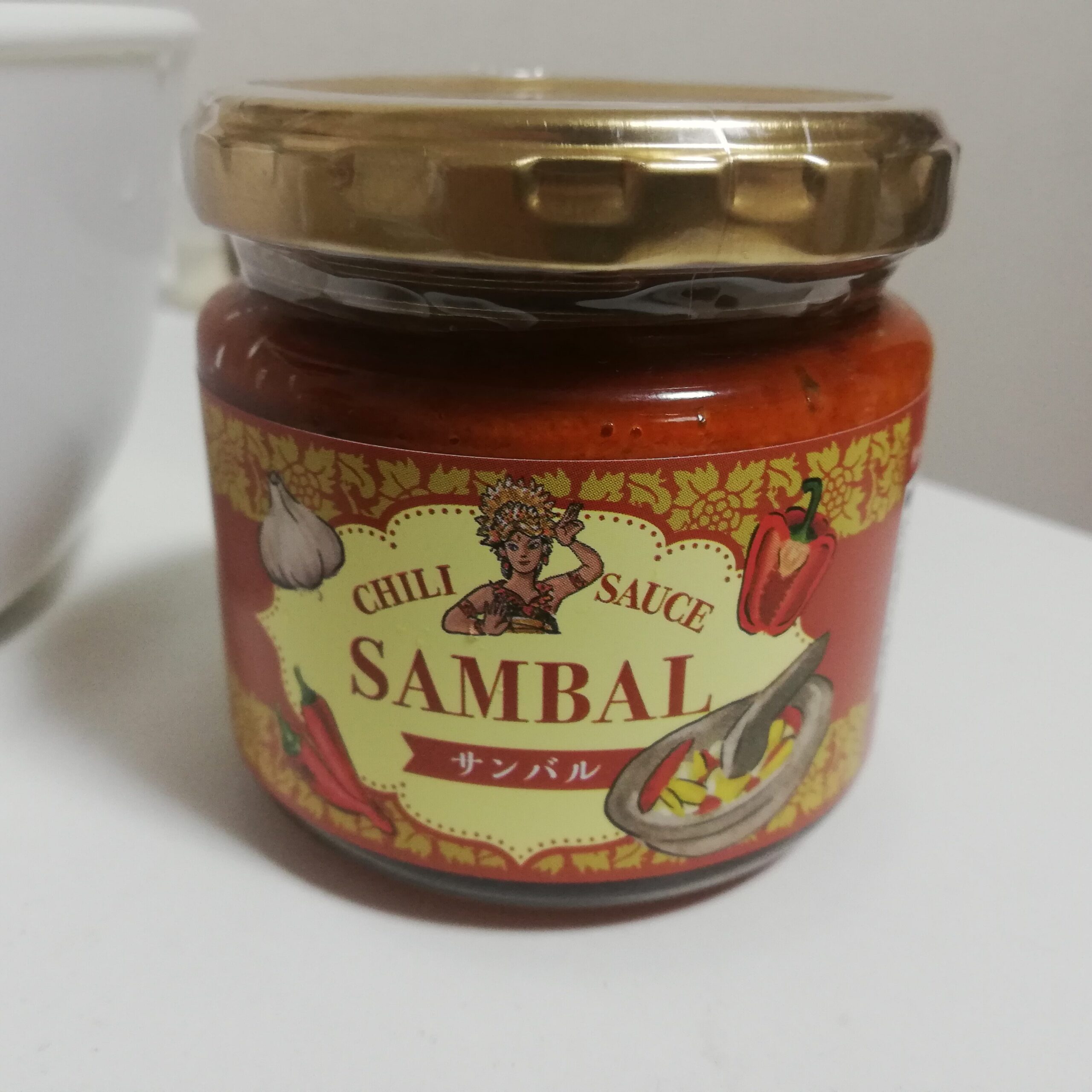
KALDI sells a spicy condiment called "Sambal" (JAN: 4515996938207) (as of November 13, 2022). Even after searching Japanese websites, I couldn't find a very good orthodox way to eat it, but after researching local dishes, it seems that in Japan, it can be easily enjoyed with salads, fried chicken, grilled fish, and fried fish. I personally have become addicted to it! However, a simple question arises: why does Sambal, a Southeast Asian dish, use chili peppers that originated in the Americas? This is related to Indonesia's complex history as a colony. Along with the history of Sambal and Indonesia, I've put together a brief review of KALDI's Sambal.
What is sambal?
We've recreated the homemade sambal you'd find in a restaurant, but with just the right amount of spiciness. Sambal is a staple condiment on Indonesian dinner tables. This original chili sauce is made by grinding paprika, onions, tomato puree, garlic, and red chilies, resulting in a perfectly balanced spiciness. It's a versatile condiment that can be used with rice and raw egg, fried chicken, grilled fish, and as a condiment for hot pot dishes.
『KALDI Online Store』
Sambal is a spicy condiment used in Indonesian and Malaysian cuisine. Originating in Indonesia, the word is originally from Javanese and Sundanese, and is a loanword in Indonesian. It's a type of chili sauce or paste made from various chili peppers and other ingredients such as shrimp paste, garlic, ginger, shallots, green onions, palm sugar, and lime juice. It comes in a wide range of flavors, from spicy to sweet, and commercially available varieties include seafood flavors. While the general ingredients are standardized, there are considerable differences in the ingredients used even within Indonesia.
How is sambal best eaten?
One day, while browsing at KALDI, I discovered a product called sambal. Since I like spicy food and ethnic cuisine, I bought it, but I was unsure how to use it. It's hard to stick with something if you don't enjoy eating it, right?
So, I looked at various Japanese websites to find out how to eat it deliciously, but there were many Japanese-style adaptations, and it was difficult to find out how it is eaten locally... So I looked at the English Wikipedia, etc. And that's how I found the names of a few dishes.
Lalab is a Sundanese raw vegetable salad served with sambal. Nowadays, it's made with cucumber, tomato, cabbage, lettuce, lemon basil, black nightshade, yardlong beans, spinach, papaya, and chayote, and is eaten with sambal. Essentially, it's just a salad with sambal. It's very easy to make at home.
Sambal goreng is a stir-fry dish made with sambal. "Goreng" means "to stir-fry." It seems to be made with meat, potatoes, tempeh, chicken, fried tofu, shrimp, fish, squid, eggs, and more.
Ayam goreng is fried chicken that is eaten with sambal as a dip.
Ikan bakar is an Indonesian dish where "ikan" means fish and "bakar" means to grill, so it literally translates to "grilled fish." It's grilled after being generously coated with sambal (a type of Indonesian sauce).
Ikan goreng is fried fish cooked in coconut oil and eaten with sambal as a dip.
Considering all of this, it seems difficult to completely recreate the meal in Japan, but it can be easily enjoyed by pairing it with salads, fried chicken, grilled fish, or fried fish. Here are some Japanese recipes for sambal goreng; you might want to take a look.
My impressions after trying it
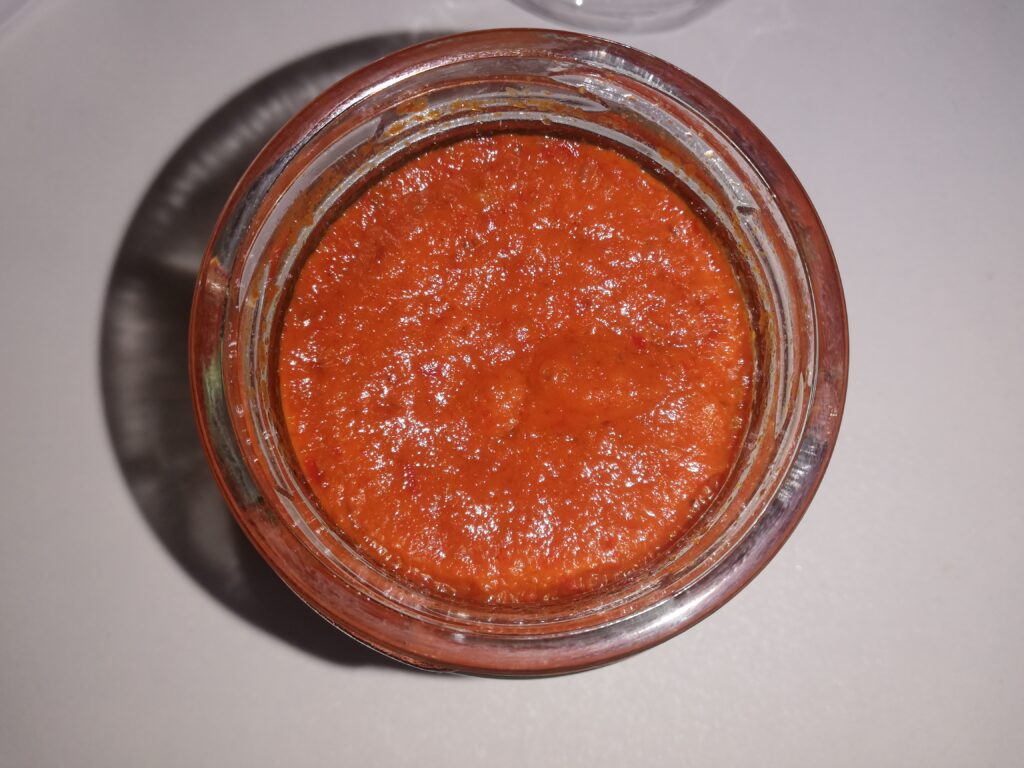
I tried dipping lettuce and tomatoes in it, intending it to be like larab, but it was delicious! The lettuce was reliably tasty, and although I thought the tomatoes might be a bit odd since sambar already contains tomatoes, the combination of freshness and tomato created a complex harmony. It has a fair amount of spiciness, but it's milder than the "Eating Garam Masala" I also bought at KALDI. With the garam masala, I felt like I was using too much because it was too spicy, but with the sambar, perhaps because it contains tomatoes and shrimp paste, it has a lot of umami, and I kept adding more and more. However, it is quite spicy, so depending on your constitution, it might make your nose run, so be careful. I would recommend this to people who want to eat salad but feel that dressings lack punch in flavor. I plan to eat salad with this for a while. I just need to be careful not to get carried away and eat too much chili and get a stomach ache.
I also tried it with fried chicken, intending to use it with ayam goreng (fried chicken), and as expected, it paired very well. Be careful not to overeat with this! However, since sambal has a strong flavor, I think it might go better with milder foods like white fish.
Sambal goreng requires some adjustment of quantities and is therefore a bit more advanced, but I'd like to try making it sometime. It seems easy to try since no extra ingredients are needed. However, figuring out which ingredients work best might require some experimentation. If anyone has tried it, please let me know!
The history of sambal: Why does sambal, a Southeast Asian dish, use chili peppers that originated in the Americas?
The chili peppers that are the main ingredient in sambal are not native to Southeast Asia, but to the Americas. Why does sambal, a Southeast Asian dish, use chili peppers that originated in the Americas? The same goes for tomatoes, too.
This is because sambal originated in Indonesia, and its history was greatly altered by the introduction of chili peppers and tomatoes into Indonesia (Surya & Tedjakusuma, 2022).
Chili peppers are native to Central and South America, and among them, the cayenne pepper and bird's-eye chili pepper varieties were introduced to Indonesia in the 16th century during the Age of Discovery by Portuguese and Spanish sailors as part of the "Columbian Exchange," an exchange of plants and animals between the Old and New Worlds. Therefore, the common chili pepper varieties used in sambal include cayenne pepper and bird's-eye chili pepper. Tomatoes are also thought to have been introduced around this time.
However, even before chili peppers arrived in Indonesia, sambal was already a staple in traditional Indonesian cuisine. So how was sambal made back then? It is believed that it was made not from chili peppers, but from indigenous spices such as long pepper (Piper retrofractum), black pepper (Piper nigrum), and ginger (Zingiber officinale).
While some of these are still used in Java, the overwhelming popularity of chili peppers has ultimately led to them becoming rare, with their use limited to the production of traditional herbal medicines and jams (traditional Javanese herbal beverages).
Ancient Indonesian texts are scarce, and it's unclear exactly when sambal began to be made. However, the oldest known mention of sambal is found in the ancient Javanese history book " Serat Centhini " (1819-1912), an ancient manuscript written in Sanskrit that compiles knowledge of traditional Javanese religion, art, stories, and teachings. According to this book, 16 different varieties of sambal are recorded. It also appears that sambal was a valuable commodity in Javanese markets during the time of the Old Mataram Kingdom around the 10th century.
Subsequently, the kingdom changed hands from the Kediri Kingdom to the Singhasari Kingdom, then to the Majapahit Kingdom, and finally to the Mataram Kingdom. During the time of the Mataram Kingdom, as mentioned above, chili peppers and tomatoes were brought in by Portuguese and Spanish sailors and became the main ingredients for sambal.
During the 1920s, when the Mataram Kingdom became a Dutch colony under the Dutch East Indies, sambal gained popularity among the upper-class Dutch community. Sambal became part of a high-end meal enjoyed by the Dutch elite, known as a listafel (meaning "rice table" in Dutch). A listafel is a celebratory dish that includes small portions of rice, side dishes, and Indonesian specialties, allowing diners to enjoy many different dishes at once.
Following the Japanese occupation and independence from the Netherlands, a massive cookbook written by Mustika Rasa in 1967 under the guidance of Sukarno (Indonesia's first president) included 63 sambal recipes among 1,600 traditional Indonesian dishes. Over the years, sambal recipes have branched out into various localized versions, depending on regional tastes and the availability of ingredients.
Today, sambal is widely used as a condiment in many parts of Indonesia. In many homes and restaurants, sambal is traditionally made using fresh ingredients and consumed directly.
However, with technological advancements, sambal began to be commercially produced through sterilization to meet high market demand and extend shelf life. While well-known classic and traditional sambal has been widely consumed by Indonesians, new sambal recipes are constantly being invented by the food industry to meet the expectations of consumers seeking novelty.
Why not try eating sambal while reflecting on Indonesia's tumultuous history?
References
Surya, R., & Tedjakusuma, F. 2022. Diversity of sambals, traditional Indonesian chili pastes. Journal of Ethnic Foods 9(1): 1-19. https://doi.org/10.1186/s42779-022-00142-7
Reference Sites