I originally have a science background, but I enjoy reading world history content.
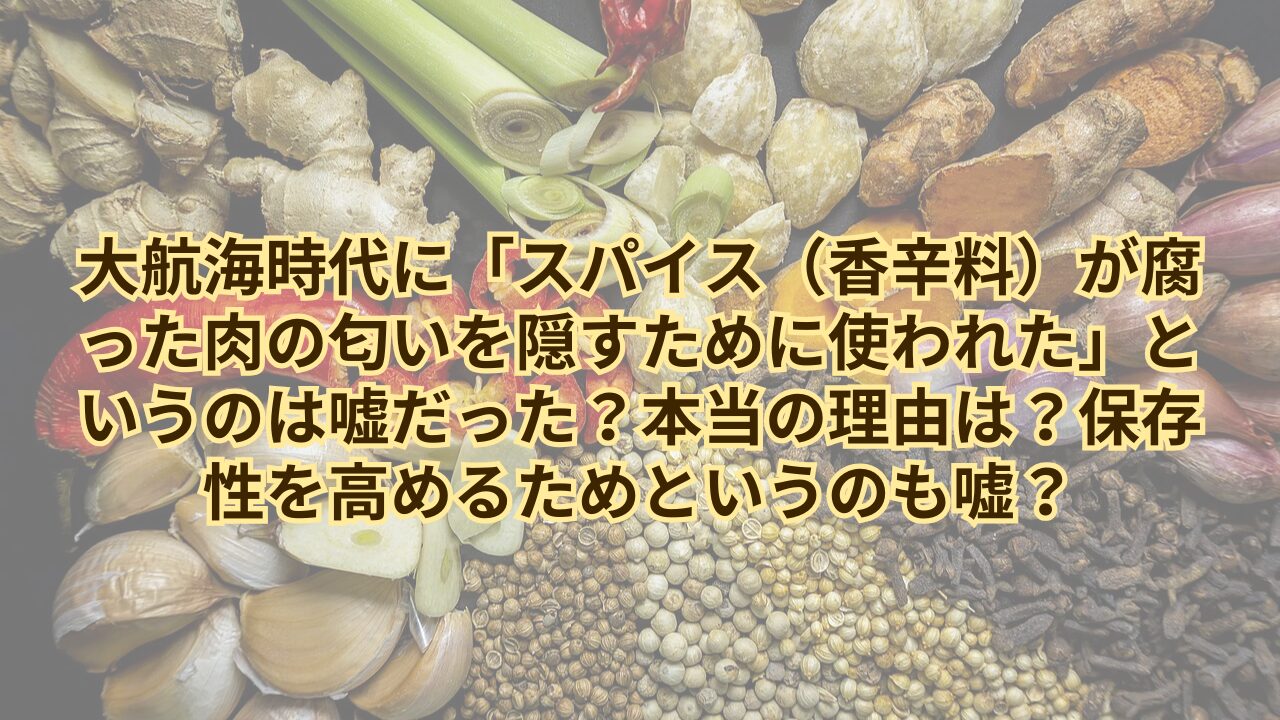
I've heard something that caught my attention. It's the theory that spices (spices excluding the stems, leaves, and flowers) don't have much antibacterial property, and that "spices were used to mask the smell of rotten meat." I've always been skeptical about whether this is true.
Our investigation has concluded that this theory is highly unfounded. The reason is that spices are too expensive for ordinary people to use.
The medicinal properties of spices themselves are diverse, including antibacterial, antioxidant, appetite-stimulating, and anti-inflammatory effects. However, the reason why wealthy people in Europe and America sought out spices from abroad during the Age of Discovery was likely for their exotic flavors and because they stimulated the secretion of addictive neurotransmitters (brain hormones) in the brain.
Ultimately, this develops into conspicuous consumption among the wealthy in Europe and America (consumption to flaunt wealth).
However, it is becoming clear that some spices can actually be used to mask the characteristic fishy smell, so they are not spoiled, but it is true that some spices can be used to eliminate fishy odors.
Another theory suggests that the antibacterial and antioxidant properties of spices, which enhance their preservation, were important. This is an explanation that you sometimes see in high school world history classes.
While it is true that spices have antibacterial properties, it is unlikely that there was a demand for them in Europe and America during the Age of Discovery. On the other hand, antibacterial properties were likely important in their places of origin.
This article will explain why the idea that spices were used to mask the smell of rotten meat is false, and the real reason why European countries sought spices during the Age of Discovery.
- Why can we say that the theory that spices were used to mask the smell of rotten meat during the Age of Discovery is false?
- Why did the misinformation spread?
- What was the real reason Europe sought spices from abroad during the Age of Discovery?
- Is the antibacterial properties of spices related to the demand for spices?
- References
Why can we say that the theory that spices were used to mask the smell of rotten meat during the Age of Discovery is false?
Why is the claim that "spices were used to mask the smell of rotten meat" considered to have little basis in fact?
The biggest problem is that spices from the Age of Discovery were too expensive (Murphy, 2024).
Europe already had an abundance of native herbs used in cooking, such as sage, rosemary, and thyme, as well as strongly flavored vegetables like leeks and onions. However, "spices" (such as pepper, nutmeg, and cloves) could only be imported through the spice trade from the Middle East and Asia.
Exotic spices, popularized by returning Crusaders and pilgrims, were already in vogue as highly prized luxuries among the upper classes in the Middle Ages, even before the Age of Discovery. However, their relative rarity, prestige, and the long distances it took to reach tables in France and England made them extremely expensive. They were simply unaffordable for ordinary households.
Furthermore, most households could quickly slaughter and eat animals by raising livestock or fish, hunting, or commissioning these activities. Examples of livestock included geese, ducks, chickens, pigs, and sheep.
In addition, if you have any leftovers, there are preservation methods such as salting, smoking, drying, and honey-preserving. Jerky and ham are examples of this.
From the above, it can be concluded that medieval Europeans did not deliberately eat rotten meat.
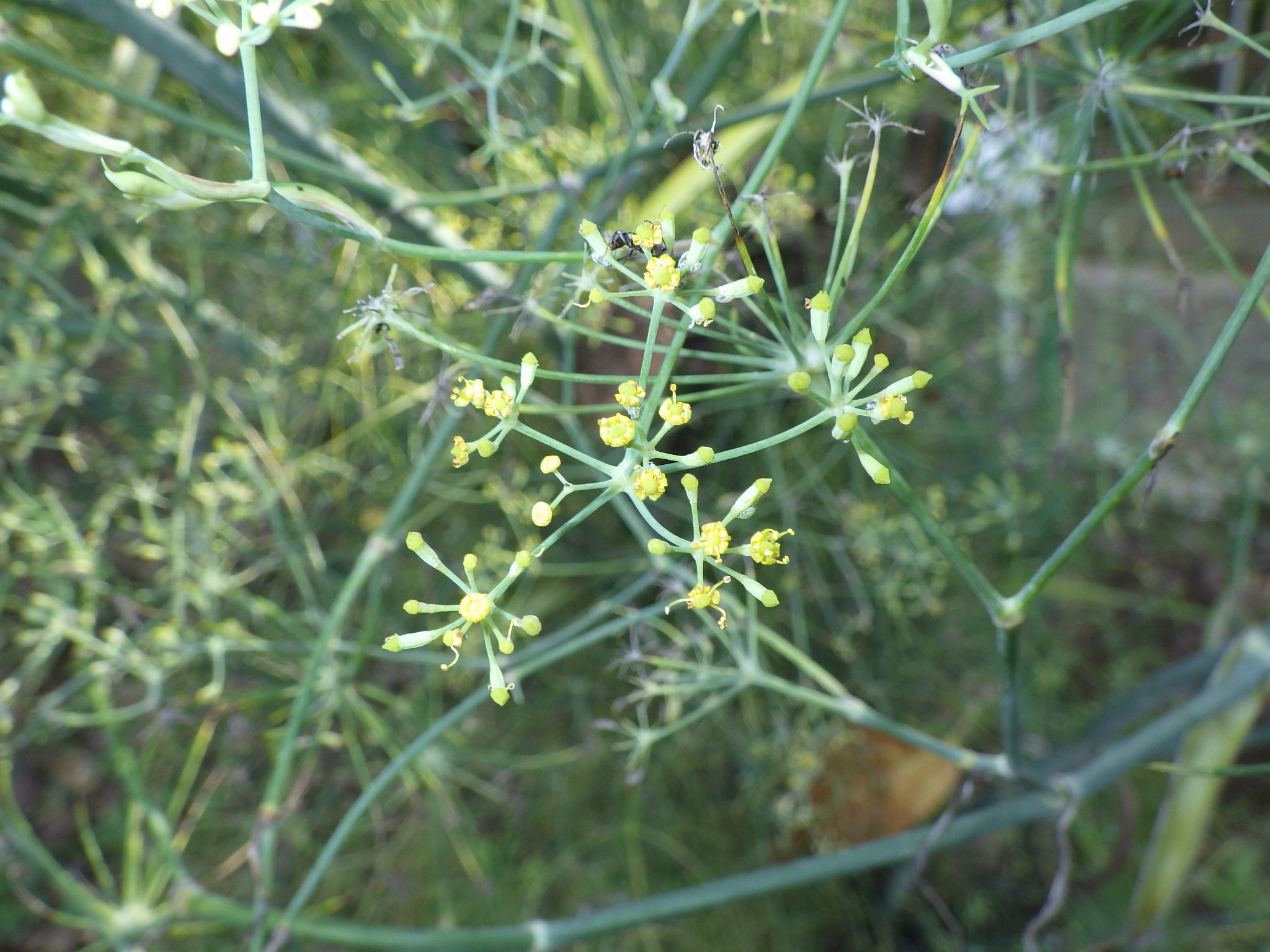
However, it has been confirmed that essential oils extracted from the fruit (fennel seeds) of fennel (a type of spice native to the Mediterranean coast) and the kernels of nutmeg seeds (native to Southeast Asia) can actually eliminate the odor of meat and fish (Takahashi et al., 2004).
Therefore, while it remains possible that native European plants like fennel were used to remove animal or fishy odors, it's unlikely to be the smell of rotting meat.
Why did the misinformation spread?
Why did this claim circulate? An influential book is involved (Myers, 2006).
In 1939, J.C. Drummond and Anne Wilbraham published "The Englishman's Food: Five Centuries of English Diet," in which they suggested that the wealthy in medieval Europe (and cunning bakers and grocery shop owners) desperately needed spices, primarily because meat was starting to spoil and the spices masked the smell and flavor of stale ingredients.
However, Drummond was a biochemist, not an expert in medieval food culture. Furthermore, he assumed from the outset that medieval preservation techniques were rudimentary and that "the main purpose of spices was to mask flavors." His work lacked documentary evidence and relied heavily on misinterpretations and speculation.
However, the readability of his writing, combined with the authority he gained from his social standing, gave his books weight and made them an ideal reference for anyone wanting to casually research the history of food.
This theory, like a rumor spreading, created a chain of mentions where inaccurate information was repeated as if it were the truth.
Worst of all, the speaker heard the same inaccurate information from multiple sources, but failed to realize that it all stemmed from a single source, creating the misconception that this theory was the dominant one.
What was the real reason Europe sought spices from abroad during the Age of Discovery?
So what was the reason for seeking spices during the Age of Discovery (mid-15th to mid-17th centuries)?
The primary reason is probably that it's a "delicacy" and has an exotic taste.
This might seem a bit simplistic, but the tendency for wealthy people to become gourmets in search of new flavors and seek out rare ingredients is still observed today.
If it were simply delicious, that would be the end of it, but for example, although it is native to Central and South America, the capsaicin contained in the fruit of the chili pepper is known to stimulate the secretion of beta-endorphins and dopamine, which are types of neurotransmitters (brain hormones) in the brain and are also called brain narcotics, due to its spiciness (pain) (Fattori et al., 2016).
This can have an effect that, while not pathological, could be described as addiction.
Other examples of spices affecting brain hormones, although primarily based on animal studies, include the following:
| botanical name | Parts used for spices | Origin | Effective chemicals | Effects on the brain |
|---|---|---|---|---|
| pepper Piper nigrum | fruit | Native to India | Piperine | Increased levels of serotonin and norepinephrine in the brain, and antidepressant-like effects (Li et al., 2007). |
| Clove Syzygium aromaticum | flower bud | Native to Southeast Asia | Eugenol | Anti-stress and anti-anxiety effects are achieved through the regulation of serotonin and the HPA axis (Garabadu et al., 2011). |
| Nuttle Myristica fragrans | Nutmeg seeds | Native to Southeast Asia | Myristicin | It is suggested to have an inhibitory effect on MAO, potentially leading to an increase in monoamines (serotonin, dopamine, etc.) (Seneme et al., 2021). It was used as a hallucinogen in hippie culture during the 1960s and 1970s. |
| Ceylon cinnamon Cinnamomum verum | Inner bark of trees (cinnamon) | Native to India | Cinnamic aldehyde | Some studies have reported changes in neurotransmitters, such as elevated serotonin and melatonin levels and decreased norepinephrine levels, suggesting a possible impact on sleep and mood (Hidayat et al., 2022). |
| Ginger Zingiber officinale | rhizome | Native to India | Ginger roll | It has been reported to have neuroprotective, anti-anxiety, and antidepressant-like effects, suggesting a link to serotonin and the GABAergic system (Kim et al., 2018). |
| Turmeric(turmeric) Curcuma longa | rhizome | Native to India | Curcumin | Increased serotonin, dopamine, and norepinephrine levels, inhibition of monoamine oxidase (MAO), and improvement of neuronal function through anti-inflammatory mechanisms (also verified in humans) (Kulkarni et al., 2010). |
| saffron(Bankoka) Crocus sativus | pistil style | Native to Greece | Crocin, Crocetin, Safranal | There is data suggesting that it also affects the reward system and opioid system by regulating serotonin, dopamine, and β-endorphin (Chauhan et al., 2024). |
| Koushiran(vanilla)Vanilla planifolia | Seeds (vanilla beans) | Native to Central America | Vanillin | There is data suggesting that aromatherapy increases serotonin and dopamine levels in the brain, contributing to improved mood (Xu et al., 2015). |
These effects likely contributed to a stronger craving for spices (Le Couteur & Burreson, 2003=2011).
As trade further developed and spices became even more expensive, the use of spices evolved into a way for the wealthy in Europe and America to flaunt their wealth and demonstrate that they could afford to use expensive spices on a daily basis (Freedman, 2005).
This corresponds to what is called "constancy consumption" in economics. This is not merely "showing off," but has been theorized in evolutionary biology as "handicap theory," and is known as an important motivation for consumption in humans (Miller, 2009=2017).
As described above, the reasons for seeking spices during the Age of Discovery likely evolved from the pursuit of delicacies to addiction and then to conspicuous consumption.
The reason Europe went to the trouble of obtaining spices by sea was that in the 15th century, the Ottoman Empire destroyed the Byzantine Empire and expanded into the Eastern Mediterranean, imposing extremely high tariffs. As a result, the supply of spices that had originally come in through the Eastern trade (Levant trade) between Islamic Qalimi merchants and Italian merchants in Venice was cut off.
As a result, the Portuguese and Spanish efforts to find spices unaffected by the Islamic world spread to the imperialist powers of the Netherlands, Britain, France, Germany, America, Italy, and Belgium, leading to colonial rule by Western powers around the world.
Is the antibacterial properties of spices related to the demand for spices?
However, and this is a bit complicated, while the reasons why Europeans and Americans sought spices during the Age of Discovery can be attributed to the pursuit of delicacies, their addictive nature, and their conspicuous consumption, the reasons why the indigenous people of those colonies used spices are likely different.
For the local people, unlike Westerners, spices grew naturally, were inexpensive, and were deeply integrated into their customs and food culture.
While taste and addictive properties are certainly contributing factors, the reasons for its long-term integration into the culture likely include its lipid-derived antioxidant, antibacterial, insecticidal, and animal-repellent properties, as well as its appetite-stimulating, anti-inflammatory, and odor-masking effects (Gottardi et al., 2016). Furthermore, although scientific proof is still lacking, it was also expected to play a role as a herbal medicine for specific organs.
In particular, antioxidant and antibacterial properties are thought to have been important for improving the preservation of food and for embalming corpses. Antibacterial properties have been proven in 99 major spices, including pepper, chili peppers, cloves, nutmeg, and sansho pepper.
Such antibacterial effects may not have been particularly valued in the European and American countries during the Age of Discovery.
However, as Dutch-Asian trade progressed from the 17th to the 18th centuries, and as a result of the expansion of trade and competition among merchants and companies, the prices of many commodities began to converge between regions. Colonial goods such as spices, tea, and sugar also spread to the general households in Europe and America (De Zwart, 2016), and became commonly consumed by ordinary households.
In Japan, after the Meiji Restoration (1853), spices originating from South America, such as chili peppers, were added to the existing Asian spices.
At this stage, some people may have started to become aware of its antibacterial properties and health benefits.
Since then, scientific research has advanced, proving that it actually has functions such as antibacterial properties and health benefits, and it has once again attracted attention.
Thus, the role of spices has changed in complex ways depending on the region and era. While the theory that spices were consumed for their odor-masking or antibacterial properties during the "Age of Discovery" is rather weak, it's important to note that spices themselves do have those effects.
References
Chauhan, S., Tiwari, A., Verma, A., Padhan, PK, Verma, S., & Gupta, PC 2024. Exploring the potential of saffron as a therapeutic agent in depression treatment: a comparative review. The Yale Journal of Biology and Medicine 97(3): 365-381. https://doi.org/10.59249/XURF4540
De Zwart, P. 2016. Globalization in the early modern era: new evidence from the Dutch-Asiatic trade, c. 1600–1800. The Journal of Economic History 76(2): 520-558. https://doi.org/10.1017/S0022050716000553
Fattori, V., Hohmann, MS, Rossaneis, AC, Pinho-Ribeiro, FA, & Verri Jr, WA 2016. Capsaicin: current understanding of its mechanisms and therapy of pain and other pre-clinical and clinical uses. Molecules 21(7): 844. https://doi.org/10.3390/molecules21070844
Freedman, P. 2005. Spices and late-medieval European ideas of scarcity and value. Speculum 80(4): 1209-1227. https://doi.org/10.1017/S0038713400001391, https://gebeasley.org/famished/wp-content/uploads/2015/10/document-2-1.pdf
Garabadu, D., Shah, A., Ahmad, A., Joshi, VB, Saxena, B., Palit, G., & Krishnamurthy, S. 2011. Eugenol as an anti-stress agent: modulation of hypothalamic-pituitary-adrenal axis and brain monoaminergic systems in a rat model of stress. Stress 14(2): 145-155. https://doi.org/10.3109/10253890.2010.521602
Gottardi, D., Bukvicki, D., Prasad, S., & Tyagi, AK 2016. Beneficial effects of spices in food preservation and safety. Frontiers in Microbiology 7: 186557. https://doi.org/10.3389/fmicb.2016.01394
Hidayat, R., Wulandari, P., & Reagan, M. 2022. The potential of cinnamon extract (Cinnamomum burmanii) as anti-insomnia medication through hypothalamus pituitary adrenal axis improvement in rats. Acta Medica Academica 51(2): 79-84. https://doi.org/10.5644/ama2006-124.375
Kim, CY, Seo, Y., Lee, C., Park, GH, & Jang, JH 2018. Neuroprotective effect and molecular mechanism of [6]-Gingerol against scopolamine-induced amnesia in C57BL/6 mice. Evidence-Based Complementary and Alternative Medicine 2018(1): 8941564. https://doi.org/10.1155/2018/8941564
Kulkarni, SK, & Dhir, A. 2010. An overview of curcumin in neurological disorders. Indian Journal of Pharmaceutical Sciences 72(2): 149-154. https://doi.org/10.4103/0250-474X.65012
Le Couteur, PC, & Burreson, J. 2003. Napoleon's buttons: How 17 molecules changed history. Tarcher, 384pp. ISBN: 9781585422203 [=2011. Spices, explosives, pharmaceuticals—17 chemical substances that changed world history. Chuokoron-Shinsha, Tokyo. 368pp. ISBN: 9784120043079]
Li, S., Wang, C., Li, W., Koike, K., Nikaido, T., & Wang, MW 2007. Antidepressant-like effects of piperine and its derivative, antiepilepsirine. Journal of Asian Natural Products Research 9(5): 421-430. https://doi.org/10.1080/10286020500384302
Miller, G. 2009. Spent: Sex, Evolution, and Consumer Behavior. Viking Adult, 384pp. ISBN: 9780670020621 [=2017. Consumer Capitalism! The Evolutionary Psychology of Show-offs. Keisou Shobo, 480pp. ISBN: 9784326299256]
Murphy, D. 2024, October 29. Did Medieval Kings Need Spice to Cover Up Rotten Food?. Youth in Food Systems. https://seeds.ca/schoolfoodgardens/13837-2/
Myers, D. 2006. Drummond's Rotten Meat: When Good Sources Go Bad. Medieval Cookery. https://www.medievalcookery.com/notes/drummond.pdf
Seneme, EF, Dos Santos, DC, Silva, EMR, Franco, YEM, & Longato, GB 2021. Pharmacological and therapeutic potential of myristicin: A literature review. Molecules 26(19): 5914. https://doi.org/10.3390/molecules26195914
Takahashi, YK, Nagayama, S., & Mori, K. 2004. Detection and masking of spoiled food smells by odor maps in the olfactory bulb. Journal of Neuroscience 24(40): 8690-8694. https://doi.org/10.1523/JNEUROSCI.2510-04.2004
Xu, J., Xu, H., Liu, Y., He, H., & Li, G. 2015. Vanillin-induced amelioration of depression-like behaviors in rats by modulating monoamine neurotransmitters in the brain. Psychiatry Research 225(3): 509-514. https://doi.org/10.1016/j.psychres.2014.11.056