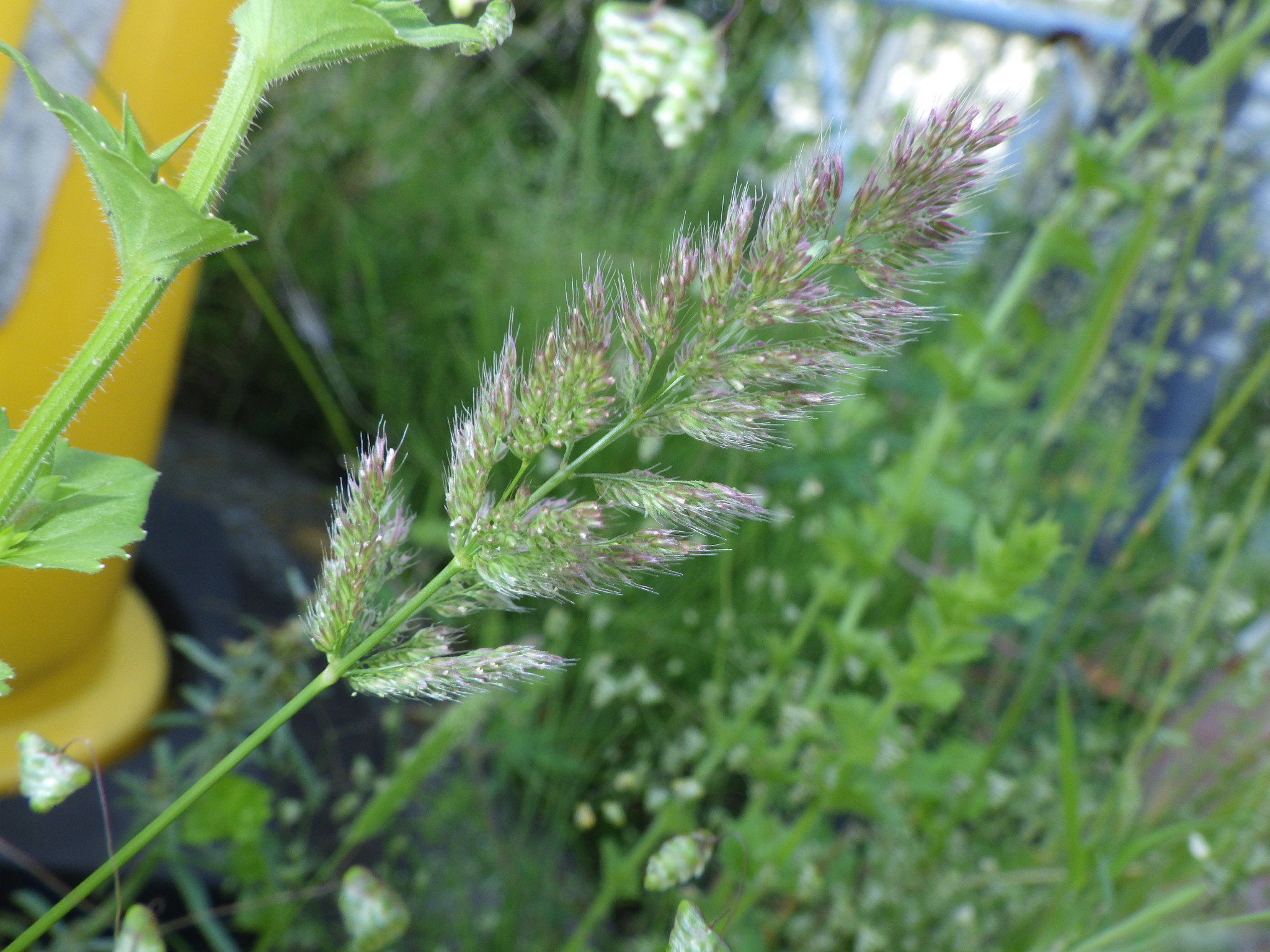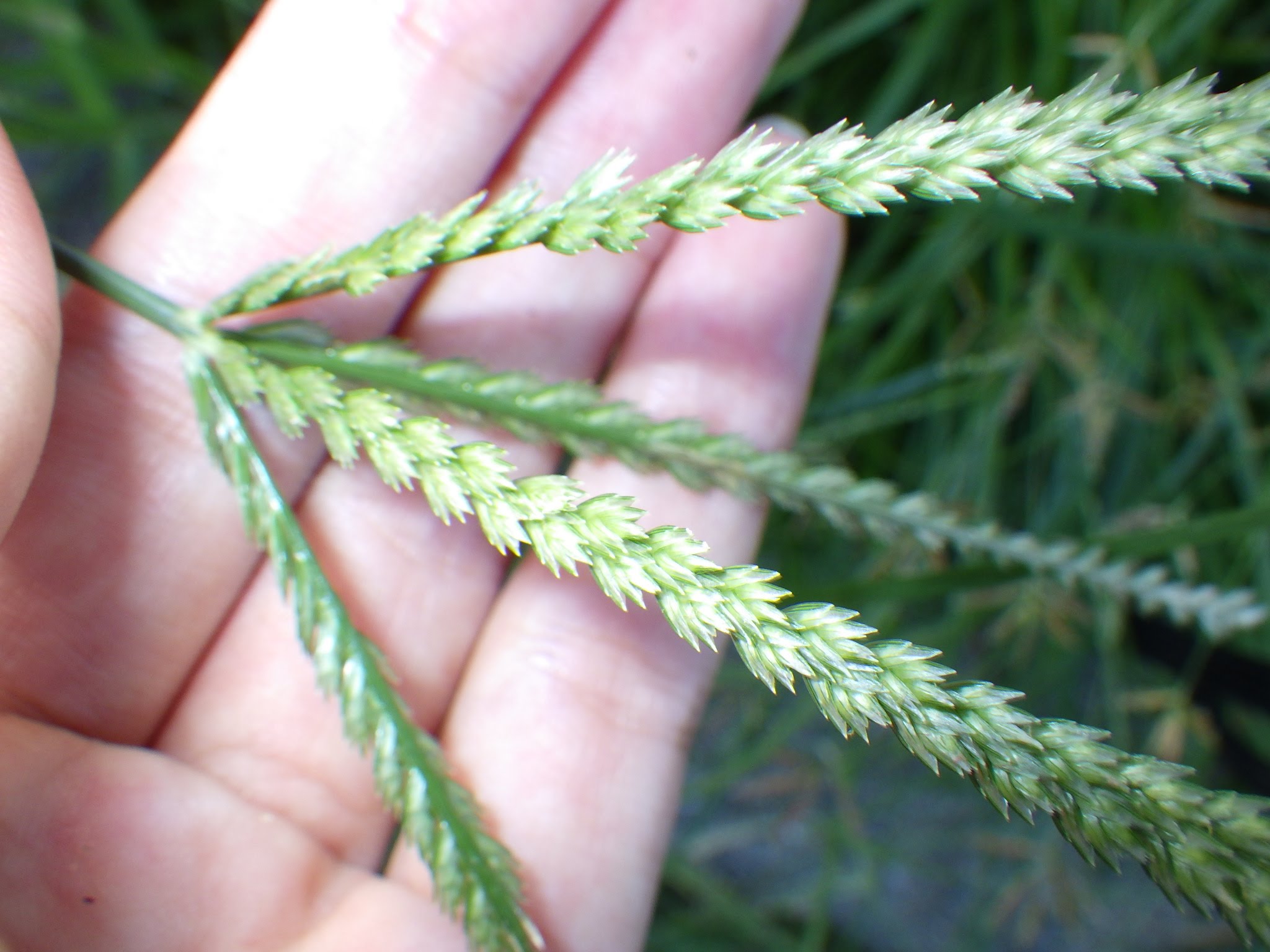
Goosegrass, crabgrass, and fine crabgrass are all members of the grass family and are extremely common herbaceous plants and weeds that can be found growing everywhere from urban to rural areas from summer to autumn. The biggest common feature is that they all bear several racemes called "inflorescences." Some people may not be able to distinguish them because their names are similar. However, goosegrass, crabgrass, and fine crabgrass can be easily distinguished by checking the length of the leaves and the shape of the spikelets. Distinguishing between crabgrass and fine crabgrass is a bit more difficult, but in addition to the shape and arrangement of the inflorescence, it is important to check the length of the leaves. This article will explain the classification and morphology of the genera Goosegrass and crabgrass.
What are Goosegrass, Digitaria sanguinalis, and Digitaria sanguinalis?
Goosegrass (Digitaria sanguinalis) is a prehistoric naturalized plant in Japan, distributed throughout Hokkaido, Honshu, Shikoku, Kyushu, and the Ryukyu Islands; and found in warm temperate to tropical regions worldwide. It is an annual plant that grows everywhere, including wastelands, grasslands, roadsides, and around houses.
Digitaria sanguinalis (Mehishiba) is an annual plant widely distributed in Hokkaido, Honshu, Shikoku, Kyushu, the Ryukyu Islands, and the Ogasawara Islands in Japan, as well as in warm temperate to temperate regions worldwide, growing in cultivated fields, sunny roadsides, and vacant lots.
Digitaria sanguinalis (also known as small-grained crabgrass) is distributed throughout Japan, specifically Honshu (west of the Kanto region), Shikoku, Kyushu, the Ryukyu Islands, and the Ogasawara Islands, as well as Southeast Asia. It is an annual plant that grows along roadsides and in garden corners, except in mountainous areas.
All of these belong to the grass family and are extremely common herbaceous plants and weeds that can be found growing everywhere from urban to rural areas during their flowering season from July to October.
The most significant common feature is that they both bear several racemes, also known as "involucres." These racemes contain even smaller clusters of inflorescences called "spikelets," where flowers (specifically called florets) bloom and develop into fruits when ripe.
The technical terms might be a little difficult, but basically, you can understand it as a plant that produces many rod-shaped structures when it's in bloom.
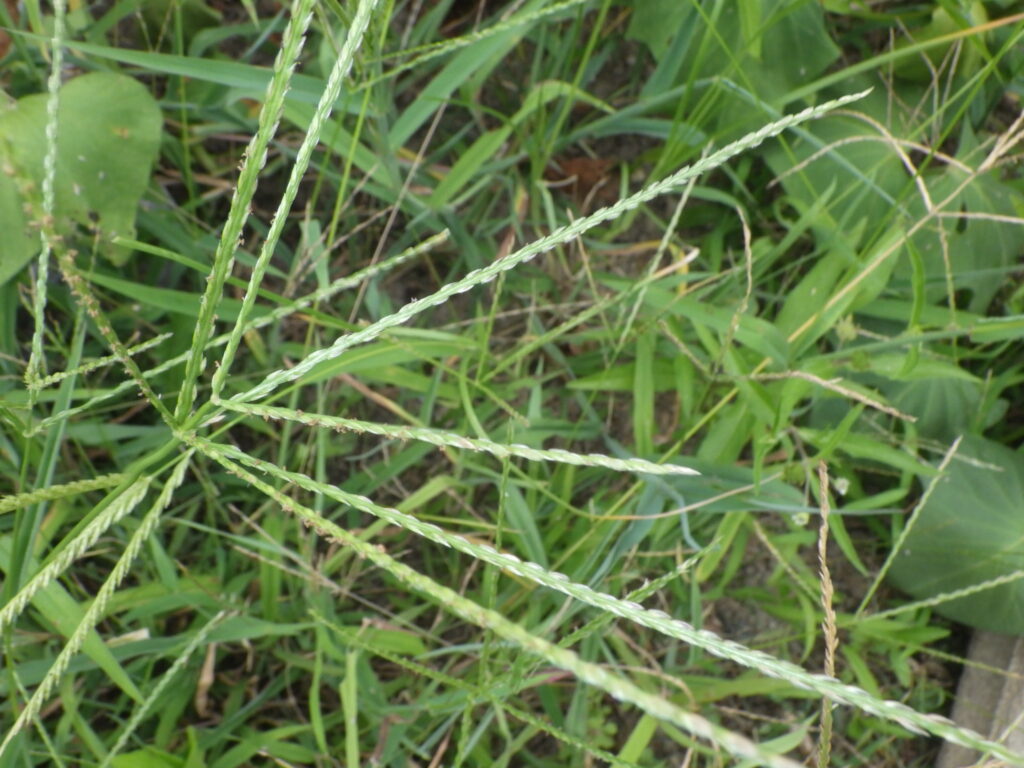
While there are many species of grasses that produce trellises, the three species mentioned above share several common characteristics: the trellises appear palmately clustered at the tip of the inflorescence, the central axis of the trellis is broad, the spikelets are attached to one side, and the base of the leaf blade does not clasp the culm.
Some people might not be able to distinguish between these three types.
What are the differences between Goosegrass, Digitaria sanguinalis, and Digitaria sanguinalis?
First, there is a taxonomic gap between Goosegrass (Eleusine indica) and Digitaria sanguinalis/Digitaria sanguinalis. Goosegrass belongs to the genus Goosegrass, while Digitaria sanguinalis and Digitaria sanguinalis belong to the genus Digitaria. From this, it can be expected that there are significant morphological differences between them.
Specifically, goosegrass (Digitaria sanguinalis) has a larger and more robust plant body than crabgrass (Digitaria sanguinalis). In goosegrass, the leaves are 8-30 cm long and the spikelets are 4-6 mm long, while in crabgrass and dwarf crabgrass, the leaves are 10-20 cm or less and the spikelets are 2.5-3.5 mm long. However, the stem height does not differ significantly.
These characteristics are the origin of the names "male" and "female," but in animals, males and females are often the same size, or females are even larger (Suzuki, 2020; Tombak et al., 2024), so the naming can be rather confusing if you have some knowledge. It seems to be based on human standards. Of course, the terms male and female in the Japanese names of plants refer to different species, and have nothing to do with males and females within the same species. Both are monoecious (having both male and female flowers on the same plant).
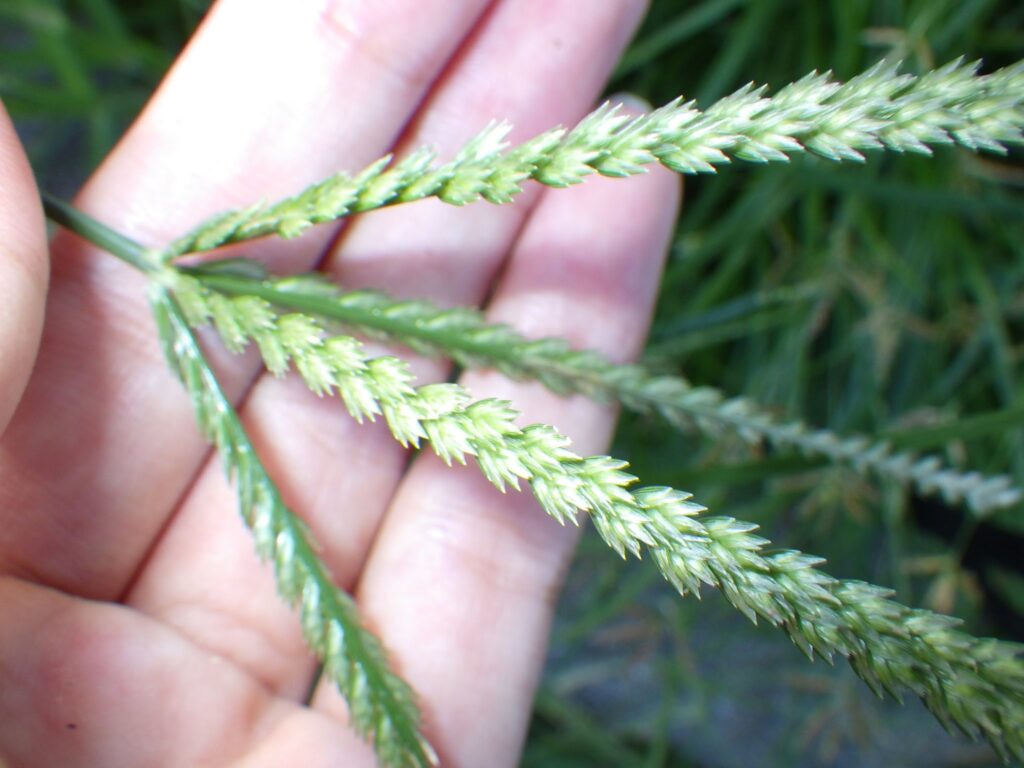
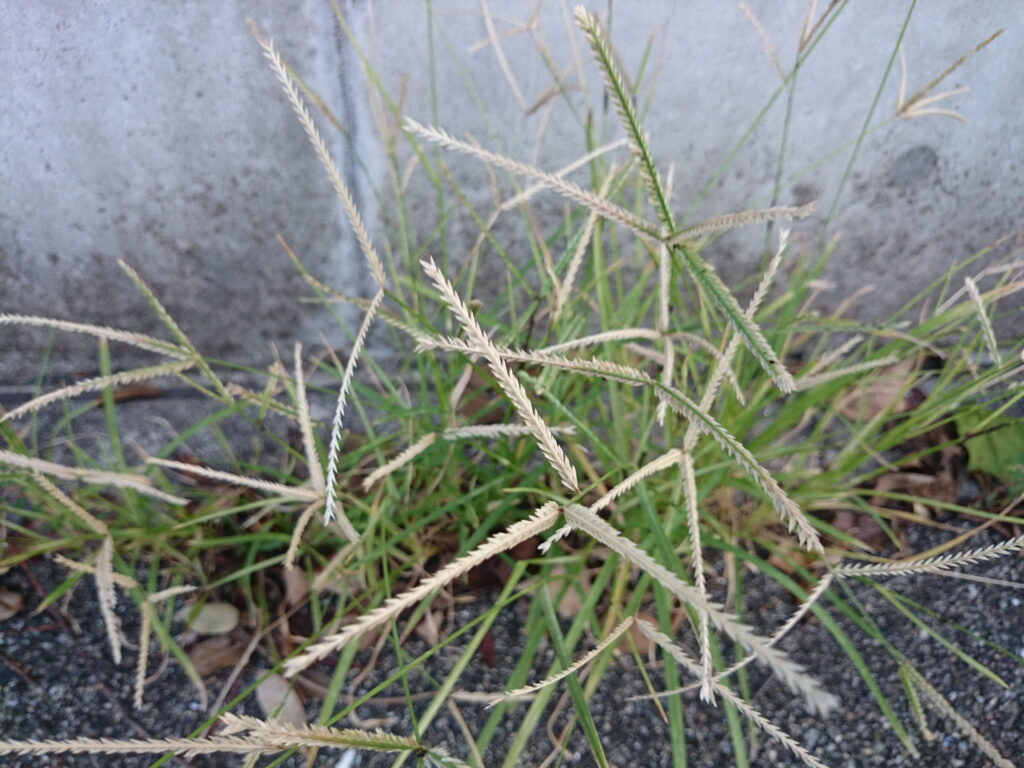
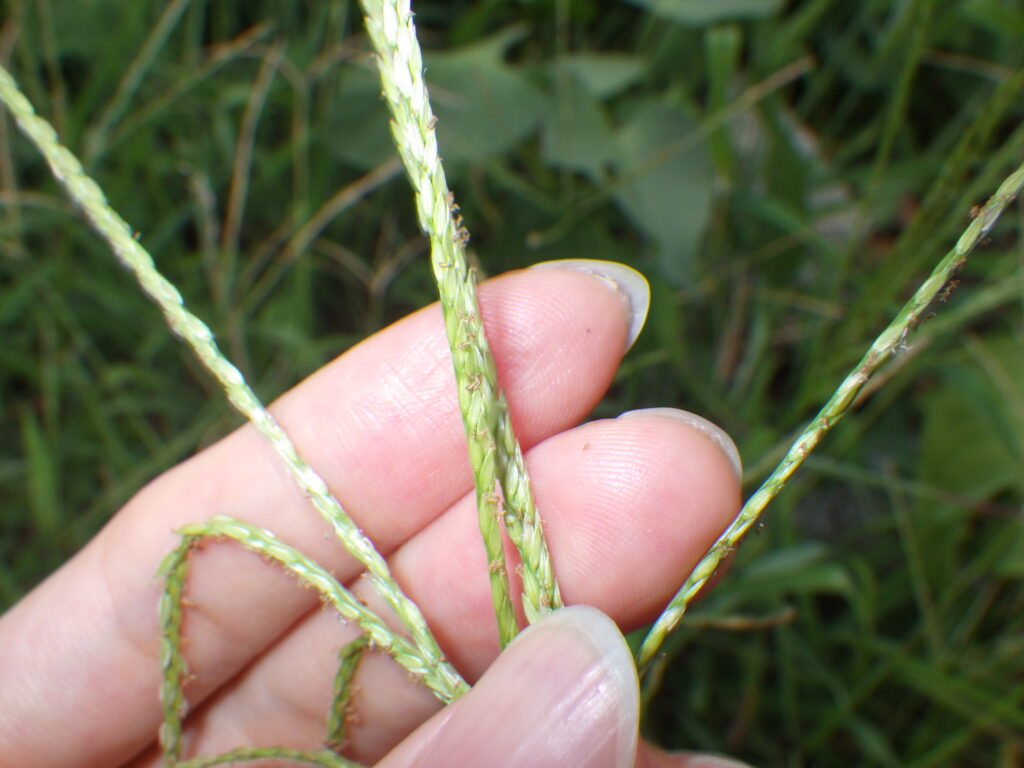
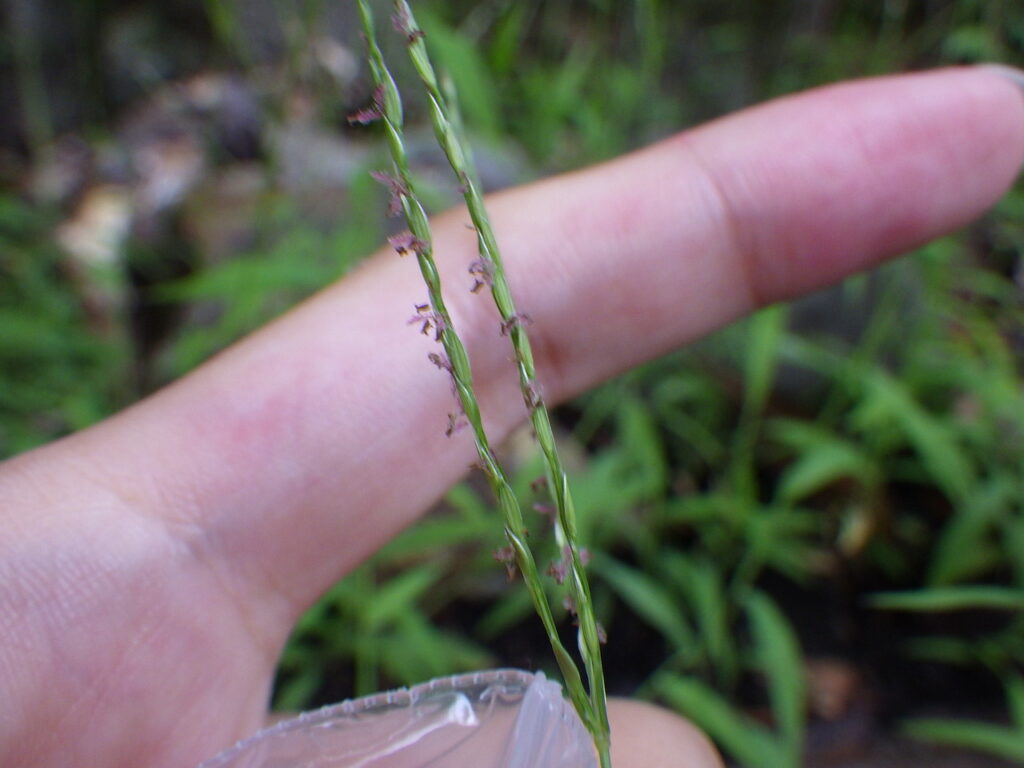
In addition, there are differences in the shape of the spikelets. In crabgrass, the spikelets consist of 4 to 5 florets, giving the bloomed plant a spiky appearance, while in crabgrass, there are only 2 florets, which are long and lanceolate in shape.
What is the difference between crabgrass and common crabgrass?
Distinguishing between crabgrass (Digitaria sanguinalis) and fine crabgrass (Digitaria sanguinalis) can be quite difficult, but they can be distinguished by the following characteristics.
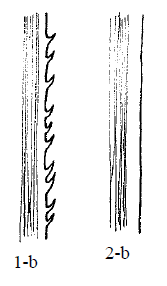
First, a crucial difference is that in crabgrass, the edge of the rachis of the cleft is toothed and rough, whereas in dioscorea serrata, the edge of the rachis of the cleft is smooth (with only minute teeth if present).
If you can confirm this, there's no mistake, but the central axis of the involucre is covered with numerous spikelets, so it may be difficult to notice unless you observe carefully or take a photograph.
In addition, there is a difference in that in crabgrass, the inflorescence race is arranged in whorls of 2-3 tiers with the bases offset, whereas in common crabgrass, the inflorescence race emerges from a single point, and the base is less likely to be offset.
However, in smaller varieties of crabgrass, there is only one tier, just like in fine crabgrass, and there are exceptions where the base is misaligned.
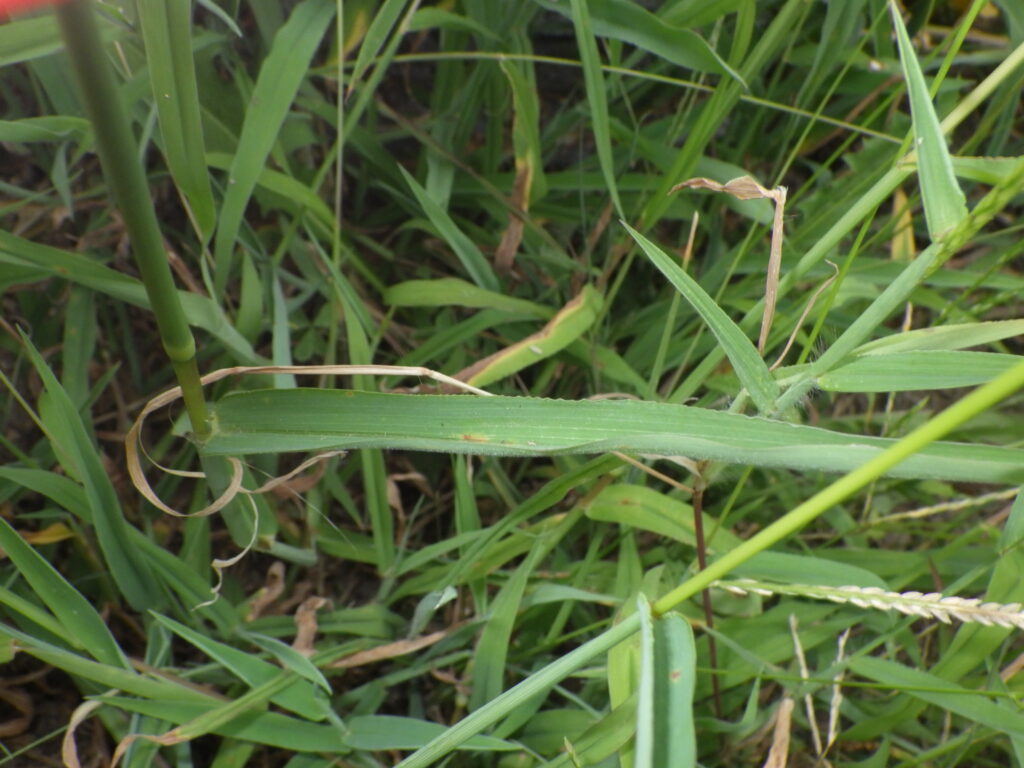
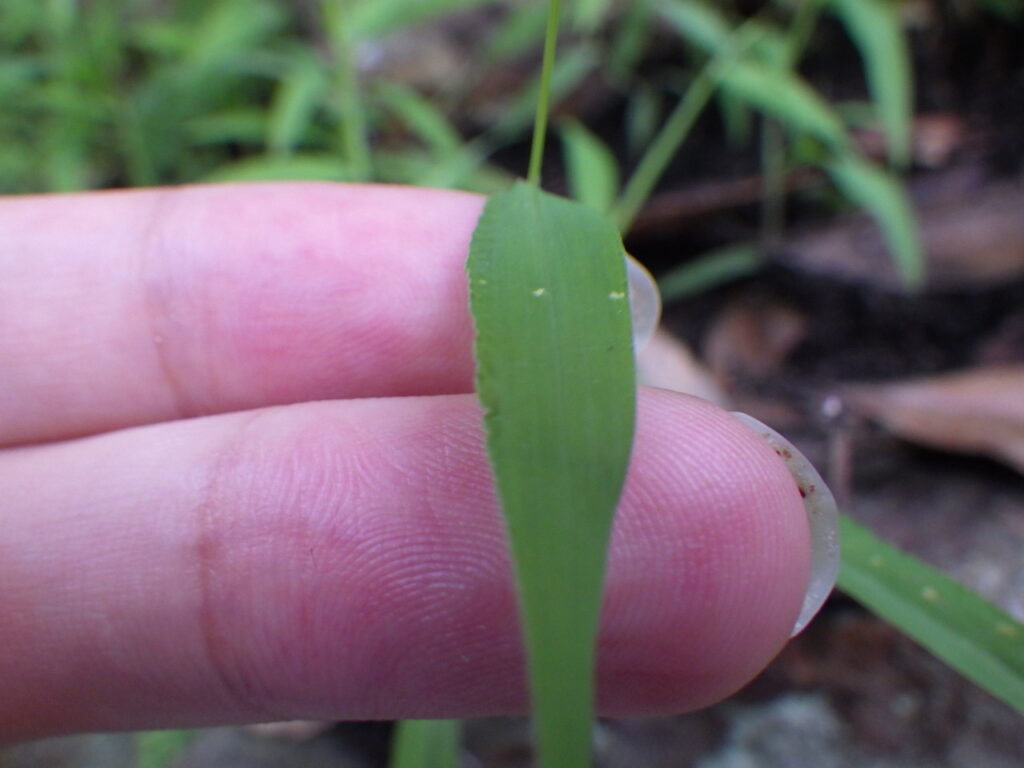
In fact, although it's not often pointed out in botanical guides, the length of the leaves seems to be a better distinguishing feature.
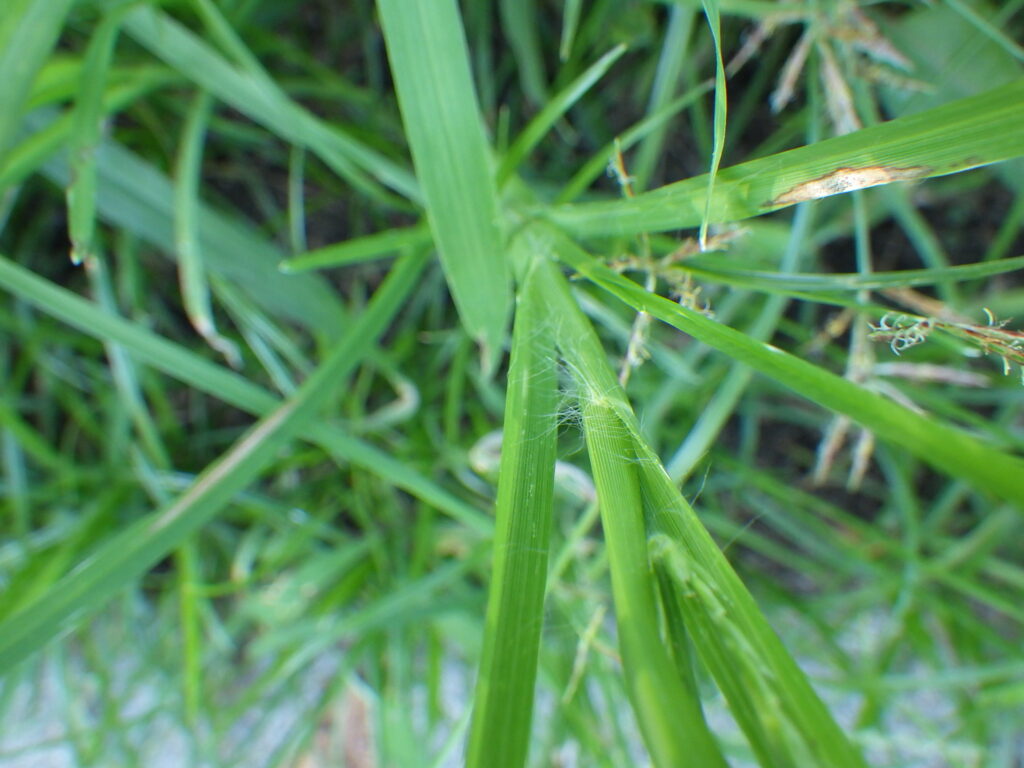
While the leaves of crabgrass are 10-20 cm long, those of small crabgrass are only 3-7 cm long.
I recommend keeping a detailed record of the leaves as well.
Are there any other similar species?
The genus Eleusine includes finger millet (Eleusine coracana), which is edible, but it has only one floret and the spikelets are not spiny.
Eleusine tristachya is a rare naturalized species originally from South America that resembles goosegrass (Eleusine aureus), but its inflorescence consists of only (1-)2-3 parts from the top of the culm, each only 1.5-6 (-8) cm long. Goosegrass in contrast has inflorescences of 5-17 cm, so if you remember this, you're unlikely to mistake them.
There are 14 other species of the genus Digitaria known in Japan, and among them, Digitaria violascens is relatively common and often confused with Digitaria sanguinalis, but its spikelets are oblong-ovate. This is completely different in shape from the oblong-lanceolate spikelets of Digitaria sanguinalis and Digitaria sanguinalis, so be sure to check carefully.
References
Kanagawa Prefecture Flora Survey Association. 2018. Kanagawa Prefecture Flora 2018 (Electronic Edition). Kanagawa Prefecture Flora Survey Association, Odawara. 1803pp. ISBN: 9784991053726
Suzuki, Satoshi. 2020. Sexual dimorphism in mammals: Unexpected similarities between weasels and elephant seals. Natural Science Gateway 26(2): 12-13. ISSN: 1341-545X, https://nh.kanagawa-museum.jp/assets/icp/contents/1599115870757/simple/tobira99_3suzuki.pdf
Tombak, KJ, Hex, SB, & Rubenstein, DI 2024. New estimates indicate that males are not larger than females in most mammal species. Nature Communications 15(1): 1872. https://doi.org/10.1038/s41467-024-45739-5