Asteraceae

Sponsored Link
plant

What are the differences between mugwort, wormwood (Artemisia princeps), bitter wormwood, and male wormwood? We'll explain how to distinguish between similar species! Did you know that mugwort is used not only in rice cakes but also in moxibustion and medicine?

Artemisia princeps, Artemisia japonica, Artemisia urticaria, and Artemisia japonica are all members of the Artemisia genus in the Asteraceae family, and are extremely common perennial herbs that dominate small vacant lots from urban areas to mountainous fields. In addition to having a cottony, fluffy underside to its leaves, it belongs to the Asteraceae family...
plant

What's the difference between *Tenningiku* and *Otenningiku*? We'll explain how to distinguish between these similar species! Actually, telling them apart is quite difficult...?

Both *Lysimachia japonica* and *Lysimachia japonica* are herbaceous plants belonging to the genus *Lysimachia* in the Asteraceae family. They are characterized by their spherical or convex receptacle and the bicolored ray florets. Due to their beautiful colors, they are sometimes cultivated for ornamental or landscaping purposes...
plant

What are the differences between Menamomi, Komenamomi, and Onamomi? We explain how to distinguish between similar species! The mucus-secreting bracts are for sticking to animals!?

Both *Menamomi* and *Komenamomi* belong to the genus *Menamomi* in the Asteraceae family. Their most distinctive features are their small, yellow ray florets and the presence of stalked glandular hairs on their involucral bracts. While not particularly common, both species grow in open areas, and *Menamomi* in particular was historically used by the Japanese as a fermented food. However...
plant

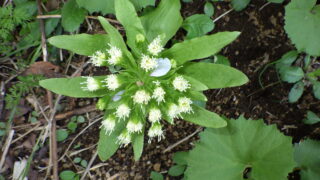
What are the differences between butterbur, leopard plant, and large leopard plant? An explanation of how to distinguish between similar species.

Butterbur, Farfugium japonicum, and Large-leaved Farfugium all belong to the Asteraceae family, and are very similar in that they have heart-shaped to kidney-shaped leaves, and are also edible. Because both have been used in Japan since ancient times, some people may confuse them.
plant

What are the differences between Japanese kerria and white kerria? How do they differ from butterbur and Hypericum patulum? This article explains how to distinguish between similar species.

Both Japanese kerria (Yamabuki) and white kerria (Shiroyamabuki) belong to the Rosaceae family, Rosioideae subfamily. They grow wild and are also cultivated for ornamental purposes, making them trees that signal the arrival of spring. However, some people mistakenly believe that white kerria is simply "Japanese kerria with white petals"...
plant

What are the differences between *Senecio japonica*, *Senecio crassipes*, and *Senecio stolonifera*? An explanation of how to distinguish between similar species.

Senecio vulgaris, Senecio rupestris, and Senecio rupestris all belong to the Senecio tribe (or Senecio tribe) of the Asteraceae family and are introduced weeds with the name "borogiku" (ragwort). A key characteristic is that their flower heads (capitulum) are composed solely of tubular florets. These three species have similar names...
plant

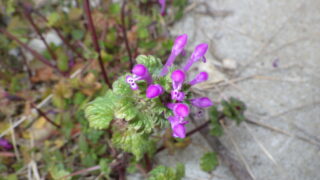
What are the differences between Lamium amplexicaule, Lamium purpureum, and Lamium album? How do they differ from Lamium album? We'll explain how to distinguish between similar species! Why are the fruits carried by ants?

Lamium amplexicaule, Lamium purpureum, and Lamium purpureum are all herbaceous plants belonging to the genus Lamium in the Lamiaceae family. Lamium amplexicaule and Lamium purpureum are particularly well-known as spring weeds, but some people may have trouble distinguishing between the three species. These three species are relatively easy to identify, and their leaves alone...
plant

What's the difference between winter cosmos and cosmos? We'll explain how to distinguish between similar species! And did you know that Bidens pilosa is actually a different species?!

Winter cosmos (also known as winter cosmos) is cultivated in horticulture for ornamental purposes and is a valuable plant for gardening because it blooms in winter, from September to December. At first glance, some people might confuse it with cosmos because their names are similar. However, by examining the bracts, flowers, and fruits...
plant

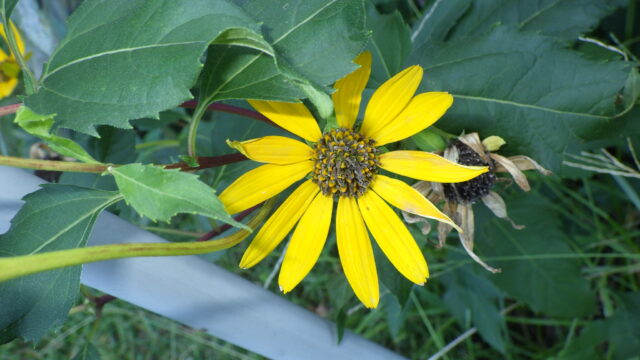
What are the differences between Bidens pilosa, Bidens frondosa, Bidens pilosa, and Bidens serrata? An explanation of how to distinguish between similar species.

Bidens pilosa, Bidens frondosa, Bidens pilosa, and Bidens serrata are all annual plants belonging to the Bidens genus of the Asteraceae family. Their most distinctive feature in relation to humans is that their fruits are "burrs." They grow along roadsides and around bodies of water, clinging to animal fur and human clothing...
plant

What are the differences between goldenrod, autumn goldenrod, and mountain goldenrod? How do they differ from other goldenrod species? This article explains how to distinguish between similar species.

Goldenrod (Solidago altissima), autumn goldenrod (Solidago virgaurea), and mountain goldenrod (Solidago virgaurea var. japonica) all belong to the genus Solidago in the Asteraceae family, and are representative perennial plants that bloom with small yellow flowers (more accurately, flower heads) in autumn. Goldenrod, in particular, is well-known because it proliferates rapidly in some regions...
Sponsored Link