Asteraceae

Sponsored Link
plant

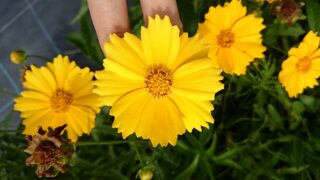
What are the differences between Coreopsis lanceolata, Coreopsis grandiflora, Coreopsis radicans, and Coreopsis lanceolata? How do they differ from Cosmos sulphureus? This article explains how to distinguish between similar species.

Coreopsis lanceolata, Coreopsis grandiflora, Coreopsis humilis, and Coreopsis radicans all belong to the genus Coreopsis in the Asteraceae family. While they have few distinguishing features, they are annual or biennial plants that give the impression of being "very showy yellow chrysanthemums with single to double flowers." Coreopsis grandiflora, in particular, is an exception...
plant

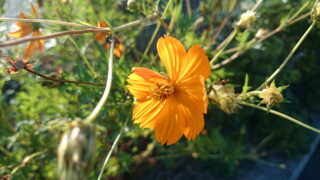
What are the differences between cosmos, yellow cosmos, chocolate cosmos, and marigolds? We explain how to distinguish between similar varieties.

Cosmos, yellow cosmos, and chocolate cosmos all belong to the Cosmos genus of the Asteraceae family. Although they are introduced species in Japan, they have become representative autumn landscape plants, as evidenced by their alternative name, "autumn cherry blossom," and are widely cultivated. They are characterized by their large, beautiful ray florets and achenes...
plant

What are the differences between ragweed and giant ragweed? What are the differences between goldenrod, goldenrod, and hawkweed? We'll explain how to distinguish between similar species.

Ragweed and giant ragweed are both annual weeds belonging to the genus Ragweed in the Asteraceae family, and are best known for causing "ragweed pollen allergy" in humans. This is because ragweed flowers are wind-pollinated, and to achieve this, the male and female flower heads are elongated...
plant

What are the differences between Atractylodes macrocephala (white atractylodes), Atractylodes lancea (narrow-leaved atractylodes), and Atractylodes japonica? An explanation of how to distinguish between similar species.

Atractylodes macrocephala (white atractylodes) and Atractylodes lancea (narrow atractylodes) are both perennial herbs belonging to the Asteraceae family, and are well-known as medicinal herbs. The dried rhizomes are collectively called "jutsu" (朮). Morphologically, the leaves have prominent serrations, and the flowers, typical of the Asteraceae family, are arranged in capitulum (flower heads) composed solely of tubular florets...
plant

What are the differences between Erigeron annuus, Erigeron philoxeroides, Erigeron strigosus, and Erigeron strigosus? We'll explain how to distinguish between similar species! What are the structures of their flowers and fruits?

Erigeron annuus, Erigeron strumarium, Erigeron philadelphicus, and Erigeron philadelphicus are all members of the Asteraceae family, genus Erigeron, and are annual to biennial herbs that spread from the Americas to the rest of the world. They are frequently found in Japan, from dry fields to urban areas. Distinguishing between them can be difficult at first...
plant

What's the difference between Galinsoga parviflora and Galinsoga stolonifera? We explain how to distinguish between similar species! Only hoverflies were visiting the flowers!? The seeds not only travel on the wind, but they also stick to surfaces!?

Both Galinsoga parviflora and Galinsoga stolonifera belong to the genus Galinsoga in the Asteraceae family. Although native to the Americas, they are now extremely common weeds in disturbed areas of Japan. The differences in the shape of their flowers are subtle from a distance, and it may be difficult to distinguish them if you only vaguely remember them. However...
Seed Plant Encyclopedia

[Seed Plant Encyclopedia #153] What are the types of legumes? Photo list

The Fabaceae family is a large family of vascular plants, second only to the Asteraceae and Orchidaceae families in terms of the number of species it contains. It includes many useful plants used for food and other purposes, and is deeply connected to human life. It includes herbs and woody plants ranging from annual to perennial, with many being climbing or possessing tendrils...
animal

The mysterious fly known as the bee-like hoverfly, which is born and lives on tree sap, can it sting? Is it harmful?

Are you familiar with the hoverfly known as the false bee hoverfly? At first glance, it looks exactly like a bee, but hoverflies are actually a type of fly, so they won't sting you and are harmless. Its bright colors are thought to be a form of mimicry. Although it's actually a type of hoverfly...
plant

What are the differences between sunflowers, dwarf sunflowers, and white sunflowers? We'll explain how to distinguish between similar varieties! Is it a myth that sunflowers face the sun? Why are they the national flowers of Russia and Ukraine?

Sunflowers are said to face the sun, giving them a cheerful and bright image, and they are now very familiar plants in Japan. Originally from North America, there are many species, but the types of sunflowers found in Japan are limited, mostly consisting of the common sunflower, dwarf sunflower, and dusty sunflower. Humans and sunflowers...
plant

What are the differences between Greater Celandine and Japanese Kerria? We'll explain how to distinguish between similar species! Are they poisonous? Why do Greater Celandine flowers bloom at an angle?

Both *Chelidonium majus* and *Cornus kousa* are wild species of the poppy family, composed of four yellow petals, so it can be difficult to distinguish between them. Their leaves can be differentiated by the presence or absence of serrations on the leaflets, and their flowers are almost identical, but there are differences in the arrangement of the inflorescence and the shape of the stamens and pistils...
Sponsored Link