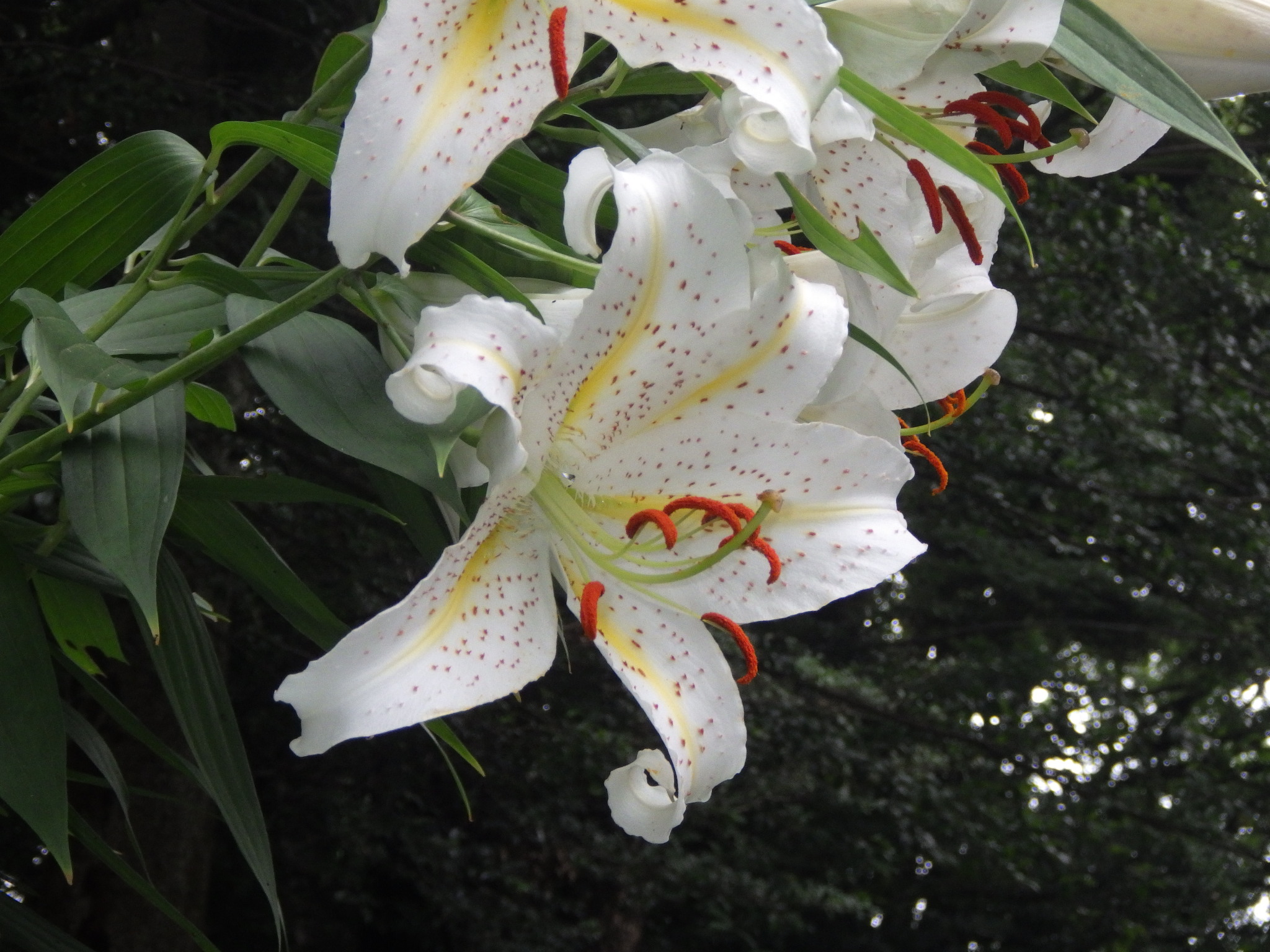
Lilium longiflorum, Lilium longiflorum, and Lilium formosanum are all members of the Liliaceae family, genus Lilium, and are three species that could be called "The Lily" because they have few distinguishing features and bear pure white flowers. However, these three species are extremely often confused. This is because researchers and research institutions treat them differently, making it quite difficult for the average person to correctly distinguish between the three. However, Lilium longiflorum and Lilium formosanum are completely different species, so the differences are quite clear. You can see the difference by checking the color of the leaves and perianth segments. Since Lilium longiflorum is a hybrid of Lilium longiflorum and Lilium formosanum, if a flower has intermediate characteristics and cannot be determined to be either, it is safe to identify it as Lilium longiflorum. The problem lies with "wild white lily populations" that resemble these three. These are often seen when walking around urban areas, and they look like either Lilium longiflorum or Lilium formosanum. While opinions differ among researchers and institutes, the current classification places it as Lilium longiflorum. Further DNA research may reveal more details in the future. This article will explain the classification and morphology of Lilium longiflorum, Lilium longiflorum, and Lilium formosanum.
- What are Lilium longiflorum, Lilium longiflorum, and Lilium formosanum?
- What are the differences between the trumpet lily and the formosa lily?
- What are the differences between Lilium longiflorum and Lilium longiflorum/Lilium formosanum?
- What is the structure of a flower?
- What is the structure of the fruit?
- References
What are Lilium longiflorum, Lilium longiflorum, and Lilium formosanum?
The trumpet lily (Lilium longiflorum) is a perennial plant that grows along the coast and is distributed in Kyushu (southern region) and Okinawa in Japan, as well as in Korea and Taiwan. In Japan, it is cultivated for ornamental purposes and is also said to have naturalized.
Lilium formosanum, also known as the Formosa lily, is a perennial herb native to Taiwan, growing on grassy slopes and coastlines. It was introduced to Japan in 1924 and has been cultivated for gardens and as cut flowers (Shimizu et al., 2001). It is also said to have naturalized in some areas.
Lilium x formolongo, also known as the new trumpet lily, is a hybrid created by Mr. Susumu Nishimura of Nagano Prefecture through crossbreeding Lilium formosanum with Lilium longiflorum. Not only first-generation hybrids, but also various back-hybrid lines have been created (Kanagawa Prefecture Flora Survey Association, 2018). Cultivated plants have escaped cultivation and are said to be growing on docks, highway embankments, railway lines, and riverbanks.
All three belong to the lily genus of the lily family and are relatively unremarkable among lilies, bearing pure white flowers that could be described as "The Lily." However, precisely because of this, these three species are extremely often confused.
This is understandable, as different researchers and research institutions handle them differently. Therefore, it would be quite difficult for the average person to correctly distinguish between these three types.
What are the differences between the trumpet lily and the formosa lily?
First, let's look at the easiest difference to understand: the trumpet lily and the formosa lily. These two species are not related, so the differences should be clear (Wu & Raven, 2000; Higuchi, 2016).
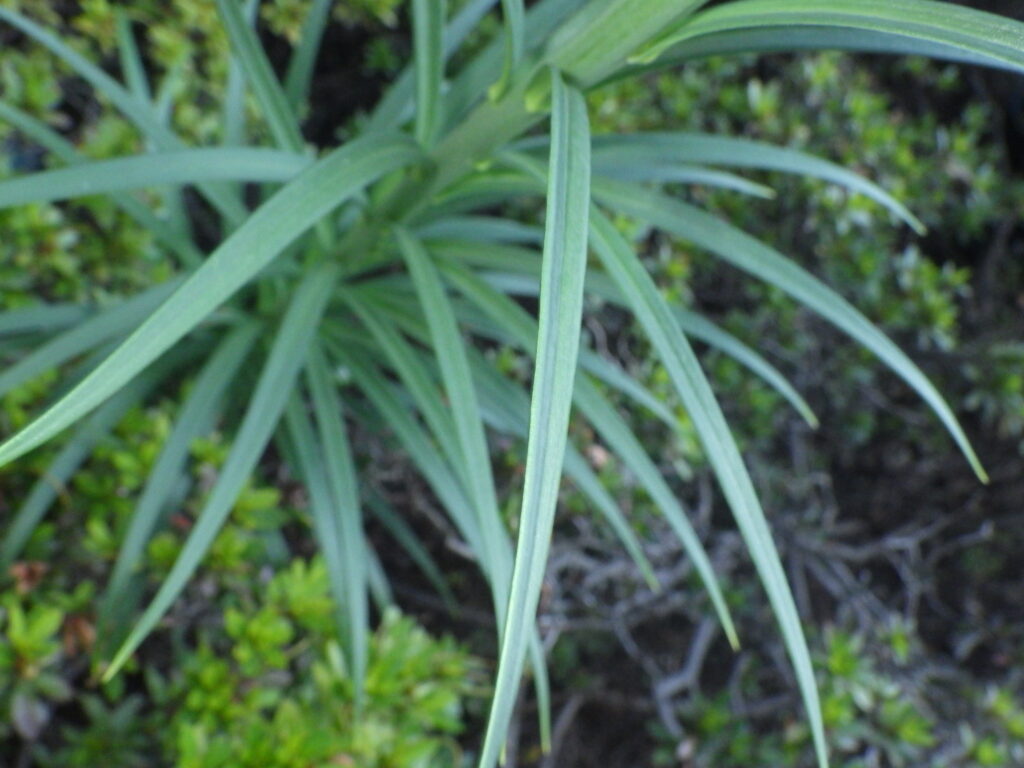
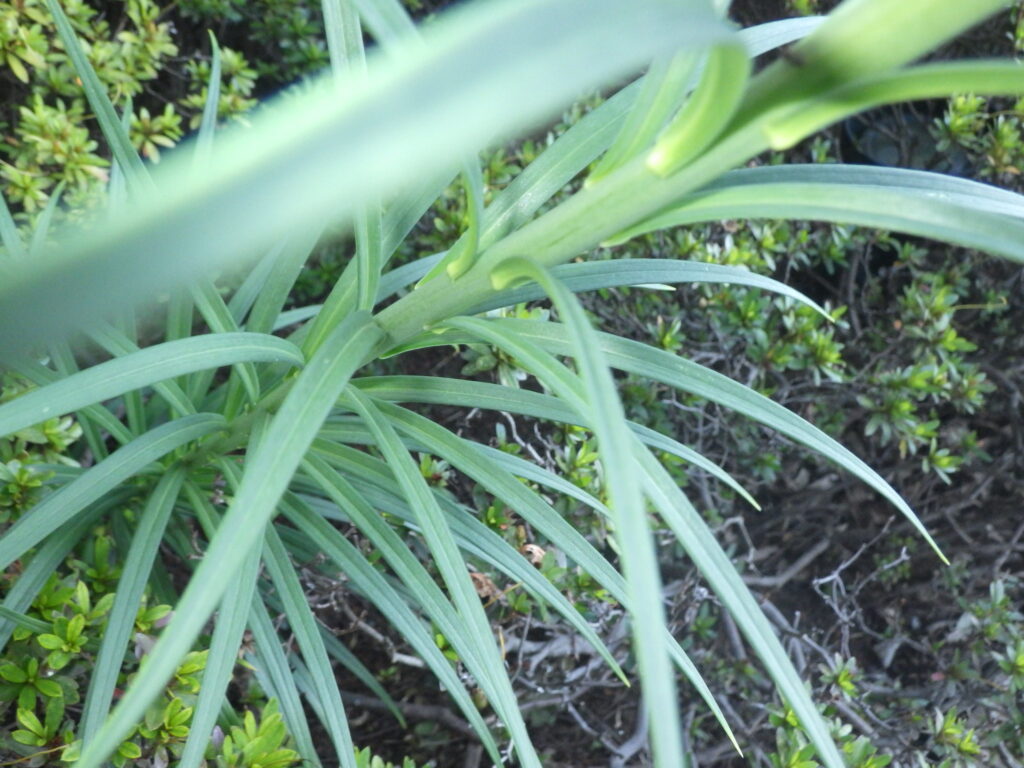
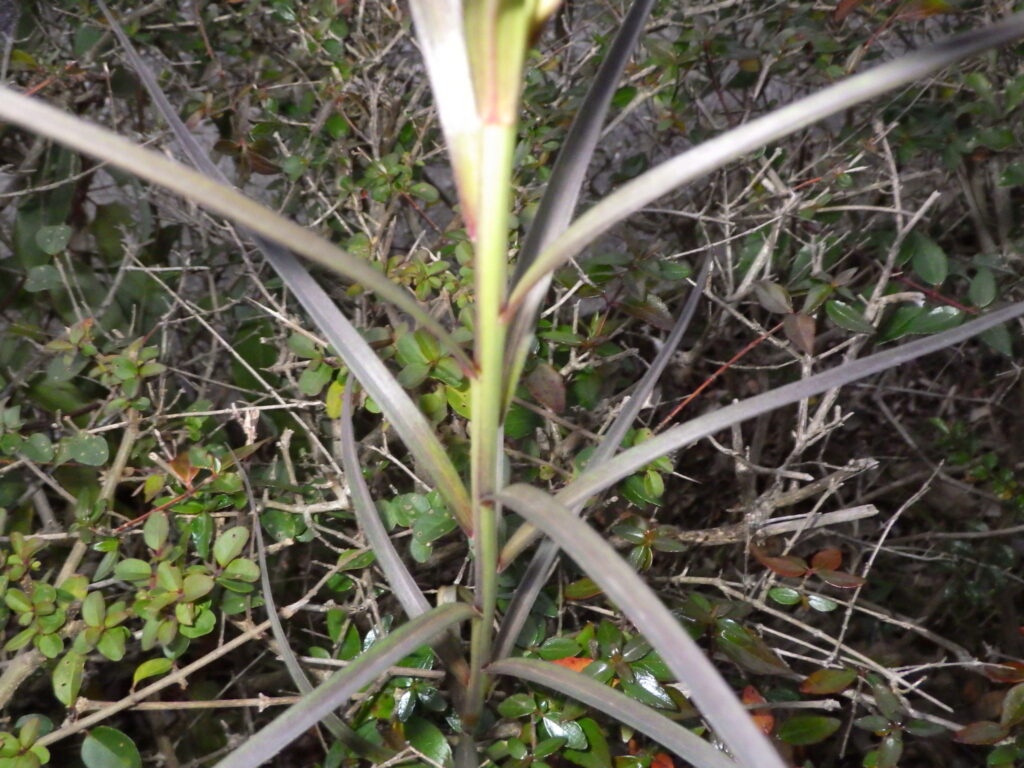
The difference lies in the leaves: the leaves of the trumpet lily are lanceolate to broadly lanceolate, 8-12 mm wide, while those of the Formosa lily are linear, 4-13 mm wide.
The term "lanceolate" might be difficult to understand, but it refers to a shape that is long and narrow, pointed at the top and slightly wider at the base. Imagine a bamboo leaf, and you'll get the idea.
In other words, trumpet lilies generally have broader leaves. That should be easy to understand.
Another significant difference is the color of the outer part of the perianth segments: in the trumpet lily, the outer part of the perianth segments is pure white, while in the formosa lily, there are purple streaks on the outer part of the perianth segments.
Think of perianth segments as the petals. They're called this because they're indistinguishable from the calyx.
In addition, while the pollen of the trumpet lily is yellow, the Formosa lily, although some individuals have yellow pollen, is predominantly purplish-brown.
The Formosa lily blooms later than the trumpet lily, and in Tokyo it blooms from mid-August to early September.
In trumpet lilies, the capsule contains 200 to 350 seeds, and when propagated by seed, it takes several years from germination to flowering. In contrast, formosa lilies have a significantly larger number of seeds, nearly 1000, and the seeds flower within 1 to 2 years after germination.


What are the differences between Lilium longiflorum and Lilium longiflorum/Lilium formosanum?
The problem lies in distinguishing between Lilium longiflorum and Lilium longiflorum/Lilium formosanum. As mentioned above, they are hybrids, so they exhibit intermediate characteristics, making identification difficult. In fact, researchers differ in their opinions because they have different definitions of what characteristics should be included in the species definition (Koba, 2006; Higuchi, 2016).
However, it seems safe to assume that any cultivated specimens that cannot be classified as either Lilium longiflorum or Lilium formosanum are all Lilium maculatum.
The biggest problem is the population of "white lilies" that have become wild and can be found in urban areas. These populations sometimes have characteristics intermediate between the trumpet lily and the formosa lily, and sometimes only the characteristics of the formosa lily, making identification difficult.
The "wild populations of white lilies" are slender, 3-7 mm wide, and sometimes resemble Lilium formosanum, but they can also be lanceolate in shape.
Additionally, this population may or may not have purple stripes on the outer edges of the perianth segments.
Pollen can be yellow or purplish-brown in color.
Based on these facts, the identity of the "wild white lily population" remains unknown. Moreover, if the trumpet lily and Formosa lily had already become wild, and then the later-developed Lilium longiflorum also became wild, and further hybridization occurred, the situation would be too complex to handle. There is also a possibility that it is hybridizing with cultivated populations. Therefore, further research using DNA is needed.
The most recent study has identified this "wild population of white lilies" as Lilium longiflorum (Kanagawa Prefecture Flora Survey Association, 2018). Therefore, we will list it as Lilium longiflorum here.
What is the structure of a flower?
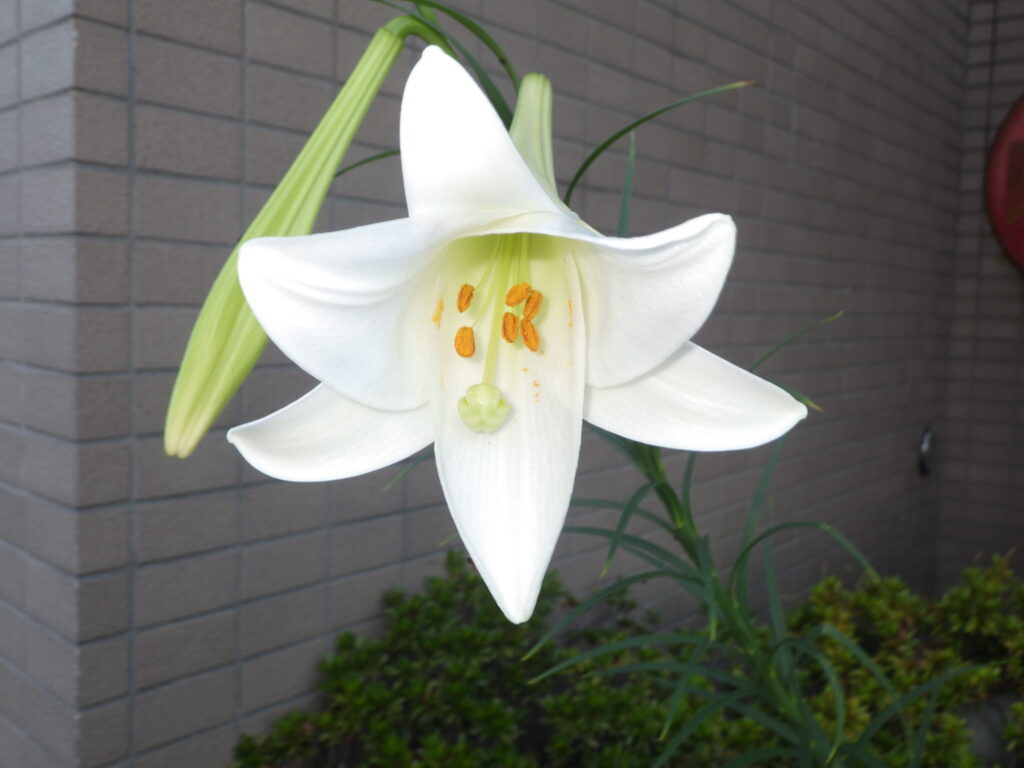
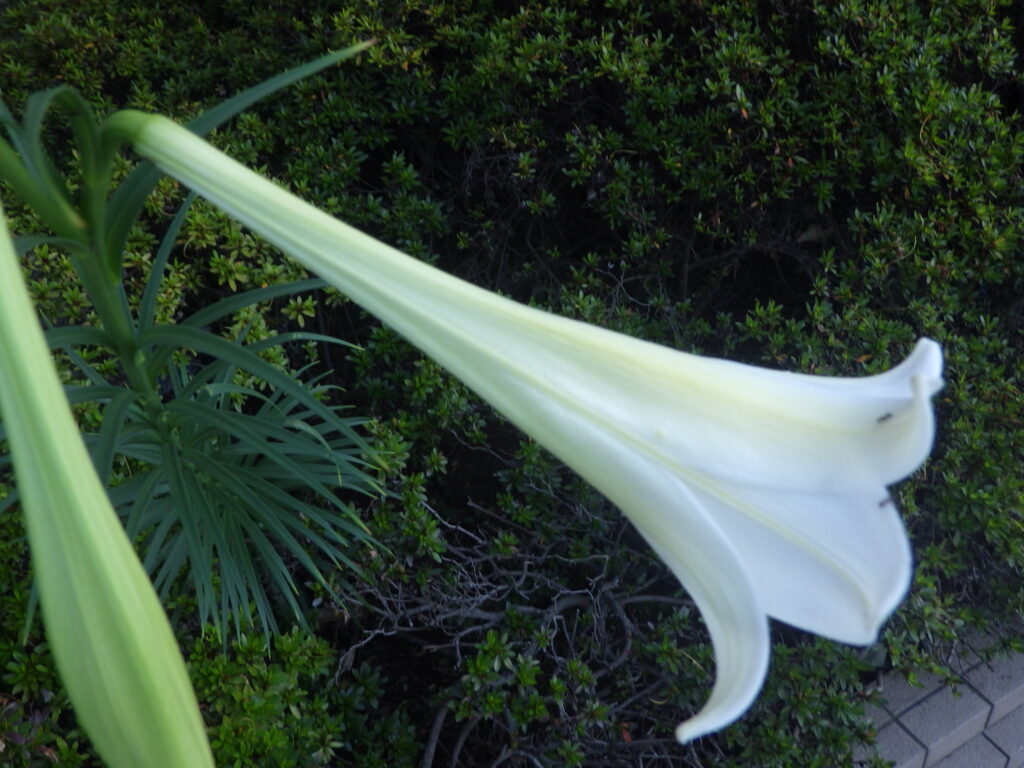
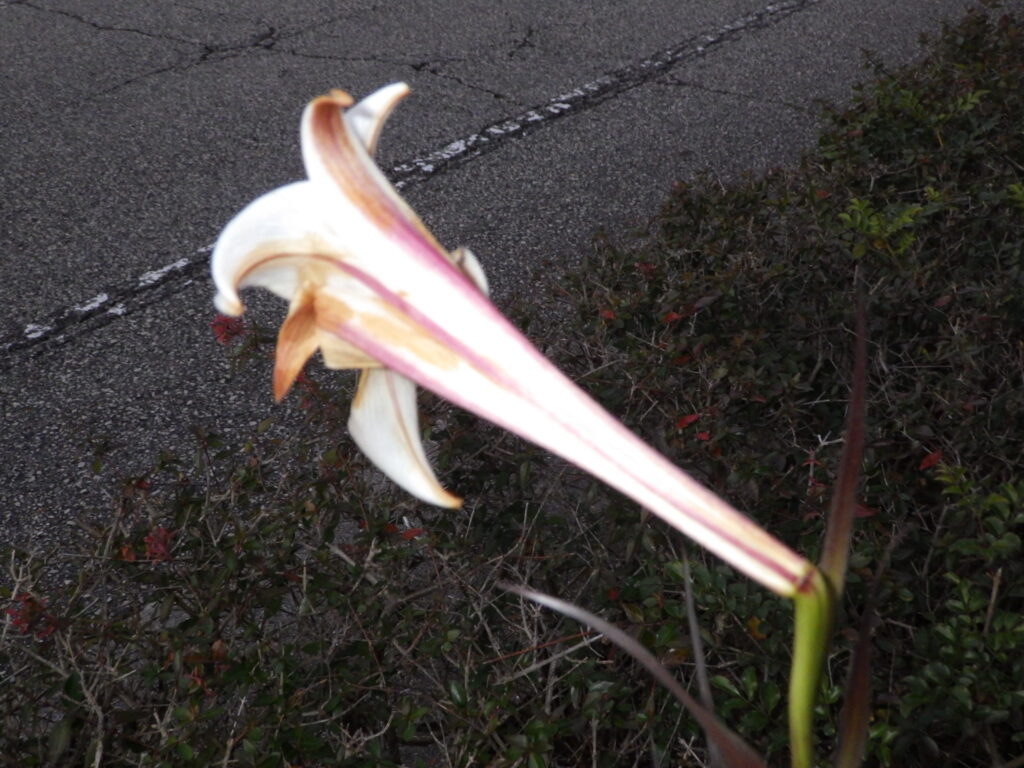
All the flowers have radially symmetrical, funnel-shaped corollas. There are six perianth segments that curve outwards.
The trumpet lily blooms from April to June. Each flower has 1 to 3 petals, with pedicels 2 to 3 cm long. The bracts are lanceolate to ovate-lanceolate, about 8 cm long and 1 to 1.4 cm wide. The flowers are trumpet-shaped, white, with a greenish tint on the outside of the tube, and 12 to 16 (up to 19) cm long. The outer perianth segments are 2.5 to 4 cm wide at the top. The inner perianth segments are wider than the outer ones. The filaments are 15 cm long and glabrous. The ovary is cylindrical, about 4 cm long. The stigma is 3-lobed.
Lilium formosanum blooms from July to September. The flowers are fragrant, borne in corymbs of one to several flowers, and have a narrow tube that widens into a funnel shape at the end. There are six white perianth segments, with a purplish-red tint on the outside. The outer perianth segments are oblanceolate, 11.5–14.5 cm long and 2.1–2.3 cm wide. The inner perianth segments are less than 3 cm wide. The nectaries are green. The filaments are about 10 cm long. The style is about 6.5 cm long.
What is the structure of the fruit?
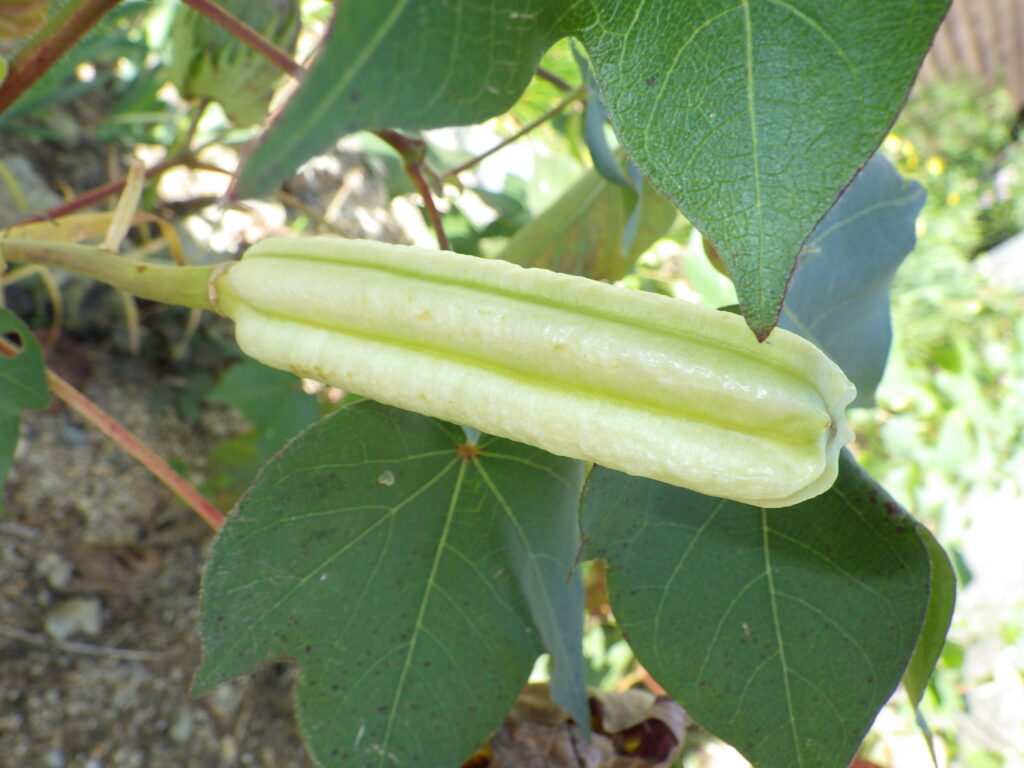
The fruit, common to all species in the genus Lilium, is a capsule. A capsule is a type of dry fruit, consisting of multiple fused, sac-like pericarps. When mature, the pericarp splits open, releasing the seeds.
The capsule of the trumpet lily is oval-shaped, 5-7 (up to 9) cm long.
The capsule of Lilium formosanum is 7-9 cm long and about 2 cm wide. It has three chambers.
References
Higuchi, Yukio. 2016. A Cultural History of Flowers at Keisen University (11): Lilium longiflorum as a Naturalized Plant. Bulletin of the Institute for Horticultural Culture, Keisen University. Horticultural Culture 12: 67-72. http://id.nii.ac.jp/1294/00000979/
Kanagawa Prefecture Flora Survey Association. 2018. Kanagawa Prefecture Flora 2018 (Electronic Edition). Kanagawa Prefecture Flora Survey Association, Odawara. 1803pp. ISBN: 9784991053726
Kiba, Hidehisa. 2006. Naturalized plants of the Lilium longiflorum species. Flora Kanagawa 61: 760-762. http://flora-kanagawa2.sakura.ne.jp/fk/fk61.pdf
Shimizu, K., Morita, H., & Hirota, S. 2001. Illustrated Guide to Naturalized Plants of Japan: 600 Species of Plant Invaders (Revised). National Rural Education Association, Tokyo. 553pp. ISBN: 9784881370858
Wu, ZY, & Raven, PH (Eds.). 2000. Flora of China (Vol. 24 Flagellariaceae through Marantaceae). Science Press, Beijing, and Missouri Botanical Garden Press, St. Louis. 431pp. ISBN: 9780915279838