The Japanese azalea (Rhododendron kaempferi) is a representative species of wild azalea in Japan, while the Japanese azalea (Rhododendron molle) is famous for being poisonous. Both belong to the Rhododendron genus of the Ericaceae family and are representative species of red wild azaleas, so you might get them confused, but you can distinguish them by checking the shape of the leaves and how the flowers are arranged. In addition to the characteristic common to the Rhododendron genus that makes the flowers easily pollinated by butterflies, the flowers of these two species are specially targeted to butterflies by being bright red. However, as research has progressed in recent years, it has been suggested that bumblebees also visit the flowers and may play an important role in pollination. This article will explain the differences between the Japanese azalea and the Japanese azalea, and the pollination ecology of their flowers.
- A representative species of wild azalea
- What are the differences between Rhododendron kaempferi, Rhododendron molle, and Rhododendron parvifolium?
- Are there any other similar species?
- Bright red flowers found in the wild in Japan
- Flowers of the Ericaceae family are special to butterflies.
- Bumblebees also come, but are they not wanted by the mountain azaleas?
- But then again, maybe we need bumblebees too?
- Why did the Rhododendron molle evolve to be poisonous?
- The fruit is a capsule, and the seeds are dispersed by wind.
- References
A representative species of wild azalea
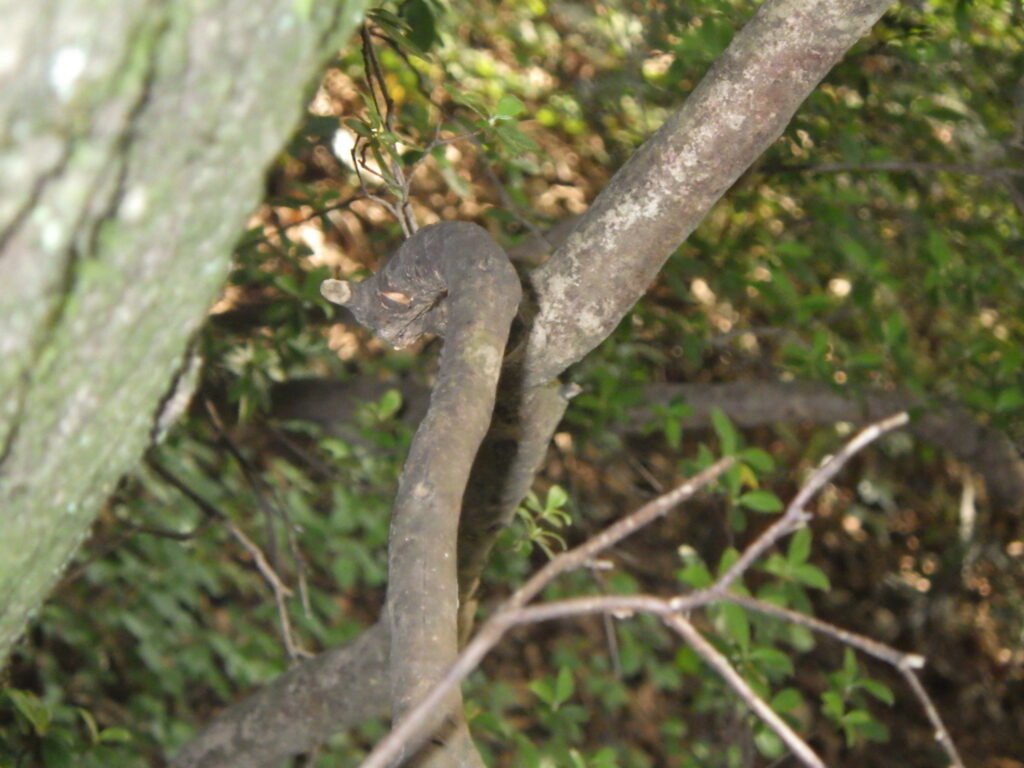
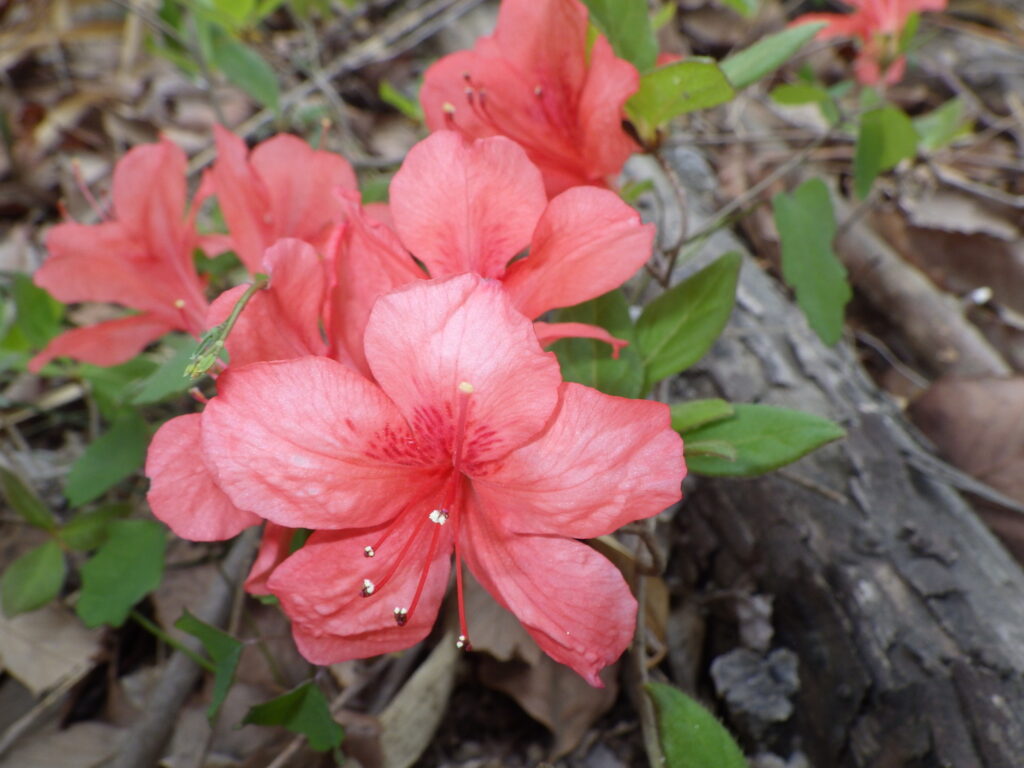
Rhododendron kaempferi var. kaempferi, also known as mountain azalea, is distributed in southern Hokkaido, Honshu, Shikoku, and Kyushu. It is a semi-evergreen shrub that inhabits sparse forests in low mountainous areas, forest edges, sunny ridges, and grasslands (Nishida, 2000; Mogi et al., 2003). It has the widest distribution range of any wild azalea in Japan and is a representative species of wild azalea that thrives in acidic soil. It has spring leaves that emerge in spring and fall in autumn, and summer leaves that emerge from summer to autumn. A unique feature is that many of the summer leaves overwinter.
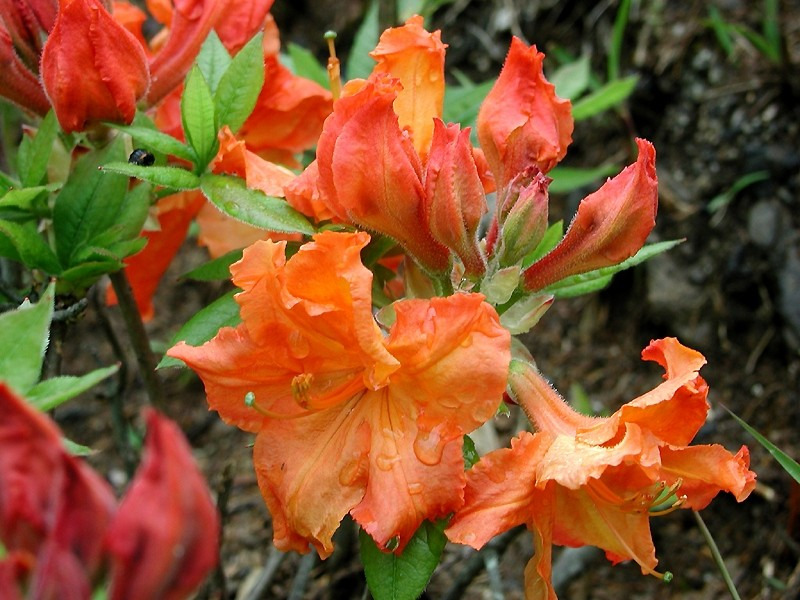
Rhododendron molle subsp. japonicum (synonym: Rhododendron japonicum), also known as the lotus azalea, is a deciduous shrub distributed in southwestern Hokkaido, Honshu, Shikoku, and Kyushu, growing in clusters in cool, sunny locations such as plateau pastures and wetlands. It is poisonous, and is known to contain grayanotoxin throughout the plant, and rhodojaponin in the flowers and roots (Yong-Qing et al., 2018). Grayanotoxin is also found in nectar and honey, and there have been cases of poisoning (Satake, 2012; Saito, 2021).
Both belong to the Rhododendron genus of the Ericaceae family and are representative species of wild red azaleas, so you may sometimes have trouble distinguishing them.
What are the differences between Rhododendron kaempferi, Rhododendron molle, and Rhododendron parvifolium?
However, these two types can be distinguished as follows:
First, while there is a closely related species to the Japanese azalea called Rhododendron transiens, they can be easily distinguished by the fact that the Japanese azalea has 5 stamens, while Rhododendron transiens has 10 stamens (sometimes 6-9) (Kanagawa Prefecture Flora Survey Association, 2018).
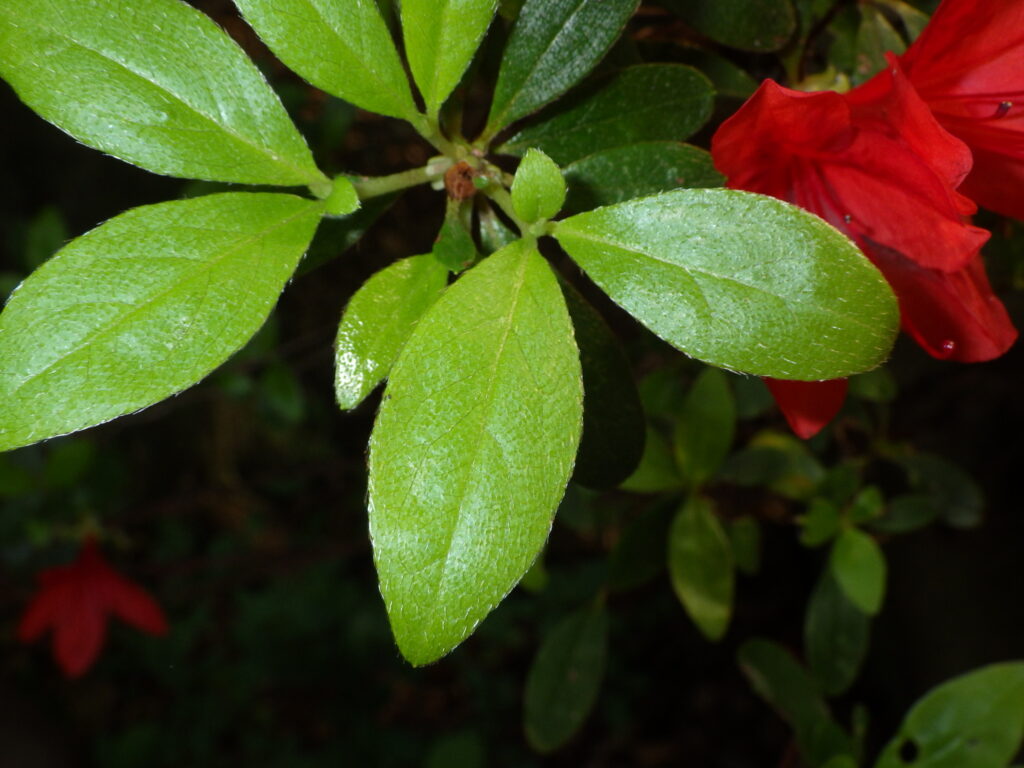
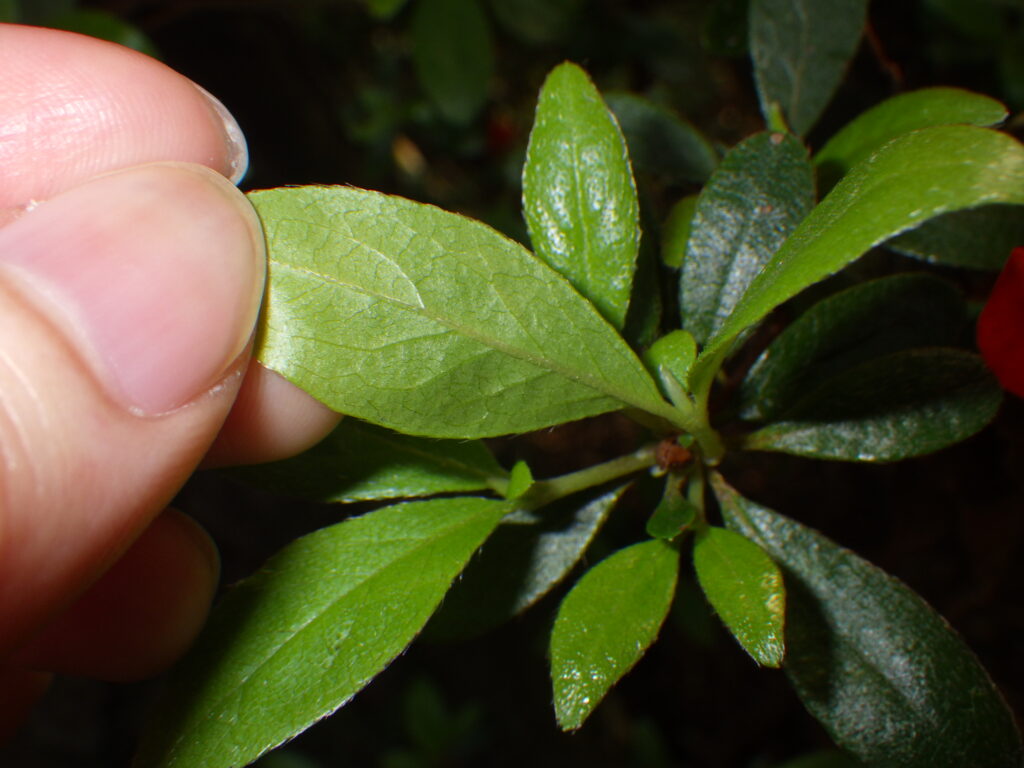
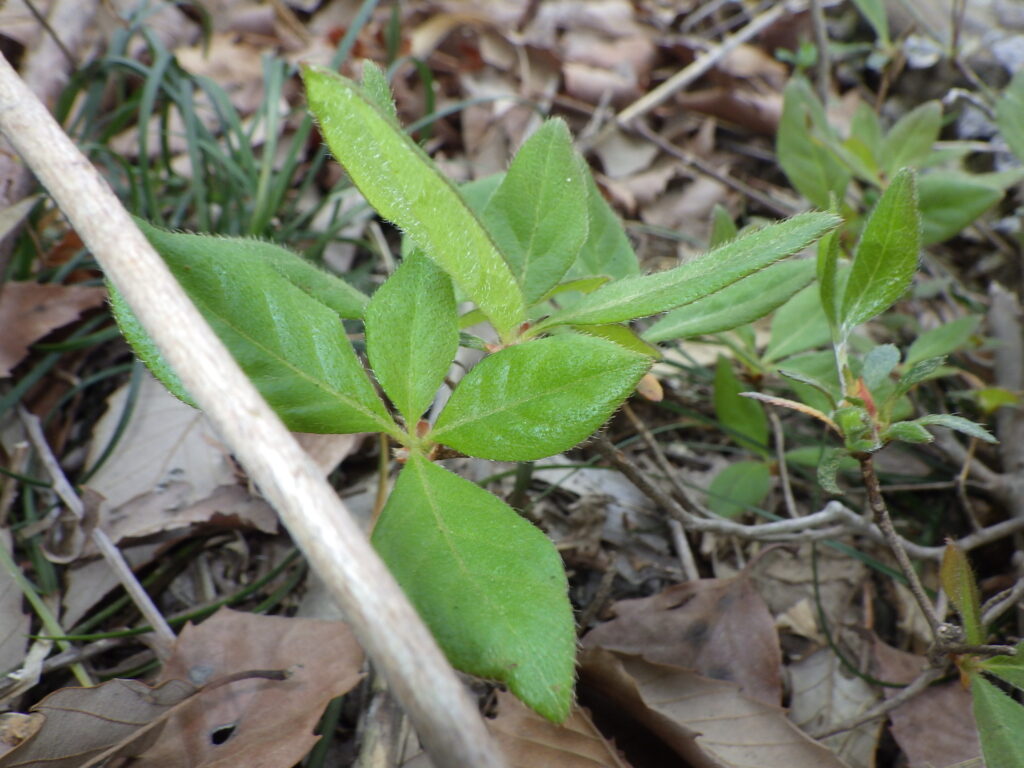
Regarding the difference between Rhododendron kaempferi and Rhododendron molle, Rhododendron kaempferi has leaves that are neatly ovate to elliptical with a relatively large amount of brown hairs on both sides, while Rhododendron molle has particularly long, narrow leaves with a rounded, spatulate tip and a noticeably wrinkled surface, so they can also be easily distinguished (Hayashi, 2014). However, some young Rhododendron molle leaves seem to have pointed tips.
Are there any other similar species?
The genus Rhododendron is an extremely vast group, and the flower shapes are very similar, so there may be other species that you might be confused with.
For information on other species in the Rhododendron genus, please see the separate article.
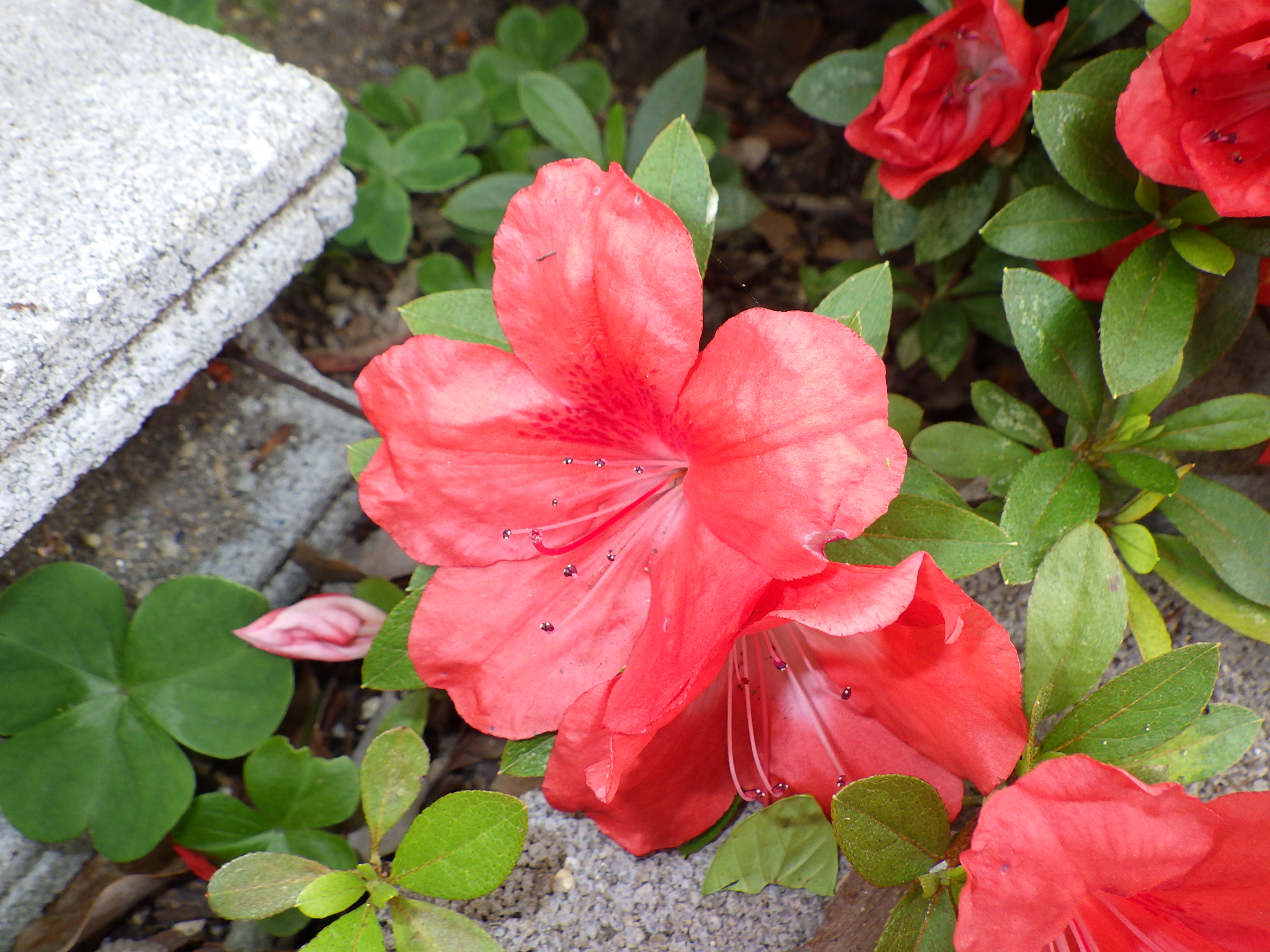
While Kurume azaleas and mountain azaleas are somewhat similar, the main difference is that Kurume azaleas are only cultivated and have many short yellow hairs on their leaves, while mountain azaleas are usually found growing wild and have long white hairs on their leaves.
Bright red flowers found in the wild in Japan
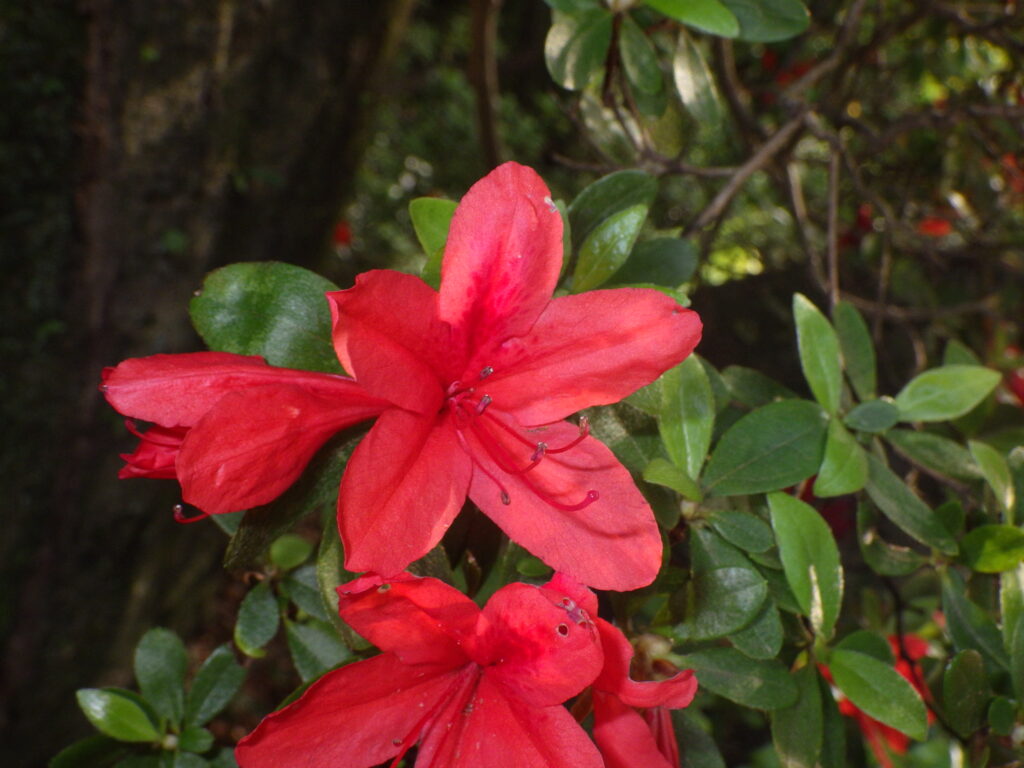
The flowers of the mountain azalea and the rhododendron are bright red, which is the most distinctive feature of these two species. There are probably few species in the mountains of Japan that have such red flowers.
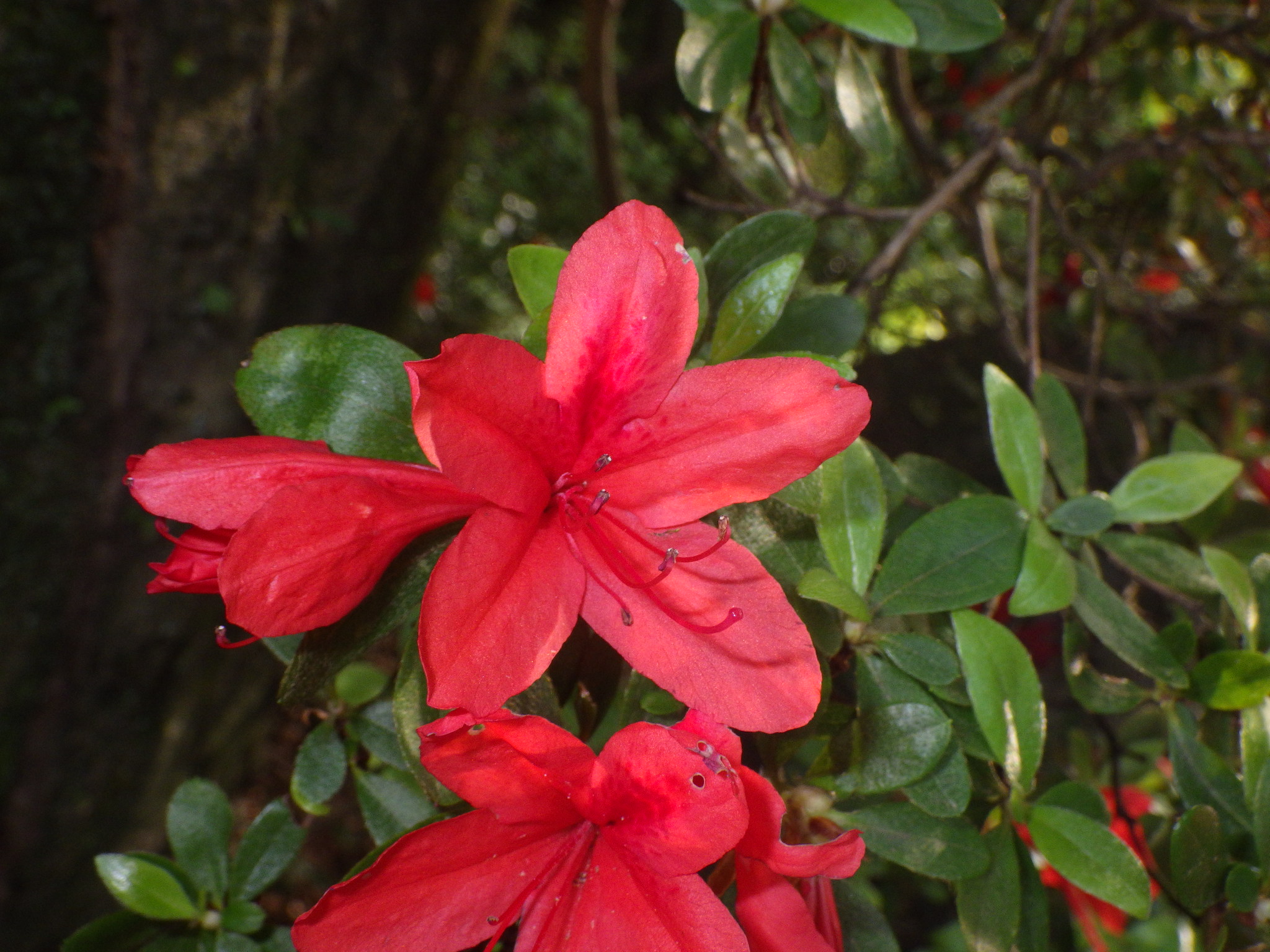
Both Rhododendron kaempferi and Rhododendron molle belong to the Rhododendron genus of the Ericaceae family, so their basic flower structure is the same. The corolla is funnel-shaped, and since it is a sympetalous flower, the base is fused, and it is divided into 5 lobes, appearing as 5 petals. The calyx is also divided into 5 lobes. There are 5 stamens, and one pistil protrudes longer than the stamens.
Where is the nectar? It's in a slightly hard-to-find location. If you observe the flower from the outside, you'll notice a single vein on the upper lobe of the corolla (petal). The cross-section of this vein is Ω-shaped, meaning it's a tube (Tanaka, 2001). This tube is formed by the lobes twisting together and becoming wrinkled. The nectar is located deep inside this tube.
In other words, to suck nectar, an insect needs to have a very long, slender mouthpart to pass through. Such insects would be extremely limited in number.
The mountain azalea blooms from April to June, and its flowers are basically vermilion in color, with dark spots on the upper lobes of the corolla.
Rhododendron molle blooms from May to June, and its flowers are often arranged in a ring of 2 to 8 flowers facing sideways. This resemblance to the shape of the lotus flower (Astragalus sinicus) is the origin of its name. The flowers are basically reddish-orange, although there are variations in shade. The upper lobes of the corolla have orange-yellow spots.
Although there are subtle differences between these two species, their flowers are quite similar, and it is expected that their basic ecology is also similar.
Flowers of the Ericaceae family are special to butterflies.
Flowers of the Rhododendron genus, including mountain azaleas and molle azaleas, are familiar to us because many varieties are cultivated, which might give the impression that they are unremarkable. However, the fact that their stamens and pistils protrude far forward, and that their petals have thin tubes, is clearly a unique structure in nature. Furthermore, the fact that they are used in horticulture means that their flowers have more vibrant colors compared to other plants. What kinds of insects are attracted to such flowers?
These plants are primarily visited by butterflies, especially swallowtail butterflies (Tanaka, 2001).
Swallowtail butterflies have very long proboscises, and in ordinary flowers, they only steal the nectar without touching the stamens or pistils, thus not contributing to pollination. To counter this, the tubes leading to the nectar, as well as the stamens and pistils, have become longer to make contact with the swallowtail butterfly's body.
The stamens have a special feature not found in other plants. At the tip of the stamen are two small, brownish volvae (anthers) side by side. The anthers lack lids, so the white pollen is visible.
When a person picks up the pollen with pointed tweezers, many grains of pollen stick together and slide out easily. This is because the pollen grains are connected by threads called "adhesive threads."
When a swallowtail butterfly comes to a flower in search of nectar, its body comes into contact with the white pollen that is slightly visible from the tip of the anther. From there, a clump of pollen slides out via an adhesive thread, sticking to the swallowtail butterfly's body, and the pollen is transferred.
You might wonder how they manage to make contact with the stamens so effectively, but there's a clever design behind it. The corolla opens wide like a trumpet, which prevents the beetle from using it as a foothold. On the other hand, the stamens and pistil rise upwards and are positioned below the entrance to the nectar tube. This ensures that the beetle must use the stamens as a foothold to drink the nectar.
Furthermore, the vibrant colors are specifically designed to attract butterflies. The red color of mountain azaleas and rhododendrons, in particular, holds special significance. Although not widely known, only a select few insects that visit flowers, such as butterflies, can see red, while bees cannot perceive it. For this reason, mountain azaleas strongly attract butterflies.
The dark or orange-yellow spots on the petals are also called "nectar guides," and are thought to make it easier to identify the entrance to the tube in the petal that leads to the nectar.
Specific species recorded on Rhododendron kaempferi include Atrophaneura alcinous alcinous and Papilio xuthus (Yokogawa & Hotta, 1995), Parnassius glacialis and Papilio maackii (Takahashi & Itino, 2017).
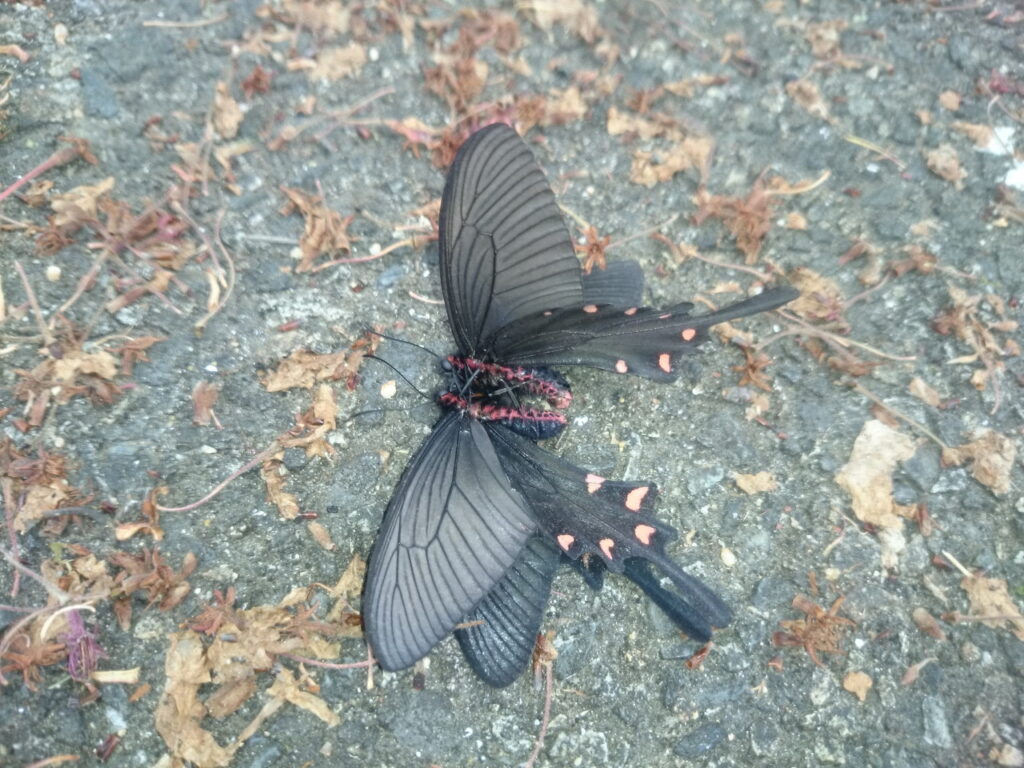
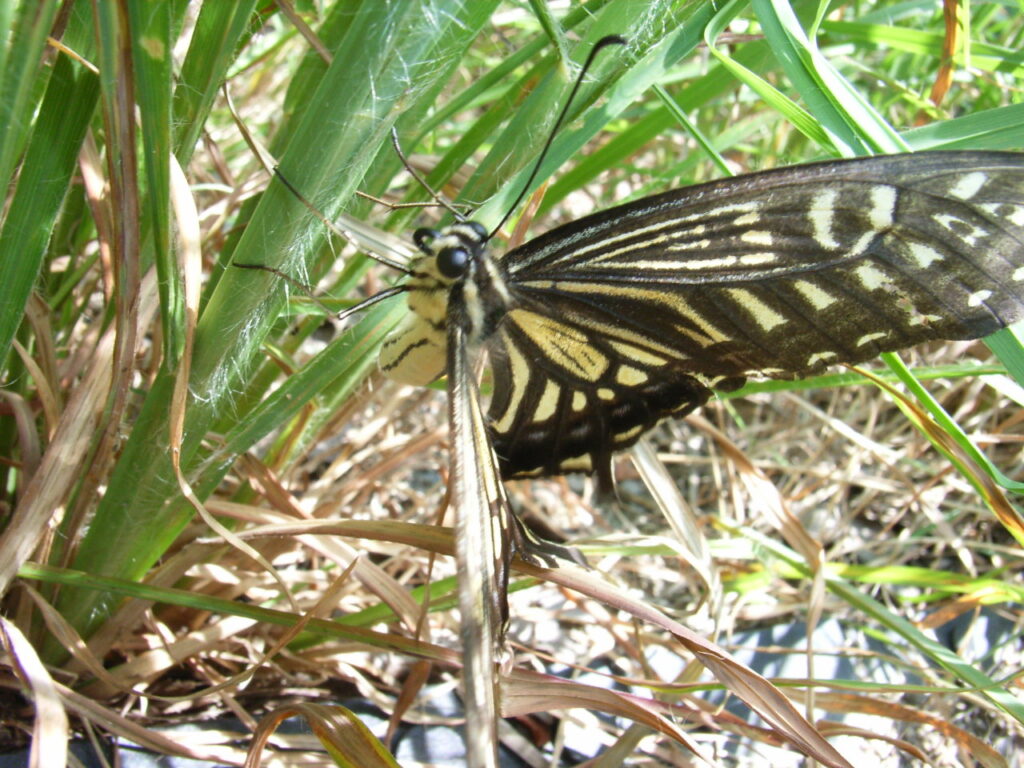
There is a record of the Papilio maackii butterfly on Rhododendron molle (Takahashi & Itino, 2017).
However, these are records from high-altitude areas, so it's more likely that more common swallowtail butterflies visit in lowland areas.
Bumblebees also come, but are they not wanted by the mountain azaleas?
While mountain azaleas and rhododendrons are specifically targeted by butterflies, it has been confirmed that completely different insects also visit them (Tanaka, 2001).
That's a bumblebee. Bumblebees have various mouth lengths, but some species, like the tiger bumblebee, have long mouths that can just barely reach the back of the tubes of the mountain azalea (Tanaka, 1997). Also, because they reflect ultraviolet light, even bumblebees that cannot see red can apparently identify the flowers (Tanaka and Hirano, 2000).
Although their mouthparts aren't as long as a butterfly's, they still manage to land properly on the stamens and pistils, so pollination should be no problem. However, there's a theory that bumblebees are undesirable for mountain azaleas. Why is that?
Bumblebees efficiently visit nearby flowers in sequence. Therefore, they are highly likely to revisit their own flower next to it (neighbor pollination). This leads to self-pollination, preventing genetic diversity. Butterflies, on the other hand, flit about aimlessly, visiting flowers on relatively random individuals, thus maintaining genetic diversity.
But then again, maybe we need bumblebees too?
However, a study by Shinshu University, published in 2017 (Takahashi & Itino, 2017), further investigated whether mountain azaleas (and rhododendrons) are truly independent of bumblebees. This study was conducted in the central mountainous region of Nagano Prefecture. The mountainous region of Nagano Prefecture is characterized by low temperatures due to its location in the northern part of Japan and its mountainous terrain.
In locations like this, butterfly diversity is low due to tolerance to low temperatures, while bumblebee diversity is high. However, mountain azaleas and rhododendrons are commonly found in these locations. Which of these two species is visited more frequently in such places?
To understand this, this study investigated the insects that visit flowers and the sugar content of nectar (different insects prefer different sugar content in nectar).
As a result, two species of bumblebees, Bombus ardens and Bombus diversus, were found more frequently on mountain azaleas than butterflies, while three species—Bombus ardens, Bombus diversus, and Bombus hypocrita— were found more frequently on rhododendrons than butterflies. In addition, the bumblebees were covered in pollen.
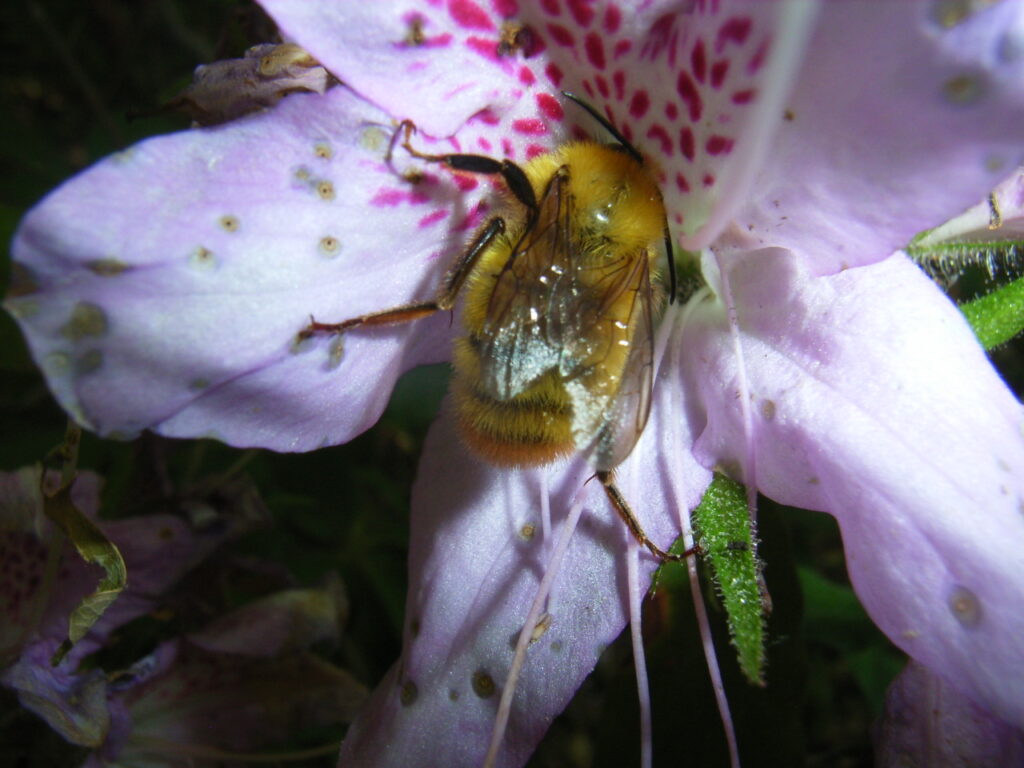
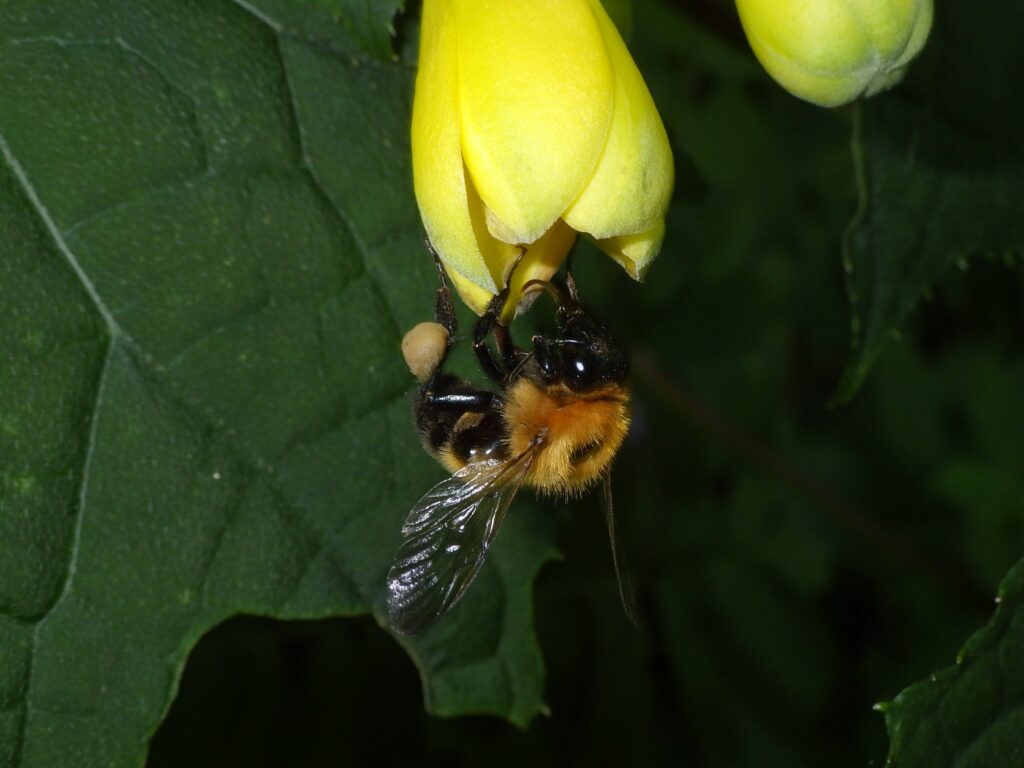
The sugar content of nectar ranged from 51 to 541 TP3T for mountain azaleas and from 30 to 451 TP3T for rhododendrons. Bumblebees prefer a sugar content of 30 to 551 TP3T, while butterflies prefer 17 to 401 TP3T. Therefore, mountain azaleas have a sugar content that is preferred by bumblebees, while rhododendrons have a sugar content that covers both.
These results suggest that bumblebees likely play a more important role in pollination in the mountainous regions of Nagano Prefecture than previously thought!
This result demonstrates the flexibility of the mountain azalea flower. While the flower shape is thought to have evolved for butterfly pollination, it may have undergone some kind of change to allow for pollination by bumblebees in mountainous regions. How it avoids cross-pollination is also unknown. Further research may reveal more details in the future!
Furthermore, there is considerable variation in the sugar content of nectar, and it has been reported that the sugar content increases rapidly after flowering. Therefore, caution may be needed when interpreting this data. This point also remains a mystery.
Why did the Rhododendron molle evolve to be poisonous?
Why did the Rhododendron molle evolve to have poisonous flowers? Several other species of the Rhododendron genus are known to be poisonous. It's puzzling that even the nectar contains toxins, let alone the leaves.
The primary role of pollinators is thought to be to block pollinators with low pollination effectiveness and to suppress excessive harvesting by foragers (herbivores) (Feng et al., 2024).
Therefore, the poison in the Rhododendron molle is effective against both insects and mammals, including humans.
Although not related to Rhododendron molle, it has been confirmed that honeybees and small bees avoid the nectar of other species in the Rhododendron genus.
It appears that the Rhododendron japonicum selectively attracts insects (butterflies and bumblebees) that are resistant to the toxins in its nectar.
Furthermore, research is revealing that even among pollinators resistant to toxins, some species are selecting insects that are more nectar-eating by increasing the toxicity of their pollen.
However, comprehensive research into why some azaleas are poisonous while others are not is still lacking.
The fruit is a capsule, and the seeds are dispersed by wind.
The fruit, common to all species in the Rhododendron genus, is a capsule. Generally, the capsule's pericarp ruptures, scattering the seeds inside.
The capsules of the mountain azalea are oval-shaped, narrowing at the tip, and covered with flat, brownish hairs. They mature and dehisce between August and October.
The capsules of Rhododendron molle are cylindrical, 2-2.5 cm long, and densely covered with brown bristles. The seeds are about 2 mm long, winged, and have serrated appendages at the base.
The capsules of the Rhododendron genus do not have any special structure, but because the seeds are very small and sometimes have wings, it is thought that they are dispersed not only by gravity but also by wind, with the seeds flying away from the fruit when it ripens and splits open (Kobayashi, 2007).
References
Feng, HH, Lv, XW, Yang, XC, & Huang, SQ 2024. High toxin concentration in pollen may deter collection by bees in butterfly-pollinated Rhododendron molle. Annals of Botany 134(4): 551-560. https://doi.org/10.1093/aob/mcae047
Hayashi, Masayuki. 2014. 1100 Tree Leaves Identified Through Real-Life Scans. Yama-kei Publishers, Tokyo. 759pp. ISBN: 9784635070324
Kanagawa Prefecture Flora Survey Association. 2018. Kanagawa Prefecture Flora 2018 (Electronic Edition). Kanagawa Prefecture Flora Survey Association, Odawara. 1803pp. ISBN: 9784991053726
Kobayashi, Masaaki. 2007. From Flower to Seed: The Science of Seed Dispersal. National Rural Education Association, Tokyo. 247pp. ISBN: 9784881371251
Nishida, Naomichi. 2000. Trees of Japan. Gakken Plus, Tokyo. 256pp. ISBN: 9784054011199
Saito, Katsuhiro. 2021. The Beautiful and Terrifying World of Poisons! A Visual Encyclopedia of 200 Poisons. Shuwa System, Tokyo. 271pp. ISBN: 9784798063652
Satake, Motoyoshi. 2012. Poisonous Plants of Japan. Gakken Plus, Tokyo. 232pp. ISBN: 9784054052697
Takahashi, K., & Itino, T. 2017. Visitation frequencies of bumblebees and swallowtail butterflies to flowers and the nectar sugar concentration of Rhododendron kaempferi and R. japonicum in mountains of central Japan. Journal of Pollination Ecology 21: 92-97. ISSN: 1920-7603, https://doi.org/10.26786/1920-7603(2017)438
Tanaka, Hajime. 2001. Flowers and Insects: A Collection of Discoveries of Mysterious Deception. Kodansha, Tokyo. 262pp. ISBN: 9784062691437
Tanaka, Hajime & Hirano, Takahisa. 2000. The Face of Flowers: Wisdom for Bearing Fruit. Yama-kei Publishers, Tokyo. 191pp. ISBN: 9784635063043
Mogi, T., Takahashi, H., Katsuyama, T., & Ishii, E. 2003. Flowers Blooming on Trees: Sympetalous Flowers, Monocotyledons, Gymnosperms. Yama-kei Publishers. Tokyo, 719pp. ISBN: 9784635070058
Yokogawa, Mizuki & Hotta, Mitsuru. 1995. Plant Notes of Southwest Japan II. Trait variation of various populations of Rhododendron kiusianum, Rhododendron kiusianum, and Rhododendron japonicum in the Kirishima Mountains. Plant Classification, Geography 46(2): 165-183. ISSN: 0001-6799, https://doi.org/10.18942/bunruichiri.KJ00001079099
Yong-Qing, CAI, Jian-Hui, HU, Jie, QIN, Tao, SUN, & Xiao-Li, LI 2018. Rhododendron Molle (Ericaceae): phytochemistry, pharmacology, and toxicology. Chinese Journal of Natural Medicines 16(6): 401-410. https://doi.org/10.1016/S1875-5364(18)30073-6