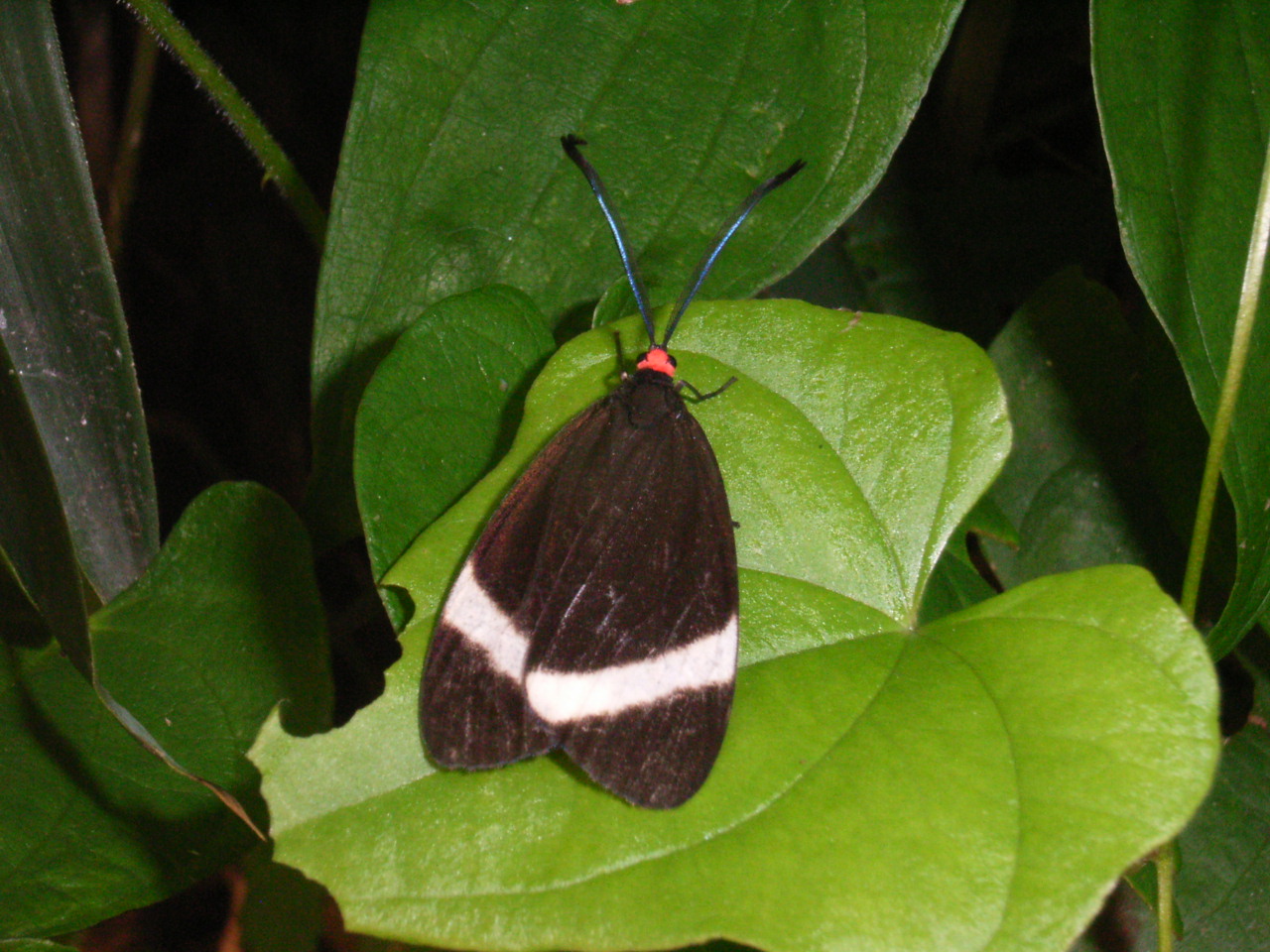
The Zygaridae family, exemplified by species like the firefly moth and the bamboo grass moth, is known for its bright, diurnal colors. But do you know why they have such striking colors? It turns out they possess a powerful poison that produces cyanide, and their colors serve as a "warning signal." Some species, like the bamboo grass moth, can have adverse effects on humans and are sometimes treated as pests, but not all species have been confirmed to have such effects. This article will explore the secrets behind the vibrant colors of Zygaridae moths found in Japan.
- Both adults and larvae of moths in the family Zygaridae are poisonous!
- Why do moths of the Zygaenidae family have such bright colors?
- How did "warning colors" evolve?
- Representative members of the Zygaenidae family in Japan
- Firefly moth Pidorus atratus (subfamily Pidorinae)
- Elcysma westwoodii westwoodii (Subfamily of Fireflies)
- Fuscartona martini (Subfamily Ixodinae)
- Balataea gracilis (subfamily Balatainae)
- Balataea octomaculata (subfamily Balatainae)
- Illiberis rotundata (subfamily Illiberinae)
- Hedina consimilis (subfamily Hedinae)
- Pryeria sinica (Zygaena subfamily)
- Are moths in the Zygaenidae family more venomous the more elaborate their patterns are?
- Did the Zygaenidae family lack "honest signals"?
- References
Both adults and larvae of moths in the family Zygaridae are poisonous!
The family Zygaridae is distributed worldwide, with over 1000 known species, most commonly found in the Palearctic region and the subtropical and tropical regions of Asia. They are generally small to medium-sized moths, although larger species are found in Southeast Asia (Hirowatari et al., 2013).
Their most distinctive feature is their toxicity (Komai et al., 2011; Mori, 2014; Briolat et al., 2019). Since all three subfamilies of moths studied were venomous, this is likely a common characteristic acquired during the time of the ancestors of the Zygaridae family or the Zygaroidea superfamily.
Both adult and larval stages of this insect store special chemical substances called linamarin and rotaustralin, which are cyanogenic glycosides (Komai et al., 2011; Briolat et al., 2019). Cyanogenic glycosides are also well-known for being found in the immature fruits, seeds, and leaves of Rosaceae plants such as plums, apricots, peaches, and loquats. These are bitter compounds that are unpleasant to bird predators and are thought to play a role in stopping their attacks. Furthermore, once they enter the intestines, they are broken down by enzymes, producing highly toxic hydrogen cyanide.
While this toxin has evolved to protect against predators such as birds in the wild and therefore doesn't necessarily have any effect on humans, some species of bamboo sedge larvae have a structure that allows them to inject this venom into their predators, and are known to cause dermatitis in humans upon contact. Caution is advised when dealing with these types of larvae.
These toxins are not obtained from plants, but are synthesized in the body using the amino acids valine and isoleucine. However, some species, such as the six-spotted red-spotted butterfly, also take in cyanogenic glycosides found in plants.
Why do moths of the Zygaenidae family have such bright colors?
Both the larvae and adults of the Zygaenidae family possess a variety of colors, including red, yellow, and metallic sheen. Furthermore, they have numerous markings. Why is this?
This is thought to be a warning to predators, in this case birds, that the animal is poisonous and tastes bad, or that it will be attacked!
These bright colors found in poisonous animals are called "warning colors."
Animals with warning coloration are more easily spotted and remembered by predators.
Adult moths of the Zygaenidae family are generally diurnal and do not fly very fast. This is thought to be due to their toxicity, which protects them from predation by birds, allowing them to move around freely during the day. In fact, their coloration may even serve to highlight their toxicity. However, it is necessary to carefully consider whether toxicity or diurnal activity evolved first.
How did "warning colors" evolve?
Warning coloration seems like an easily understandable phenomenon to humans, who possess advanced learning abilities. But what about birds, which are predators in the natural world?
Birds are not taught about dangerous foods by their parents or society at birth, unlike humans. Therefore, even if an insect uses color to signal its toxicity, young birds might attack it, killing the insect. If that's the case, the very first insects to develop bright colors would have had no use for it, and would have actually increased their chances of being attacked. So, how did warning coloration evolve?
The mechanism is very technical and I can't explain it all here, but to put it simply,
- A series of accidental genetic changes leads to an increase in individuals with many warning colors, making it easier for birds to learn.
- The first individual is sacrificed for the sake of its fellow relatives.
- Birds only eat things they are certain are edible, so they won't try to eat something just because it has a strange, flashy color. Therefore, the first bird wouldn't be sacrificed in the first place.
- Birds are very cautious when it comes to eating, so the moment they detect poison and think, "This tastes bad!", they stop attacking, and the insects are never killed.
These are some of the theories being considered (Ecological Society of Japan, 2012). Of these, (3) might be easier to understand for people who have kept birds as pets.
Evidence for each side is being presented, and it's not a matter of which is correct; they may all be intricately interconnected. That's how profound the topic of warnings is.
Representative members of the Zygaenidae family in Japan
Here are some photos taken by the author. Basic information is mainly based on Suzuki (2018).
Firefly moth Pidorus atratus (subfamily Pidorinae)
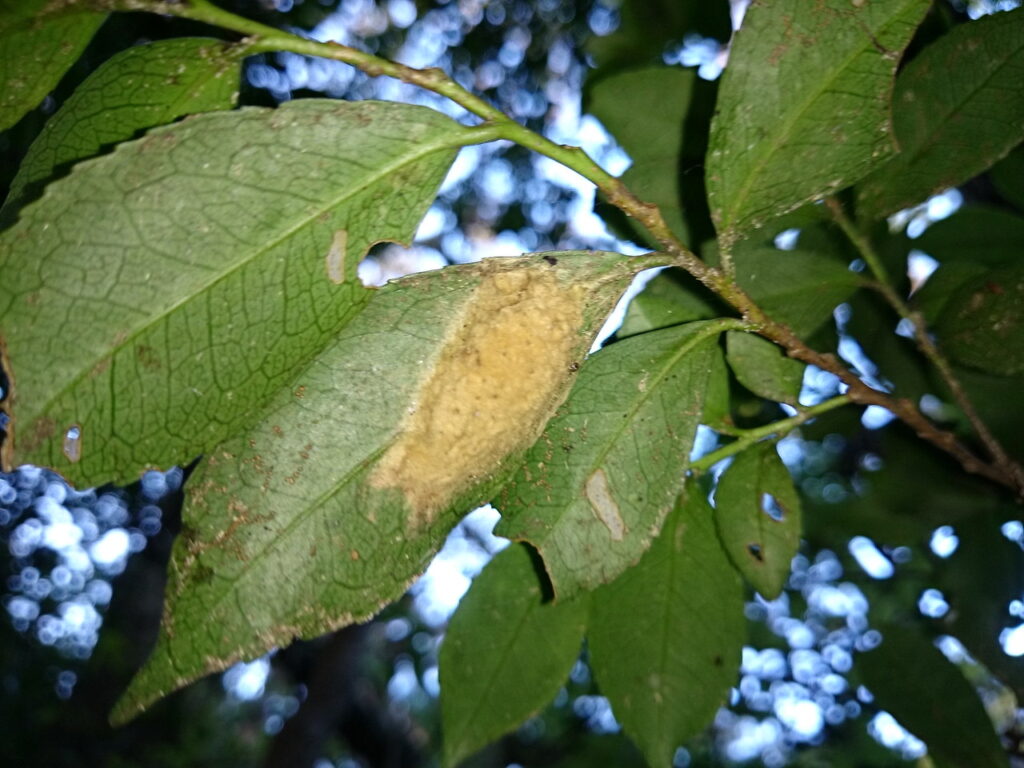
It is distributed in Korea and Japan (Hokkaido, Honshu, Shikoku, Kyushu, Tsushima, and Okinawa Island).
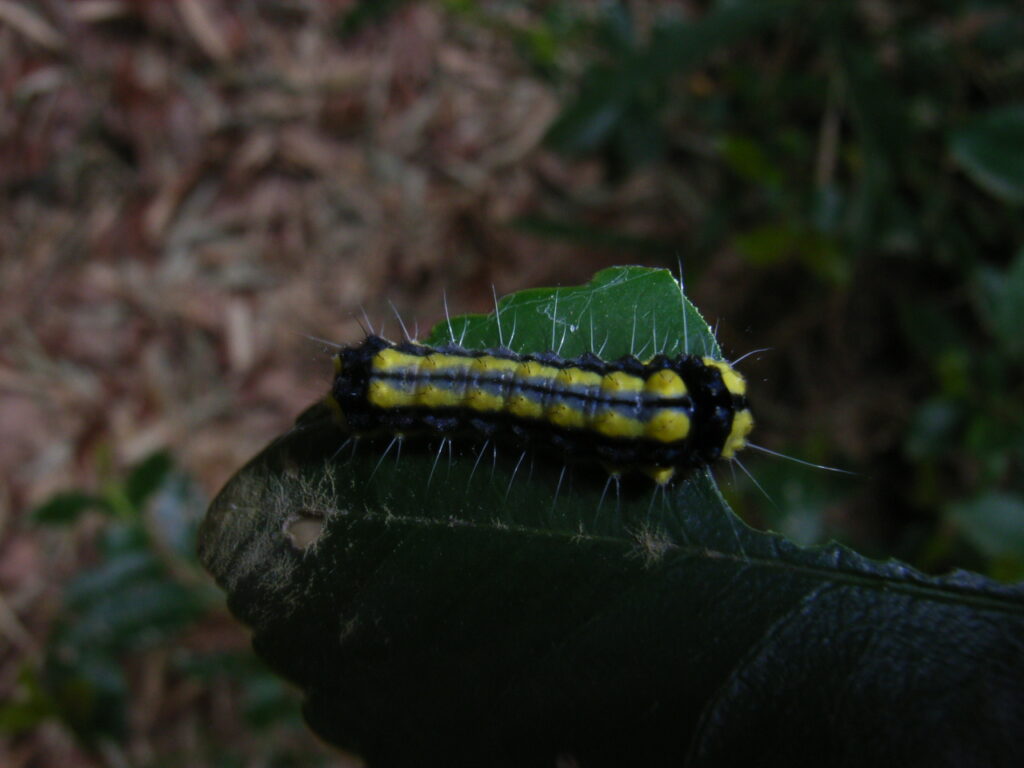
The larvae have been confirmed to feed on plants of the Camellia family (Eurya japonica, Cleyera japonica, Eurya japonica) and the Celastraceae family (Euonymus japonicus). In recent years, they have been found on planted Eurya japonica and are now being seen in urban areas (Nakano, 2018). Although they are sometimes considered pests, I think they have a cute appearance.
The larvae, when subjected to pressure from an enemy pressing the tip of their spiny hair against the skin, leak the venom stored inside from the tip of the hair, which in humans is thought to cause dermatitis. However, recent reports suggest that pain or itching is usually not felt on the skin.
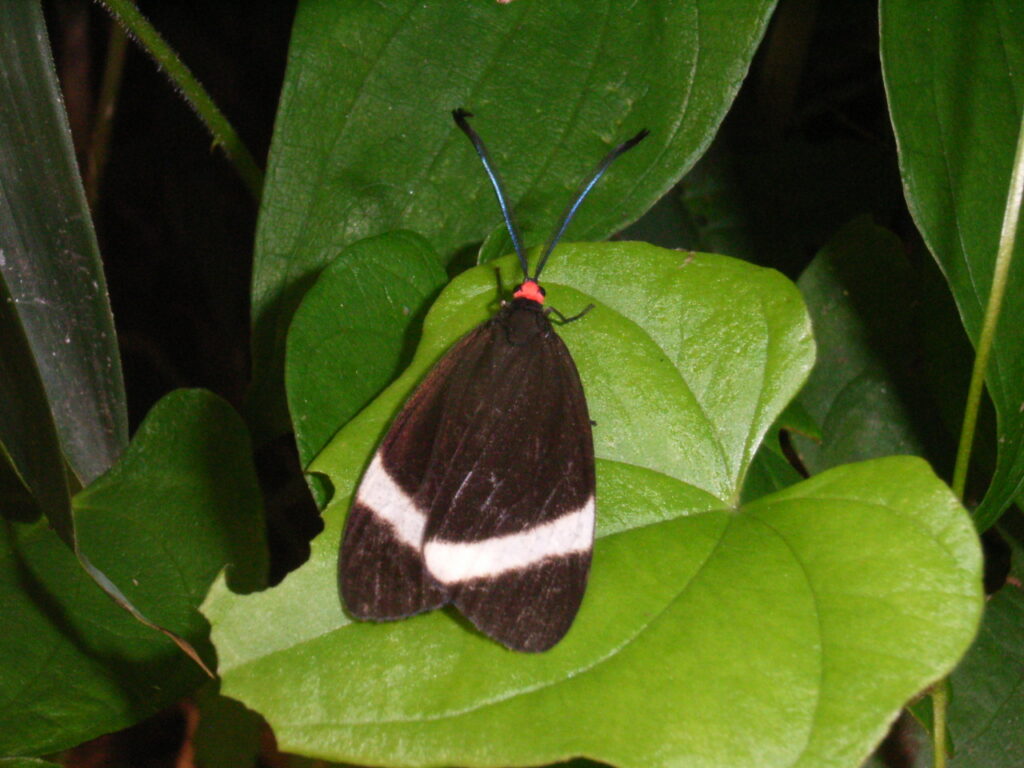
Adults emerge in June-July and August-September. They have matte blackish-brown forewings with a thick white band. Their heads are reddish-pink, and their antennae are bluish-blackish-brown and comb-like. Their Japanese name comes from the fact that their heads are red, like those of a firefly.
They are diurnal, and the males fly slowly at a low height of 50 cm above the ground in search of females.
Elcysma westwoodii westwoodii (Subfamily of Fireflies)
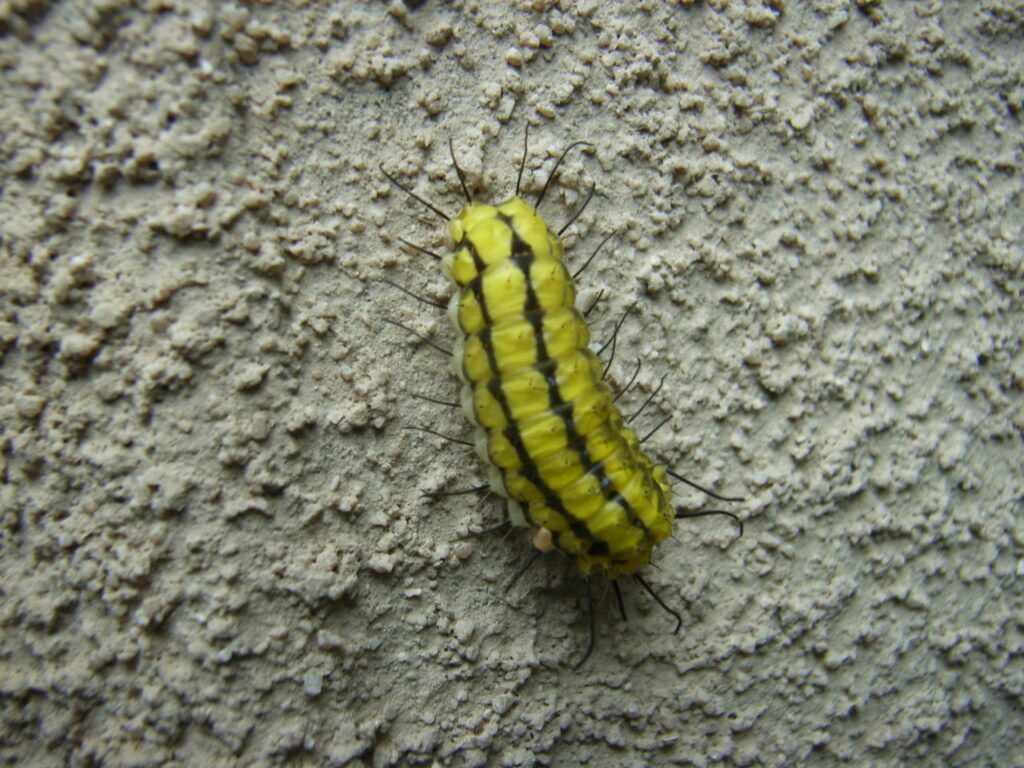
It is distributed in Korea and Japan (Honshu, Shikoku, and Kyushu). Western Japan is the center of its distribution.
The larvae feed on plants in the Rosaceae family (plum, cherry, apricot, Japanese apricot, quince, crabapple) and the Ulmaceae family (hackberry).
The larvae have a distinctive pattern of light yellow with black vertical stripes, and when touched, they secrete a viscous, transparent liquid from their body surface. No adverse effects on humans have been confirmed.
They have one generation per year, overwintering as larvae, going through summer dormancy as pre-pupae before becoming pupae, and emerging as adults from late September to early October.
The cocoon is always built on the main leaf vein, with the insect spinning silk around its body to create the base of the cocoon, and then soaking it with bodily fluids to harden it.
The adult butterfly has translucent white wings with few scales, and its hindwings have tail-like projections similar to those of a swallowtail butterfly, which is the origin of its name.
When adult insects are disturbed, they will also produce white foam from the base of their compound eyes.
Adults are most active in the early morning and afternoon. In the early morning, males fly around mainly searching for females, while in the afternoon, females fly around to move to egg-laying sites. Males have a grasping organ called a clasp, which is used to grasp the female's abdomen (Koshio et al., 2007).
Fuscartona martini (Subfamily Ixodinae)
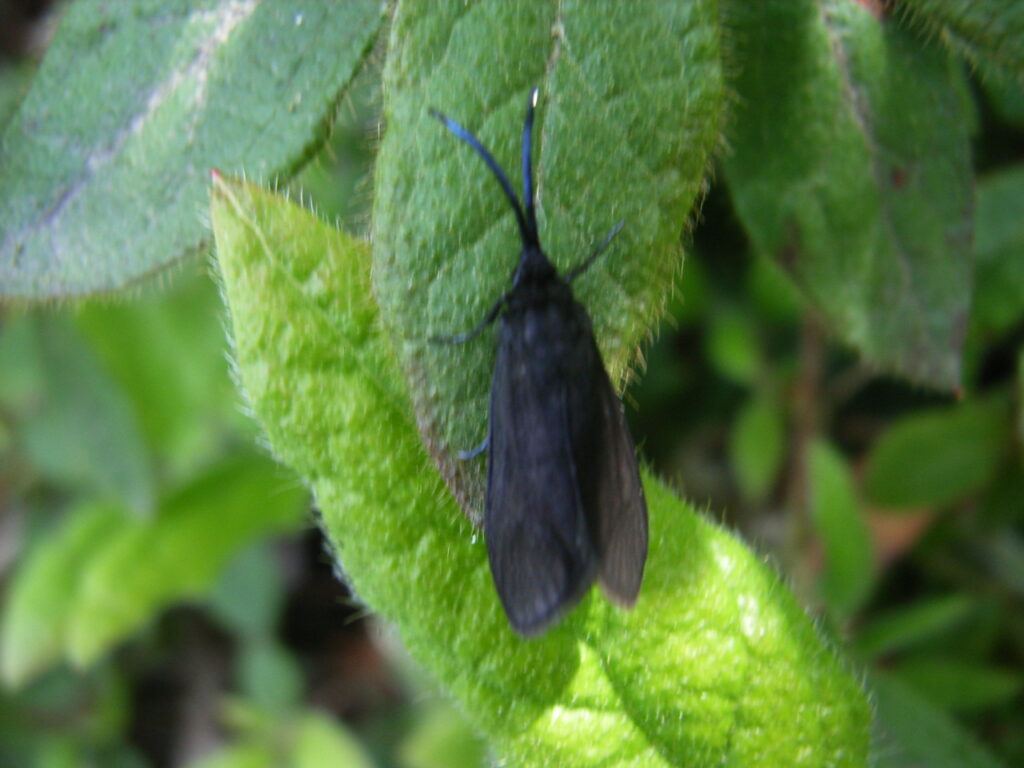
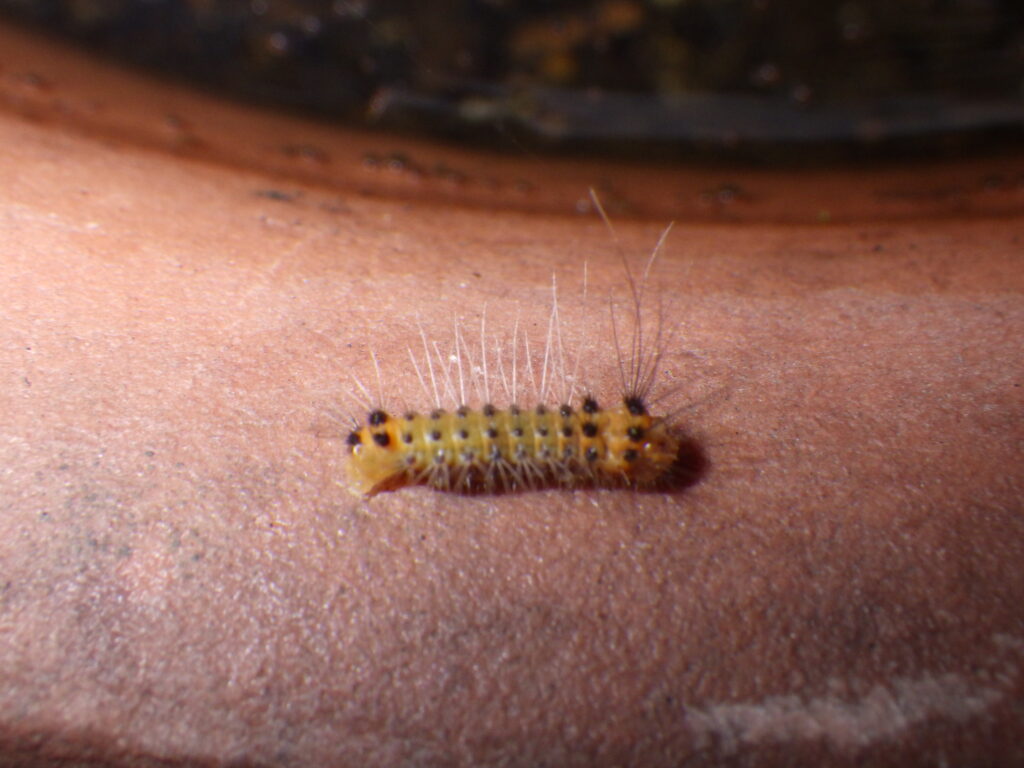
It is distributed in Korea, China, and Japan (Hokkaido, Honshu, Ogasawara, Shikoku, Kyushu, Tsushima, Amami Oshima, and the Okinawa Islands).
The larvae feed on grasses (such as bamboo, moso bamboo, and Japanese bamboo).
The larvae are bright yellowish-brown to reddish-brown and possess venomous hairs. They are gregarious and can sometimes be seen in clusters. The base of the larval venomous hairs contains venom gland tissue where venom is produced and stored within the hollow hairs; the liquid is injected upon contact. The amount of histamine is said to be comparable to that of the gypsy moth (Itokawa et al., 1985; Nakajima, 1986). Touching them with bare hands can cause pain and wheals (Natsuaki, 2013).
Adults emerge in July and August (Yamaguchi, 1960). They inhabit areas near their host plants and other trees close to their emergence sites, and most are active during the daytime, from around 7 am to 4 pm. Females generally have weaker flight capabilities than males, flying only near their host plants and often resting on the leaves of those plants. In contrast, adult males are more active and can fly considerable distances.
Because it is well known as a pest, its other ecology is also well understood in detail (Yamaguchi, 1960).
Balataea gracilis (subfamily Balatainae)
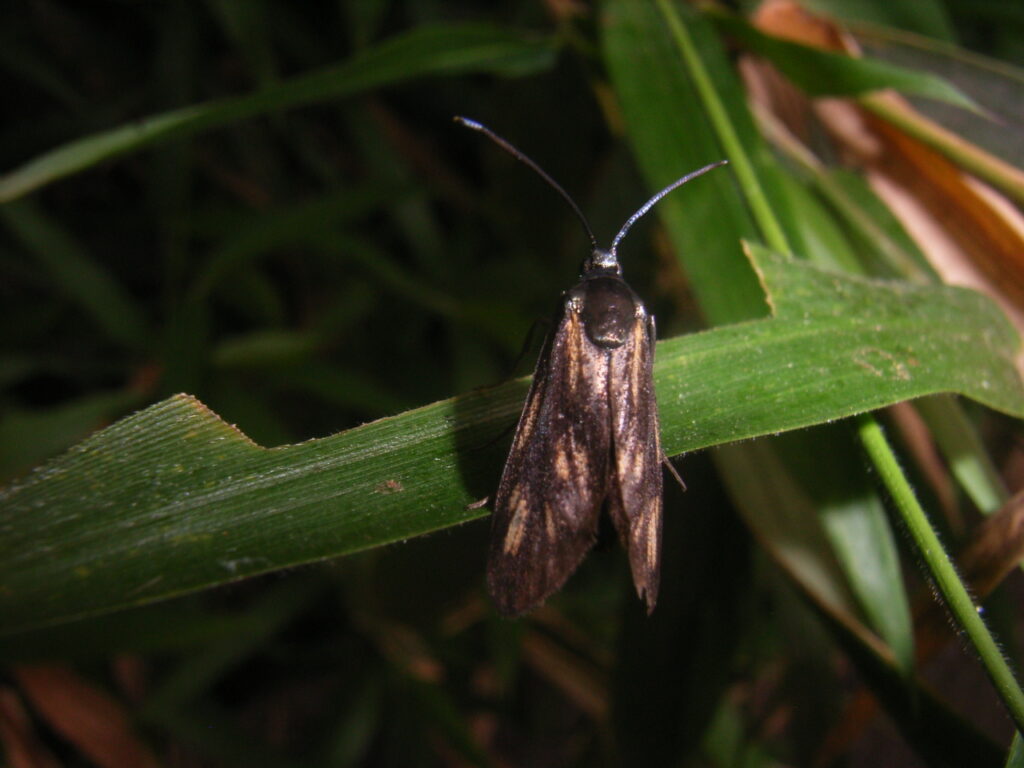
It is distributed in the Kuril Islands, Korea, China, and Japan (Hokkaido, Honshu, Shikoku, Kyushu, and Tsushima) (Hirowatari et al., 2013).
It is known that the larvae feed on grasses (such as bamboo and Japanese pampas grass).
Adults emerge once or twice a year, occurring in May-June and August in the lowlands of Honshu, and in July-August in higher elevations. They are diurnal and often gather on flowers.
The head and the dorsal side of the thorax are grayish-greenish-blue, and the abdomen has a blue metallic sheen. The forewings are dark brown, with yellow spots that are more elongated compared to those of the *Yahoshihosomadara* species, and the hindwings are semi-transparent.
Balataea octomaculata (subfamily Balatainae)
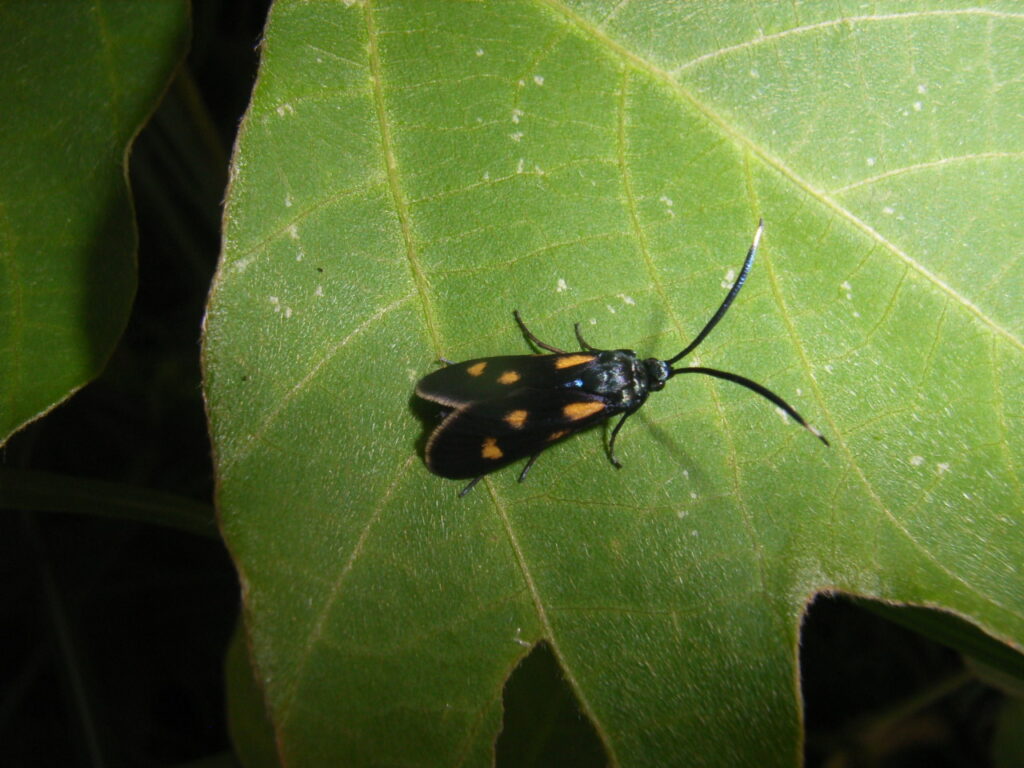
It is distributed in Siberia, Korea, China, and Japan (Honshu, Shikoku, and Kyushu). It inhabits bright grasslands, and in Honshu in particular, it prefers wetlands (Hirowatari et al., 2013).
The author has reported the first record of this species in Nara Prefecture, where it is listed as Near Threatened (NT) on the Ministry of the Environment's Red List (Ikeda, 2020).
The larvae are known to feed on grasses (such as bamboo, dwarf bamboo, and marsh grass).
Adults emerge once or twice a year, in June and August. The head, thorax, and abdomen have a dark blue sheen, the forewings are dark brown with shorter and more distinct yellow spots compared to the *Phalacrognathus fuscipes*, and the hindwings are semi-transparent.
Illiberis rotundata (subfamily Illiberinae)
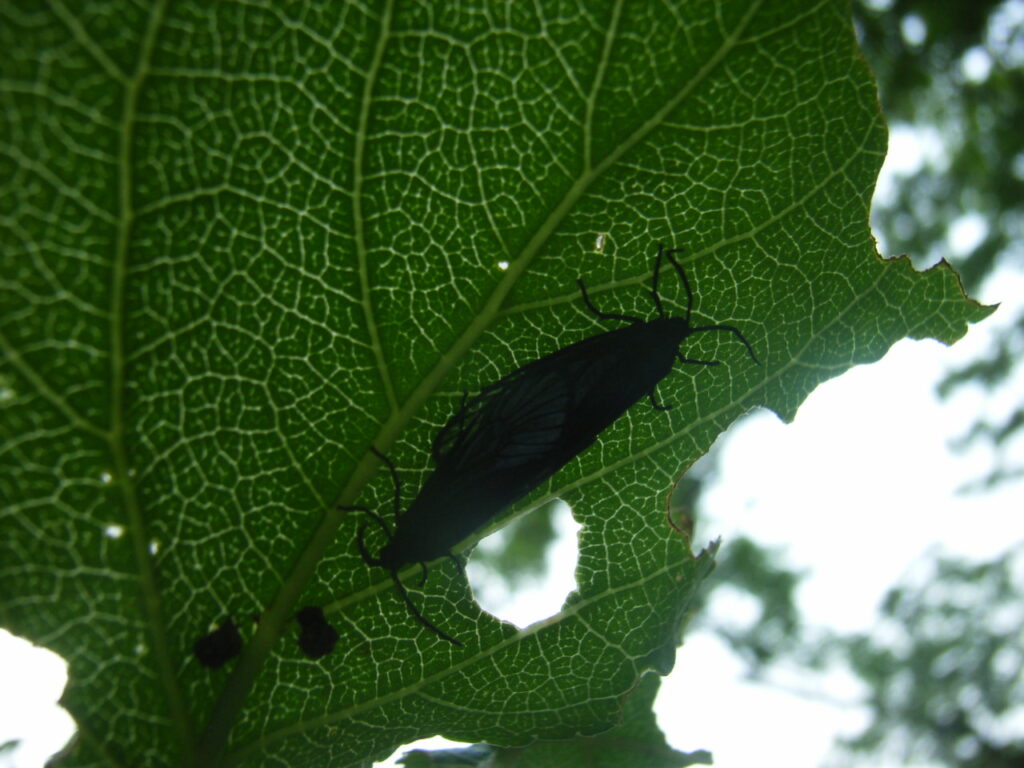
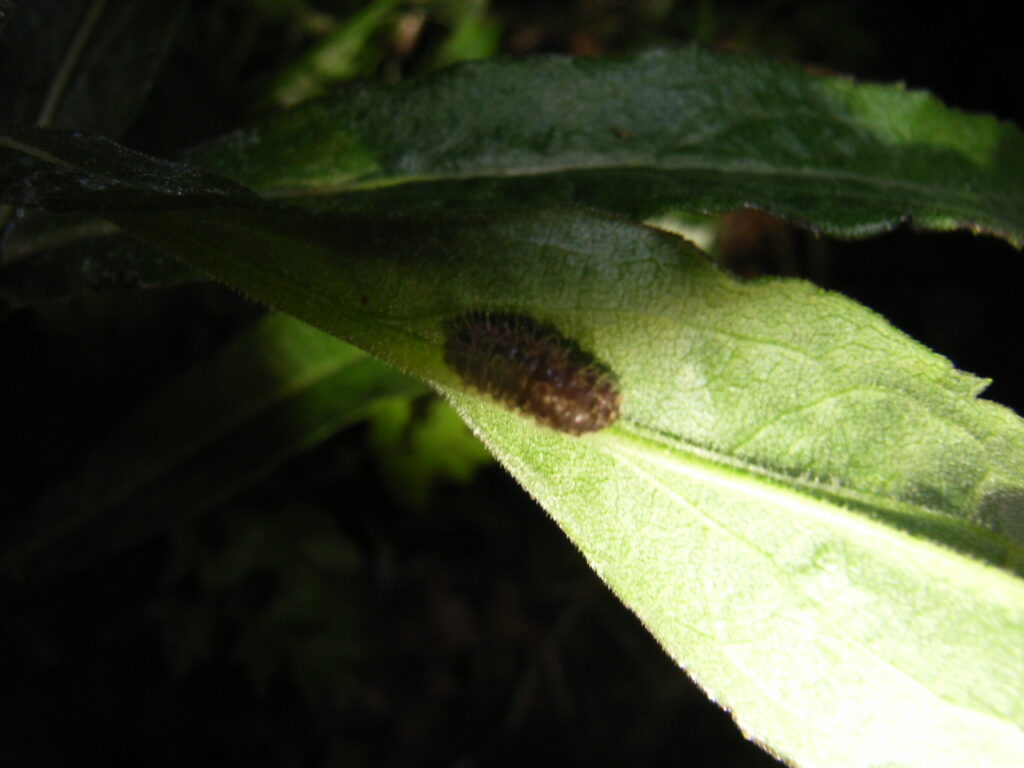
It is distributed in China and Japan (Honshu, Kyushu, and Tsushima).
The larvae have been confirmed to feed on plants of the Rosaceae family (Japanese apricot, peach, cherry, crabapple, flowering crabapple, apple, pear, Somei Yoshino cherry, apricot, and plum).
When the larval hairs penetrate the skin of an enemy, the hollow, spherical part at the base of the hairs indents, and the fluid inside is injected. In humans, this causes dermatitis. Its toxicity is weaker than that of the bamboo grass moth (Tsutsumi, 1960).
Adults emerge in June and July, and mating is known to last for two full days, with multiple matings occurring. The reason for the prolonged mating period may be that the male uses pre- and post-mating guarding to prevent other males from taking the female, but this is not yet well understood (Tanaka and Koshio, 2002).
Hedina consimilis (subfamily Hedinae)
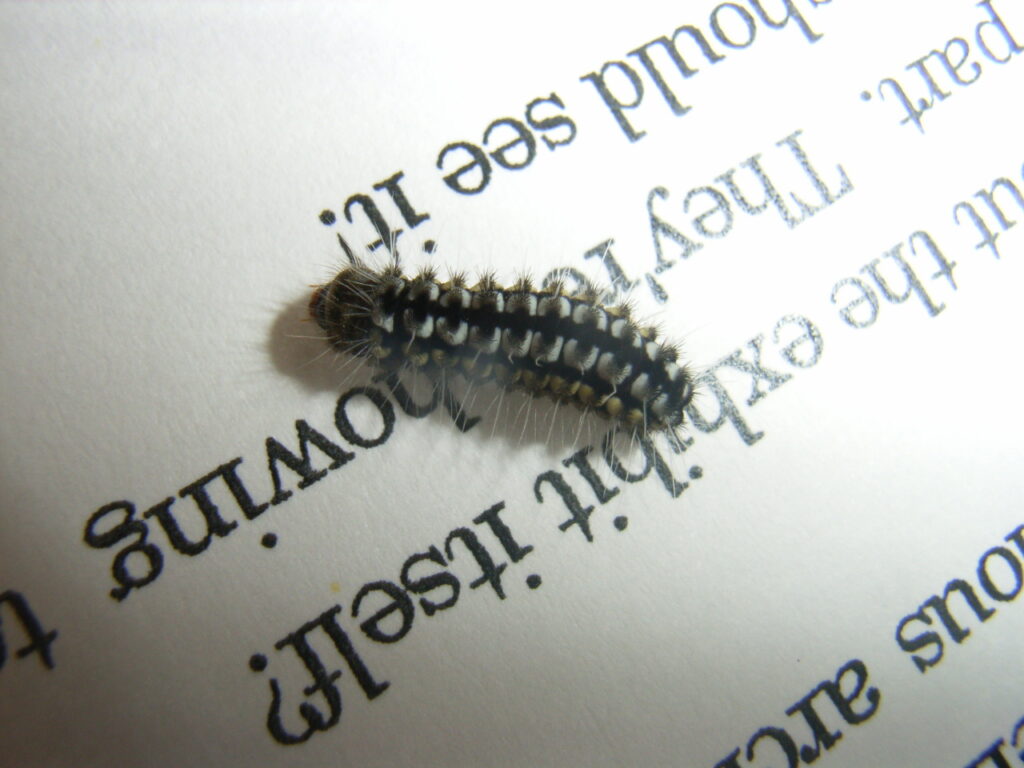
It is distributed in Japan (Honshu, Shikoku, and Kyushu) and Siberia. The larval morphology remained unknown for a long period, and it is currently considered a relatively rare species. Records are mainly found in western Japan, and to the best of the author's knowledge, Kanagawa Prefecture is the easternmost record in Japan (Nishihara, 2002). The author has confirmed its presence in Nara Prefecture. While there are no official records in Nara Prefecture publications, it is listed in the catalog (Nara Prefecture Red Data Book Revision Committee, 2017). It inhabits sunny forest edges and riverbanks in deciduous and evergreen forests.
It is known that the larvae feed on plants of the Vitaceae family (ivy, wild grape).
Adults emerge once a year, in March or April. The forewings are translucent and pale black, the hindwings are whitish, and the abdomen shines with a blue hue.
Although no direct reports of toxicity to humans have been confirmed, the larvae secrete small amounts of defensive fluid from the base of all their bristles when threatened or exposed to bright light (Sugi et al., 2000). The adults also emit a distinctive, pungent odor. I have photographed some that were attached to my clothing, but I did not experience any dermatitis or other skin problems.
Pryeria sinica (Zygaena subfamily)
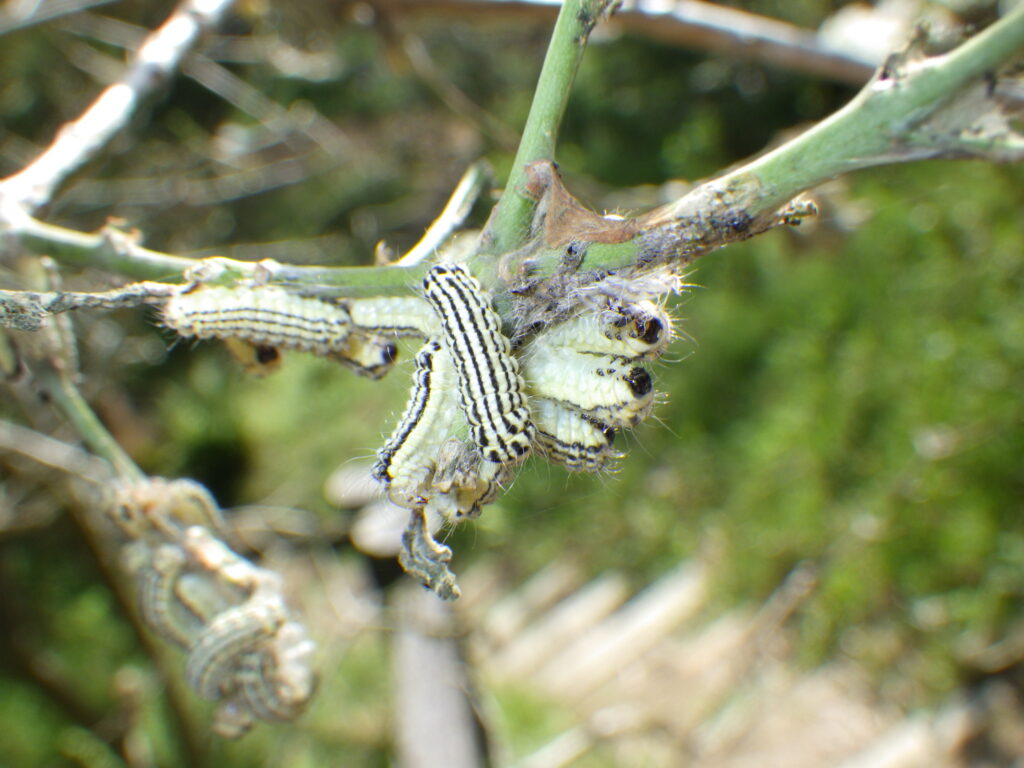
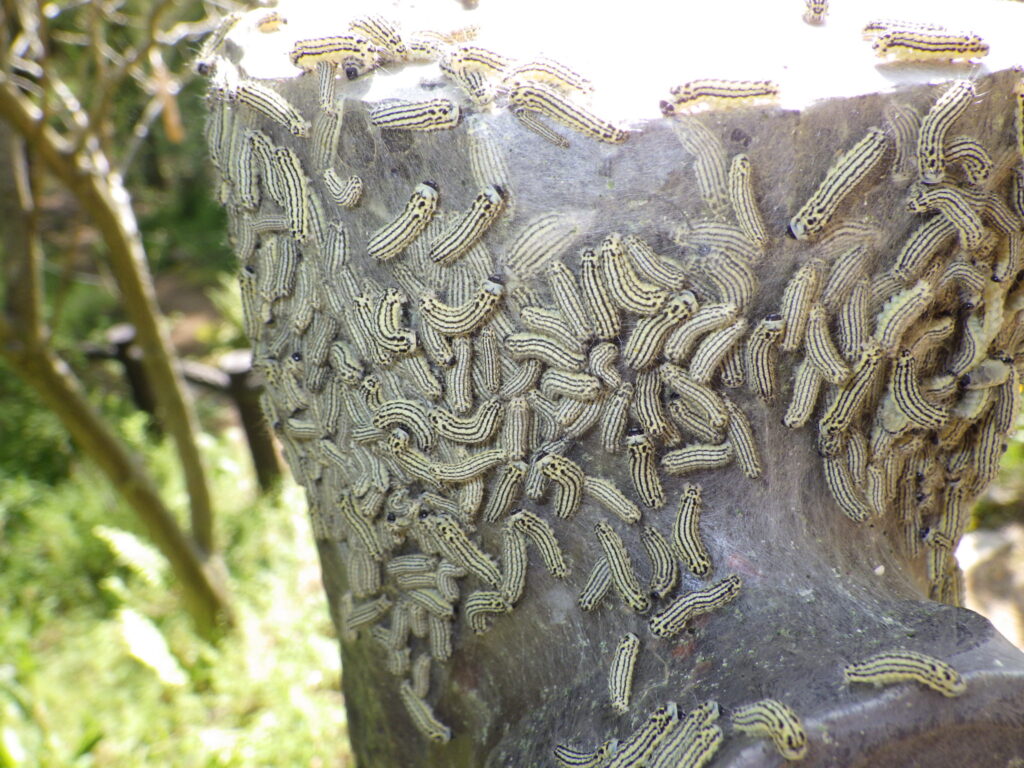
It is distributed in Korea, China, and Japan (Hokkaido, Honshu, Shikoku, Kyushu, and Tsushima).
The larvae are known to feed on plants of the Celastraceae family (Euonymus alatus, Euonymus sieboldianus, Euonymus japonicus, Celastrus orbiculatus, and Euonymus sieboldianus).
The larvae secrete a liquid with a distinctive odor from their body surface, which has been shown in experiments to deter predation by Japanese grass lizards (Johki & Hidaka, 1979). No effects on the human body have been confirmed.
The larvae are gregarious and can appear in large numbers. They devour leaves in groups, which is thought to be an efficient way for siblings to consume limited food resources (Tsubaki & Shiotsu, 1982).
The adults only emerge for a short period in November, which is unusual. They are diurnal, and their mouthparts are vestigial, suggesting that they do not feed once they reach adulthood.
The female has a tuft of hairs at the tip of her abdomen, and after laying eggs, she attaches these hairs to the eggs (Matsuzawa, 1962). This is also a surprising behavior. It is thought to be a way to hide the eggs, but it is not well understood why only the Minousba moth does this.
The life history is generally well understood (Matsuzawa, 1962).
Are moths in the Zygaenidae family more venomous the more elaborate their patterns are?
There is more in-depth research on moths of the family Zygaenidae.
The question is, "Are moths in the Zygaenidae family more poisonous the more showy their patterns are?" While many Zygaenidae moths have bright colors, there are also relatively plain species, and there are certainly differences in the level of showiness depending on the species. If the showiness is a "warning color," then there may be differences in toxicity as well.
In such cases, theoretically, one can predict that "the more vibrant the warning coloration, the stronger the toxicity." If a creature has weak toxicity but possesses disproportionately bright colors, it will be unable to withstand the increased number of attacks from birds due to its conspicuousness. Even if it manages to survive the attack, it would be impossible for its offspring to maintain colors more vibrant than their toxicity for thousands or tens of thousands of years.
Of course, as mentioned above, birds may have preferences for certain prey, which could allow even weak toxins to function as warning colors, and there are also insects that mimic poisonous closely related species (Batesian mimicry). However, as a general trend, it is believed that the formula "bright warning colors ≈ strong poison" always holds true. This kind of relationship between the characteristics of living creatures is called "honest signals" in technical terms.
In fact, studies of ladybugs, poison dart frogs, and opisthobranchs (including sea slugs) have shown a tendency for brighter warning colors to indicate stronger poison. In other words, they had an "honest signal."
Did the Zygaenidae family lack "honest signals"?
So, do moths in the Zygaenidae family possess "honest signals"?
Studies conducted in the UK, Denmark, and France investigated the relationship between several species of moths in the family Zygaridae, sex, coloration, iridescence (luminosity), and toxicity. Surprisingly, while there was a tendency for adult Zygaridae moths to be more venomous the more iridescent their wings were, for females, the duller their coloration, the more venomous they were (Briolat et al., 2019). It was n't an honest signal.
This is a very surprising result. The reason isn't entirely clear, but it's possible that differences in the ecology of each species played a role.
As mentioned above, moths of the Zygaena family synthesize cyanogenic glycosides themselves, but some species, such as Zygaena filipendulae, also take in cyanogenic glycosides found in plants. In this case, other Zygaena species need to use energy for both toxicity synthesis and vibrant coloration, but Zygaena filipendulae and others can obtain toxins from plants, thus not having to synthesize them, and may be able to allocate more energy to making their colors more vibrant. In this case, there may be a difference in toxicity and coloration.
Furthermore, there may be differences in how the adults fly. Members of the Firefly Moth and Dorcus genus fly around leisurely, while members of the Dorcus genus fly as if fleeing. It is not well understood why Dorcus genus members flee despite being poisonous, but this behavior may reduce the frequency of attacks by birds compared to members of the Firefly Moth and Dorcus genus. In this case, the need for bright colors would be relatively less.
As mentioned above, the relationship between toxicity and warning coloration seems to be strong. There are still many mysteries, but further research into members of the Zygaenidae family may reveal more about the secrets of warning coloration!
References
Briolat, ES, Zagrobelny, M., Olsen, CE, Blount, JD, & Stevens, M. 2019. No evidence of quantitative signal honesty across species of aposematic burnet moths (Lepidoptera: Zygaenidae). Journal of Evolutionary Biology 32(1): 31-48. ISSN: 1010-061X, https://doi.org/10.1111/jeb.13389
Hiroto, Toshiya; Nasu, Yoshitsugu; Sakamaki, Yoshitaka; and Kishida, Yasunori. 2013. Standard Illustrated Guide to Japanese Moths III. Gakken Educational Publishing, Tokyo. 359pp. ISBN: 9784054051096
Komai, K., Yoshiyasu, Y., Nasu, Y., & Saito, T. 2011. Lepidoptera of Japan: Phylogeny and Diversity. Tokai University Press, Hadano. 1305pp. ISSN: 9784486018568
Koshio, C., Muraji, M., Tatsuta, H., & Kudo, SI 2007. Sexual selection in a moth: effect of symmetry on male mating success in the wild. Behavioral Ecology 18(3): 571-578. ISSN: 1045-2249, https://doi.org/10.1093/beheco/arm017
Ikeda, Kenichi. 2020. Lepidoptera (butterflies and moths) not recorded in Nara Prefecture. Niche Life 8: 45-52. ISSN: 2188-0972, https://media.niche-life.com/series/008/Niche008_14.pdf
Itokawa, H., Kano, R., Nakajima, T., & Yasuhara, Y. 1985. Quantitative determination of histamine and serotonin, analgesic amines, in the venomous hairs and spines of Japanese venomous lepidoptera. Sanitary Zoology 36(2): 83-86. ISSN: 0424-7086, https://doi.org/10.7601/mez.36.83
Johki, Y., & Hidaka, T. 1979. Function of the “warning coloration” in larvae of a diurnal moth, Pryeria sinica Moor (Lepidoptera: Zygaenidae). Applied Entomology and Zoology 14(2): 164-172. ISSN: 0003-6862, https://doi.org/10.1303/aez.14.164
Matsuzawa, Hiroshi. 1962. On the life history of *Minousuba*. *Konchu* (Insects) 30(2): 101-109. ISSN: 0915-5805, https://dl.ndl.go.jp/info:ndljp/pid/10650109
Mori, Akihiko. 2014. The Wonders of Caterpillars: Evolutionary Ingenuity and Astonishing Life Science Hidden in Their Tiny Bodies. SB Creative, Tokyo. 221pp. ISBN: 9784797372038
Nakajima, Terumi. 1986. Chemistry of insect toxins. Chemistry and Biology 24(10): 677-681. ISSN: 0453-073X, https://doi.org/10.1271/kagakutoseibutsu1962.24.677
Nakano, Keiichi. 2018. Case of firefly moth outbreak from planted areas along a national highway. Urban Pest Management 8(1): 1-3. ISSN: 2186-1498, https://doi.org/10.34348/urbanpest.8.1_1
Natsuaki, Yu. 2013. Dr. Natsuaki's Clinical Atlas: Insects and Dermatitis. Gakken Medical Shujunsha, Tokyo. 199pp. ISBN: 9784780908688
Nara Prefecture Red Data Book Revision Committee. 2017. Nara Prefecture Wildlife Catalog. Landscape and Natural Environment Division, Landscape and Environment Bureau, Department of Lifestyle Creation, Nara. 422pp.
Ecological Society of Japan. 2012. Behavioral Ecology. Kyoritsu Shuppan, Tokyo. 292pp. ISBN: 9784320057388
Nishihara, Kayoko. 2002. Larvae of *Ruriirosakakushima* moth collected in Aichi Prefecture. Moth News 220: 378-380. ISSN: 0286-3537, http://publ.moth.jp/tsushin/201-250/jhj220.pdf
Sugi, Shigeo; Nishihara, Kayoko; and Koshio, Chiharu. 2000. Larval stage of *Ruriirosukashikuroba*. Moth News 208: 143-147. ISSN: 0286-3537, http://publ.moth.jp/tsushin/201-250/jhj208.pdf#page=7
Takayuki Suzuki. 2018. A Collaborative Illustrated Guide to Japanese Moths, Vol. 2. http://www.jpmoth.org/
Tanaka, Yoshihisa & Chiharu Oshio. 2002. Diurnal activity and reproductive behavior of * Illiberis rotundata Jordan* (Zygaenidae: Scarabaeinae). *Konchu New Series* 5(3): 70-80. ISSN: 1343-8794, https://doi.org/10.20848/kontyu.5.3_70
Tsubaki, Y., & Shiotsu, Y. 1982. Group feeding as a strategy for exploiting food resources in the burnet moth Pryeria sinica. Oecologia 55(1): 12-20. https://doi.org/10.1007/BF00386712
Tsutsumi, Chisato. 1960. On unknown poisonous hairs of several lepidopteran larvae. Sanitary Zoology 11(4): 168-172. ISSN: 0424-7086, https://doi.org/10.7601/mez.11.168
Yamaguchi, Akira. 1960. A study on the life history of Artona funeralis (Butler) (Zygaenidae). Sanitary Zoology 11(4): 173-180. ISSN: 0424-7086, https://doi.org/10.7601/mez.11.173