This article contains a draft of the report titled "Records of Common Digger Wasps and Large Digger Wasps in Mainland Tokyo," which was published in the following journal.
Citation method: Ikeda, K. 2019. Records of Scolia decorata ventralis and Scolia histrionica japonica in the mainland of Tokyo. Gekkan-Mushi 585: 59-60. ISSN: 0388-418X [Ikeda, K. 2019. Records of Scolia decorata ventralis and Scolia histrionica japonica in the mainland of Tokyo. Gekkan-Mushi 585: 59-60.]
This article was written assuming the second recorded instance of *Dictyophora japonica* and the first recorded instance of *Dictyophora scoparius* in mainland Tokyo.
There may be minor changes in wording, but the cited references remain the same. For more accurate information, please refer to the journal.
Further information about this article can be found in the following article.
The world and distribution and ecology of the common digger wasp and the large digger wasp in Tokyo.
The common digger wasp , Scolia decorata ventralis Smith, 1873, is distributed in Japan as follows: Hokkaido, Honshu, Shikoku, Kyushu, Tsushima, Osumi Islands, Kuchinoerabu Island, Izu Islands, and Ogasawara Islands. It is known to parasitize beetles such as the Japanese dung beetle. In recent years, there has been one record of it in Setagaya Ward, Tokyo (Fujimori, 2016).
Furthermore, the large-spotted digger wasp, Scolia histrionica japonica Smith, 1873, is distributed in Japan as far as Hokkaido, Honshu, Shikoku, Kyushu, Tsushima, the Osumi Islands, and the Izu Islands. It prefers sandy areas and is commonly found on coastlines and riverbanks, appearing from summer to autumn (Terayama and Suda, 2016). In the mainland area of Tokyo, there are no records of this species according to the Tokyo Metropolitan Area Insect Catalog (Tokyo Metropolitan Area Insect Catalog Creation Project, last updated 2016).
Records of the common digger wasp and the large digger wasp by the author
I photographed *Digitaria japonica* and *Digitaria scoparius* in Komae City, Tokyo in 2018, and I report my findings here.
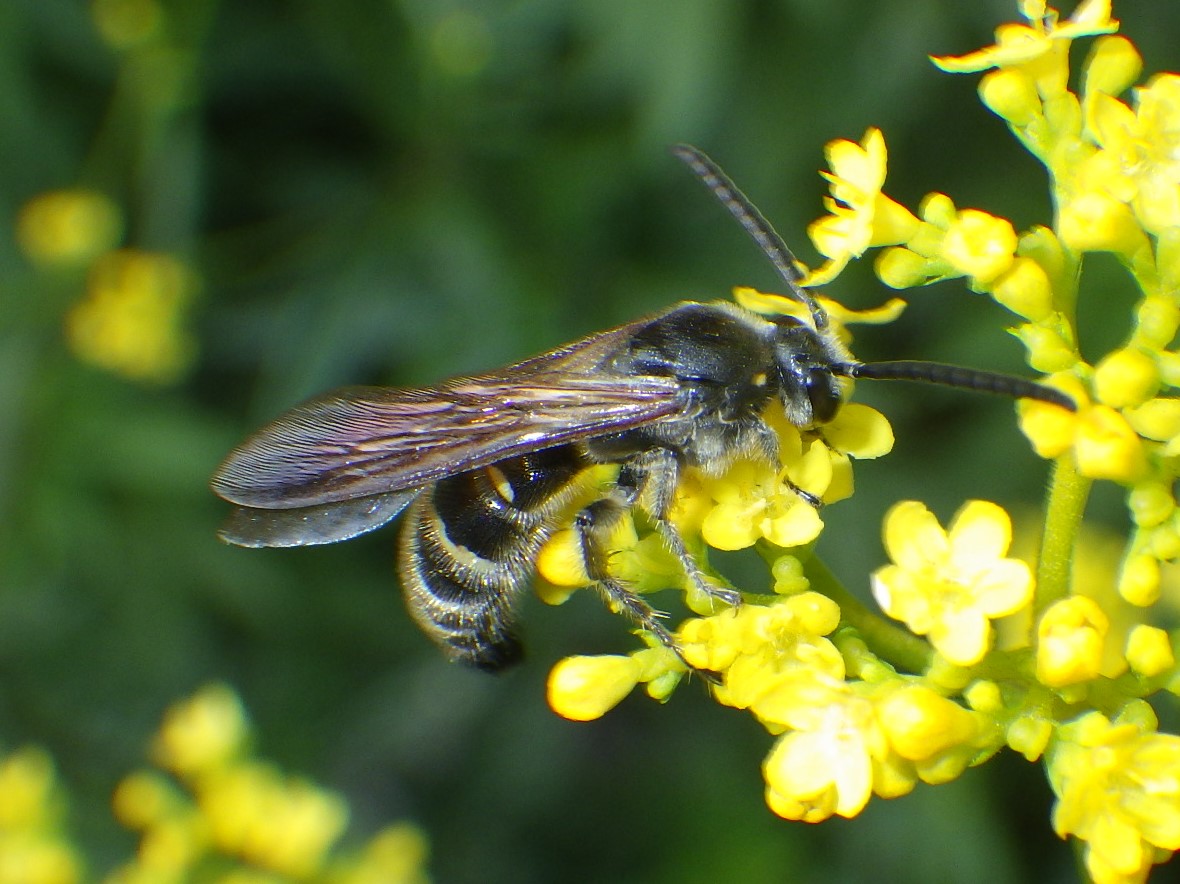
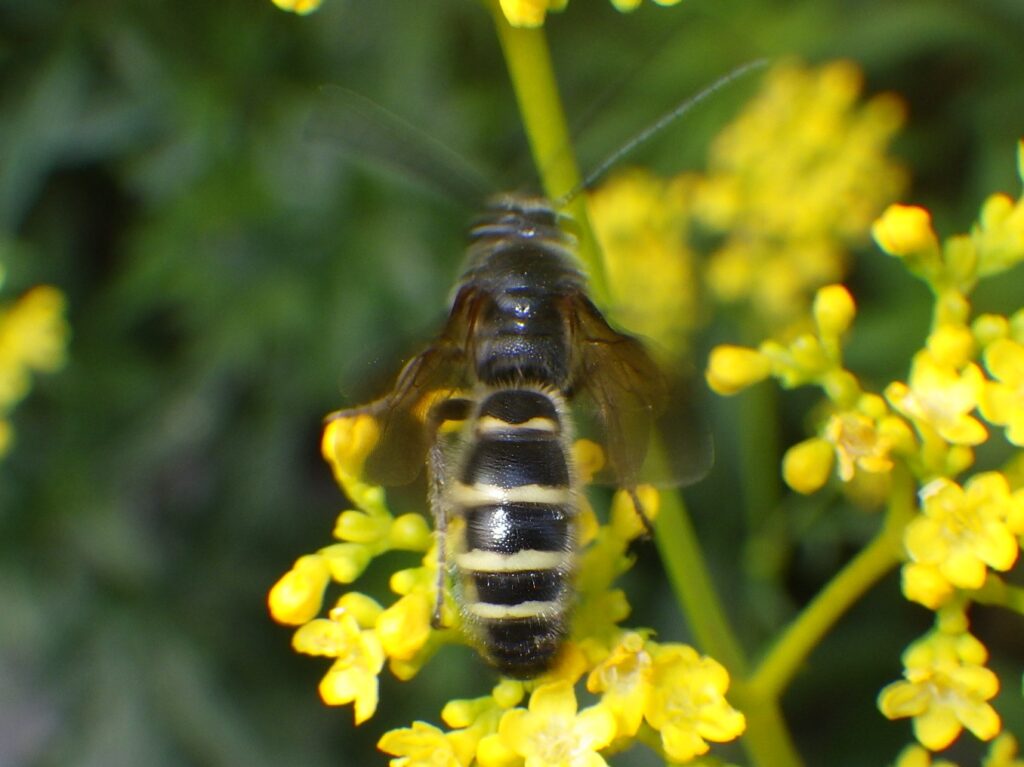
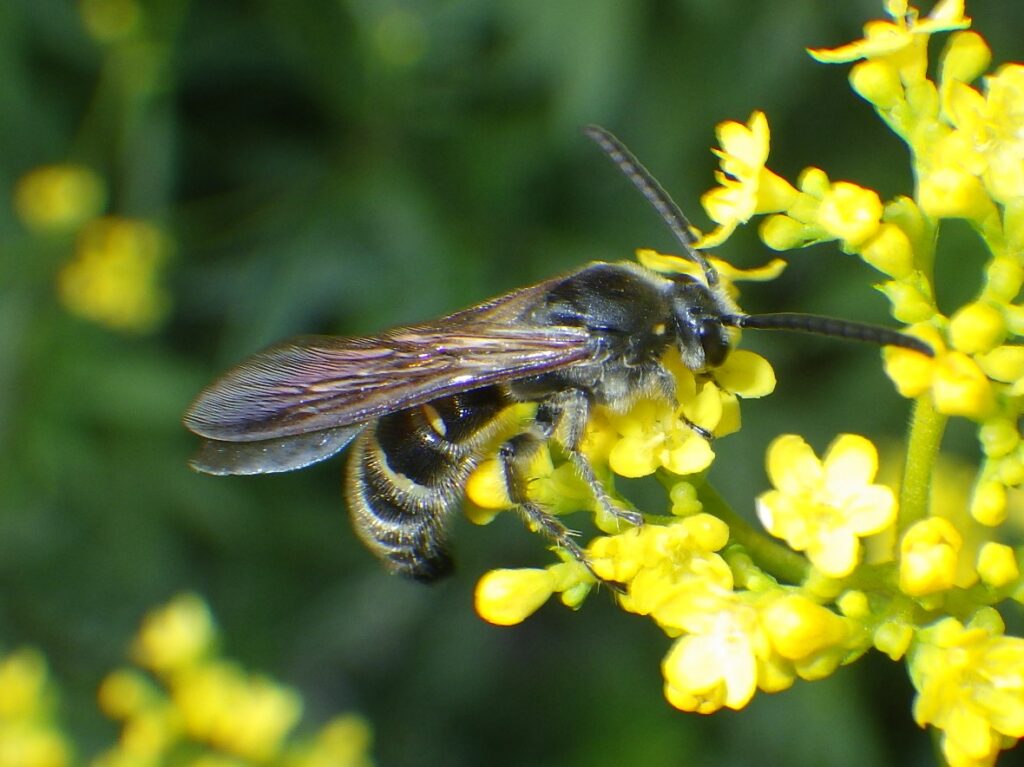
The common digger wasp was observed visiting a Patrinia scabiosifolia planted at a private residence in Izumihoncho 3-chome around 4:30 PM on July 14, 2018. The wasp is believed to be this species based on its white, sparse hairs on the mesothoracic tergite, black head and thorax, and a yellow band on the first to fourth tergites of the abdomen. The observation took place in a residential area, and while the species' home range is unknown, the surrounding green spaces are limited to planned green areas. The author has not yet confirmed the presence of the host species, the Japanese beetle (Dorcus titanus). While Mentha species, Lysimachia japonica, and Patrinia scabiosifolia are known to be visited by this species (Hinakura, 2011), this report is similar. This is believed to be the second recorded instance in mainland Tokyo.
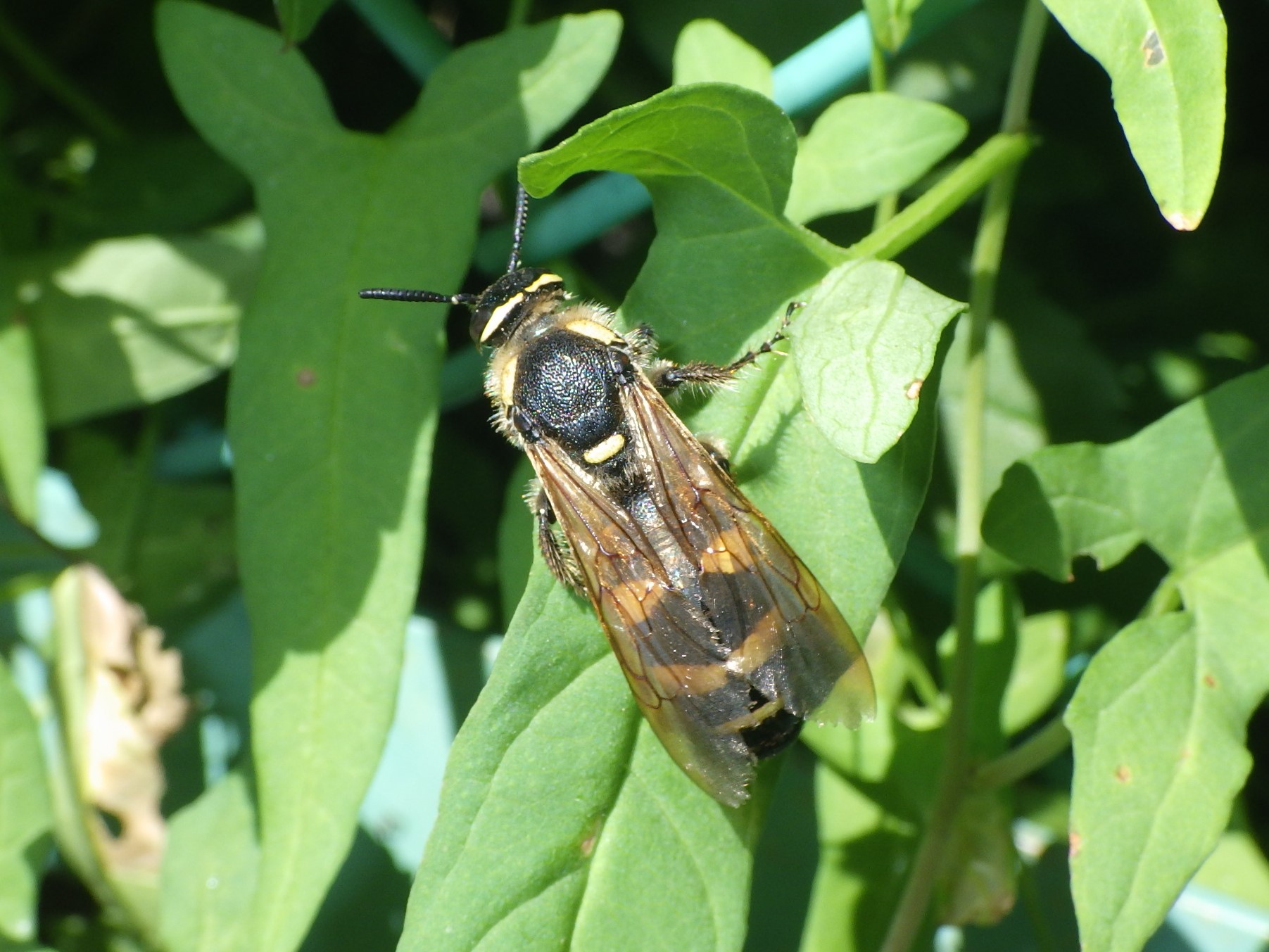
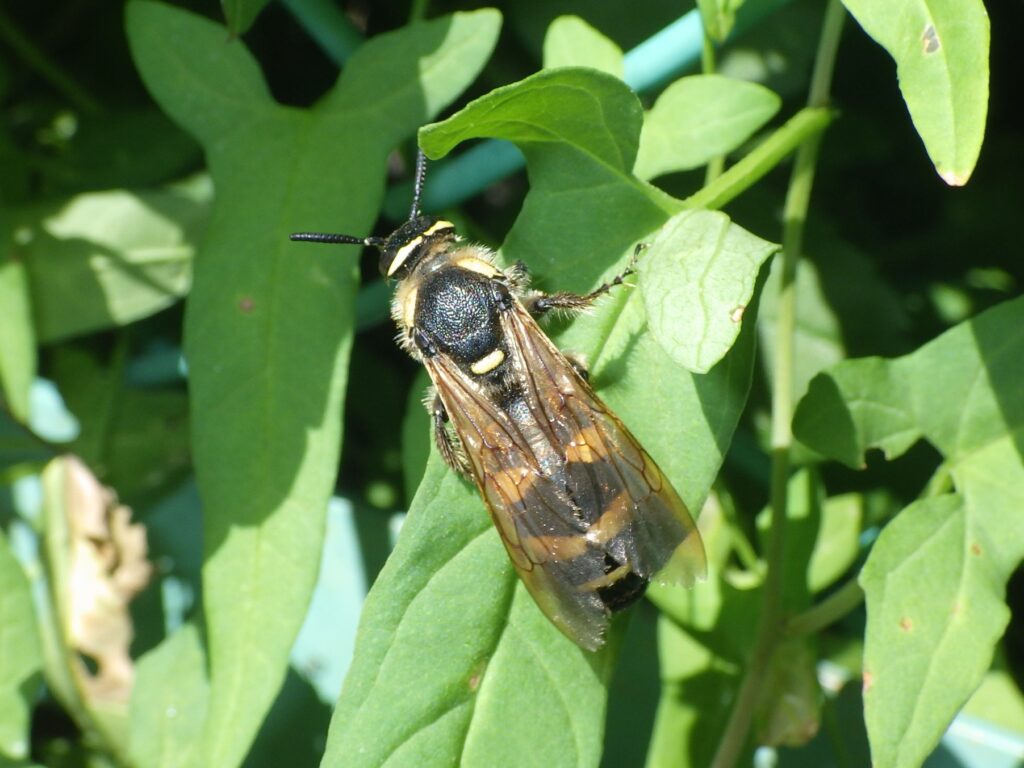
On September 9, 2018, at approximately 2 PM, a large-spotted digger wasp (Dictyophora japonica) flew to a morning glory leaf wrapped around the fence of an elementary school playground in Izumihoncho 2-chome and temporarily rested there. It can be identified as this species by the yellow band on the posterior margin of its compound eye (Terayama and Suda, 2016). Furthermore, since females only have yellow markings on the metanotum (Terayama and Suda, 2016), this individual is a female. This photograph was also taken in a residential area, with Nogawa Green Park being a nearby green space. This report is believed to be the first record of this species in mainland Tokyo. Although this is a different example from Terayama and Suda (2016), which mainly inhabit coastal areas and riverbeds, Asano et al. (2012) stated that "it sometimes inhabits inland areas," and this case is thought to be similar.
References
Asano, M., Kawashima, I., & Ono, H., 2012. Insect records on the coast of the Miura Peninsula, Part 1. Kanagawa Natural History Materials (33): 65-74. https://nh.kanagawa-museum.jp/www/contents/1600233778218/simple/nhr33_065-074_asano_s.pdf
Hinakura, Masato, 2011. Records of notable bee species in Kawasaki City. Report of the 7th Kawasaki City Natural Environment Survey. pp. 205-211. Kawasaki City Board of Education, Kawasaki. https://konrac2.sakura.ne.jp/book/RVII-p205.pdf
Fujimori, Takeshi, 2016. Records of *Corbicula japonica* in Setagaya Ward, Tokyo. Kanagawa Insect Report (188): 60.
Terayama, Mamoru and Suda, Hirohisa, 2016. An Illustrated Guide to Japanese Argynnis Wasps. Tokai University Press, Hiratsuka.
Tokyo Metropolitan Area Insect Catalog Creation Project, last updated 2016. Tokyo Metropolitan Area Insect Catalog. http://tkm.na.coocan.jp/