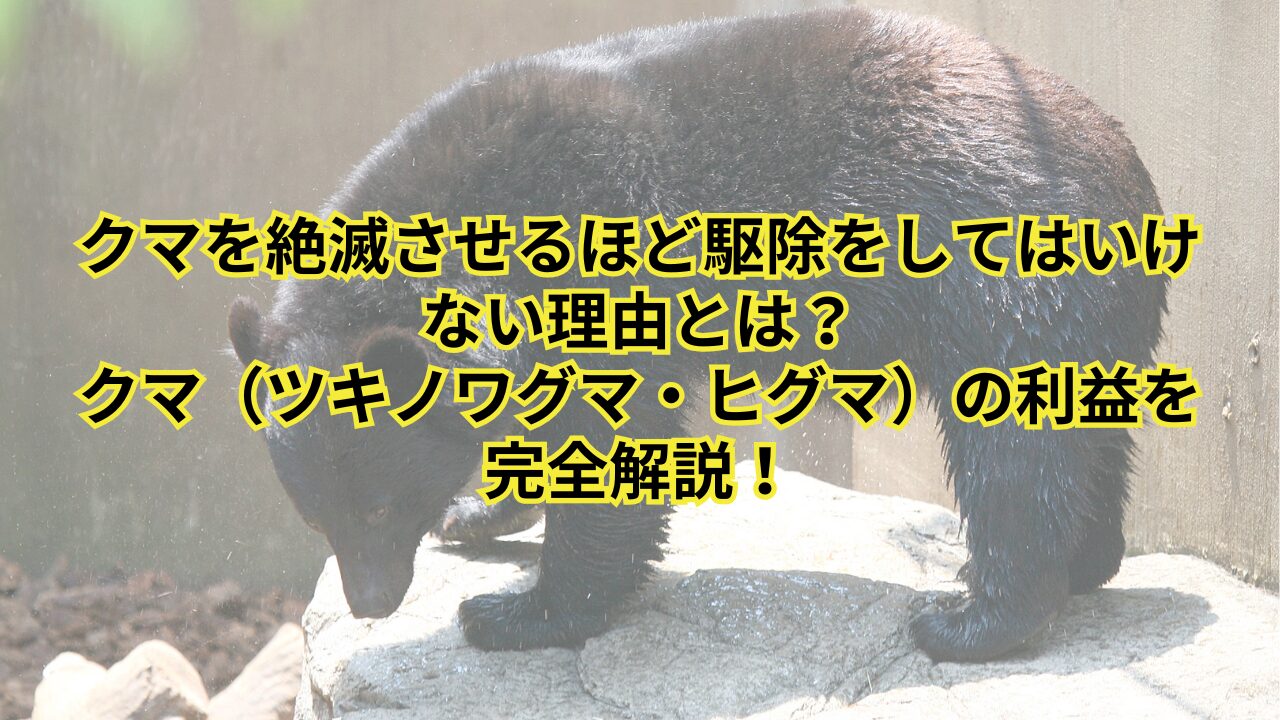
In Japan, the Japanese black bear (Ursus thibetanus japonicus) is found on Honshu and Shikoku, while the Hokkaido brown bear (Ursus arctos yesoensis) is found on Hokkaido.
It has been reported that by 2025 these bears were increasing their activity in populated areas, leading to a frequent occurrence of tragic incidents. Such bear attacks have existed since ancient times and are a problem not only in Japan but all over the world.
Among those people, many might wonder, "How are bears related to our lives?"
Some people hold the extreme opinion that "bears should be exterminated!" I think they are free to hold such opinions, but I believe they may lack sufficient knowledge about the benefits that bears provide to the ecosystem.
While I believe that culling bears is sometimes unavoidable when necessary, as someone involved in environmental assessment work, I will deliberately consider the practical benefits (advantages and advantages for humans) rather than focusing on animal welfare.
To put it simply, "Bears enrich forests through seed dispersal and predation, and indirectly benefit humans through the benefits those forests provide."
- Reason 1: Because seed dispersal will decrease, leading to a reduction in forests or an increase in simple forests.
- Reason 2: Because it will get rid of the bees.
- Reason 3: Salmon spread nutrients from the sea onto land through their predation.
- Reason 4: Because digging enriches the land.
- Reason 5: Because they eat herbivores and return them to the soil.
- Reason 6: They eat mushrooms and then spread their spores.
- In conclusion: Is the role of the bear replaceable?
- References
Reason 1: Because seed dispersal will decrease, leading to a reduction in forests or an increase in simple forests.
Although the Japanese black bear is an omnivore, it is known that 80-90% of its diet consists of plant-based foods (Hashimoto and Takatsuki, 1997).
Among these, it has been found that they eat the fruits of 23 different plants, and fecal analysis has revealed that they also expel the seeds of 16 different plants alive (Koike et al., 2003).
The plants include six varieties of cherry blossoms, such as the mountain cherry (Prunus jamasakura), and are familiar and well-known to Japanese people who love cherry blossom viewing.
In addition, there are studies showing that, beyond just the number of species, the distribution of mountain cherry trees, for example, is being pushed up to higher altitudes geographically by the Japanese black bear (Naoe et al., 2016).
The same is true for brown bears; it has been reported that bears, not birds, disperse the majority of seeds of the American berry shrub , Oplopanax horridus, in southeastern and northern Alaska, United States (Levi et al., 2020).
While there is still insufficient research on the Hokkaido brown bear, it is thought that berries play a similar role in their diet (Sato, 2005; 2018). In one study, after eating three types of berries, including Actinidia arguta, most of the seeds were excreted intact, with 941 TP3T remaining undamaged, and the germination rate was increased (Tsunamoto et al., 2024).
Furthermore, it has been confirmed that brown bears supply food to seed-eating rodents through their feces (Levi et al., 2020). Mice readily carry the seeds contained in the bear's droppings.
In other words, this means that bears are increasing the diversity of plants and animals in the forest.
It is well known that forests provide a variety of "ecosystem services," such as fixing atmospheric carbon dioxide and converting it into biomass, acting as a "green dam" to absorb rainwater and reduce the risk of floods and water shortages, stabilizing the ground to prevent landslides and mudslides, regulating the climate, and providing recreational areas (Nakashizu, 2017; Tanaka and Nagahiro, 2019).
Furthermore, numerous studies have shown that insects that thrive in forests contribute to the pollination of our agricultural products (Ulyshen et al., 2023), and many crops cannot bear fruit without pollination by wild insects. For example, in Japan, it has been found that buckwheat pollination is facilitated by insects originating from forests (Taki et al., 2010).
It is well known that these ecosystem services are more abundant in forests with higher biodiversity (Brockerhoff et al., 2017).
Therefore, it is highly likely that the existence of bears indirectly benefits humans as well.
However, it can be said that the extent to which this affects the overall situation is currently unknown.
Reason 2: Because it will get rid of the bees.
Japanese black bears also readily eat honeybees, wasps, and ants (Hashimoto and Takatsuki, 1997). These make up the largest proportion of their animal-based diet. This is because they are eusocial insects and exist in colonies, making them an important source of protein for Japanese black bears. The same is true for Hokkaido brown bears (Sato, 2005).
Honeybees and wasps, in particular, are relatively aggressive insects and possess venomous stingers, making them a common cause of harm to humans. In the decade from 2002 to 2011, wasp stings averaged 19.4 deaths per person (Kanayama, 2013). The number of injuries is likely much higher.
Japanese black bears may be reducing the populations of honeybees and wasps by preying on them. In particular, wasps are almost the top predator among insects and have only a handful of natural enemies (Noguchi & Ikeda, 2022), and even among vertebrates, the number of proven natural enemies is limited, such as the honey buzzard bird and the marten mammal (Hirakawa & Sayama, 2005).
The Japanese black bear is undoubtedly an important natural enemy of honeybees and wasps, and it likely also brings benefits to humans. However, the quantitative aspects remain unclear.
From the perspective of human benefits, it boils down to the question, "Which is more important, eliminating bears or wasps?", but I've encountered wasps far more often.
Furthermore, as top predators among insects, hornets prey on a wide variety of insects. Hornets, which have invaded Hawaii and New Zealand as an invasive species, are known to have a significant impact on native ecosystems, primarily affecting moth and butterfly larvae (New, 2016).
In Japan, the Japanese black bear may be reducing the population of wasps, thereby lowering predation pressure and increasing the diversity of prey and sub-predators. This would likely lead to the aforementioned increase in ecosystem services.
Reason 3: Salmon spread nutrients from the sea onto land through their predation.
While there are currently no confirmed instances of Japanese black bears eating fish (Hashimoto & Takatsuki, 1997), Hokkaido brown bears have been confirmed to eat salmonid fish such as pink salmon and chum salmon, although the amount has been decreasing due to development (Sato, 2005). The predation pressure is so strong that it alters the breeding morphology of pink salmon (Sahashi et al., 2020), and they serve as an important food source before hibernation. Some studies also suggest that females can produce more offspring as their consumption of salmon increases (Sato, 2018).
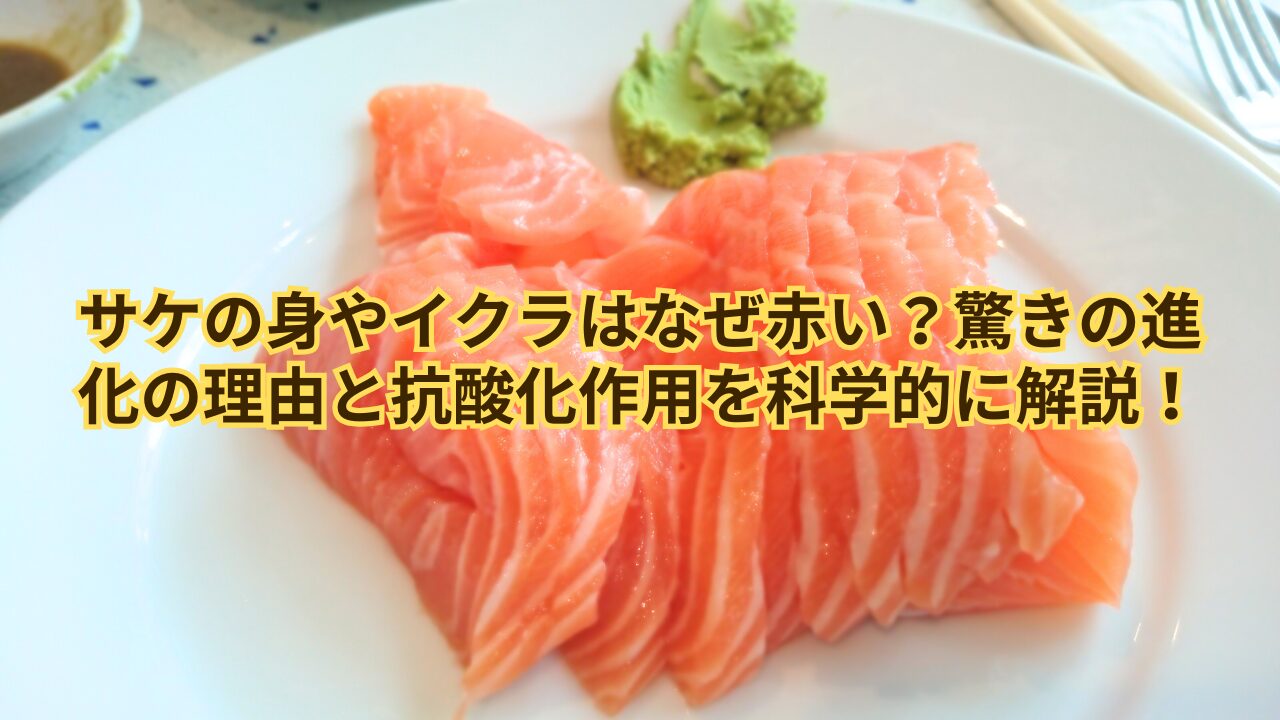
At first glance, this might sound like simple predation, but in fact, by consuming such large quantities of salmon, the Hokkaido brown bear is returning nutrients, primarily nitrogen, from the sea to the land (Koshino et al., 2013; Sato, 2018). This might be an overlooked point.
It has been pointed out that this is true not only for the Ezo brown bear in Japan but also for brown bears around the world (Levi et al.,, 2020).
Furthermore, it has been discovered that salmon not only enrich the forest through their feces, but also enrich the rivers themselves, as land animals and aquatic insects utilize the carcasses of the salmon they kill.
Normally, nutrients would be washed away by gravity, but the fact that this doesn't happen is thanks to salmon and brown bears.
However, you might wonder, "Isn't nitrogen already transported inland by seabird droppings, and isn't it okay because leguminous plants and other organisms fix nitrogen from the air back into the soil?"
However, studies investigating nitrogen isotope ratios have confirmed that riparian plants actively utilize nitrogen derived from salmon, increasing physiological activity, productivity, and community structure, and exhibiting specific changes such as an increase in the nitrogen ratio within the plant body and an increase in stomatal density (Levi et al., 2020).
Almost exclusively bears are capable of doing something similar, and even animals that eat salmon only consume the carcasses left behind after bears have hunted or after floods.
Therefore, the Hokkaido brown bear may play a significant role in enriching the rivers and riverside forests of Hokkaido.
Reason 4: Because digging enriches the land.
Brown bears are known to dig up the underground parts of herbaceous plants in subalpine grasslands such as snowfield communities (Sato, 2018). This is also true for the Ezo brown bear in Japan.
Although there is a lack of research in Japan, it has been reported that in Glacier National Park in Montana, USA, this "digging" behavior has led to an increase in bare ground, a rise in ammonia and nitrate concentrations in the soil, and an increase in seed production of the yellow dogtooth violet plant.
In other words, the feeding behavior of brown bears is indeed contributing to an increase in soil fertility. Organisms that modify the landscape through certain behaviors, creating habitats for other organisms, are called "ecosystem engineers." Earthworms and beavers are typical examples, but brown bears have been shown to be part of this group as well.
Reason 5: Because they eat herbivores and return them to the soil.
Japanese black bears are known to feed on Japanese serows and Japanese deer, while Hokkaido brown bears feed on Hokkaido deer (Hashimoto and Takatsuki, 1997; Sato, 2005).
However, instances of them directly eating living animals are rare, except for weakened individuals, and it is generally believed that they feed on carcasses killed through hunting or extermination (Hashimoto & Takatsuki, 1997; Sato, 2018).
While brown bears in other countries sometimes prey on young herbivores, and given the limited opportunities to directly observe Japanese black bears and Hokkaido brown bears, it's possible they are preying on more animals than we know, but this is currently unknown.
If they are preying on herbivorous mammals, they may be regulating their populations.
Even if they are scavengers, they still play a role in returning herbivorous mammals to the soil.
However, this role may be replaceable by many other animals.
Reason 6: They eat mushrooms and then spread their spores.
It has been found that the American black bear (Ursus americanu s) and the grizzly bear (Ursus arctos horribilis), which are distributed in North America, eat fungi (mycorrhizal fungi, which include ascomycetes and basidiomycetes) and excrete some of the spores alive as they pass through their digestive tract (Cázares & Trappe, 1994; Mattson et al., 2002).
This may help distribute less mobile fungi over a wider area, contributing to increased fungal diversity and the diversity of host plants. Furthermore, free-living nitrogen-fixing bacteria that inhabit the fruiting bodies of mycorrhizal fungi are also dispersed along with fungal spores through mammalian feeding.
Of course, people who enjoy mushroom hunting as a hobby are directly benefiting from it.
While this hasn't been extensively studied in Japan, it's known that Japanese black bears also eat mushrooms (Hashimoto & Takatsuki, 1997), suggesting a similar role. However, squirrels, flying squirrels, mice, and Japanese macaques also eat mushrooms (Sawada, 2014; Sagara, 2021).
In conclusion: Is the role of the bear replaceable?
Up to this point, we have listed the various benefits of bears across different ecosystems, but their actual impact on the ecosystem as a whole remains unknown due to a lack of research.
The Asiatic black bear in Kyushu had already had a limited habitat and a small population by the early Showa period, and was extinct after the last sighting in 1957 (Nishida et al., 2022). However, it is unknown whether this has led to the effects described above.
However, human imagination has its limits, and it would be nearly impossible to consider all the consequences of an irreversible extinction.
As known as the "rivet hypothesis," even if one part of an airplane is missing and it can still fly (even if one species disappears and the ecosystem appears unchanged), as the number of missing parts increases, it can rapidly become impossible to fly (the ecosystem collapses) (Eisenhauer et al., 2023). In recent years, this has been demonstrated under the term "redundancy."
Even bears, in the present, may have their role taken over by other animals, but if other species become extinct, it's uncertain whether that will actually happen.
As depicted in the manga "Golden Kamuy," there is a view that the Japanese should adopt a similar approach to dealing with bears, just as the Ainu once distinguished between "good" brown bears (Kimun Kamuy) that do not attack humans and "bad" brown bears (Wen Kamuy) that do, and treated them accordingly (Matsuda, 2008). Considering that extermination is irrational from a cost, interest, and ethical standpoint, I also believe that this serves as an example to consider the duality of nature and that rational coexistence is needed.
Of course, balancing extermination and protection is very difficult, so please consider the above-mentioned impacts and deepen your discussion.
References
Brockerhoff, EG, Barbaro, L., Castagneyrol, B., Forrester, DI, Gardiner, B., González-Olabarria, JR, … & Jactel, H. 2017. Forest biodiversity, ecosystem functioning and the provision of ecosystem services. Biodiversity and Conservation 26(13): 3005-3035. https://doi.org/10.1007/s10531-017-1453-2
Cázares, E., & Trappe, JM 1994. Spore dispersal of ectomycorrhizal fungi on a glacier forefront by mammal mycophagy. Mycologia 86(4): 507-510. https://doi.org/10.1080/00275514.1994.12026443
Eisenhauer, N., Hines, J., Maestre, FT, & Rillig, MC 2023. Reconsidering functional redundancy in biodiversity research. npj Biodiversity 2(1): 9. https://doi.org/10.1038/s44185-023-00015-5
Kanayama, Akihiro. 2013. Bee species and control methods. Pest Control Tokyo (64): 20-25. https://www.pestcontrol-tokyo.jp/img/pub/064r/064-8.pdf
Koike, S., Hazumi, T., & Furubayashi, K. 2003. Possible seed dispersal of the Japanese black bear (Ursus thibetanus japonicus). Wildlife Conservation 8(1): 19-30. https://doi.org/10.20798/wildlifeconsjp.8.1_19
Koshino, Y., Kudo, H., & Kaeriyama, M. 2013. Stable isotope evidence indicates the incorporation into Japanese catchments of marine-derived nutrients transported by spawning Pacific Salmon. Freshwater Biology 58(9): 1864-1877. https://doi.org/10.1111/fwb.12175
Levi, T., Hilderbrand, GV, Hocking, MD, Quinn, TP, White, KS, Adams, MS, … & Wilmers, CC 2020. Community ecology and conservation of bear-salmon ecosystems. Frontiers in Ecology and Evolution 8: 513304. https://doi.org/10.3389/fevo.2020.513304
Mattson, DJ, Podruzny, SR, & Haroldson, MA 2002. Consumption of fungal sporocarps by Yellowstone grizzly bears. Ursus 13: 95-103. https://www.jstor.org/stable/3873191
Matsuda, Hiroyuki. 2008. Restarting Science Course 07: Why Protect Ecosystems?. NTT Publishing, Tokyo. 240pp. ISBN: 9784757160279
Nakashizu, Toru. 2017. Terrestrial biodiversity and ecosystem services. Journal of the Japanese Society of Rural Planning 36(1): 5-8. https://doi.org/10.2750/arp.36.5
Hashimoto, Yukihiko & Takatsuki, Shigeki. 1997. Diet of the Asiatic black bear: A review. Mammalian Science 37(1): 1-19. https://doi.org/10.11238/mammalianscience.37.1
Hirakawa, H., & Sayama, K. 2005. Photographic evidence of predation by martens (Martes melampus) on vespine wasp nests. Bulletin of the Forestry and Forest Products Research Institute 4(3): 207-210. ISSN: 0916-4405, https://www.ffpri.go.jp/labs/kanko/396-3.pdf
Sahashi, Genki; Morita, Kentaro; and Yoshiyama, Taku. 2020. The same species, but quite different? – Intraspecies diversity observed in wild salmonid fish. Salmon Information 14: 3-9. ISSN: 1881-705X, https://fra.repo.nii.ac.jp/records/2009605
Naoe, S., Tayasu, I., Sakai, Y., Masaki, T., Kobayashi, K., Nakajima, A., … & Koike, S. 2016. Mountain-climbing bears protect cherry species from global warming through vertical seed dispersal. Current Biology 26(8): R315-R316. https://doi.org/10.1016/j.cub.2016.03.002
New, TR 2016. Alien insects and insect conservation. In TR New (Ed.), Alien species and insect conservation (pp. 129-174). Springer International Publishing. https://doi.org/10.1007/978-3-319-38774-1_6
Nishida, S., Kawahara, K., Yasukochi, H., Eda, M., Koike, Y., & Iwamoto, T. 2022. The origin of "bear paws" in Takachiho Town, Miyazaki Prefecture, and its molecular phylogenetic analysis—DNA analysis of Asiatic black bears from the Sobosan mountain range in Kyushu—. Mammalian Science 62(1): 3-10. https://doi.org/10.11238/mammalianscience.62.3
Noguchi, D., & Ikeda, K. 2022. Intraguild predation on hornets and yellowjackets of vespine wasps by spiders, and vice versa. Serket 18(3): 287-298. http://hdl.handle.net/10069/00041479
Naohiko Sagara. 2021. Mushrooms and Animals. Tsukiji Shokan, Tokyo. 274pp. ISBN: 9784806716150
Sato, Kiwa. 2005. Diet of brown bears: Regional differences and annual variations. Mammalian Science 45(1): 79-84. https://doi.org/10.11238/mammalianscience.45.79
Sato, Kiwa. 2018. Forests as habitats for brown bears and their management—natural forests, plantations, understory vegetation, and deer. Northern Forest Research 66: 1-3. https://doi.org/10.24494/jfsh.66.0_1
Sawada, Akiko. 2014. Mushroom-eating behavior in primates: Future challenges and possibilities. Primate Research 30(1): 5-21. https://doi.org/10.2354/psj.30.010
Taki, H., Okabe, K., Yamaura, Y., Matsuura, T., Sueyoshi, M., Makino, SI, & Maeto, K. 2010. Effects of landscape metrics on Apis and non-Apis pollinators and seed set in common buckwheat. Basic and Applied Ecology 11(7): 594-602. ISSN: 1439-1791, https://doi.org/10.1016/j.baae.2010.08.004
Tanaka, K. & Nagahiro, S. 2019. A comparison of subjective and inferential evaluations of the value of forest ecosystem services. Environmental Economics and Policy Studies 12(1): 44-58. https://doi.org/10.14927/reeps.12.1_44
Tsunamoto, Y., Tsuruga, H., Kobayashi, K., Sukegawa, T., & Asakura, T. 2024. Seed dispersal function of the brown bear Ursus arctos on Hokkaido Island in northern Japan: gut passage time, dispersal distance, germination, and effects of remaining pulp. Oecologia 204(3): 505-515. https://doi.org/10.1007/s00442-024-05510-5
Ulyshen, M., Urban-Mead, KR, Dorey, JB, & Rivers, JW 2023. Forests are critically important to global pollinator diversity and enhance pollination in adjacent crops. Biological Reviews 98(4): 1118-1141. https://doi.org/10.1111/brv.12947