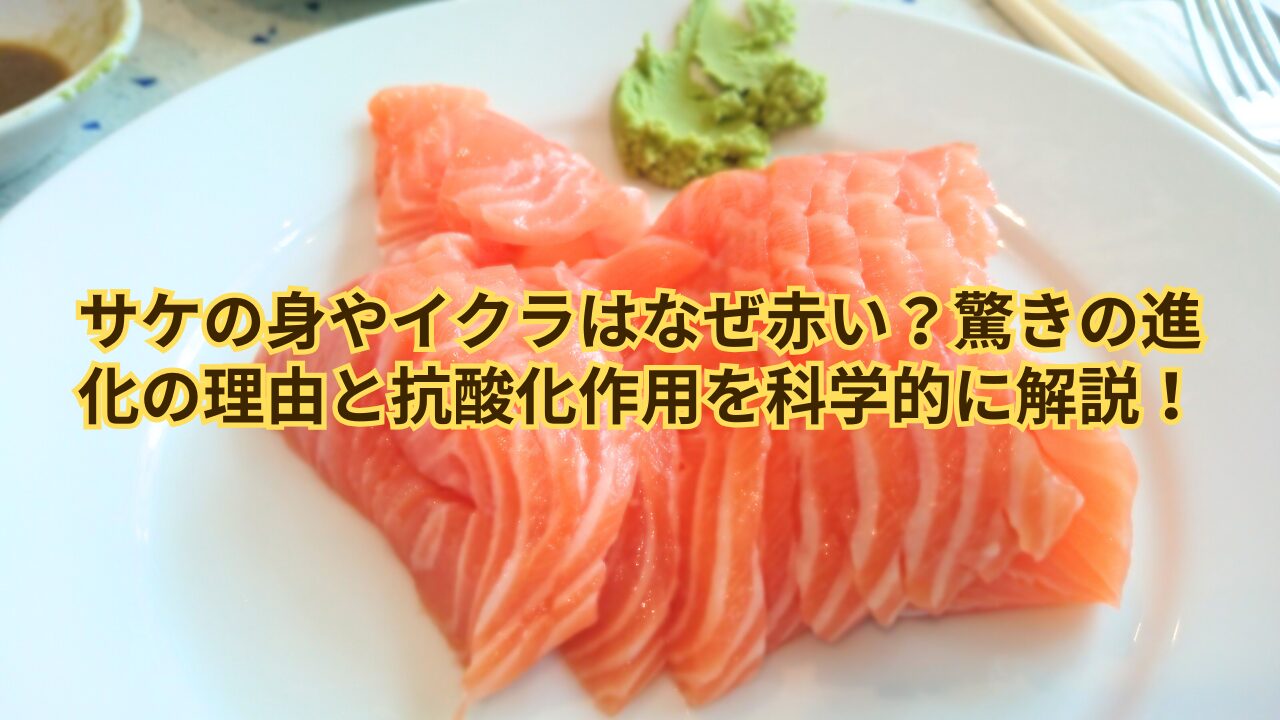
It's common knowledge that salmon sashimi (meat), fillets, and salmon roe are red or salmon pink. You might accept this without question when you go to a sushi restaurant, play Salmon Run in the game Splatoon, or see Sanrio's KIRIMI-chan.
However, the fact that salmon flesh and roe are red is, frankly speaking, "abnormal." There are almost no other fish with red flesh or eggs (Lehnert et al., 2019). It is thought to be an evolutionary trait unique to the salmon family.
Furthermore, as will be discussed later, it has been found that having red flesh and eggs makes them easily conspicuous and therefore more susceptible to predation, resulting in significant disadvantages.
Despite this, salmon maintain their red color. Why is that? This article will explore this mystery.
To put it simply, it's thought that the carotenoid pigment that produces the red color in salmon plays a role in preventing damage to muscle cells during the strenuous movement called "anadromous migration," where salmon travel back and forth between rivers and the sea. Furthermore, male salmon with this color are considered superior, and therefore, red salmon are more attractive to mates.
The main carotenoid found in salmon is astaxanthin, a pigment whose antioxidant effects surpass those of vitamins C and E. It is known to improve overall bodily functions through its powerful antioxidant properties in humans, making it highly rational.
This article will explain why salmon sashimi (meat) and salmon roe (ikura) are red or salmon pink in color.
- What kind of creature is a salmon?
- Is salmon a white-fleshed fish? Or a red-fleshed fish?
- What is the mechanism behind the red color of salmon flesh and roe (ikura)?
- Why are only the flesh (meat) and roe (ikura) of salmon red or salmon pink?
- Why is salmon *only* red? It turns out that having red flesh has a lot of disadvantages!?
- References
What kind of creature is a salmon?
What is the definition of salmon?
The word "sake" (also known as salmon, sake, stone mandarin fish, abalone, or yearly fish) generally has two meanings.
One possibility is that the insect is only poking one species of salmon (chum salmon, white salmon, autumn salmon), Oncorhynchus keta.
Another possibility is that it refers to the Salmonidae family or the genus Oncorhynchus. In addition to the genus Oncorhynchus, the Salmonidae family includes one genus, Thymallus, in the subfamily Thymallinae; three genera, Prosopium, Stenodus, and Coregonus, in the subfamily Salmoninae; and genera Brachymystax, Hucho, Parahucho, Salvelinus, and Salmo in the subfamily Salmoninae. However, there are various theories regarding classification.
Here, we will use it to mean "salmon family."
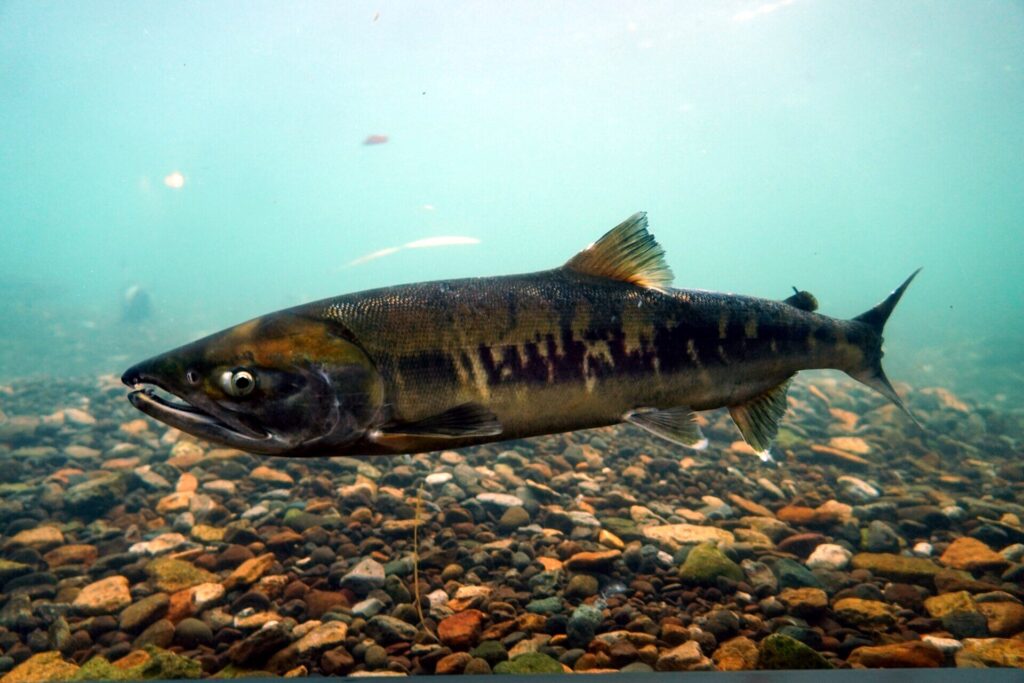
What's the difference between salmon and trout? Is it a lie that there's a difference?!
Is there a difference between salmon and trout?
In conclusion, in most cases they are the same and there is no difference.
However, in the Japanese food and beverage industry, it is customary to distinguish between wild-caught salmon that cannot be eaten raw due to parasites ("sake") and farmed salmon that are free of parasites and can be eaten raw ("salmon"). This "salmon" almost always refers to Atlantic salmon (Salmo salar), rainbow trout (Oncorhynchus mykiss), or king salmon (Oncorhynchus tshawytscha).
However, for example, the salmon (chum salmon) Oncorhynchus keta, which is distributed in Japan, is called "Chum salmon" in English.
As you can see from this, there is essentially no difference that warrants special distinction.
On the internet, there are many websites that describe this practice in the Japanese food and beverage industry as if it were common knowledge, but in reality, it is a classification that applies to a very narrow field.
However, since you should be careful about food poisoning from parasites like Anisakis, please do not eat raw salmon from packages that say "salmon" on them.
What are the characteristics of salmon? What is anadromous migration?
What exactly are salmonids?
Of course, they are a type of fish, but they have the following characteristics that are not found in other fish, or that are particularly noteworthy (Willson, 1997).
- In some cases, there is an anadromous migration, a life cycle that involves moving between the sea and freshwater (rivers, ponds, lakes).
- In some cases, they exhibit a "homing" behavior, returning to the river where they were born.
- In some cases, a physiological change called "smoltization (silvering)" may occur as a result of adaptation to seawater.
- They are usually quite large in size.
- They often have a long time to reach maturity.
- They often exhibit reproductive patterns and sexual dimorphism.
However, these characteristics have essentially evolved from "anadromous migration," a type of traversal migration, and it could be said that anadromous migration is the most important characteristic.
"Through migration" refers to underwater movement that involves traveling back and forth between the sea and rivers.
"Anadromous migration" refers to the underwater movement of fish that spend most of their life cycle in the sea but spawn in rivers.
They spend most of their life cycle in the sea, but spawn in rivers. The young fish born in rivers migrate to the sea to grow, and as adults, they return to rivers to spawn. This return to the river is called "upstream migration."
Anadromous migration also includes "catadromous migration," where fish spend most of their life cycle in rivers and spawn in the sea, and "amphidromous migration," where fish utilize either the sea or rivers only for part of their life cycle.
Anadromous migration is thought to have evolved primarily when the ocean offered higher survival rates, abundant food sources, and opportunities for faster growth (Railsback et al., 2014).
The ecological behavior of anadromous migration is extremely important to the ecosystem, as bears play a role in returning nutrients from the sea to land through predation.

Furthermore, the salmonid family's most distinctive feature, its "red flesh," is thought to be related to its anadromous migration.
What are the differences between anadromous and landlocked (river-resident) types?
Here's where it gets a bit complicated: the salmon family includes not only "anadromous" species that migrate back up rivers to the sea, but also "landlocked" species or populations that do not migrate at all. The sockeye salmon, rainbow trout, cherry salmon, amago trout, and char are typical examples of this type.
Landlocked species evolved from groups that were unable to return to the sea due to glacial expansion during the last glacial period (70,000 to 10,000 years ago) and were trapped in lakes (Subramanian & Kumar, 2023).
In other words, this species originally migrated through rivers but was left stranded on land relatively recently (though this was about 70,000 years ago), resulting in its emergence as a species of fish.
However, some may selectively avoid going to sea due to reasons such as a low survival rate in the ocean (Railsback et al., 2014).
Is salmon a white-fleshed fish? Or a red-fleshed fish?
What are the differences and definitions of white-fleshed fish and red-fleshed fish?
Is salmon considered a "red-fleshed fish"? Looking at fillets or salmon sushi, you might definitely think it is.
However, the reality is different. To understand this, we need to confirm the definitions of white-fleshed fish and red-fleshed fish.
First of all, the classification of white-fleshed fish into red-fleshed fish is not based on evolution. It is simply a classification based on characteristics that are convenient for humans (Suzuki, 1976).
There is a rough definition of the difference between white-fleshed fish and red-fleshed fish: fish with white muscles and little dark muscle are called "white-fleshed fish," while fish with red muscles and a lot of dark muscle are called "red-fleshed fish."
Chemically speaking, this can be rephrased as follows: white-fleshed fish have a low myoglobin content and their flesh appears white to the naked eye, while red-fleshed fish have enough myoglobin to give their muscles a reddish color.
Typical examples of white-fleshed fish include Spanish mackerel, grunt, pufferfish, cod, and flounder.
Typical examples of red-fleshed fish include herring, sardines, mackerel, horse mackerel, flying fish, frigate mackerel, mahi-mahi, and tuna.
However, it's important to note that white-fleshed fish also contain small amounts of dark muscle, which gives them their red color, and red-fleshed fish also contain small amounts of regular muscle, which gives them their white color.
This definition doesn't have a specific indicator like "If the percentage of dark muscle is X, it's a red-fleshed fish!", but rather it's a gradient with an ambiguous boundary.
Therefore, even among red-fleshed fish, there is a range of flesh colors, from relatively pale red to quite dark red.
However, the definition of red-fleshed fish remains unchanged: it must have a high content of dark muscle and myoglobin.
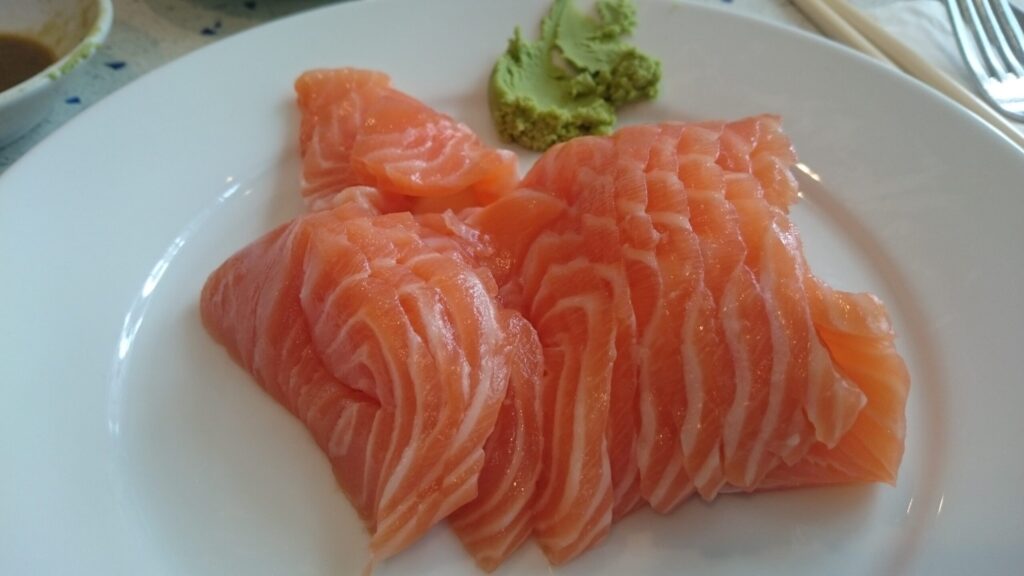
Salmon is a white-fleshed fish!?
According to this definition, which category does salmon fall into?
The red color of salmon meat is simply due to the deposition of a different component called "carotenoid" from its food into its body. It has nothing to do with myoglobin.
Therefore, although it is a reddish meat and can be called "red meat," salmon is not a red-fleshed fish, but a white-fleshed fish.
Some people might be indignant and ask, "Why isn't it considered a red-fleshed fish when it's red?" but that's because it's based on this definition.
In fact, I don't think you've ever tasted iron when eating salmon at a sushi restaurant.
It is also known that farmed salmon will develop white flesh if they are not supplemented with carotenoids (Păpuc et al., 2024).
Generally speaking, the dark muscle is used for normal swimming, while the normal muscle is used for sudden movements such as pouncing on live prey or escaping from enemy attacks.
Therefore, it can be thought that white-fleshed fish have evolved to be less active normally and more capable of sudden movements when necessary, while red-fleshed fish have evolved to be more capable of prolonged swimming.
What is the mechanism behind the red color of salmon flesh and roe (ikura)?
As mentioned above, the red color of salmon flesh and roe (ikura) is caused by the absorption and deposition of carotenoids (mostly astaxanthin, with some canthaxanthin) derived from the diet into the body.
Specifically, when salmon feed on crustaceans such as krill, copepods, and amphipods, the carotenoids contained in them are absorbed into the salmon's body (Graham et al., 2021; Păpuc et al., 2024).
Normally, in other fish, carotenoids are broken down in the body if the amount exceeds what is used. However, in salmon, the gene called BCO2-l, which is responsible for this breakdown, is broken, so the carotenoids from the food are deposited directly into the flesh and roe (Lehnert et al., 2019).
In adult fish, carotenoids are absorbed, transported in the bloodstream, and then deposited in the muscles, where they bind to myofibrillar proteins such as α-actinin, making them appear red (Matthews et al., 2006).
In salmon roe (ikura), the carotenoids from the mother fish accumulate in the yolk, making it appear red.
Why are only the flesh (meat) and roe (ikura) of salmon red or salmon pink?
So why did salmon meat and eggs evolve to be red in the first place? In conclusion, there are two leading theories: the antioxidant theory and the sex selection theory, and it is likely that both of these factors work together to produce the red color. Let's consider them in order.
Antioxidant theory: To protect muscles from damage during anadromous migration.
The most plausible theory is the "antioxidant effect theory" (Lehnert et al., 2019).
It is believed that the ancestors of salmon originally underwent many stressful activities such as spawning migrations and nest building.
It has also been proposed that by utilizing red carotenoids as an antioxidant resource in muscle tissue, damage to muscle cells was reduced, and this, in turn, promoted the evolution of anadromous migration.
Indeed, when you see the footage of them fighting with other men, being attacked by bears, and struggling to swim upstream at a furious pace, it's easy to understand why they would experience such immense stress.
The reason why carotenoids are used as an "antioxidant resource" in muscle tissue is primarily because they protect muscles from oxidative damage (Shastak & Pelletier, 2023).
Carotenoids, especially astaxanthin, are known to suppress reactive oxygen species, reduce lipid peroxidation, and maintain the health of cell membranes. Muscles experience a high level of physical activity, and their membrane lipids are easily oxidized, so this protection is directly linked to maintaining muscle function.
Astaxanthin has been reported to have up to 65 times the antioxidant power of vitamin C and 50 times that of vitamin E (Ekpe et al., 2018), and is also known to suppress oxidative damage to cell membranes by up to 41% (McNulty et al., 2007), surpassing the effects of other antioxidants.
In fact, studies have shown that depletion of astaxanthin and vitamin E in Atlantic salmon negatively affects autoxidative defense and fatty acid metabolism (Bell et al., 2000).
In summary, the red color evolved to enable them to withstand extremely long-distance swimming and spawning migrations involving fasting. In this case, the red color was purely coincidental, just like with carrots.
Furthermore, in humans, astaxanthin is known to improve systemic functions, including the nervous and immune systems, through its powerful antioxidant and anti-inflammatory effects (Nishida et al., 2023).
Sexual selection theory: To be attractive
Another prominent theory is the "sex selection theory." Sex selection includes same-sex selection and opposite-sex selection, and here we are referring to opposite-sex selection.
Specifically, it has been found that female red-bodied females prefer red-bodied males. In other words, red-bodied males are more attractive.
Furthermore, even after mating, females have been observed to physiologically favor the sperm of males of the same color as themselves. It's surprising that they can do that, but this kind of physiological preference in males is widely known in evolutionary biology as "cryptic female choice." However, the physiological mechanism behind it is still not well understood.
This theory explains the evolutionary reasons behind the color red.
However, this theory doesn't adequately explain why the females are also red. If the above were true, the females' bodies and eggs shouldn't be red, but that's not the case.
This theory interprets the red color of female flesh as a "byproduct of genetic constraint," meaning that males and females share the gene that makes them red (i.e., there is a gene for red color outside of the sex chromosomes). However, such an explanation is rarely used in modern evolutionary biology.
A combined theory of antioxidant activity and sex selection.
In reality, these are not opposing theories, but rather it seems reasonable to consider that both had an influence.
In other words, after both males and females developed red bodies due to antioxidant properties, females began to prefer red males.
This might sound a bit vulgar, but for example, even among humans, skills like music and comedy are inherently excellent regardless of gender, but sometimes they can be linked to sexual attractiveness.
In salmon, too, the antioxidant properties may have originally been important, but gradually, the presence of antioxidants in males became an indicator of superiority. This may have led to a stronger tendency for red females to prefer red males and favor the sperm of males of the same color as themselves. This is a well-known biological concept known as "pre-adaptation" or "runaway theory."
Why are salmon roe (ikura) red?
What about salmon roe (ikura)?
A study investigating the correlation between carotenoid concentration in salmon roe, hatching survival rate, and resistance to a specific disease (vibrio disease) found that higher carotenoid levels were associated with higher hatching survival rates and greater disease resistance (Tyndale et al., 2008).
This is thanks to the antioxidant effects of carotenoids, as mentioned above.
Therefore, it is thought that the only reason eggs are red is due to antioxidant activity.
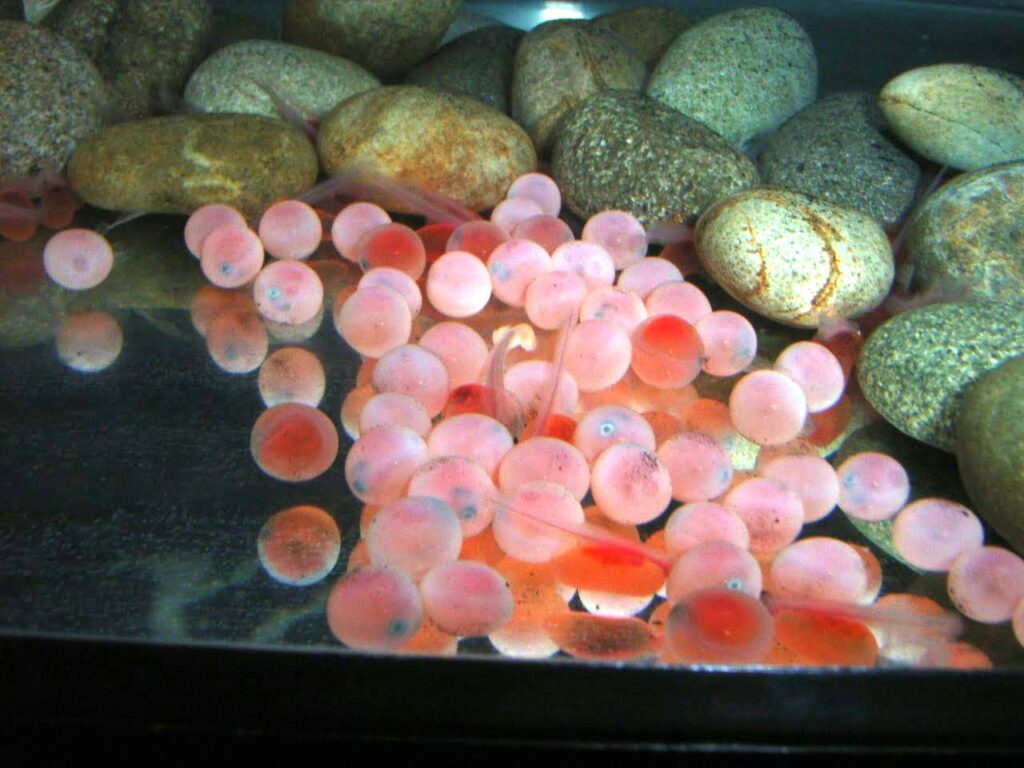
Why is salmon *only* red? It turns out that having red flesh has a lot of disadvantages!?
In reality, salmon pink has a lot of disadvantages.
Up to this point, I've only explained the advantages of a fish's body turning red, but in reality, having red flesh or eggs is full of disadvantages for fish (Lehnert, 2016; Lehnert et al., 2019).
Predation experiments with rainbow trout have shown that red eggs (ikura) are significantly more likely to be preyed upon than white eggs (Lehnert et al., 2019).
Certainly, from a human perspective, the red color of salmon roe might make it stand out, look beautiful, and appear delicious (though this is subjective).
In nature, when prey is clearly distinguishable by its color, it's often a "warning coloration" indicating that it's poisonous, but that's not always the case. In fact, humans and bears love it.
Furthermore, it has been pointed out that even if eggs have a high amount of carotenoids, there may be no significant benefit in survival rate, growth, immunity, or stress response unless the environment is particularly stressful or contains pathogens (Lehnert, 2016).
Saying there's no profit might give the impression that it's a break-even situation, but in reality, it involves "retaining" carotenoids throughout the body using genes, which means consuming energy for something that's essentially useless (Tyndale et al., 2008). In other words, it's a loss with zero profit.
Furthermore, high levels of carotenoids are also considered to be toxic to the plant itself (Lehnert et al., 2019).
Therefore, the only conditions under which the flesh or eggs of a fish turn red are when the aforementioned benefits (antioxidant effect, attractiveness) outweigh the disadvantages. That's why most fish have white flesh.
Why salmon are "only" red
Conversely, in most cases, the advantages of salmon outweigh these disadvantages, because they undertake intense upstream migrations that other fish do not.
Moreover, salmon have a mutation that has destroyed the BCO2-l gene, which is necessary for breaking down carotenoids, so they maintain their carotenoid intake from their feed. Therefore, they need to wait for a mutation that will revert their flesh back to white.
Salmon may be firmly destined to "live as red" due to their migratory behavior and genetic constraints.
It is also known that the capelin (Spirinchus lanceolatus), which also migrates through rivers, has very high levels of astaxanthin during the summer, though not to the same extent as salmon (Bragadóttir, 2001).
There was a salmon that had turned white!?
However, there are rare cases of people who have escaped this constraint (Lehnert et al., 2019).
For example, in the king salmon (Oncorhynchus tshawytscha), there are "red morphs" and "white morphs," which differ genetically in the amount of carotenoid deposition.
This suggests that in environments where predation rates are high for some reason, the aforementioned disadvantages (predation pressure) outweigh the inherent advantages, resulting in situations where the "white form" is partially advantageous, and thus both patterns coexist.
This raises the question of what will happen to landlocked salmon species in the future, but we don't really know yet.
References
Bell, JG, McEvoy, J., Tocher, DR, & Sargent, JR (2000). Depletion of α-tocopherol and astaxanthin in Atlantic salmon (Salmo salar) affects autoxidative defense and fatty acid metabolism. The Journal of Nutrition, 130 (7), 1800-1808. https://doi.org/10.1093/jn/130.7.1800
Bragadóttir, M. (2001). On the stability of Icelandic capelin meal [Master's thesis, Department of Food Science University of Iceland]. https://www.matis.is/media/matis/utgafa/Skyrsla_17-00.pdf
Ekpe, L., Inaku, K., & Ekpe, V. (2018). Antioxidant effects of astaxanthin in various diseases a review. Journal of Molecular Pathophysiology, 7 (1), 1-6. https://www.jmolpat.com/abstract/antioxidant-effects-of-astaxanthin-in-various-diseasesa-review-48193.html
Graham, C., Pakhomov, EA, & Hunt, BP (2021). Meta-analysis of salmon trophic ecology reveals spatial and interspecies dynamics across the North Pacific Ocean. Frontiers in Marine Science, 8, 618884. https://doi.org/10.3389/fmars.2021.618884
Lehnert, SJ (2016). Why are salmon red? Proximate and ultimate causes of flesh pigmentation in Chinook salmon [Doctoral dissertation, University of Windsor]. https://www.proquest.com/openview/d2e876656328ff473b13c20c8ad4b5d6/
Lehnert, SJ, Christensen, KA, Vandersteen, WE, Sakhrani, D., Pitcher, TE, Heath, JW, … & Devlin, RH (2019). Carotenoid pigmentation in salmon: variation in expression at BCO2-l locus controls a key fitness trait affecting red coloration. Proceedings of the Royal Society B: Biological Sciences, 286 (1913), 20191588. https://doi.org/10.1098/rspb.2019.1588
Matthews, SJ, Ross, NW, Lall, SP, & Gill, TA (2006). Astaxanthin binding protein in Atlantic salmon. Comparative Biochemistry and Physiology Part B: Biochemistry and Molecular Biology, 144 (2), 206-214. https://doi.org/10.1016/j.cbpb.2006.02.007
McNulty, HP, Byun, J., Lockwood, SF, Jacob, RF, & Mason, RP (2007). Differential effects of carotenoids on lipid peroxidation due to membrane interactions: X-ray diffraction analysis. Biochimica et Biophysica Acta (BBA) -Biomembranes, 1768 (1), 167-174. https://doi.org/10.1016/j.bbamem.2006.09.010
Nishida, Y., Berg, PC, Shakersain, B., Hecht, K., Takikawa, A., Tao, R., … & Maoka, T. (2023). Astaxanthin: past, present, and future. Marine Drugs, 21 (10), 514. https://doi.org/10.3390/md21100514
Păpuc, T., Cocan, D., Constantinescu, R., Răducu, C., LadoșI, D., LadoșI, I., … & Mireșan, V. (2024). Carotenoids in salmonid aquafeeds: a review of use and effects. Scientific Papers. Series D. Animal Science, 67 (1), 764-775. ISSN: 2285-5750, https://animalsciencejournal.usamv.ro/pdf/2024/issue_1/Art93.pdf
Railsback, SF, Harvey, BC, & White, JL (2014). Facultative anadromy in salmonids: linking habitat, individual life history decisions, and population-level consequences. Canadian Journal of Fisheries and Aquatic Sciences, 71 (8), 1270-1278. https://doi.org/10.1139/cjfas-2014-0091
Shastak, Y., & Pelletier, W. (2023). Captivating colors, crucial roles: Astaxanthin's antioxidant impact on fish oxidative stress and reproductive performance. Animals, 13 (21), 3357. https://doi.org/10.3390/ani13213357
Suzuki, Taneko. (1976). Red-fleshed fish and white-fleshed fish. Cooking Science, 9 (4), 182-187. https://doi.org/10.11402/cookeryscience1968.9.4_182
Subramanian, S., & Kumar, M. (2023). Genomic footprints of bottleneck in landlocked salmon population. Scientific Reports, 13 (1), 6706. https://doi.org/10.1038/s41598-023-34076-0
Tyndale, ST, Letcher, RJ, Heath, JW, & Heath, DD (2008). Why are salmon eggs red? Egg carotenoids and early life survival of Chinook salmon (Oncorhynchus tshawytscha). Evolutionary Ecology Research, 10, 1187-1199. https://uwindsor.scholaris.ca/server/api/core/bitstreams/a71aa19d-e7db-4401-91e9-faef4e8f30bf/content
Willson, MF (1997). Variation in salmonid life histories: patterns and perspectives (Vol. 498). US Department of Agriculture, Forest Service, Pacific Northwest Research Station. ISBN: 9780265016275, https://doi.org/10.2737/PNW-RP-498