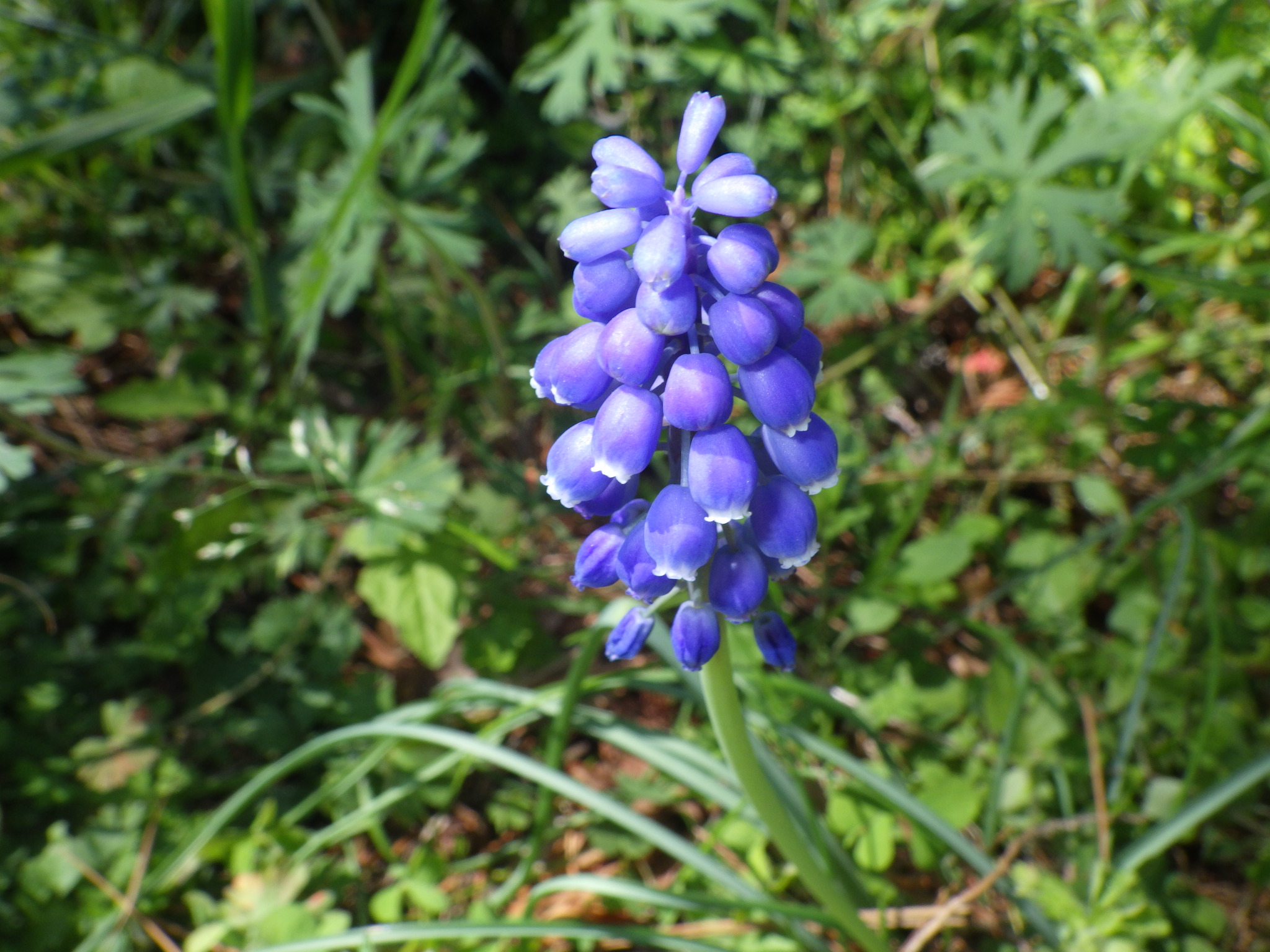
Muscari, grape muscari, and blue muscari are all perennial plants belonging to the genus Muscari in the family Asparagaceae (formerly Asparagaceae). In early spring, from March to April, they produce numerous blue, urn-shaped flowers that hang downwards in racemes, and their cuteness makes them very popular as ornamental plants in gardens. However, in Japan, there are few proper descriptions of how to distinguish between different species of Muscari, which seems to cause confusion. A botanical guide from the United States describes how to distinguish them, and according to it, they can be distinguished by checking the number of flowers per inflorescence and the color of the flowers. This article will explain the classification and morphology of the genus Muscari.
What are Muscari, Grape Muscari, and Blue Muscari?
Muscari neglectum, also known as grape hyacinth, is a perennial plant distributed along the Mediterranean coast of Europe, North Africa, West Asia, and the Caucasus, growing in roadsides, fields, forests, and abandoned gardens. It is cultivated worldwide for ornamental purposes, including in Japan, and has become naturalized in places like the UK and North America.
Grape muscari (Muscari armeniacum), also known as large grape muscari, muscari armeniacum, or muscari armeniacum, is a perennial plant distributed in Yugoslavia, Bulgaria, Greece, the Caucasus, and Turkey. It is cultivated worldwide for ornamental purposes, including in Japan, and has become naturalized in Western Europe and North America.
Muscari botryoides, also known as blue muscari, is a perennial plant distributed throughout Europe, from France to Ukraine, growing in roadsides, fields, forests, and abandoned gardens. It is cultivated worldwide for ornamental purposes, including in Japan, and has become naturalized in places like the UK and North America.
All of these are perennial plants belonging to the Muscari genus of the Asparagaceae family (formerly known as the Asparagaceae family). In early spring, from March to April, they produce numerous blue, urn-shaped flowers that hang downwards in racemes. Perhaps because of their cute appearance, they are very popular as ornamental plants in gardens. It would not be an exaggeration to say that you are bound to see them in gardens and other places when walking around town.
However, when it comes to muscari species, there are few resources in Japan that properly describe how to distinguish between different types, and even when searching for overseas photos using Google Image Search, many of them are incorrect. The Japanese Wikipedia also seems to contain errors. There is little accurate information available on how to distinguish between muscari species, which may be causing many people trouble.
What are the differences between Muscari, Grape Muscari, and Blue Muscari?
The American botanical guide notes that there are relatively clear differences between these three species (Flora of North America Editorial Committee, 2002).
First, regarding the flowers that grow in racemes, there is a difference between Muscari and Grape Muscari, which have 20 to 40 flowers, and Blue Muscari, which has 12 to 20 flowers.
In short, Muscari and grape muscari have more flowers. This is also the origin of the name "grape muscari," likely because the inflorescence resembles a bunch of grapes.
Furthermore, there is a difference in the leaves: while Muscari and grape Muscari have leaves that are 2-4 mm wide, blue Muscari has leaves that are 3-8 mm wide. In short, blue Muscari generally has slightly thicker leaves.
While distinguishing between Muscari species is relatively easy, the differences between Muscari and Muscari rupestris are said to be minimal, mainly just the color of the corolla.
Specifically, while the corolla of Muscari is a dark blue, that of Grape Muscari is a beautiful blue to sky blue. In horticultural varieties, Grape Muscari can also be white.
Because the main difference is color, distinguishing them using dried specimens is considered difficult.
In Japan, I rarely see true "muscari," and I believe that most of them are either grape muscari or blue muscari.
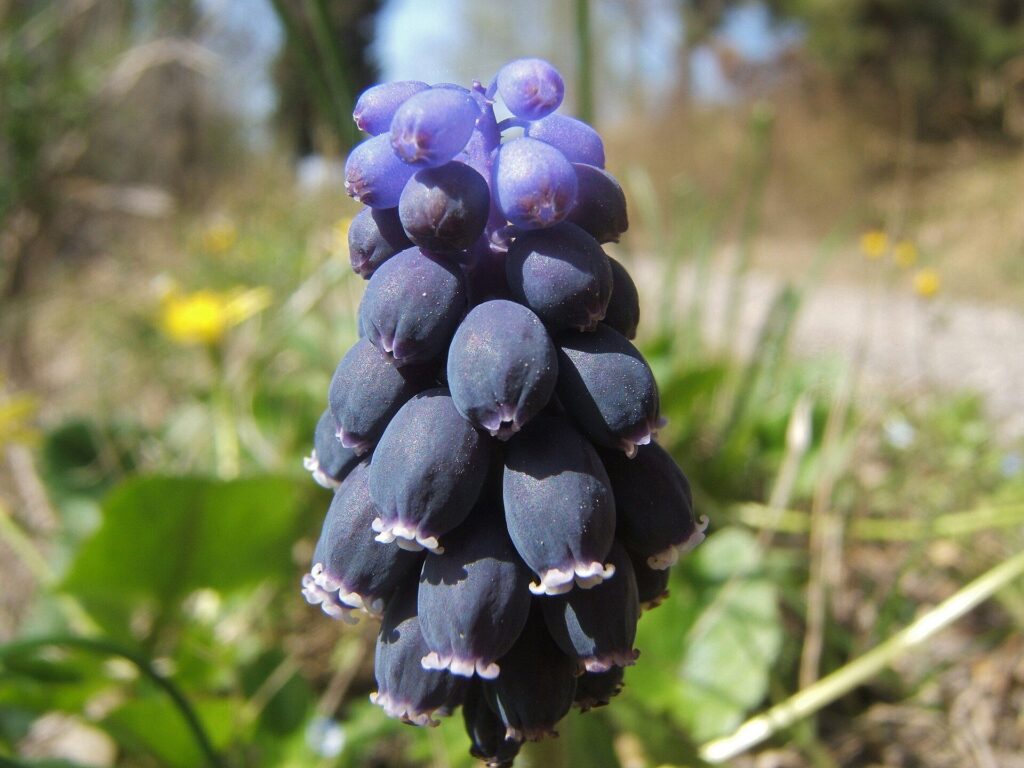
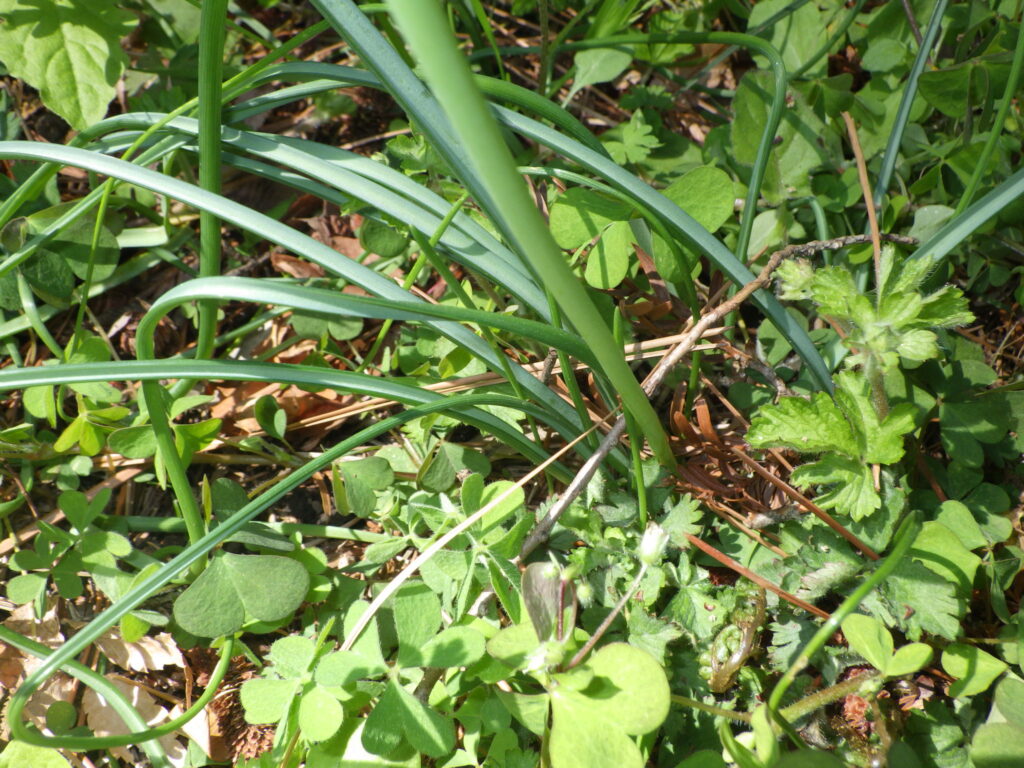
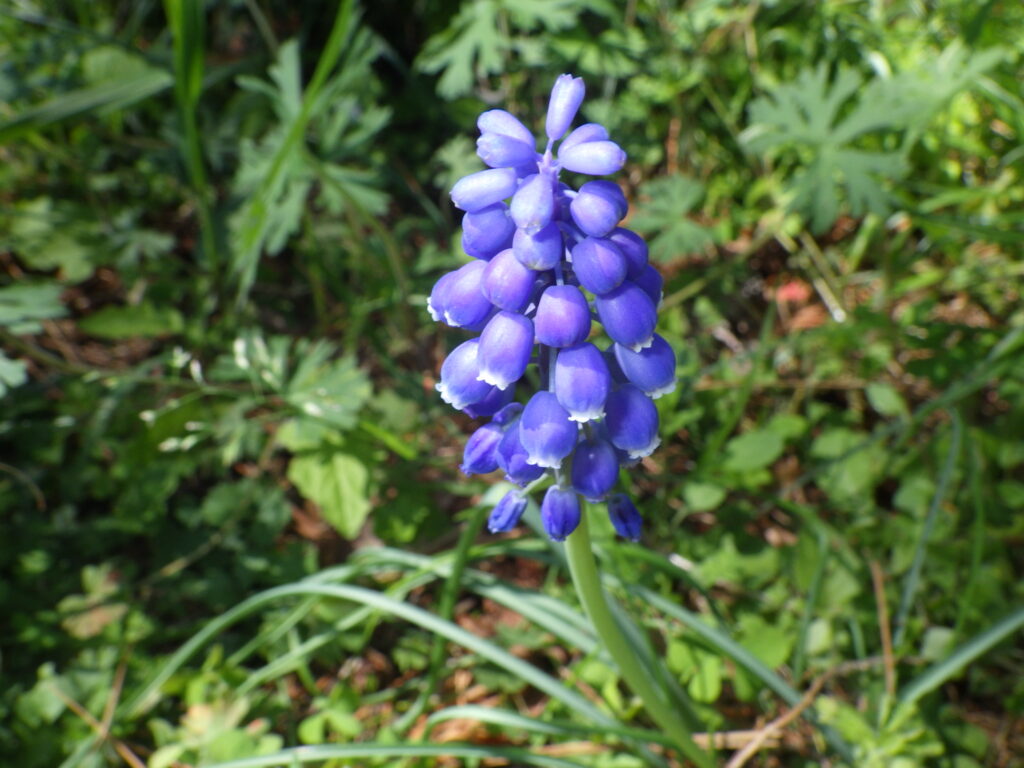
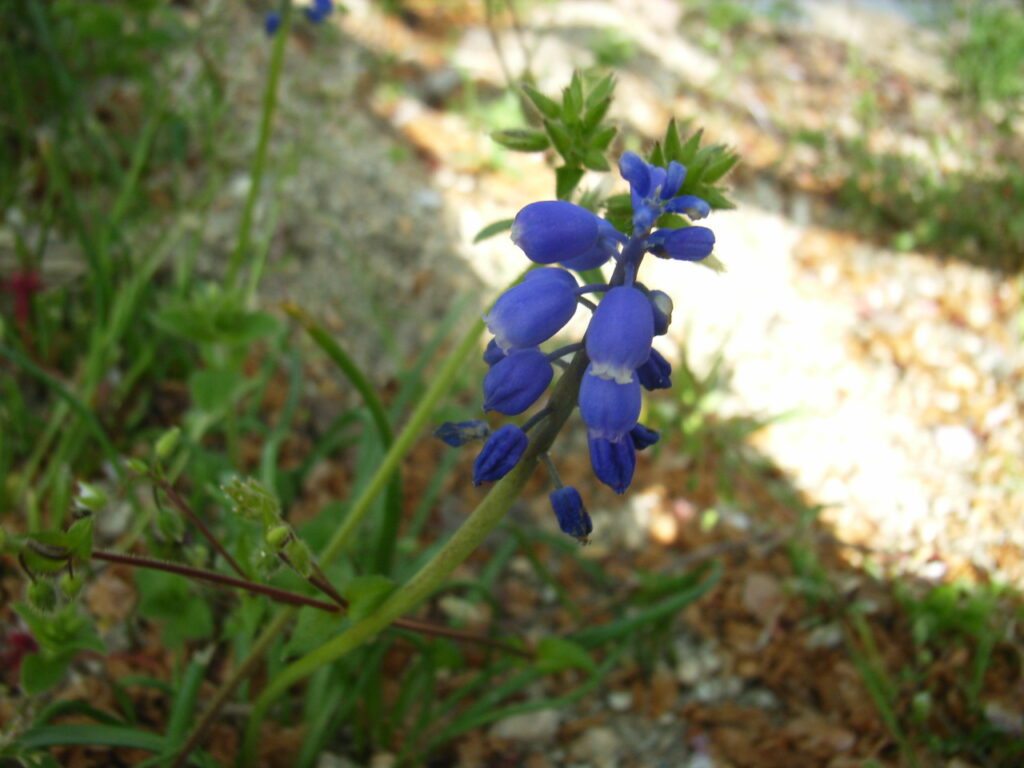
Are there any other similar varieties? What's the difference between this and lavender?
While many other species of the Muscari genus are known, they are rare in Japan, so I will omit them.
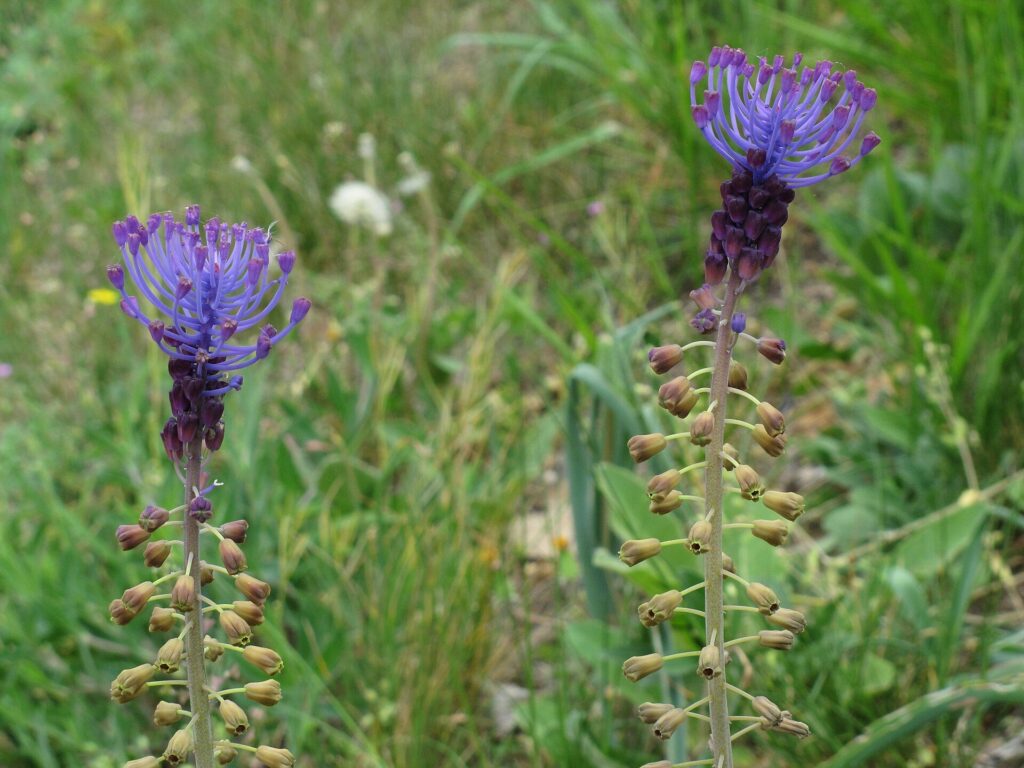
The species known as "feathered muscari" (Muscari comosum), also called Muscari comosum, has very long flower stalks at the top of its inflorescence, resembling the "feathers" used in the Japanese game of battledore and shuttlecock, and is rarely confused with the three species mentioned above.
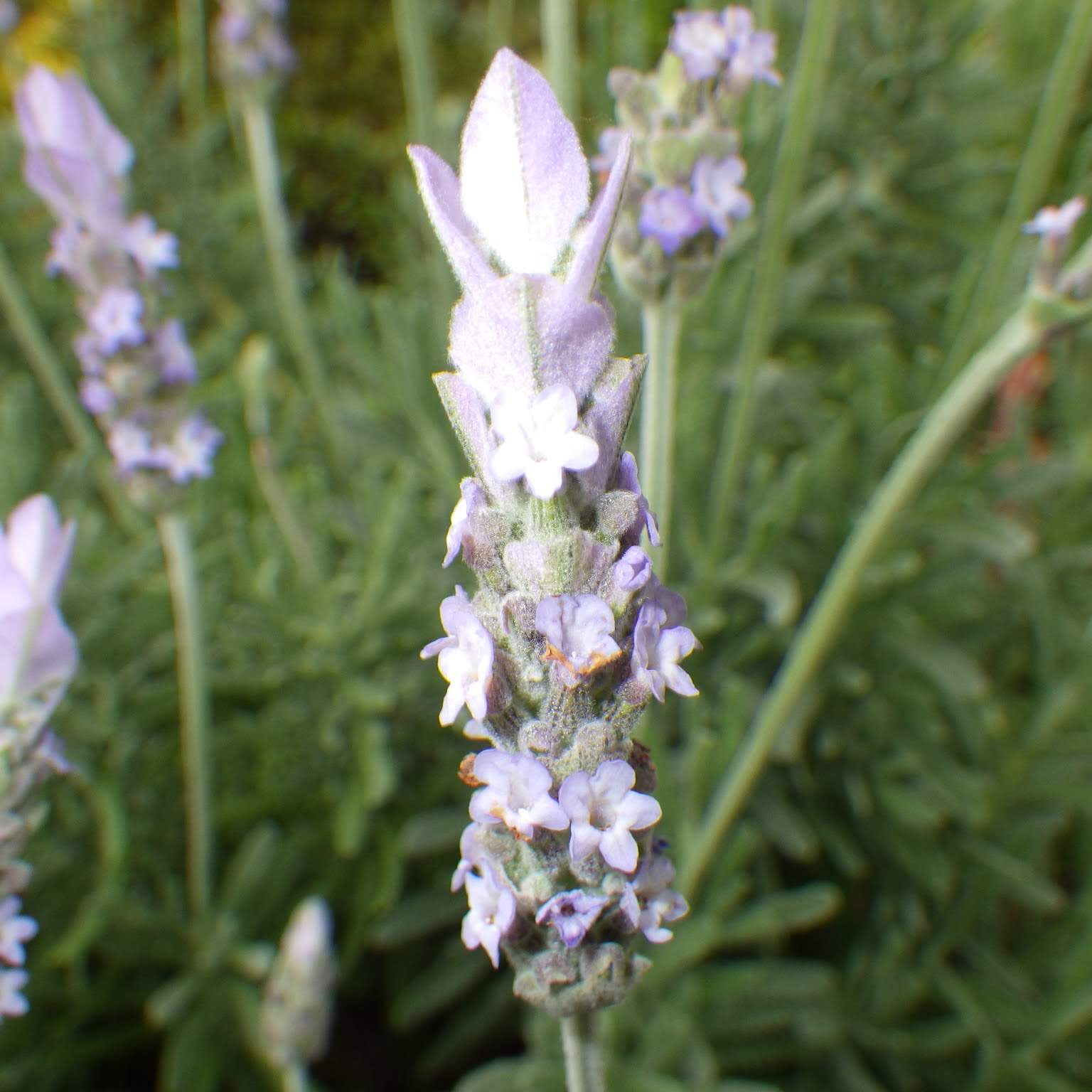
Google searches often include questions about the difference between lavender and muscari. While it's true that lavender, like muscari, produces blue inflorescences, it belongs to the mint family, has hairy and fragrant leaves, and its corollas face upwards. These differences make it difficult to find common ground. Please compare it to the photos in the other article.
References
Flora of North America Editorial Committee. 2002. Flora of North America (Vol. 26 Liliidae). Oxford University Press, Oxford. 752pp. ISBN: 9780195152081