ecology

Sponsored Link
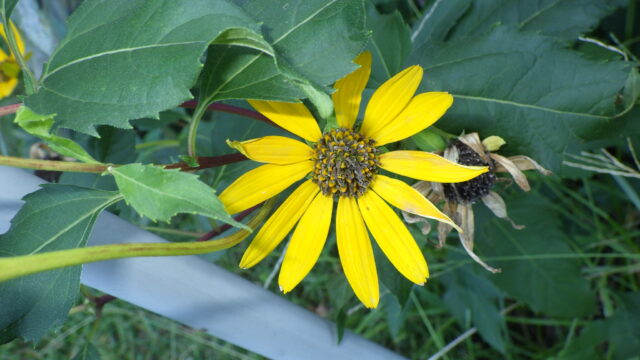
07.3877.a False Jerusalem Artichoke Flower plant

What are the differences between Jerusalem artichoke, dog Jerusalem artichoke, and false Jerusalem artichoke? An explanation of how to distinguish between similar species.

Jerusalem artichoke, Helianthus tuberosus, and false Jerusalem artichoke all belong to the Asteraceae family. They share characteristics such as erect stems, scales on the receptacle, and yellow ray florets, but their overall appearance is so lacking in distinct features that they could be described as "The Asteraceae." Distinguishing between them is difficult if you only focus on the flower heads...
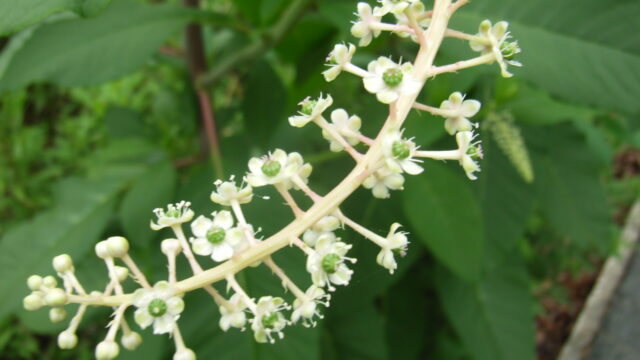
07.2830 American Pokeweed Flower plant

What are the differences between Japanese pokeweed (Phytolacca americana), American pokeweed (Phytolacca americana var. japonica), and round pokeweed (Phytolacca americana var. japonica)? How do they differ from burdock (Phytolacca americana)? We'll explain how to distinguish between similar species! Even though it's highly poisonous to humans, birds are unaffected!?

Japanese pokeweed (Phytolacca americana), American pokeweed (Phytolacca oleracea), and round pokeweed (Phytolacca oleracea) all belong to the Phytolaccaceae family and genus Phytolacca. Their names come from the fact that their fleshy, thick roots resemble those of burdock (Philadelphia arvensis), and they are characterized by their entirely poisonous nature and dark purple berries. However, the three species are often confused...
Posts 24088 Featured Image Salmon Red Color Evolution Antioxidant animal

Why are salmon flesh and salmon roe red (pink)? A scientific explanation of the surprising evolutionary reasons and antioxidant properties!

It's common knowledge that salmon sashimi (meat), fillets, and salmon roe are red or salmon pink. Whether you're at a sushi restaurant, playing Salmon Run in the game Splatoon, or seeing Sanrio's KIRIMI-chan, you accept it without question...
Posts 20230 Featured Image Wordpress Bed Bug Detection And Eradication Guide animal

[Real-life experience] How to find bed bugs and the complete procedure for eradicating them! A thorough explanation of bite marks, eggs, and their life cycle.

Recently, bed bugs appeared in my apartment. Bed bugs (Cimex lectularius) are indoor pests belonging to the genus Cimex in the family Cordycepsidae, order Hemiptera. In Japan, after World War II, effective insecticides were used to combat them...
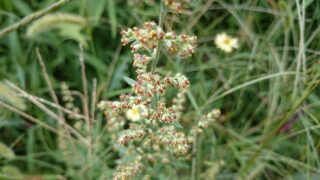
07.3928 Mugwort flower plant

What are the differences between mugwort, wormwood (Artemisia princeps), bitter wormwood, and male wormwood? We'll explain how to distinguish between similar species! Did you know that mugwort is used not only in rice cakes but also in moxibustion and medicine?

Artemisia princeps, Artemisia japonica, Artemisia urticaria, and Artemisia japonica are all members of the Artemisia genus in the Asteraceae family, and are extremely common perennial herbs that dominate small vacant lots from urban areas to mountainous fields. In addition to having a cottony, fluffy underside to its leaves, it belongs to the Asteraceae family...
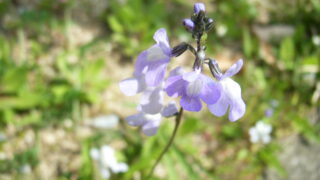
07.3397 *Linaria japonica* (flower) plant

What are the differences between *Linaria japonica*, *Linaria cantoniensis*, and *Linaria thunbergii*? We explain how to distinguish between similar species! Despite their showy flowers, they are entirely self-pollinating!?

*Linaria japonica*, *Linaria cantoniensis*, and *Linaria thunbergii* all belong to the Plantaginaceae family and are herbaceous plants that bear cute, blue-colored "lip-shaped flowers" (flowers with separate upper and lower lips) with a swollen center on the lower lip. Although they are introduced species, they are frequently seen in urban areas, but their flowers...
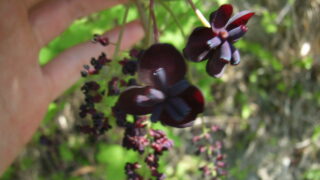
07.1157 Akebia trifoliata (female flower) plant

What are the differences between Akebia, Akebia trifoliata, Akebia quinata, and Stauntonia hexaphylla? We explain how to distinguish between similar species! Are the large female flowers a way to deceive insects? Who eats the fruit in the wild?

Akebia, Akebia trifoliata, Akebia quinata, and Stauntonia hexaphylla all belong to the Akebia family. They are climbing plants with palmately compound leaves, and a key characteristic is that male and female flowers bloom separately. Akebia and Akebia trifoliata, in particular, are famous for the edible white, gelatinous pulp inside their opened fruits. For many, it's a taste of the countryside from their childhood...
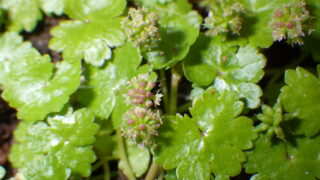
07.4209 Hydrocotyle sappan (flower) plant

What are the differences between *Hydrocotyle japonica*, *Hydrocotyle sibthorpioides*, *Hydrocotyle japonica*, and *Hydrocotyle maximowiczii*? We'll explain how to distinguish between similar species! What insects visit these tiny flowers?

Hydrocotyle sibthorpioides, Hydrocotyle japonica, Hydrocotyle kobus, and Hydrocotyle sibthorpioides all belong to the genus Hydrocotyle in the family Araliaceae. These perennial herbs creep along the ground in slightly shaded areas of forests and other woodlands, and are notable for their small, nearly orbicular simple leaves. However, their flowers and fruits are small and inconspicuous...
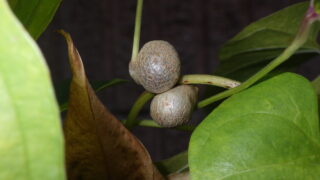
07.0282 Nagaimo (Japanese yam) yam yam plant

What are the differences between Japanese yam (Dioscorea japonica), Chinese yam (Dioscorea japonica), Japanese yam (Dioscorea tokoro), and bitter yam (Dioscorea japonica)? We explain how to distinguish between similar species! Why do they produce bulbils? Their reproductive strategies were diverse!

Japanese yam (Dioscorea japonica), Chinese yam (Dioscorea longa), Japanese yam (Dioscorea tokoro), and bitter yam (Dioscorea japonica) all belong to the genus Dioscorea in the family Dioscoreaceae. They produce edible tubers and bulbils, and are very common climbing perennial plants often seen in urban areas. The genus Dioscorea, also known as yam, is a group that includes a vast number of species...
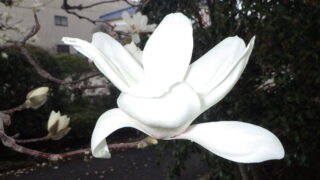
07.0120 White Magnolia Flower plant

What are the differences between white magnolia, kobushi magnolia, star magnolia, and tamushiba magnolia? We'll explain how to distinguish between similar species! Is it a myth that their flowers are primitive? What is the purpose of their conspicuous red seeds?

White magnolia, kobushi magnolia, star magnolia, and tamushiba all belong to the Magnolia genus of the Magnoliaceae family. Being deciduous trees, they shed their leaves in winter, and around April, like cherry blossoms, they produce large, white, polypetalous flowers—one per branch—before the leaves appear. A key characteristic of these trees is...
Sponsored Link