Japanese yam (Dioscorea japonica), Chinese yam (Dioscorea longa), Japanese yam (Dioscorea tokoro), and bitter yam (Dioscorea japonica) all belong to the genus Dioscorea in the family Dioscoreaceae. They produce edible tubers and bulbils and are very common climbing perennial plants often seen in urban areas. The genus Dioscorea, also known as yam, is a vast group containing many species, but these four species are the most common in Japan. However, they are often confused, especially Japanese yam (Dioscorea japonica ) and Chinese yam (Dioscorea longa), which are used to make "tororo" (grated yam), and this confusion has even occurred at the government level. While there are other species besides these four, these four can be distinguished by the shape of their leaves and flowers, and the presence or absence of tubers (rhizomes) and bulbils. Their reproductive strategies are extremely diverse; tubers, bulbils, flowers, and fruits are all involved in reproduction, but how they are used differs greatly from species to species. Therefore, although they are often confused, each species has a strong biological individuality. This article will explain the classification, morphology, and ecology of the genus Dioscorea.
- What are Japanese yam, Chinese yam, Japanese nightshade, and bitter yam?
- What are the differences between Japanese yam (Dioscorea japonica), Chinese yam (Dioscorea tokoro), and bitter yam (Dioscorea japonica)?
- What are the differences in how to use Japanese yam (Dioscorea japonica), Chinese yam (Dioscorea tokoro), and bitter yam (Dioscorea japonica)?
- Are there any other similar species?
- How do they reproduce? Why do they reproduce through bulbils and pollination?
- How do they pollinate? The insects that visit them vary completely depending on the species!
- What are the seed dispersal methods?
- References
What are Japanese yam, Chinese yam, Japanese nightshade, and bitter yam?
Japanese yam (Dioscorea japonica), also known as yamaimo or jinenjo, is a climbing perennial herb distributed in the temperate to subtropical regions of Honshu, Shikoku, Kyushu, and the Ryukyu Islands in Japan, as well as the Korean Peninsula, China, and Taiwan. It commonly grows in alluvial plains and mountainous areas, along forest edges, roadsides, field edges, vacant lots, and park planting areas. However, since only the underground rhizome (edible part) is annual, the leaves above ground wither in winter.
Nagaimo (Japanese yam), also known as Dioscorea polystachya, is a climbing perennial herb distributed in the temperate to subtropical regions of Honshu, Shikoku, Kyushu, and the Ryukyu Islands in Japan; the Korean Peninsula; China; and Taiwan. It grows in alluvial plains and hillsides of the Castanopsis and Quercus zones, along forest edges, fields, vacant lots, and park planting areas. However, since only the underground rhizome (edible part) is annual, the leaves above ground wither in winter. There are various theories regarding the distribution of nagaimo in Japan; one theory suggests it may not be a native species, but rather was introduced from China and may have been cultivated in the late Jomon period, preceding grains and rice (Yoshida, 2019). Numerous cultivated varieties exist.
Dioscorea tokoro is a climbing perennial herb that is distributed in Hokkaido, Honshu, Shikoku, and Kyushu in Japan; as well as in the temperate to warm zones of the Korean Peninsula and China. It is very common to find it growing in alluvial plains and mountainous areas from the Castanopsis and Quercus zones to the Beech zone, including forest edges, grasslands, vacant lots, and planted areas in parks.
Dioscorea bulbifera, also known as space potato or air potato, is a climbing perennial herb widely distributed in Honshu, Shikoku, Kyushu, and the Ryukyu Islands of Japan; and in the subtropical to tropical regions of Asia and Oceania. It grows in forest edges and grasslands along rivers in alluvial plains and hilly areas of the Castanopsis and Quercus zones.
All of these belong to the genus Dioscorea in the family Dioscoreaceae, and are very common climbing perennial plants that can often be seen even in urban areas. The genus Dioscorea is a group that includes a vast number of species, but these four species are the most commonly encountered in Japan.
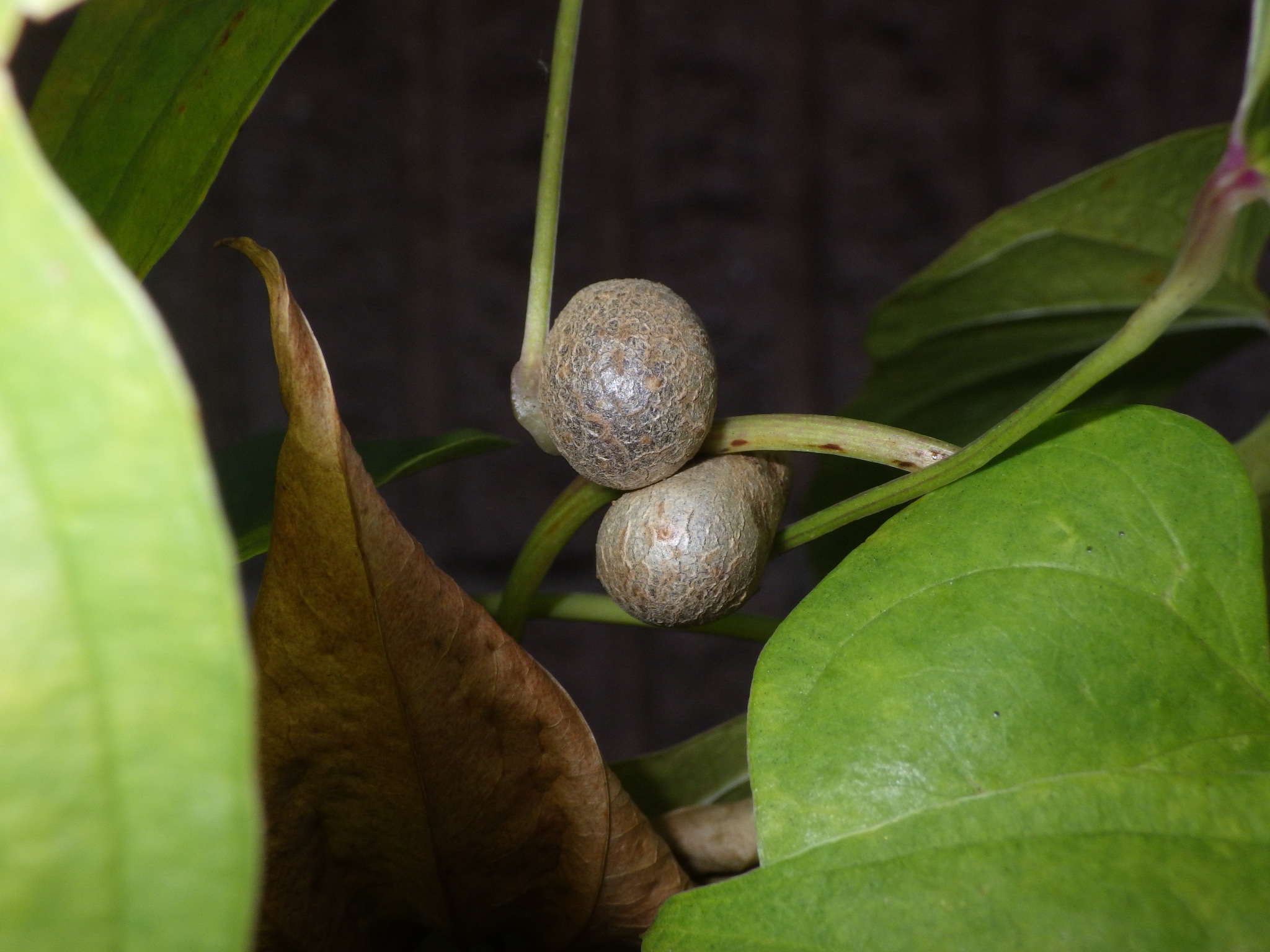
Its most distinctive feature is that it can form roots or bulbils, commonly referred to as "potatoes." Of the four species, only Japanese yam (Dioscorea japonica) and Chinese yam (Dioscorea japonica) are edible in Japan.
The root of the nagaimo yam is eaten as "tororo" when grated, and it's an indispensable topping when you're eating out and paying a little extra for it, especially with soba noodles or rice bowls.
However, Japanese yam (Dioscorea japonica) and Chinese yam (Dioscorea japonica) are extremely often confused. They are so confused that, according to statistics from the Ministry of Agriculture, Forestry and Fisheries, they weren't even distinguished from each other until 2008. Few websites clearly explain the difference between them.
Furthermore, in the wild, Japanese yam (Dioscorea japonica) and Dioscorea tokoro often grow together, so it is necessary to distinguish between the two.
Furthermore, Japanese specimens of bitter cinnamon are bitter and not typically eaten, so it's necessary to distinguish them from other plants.
Although these groups are very similar, there are often situations where it is necessary to distinguish between them.
What are the differences between Japanese yam (Dioscorea japonica), Chinese yam (Dioscorea tokoro), and bitter yam (Dioscorea japonica)?
The genus Dioscorea is a very large group of known species, and it's difficult to describe all the differences here, but I'll focus on four relatively common species.
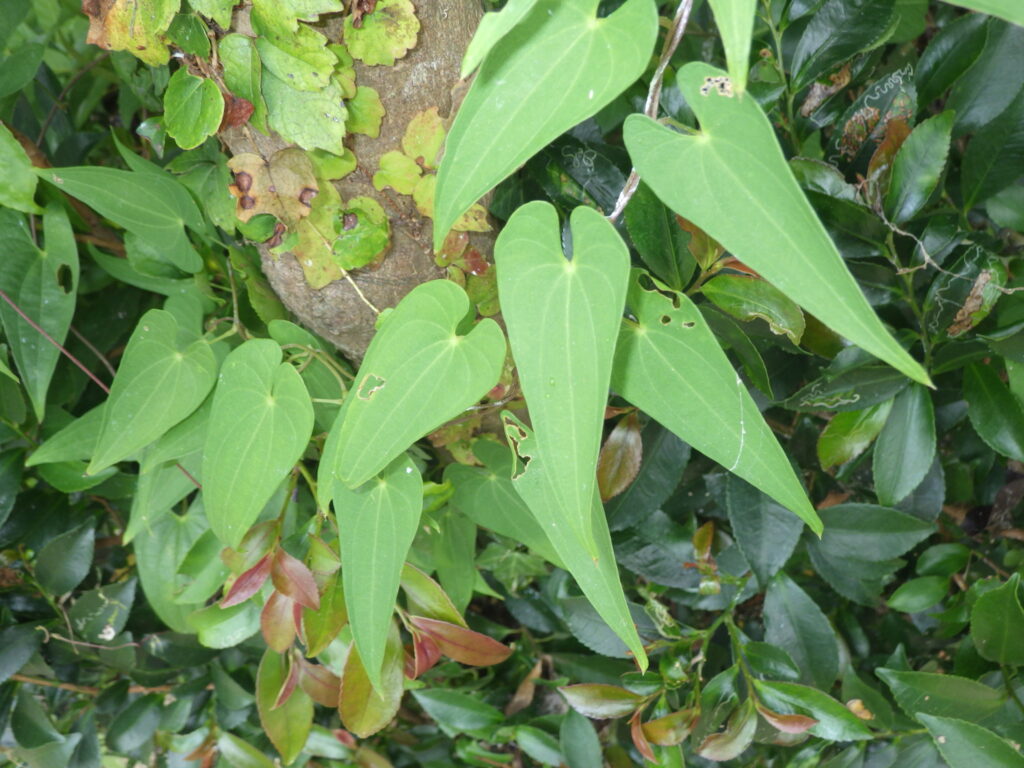
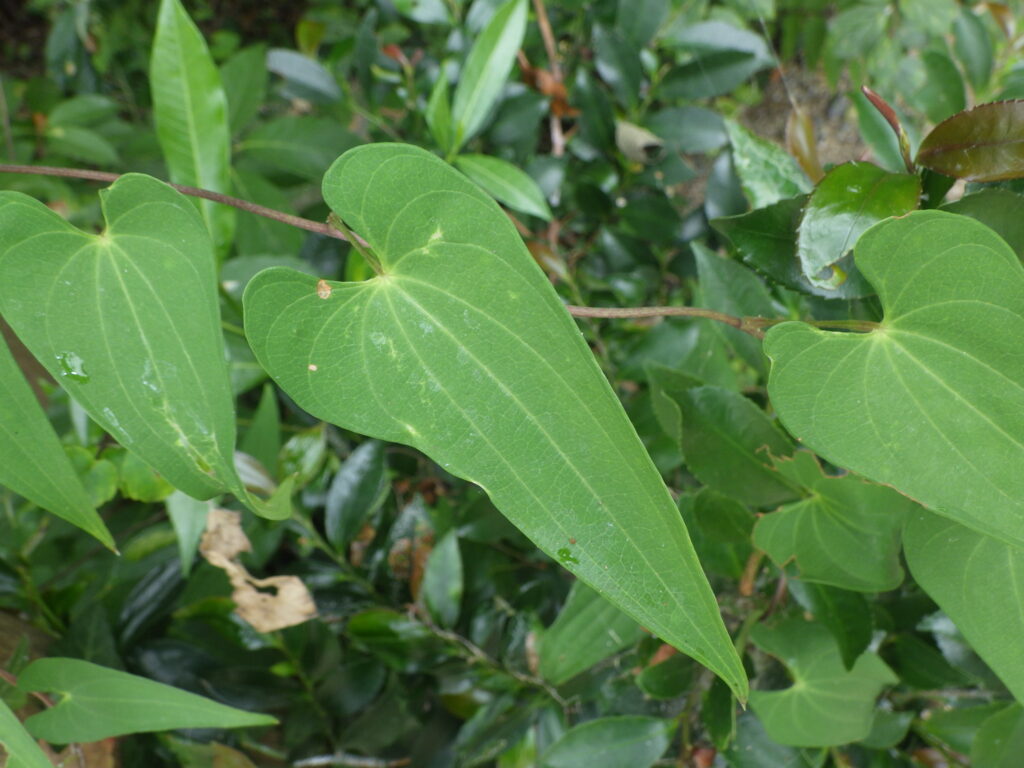
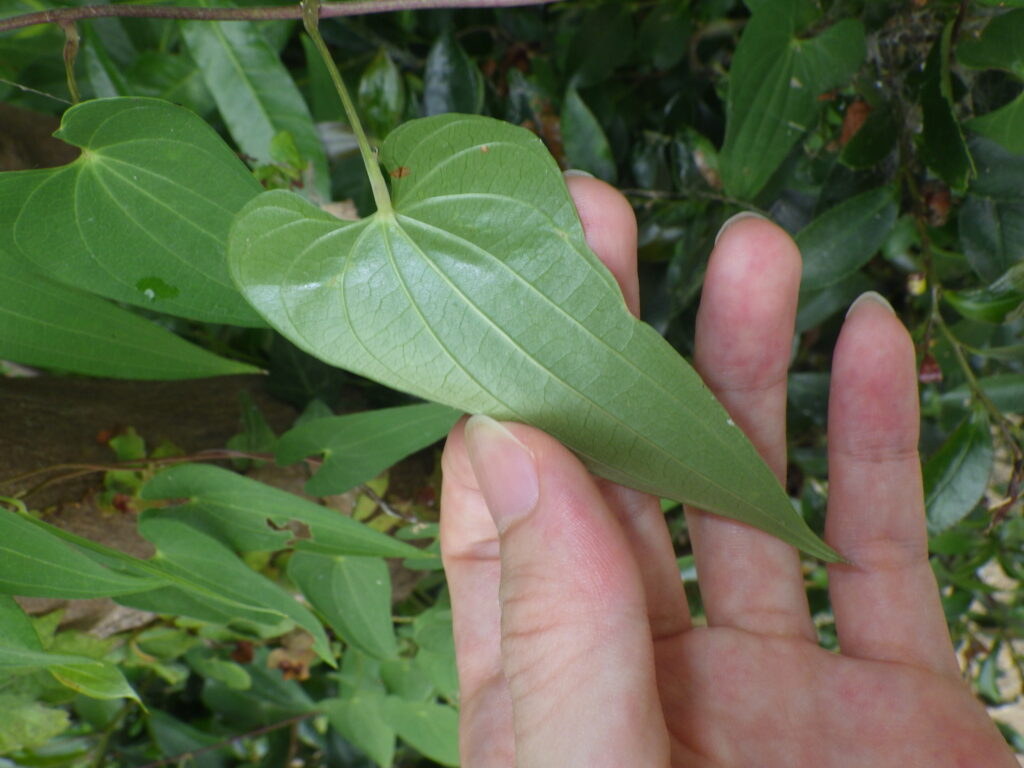
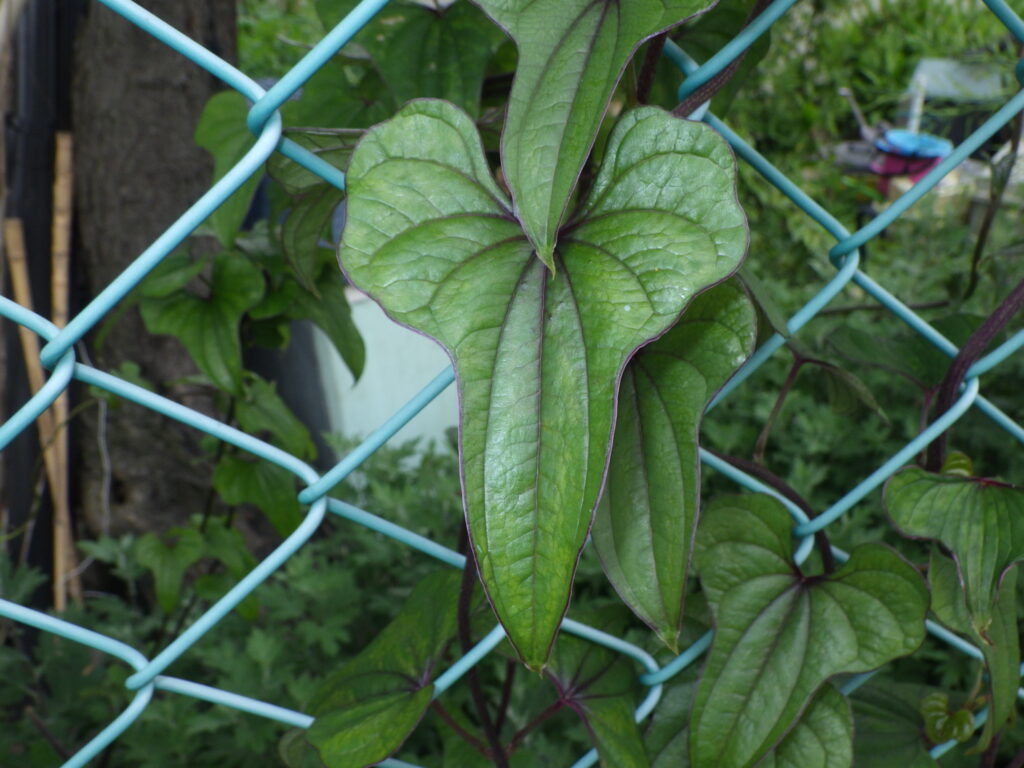
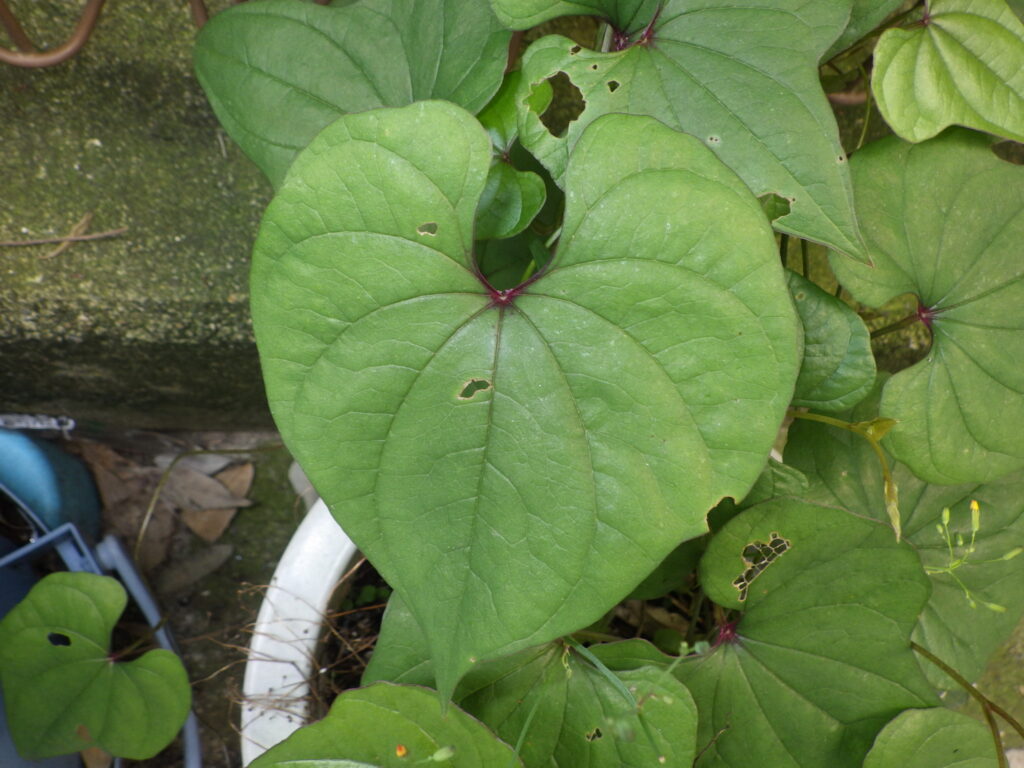
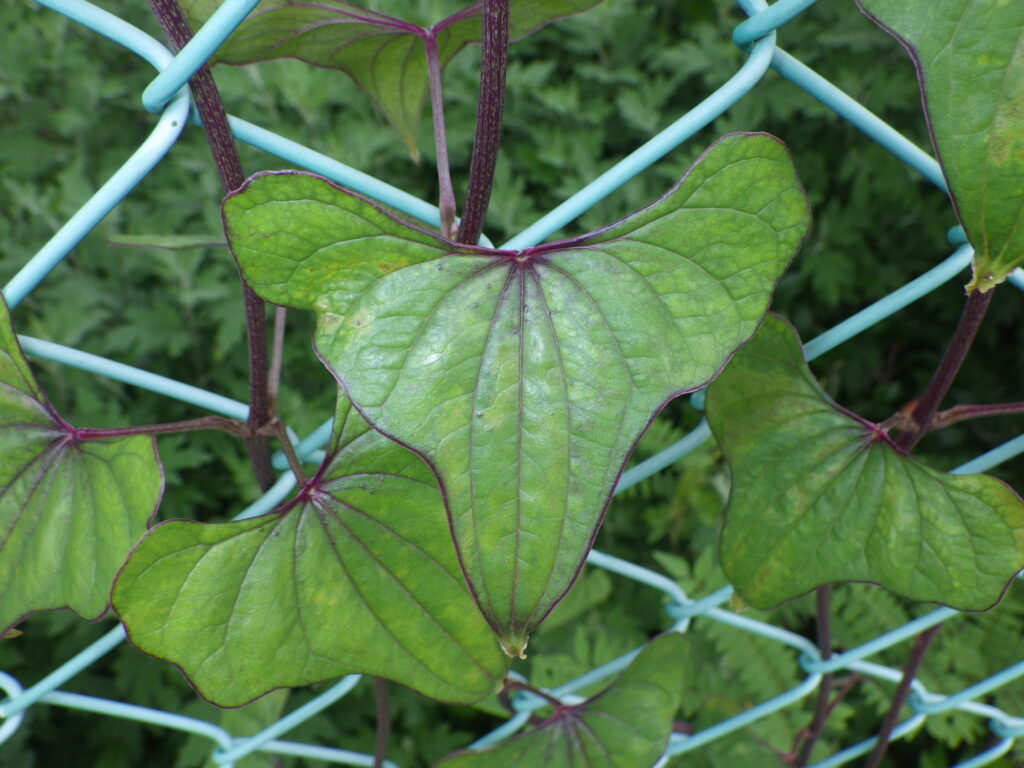
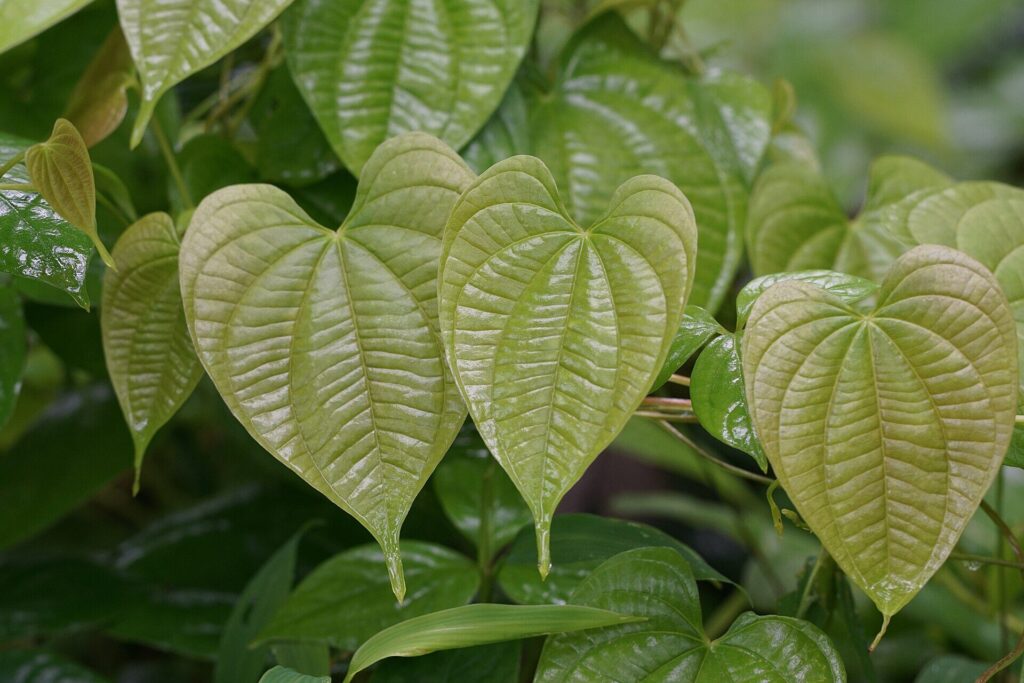
Regarding the leaves, there is a difference in that the leaves of Japanese yam (Dioscorea japonica) and Chinese yam (Dioscorea japonica) are triangular-ovate to triangular-lanceolate, while those of Japanese yam (Dioscorea tokoro) and bitter yam (Dioscorea japonica) are orbicular-cordate (heart-shaped).
However, since yams exhibit considerable variation, with some having leaves that are nearly heart-shaped, it is important to examine multiple leaves.
Regarding Japanese yam (Dioscorea japonica) and Chinese yam (Dioscorea japonica), the difference lies in the fact that in Japanese yam, the lateral base does not protrude in an ear-like shape and the base of the leaf blade is green, while in Chinese yam, the lateral base protrudes in an ear-like shape and the base of the leaf blade is reddish-purple.
Regarding Dioscorea tokoro and Dioscorea japonica, the difference is that in Dioscorea tokoro, the base of the petiole is smooth, while in Dioscorea japonica, the base of the petiole protrudes in a stipule-like manner and clasps almost half of the stem.
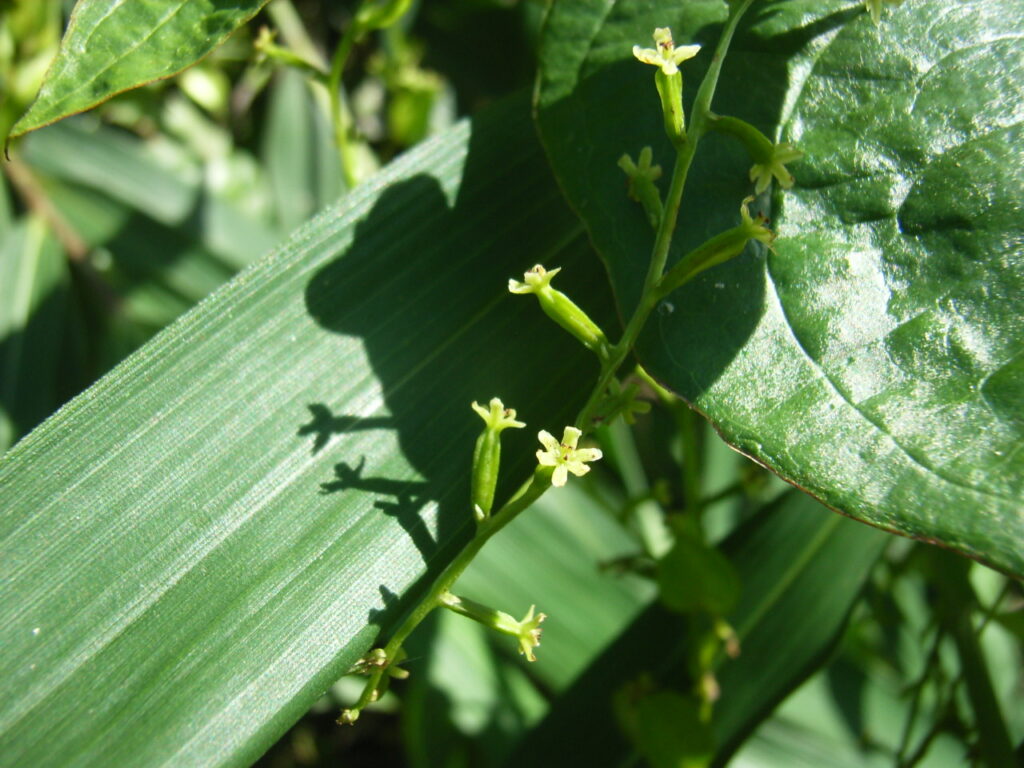
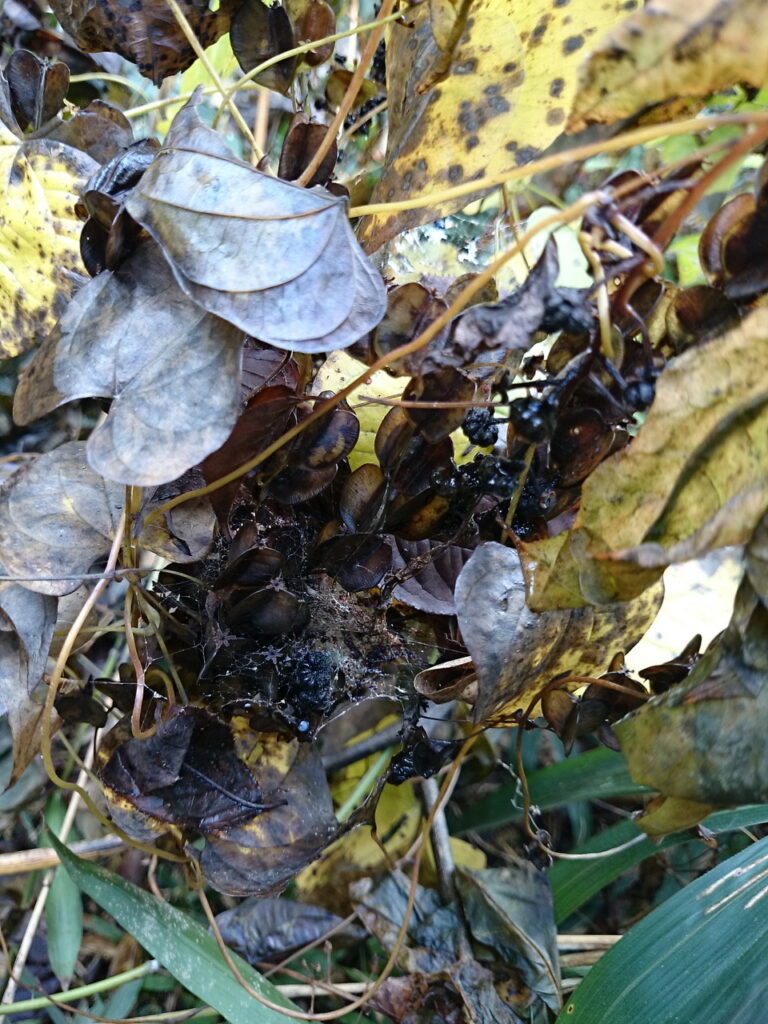
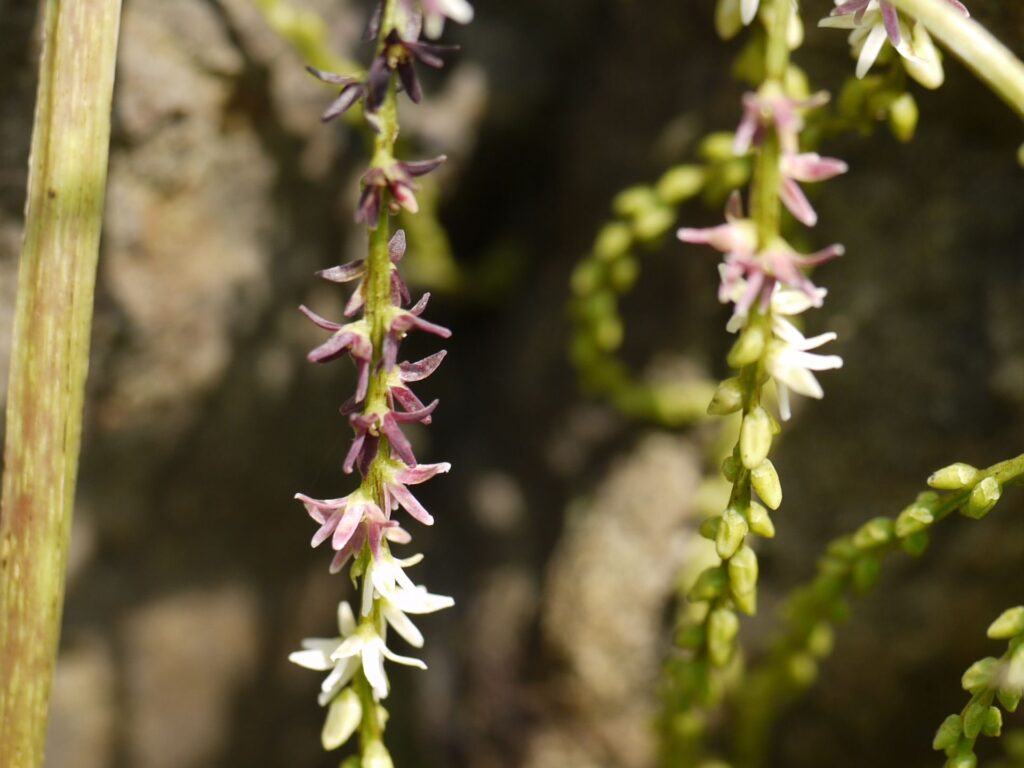
There are even greater differences in the presence or absence of rhizomes and bulbils, as well as in the shape of the flowers. Please check the details below.
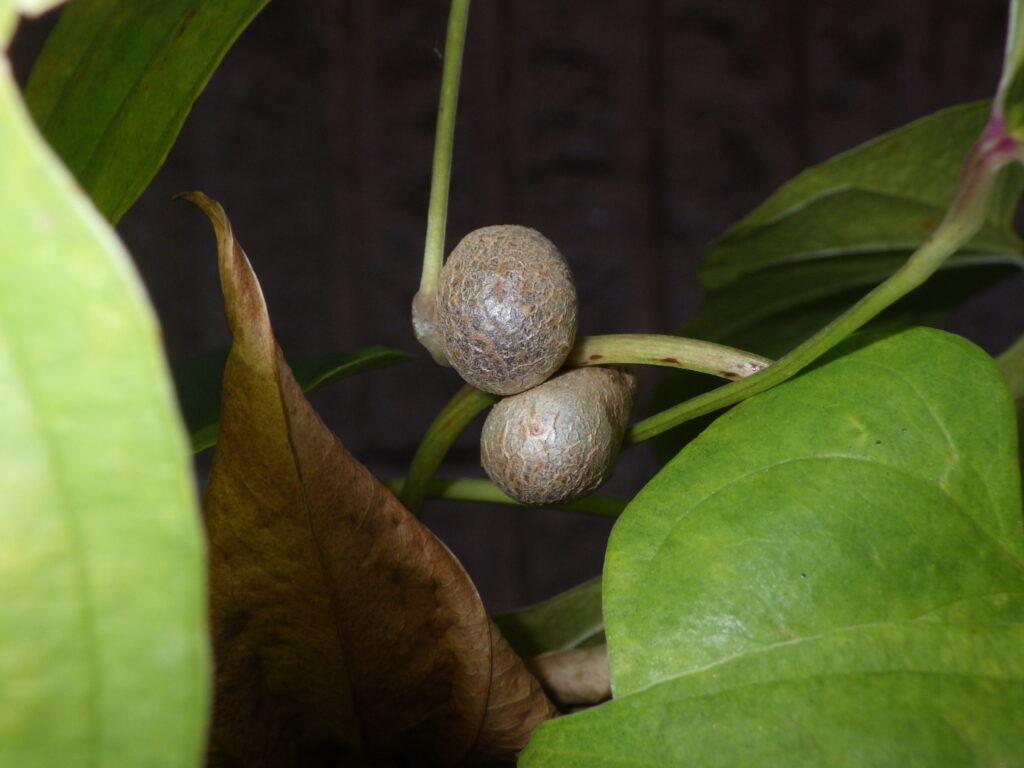
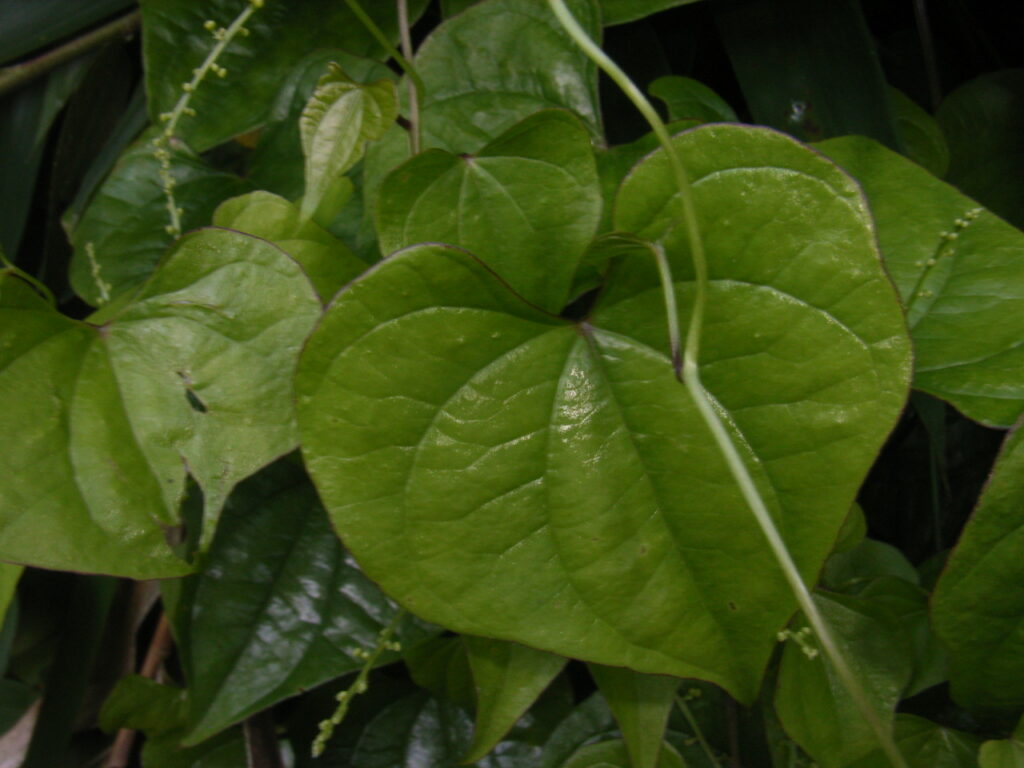
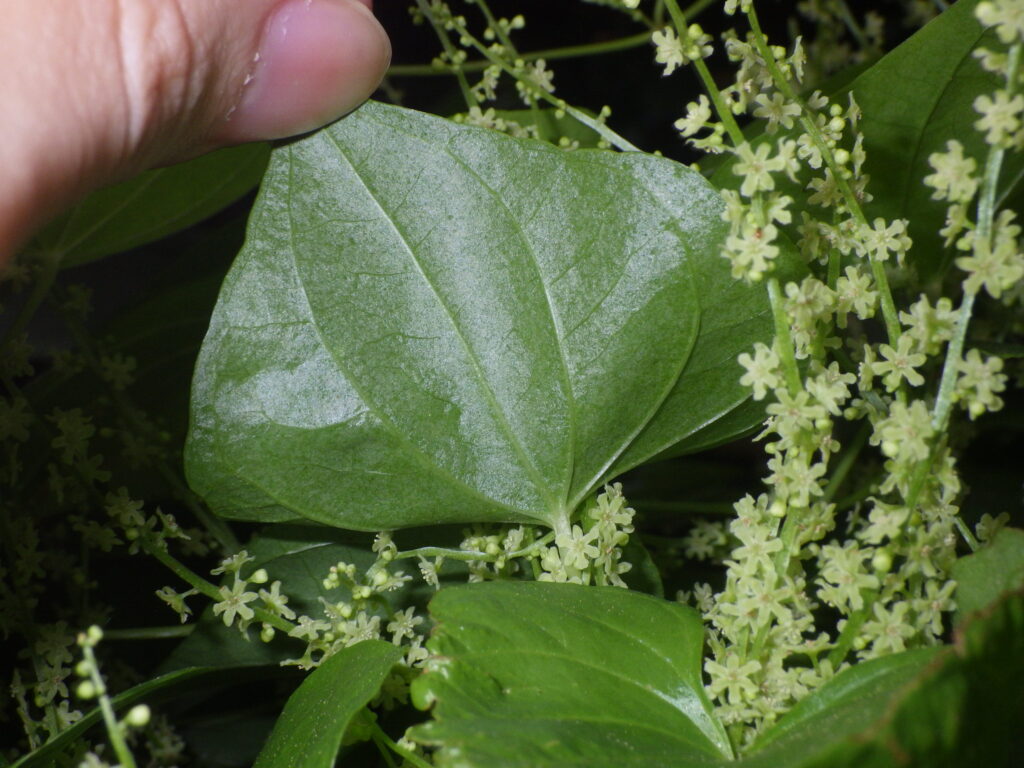
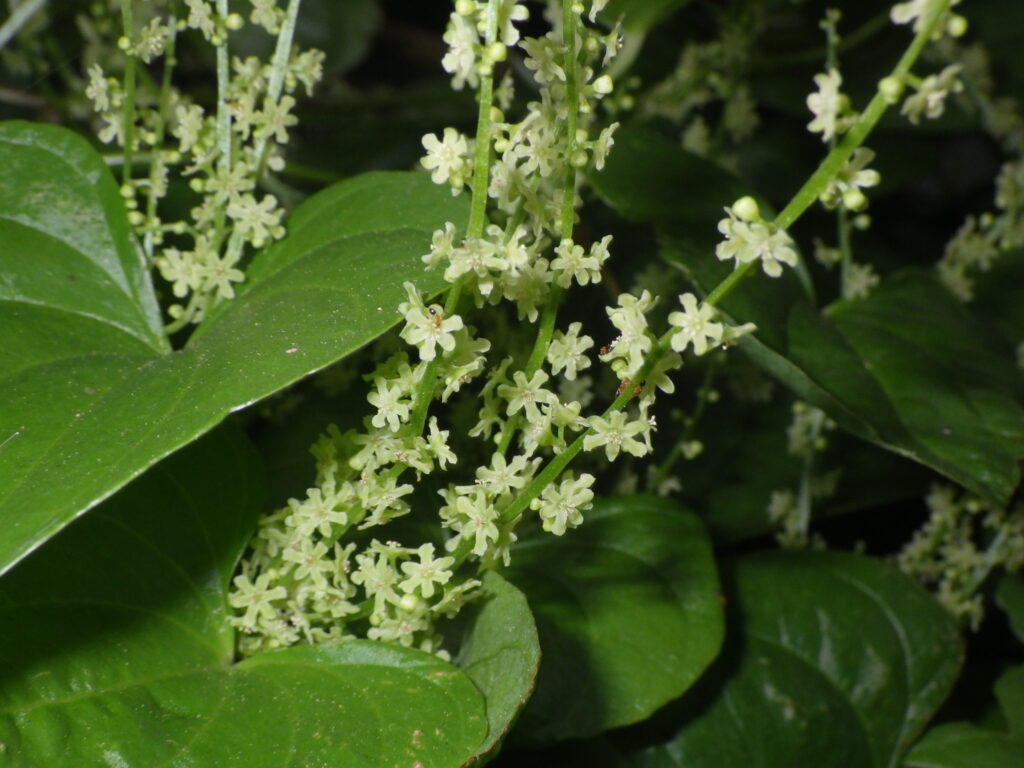
What are the differences in how to use Japanese yam (Dioscorea japonica), Chinese yam (Dioscorea tokoro), and bitter yam (Dioscorea japonica)?
The four uses vary greatly depending on the developmental stage of the organs and the taste of each of the four types.
When used, yams are usually for food, and there are typically two types: the wild yam (Dioscorea japonica), which is common in the wild, and the cultivated Chinese yam (Dioscorea longa). There are various theories about the distribution of Chinese yams in Japan, and one theory suggests that it is questionable whether it is a native species, and that it may have been introduced from China and cultivated in the late Jomon period, preceding grains and rice (Yoshida, 2019). It already appears in the dictionary "Wamyō Ruijushō," which was compiled in the mid-Heian period, suggesting that it was already being used.
For a long time, the two species were rarely distinguished for consumption, and even in the Ministry of Agriculture, Forestry and Fisheries' crop survey statistics, they were not differentiated until 2008. However, since 2007, it has been found that the majority of what is sold as "yamaimo" (Japanese yam) is actually nagaimo (Chinese yam).
Both Japanese yam (Dioscorea japonica) and Chinese yam (Dioscorea japonica) have a single cylindrical, fleshy "root" (also known as a tuber, or "potato") underground. In Japan, the roots of both species are collectively called "tororo imo," and in the case of Japanese yam, they are also called "jinenjo." Chinese yam has a thicker shape.
However, cultivated varieties of Japanese yam, such as Tsukuneimo and Yamatoimo (Yamatoimo), are round in shape.
This part is cut into sticks and mixed with okra, or grated and mixed with white soy sauce and dashi to make the sticky "tororo," which is commonly eaten as "tororo soba," "tororo udon," or "mugitoro gohan." The stickiness is due to mucilage (or mucin, according to some papers), and it can be eaten raw.
It is said that grated yam (Yamaimo) is far stickier than grated Chinese yam (Nagaimo).
While cultivated nagaimo (Chinese yam) is typically used in restaurants, wild yam (Yamaimo) was likely also used before the Edo period, and even today, wild yam is sometimes used intentionally due to its different texture.
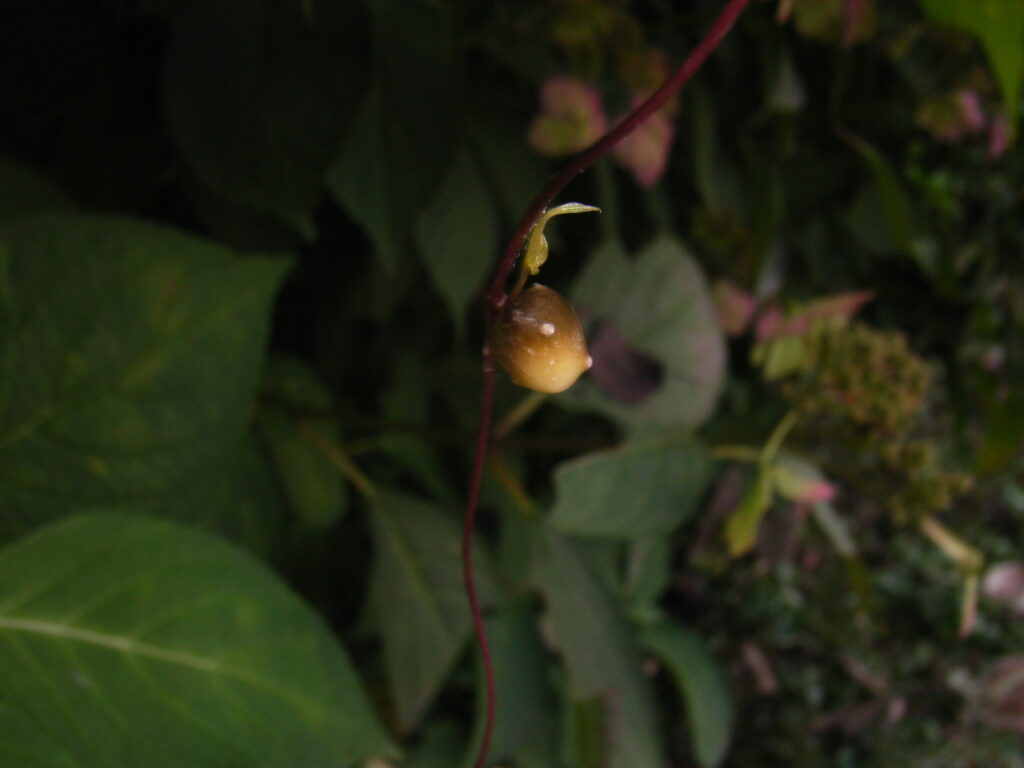
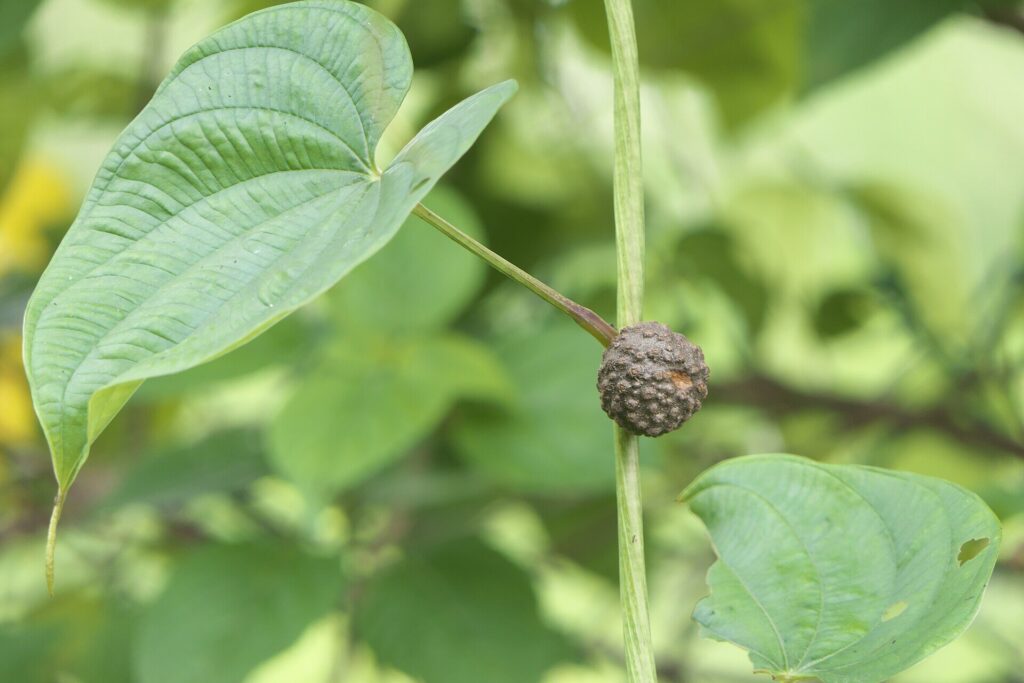
Furthermore, Japanese yam, Chinese yam, and bitter yam form "bulbils" in the leaf axils.
Mukago, also known as "bulbils," are the buds that have developed to contain nutrients for reproduction.
Because the bulbils of both Japanese yam and Chinese yam have a potato-like texture, they are eaten. They are cooked with rice to make "mukago rice," or served as a snack with drinks at izakayas (Japanese pubs), sometimes stir-fried with salt, or as "deep-fried mukago" or "mukago tempura." However, it is usually the Chinese yam that is eaten.
In addition, it was sometimes called wild yam or soil yam and used as a herbal medicine.
On the other hand, while bitter corn has rhizomes and bulbils, both are very bitter and are not usually eaten. This is as its Japanese name suggests. However, cultivated varieties are commonly eaten worldwide because the bitterness can be removed by boiling, and it is popular in West Africa. In Japan, it is sold under the names "space potato" or "air potato."
As for *Dioscorea tokoro*, it lacks both rhizomes and bulbils, so it is not usually eaten. However, it does form a rhizome instead of rhizomes.
Are there any other similar species?
The genus Dioscorea is a very broad group, so it's impossible to list them all here. However, some species that resemble Dioscorea tokoro found in the wild in Japan include Dioscorea japonica, Dioscorea japonica, Dioscorea tokoro, Dioscorea japonica, and Dioscorea japonica, so caution is advised.
Globally, edible yams of the genus Dioscorea are collectively called "yam," and include species such as Dioscorea alata and Dioscorea elephantipes (also known as Dioscorea elephantipes).
Yams are rich in dietary fiber, starch, sugars and other carbohydrates, as well as protein, lipids, vitamins, and minerals, providing approximately 200 calories per person per day to 300 million people in tropical regions, making them one of the world's most important staple root vegetables and tubers (Obidiegwu et al., 2020).
How do they reproduce? Why do they reproduce through bulbils and pollination?
Reproductive methods vary greatly depending on the species.
Japanese yam (Dioscorea japonica), Chinese yam (Dioscorea japonica), and bitter yam (Dioscorea japonica) reproduce asexually through clonal propagation via bulbils and sexually through insect-pollinated flowers, incorporating genes from other plants.
In the reproduction of bulbils, they are either dropped to the ground by gravity, washed away by water, or, like acorns, carried by mice and stored underground (stored), and then germinate when forgotten by the mice (Mizuki & Takahashi, 2009).
Compared to asexual reproduction via rhizomes, stolons, and stolons, bulbils are considered to have advantages in that they can move to spatially distant, suitable environments for growth and are resilient to disturbed areas (such as aquatic environments and roadsides where the environment changes drastically) (Inoue, 2007).
On the other hand, *Dioscorea tokoro* does not produce bulbils and reproduces only sexually through insect-pollinated flowers.
Why do Japanese yam, Chinese yam, and bitter yam reproduce in two different ways, including by adding bulbils?
Generally, two advantages are explained (Takahashi & Inoue, 2005; Mizuki & Takahashi, 2009).
The first advantage is that bulbils weigh about 100 times more than seeds in dry weight, and they can germinate and grow even in dark environments, so the survival rate of offspring is higher with bulbils than with seeds.
The second advantage is that organisms want to pass on all of their genes if possible, so creating bulbils, which are clones, allows twice as many of the female parent's genes to be passed on as seeds.
However, this might lead you to wonder why they reproduce sexually through insect pollination.
There are two potential advantages to this as well.
The first advantage of sexual reproduction is that, due to the effects of various genes, the offspring become more resistant to pests, diseases, pathogens, and changes in the natural environment.
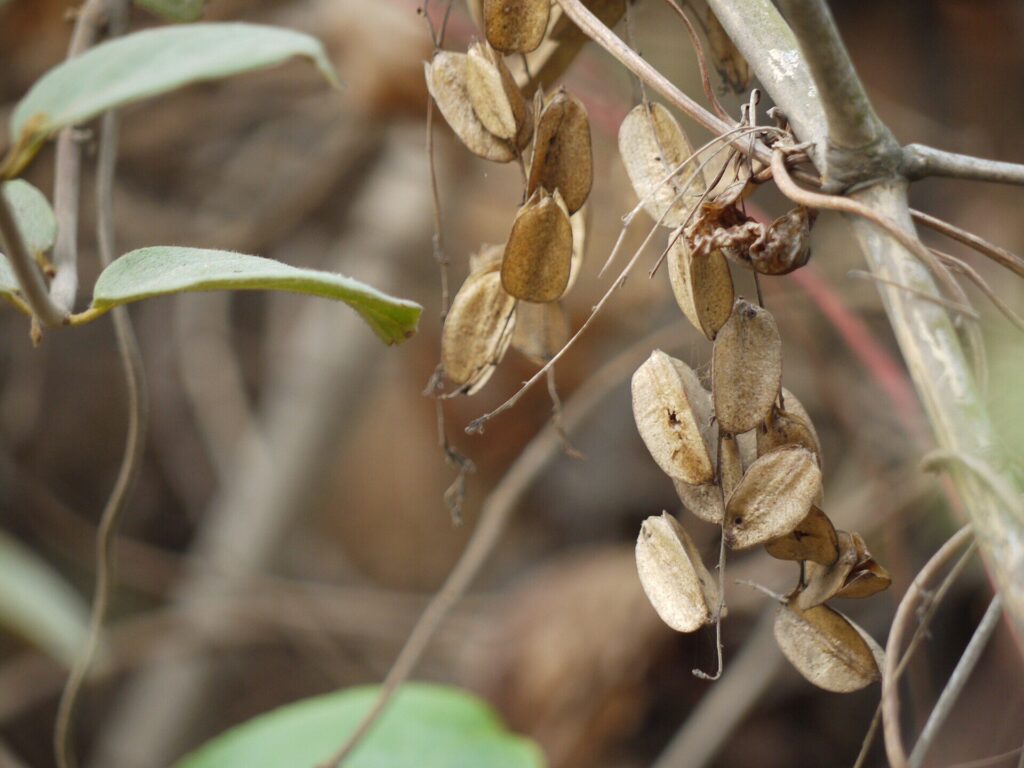
The second feature is unique to the genus Dioscorea, which has capsules with "wings" that make it easier to catch the wind, and its seeds are also circular with thin wings around the edge. These features allow for efficient seed dispersal (wind dispersal), which has the advantage of sending the offspring further than bulbils, thus reducing the risk of competition among offspring (such as competing for nutrients).
While it is true that bulbils can be transported far from the mother plant by mice, it has been found that their range of movement is shorter than that of seeds.
From the above, it can be said that Japanese yam, Chinese yam, and bitter ginger combine the best aspects of asexual and sexual reproduction, thereby increasing their efficiency.
However, this still leaves a question: If that's the case, why doesn't *Dioscorea tokoro* reproduce asexually?
This has not yet been investigated. Dioscorea tokoro is a species that reproduces just as well as Dioscorea japonica, and it does not seem to suffer significant losses from losing the advantages mentioned above.
One possibility is that the African species D. sansibarensis has highly buoyant bulbils that spread by water currents, resulting in a wide distribution in valleys (Chen et al., 2022). Furthermore, D. alata is known to form bulbils when the soil becomes moist during the rainy season (Hamaoka et al., 2023).
Unlike seeds, bulbils are expected to be a more efficient way for plants to reproduce even in aquatic environments, and since *Dioscorea tokoro* is a species adapted to land, it may not need to produce bulbils.
In fact, the bitter oak, which is common in aquatic environments, does have bulbils. However, this is merely speculation.
How do they pollinate? The insects that visit them vary completely depending on the species!
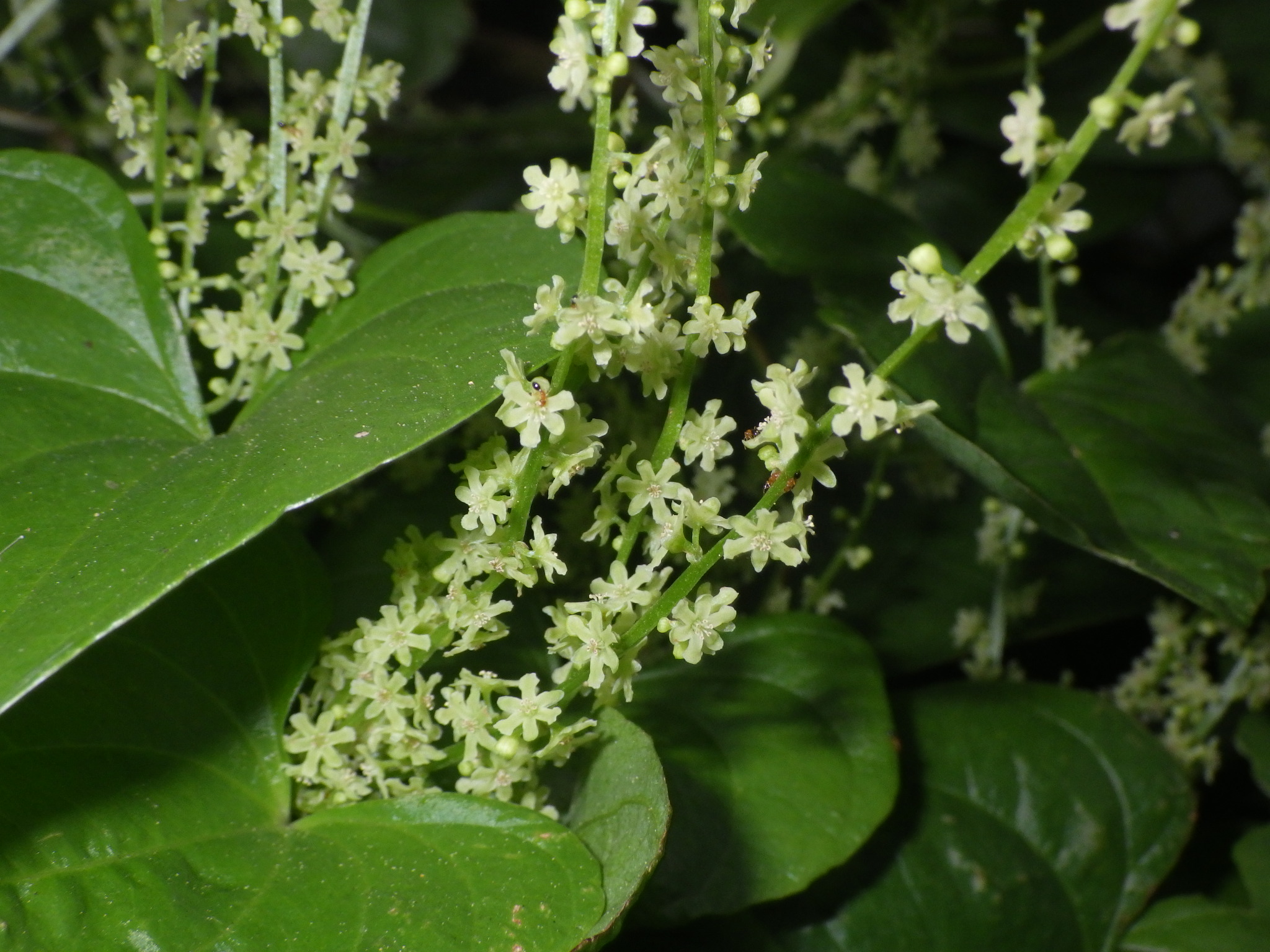
All four species are dioecious, meaning they have separate plants that produce only male flowers and only female flowers. They all share six perianth segments, and male flowers have six stamens.
As mentioned above, it is an insect-pollinated flower, relying on insects for pollination. However, it gives the impression of being very inconspicuous compared to other insect-pollinated flowers. What kind of insects visit it?
It turns out that the flowers are actually visited by a special, very small insect that is perfectly sized for them.
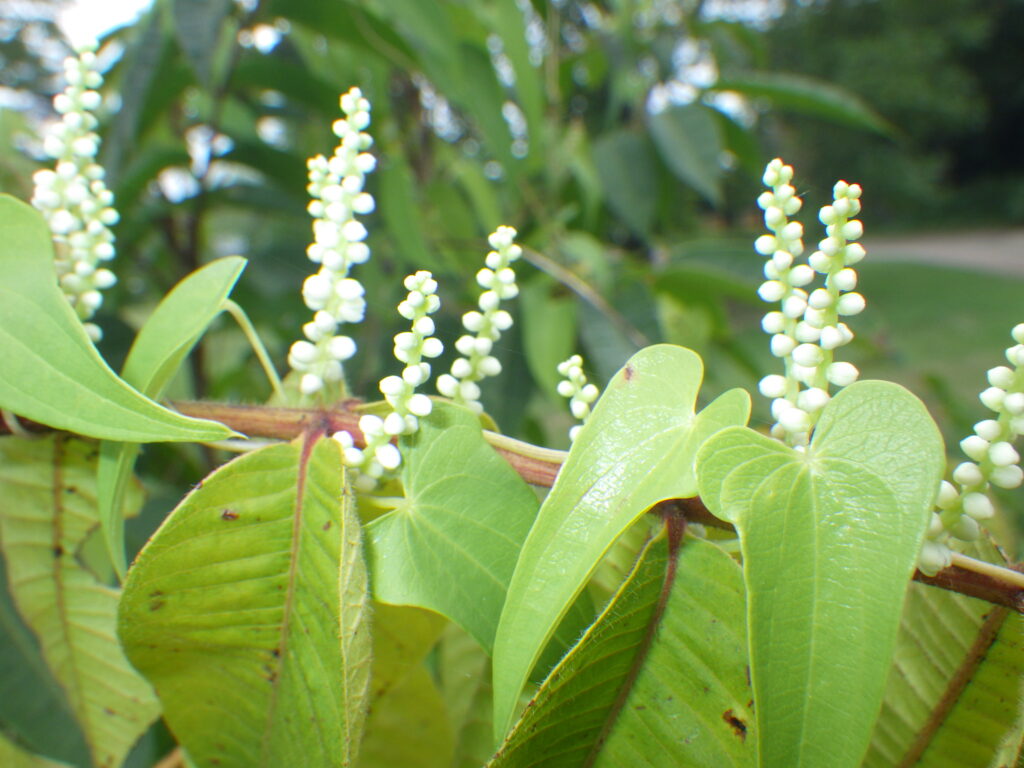
In Japanese yam (Dioscorea japonica), the male inflorescences are erect from the leaf axils, while the female inflorescences droop, and the perianth segments are white and do not open very much (Hayashi et al., 2013). When 427 insects that visited these flowers were collected, 97% were found to be thrips, which are very small pollinating insects (Mizuki et al., 2005).
In Chinese yam (Dioscorea japonica), the male inflorescences are almost identical to those of Japanese yam (Dioscorea japonica), except for the drooping male inflorescences. A study conducted in China revealed that only one species of thrips, Ernothrips lobatus, visits the flowers (Li et al., 2014). This thrips also lays eggs and develops its larvae within the flowers, indicating a close relationship at the life cycle level. However, thrips can only move short distances, and pollination cannot occur unless males and females are in close proximity.
On the other hand, in Dioscorea tokoro, the male inflorescences are erect from the leaf axils, while the female inflorescences are drooping, and the perianth segments are pale green and spread flat (Kudo et al., 2021). When 389 insects that visited this flower were collected, 57% were gall midges and 11.6% were biting midges, but it was mostly biting midges that were actually carrying the pollen (Mochizuki et al., 2025).
Furthermore, despite the fact that both the male and female inflorescences of *Rhododendron parvifolium* droop and the perianth segments change from white to purple, a study in China found no records of insects visiting the flowers even once in two years, suggesting that it relies almost entirely on asexual reproduction via bulbils, with only a small portion being wind-pollinated (Li et al., 2014). It also rarely produces fruit in Japan (Kanagawa Prefecture Flora Survey Association, 2018).
Thus, we have obtained contrasting results: thrips visit Japanese yam and Chinese yam, small flies visit Japanese yam, and no insects visit bitter ginger. Although they are very similar in appearance, it can be said that their reproductive strategies are completely different.
What are the seed dispersal methods?
The fruits of all four species are capsules, possessing wings that make them more susceptible to wind, and the seeds also have wings (Kanagawa Prefecture Flora Survey Association, 2018; Chen et al., 2022).
As mentioned above, this is done to disperse seeds by wind, which has allowed the offspring to travel even greater distances than bulbils.
References
Chen, M., Sun, X., Xue, JY, Zhou, Y., & Hang, Y. (2022). Evolution of Reproductive Traits and Implications for Adaptation and Diversification in the Yam Genus Dioscorea L. Diversity, 14 (5), 349. https://doi.org/10.3390/d14050349
Hamaoka, N., Moriyama, T., Taniguchi, T., Suriyasak, C., & Ishibashi, Y. (2023). Bulbil formation on water yam (Dioscorea alata L.) is promoted by waterlogged soil. Agronomy, 13 (2), 484. https://doi.org/10.3390/agronomy13020484
Hayashi, Yasaka, Kadota, Yuichi, and Hirano, Takahisa. (2013). Yamakei Handy Illustrated Guide 1: Wildflowers (Revised and Expanded New Edition). Yama-kei Publishers. ISBN: 9784635070195
Inoue, Mizuki. (2007). Dispersion and spatial structure in dispersing clonal growth plants (bulbils, rhizomes, etc.)—comparison with non-dispersing clonal growth plants (rhizomes, stolons, projectiles). Journal of the Ecological Society of Japan, 57 (2), 238-244. https://doi.org/10.18960/seitai.57.2_238
Kanagawa Prefecture Flora Survey Association. (2018). Kanagawa Prefecture Flora 2018 Electronic Edition. Kanagawa Prefecture Flora Survey Association. ISBN: 9784991053726
Kudo, A., Sugihara, Y., Ota, A., & Terauchi, R. (2021). Upright males and drooping females—sexual differences in flower traits and visitor numbers in the dioecious plant Dioscorea tokoro. Abstracts of the Annual Meeting of the Ecological Society of Japan, 68, P1-061. https://esj.ne.jp/meeting/abst/68/P1-061.html
Mizuki, I., Ishida, K., Tani, N., & Tsumura, Y. (2010). Fine-scale spatial structure of genes and sexes in the dioecious plant Dioscorea japonica, which disperses by both bulbils and seeds. Evolutionary Ecology, 24 (6), 1399-1415. https://doi.org/10.1007/s10682-010-9396-z
Mizuki, I., Osawa, N., & Tsutsumi, T. (2005). Thrips (Thysanoptera: Thripidae) on the flowers of a dioecious plant, Dioscorea japonica (Dioscoreaceae). The Canadian Entomologist, 137 (6), 712-715. https://doi.org/10.4039/n05-003
Mizuki, I., & Takahashi, A. (2009). Secondary dispersal of Dioscorea japonica (Dioscoreaceae) bulbils by rodents. Journal of Forest Research, 14 (2), 95-100. https://doi.org/10.1007/s10310-008-0106-4
Mochizuki, K., Elsayed, AK, & Kawakita, A. (2025). Pollination by biting midges in Dioscorea tokoro and Vincetoxicum aristolochioides with a secondary contribution of gall midges: Pollination by biting midges in Dioscorea tokoro and Vincetoxicum aristolochioides with a secondary contribution of gall midges. Arthropod-Plant Interactions, 19 (3), 41. https://doi.org/10.1007/s11829-025-10142-4
Li, MM, Yan, QQ, Sun, XQ, Zhao, YM, Zhou, YF, & Hang, YY (2014). A preliminary study on pollination biology of three species in Dioscorea (Dioscoreaceae). Life Science Journal, 11 (2), 436-444. https://www.lifesciencesite.com/lsj/life1102/060_B00049life110214_436_444.pdf
Obidiegwu, JE, Lyons, JB, & Chilaka, CA (2020). The Dioscorea Genus (Yam): An appraisal of nutritional and therapeutic potentials. Foods, 9 (9), 1304. https://doi.org/10.3390/foods9091304
Takahashi, Akiko & Inoue, Mizuki. (2005). Comparison of dispersal distances of seeds and bulbils of *Dioscorea japonica*: Wind, gravity, and mice. Abstracts of the Annual Meeting of the Ecological Society of Japan, 52, 528. https://doi.org/10.14848/esj.ESJ52.0.528.0
Yoshida, M. (2019). Japanese people and sweet potatoes. Journal of Food and Nutrition Research, 39 (5), 235-248. ISSN: 0288-0806, https://ku-food-lab.com/wp/wp-content/uploads/2019/07/2774f33ed7e947fb03c1d40880e92a23.pdf