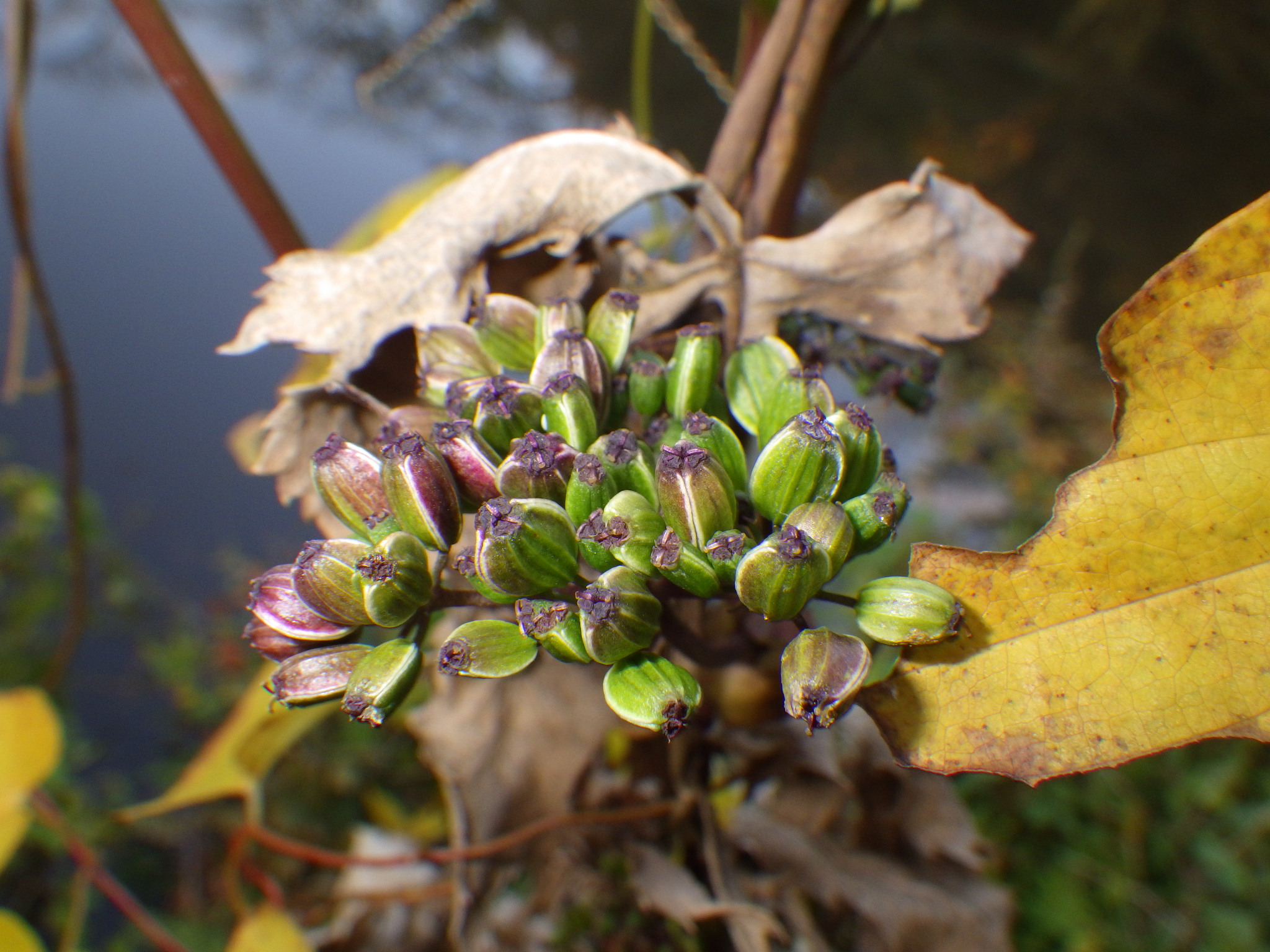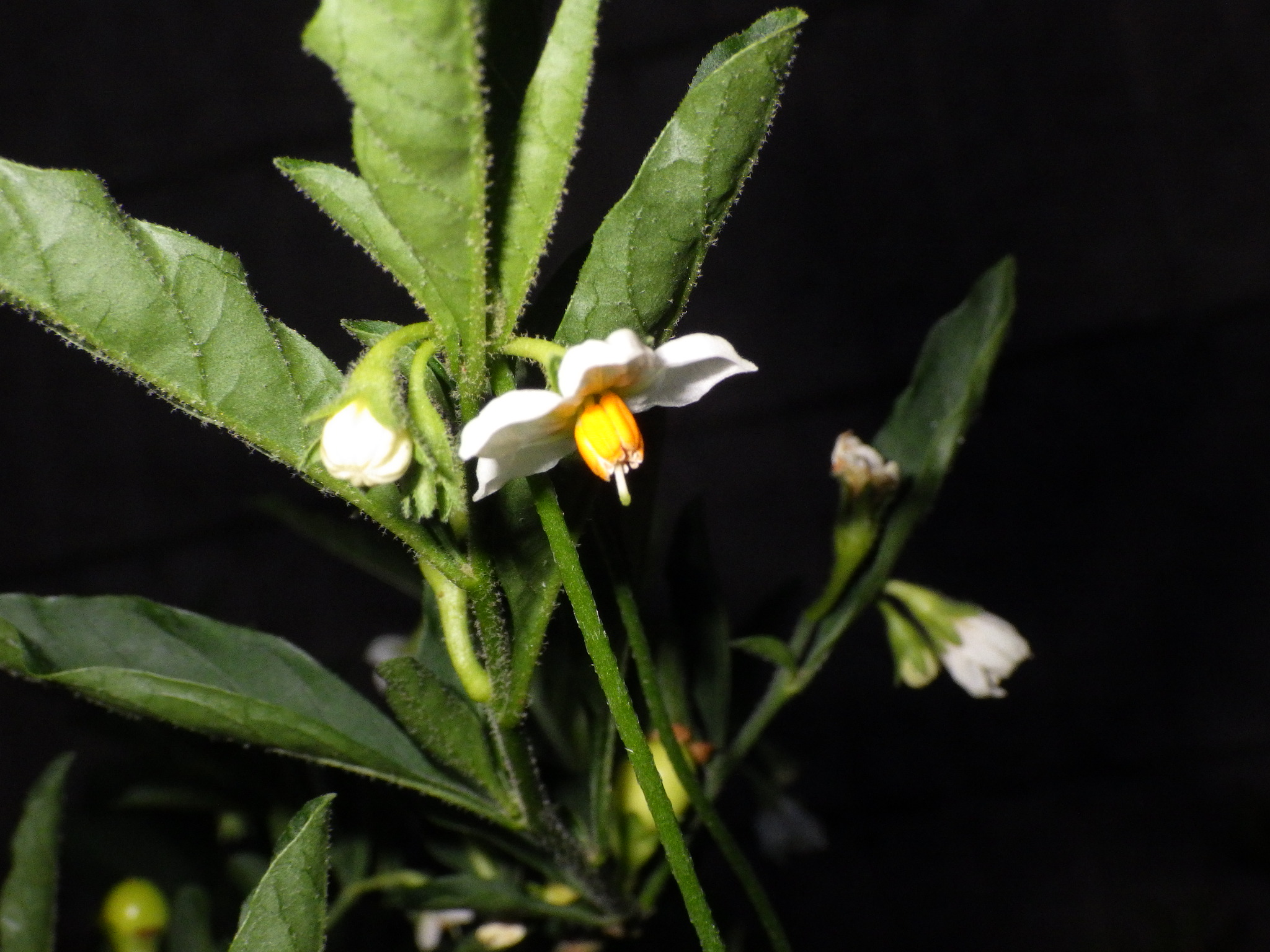
Both Solanum sieboldii (winter coral) and Solanum nigrum belong to the Solanaceae family and are cultivated extensively for ornamental purposes because they produce attractive, round, red, ripe fruits (berries) in winter. However, few people in Japan can properly distinguish between the two varieties. The two varieties can be easily distinguished by checking the amount of hair covering their entire body. This article will explain the classification and morphology of the Solanum genus, which consists of evergreen shrubs.
What are *Tama coral* and *Himeta tama coral*?
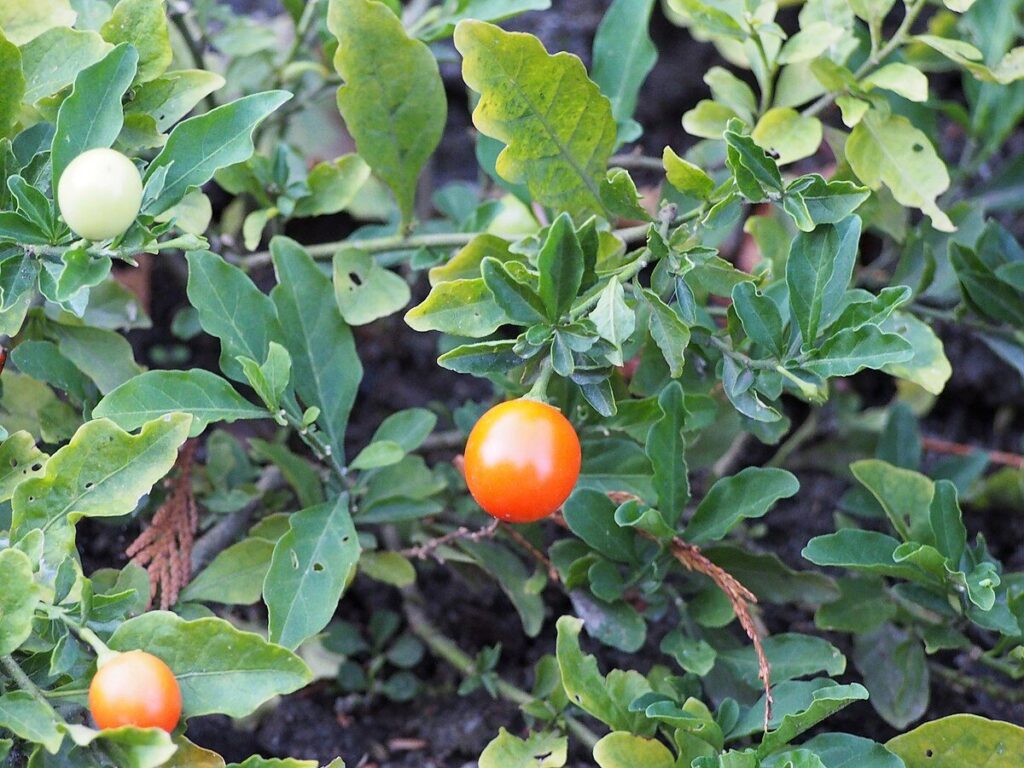
Solanum pseudocapsicum var. pseudocapsicum, also known as winter coral, is native to South America (Brazil, Argentina, Chile, Uruguay, and Paraguay) and is cultivated as an ornamental plant worldwide, including in Japan. It was introduced to Japan in the mid-Meiji era and is cultivated for ornamental purposes, but it has also naturalized along roadsides in warmer regions.
Solanum pseudocapsicum var. diflorum, also known as Himetama coral (princess ball coral), is an evergreen shrub of unknown origin (possibly the same as ball coral?) that is cultivated for ornamental purposes all over the world, including Japan.
All of these plants belong to the Solanum genus of the nightshade family, and they are widely cultivated for ornamental purposes because they produce round, red, ripe fruits (berries) in winter, making them visually appealing.
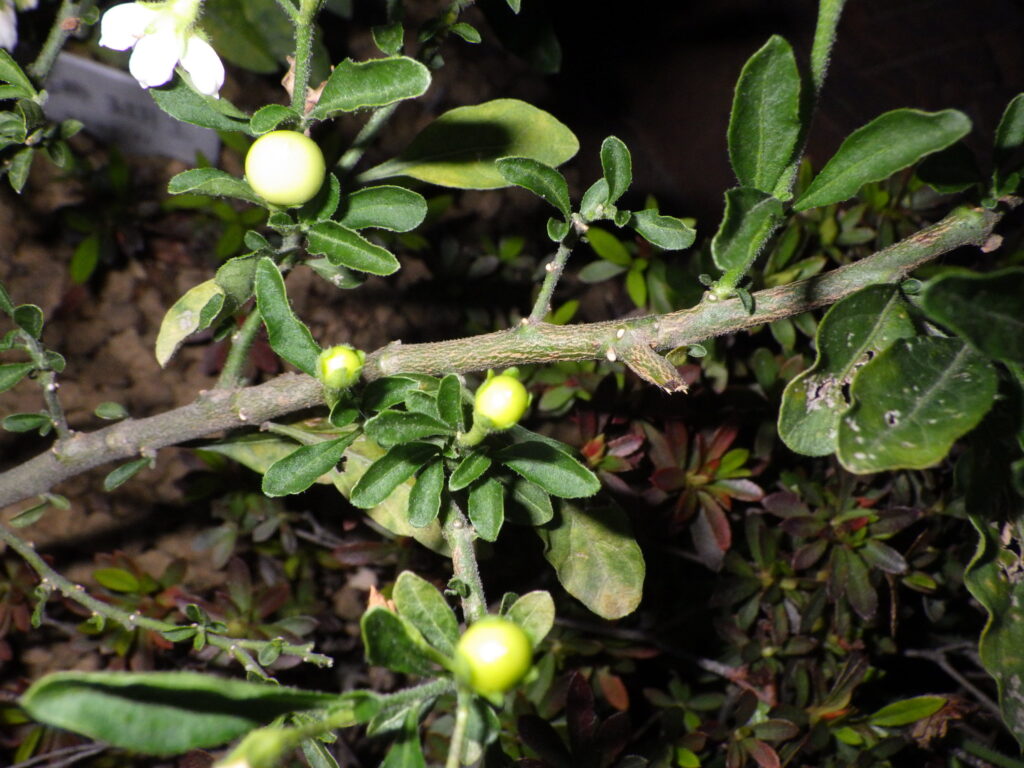
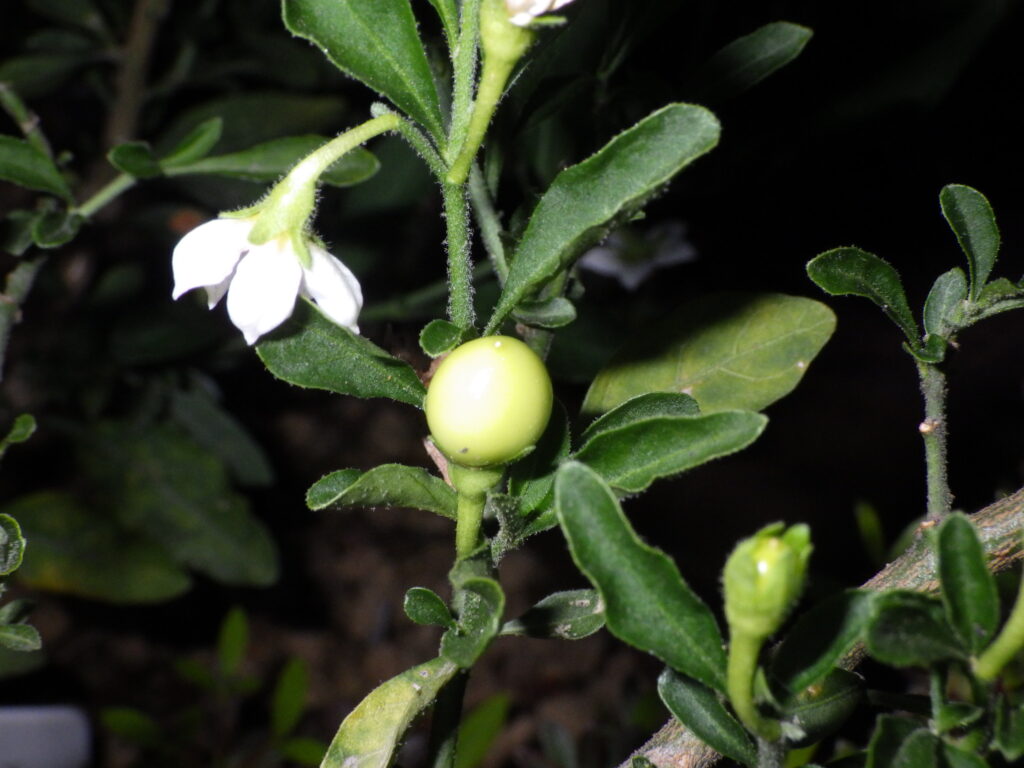
Morphologically, a distinctive feature of this species within the Solanum genus is its erect stem and evergreen shrub-like structure, which is helpful for identification (Kanagawa Prefecture Flora Survey Association, 2018).
However, it seems that few people in Japan properly distinguish between the two varieties, *Tama-sango* and *Hime-tama-sango*. While they are described in 'Ylist', the most comprehensive list of correspondences between Japanese and scientific names, there are few websites that appear when you search for *Hime-tama-sango* on Google, and some field guides do not include both varieties.
On the other hand, two varieties are distinguished in Chinese botanical guides (Wu & Raven, 1994).
What is the difference between *Tama coral* and *Himeta coral*?
Distinguishing between *Tinea japonica* and *Tinea japonica* is quite easy (Wu & Raven, 1994).
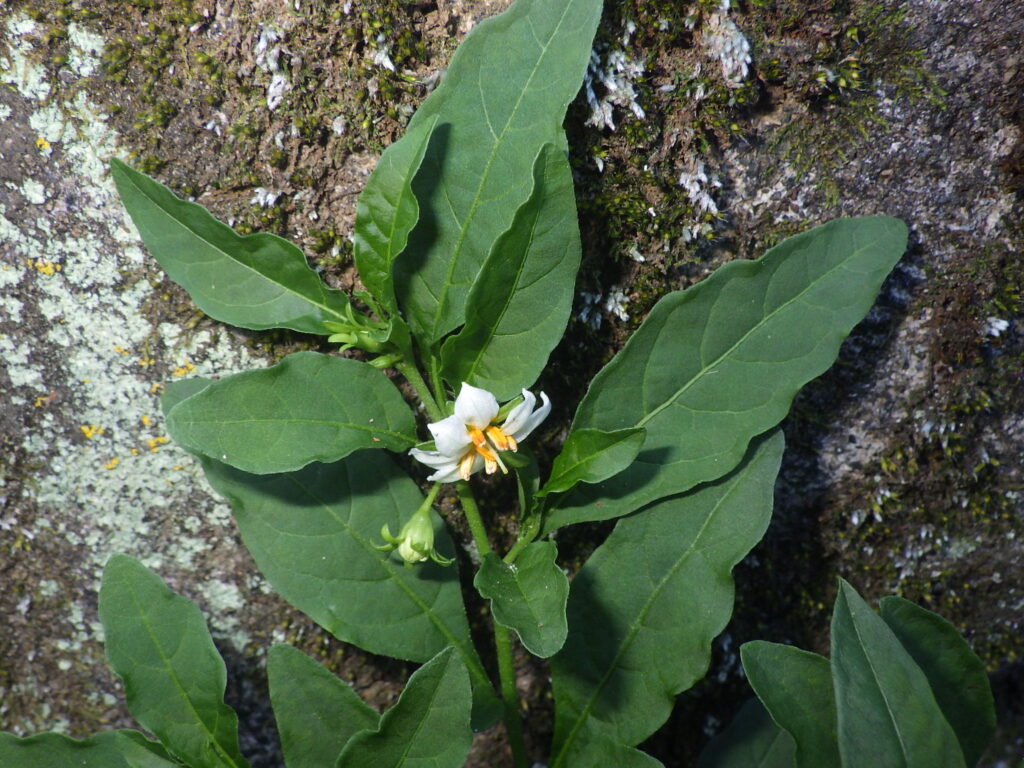
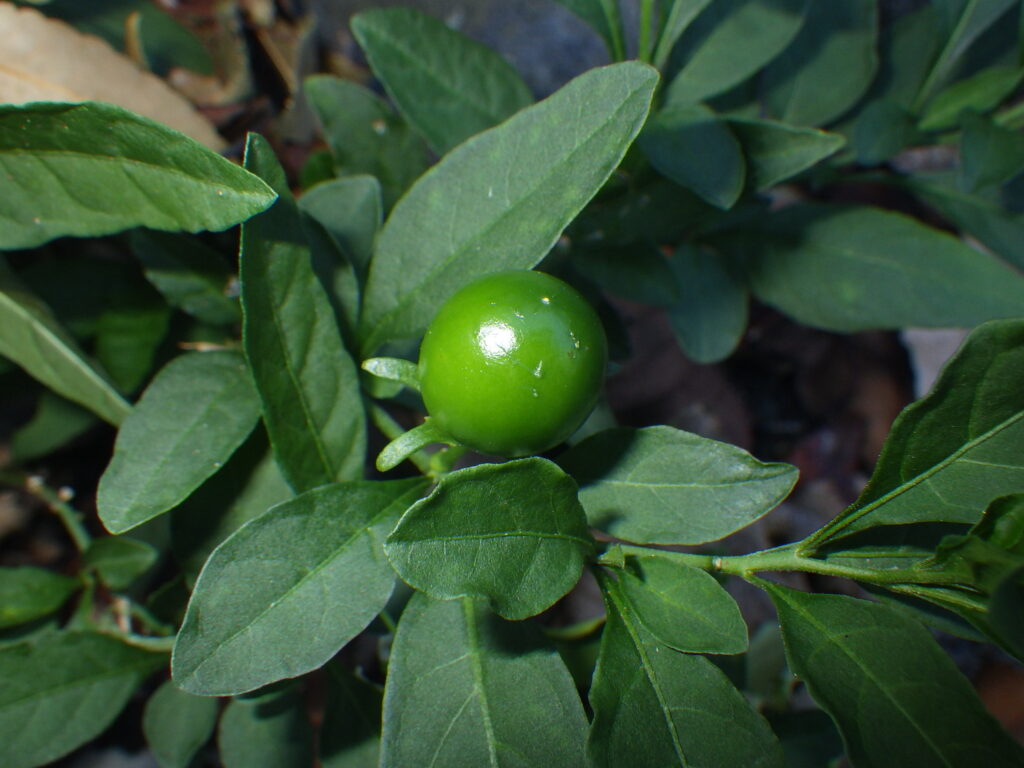
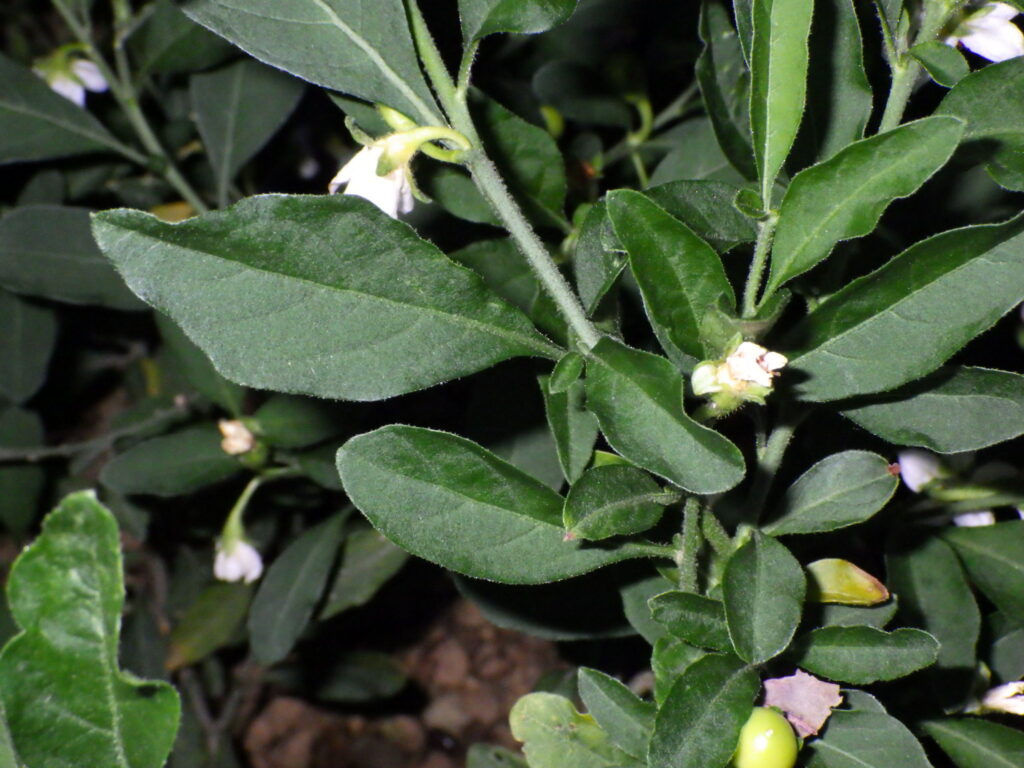
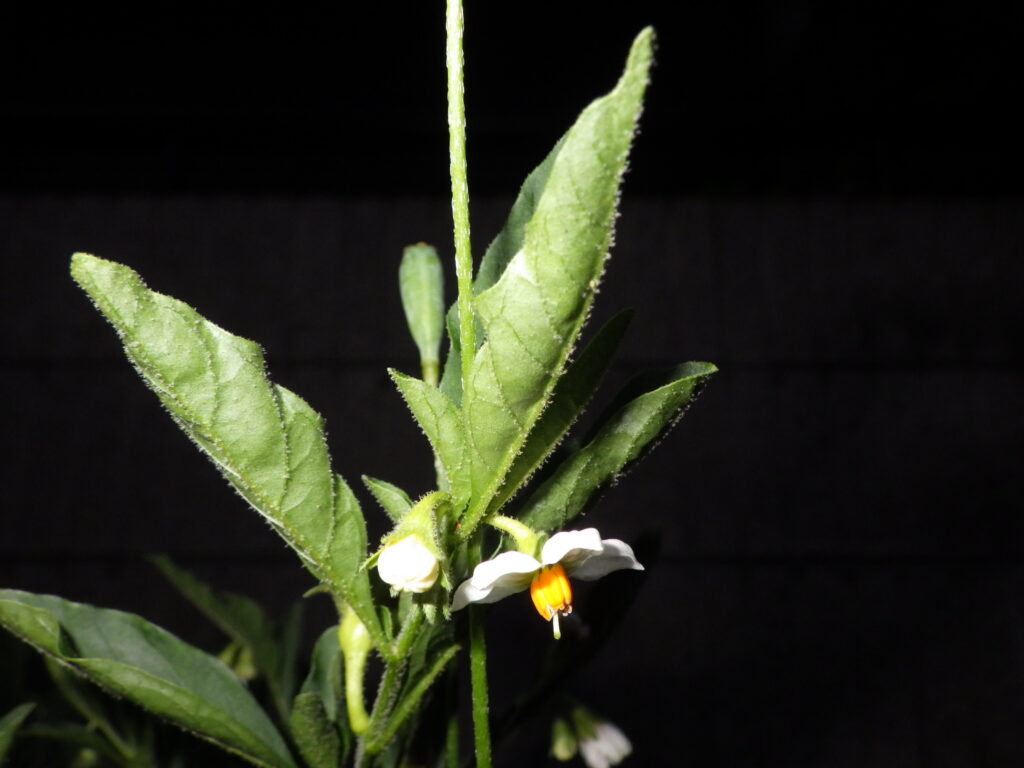
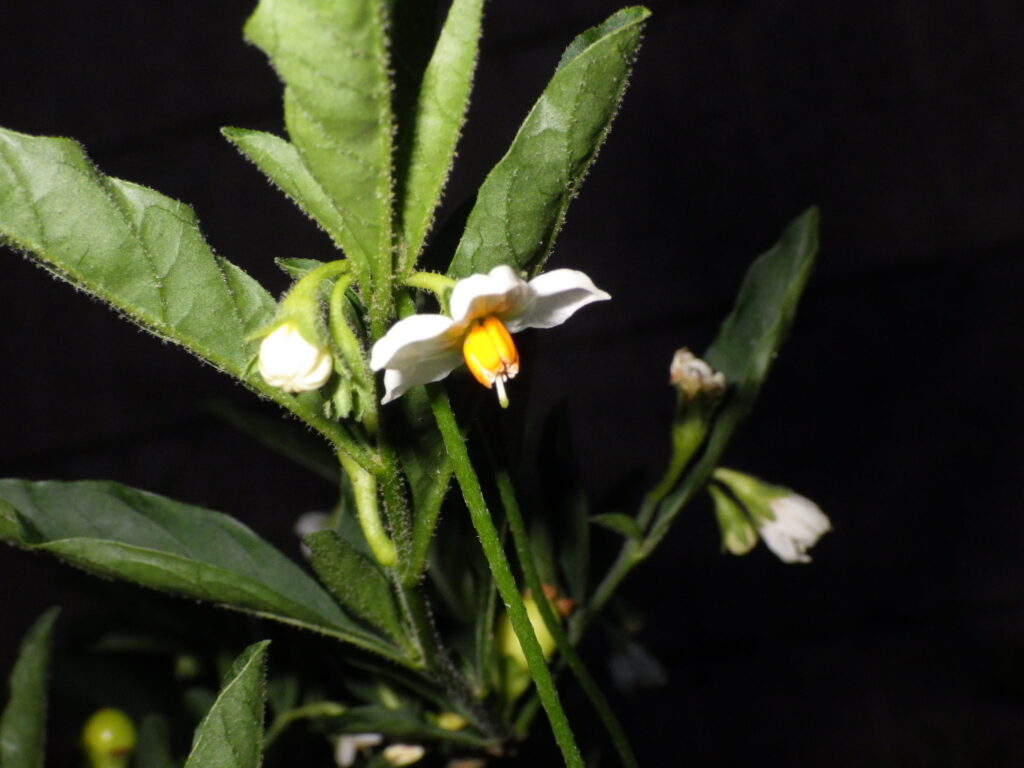
In *Tama-sango*, the entire body is hairless and the anthers of the flower stamens are 2 mm or longer, whereas in *Hime-tama-sango*, the entire body is hairy and the anthers of the flower stamens are about 2 mm long.
The hair all over this animal is so thick that it's clearly visible even from a distance, so if you know what it is, you won't mistake it for anything else.
The book "Ylist" suggests that "most of the tama corals in Japan are actually dwarf tama corals," but I have confirmed the presence of both in Japan. However, it's possible that one of them is rare, and this may become clearer as more people learn to distinguish between them properly in the future.
It should be noted that some research institutions in the UK do not distinguish between the two varieties, and some do not consider them to be separate varieties (RBG Kew, 2024).
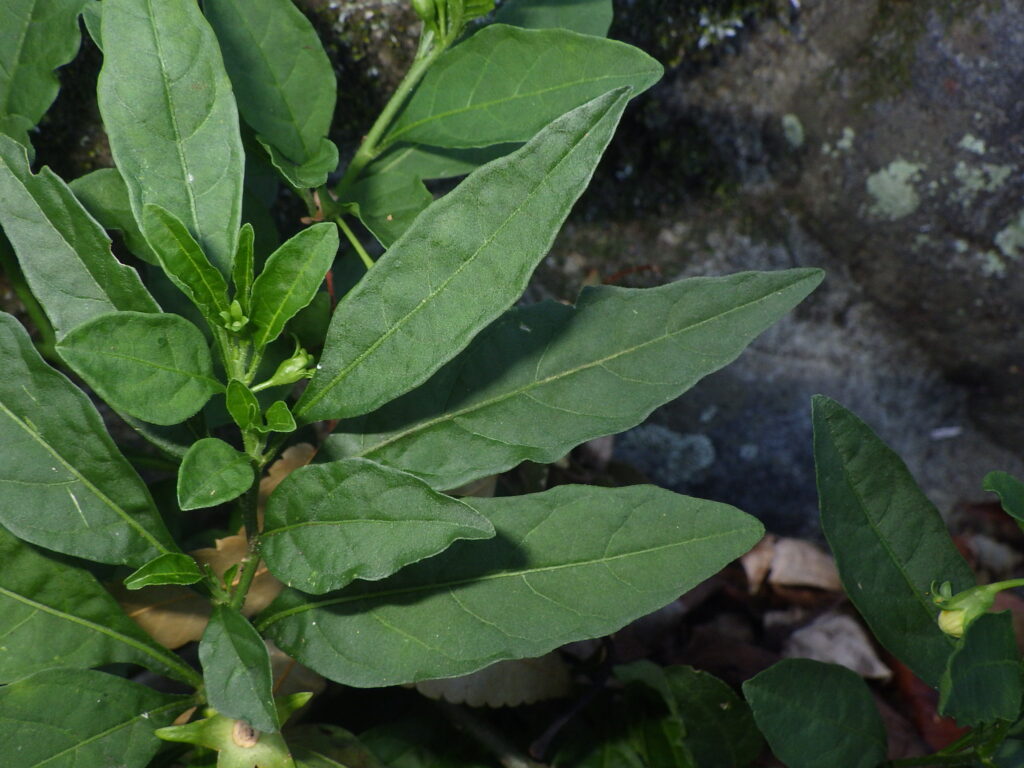
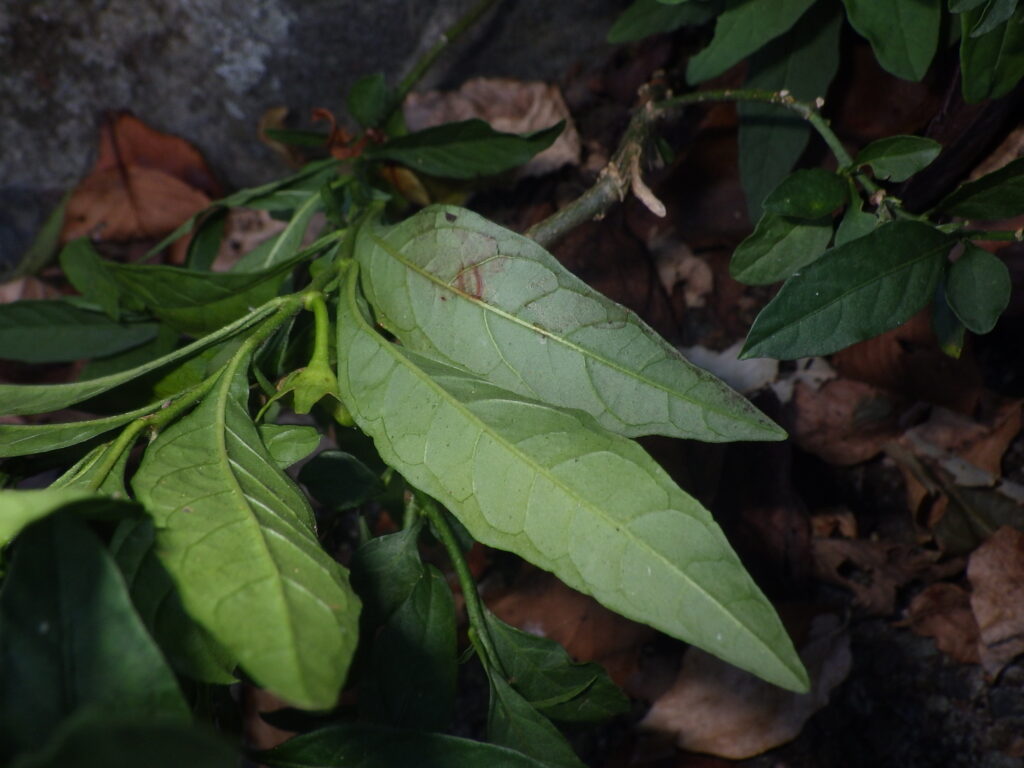
Are there any other similar species?
As mentioned above, winter coral belongs to the Solanum genus, which contains a vast number of species, but it can be easily identified by its evergreen shrub and upright stem.
For information on other members of the Solanum genus, please see our other articles.
References
Kanagawa Prefecture Flora Survey Association. 2018. Kanagawa Prefecture Flora 2018 (Electronic Edition). Kanagawa Prefecture Flora Survey Association, Odawara. 1803pp. ISBN: 9784991053726
RBG Kew. 2024. The International Plant Names Index and World Checklist of Vascular Plants. Plants of the World Online. http://www.ipni.org and https://powo.science.kew.org/
Wu, ZY, & Raven, PH (Eds.). 1994. Flora of China (Vol. 17 Verbenaceae through Solanaceae). Science Press, Beijing, and Missouri Botanical Garden Press, St. Louis. 342pp. ISBN: 9780915279241