Vinca, climbing periwinkle, and dwarf periwinkle all belong to the Apocynaceae family and are cultivated for ornamental purposes in Japan, being commonly seen even in urban areas. They are popular for their interesting fused petals with five-lobed, propeller-like tips, but their names are similar, and the flowers of climbing periwinkle and dwarf periwinkle are almost identical, making them difficult to distinguish . The main differences between vinca, climbing periwinkle, and dwarf periwinkle can be easily distinguished by the stem structure and flower color. However, climbing periwinkle and dwarf periwinkle are quite similar. They are often collectively called "vinca," and their flowers are practically identical. While there are some differences in size, checking the leaf shape and the hairs on the calyx is the most accurate way to distinguish them. When observing them, be sure to record these features as well as the flowers. This article will explain the classification of periwinkle, climbing periwinkle, and dwarf periwinkle.
What are periwinkle, climbing periwinkle, and dwarf climbing periwinkle?
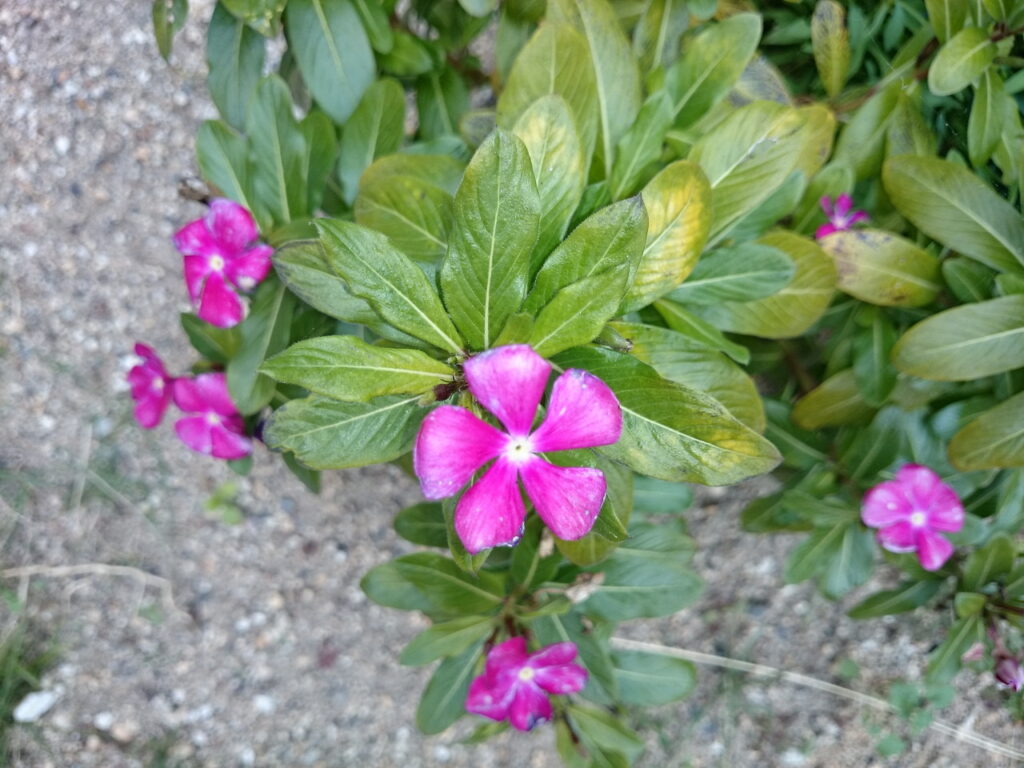
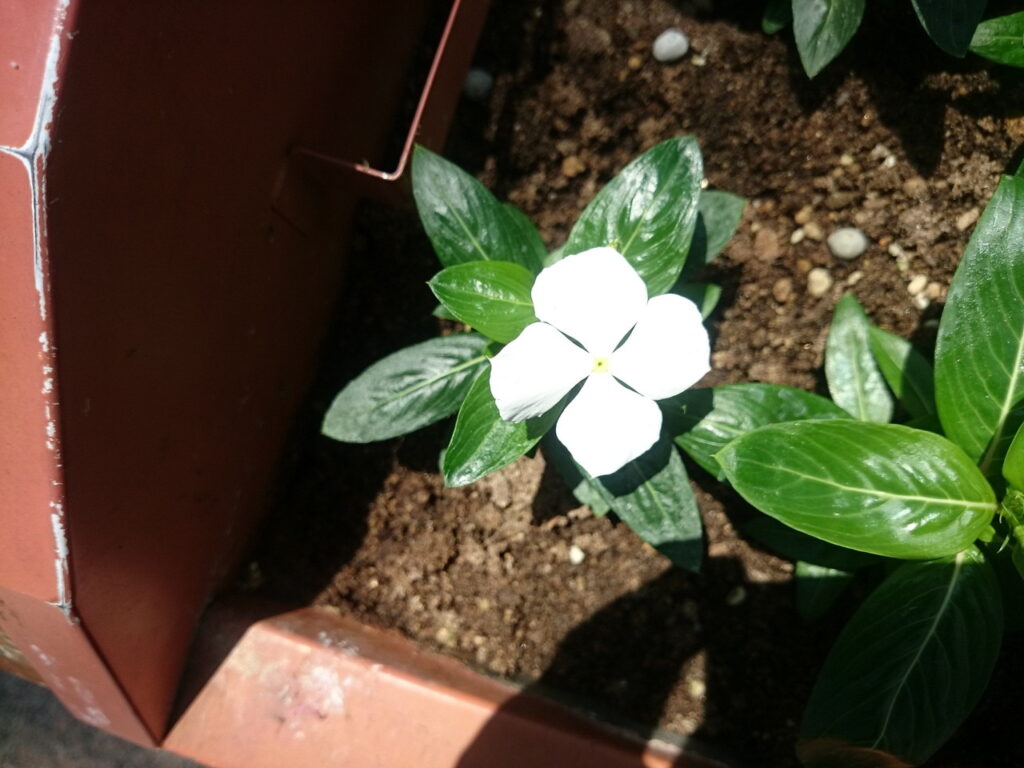
Catharanthus roseus, also known as periwinkle, is an annual plant native to Madagascar in Africa, which has been cultivated worldwide and has naturalized in tropical regions (RBG Kew, 2023). It is also cultivated in Japan for ornamental purposes.
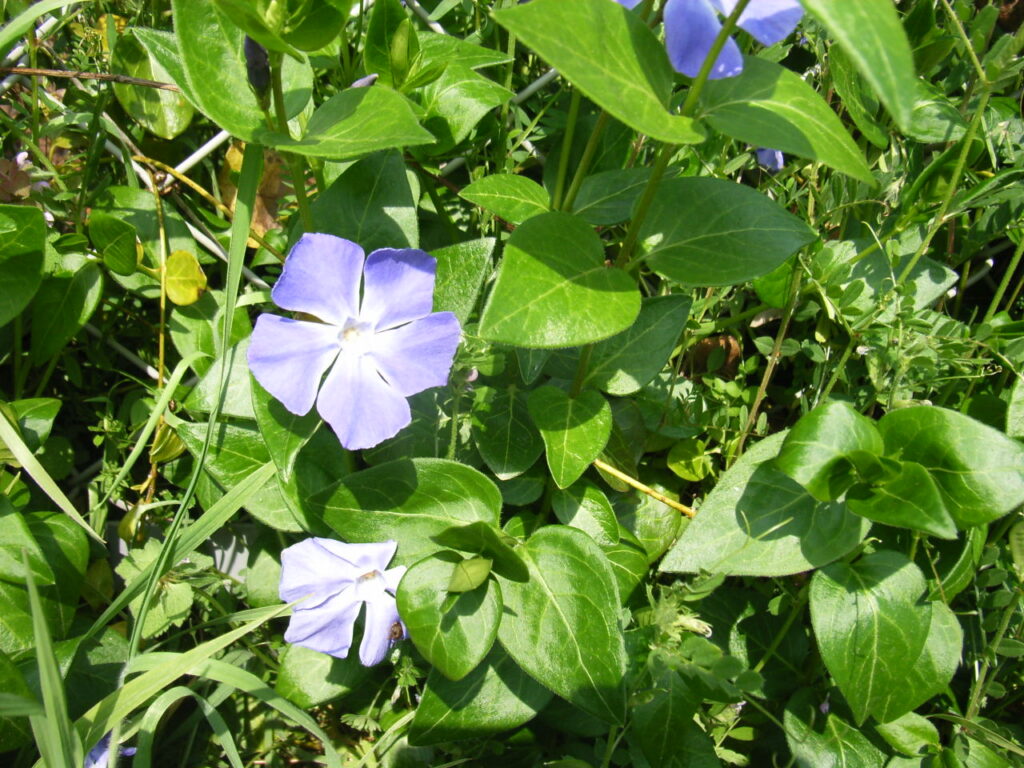
Vinca major, also known as climbing periwinkle, is a perennial plant native to southern Europe (France, Italy, Albania, Bulgaria), the Middle East (Turkey, Lebanon, Syria), and the Caucasus. It has been cultivated and naturalized throughout the world. It is also cultivated in Japan for ornamental purposes.
Vinca minor, also known as dwarf periwinkle, is a perennial plant native to Europe and the Caucasus, which has naturalized after being cultivated worldwide. It is also cultivated in Japan for ornamental purposes.
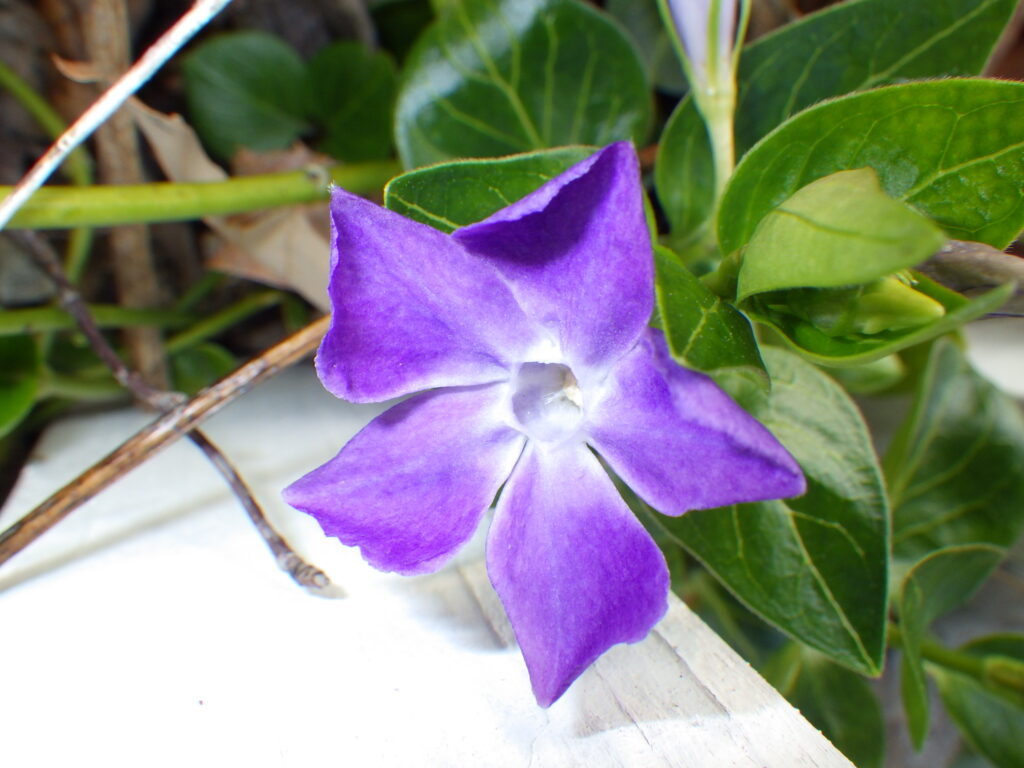
All of these plants belong to the Apocynaceae family and are cultivated in Japan for ornamental purposes, and are commonly seen in urban areas. Their most distinctive feature is that they produce fused petals with five propeller-shaped lobes at the tip, a characteristic common to the Apocynaceae family. In addition to being easy to cultivate, the fact that they produce such interesting flowers is likely one of the reasons for their popularity.
However, these three species have similar names, and the flowers of Vinca minor and Vinca minor are almost identical, making them difficult to distinguish. In horticulture, they are often collectively referred to by their scientific name, "Vinca." As a result, the existence of the plant known as "Vinca minor" is often not even recognized.
What are the differences between periwinkle, climbing periwinkle, and dwarf climbing periwinkle?
While periwinkle belongs to the genus Vinca within the family Apocynaceae, climbing periwinkle and dwarf climbing periwinkle belong to the genus Vinca (Wu & Raven, 1995).
Therefore, the differences between periwinkle, climbing periwinkle, and dwarf periwinkle are quite clear.
Specifically, while periwinkle lacks stolons, climbing periwinkle and dwarf periwinkle have them.
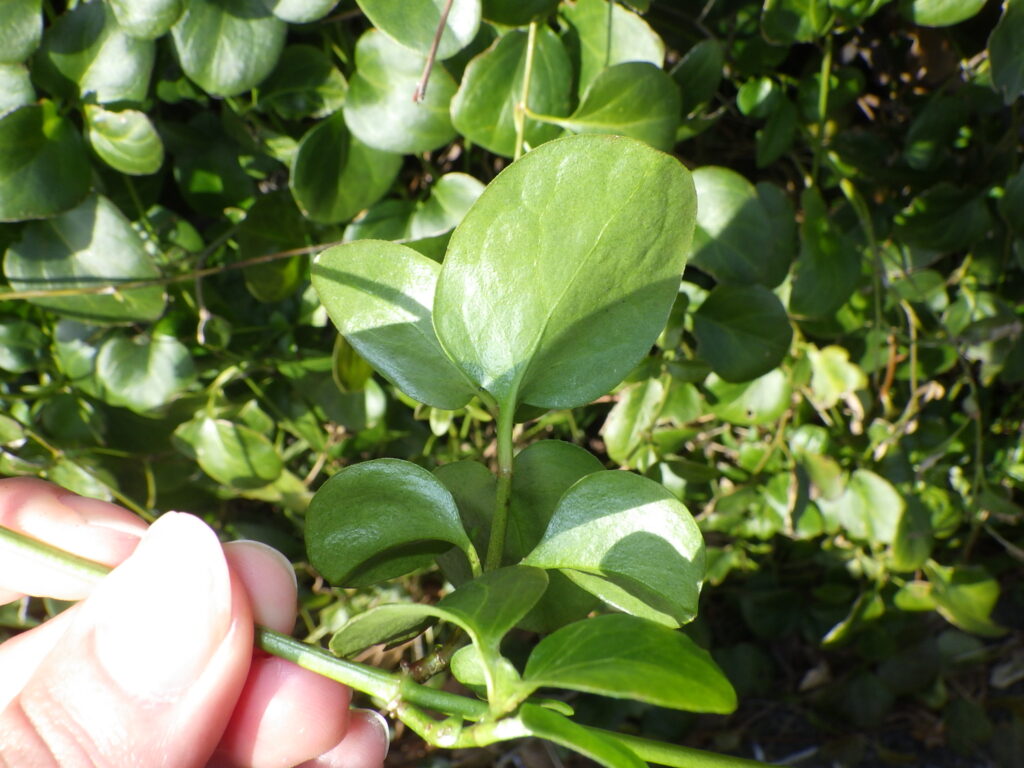
A creeping stem is a stem that emerges from the base of a plant and grows horizontally along the ground, and it has the characteristic of being a "vine," as its Japanese name suggests. If you see a stem creeping along the ground, it is either Vinca minor or Vinca minor.
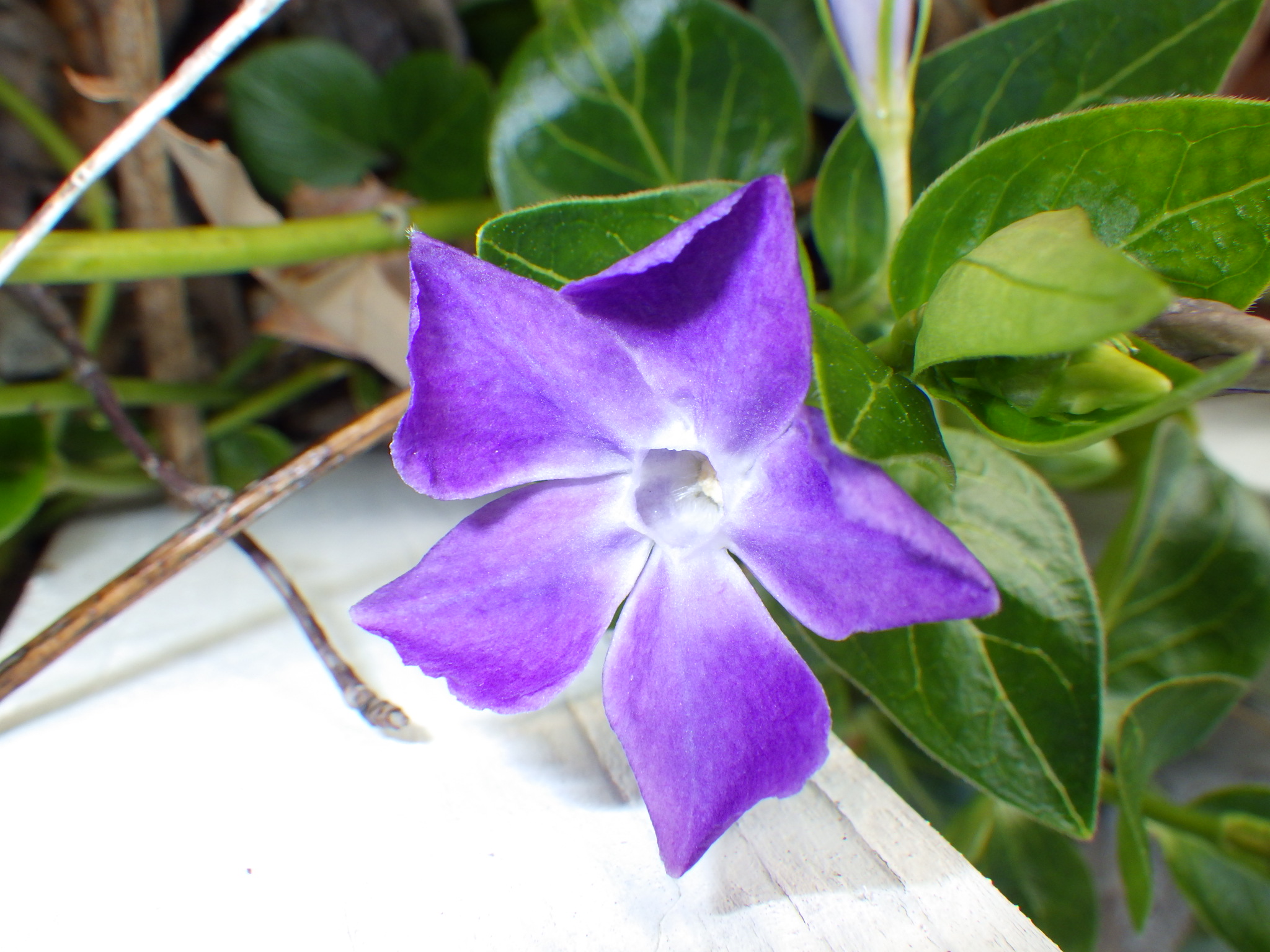
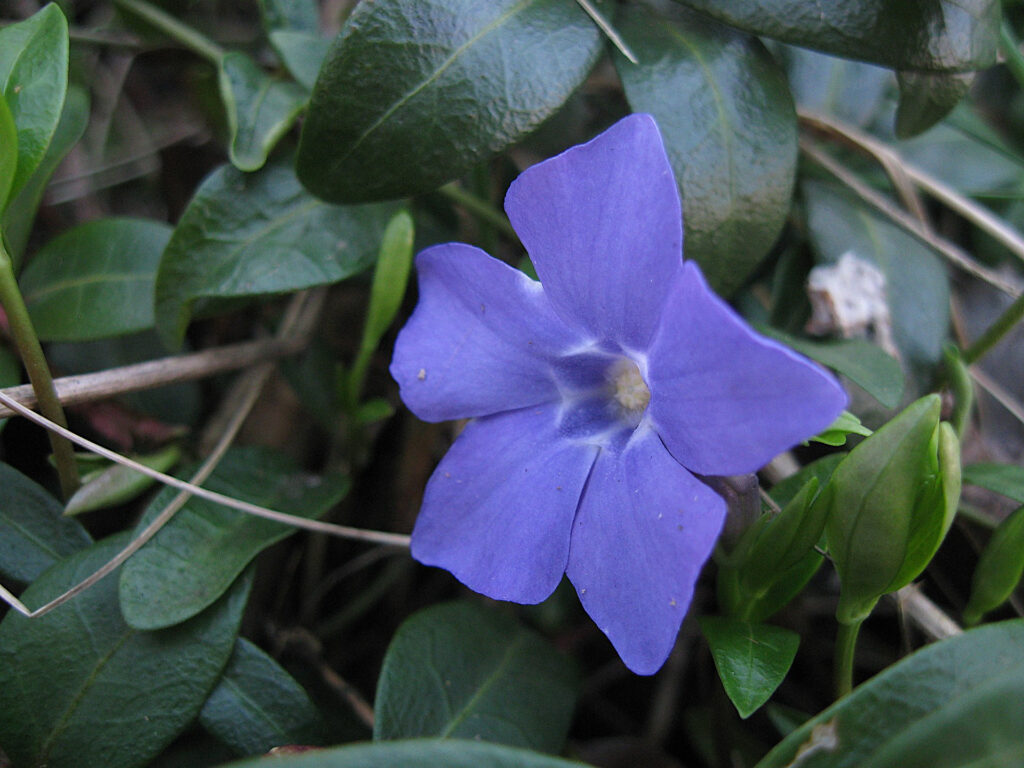
Furthermore, regarding flower color, while the corolla of the periwinkle is pink or white, the corolla of the climbing periwinkle and dwarf periwinkle is purple. I don't think there are many exceptions.
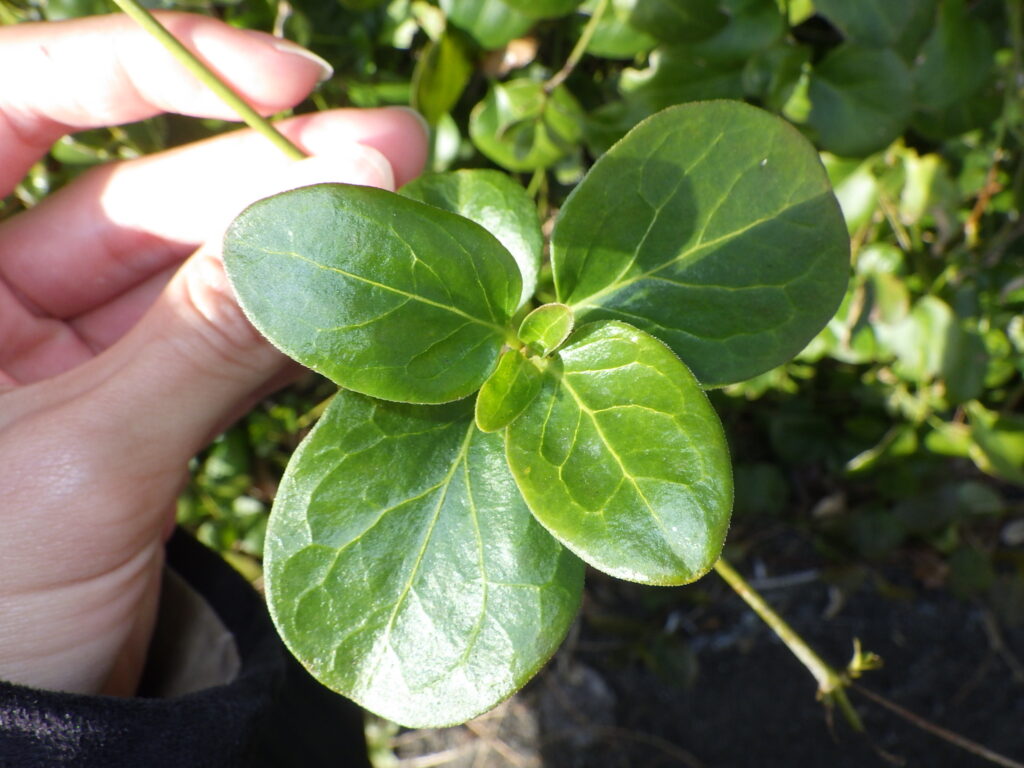
Distinguishing between Vinca minor and Vinca minor is difficult, but you can find definitive differences mainly in the shape of the leaves and the hairs on the calyx.
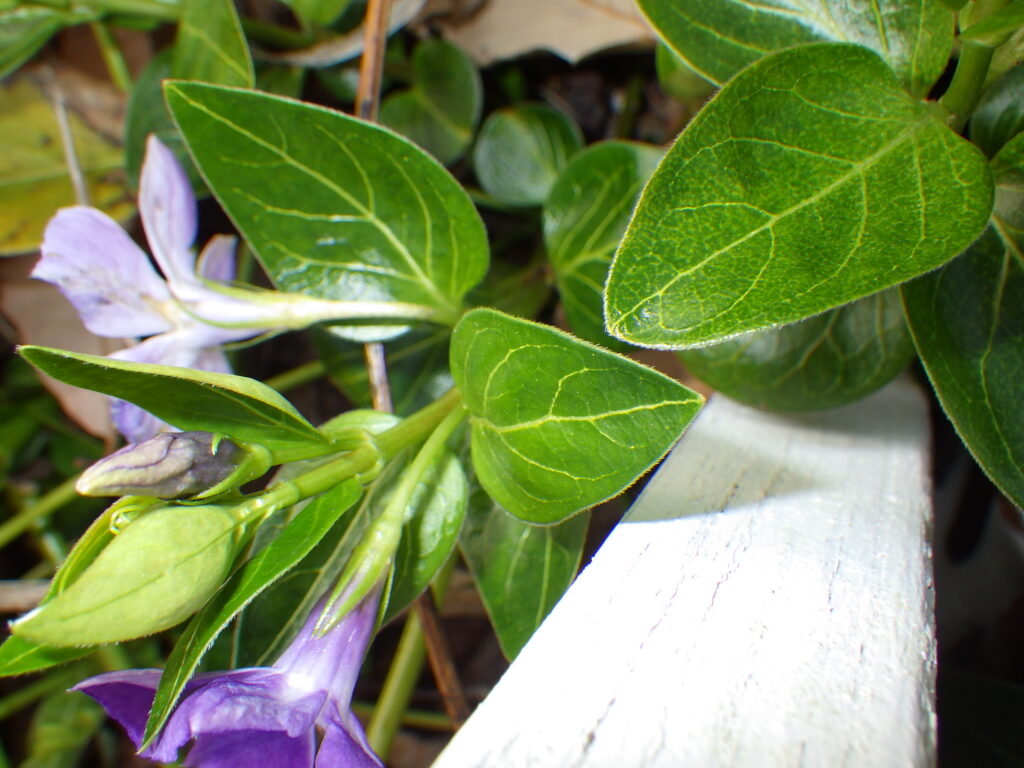
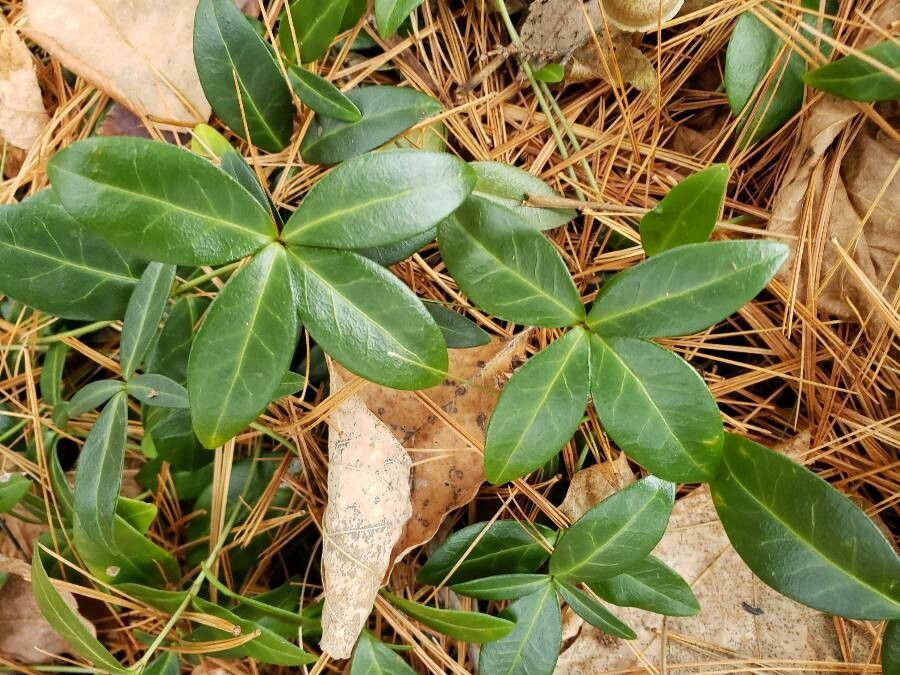
Regarding the leaves, the base of the leaves of Vinca minor is truncate to heart-shaped, while that of Vinca minor is wedge-shaped. In other words, Vinca minor has more typical leaf shapes.
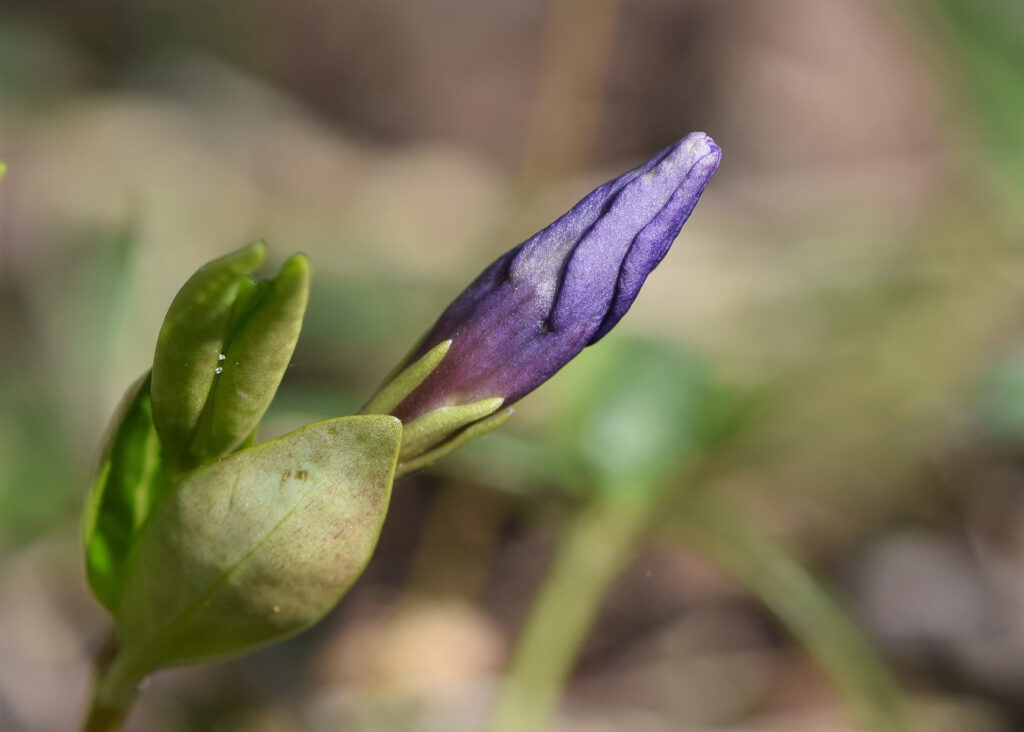
Regarding the calyx, *Vinca minor* has fine hairs and a thread-like tip, while *Vinca minor* is hairless and has a blunt tip. The difference is most noticeable when the flower is in bud.
Other differences include the fact that the flower stalks of Vinca minor are 3-5 cm long, while those of Vinca minor are 1-1.5 cm long, and Vinca minor has slightly more corollas. However, there is variation, so this should only be used as a general guideline.
What is the variety of periwinkle?
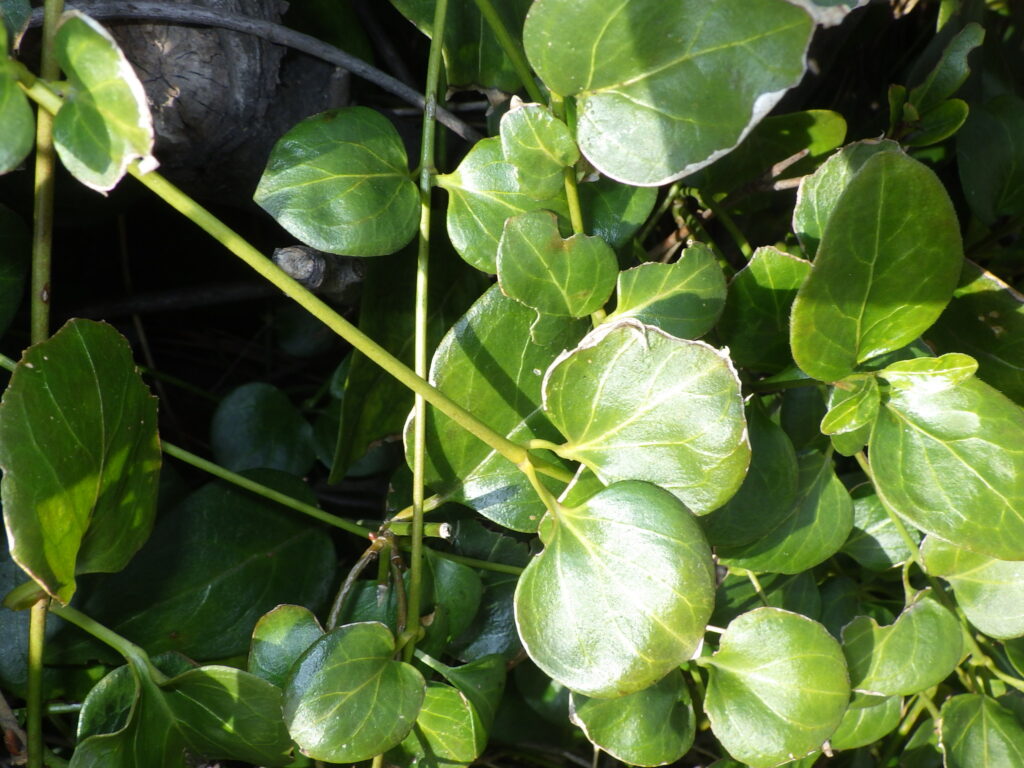
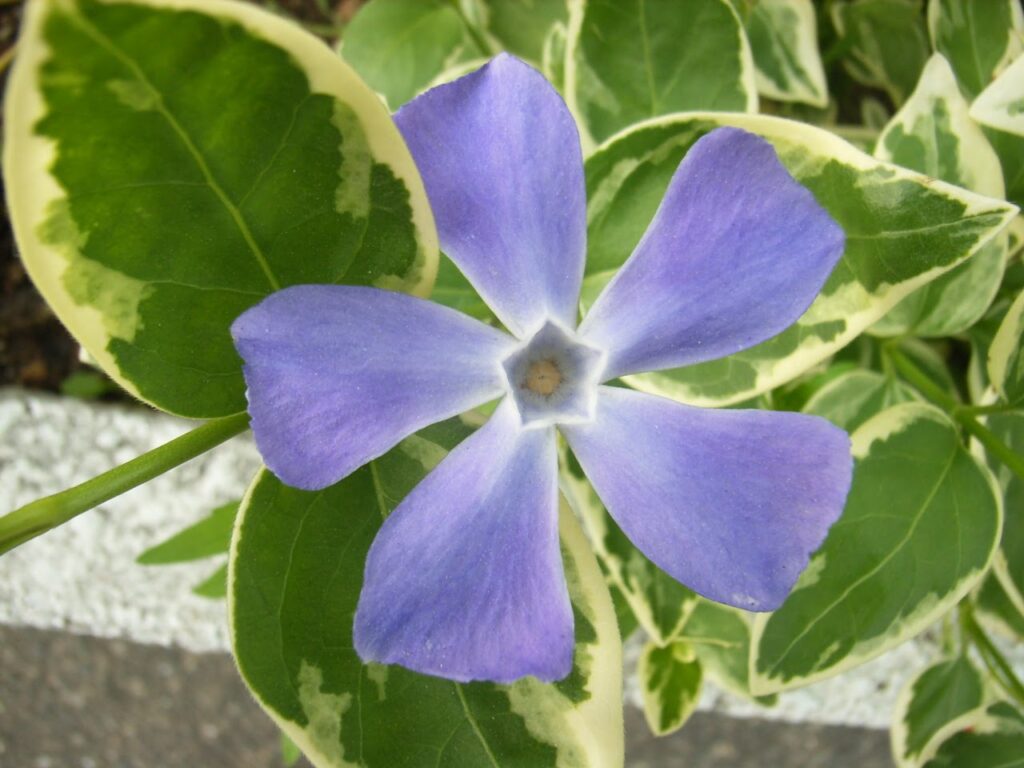
There are known varieties of periwinkle. 'Variegata' is almost identical to periwinkle, but its leaves have variegation and are white on the edges.
References
RBG Kew. 2023. The International Plant Names Index and World Checklist of Vascular Plants. Plants of the World Online. http://www.ipni.org and https://powo.science.kew.org/
Wu, ZY, & Raven, PH (Eds.). 1995. Flora of China (Vol. 16 Gentianaceae through Boraginaceae). Science Press, Beijing, and Missouri Botanical Garden Press, St. Louis. 479pp. ISBN: 9780915279333