Both Fatsia japonica and Fatsia japonica belong to the Araliaceae family and are evergreen trees most characterized by their large, palmately lobed leaves. Both can be observed in the wild and as garden plants. They share many other similarities, which can sometimes lead to confusion. However, distinguishing between them is relatively easy; you can check the size of the leaves, the amount of hair, wrinkles, and gloss. This article will explain the classification of Fatsia japonica and Fatsia japonica.
What are Fatsia japonica and Fatsia japonica?
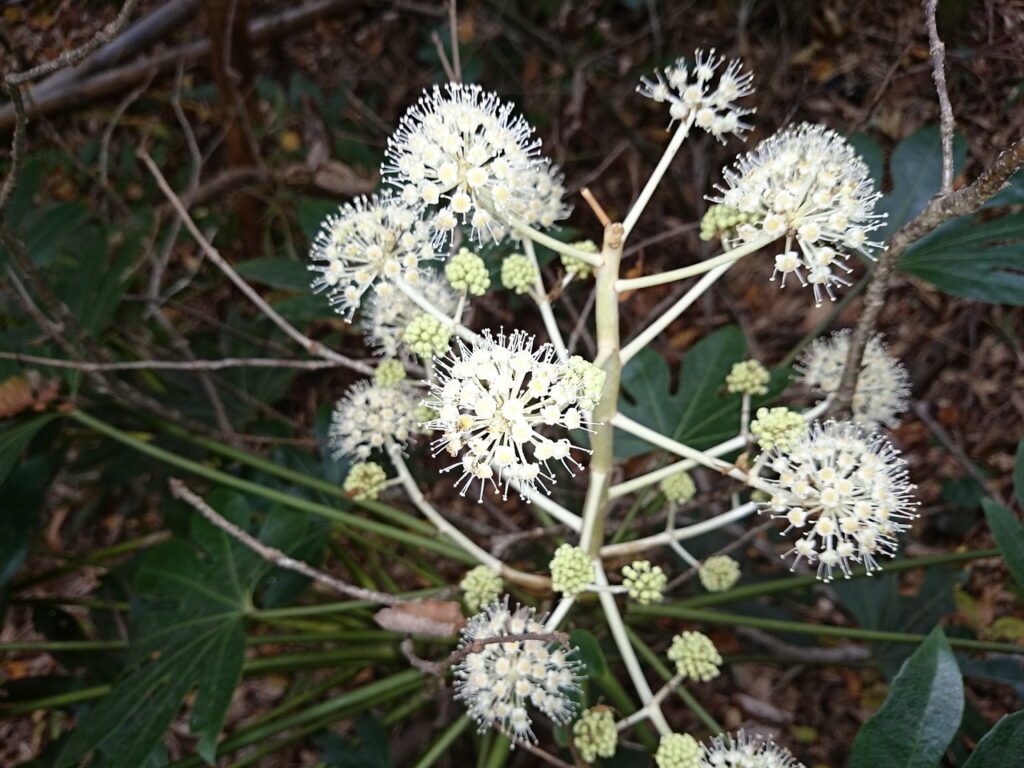
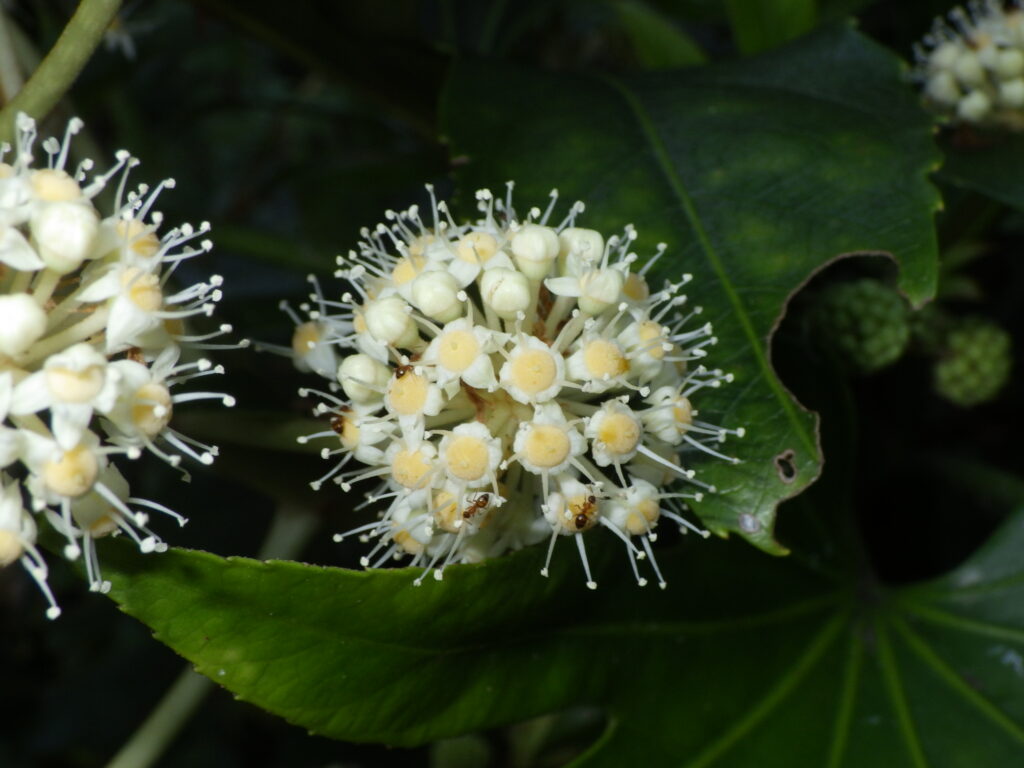
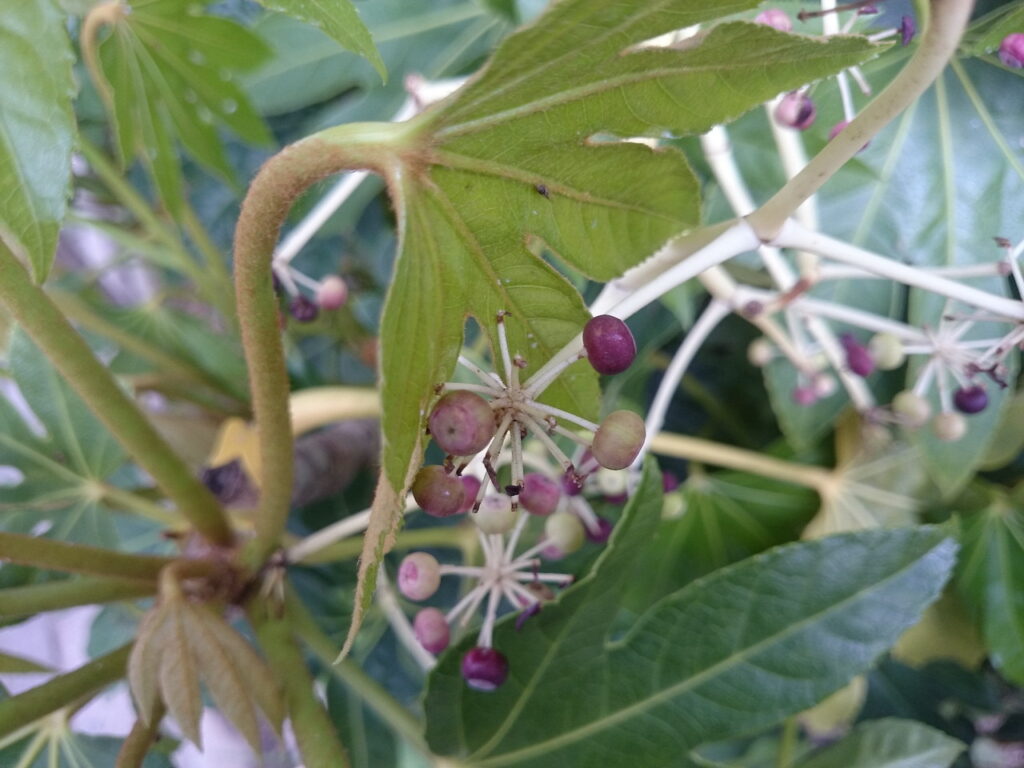
Fatsia japonica var. japonica, also known as Tengu-no-hauchiwa (Tengu's fan) (Kanagawa Prefecture Flora Survey Association, 2018), is an evergreen shrub distributed in Honshu (west of Ibaraki Prefecture), Shikoku, and southern Kyushu in Japan, growing in forests from the coast to hillsides. Due to its interesting leaf shape, it is widely cultivated as an ornamental plant, and many have escaped into the wild. In the Ryukyu Islands south of Amami Oshima, a smaller variety called Ryukyu Fatsia japonica var. liukiuensis grows.
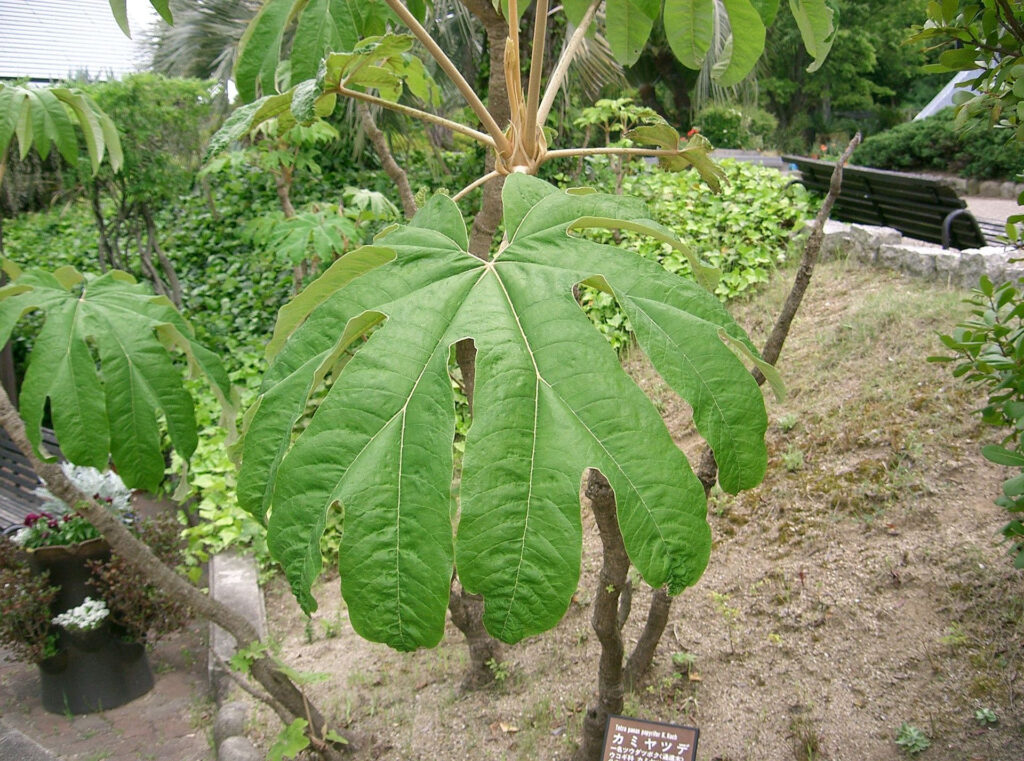
Tetrapanax papyrifer, also known as Kamiyatsude or Tsudatsude, is an evergreen small tree native to Taiwan that grew in mixed forests and was introduced to southern China early on (Wu et al., 2007). In Japan, it was once cultivated in warm regions for its use as a raw material for paper, and is now occasionally planted as a garden tree, sometimes naturalizing on the forest edges of coastal areas west of the Kanto region (Hayashi, 2019).
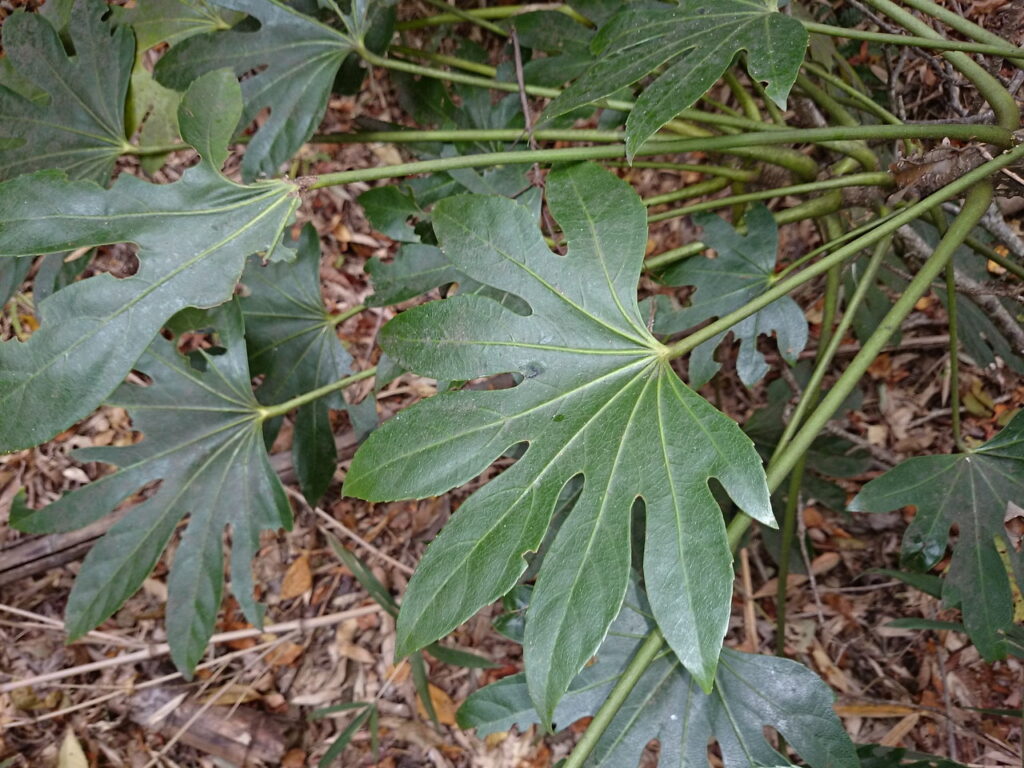
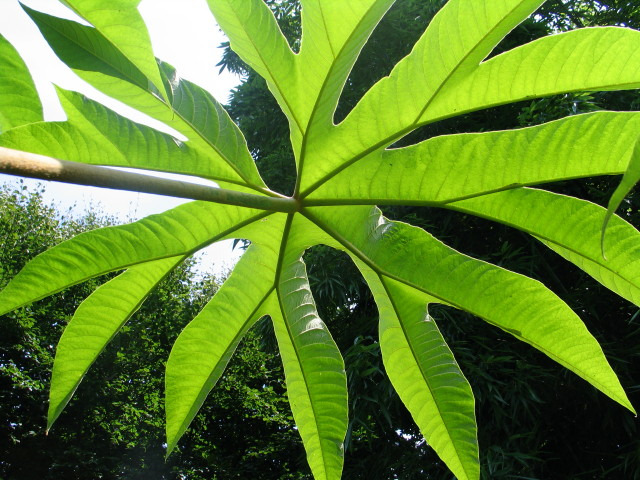
All of these evergreen trees belong to the Araliaceae family and are most characterized by their large, palmately divided leaves. While the kanji characters for these trees read "八つ手" (yatsute), the actual leaves vary greatly in lobe length, ranging from 7 to 12. The "八つ" in "八つ" is believed to mean "many" rather than a specific number.
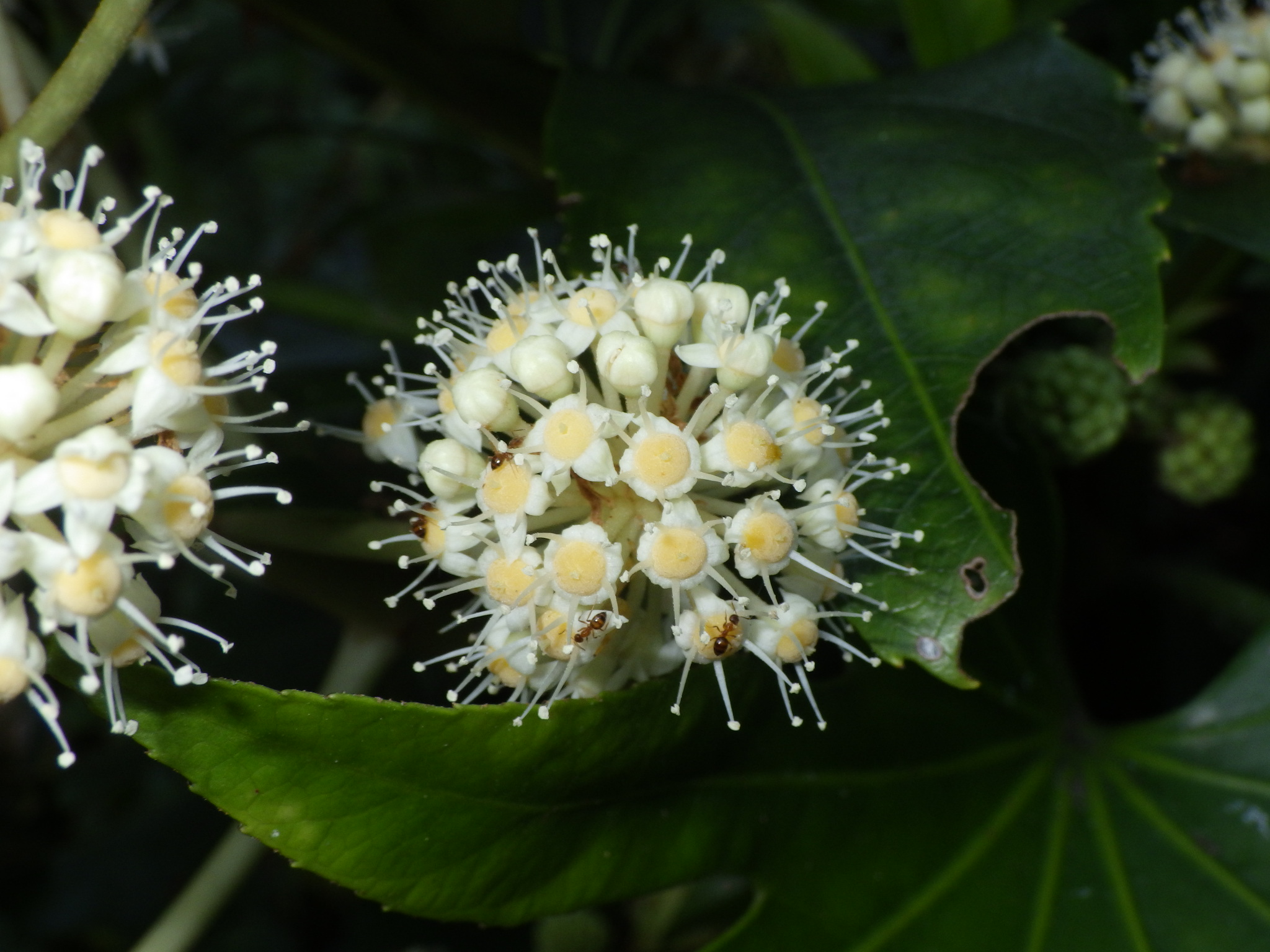
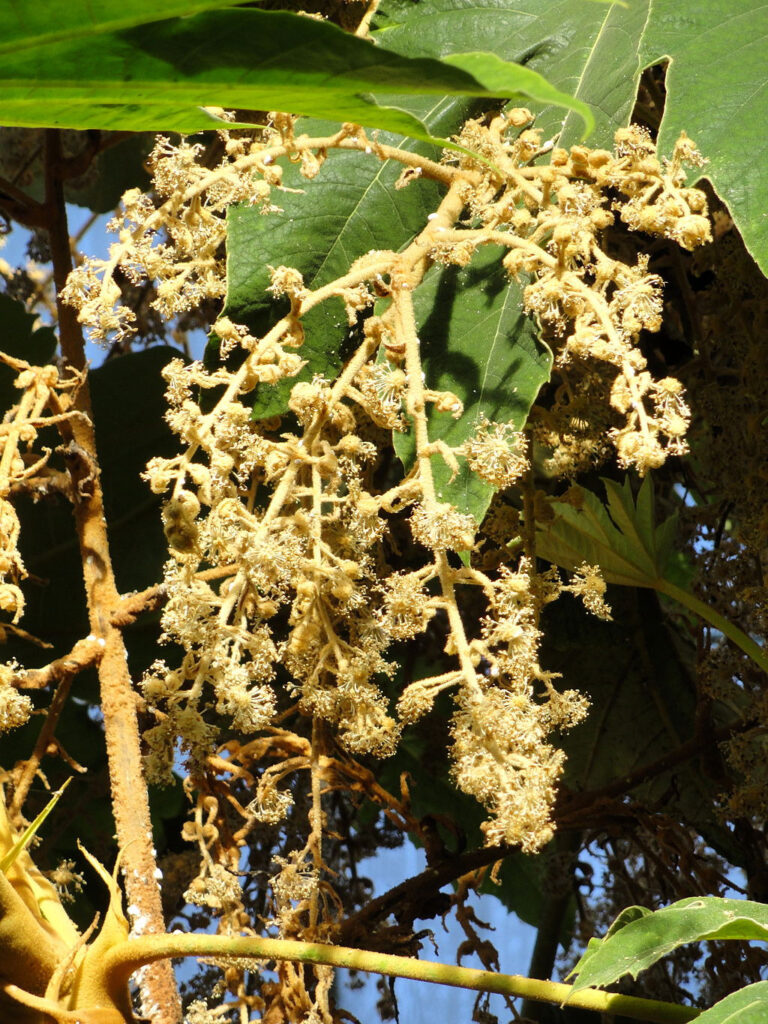
Morphologically, they share several common characteristics, including simple leaves, petioles and leaf blades that are 20 cm or longer, large inflorescences where umbels are compounded into panicles, and petals that are paving-stone-like when in bud.
Because they share so many similarities, you might sometimes be confused about how to distinguish between the two.
What is the difference between Fatsia japonica and Fatsia japonica?
However, distinguishing between these two species is relatively easy (Kanagawa Prefecture Flora Survey Association, 2018; Hayashi, 2019).
While Fatsia japonica belongs to the genus Fatsia, Fatsia japonica belongs to the genus Fatsia, suggesting significant differences between the two. Basically, they can be distinguished simply by looking at their leaves.
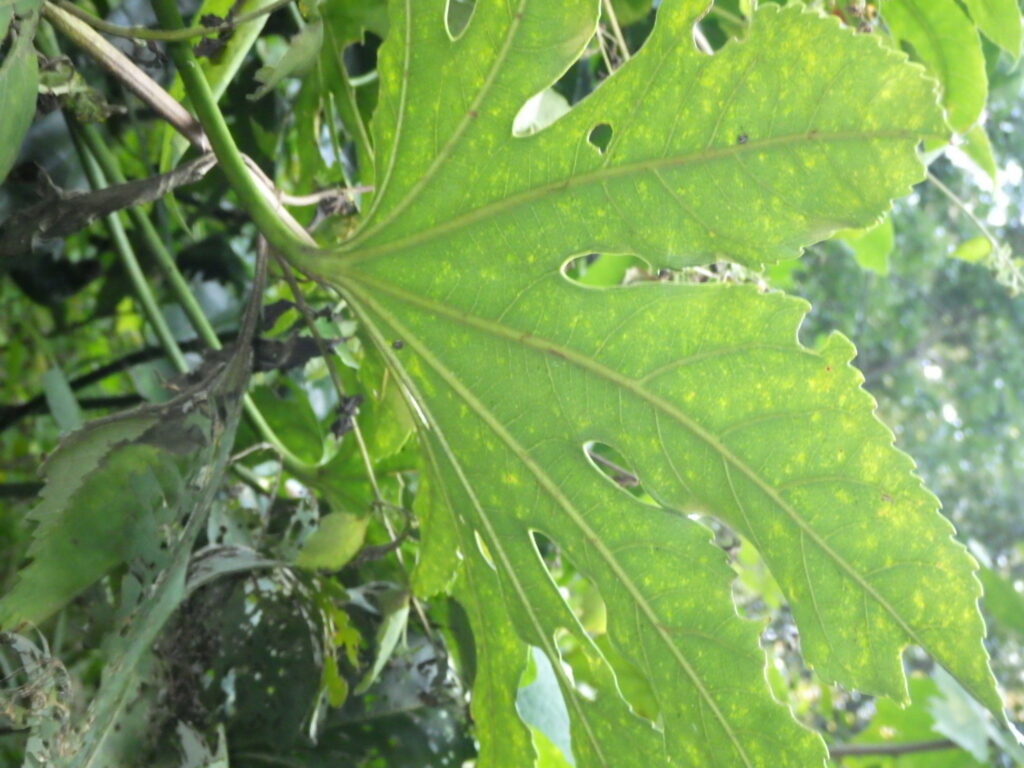
Specifically, in Fatsia japonica, the leaves are almost hairless and wrinkle-free on both the upper and lower surfaces, and the upper surface is glossy, whereas in Fatsia japonica, the leaves are densely covered with stellate hairs on both the upper and lower surfaces, are wrinkled, and the upper surface is less glossy.
You can easily distinguish them just by looking at the upper surface of the leaves. Furthermore, the glossy surface of Fatsia japonica leaves is not simply due to it being an evergreen tree; it's thought to reflect light during the cold early winter months, raising the leaf temperature and attracting ectothermic (warm-blooded) pollinating insects (such as hoverflies and blowflies) to the flowers, thus ensuring successful pollination (Tanaka, 1961; 2001). Similar results have been found in Chinese research (Wang et al., 2011). The surface temperature of the thick leaves is said to be around 20°C. Fatsia japonica may not possess this function.
There are also differences in leaf size; the leaf blade diameter of Fatsia japonica is 20-40 cm, while that of Fatsia japonica is 40-80 cm, making Fatsia japonica clearly larger.
Furthermore, in Fatsia japonica, the palmately divided lobes are further forked.
The above should allow you to distinguish them.
What is the variety of Fatsia japonica?
Several varieties of Fatsia japonica are known.
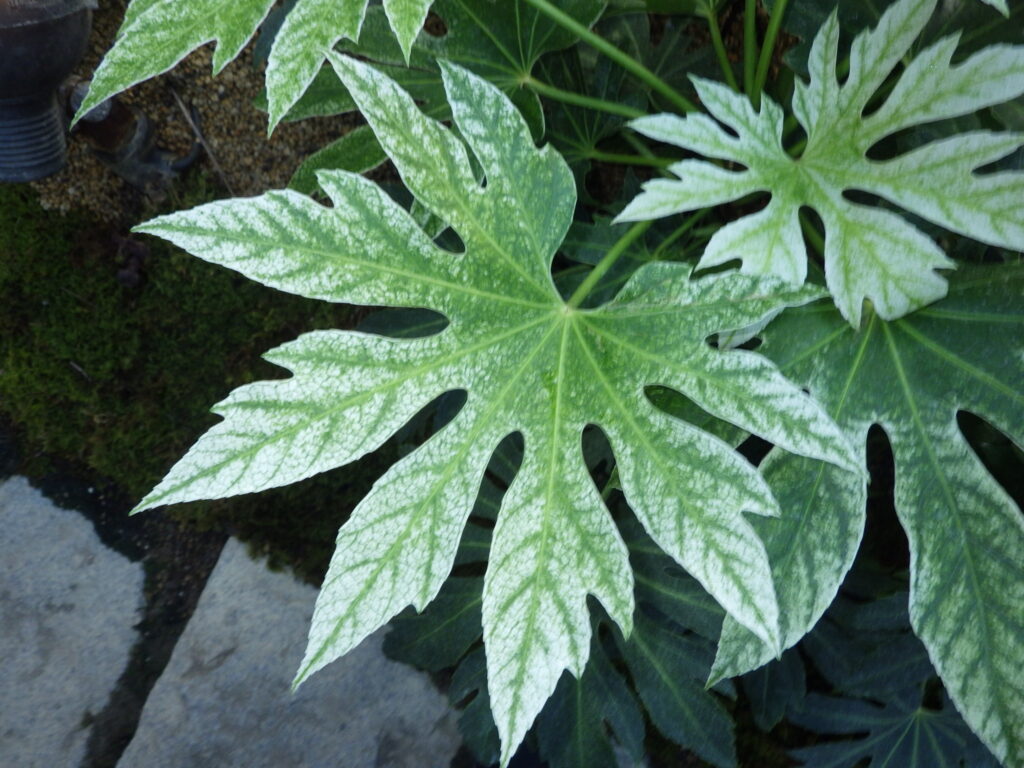
'Albo-marginata', also known as variegated Fatsia japonica, has white variegation on its leaves.
The white-spotted Fatsia japonica 'Variegata' has white edges on its leaves.
'Aureo-variegata', also known as yellow-spotted Fatsia japonica, has yellow spots.
The leaf margins of Fatsia japonica 'Undulata' are wavy.
The leaves of Fatsia japonica f. lobulata are twisted.
References
Hayashi, Masayuki. 2019. Tree Leaves: Expanded and Revised Edition - Identifying 1300 Species Through Real-Life Scans. Yama-kei Publishers, Tokyo. 824pp. ISBN: 9784635070447
Kanagawa Prefecture Flora Survey Association. 2018. Kanagawa Prefecture Flora 2018 (Electronic Edition). Kanagawa Prefecture Flora Survey Association, Odawara. 1803pp. ISBN: 9784991053726
Tanaka, Hajime. 1961. Pollination methods of Fatsia japonica. Collection and Rearing 23: 358-359. ISSN: 0036-3286, https://doi.org/10.11501/2294059
Tanaka, Hajime. 2001. Flowers and Insects: A Collection of Discoveries of Mysterious Deception. Kodansha, Tokyo. 262pp. ISBN: 9784062691437
Wang, J., Ma, YX, Cui, DL, Wang, RX, Lu, YY, & Qin, J. 2011. An observation on pollinating insects and their flower-visiting behavior on Fatsia japonica. Chinese Journal of Applied Entomology 48: 764-768. ISSN: 2095-1353, http://www.ent-bull.com.cn/viewmulu_en.aspx?qi_id=624&mid=15695
Wu, ZY, Raven, PH, & Hong, DY (Eds.). 2007. Flora of China (Vol. 13 Clusiaceae through Araliaceae). Science Press, Beijing, and Missouri Botanical Garden Press, St. Louis. ISBN: 9781930723597