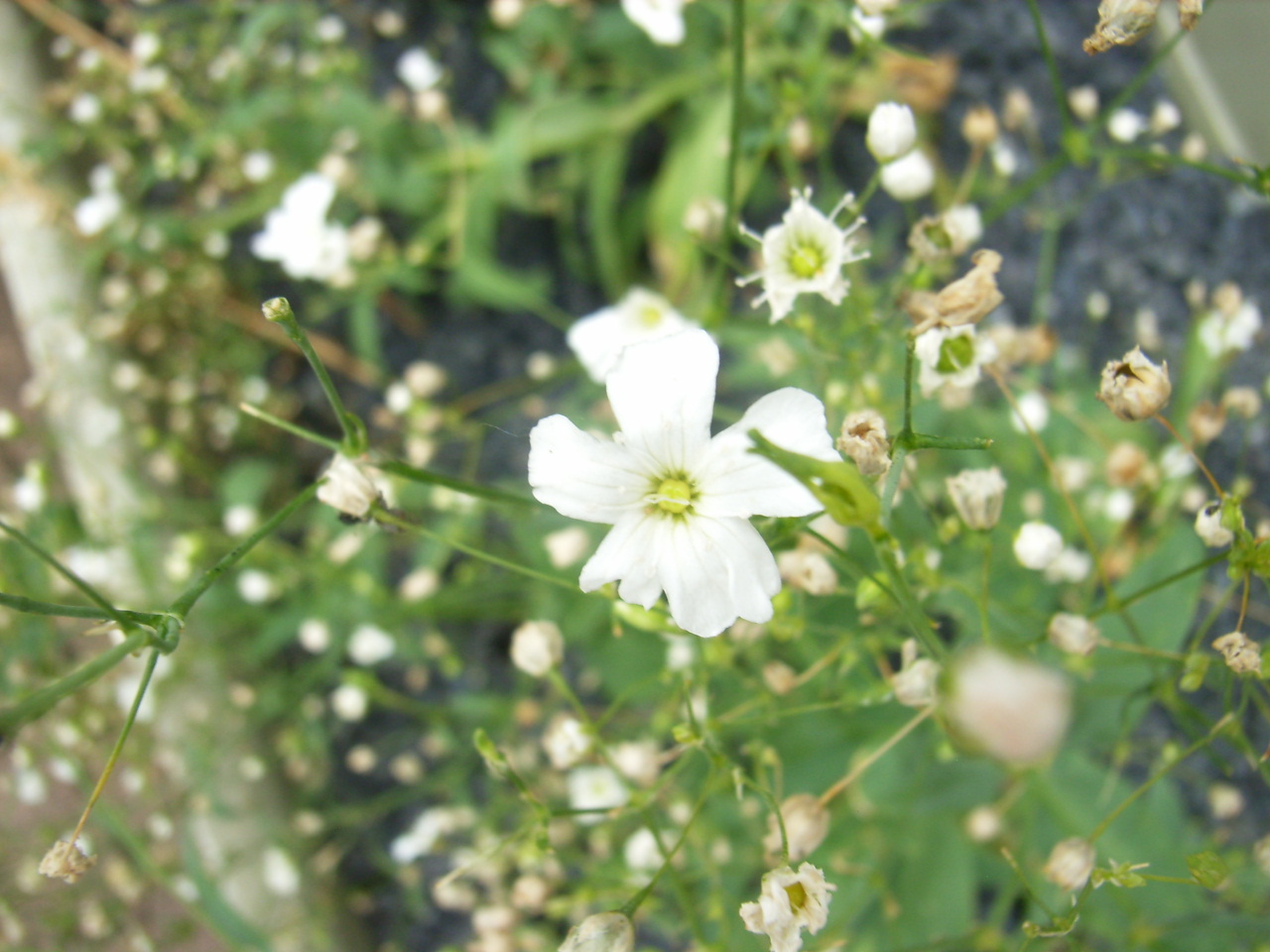
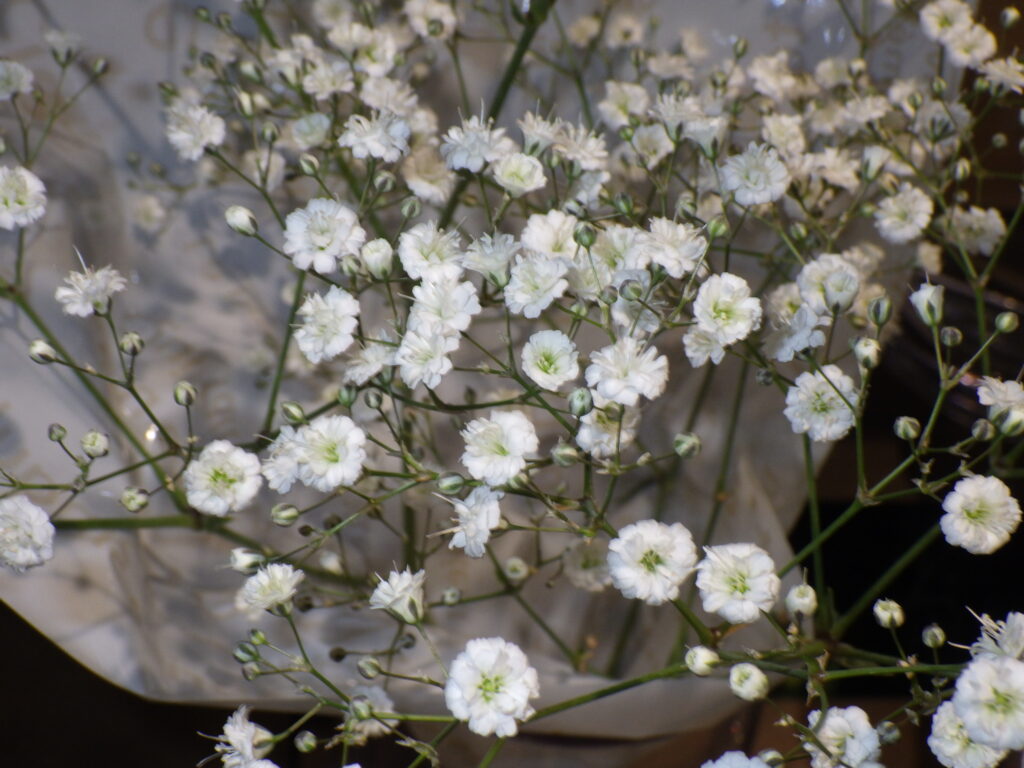
Both baby's breath (Gypsophila spp.) and perennial baby's breath (Gypsophila spp.) belong to the Gypsophila genus of the Caryophyllaceae family. They bear numerous delicate, small flowers (mainly white or pink) and are often planted in flowerbeds, as well as being widely used as cut flowers and in flower arrangements. However, incorrect information can be found on gardening websites and through Google searches. Besides the fact that baby's breath is an annual and perennial baby's breath is a perennial, there are also differences in how the leaves are arranged. It is believed that most of the cut flowers sold are perennial baby's breath. This article will explain the classification and morphology of the Gypsophila genus.
What are baby's breath and perennial baby's breath (perennial gypsophila)?
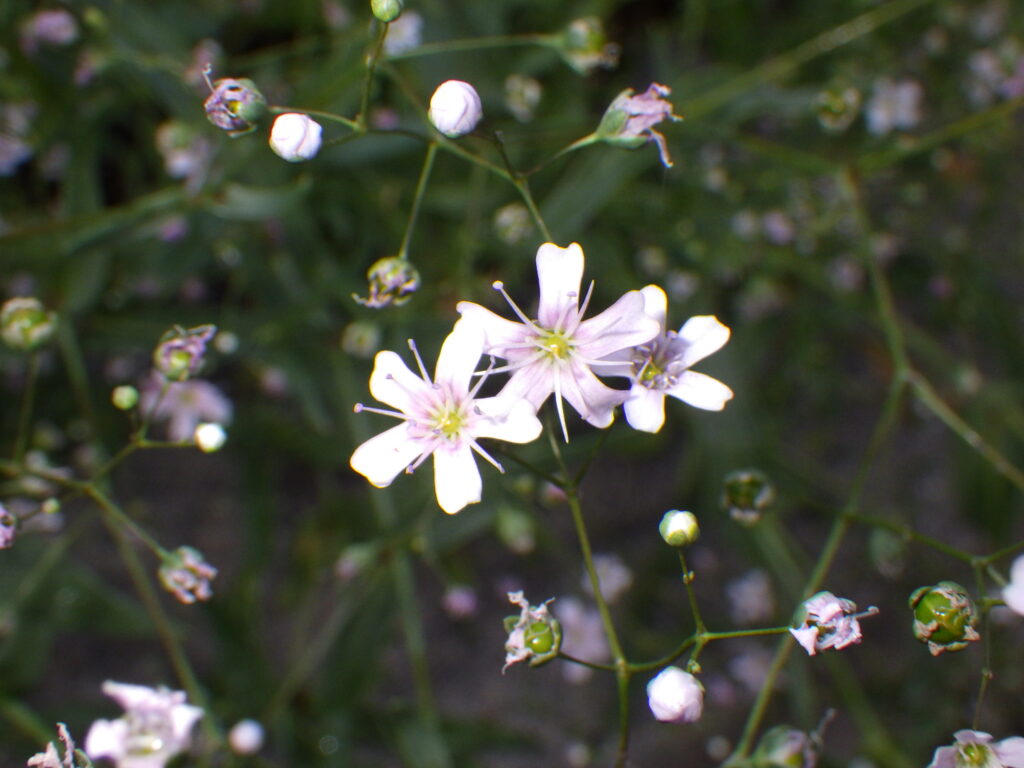
Gypsophila elegans, also known as baby's breath or kasumisou, is distributed across Eurasia (Turkey, Ukraine, Caucasus, and Iran) and has been introduced to the world. In Japan, it is cultivated as an ornamental plant (RBG Kew, 2025).
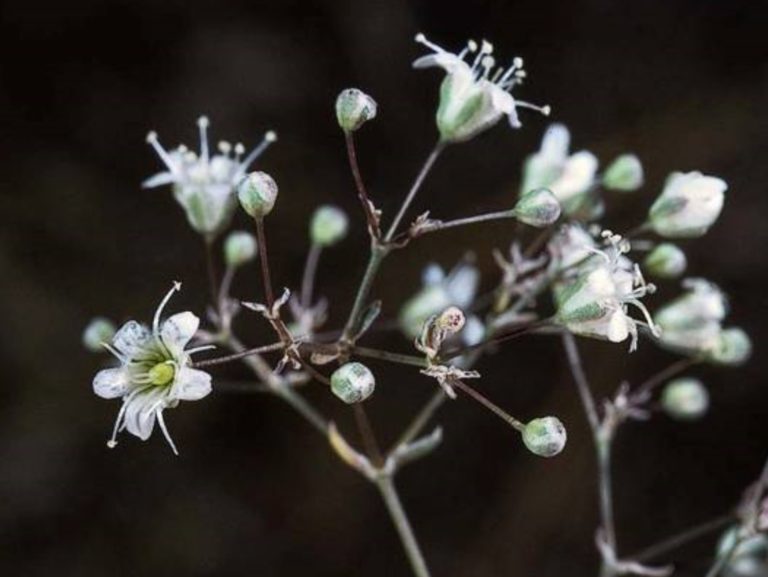
Perennial gypsophila paniculata, also known as perennial baby's breath or small pink, is cultivated in horticulture. Native to Eurasia (Eastern Europe to Mongolia), it has been introduced worldwide and cultivated in Japan for ornamental purposes as well as being used as a cut flower (RBG Kew, 2025; Ichimura, 2016). It is mainly produced in Kumamoto, Fukushima, Wakayama, and Hokkaido prefectures.
Both belong to the genus Gypsophila in the family Caryophyllaceae. They bear numerous delicate, small flowers (mainly white or pink) and are often planted in flowerbeds, as well as being widely used as cut flowers and in flower arrangements. Their Japanese-sounding names might suggest they are native to Japan, but they are actually completely different introduced species.
Morphologically, it is characterized by features such as the petals being clearly divided into a claw-shaped and a limb-shaped part, the calyx being incompletely fused and not separated to form a calyx tube, and the calyx being bell-shaped (Kanagawa Prefecture Flora Survey Association, 2018).
In addition to its cute appearance, its flower meanings are said to be "happiness," "gratitude," "kindness," and "pure heart," and it is often seen being used in arrangements at ceremonial occasions (weddings, funerals, Buddhist altars, graves, etc.). I myself have a strong impression of seeing it often at memorial services after my grandparents passed away.
However, when you search for "gypsophila" on Google, most of the results are for perennial gypsophila, and Google's image suggestions are also incorrect. Gardening websites also incorrectly present it.
It's safe to say that most Japanese people misunderstand and confuse these two things, including Google LLC.
What is the difference between baby's breath and perennial baby's breath (Perennial Baby's Breath)?
Many websites present baby's breath and perennial baby's breath as if they were simply different varieties, but biologically they are completely different species (Flora of North America Editorial Committee, 2005).
The primary difference between baby's breath and perennial baby's breath is that, as the names suggest, baby's breath is an annual plant that cannot survive the winter, while perennial baby's breath is a perennial plant that stores nutrients in its stems and roots to survive the winter and produces leaves again the following year.
However, these differences are largely ecological, and you might feel that they cannot be reliably distinguished by appearance alone.
However, there is a crucial difference in how the leaves are attached.
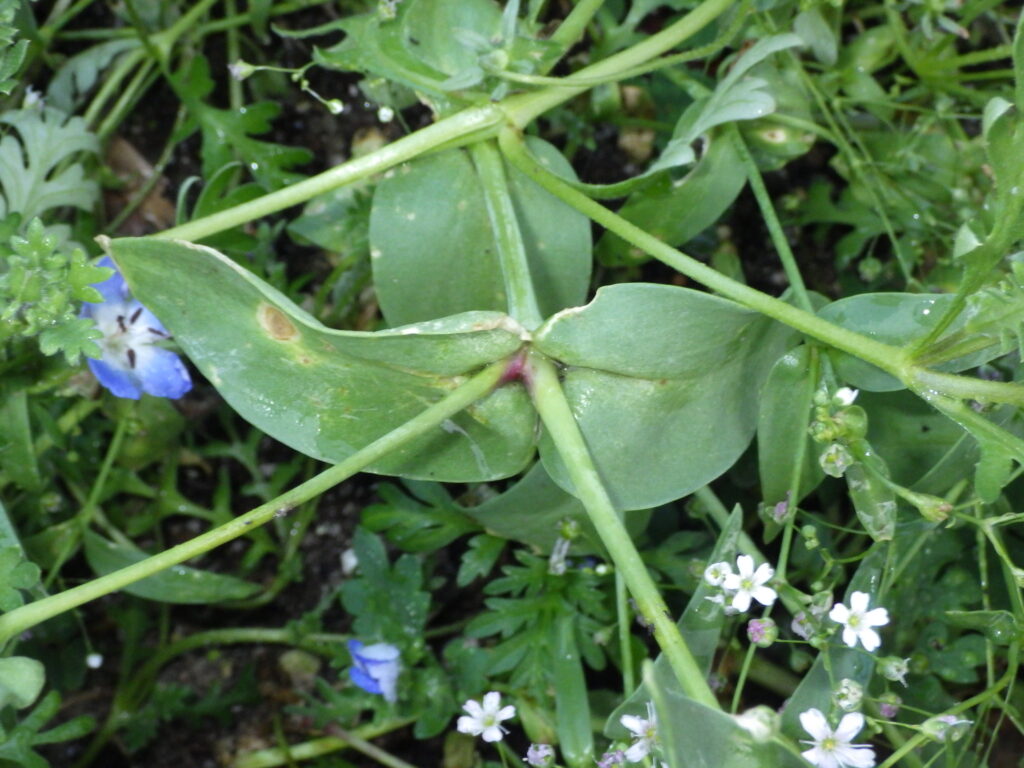
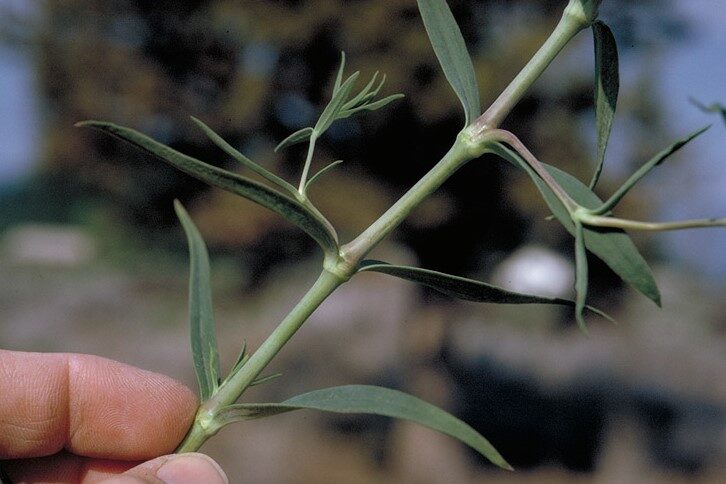
Both species have two leaves that grow opposite each other on the stem (i.e., they are opposite), but the difference is that in baby's breath, the bases of the leaves clasp the stem they grow on, keeping them close together, whereas in perennial baby's breath, the bases of the leaves do not clasp the stem they grow on, keeping them separated.
Therefore, the base of the leaves is thick in baby's breath and thin in perennial baby's breath.
In addition, regarding the original species, the petals of Gypsophila flavescens are large, measuring 6-15 mm, while those of Gypsophila flavescens are considerably smaller, measuring 1-4 mm. However, there are also cultivated varieties of Gypsophila flavescens that are larger.
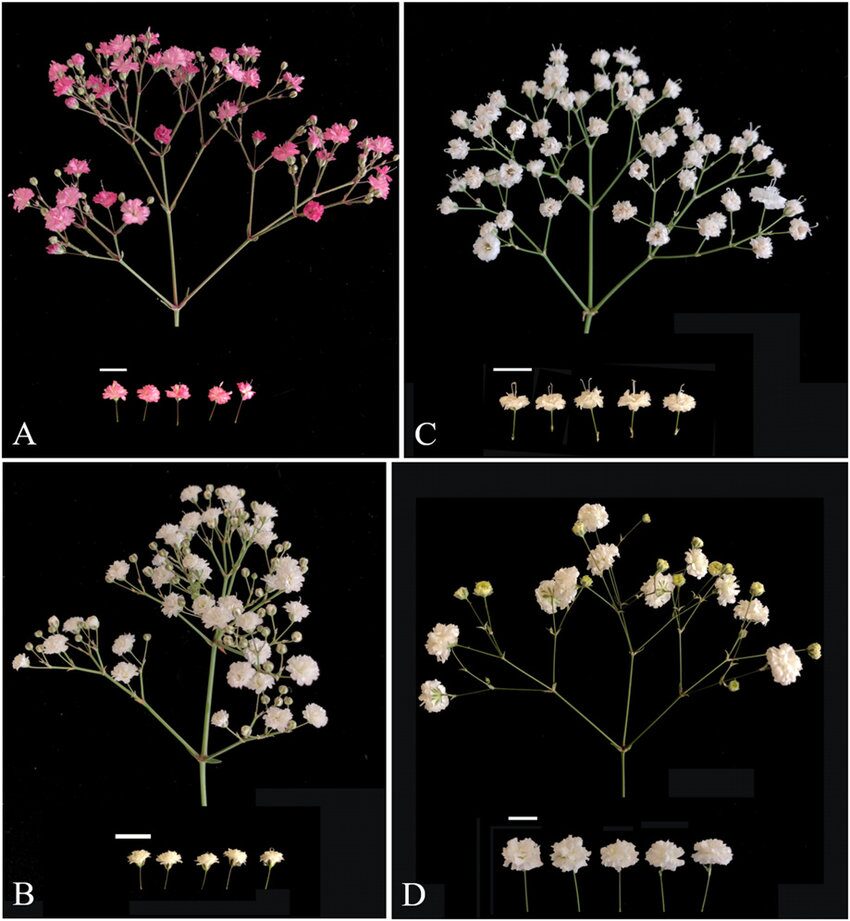
While it's difficult to distinguish them clearly in cut flowers, regular baby's breath (Gypsophila sulphureus) lacks established flowering control technology, making long-term shipments impossible. In contrast, perennial baby's breath (Gypsophila perennialis) has established flowering control technology, allowing for year-round supply. Therefore, it's safe to assume that many of the "baby's breath" cut flowers sold are actually perennial baby's breath. Many of these horticultural varieties have double flowers.
Incidentally, the baby's breath with red petals is called Gypsophila elegans var. carminea. The pink baby's breath is Gypsophila elegans 'Rosea', which we will tentatively call pale pink baby's breath.
References
Flora of North America Editorial Committee. 2005. Flora of North America (Vol. 5 Magnoliophyta: Caryophyllidae, Part 2). Oxford University Press, Oxford. 690pp. ISBN: 9780195222111
Ichimura, Kazuo. 2016. Basics and Practices of Preserving the Freshness and Quality of Cut Flowers: Shelf Life is Key to Consumption. Seibundo Shinkosha, Tokyo. 192pp. ISBN: 9784416516447
Kanagawa Prefecture Flora Survey Association. 2018. Kanagawa Prefecture Flora 2018 (Electronic Edition). Kanagawa Prefecture Flora Survey Association, Odawara. 1803pp. ISBN: 9784991053726
Li, F., Wang, G., Yu, R., Wu, M., Shan, Q., Wu, L., … & Yang, C. 2019. Effects of seasonal variation and gibberellic acid treatment on the growth and development of Gypsophila paniculata. HortScience 54(8): 1370-1374. https://doi.org/10.21273/HORTSCI14156-19
RBG Kew. 2025. The International Plant Names Index and World Checklist of Vascular Plants. Plants of the World Online. http://www.ipni.org and https://powo.science.kew.org/