Black locust (Robinia pseudoacacia) and Japanese bush clover (Robinia japonica) are both legumes, have odd-pinnately compound leaves composed of numerous leaflets, are used for greening, and tend to naturalize in similar environments, leading to confusion. In Japan, both are classified as invasive alien species (formerly designated as species requiring caution) due to their potential to cause ecosystem damage. While the presence or absence of thorns is sometimes cited as a distinguishing feature, this is premature because thornless black locust (Robinia japonica) exists. Distinguishing them requires careful observation of the leaves. However, their flowers and fruits are completely different, making them easy to identify. How do these contrasting flowers and fruits affect the ecology of these two species? It is likely that the flowers of black locust attract a wide range of bees of various sizes, while those of black locust target bees about the size of European honeybees. Research on their fruits is also insufficient, but black locust uses wind and animals to disperse its seeds, while black locust uses gravity, wind, and gravity. This article explains the classification, pollination ecology, and seed dispersal of black locust and Japanese bush clover.
- A leguminous tree that originated in North America as a landscaping plant and has since become naturalized.
- What are the differences between Japanese bush clover (Lespedeza bicolor) and black locust (Robinia pseudoacacia)?
- What is the structure of a flower?
- Black locust trees have a highly flexible pollination strategy!?
- Were the insects that came to the flowers of the Japanese bush clover (Lespedeza bicolor) attracted by pollen?
- The fruit is a legume, and the seeds are dispersed by both wind and water!?
- References
- Source
A leguminous tree that originated in North America as a landscaping plant and has since become naturalized.
Amorpha fruticosa, also known as black-flowered pagoda tree, is native to eastern North America and Mexico. It was introduced to Japan for road embankment greening and erosion control and has since become naturalized (Mogi et al., 2000). In its native habitat, it grows in open, moist forests, damp ground near streams and ponds, rocky banks, and canyons (The Great Plains Flora Association, 1986). In its invasive areas, it is a deciduous shrub that has naturalized in landslide areas and riverbeds (Mogi et al., 2000).
Black locust (Robinia pseudoacacia), also known as false acacia, is native to North America. It was introduced to Japan in the early Meiji era and planted in various places for erosion control. It is a deciduous tree that has naturalized along riverbanks, embankments, and landslide areas.
The two species mentioned above are legumes native to North America, and share the common characteristics of having odd-pinnately compound leaves composed of numerous leaflets, being used for greening, and becoming naturalized in similar environments. Furthermore, as will be discussed later, their high reproductive capacity has led to problems such as inhibiting the growth of native plant species and damaging the landscape in Europe and Japan. Although they are not designated as specified invasive alien species in Japan, both are designated as alien species that cause damage to ecosystems (formerly designated as alien species of concern) and require close monitoring.
What are the differences between Japanese bush clover (Lespedeza bicolor) and black locust (Robinia pseudoacacia)?
While there are many similarities and it is often confusing, a closer look reveals quite a few differences (Mogi et al., 2000; Hayashi, 2014).
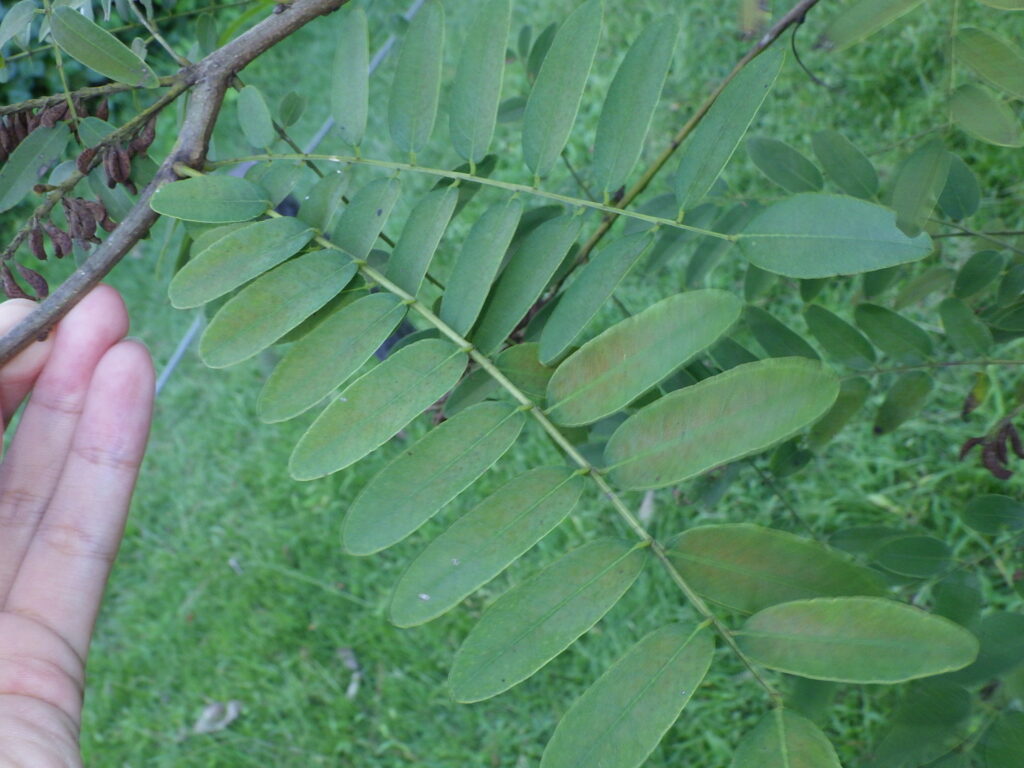
First, the leaflets of *Lespedeza bicolor* are long and oval-shaped and small (there is variation, but not as much as in *Robinia pseudoacacia*), usually with a minute projection at the tip and scattered with light-colored glandular dots, whereas in *Robinia pseudoacacia* they are short and oval-shaped and large, usually with a concave tip and no projection, and no glandular dots.
Also, while the branches of the Japanese bush clover (Lespedeza bicolor) are thornless, the black locust (Robinia pseudoacacia) usually has thorns, as its name suggests. Some people emphasize this, but this point may not be a very clear distinguishing feature, because there is a variety with the extremely roundabout (but appropriate) name of thornless black locust f. inermis. So, if it has thorns, it's a black locust.
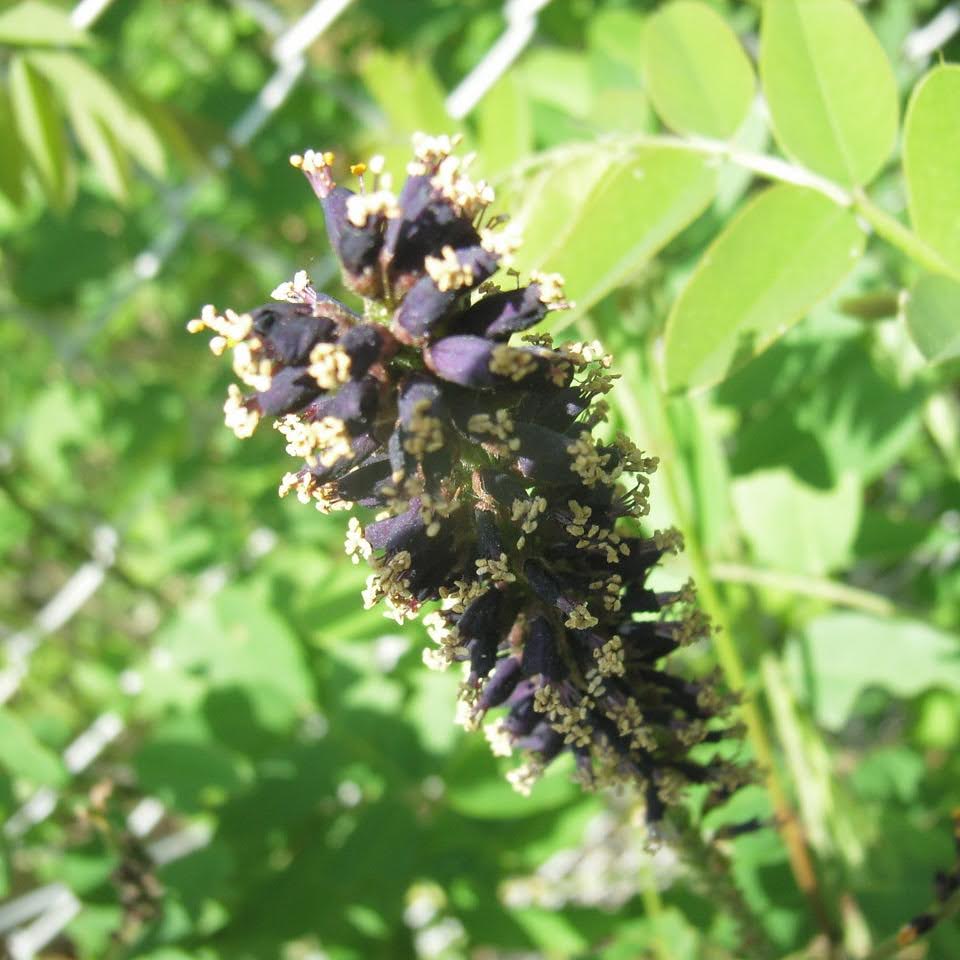
The flowers are completely different. In the Japanese bush clover, several spike-like inflorescences extend from the tips of the branches, bearing numerous dark purple flowers. The petals consist only of a standard petal, with the wing and keel petals reduced. The standard petal is dark purple, the filaments are purple, and the anthers are yellow. In contrast, the black locust (Robinia pseudoacacia) hangs down racemes from the leaf axils, bearing numerous fragrant white butterfly-shaped flowers.
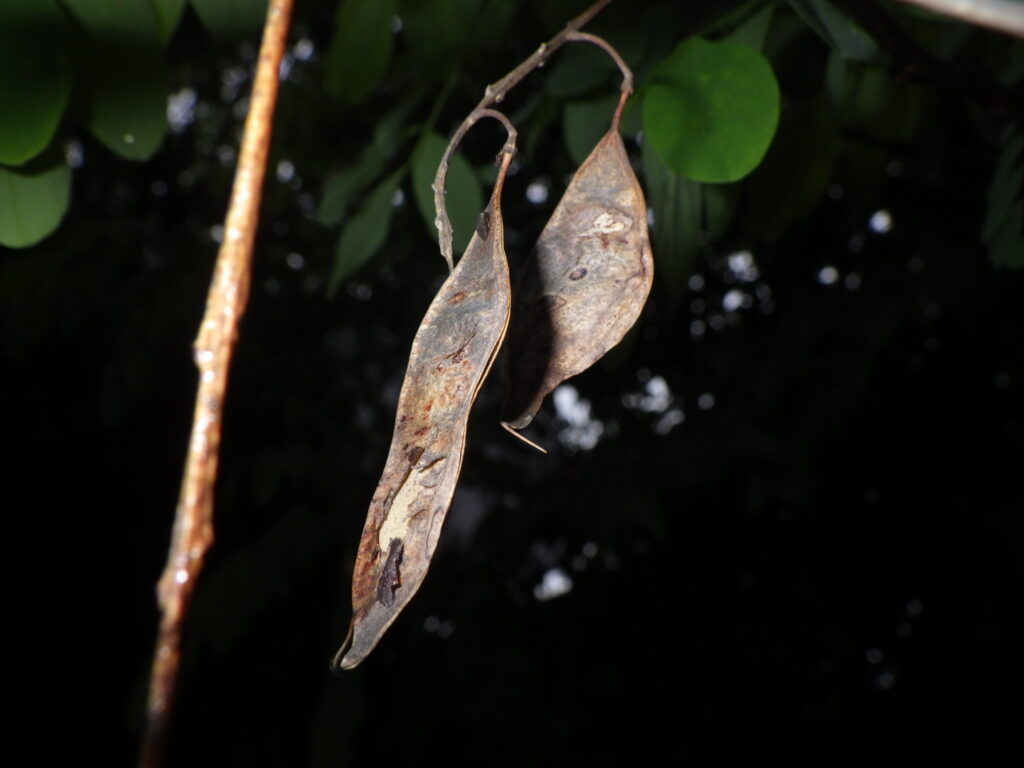
The fruits are also completely different; although both are legumes, the surface of the Japanese bush clover has vesicular warts, does not split open when ripe, and contains a single seed, whereas the black locust has narrow wings on the abaxial side, the surface is hairless, ripens around October, splits into two, and contains 3 to 10 seeds.
These two species are sometimes confused with Sophora flavescens, Sophora japonica, and Sophora japonica, but they can be distinguished from these by the fact that Sophora flavescens has minute projections on its leaflets and scattered light-colored glandular dots, while Sophora japonica can be distinguished by the fact that its leaves are not pointed but usually concave.
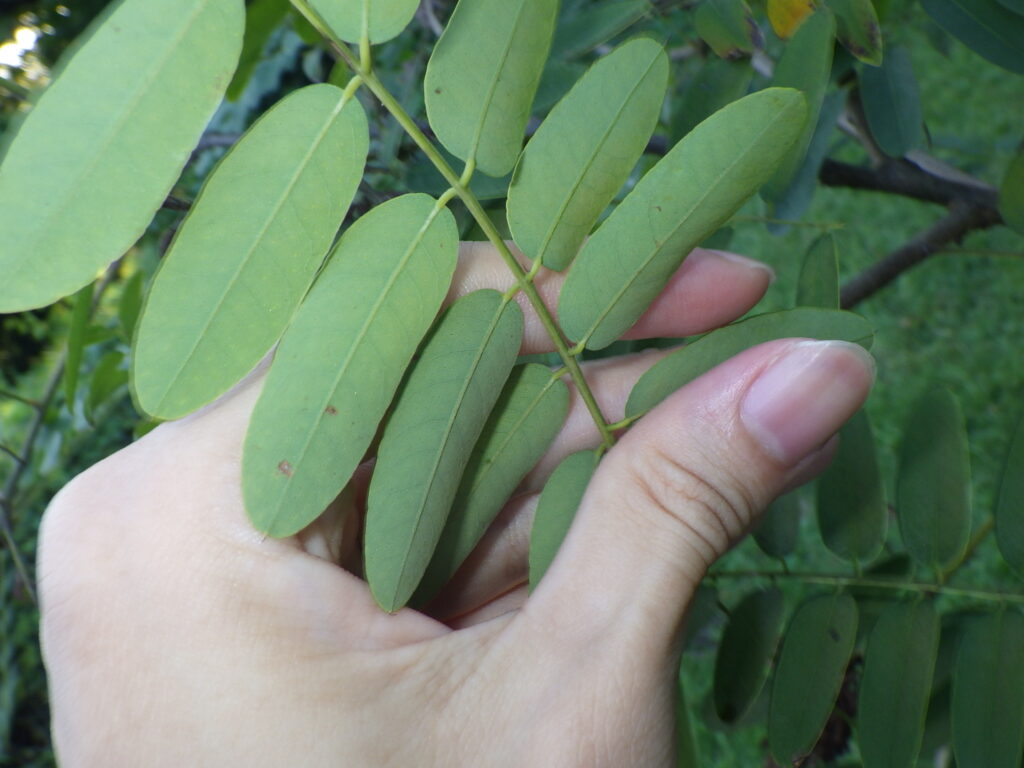
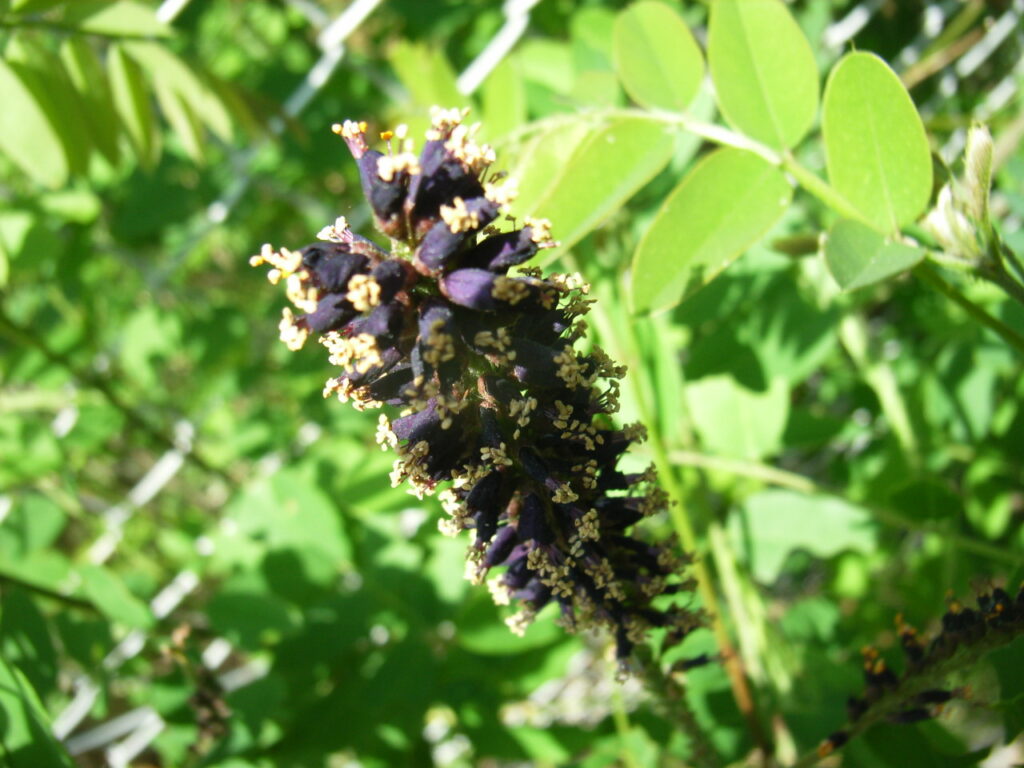
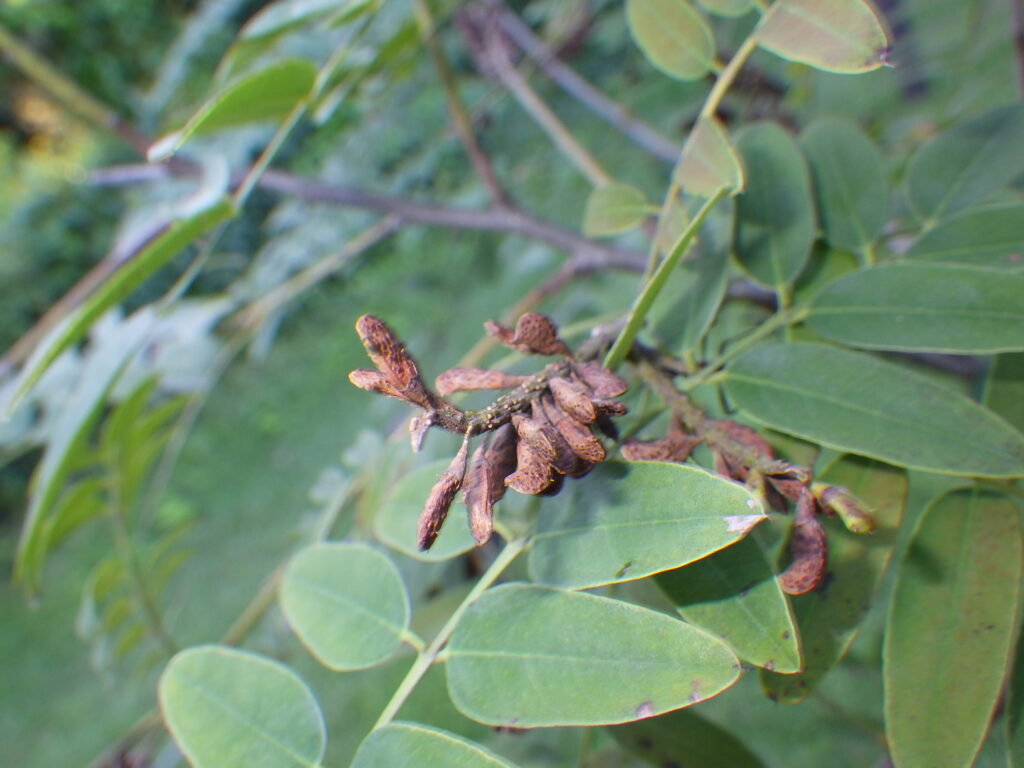
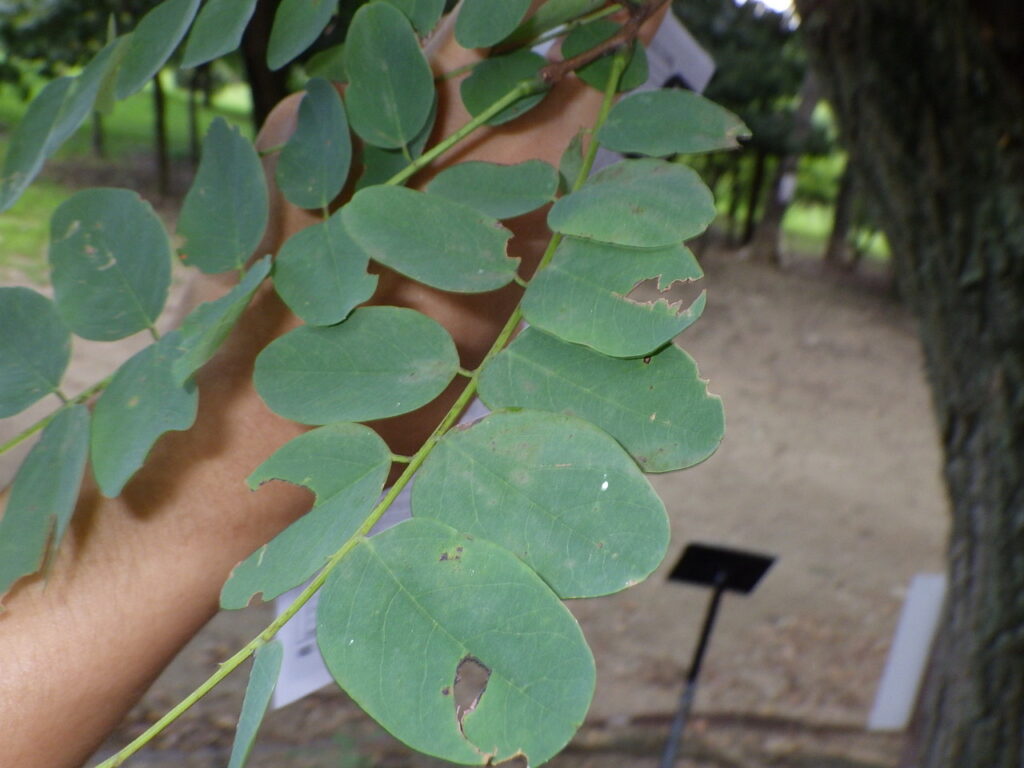
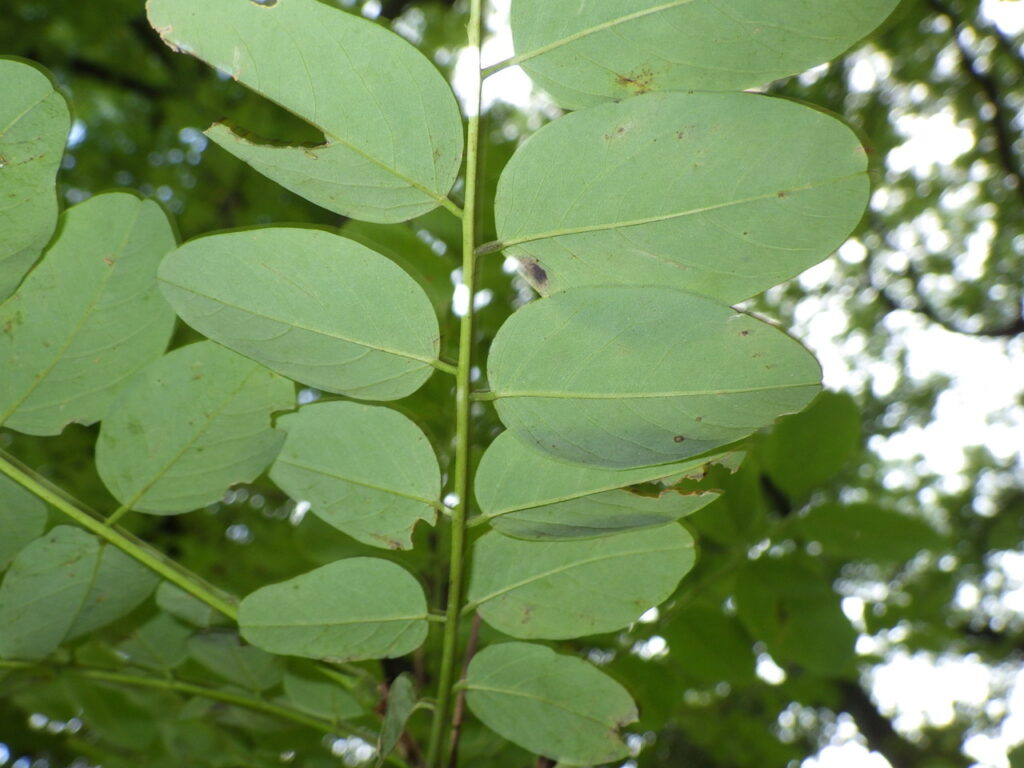
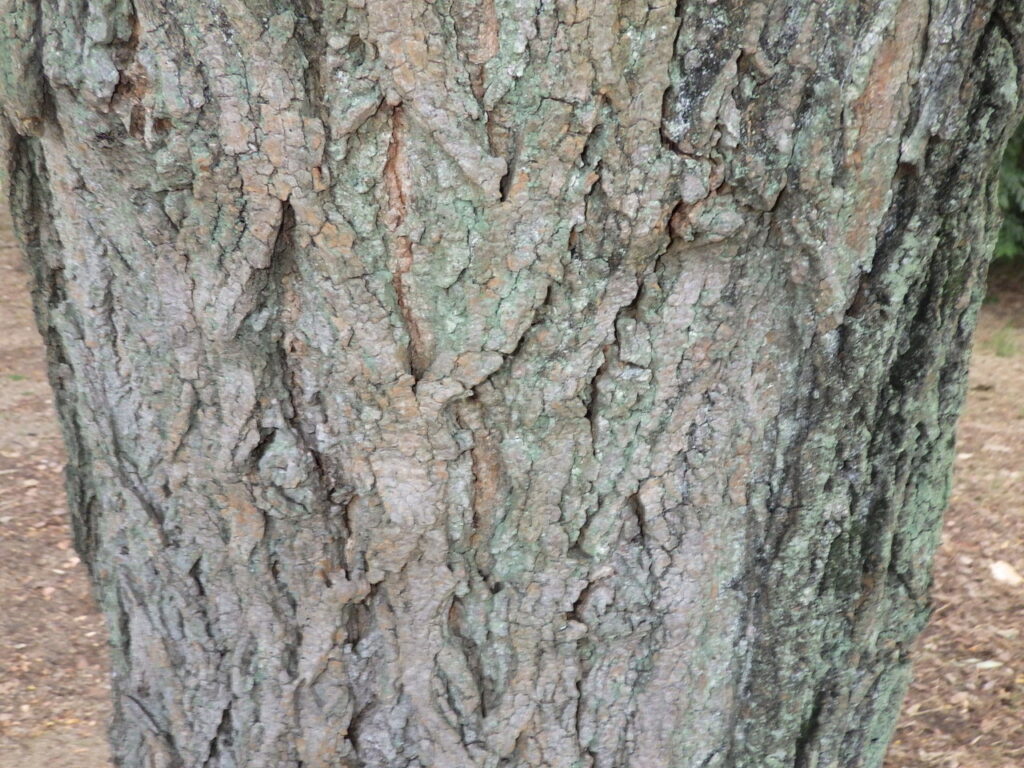
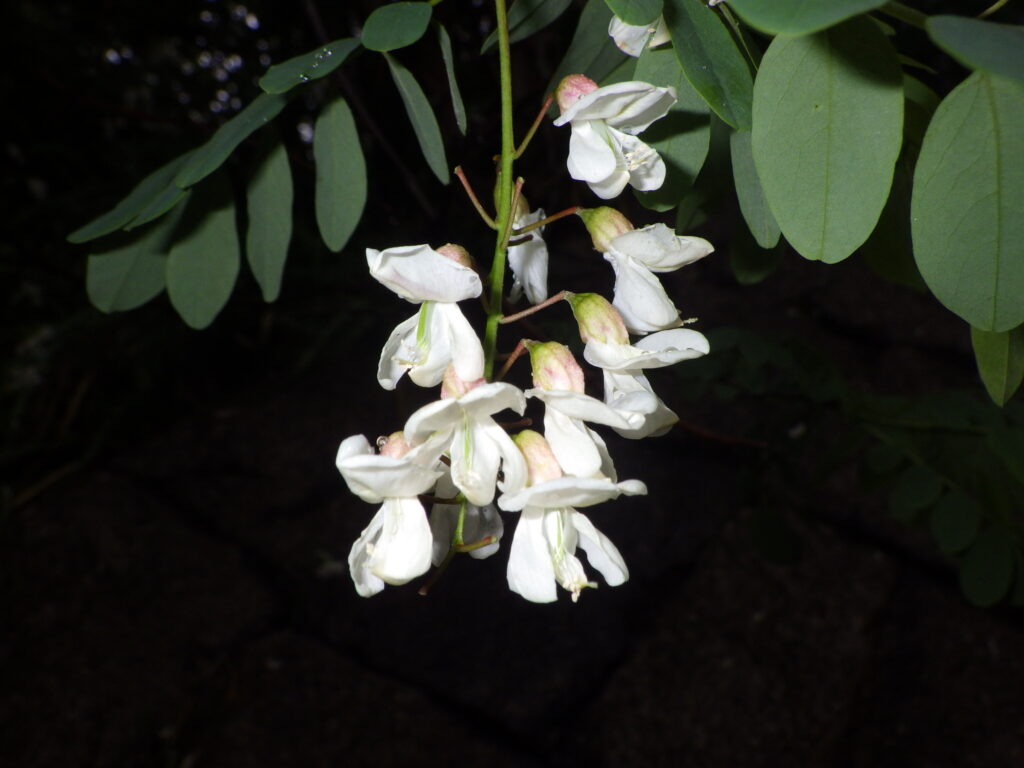
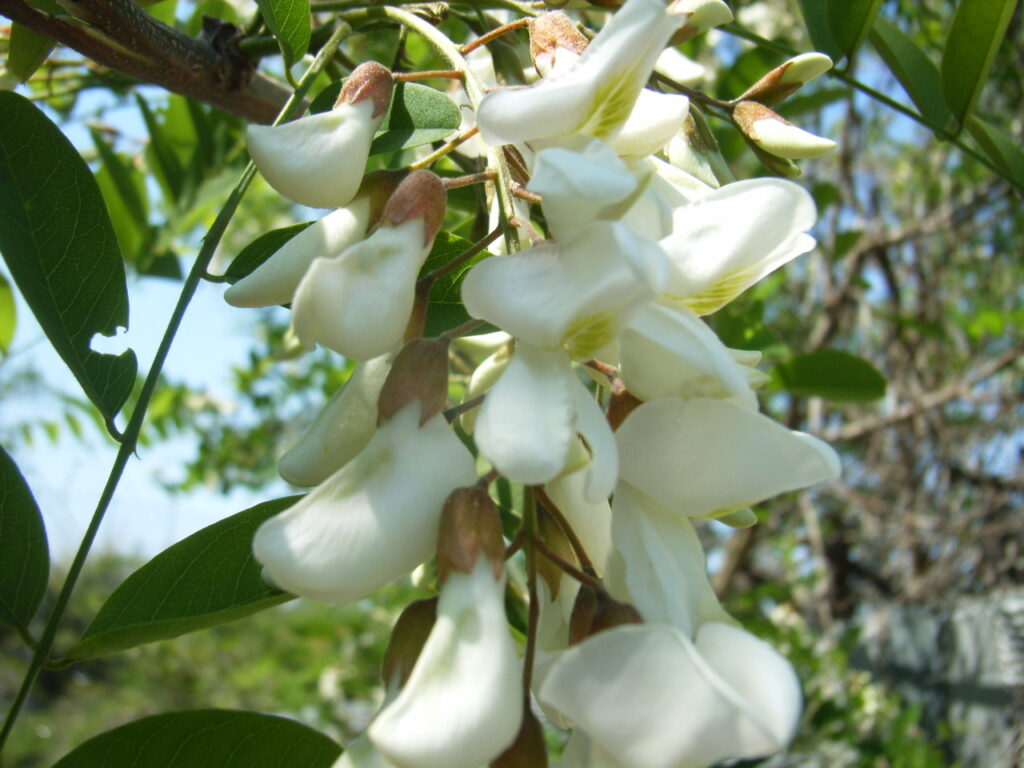
What is the structure of a flower?
Lespedeza bicolor blooms from May to June. It produces several spike-like inflorescences 6 to 20 cm long at the tips of its branches, bearing numerous dark purple flowers about 8 mm long. As it belongs to the legume family, its original form is butterfly-shaped, but the wing petals and keel petals have atrophied, and it consists only of the standard petal. The standard petal is dark purple, the filaments (the lower part of the stamen) are purple, and the anthers (the part of the stamen that holds pollen) are yellow, creating a contrast. The name comes from the fact that the cluster of flowers in the inflorescence resembles a weasel's spike.
Black locust (Robinia pseudoacacia) blooms from May to June. It produces numerous fragrant, white, butterfly-shaped flowers in drooping racemes 10-15 cm long from the leaf axils. The flowers are about 2 cm long. The calyx is broadly bell-shaped and hairy, with five lobes at the top.
Although the two types of flowers look completely different, it can be said that black locust has a more standard shape within the legume family, while the Japanese bush clover (Lespedeza bicolor) is more specialized.
Both species can reproduce asexually by producing shoots from stumps or roots (Iamonico, 2016; CABI, 2019).
Black locust trees have a highly flexible pollination strategy!?
Black locust has a standard flower shape for a legume, but it is still believed to be primarily pollinated by honeybees (CABI, 2019). The butterfly-shaped flowers conceal the stamens, pistils, and nectar inside, and honeybees can only access the nectar by pushing them open, so only a limited number of species can feed on the nectar.
In Japan, extensive research has been conducted, with 44,713 photographs taken of black locust flowers in their natural state along the Tama River. Of the 1,755 photographs in which animal visits were confirmed, 1,587 were of European honeybees, accounting for 90.4% of the total (Xirefujiang et al., 2013).
This might lead one to believe that black locust trees are heavily dependent on European honeybees. In fact, black locust honey is often sold under the name "acacia honey." It is characterized by its mild flavor and is considered ideal for cooking and baking.
However, European honeybees are not native to the Americas! Therefore, it is natural to assume that a bee similar to the honeybee pollinated the Americas, but after arriving in Eurasia, it switched its pollinator to the European honeybee. This demonstrates the high adaptability of the black locust tree.
Furthermore, it is believed that 18.0% of black locust trees self-pollinate without the need for insects, demonstrating a degree of self-compatibility and allowing them to reproduce to some extent even in environments without insects (Xirefujiang et al., 2013). This explains why they have spread so widely throughout the world.
Were the insects that came to the flowers of the Japanese bush clover (Lespedeza bicolor) attracted by pollen?
On the other hand, what about the Japanese bush clover (Lespedeza bicolor)? The shape of the Japanese bush clover flower is completely different from the standard butterfly-shaped flower.
Although I couldn't find any comprehensive studies, my research has found records of bumblebees in Japan (Yamada & Yuma, 2007) and honeybees overseas (Holmes, 1985). Furthermore, studies examining the proportion of visiting insects have shown that carpenter bees make up the vast majority (Yokoi et al., 2008), and observations from the United States found on the internet also show only carpenter bees visiting (Hilty, 2018).
Just hearing this, you might think it's not much different from black locust.
However, what's interesting is that there are many rather small bees, such as those belonging to the genera Andrena and Hylaeus.
My theory is that the black color makes the pollen more visible, so many bees may be attracted to it for its pollen. Also, as mentioned above, typical butterfly-shaped flowers require a certain amount of force to pry open the petals, which is advantageous for larger bees. It's possible that the Japanese bush clover evolved this shape to attract a variety of bees because there were no large bees present, or because there was significant competition with other plant species for large bees.
Although it's said to spoil the scenery, the shape and color of the flowers are unique and quite fascinating.
The fruit is a legume, and the seeds are dispersed by both wind and water!?
Both types of fruit are legumes, but their shapes are quite different.
The Japanese bush clover (Lespedeza bicolor) is about 1 cm long and does not split open even when mature. Its surface has vesicular warts. It contains one seed, about 4 mm long.
Black locust trees are 5-10 cm long and 1.5-2 cm wide, with narrow wings on the dorsal side, and their surface is hairless. They mature around October, splitting into two halves to release 3-10 seeds. The seeds are kidney-shaped and about 6 mm in diameter.
Do these differences in shape have any ecological significance?
While there is a lack of research on *Lespedeza bicolor*, it is thought that it disperses its seeds by wind (Iamonico, 2016). This is because each fruit is light, does not release seeds when ripe, and is simply carried away by the wind. It has also been suggested that birds and small mammals may disperse the seeds.
On the other hand, black locust is well known for its gravity-based dispersal. Seeds are dispersed when the fruit splits open (Sakio, 2015).
However, it has been confirmed that black locust trees also disperse their seeds by wind, and it has been observed that unopened or opened pods with seeds still attached can be carried over long distances by the wind.
Furthermore, watering is also carried out. Experiments and observations have shown that legumes with seeds still attached float and are carried away in rivers. It is also believed that black locust forests in riparian forests were established through watering.
Looking at this alone, it might seem like the black locust fruit is a complete superior alternative, but is that really the case? The reason why the fruit of the Japanese bush clover has bumps is also unknown. We don't know yet, but perhaps animal dispersal is also important. I hope that research into the dispersal of Japanese bush clover will progress.
References
CABI. 2019. Robinia pseudoacacia (black locust). CABI Compendium. https://doi.org/10.1079/cabicompendium.47698
The Great Plains Flora Association. 1986. Flora of the Great Plains. University Press of Kansas, Kansas. 1392pp. ISBN: 9780700602957
Hayashi, Masayuki. 2014. 1100 Tree Leaves Identified Through Real-Life Scans. Yama-kei Publishers, Tokyo. 759pp. ISBN: 9784635070324
Hilty, J. 2018, January 16. Flower-Visiting Insects of Indigo Bush. Illinois Wildflowers. https://www.illinoiswildflowers.info/flower_insects/plants/indigo_bush.htm
Holmes FO 1985. Privets and Amorpha fruticosa as nectar sources. Gleanings in Bee Culture 113: 79-80. ISSN: 0017-114X
Iamonico, D. 2016. Amorpha fruticosa (false indigo-bush). CABI Compendium. https://doi.org/10.1079/cabicompendium.5001
Mogi, Toru; Ota, Kazuo; Katsuyama, Teruo; Takahashi, Hideo; Shirokawa, Shiro; Yoshiyama, Hiroshi; Ishii, Hidemi; Sakio, Hitoshi; and Nakagawa, Shigetoshi. 2000. Flowers Blooming on Trees: Polypetalous Flowers (Vol. 2, 2nd edition). Yama-kei Publishers, Tokyo. 719pp. ISBN: 9784635070041
Sakio, Hitoshi. 2015. Why has black locust expanded its distribution in Japanese river basins? Journal of the Japanese Society of Landscape Architecture 40(3): 465-471. https://doi.org/10.7211/jjsrt.40.465
Xirefujiang Maimai, Yoshinobu Hoshino, and Masato Yoshikawa. 2013. Fruiting of black locust trees and pollinating insects in the Tama River. Journal of the Japanese Society of Landscape Architecture 39(1): 109-114. https://doi.org/10.7211/jjsrt.39.109
Yamada, Junpei & Yuma, Masahide. 2007. Flowering phenology and insect flowering strategies in "Ryukoku Forest". In: Ryukoku University Satoyama Studies Research Center (Eds.), Annual Report of the Satoyama Studies Research Center 2007 (pp. 367-390). Ryukoku University Satoyama Studies Research Center.
Yokoi, Tomoyuki; Habe, Akifumi; Katori, Ikuo; and Sakuraya, Yasuyuki. 2008. Diversity of pollinating insect communities at Kinki University Nara Campus. Kinki University Faculty of Agriculture Bulletin 41: 77-94. ISSN: 0453-8889, http://id.nii.ac.jp/1391/00005214/
Source
This article is a significantly expanded version of a piece originally published in the following book.