Wintersweet (Chimonanthus praecox) is native to China and is used as a garden tree in Japan. Although not widely known, its seeds and leaves are poisonous, so caution is necessary. Wintersweet and Chimonanthus praecox can be distinguished by the color of their flowers. Wintersweet blooms in the middle of winter, brightening up gardens when other plants are not in bloom, but do you know why wintersweet does this? Although not well known in Japan, it has been studied in China and it has been found that wintersweet differentiates itself from other plants by relying on flies that can be active even in winter for pollination. This article will explain the classification, toxicity, history, pollination ecology, and seed dispersal of wintersweet.
- A deciduous shrub native to China.
- The little-known toxicity of winter sweet
- When did winter sweet (Chimonanthus praecox) arrive in Japan?
- Are the red parts on the petals of this flower, which blooms in the middle of winter, meant to attract insects?
- A minority strategy to bloom in winter
- The fruit is encased in a false fruit!?
- References
- Source
A deciduous shrub native to China.
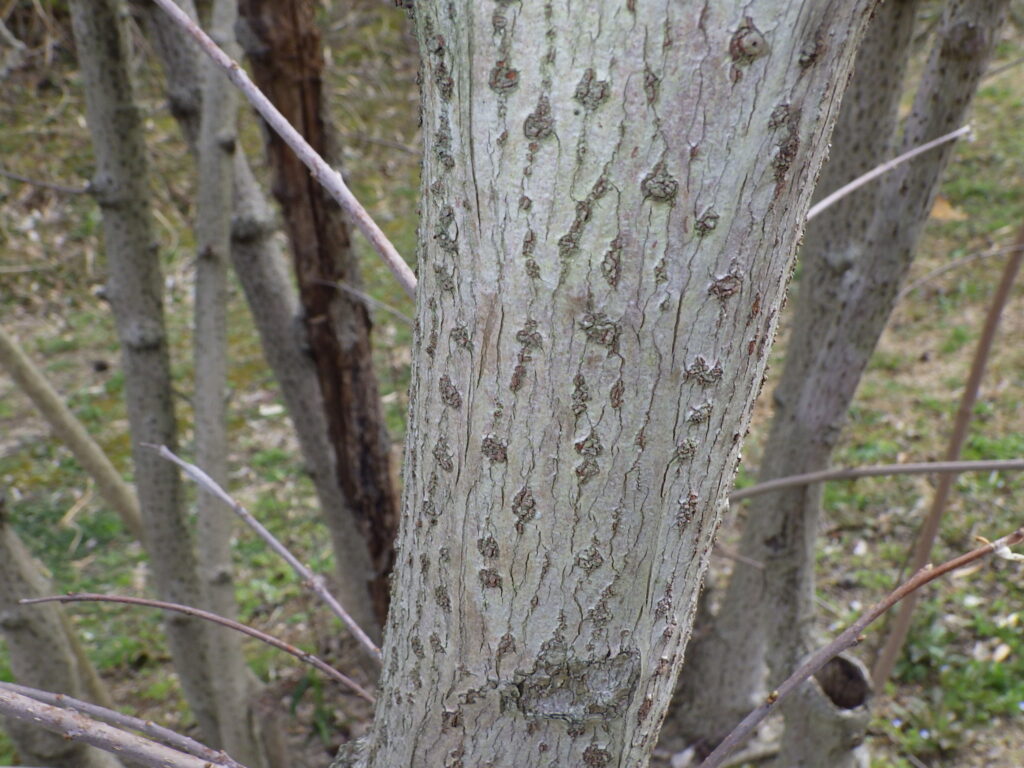
Chimonanthus praecox, also known as winter sweet, is native to China and cultivated in temperate regions, including Japan (Wu et al., 2008). In China, it is a deciduous shrub that grows in mountainous forests.
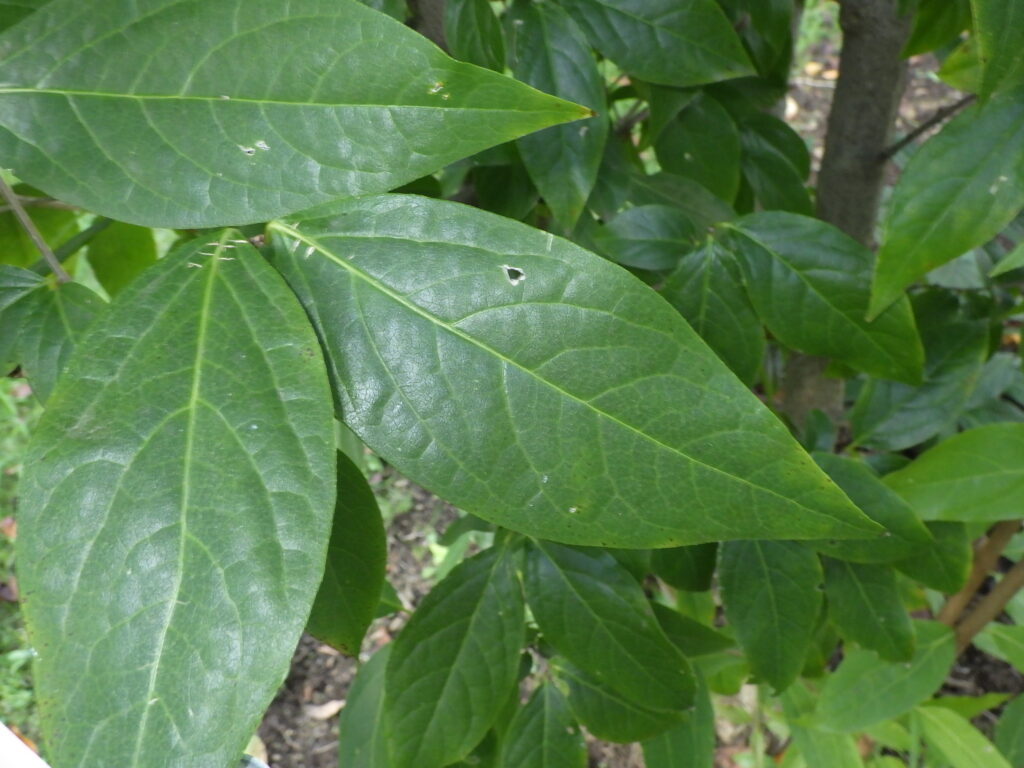
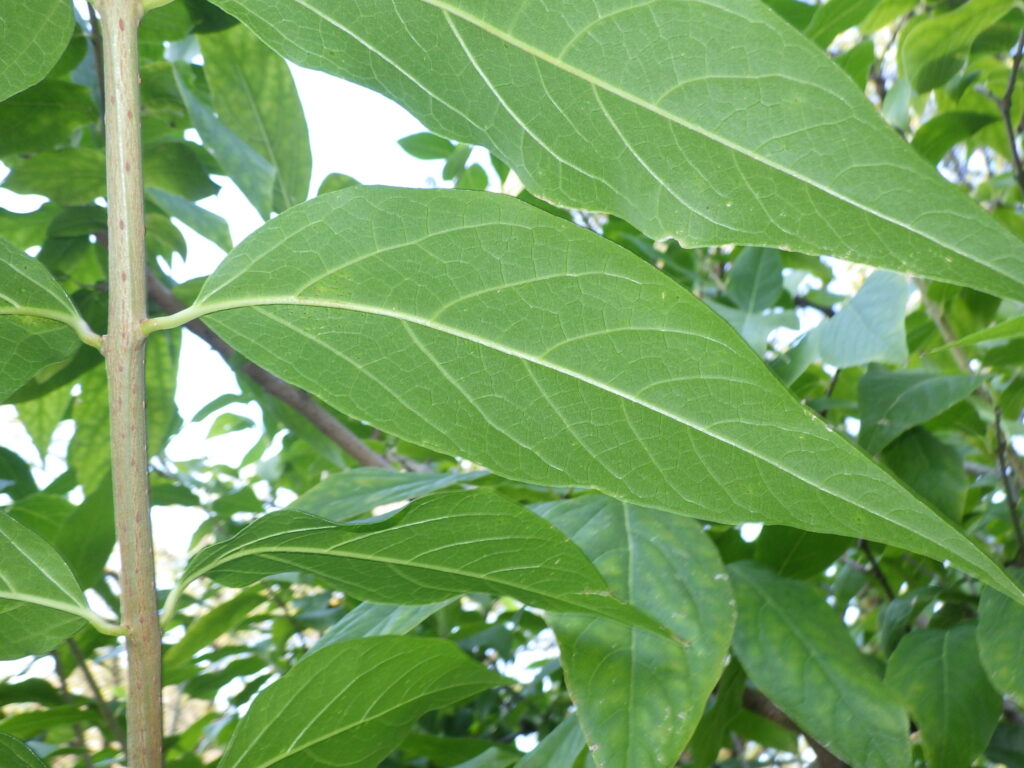
It belongs to the genus Chimonanthus in the family Calycanthaceae. Its leaves are petiolate and opposite, about 15 cm long, ovate or ovate-elliptic in shape, pointed at both ends, with entire margins and a rough surface.
The little-known toxicity of winter sweet
Although not widely known, wintersweet is poisonous.
Seeds and leaves are known to contain calycanthine, a type of alkaloid (Haruyama, 2020).
When animals ingest calicanthine, the release of GABA, an inhibitory neurotransmitter in the central nervous system, is inhibited, and the release of dopamine increases, leading to tonic seizures and tachypnea.
In 2016, sheep grazing in Japan actually ingested winter sweet seeds and suffered from poisoning symptoms. However, there are currently no known cases of this affecting humans.
There are significant differences between animal species and individual plants, and the exact level of toxicity is currently unknown, but it's best to avoid intentionally ingesting the leaves or seeds.
When did winter sweet (Chimonanthus praecox) arrive in Japan?
The name " Chimonanthus praecox" already appears in the "Onko Chishinsho," a Japanese dictionary compiled in 1484 during the late Muromachi period. Therefore, it is believed to have been introduced to Japan around this time (Isono, 2007). However, there are no further records of it for some time after that.
Winter sweet (Chimonanthus praecox) reappears in the early Edo period in 1666 in a picture scroll by Kano Tsunenobu, a painter of the Kano school, and in 1674 in Kano Tan'yu's "Illustrated Scroll of Flowers and Plants," suggesting that it may have actually become popular from this period onward.
Since then, various crossbreedings have been carried out, and breeding efforts have progressed (Haruyama, 2020). In Japan, it is mainly cultivated in farms and gardens for ornamental purposes.
Are the red parts on the petals of this flower, which blooms in the middle of winter, meant to attract insects?
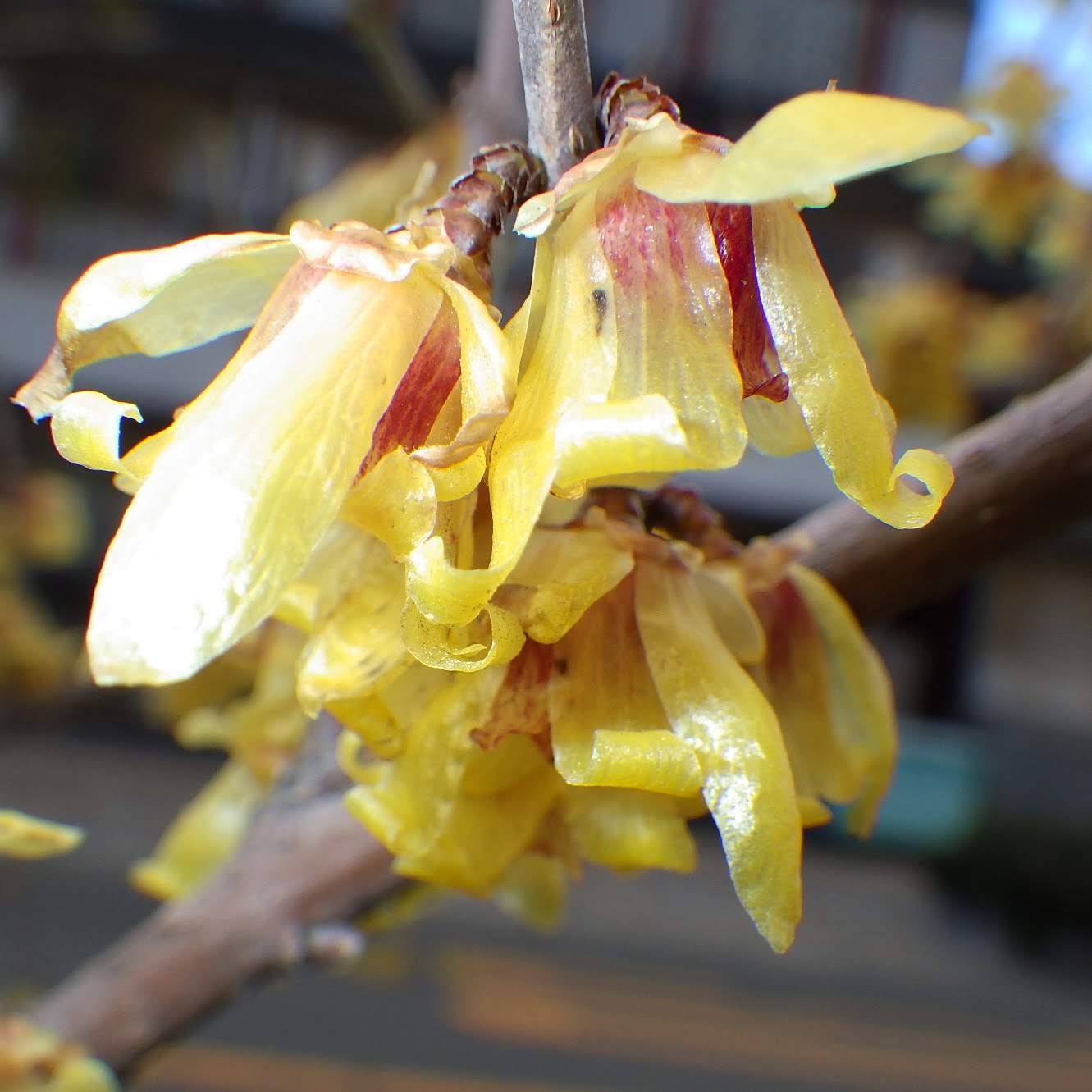
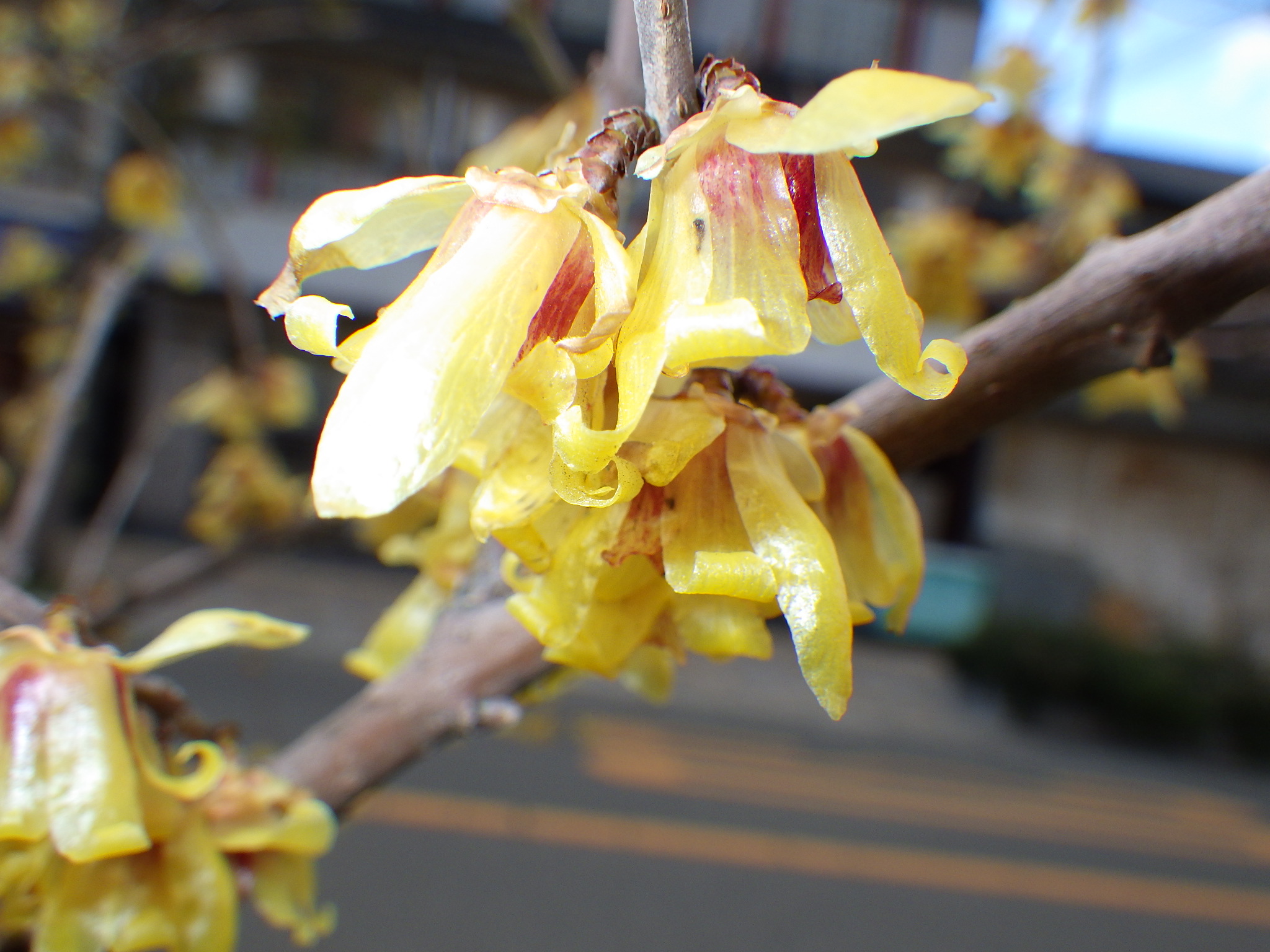
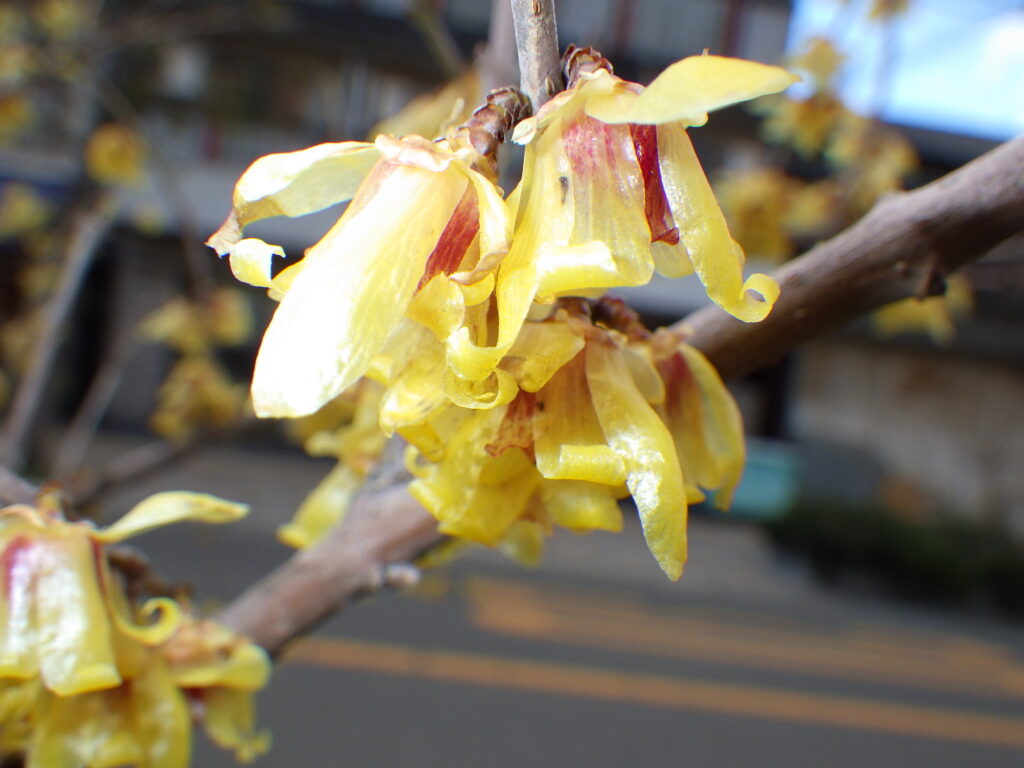
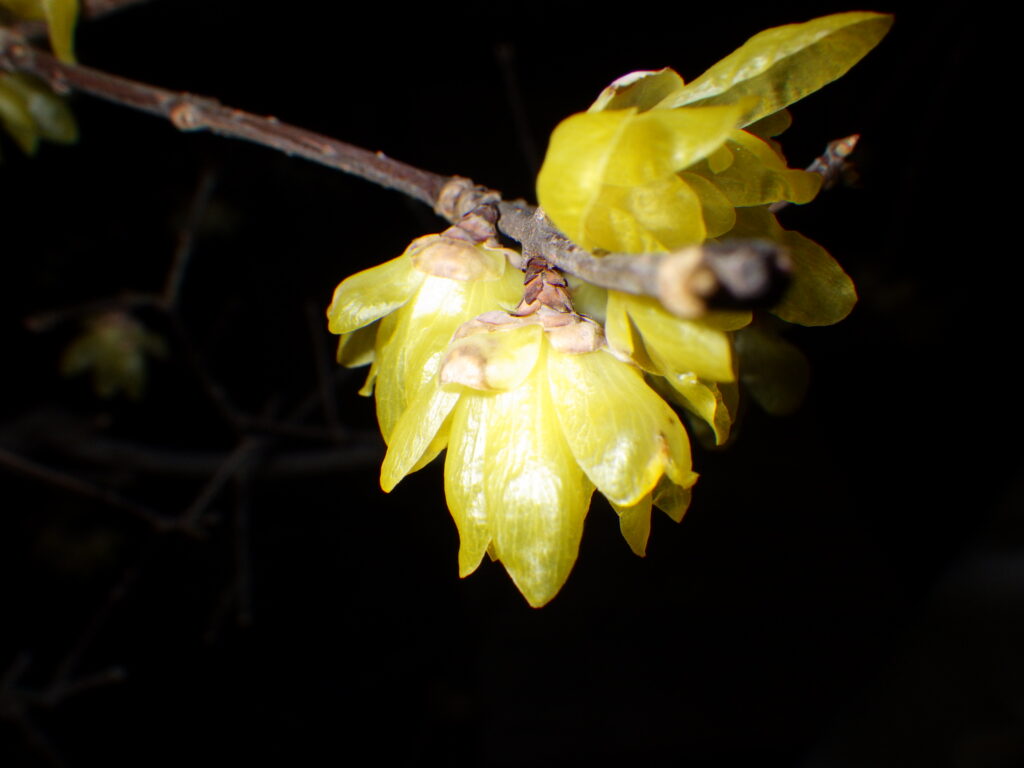
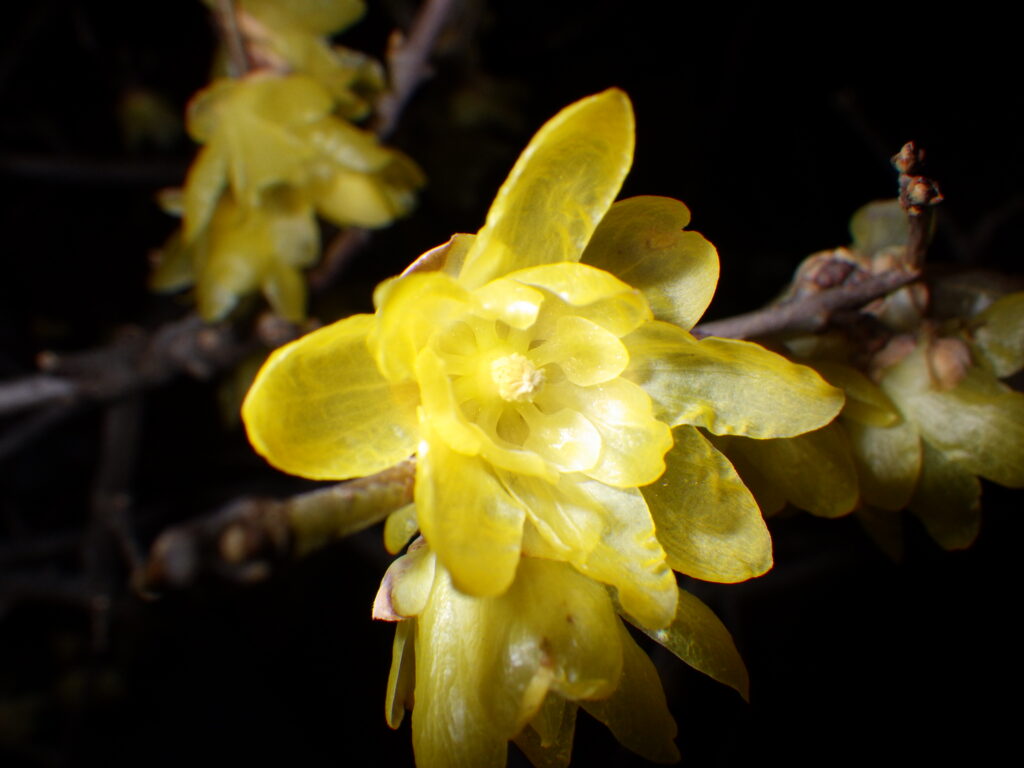
In the depths of winter, from January to February, glossy yellow flowers bloom facing downwards before the leaves appear. The petals are arranged in a ring, overlapping in several layers. The outer petals are nearly oblong, becoming more oval towards the center. The inner petals are purplish-red and secrete nectar (Hirono, 2017). This is thought to make it easier for insects to find the nectar. However, in Chimonanthus praecox f. concolor, the petals are yellow.
A minority strategy to bloom in winter
It seems strange that these flowers bloom in the middle of winter when insect activity is very low, doesn't it? This is something that doesn't receive much attention in Japan, but it's very unique. What kind of insects visit them at this time of year?
Independent studies were conducted in Wuhan, Hubei Province, and Nanjing, Jiangsu Province, China, and the results showed that in both locations, hoverflies, flies, and Italian honeybees (Western honeybees) were the main visitors (Lihua et al., 2006; Du et al., 2012).
However, it was found that hoverflies do not carry pollen, and Italian honeybees do not come in large numbers, so in effect, only flies are responsible for pollination.
Flies are more tolerant of cold than other insects. It is thought that winter sweet flowers bloom in winter when other flowers are absent, thus ensuring that flies carry out pollination.
The fruit is encased in a false fruit!?
After flowering, the plant develops fruit, but the way it forms is unusual.
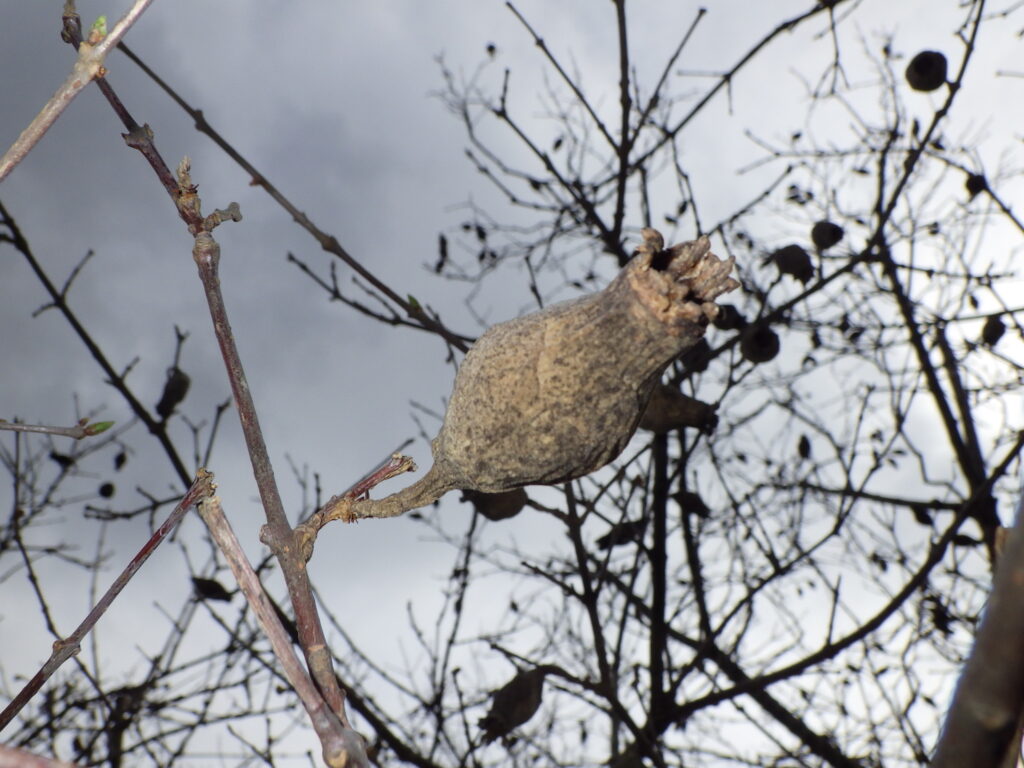
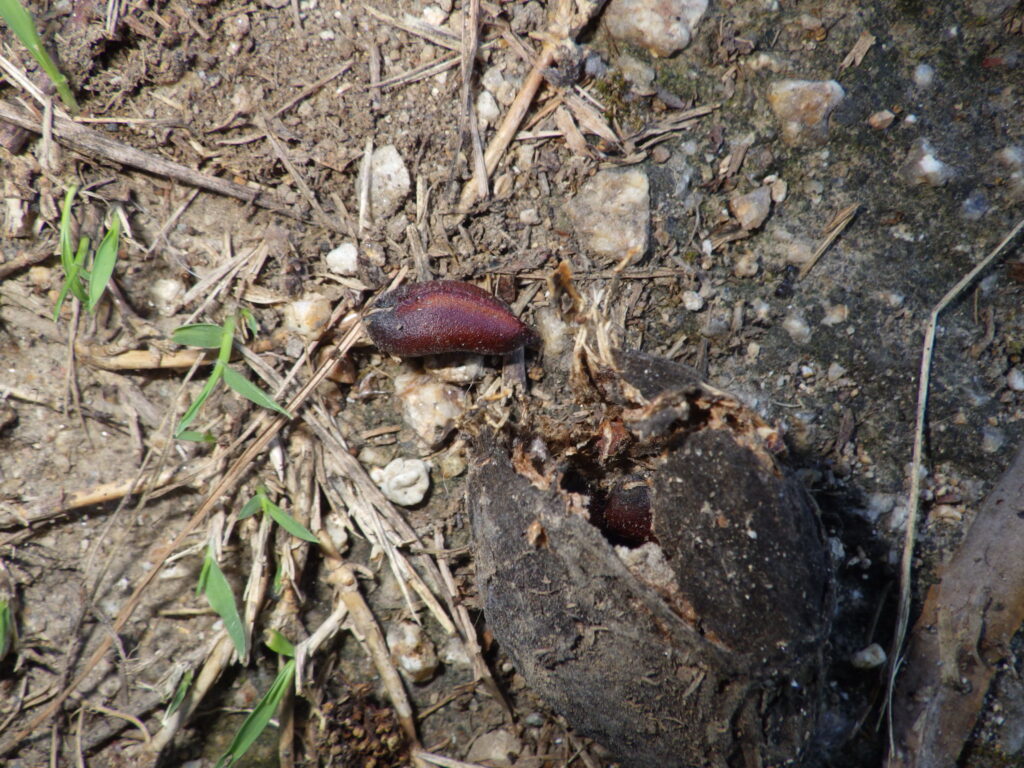
In wintersweet, the fleshy receptacle that holds the fruit enlarges, forming a false fruit. Its appearance is resembling a vase.
The false fruit contains 5 to 20 true fruits (achenes), each containing a seed. When the false fruit ripens, it splits open at the base, and the true fruits are dispersed by gravity (Yang et al., 2013).
References
Du, W., Wang, S., Wang, M., & Wang, X. 2012. Who are the major pollinators of Chimonanthus praecox (Calycanthaceae): insect behaviors and potential pollination roles. Biodiversity Science 20(3): 400-404. ISSN: 1005-0094, https://doi.org/10.3724/SP.J.1003.2012.05033
Haruyama, Yui. 2020. Suspected cases of winter jasmine poisoning in sheep. Journal of the Japan Veterinary Medical Association 73(5): 249-252. ISSN: 0446-6454, https://doi.org/10.12935/jvma.73.249
Isono, Naohide. 2007. Chronological Table of Horticultural Plants Introduced to Japan Before the Meiji Era. Keio University Hiyoshi Journal, Natural Sciences 42: 27-58. ISSN: 0911-7237, https://koara.lib.keio.ac.jp/xoonips/modules/xoonips/detail.php?koara_id=AN10079809-20070930-0027
Ikuo Hirono. 2017. You can't really tell what winter sweet flowers are just by looking at them! Continued: A Walk Through the Trees 231. Tree Notebook. https://kinomemocho.com/sanpo_Chimonanthus.html
Lihua, Z., Riming, H., & Jianzhong, W. 2006. The pollination biology of Chimonanthus praecox (L.) Link (Calycanthaceae). Acta Horticulturae Sinica 33(2): 323-327. https://www.ahs.ac.cn/EN/Y2006/V33/I2/323
Wu, X., Raven, PH, & Hong, D. (Eds.). 2008. Flora of China (Vol. 7 Menispermaceae through Capparaceae). Science Press, Beijing, and Missouri Botanical Garden Press, St. Louis. xii, 499pp. ISBN: 9781930723818
Yang, J., Dai, P., Zhou, T., Huang, Z., Feng, L., Su, H., … & Zhao, G. 2013. Genetic diversity and structure of wintersweet (Chimonanthus praecox) revealed by EST-SSR markers. Scientia Horticulturae 150: 1-10. https://doi.org/10.1016/j.scienta.2012.11.004
Source
This article is a significantly expanded version of a piece originally published in the following book.