Both Ipomoea purpurea and Ipomoea purpurea belong to the Ipomoea genus of the Convolvulaceae family and are introduced species that have naturalized in Japan. They share the characteristics of small corollas and a star shape when viewed from above. They can be seen in urban areas, but they may be confused with each other. However, in addition to the easily recognizable difference of flower color, the way the inflorescence stalks appear can also be used to distinguish them. If it is still difficult to distinguish them, it is necessary to examine the finer details. This article will explain the classification and morphology of Ipomoea genus species other than small, red-flowered varieties.
What are morning glories and star morning glories?
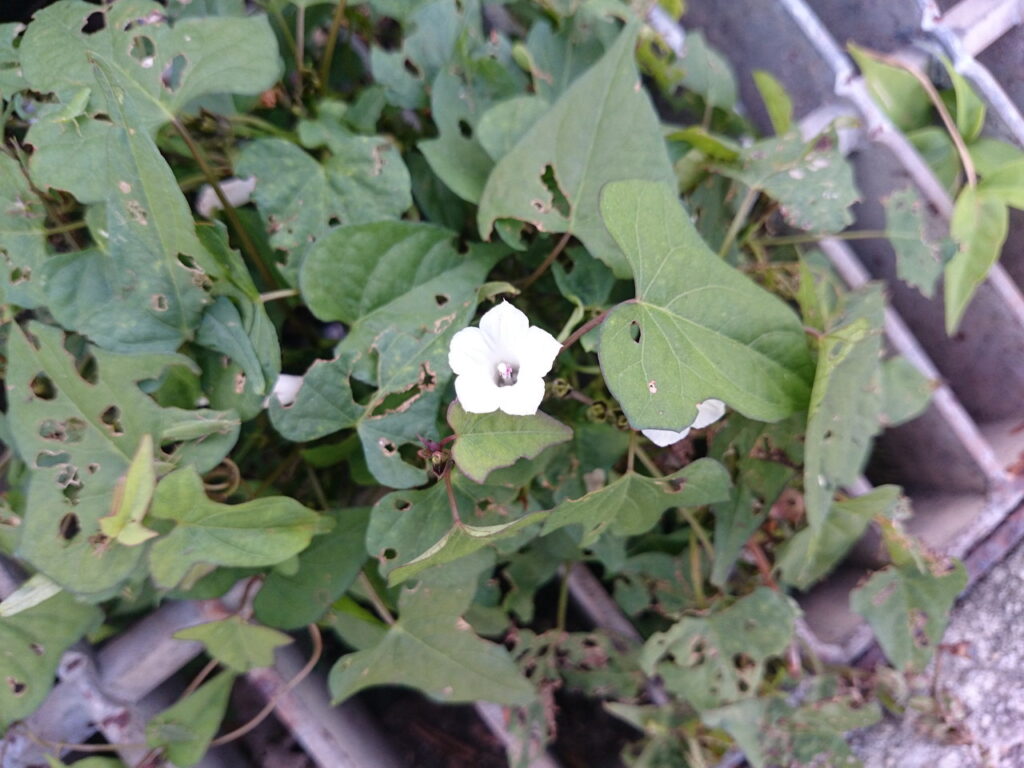
Ipomoea lacunosa, also known as the dwarf morning glory, is an annual plant native to the eastern United States that has naturalized worldwide. In Japan, it is said to have arrived mixed in with imported grains after World War II and grows along roadsides south of the Kanto region.
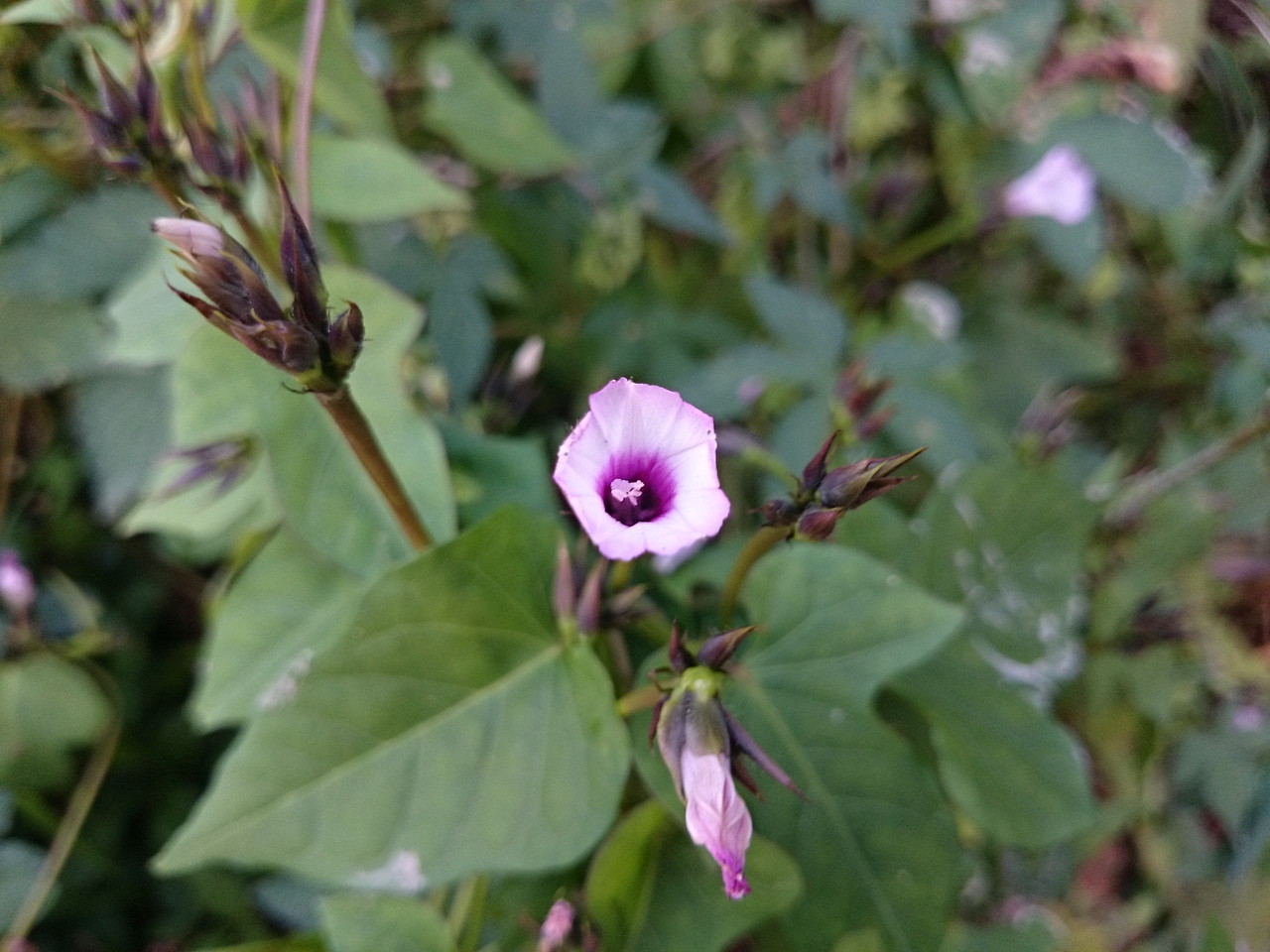
Ipomoea triloba, also known as the star morning glory, is an annual plant native to Central and northern South America that has naturalized worldwide. In Japan, it is believed to have been introduced after World War II and grows along roadsides south of the Kanto region.
Both belong to the Ipomoea genus of the Convolvulaceae family and are introduced species in Japan that have naturalized and are common annual plants found along roadsides. In addition to the common characteristics of the Ipomoea genus, such as having a single style and a spherical, unbranched stigma, these two species also share the characteristics of having hairy leaves that are shallowly divided into 3 to 5 lobes, and having funnel-shaped corollas of fused petals that are less than 2 cm in diameter and star-shaped when viewed from above.
Therefore, it may be difficult to distinguish between them.
What are the differences between morning glory and star morning glory?
Distinguishing between the two is relatively easy in typical cases.
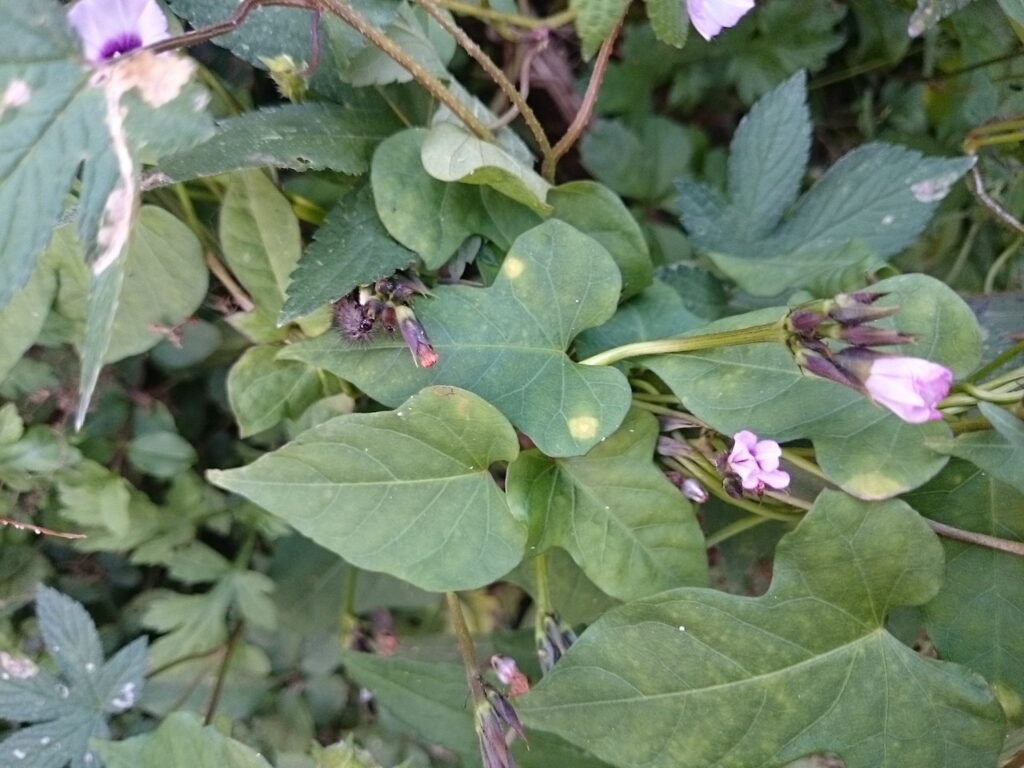
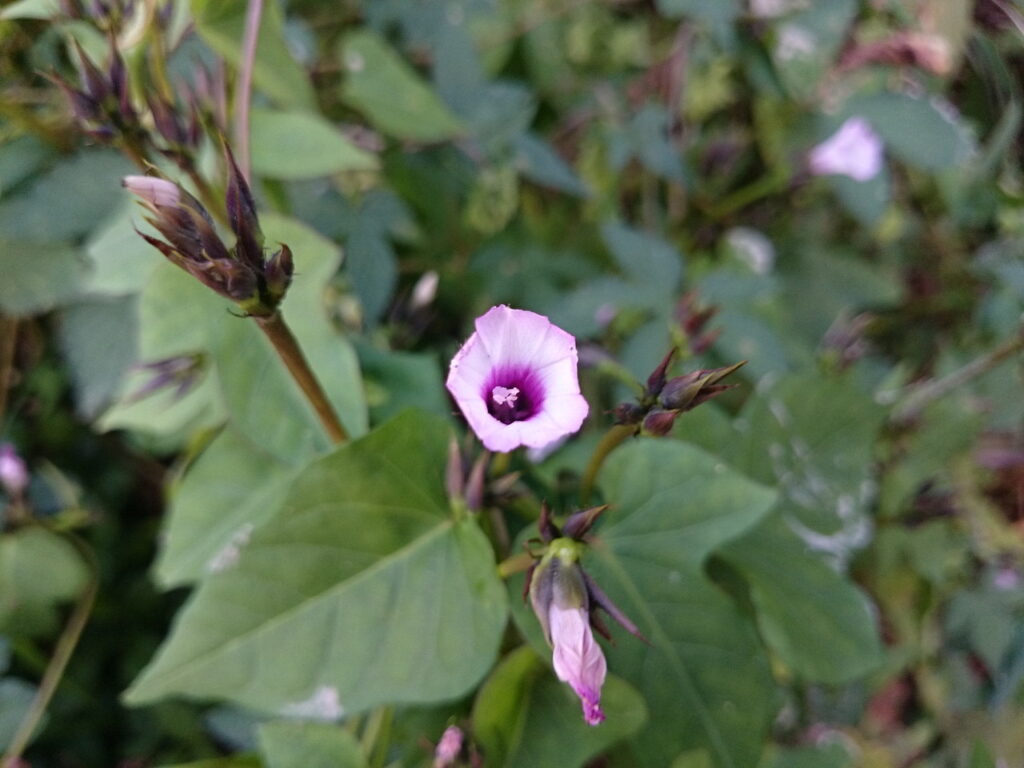
In contrast to the common morning glory (Ipomoea purpurea), the flowers are white, the peduncle is much shorter than the petiole that emerges from the base, and there are usually only 1 to 3 flowers per inflorescence. In contrast, the star morning glory has pale pink flowers on the outside and a reddish-purple center, and the peduncle is longer than the petiole that emerges from the base, producing 3 to 10 flowers per inflorescence.
The term "peduncle" might be confusing, but it refers to the slender part that holds the inflorescence (a cluster of flowers) together. In the case of the star morning glory, you can simply understand that this peduncle is long and protrudes upwards, and it has a large number of flowers.
I believe these two points are sufficient to distinguish them in most cases, but some plant guides point out that "it can be difficult to determine the flower color or the number of flowers on a single stem, so caution is required when identifying them."
In such cases, the distinguishing features are that the flower stalks of Ipomoea tricolor are densely covered with wart-like protrusions and the seeds are thickened, while those of Ipomoea purpurea are scattered on the flower stalks and the seeds are not thickened and are triangular in shape.
I don't think it's usually necessary to check this much.
Are there any other similar types?
The sweet potato genus includes many species, but this particular variety, with its hairy leaves and small, white or purple flowers, is unknown in Japan. Although it shares the same genus as the morning glory (asagao), it is not a variety but a completely different species.
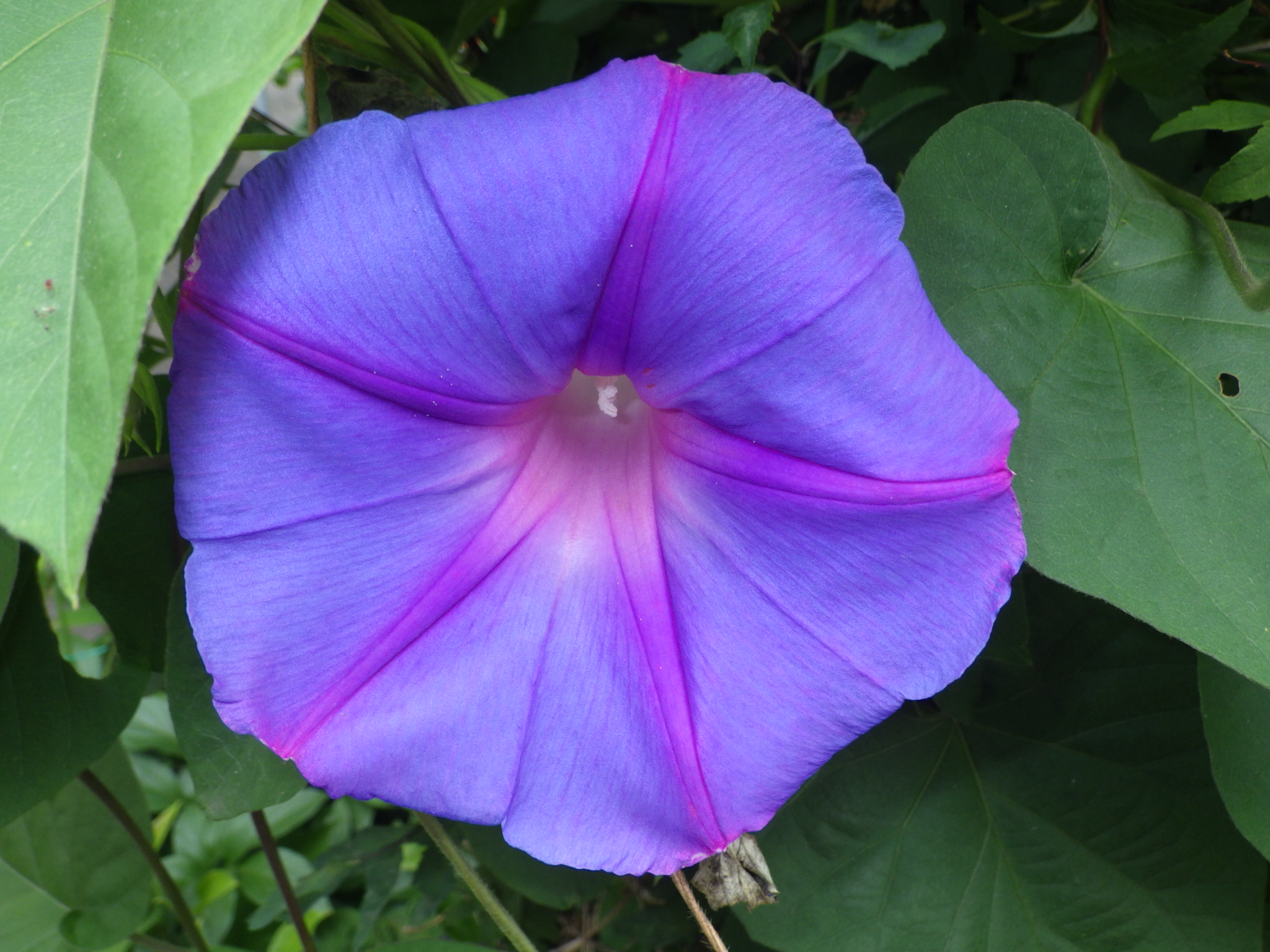
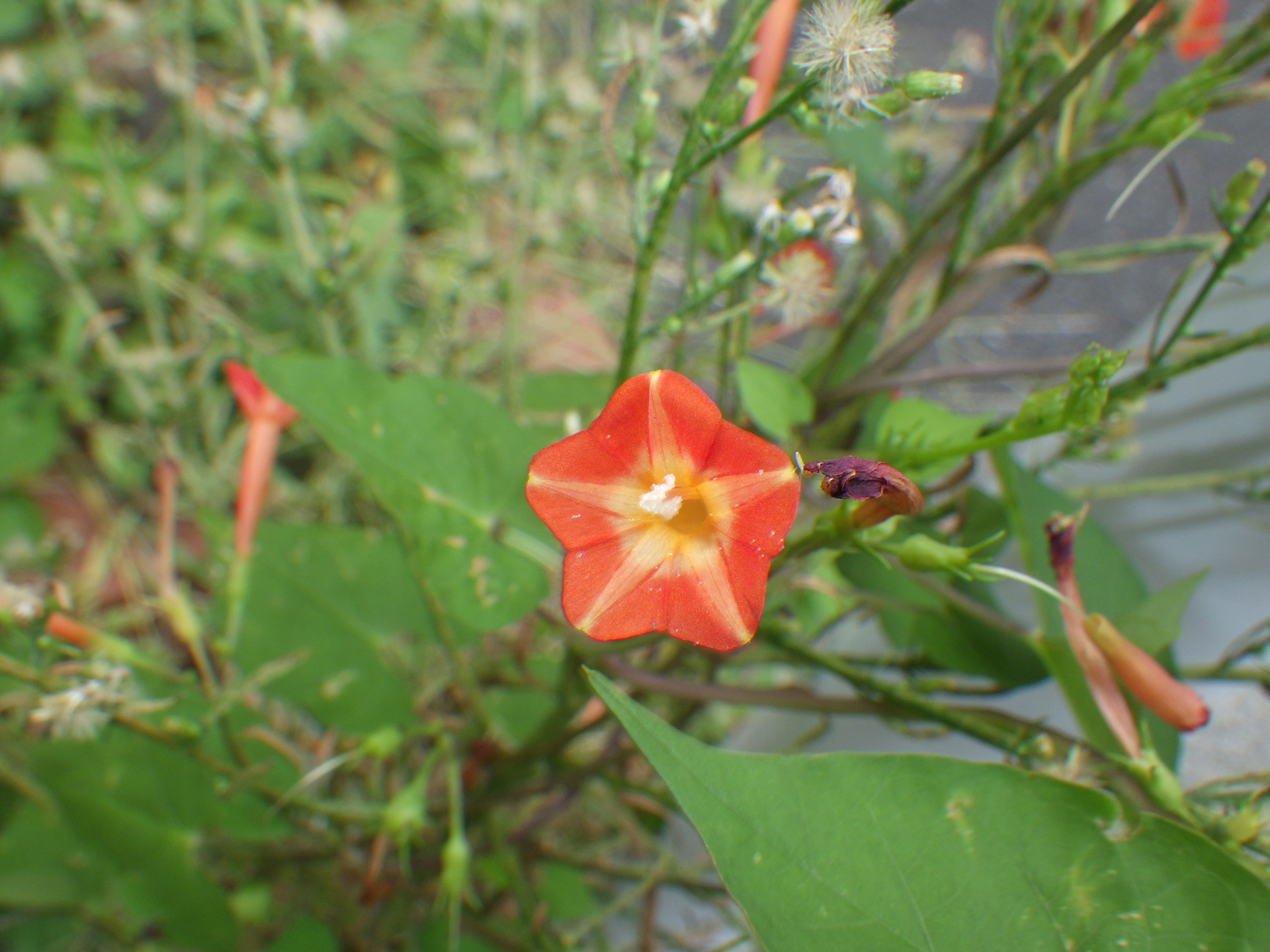
For information on other species of the Ipomoea genus, please see the separate article.
References
Kanagawa Prefecture Flora Survey Association. 2018. Kanagawa Prefecture Flora 2018 (Electronic Edition). Kanagawa Prefecture Flora Survey Association, Odawara. 1803pp. ISBN: 9784991053726