The castor bean plant, said to originate in northeastern Africa, is a perennial plant cultivated worldwide for commercial and ornamental purposes, and sometimes naturalized. It is almost impossible to mistake it for anything else. Its seeds, called "himashi," are rich in oil, and the extracted "castor oil" is highly valued for its diverse uses in cosmetics, shampoos, soaps, hand lotions, laxatives, lamp fuel, and highway lubricants. Its history dates back to around 1550 BC in Egyptian papyrus, and may go even further. Originally used medicinally for treating dermatitis and as a laxative, castor oil has gained attention in modern times as heavy chemical industries have advanced, and it supports our lives in countless ways. On the other hand, the seeds contain toxic components, mainly ricin, and have been misused for military and bioterrorism purposes since the World Wars. While the lethal dose of ricin from inhalation or injection is extremely low at approximately 5-10 μg/kg, the lethal dose from oral ingestion is estimated to be much higher at approximately 1-20 mg of ricin per kg of body weight. This is equivalent to about 8 seeds for an adult. Although ricin alone is extremely dangerous, because ricin is a protein, it is sensitive to heat and denatures, so it is not found in processed castor oil. Oral ingestion weakens its toxicity, and it is also difficult to store, so it may be considered somewhat overhyped. The castor bean flower has an unusual shape, with female flowers at the top and male flowers at the bottom. This is an adaptation for wind pollination, but recent research has shown that it is not only wind pollination but also insect pollination by honeybees promotes increased yield. The fruit also bursts open when dry, scattering the seeds, but it has also been found that elaiosomes attached to the seeds allow ants to carry them far away. This article will explain the classification, history, uses, medicinal uses, toxicity, pollination ecology, and seed dispersal of the castor bean.
- A perennial plant native to Africa, cultivated for oil production.
- What is the history of castor beans? From medicinal use to oil production.
- What was the incident involving castor beans?
- How toxic are castor beans? What is the lethal dose?
- Why are they used even though they are poisonous? Why is it sometimes okay to ingest them orally?
- What is the structure of a castor bean flower?
- Flowers can be pollinated not only by wind but also by insects!?
- The fruit is a capsule, and the seeds are dispersed both automatically and by ants!?
- References
A perennial plant native to Africa, cultivated for oil production.
Castor bean (Ricinus communis), also known as castor bean, is a perennial plant originally from northeastern Africa (although there are various theories about its origin, including India), and is cultivated worldwide for oil production and ornamental purposes, and sometimes becomes naturalized (Shimizu et al., 2001). In Japan, it was introduced from Tang (China) and has now escaped cultivation and become naturalized, mainly in western Japan.
The Japanese name "Tougoma" (meaning "castor bean") originates from its introduction from China, and comes from the fact that, like sesame (goma), oil is obtained from its seeds.
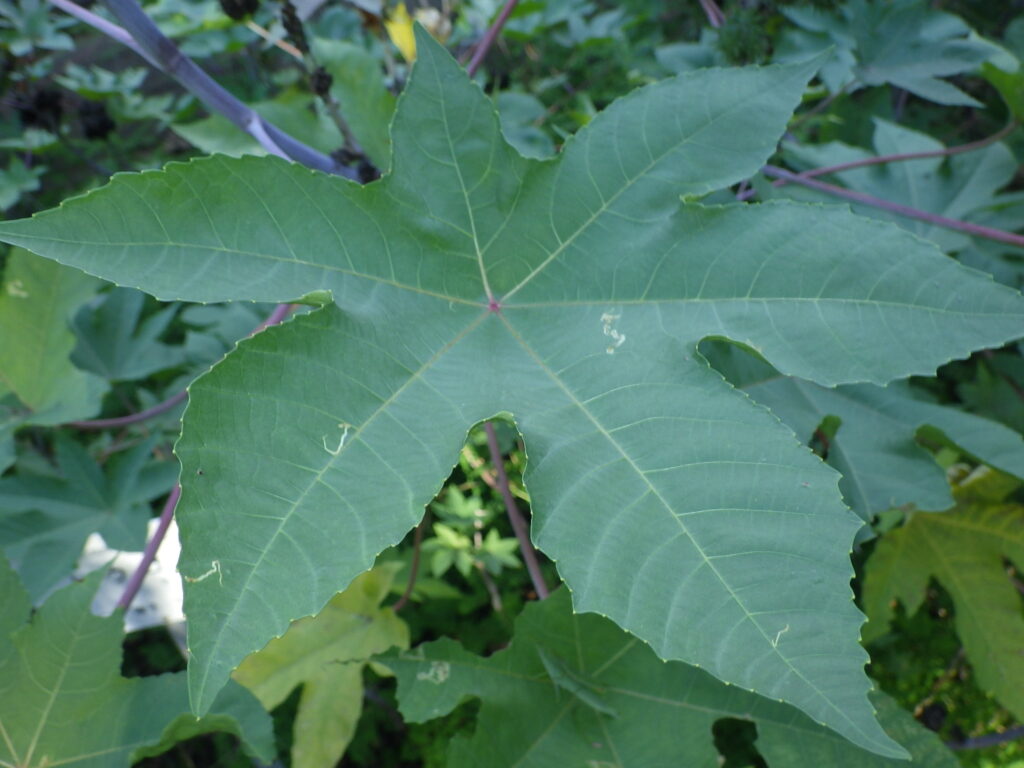
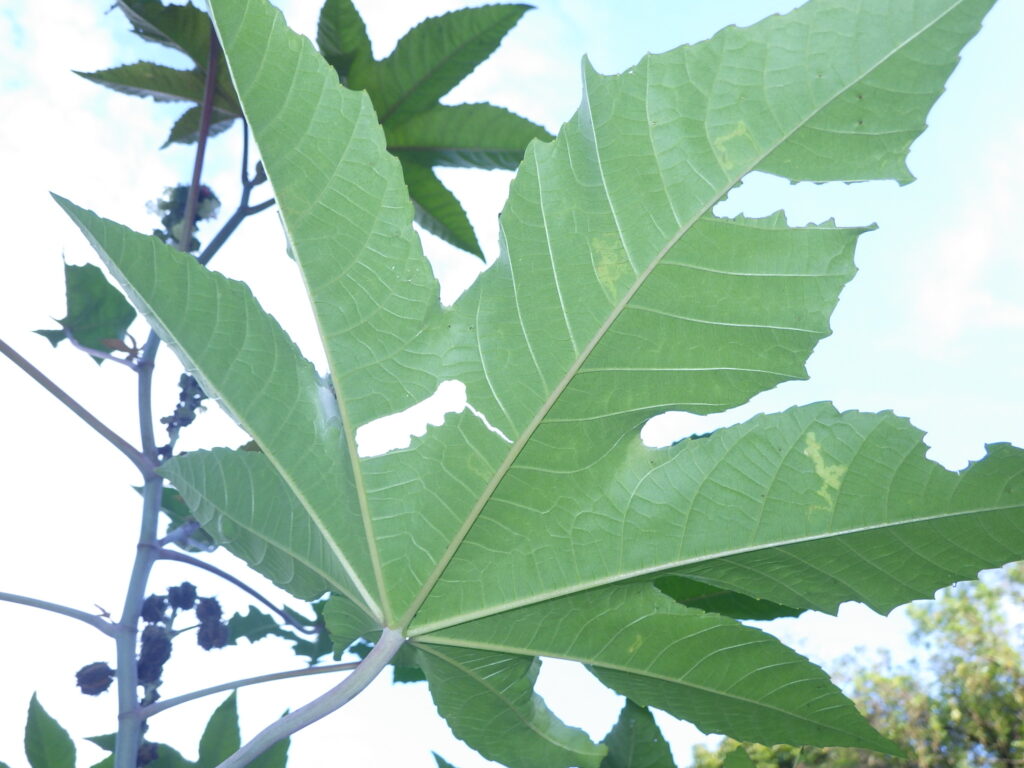
The plant is entirely hairless and usually tinged with dark purple. The stem is cylindrical, erect, and sparsely branched, reaching a height of 2 meters. The leaves are large, palmately divided into 5 to 11 lobes, with serrated edges, and arranged alternately on long petioles.
The plant possesses extrafloral nectaries at the base of the petiole and inflorescence axis, attracting ants and providing them with food in exchange for them protecting the plant (Sasidharan & Venkatesan, 2019).
Castor bean belongs to the genus *Ricinus* in the family Euphorbiaceae. The genus *Ricinus* contains no other species, and no closely related or similar species are known. The closest relative would be sesame (*Sesamum indicum*) in the family Pedagoaceae, but other than the oil being extracted from the seeds, there are absolutely no similarities.
What is the history of castor beans? From medicinal use to oil production.
The reason why castor beans are considered important is that their seeds, called "himashi," are rich in oil, and the extracted "castor oil" has a wide range of uses, including cosmetics, shampoos, soaps, hand lotions, laxatives, lamp fuel, and high-speed lubricants (Rizzardo et al., 2012).
On the other hand, because it contains a highly toxic protein called "ricin," it is sometimes used in bioterrorism attacks and is known to become a politically charged incident (Uzawa, 2005).
Historically, the first appearance of castor bean is thought to be in the Ebers Papyrus, the oldest papyrus written in the New Kingdom of Egypt around 1550 BC, which describes ancient Egyptian medicine (Franke et al, 2019). Since the contents of the Ebers Papyrus are thought to be a copy of a text from the Predynastic period of Egypt, predating around 3400 BC, it is possible that castor bean was known even before that time.
Interestingly, in the Ebers Papyrus, it is treated as a medicinal plant for curing diseases, which is somewhat different from its main uses today. It is said that a mixture of the root and water was used for head ailments, a mixture of crushed cantaloupe seeds and beer for expelling intestinal contents, a mixture of ground cantaloupe seeds and oil for hair growth, cantaloupe oil for dermatitis, and a mixture of ground cantaloupe seeds and honey for pain relief. Furthermore, in the 4th century BC, during the late Egyptian dynasty, it was used as currency and as a burial item, signifying that medicine was being offered to the deceased.
Furthermore, the castor bean also appears in the Book of Jonah, one of the Old Testament texts, which is set in the Northern Kingdom of Israel. The exact year of the composition of the Book of Jonah is unknown, but it is thought to be sometime between the late 5th century BC and the early 4th century BC, when the Babylonian exile occurred. Within the Book of Jonah, there is only a description of the rapid growth of the castor bean and the insects that eat it.
In China, the first known formula for castor bean paste was found in the "Bù Qué Zhū Hǎi Yǎi Yǎn" (Bù Qué Zhū Hǎo Bài Yǎi Fàng) revised by Tao Hongjing, a physician and scientist, during the Northern and Southern Dynasties period, specifically the Six Dynasties period (around 500 AD). It also appears in the "Xīn Xiū Ben Cao" (Xīn Xiū Ben Cao), a herbal medicine book revised by Li Ji and others in 659 AD by order of Emperor Gaozong, the third emperor of the Tang Dynasty.
As heavy and chemical industries advanced in modern times, castor oil, with its high viscosity and oily properties, attracted attention as a lubricant. While it continued to be used medicinally in traditional medicine, its commercial uses changed dramatically.
After its widespread adoption in aviation engines in Europe in 1909, it was used as a lubricant in rotary engines such as the Gnome engine. However, due to the increasing power output of engines and its lack of stability against heat and oxidation, by the time of World War II, mineral oil-based lubricants, such as Pennsylvania engine oil, had become the mainstay of aircraft lubricants.
In modern times, its uses have expanded to include food additives, preservatives, soap, waste tempura oil treatment agents (solidifiers), lubricants, hydraulic fluids, paints, inks, waxes, low-temperature resistant resins, nylon, pharmaceuticals, perfumes, and hair oils (pomades, hair styling oils). It is also an important raw material for sebacic acid.
Polyamide 11, which Arkema has been manufacturing and selling for over 50 years, is also derived from castor oil (Miyaho, 2013). In addition to its basic properties, it has excellent flexibility and processability, so it is widely used in extrusion processing applications such as automotive fuel system tubes, air brake tubes, offshore oil drilling pipes, and powder coatings for dishwashers.
Furthermore, lysine is attracting attention for its potential in tumor treatment, including as an anticancer drug (Franke et al., 2019).
What was the incident involving castor beans?
While there are practical uses like these, there are also known instances of the highly toxic ricin contained in castor bean seeds being misused.
During World War I and World War II, the United States and other countries investigated the potential military use of ricin as a biological weapon, such as bullets, shrapnel, or aerosols, although it is believed that it was never actually used (Franke et al., 2019).
After the Cold War began, cases of its actual use in assassinations became known.
In 1978, anti-communist exiles from the People's Republic of Bulgaria were assassinated or nearly assassinated by the Soviet KGB or the Bulgarian Secret Police (STB) by being stabbed with the tip of an umbrella loaded with a bullet containing ricin.
In the United States, there have been several incidents, all unsuccessful, where ricin was sent by mail with the intent of assassination. Barack Obama (44th President) and Donald Trump (45th and 47th Presidents) were among those targeted. Similar incidents are known to have occurred in the Czech Republic and the Federal Republic of Germany.
In Japan, there have been known cases such as in 2015 when a wife attempted to kill her estranged husband by mixing ricin extracted from castor beans into his shochu (Japanese distilled spirit), and in 2021 when a colleague put ricin extracted from castor beans into a water bottle, rendering it unusable. However, there have been no reported deaths.
The production of ricin is prohibited under the Biological Weapons Convention (1972) and the Chemical Weapons Convention (1997) because it can be used as a biological or chemical weapon. However, because it is relatively easy for individuals to produce, such terrorist attacks continue unabated (Franke et al., 2019).
How toxic are castor beans? What is the lethal dose?
What are the toxicity levels of castor beans?
The most prominent toxic component is lysine, a type of lectin (carbohydrate-binding protein) that has already been mentioned (Franke et al, 2019). This is different from lysine, an α-amino acid that is widely used as a supplement worldwide.
The lethal dose of ricin from inhalation and intramuscular/intravenous injection in humans is estimated to be around 5-10 μg/kg, although this is based on various theories as actual experiments cannot be conducted. For a 70kg adult, this would be equivalent to 350-700 μg.
Furthermore, analysis of poisoning cases suggests that the lethal dose of ricin for humans from oral ingestion is approximately 1 to 20 mg per kg of body weight, which is equivalent to about 8 seeds in an adult. In reports documenting clinical symptoms (from mild to fatal), the number of seeds ingested ranged from 0.5 to 30.
Symptoms include hematemesis (vomiting blood), diarrhea, hemorrhagic necrosis of the intestinal wall and myocardium, kidney disease, and circulatory collapse. This effect occurs because lysine inhibits the synthesis of cellular proteins.
Due to its potent toxicity, ricin is known as one of the five most toxic substances, along with tetanus toxin, botulinum toxin, diphtheria toxin, and gramicidin.
It is speculated that its potent toxicity may function as a defense against herbivorous animals in nature. However, the specific animals it evolved to target are still unknown.
Castor beans also contain several other toxic components.
Castor bean agglutinins, unlike lysine, are not cytotoxic, but they do exhibit affinity for red blood cells, causing agglutination and subsequent hemolysis. However, because they are not adequately absorbed from the intestines, their effects are limited to intravenous administration.
Ricinine is an alkaloid toxin found in small amounts in all parts of the plant, including leaves and fruit peels. The median lethal dose for mice is 3 g/kg when ingested orally and 340 mg/kg when administered intraperitoneally. This component is known to act as a repellent or toxin against insects such as the brown leafcutter ant (Atta sexdens rubropilosa) and the fall armyworm (Spodoptera frugiperda).
Why are they used even though they are poisonous? Why is it sometimes okay to ingest them orally?
After hearing all this, you might wonder why zebo oil, which is supposed to be toxic, is used in everyday tools. Why is it usable despite being poisonous?
The reason is that ricin is a protein, and therefore it denatures when heated. During the process of extracting oil from the seeds, the ricin is heated and denatured, so commercially available castor oil products are rendered non-toxic (Saito, 2021). Therefore, they can be used safely.
However, even considering all that, there are still mysteries surrounding ricin. Despite its high toxicity, there are a great many cases where assassination attempts have been unsuccessful. Why is that?
While some of these incidents have certainly been prevented by human intervention, the fact that ricin is a protein is also a contributing factor (Saito, 2021; Kurare & Pharmacology Research Lab, 2022). Because ricin is a protein, it is believed that a certain amount, though not all, is digested in the stomach. In fact, the lethal dose to humans is clearly higher from oral ingestion than from inhalation or intramuscular/intravenous injection. It also has poor shelf life and requires freezing.
Therefore, considering its actual toxicity, it could be said that some aspects have been slightly exaggerated. Nevertheless, it remains dangerous, and its misuse must never be tolerated.
What is the structure of a castor bean flower?
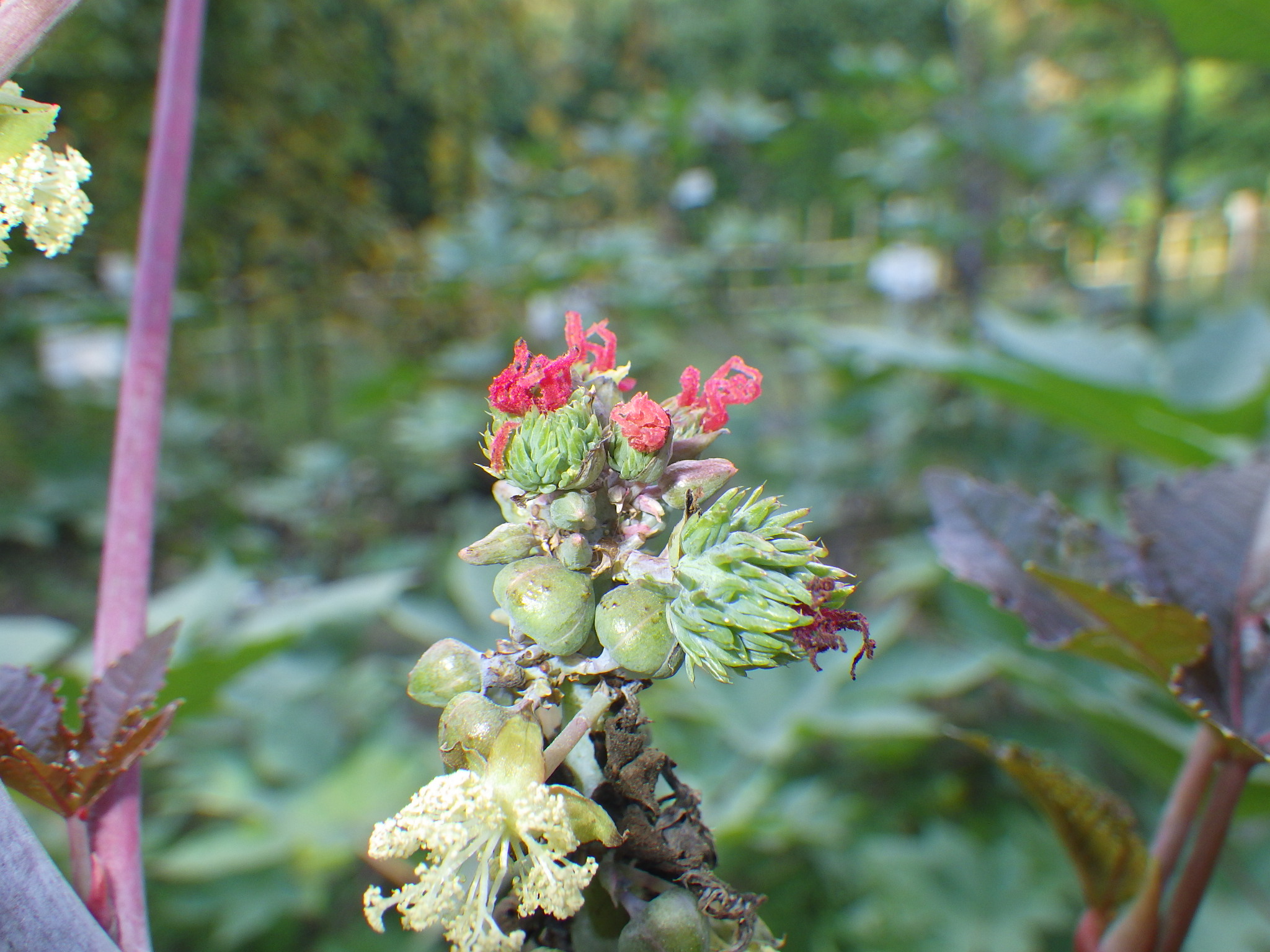
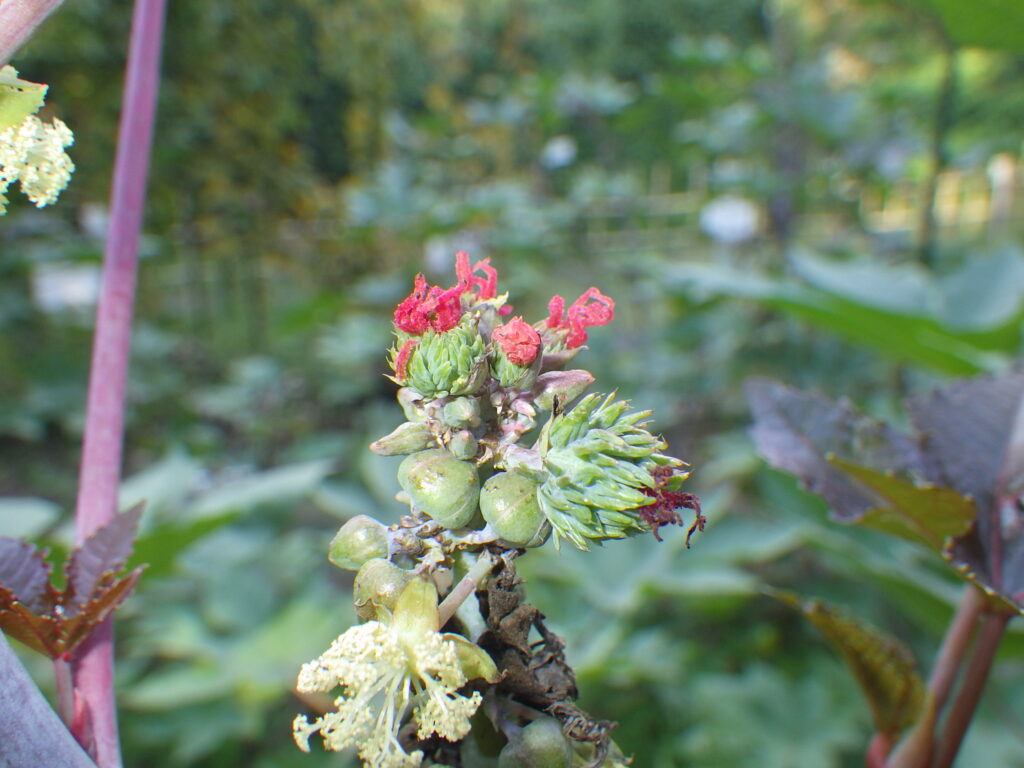
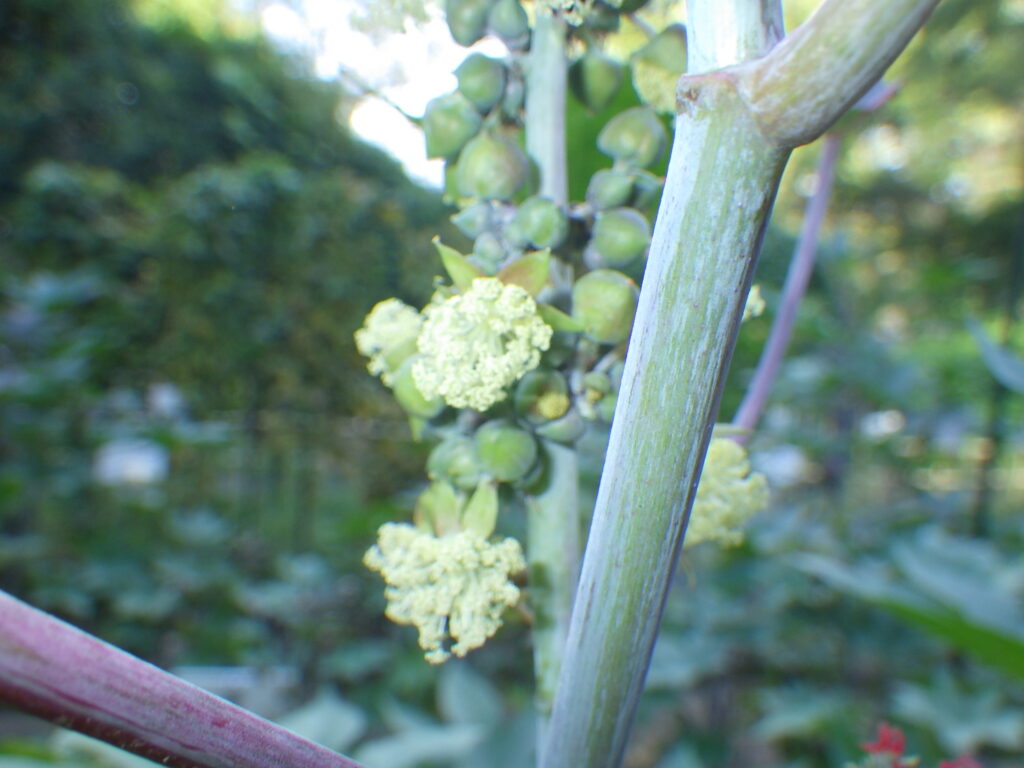
While the seeds of the castor bean plant are often emphasized, its flowers may be less well known. It flowers from June to September, blooming in autumn in Japan. It produces inflorescences about 20 cm long at the top of the stem and in the leaf axils, with female flowers at the top and male flowers at the bottom (Shimizu et al., 2001; Wu et al., 2008).
The female flowers are bright red, with pedicels 5-10 mm long and ovate sepals 4-5 mm long. The ovary is densely covered with slender, cylindrical projections with bristles at the tip. The style is red or orange-red, 4-5 mm long. The stigma widens at the top.
The male flowers are white, with pedicels 5-17 mm long. The sepals are ovate, 5-8 mm long. The stamens are 7-8 mm long.
The contrasting and vibrant colors of the male and female flowers make it understandable why this plant is also valued from an ornamental standpoint.
Flowers can be pollinated not only by wind but also by insects!?
Castor bean flowers can self-pollinate, but they also undergo cross-pollination (Rizzardo et al., 2012). Castor bean flowers have a rather unusual shape, but how do they disperse their pollen?
Until very recently, it was believed that this flower relied solely on wind for pollination, resulting in cross-pollination. Male flowers burst open during blooming, releasing pollen into the wind (Rizzardo et al., 2012). The fact that female flowers are located above and male flowers below is thought to make self-pollination less likely when pollen is carried by the wind.
But it has quite a striking color, even though it doesn't need to attract insects, doesn't it?
A 2012 Brazilian study provided more detailed information (Rizzardo et al., 2012). This study found that the presence of the European honeybee Apis mellifera increased fruit set and seed yield.
This is thought to be due not only to pollination occurring directly as a result of European honeybees seeking pollen and nectar outside the flowers, but also to the fact that the European honeybees stimulated the male flowers, causing many of them to burst open.
Interestingly, it's noteworthy that when European honeybees moved up and down on the same individual flower, they promoted "self-pollination" or "neighboring flower pollination" rather than cross-pollination.
Although not mentioned in this paper, the color of the flower may also be important to insects. It can be said that this is an unusual flower that coexists with both wind and insects. The presence of insects was essential for the increased production of castor bean.
The fruit is a capsule, and the seeds are dispersed both automatically and by ants!?
The fruit is a capsule, dark red, oval or ovate, 1.5–2.5 cm long, covered with spines, which are about 5 mm long or less (Wu et al., 2008). The fruit consists of three carpels and three seeds. The seeds are oval, 7–12 mm long, glossy, gray to silver to beige in color, with dark markings. These seeds are called "castor seeds" and are the raw material for castor oil. The seeds have an appendage called a caruncle, which is a flattened cone shape, 2–3 mm wide.
The seed, or cinnamon seed, can be easily separated into a fibrous "cocole (seed coat)" and a part called the "kernel" (Yasuda and Miyaho, 2010). Furthermore, the kernel is divided into the "embryo," which is the main part that will sprout, and the "endosperm," which contains oil and protein and nourishes the embryo. The endosperm contains 47-51% oil. Approximately 90% of this oil is ricinoleic acid triglyceride.
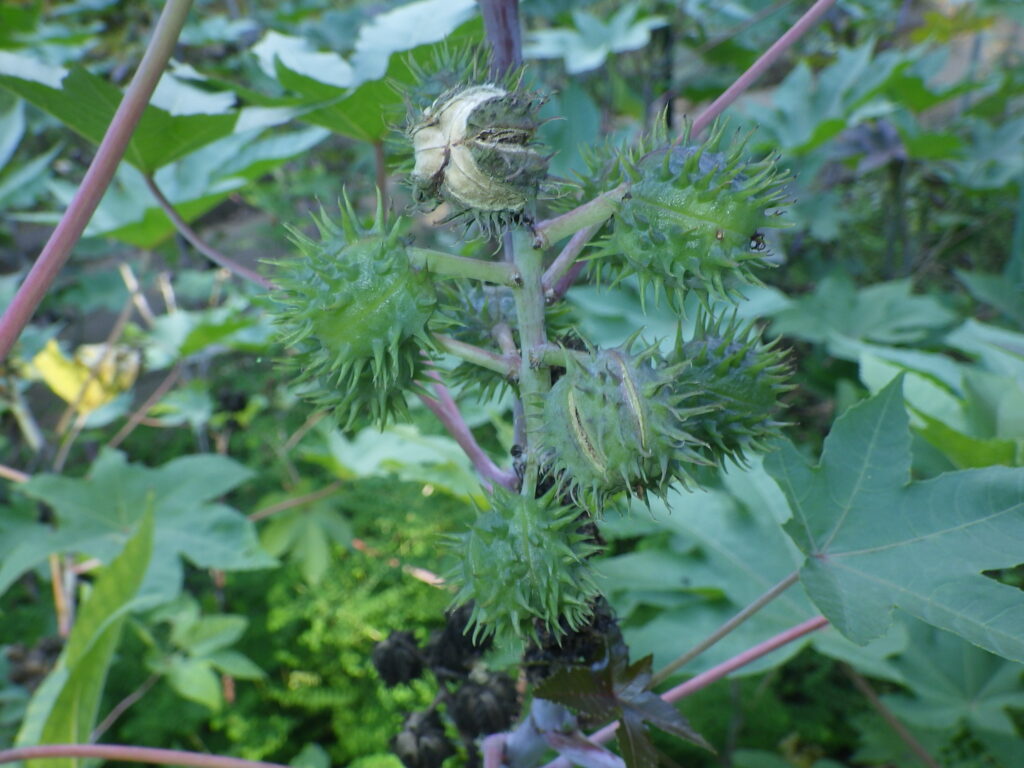
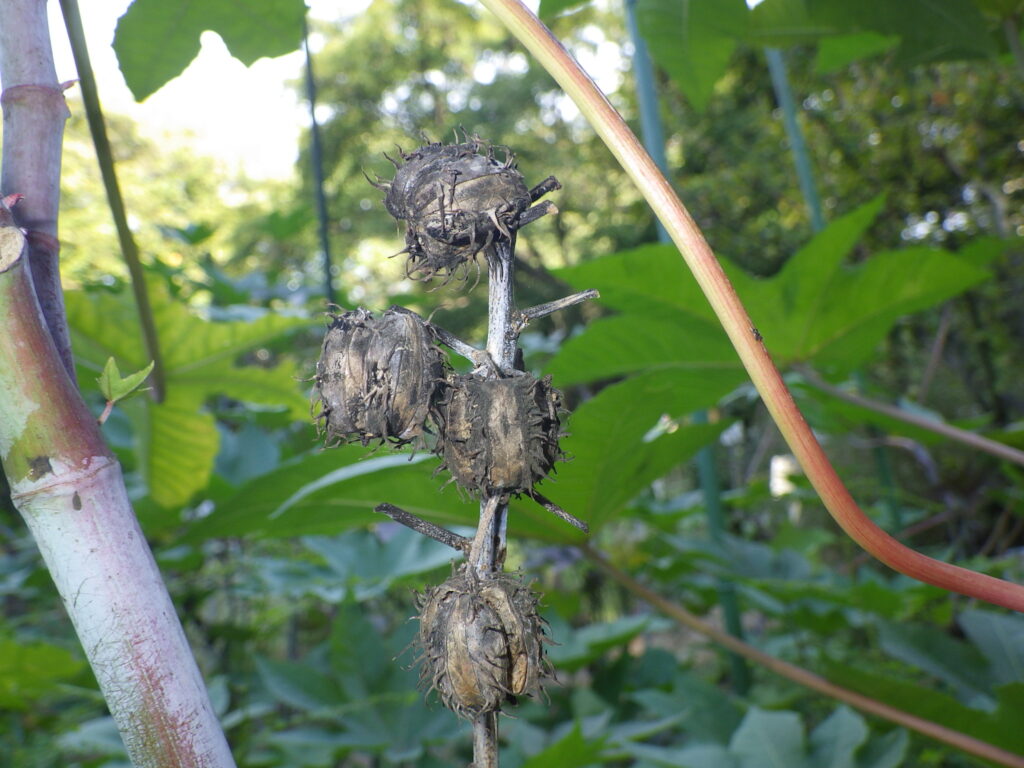

The seeds are dispersed automatically, and the fruit is known to burst open when dry, scattering the seeds it contains.
However, this is not the only way castor beans disperse their seeds. The seeds have an appendage called a seed cushion. The seed cushion is an appendage derived from the integument at the tip of the seed (near the micropyle). It has been found that this seed cushion is eaten by ants. In other words, it functions as an "elaiosome" (Martins et al., 2006; Sasidharan & Venkatesan, 2019).
Seed pillows are rich in fatty acids and sugars, with the fatty acids (93.4–99%) being palmitic acid, oleic acid, linoleic acid, stearic acid, myristic acid, and palmitoleic acid. Analysis has revealed that they mainly contain glucose, rhamnose, ribose, sucrose, and trehalose, and sugar alcohols mainly consisting of myo-inositol, glycerol, mannitol, and arabitol (Sasidharan & Venkatesan, 2019). These make good food for ants.
When ants approach castor bean seeds, they react to the seed cushion and carry the seeds back to their nest. Only the seed cushion is used as food by the ants; the seeds themselves are inedible and are discarded around the nest. In this way, castor bean seeds are not only dispersed automatically, but also dispersed by ants.
In a study in Brazil, 20 different ant species were identified as being attracted to the site, with Pheidole and Solenopsis species being particularly favored (Martins et al., 2006).
Furthermore, a study in India identified six species: Leptogenys processionalis, Monomorium indicum, Pheidole grayi, Solenopsis geminata, Camponotus compressus, and Aphaenogaster beccarii. However, only two species—Pheidole grayi and Aphaenogaster beccarii —not only ate the food on the spot but also carried it back to their nests at a high rate (Sasidharan & Venkatesan, 2019).
This result suggests that not just any type of ant will visit the elaiosome.
Looking at it this way, it becomes clear that this plant is surprisingly dependent on insects, including its flowers and extrafloral nectaries. Although it has become naturalized in Japan, no research has been conducted from this perspective. If we could find out what kinds of insects it is related to in Japan, we might be able to uncover the secret behind its naturalization.
References
Franke, H., Scholl, R., & Aigner, A. 2019. Ricin and Ricinus communis in pharmacology and toxicology-from ancient use and “Papyrus Ebers” to modern perspectives and “poisonous plant of the year 2018”. Naunyn-Schmiedeberg's Archives of Pharmacology 392: 1181-1208. https://doi.org/10.1007/s00210-019-01691-6
Kurare & Pharmacology Research Lab. 2022. The Unbelievable Dictionary of Toxicology. Sansai Books, Tokyo. 205pp. ISBN: 9784866733067
Martins, F., Guimarães, PR, Silva, RR, & Semir, J. 2006. Secondary Seed Dispersal by Ants of Ricinus communis (Euphorbiaceae) in the Atlantic Forest in Southeastern Brazil: Influence on Seed Germination. Sociobiology 47(1): 265-274. https://guimaraes.bio.br/013.pdf
Miyaho, Jun. 2013. Latest trends and application developments of castor oil-derived polyamides. Journal of the Japan Rubber Association 86(6): 188-193. https://doi.org/10.2324/gomu.86.188
Rizzardo, RA, Milfont, MO, Silva, E., & Freitas, BM 2012. Apis mellifera pollination improves agronomic productivity of anemophilous castor bean (Ricinus communis). Anais da Academia Brasileira de Ciências 84: 1137-1145. ISSN: 0001-3765, https://doi.org/10.1590/S0001-37652012005000057
Saito, Katsuhiro. 2021. The Beautiful and Terrifying World of Poisons! A Visual Encyclopedia of 200 Poisons. Shuwa System, Tokyo. 271pp. ISBN: 9784798063652
Sasidharan, R., & Venkatesan, R. 2019. Seed elaiosome mediates dispersal by ants and impacts germination in Ricinus communis. Frontiers in Ecology and Evolution 7: 246. https://doi.org/10.3389/fevo.2019.00246
Shimizu, K., Morita, H., & Hirota, S. 2001. Illustrated Guide to Naturalized Plants of Japan: 600 Species of Plant Invaders (Revised). National Rural Education Association, Tokyo. 553pp. ISBN: 9784881370858
Uzawa, Hirotaka. 2005. Ultra-high sensitivity detection technology for highly toxic ricin: Enabling detection of 1/10,000th of the lethal dose in just 10 minutes. AIST Today 5(12): 16-19. ISSN: 1880-0041, https://www.aist.go.jp/Portals/0/resource_images/aist_j/aistinfo/aist_today/vol05_12/vol05_12_p16_19.pdf
Yasuda, Maho & Miyaho, Jun. 2010. Polyamides made from castor oil. Journal of the Textile Society of Japan 66(4): 137-142. https://doi.org/10.2115/fiber.66.P_137
Wu, ZY, Raven, PH, & Hong, DY (Eds.). 2008. Flora of China (Vol. 11 Oxalidaceae through Aceraceae). Science Press, Beijing, and Missouri Botanical Garden Press, St. Louis. ISBN: 9781930723733