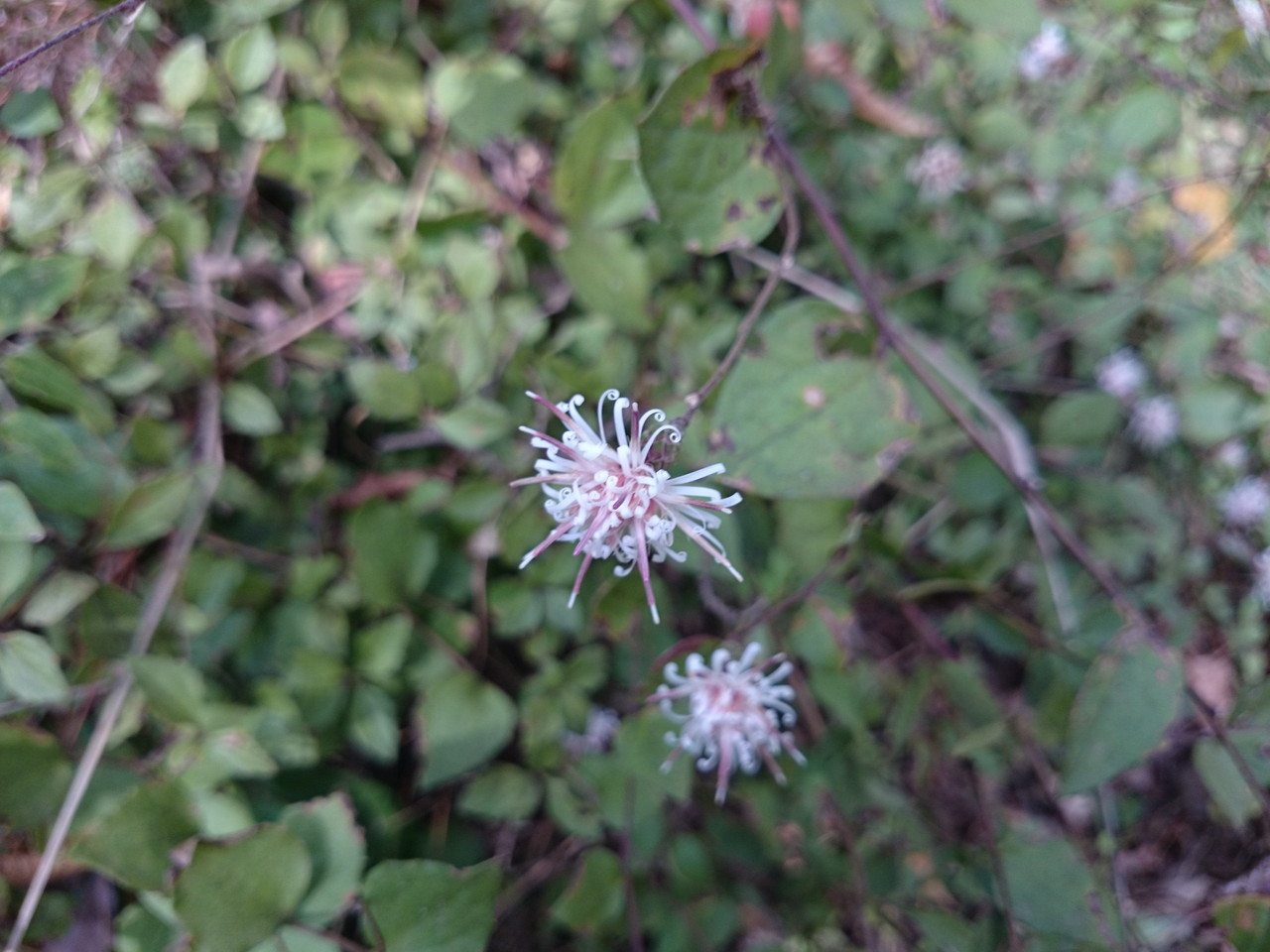
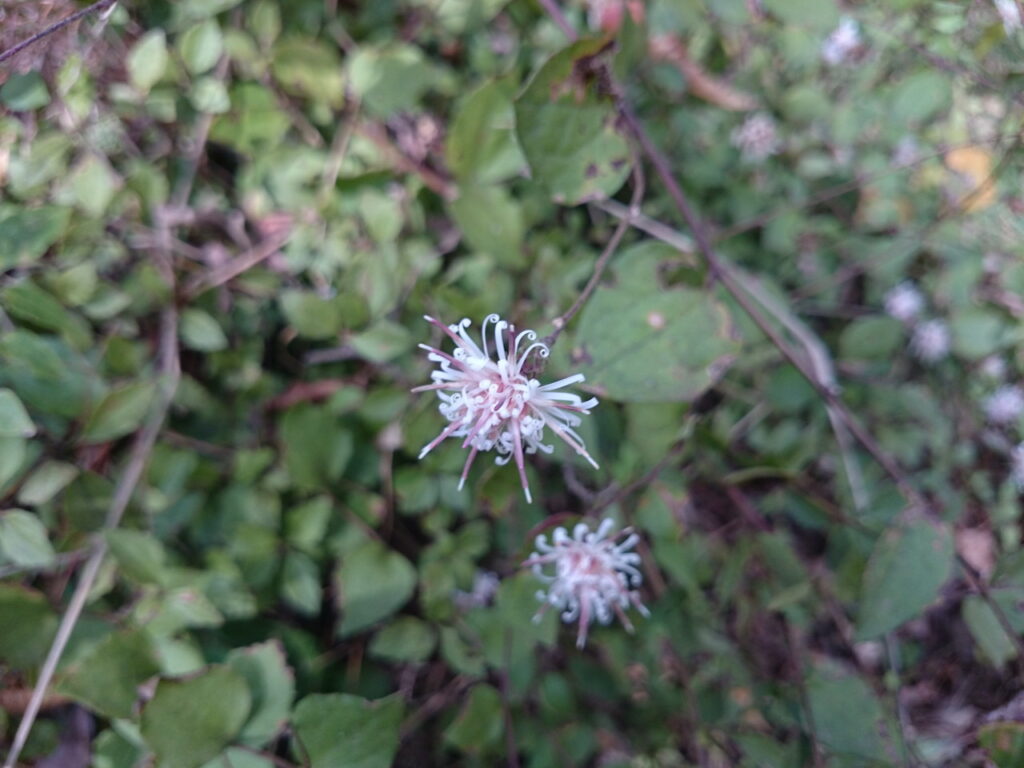
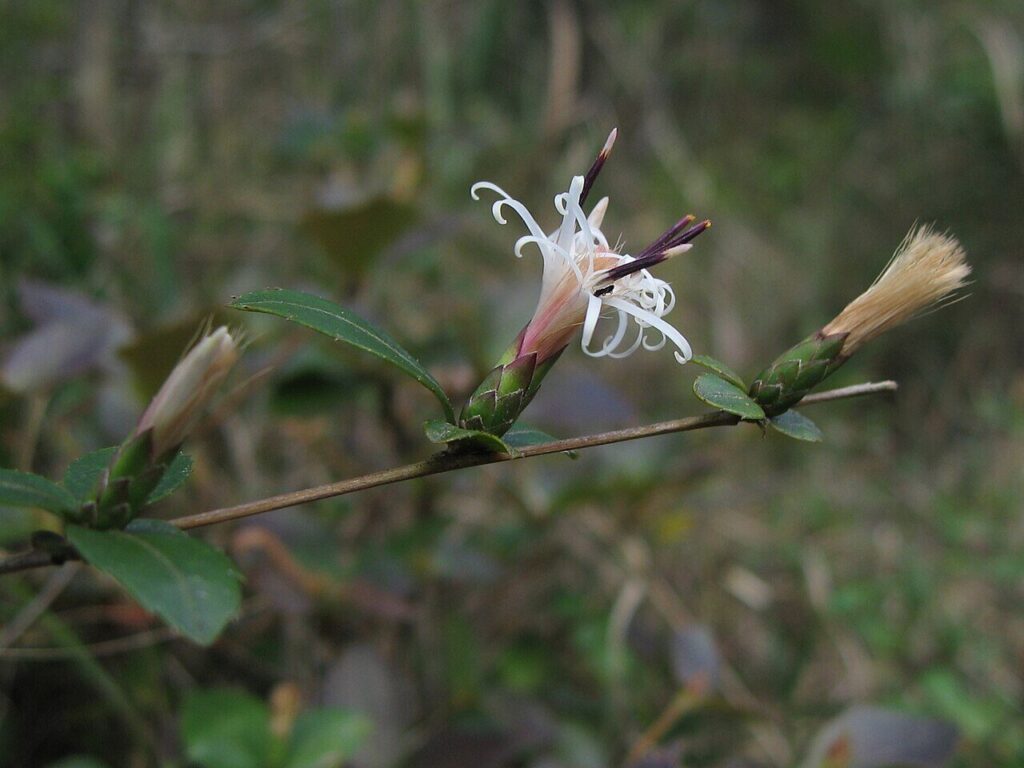
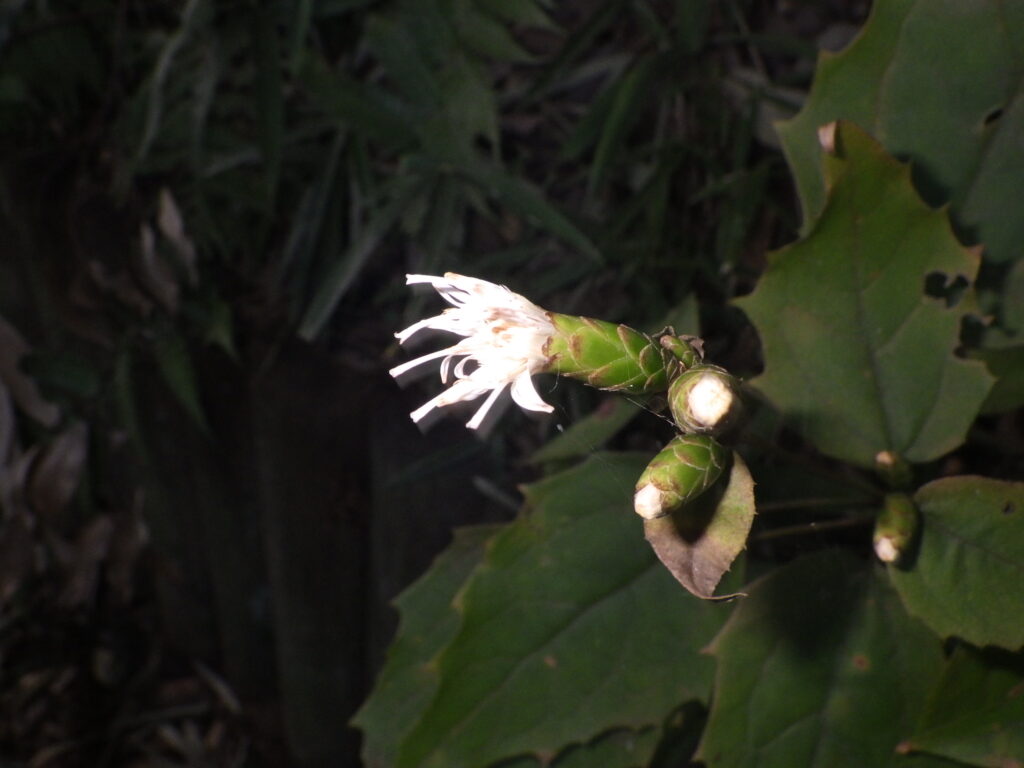
Koyabouki, Nagabano-koyabouki, and Kashiwaba-haguma all belong to the genus Koyabouki in the Asteraceae family. A major distinguishing feature of these three species, even within the vast Asteraceae family, is that the tubular florets in the center of the flower head have a two-lipped corolla. They are commonly found in forests. However, the flower heads of the three species are similar, and some people may have difficulty distinguishing them. The three species can be distinguished mainly by their life form and leaf shape. The way the leaves are attached differs depending on the maturity of the branches, so this point should be noted when identifying them. This article will explain the classification and morphology of the genus Koyabouki.
What are *Kouyabouki* and *Nagabano Kouyabouki*?
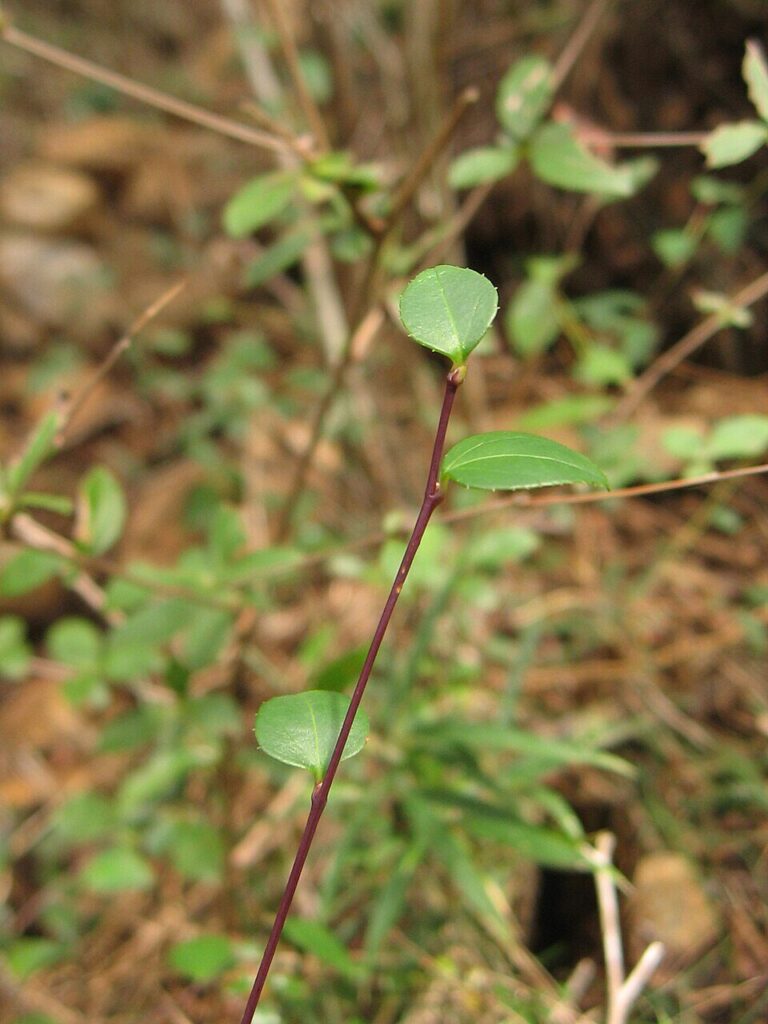
Pertya scandens, also known as Koyabouki, is a deciduous shrub distributed in Honshu (west of the Kanto region), Shikoku, and Kyushu in Japan, as well as in China. It grows in dry forests and forest edges in the areas of Castanopsis and Quercus and the lower part of the Fagus zone.
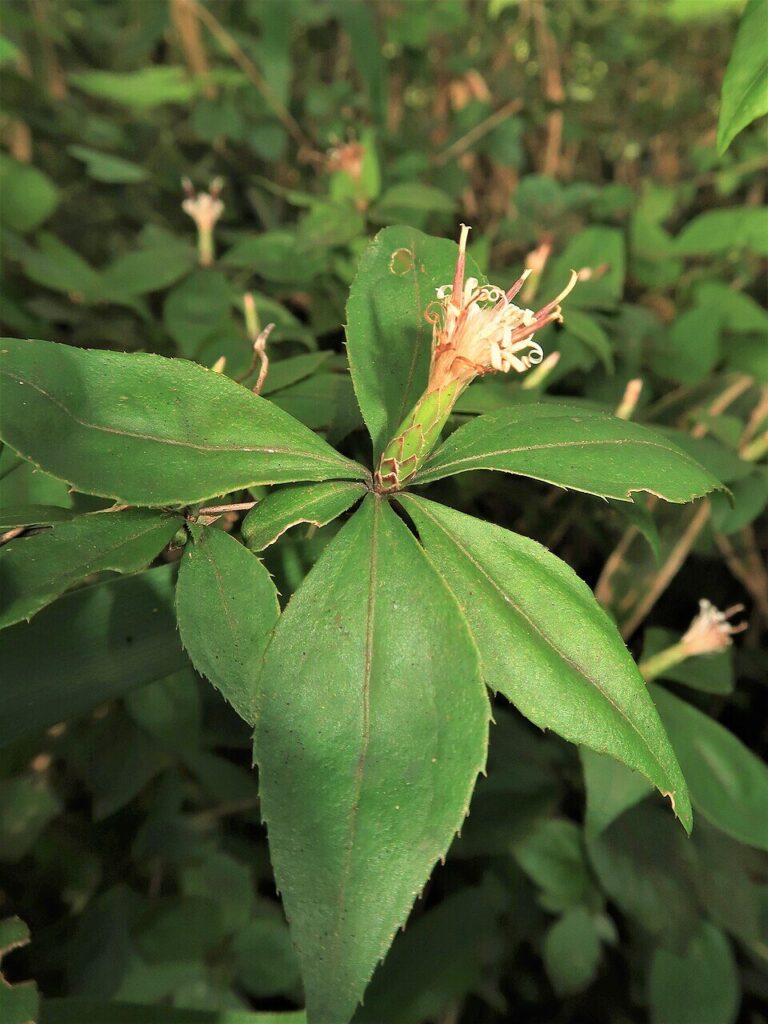
Pertya glabrescens, also known as long-leaved broom, is a deciduous shrub distributed in Honshu, Shikoku, and Kyushu in Japan, growing in dry forests and forest edges at higher elevations than the common broom.
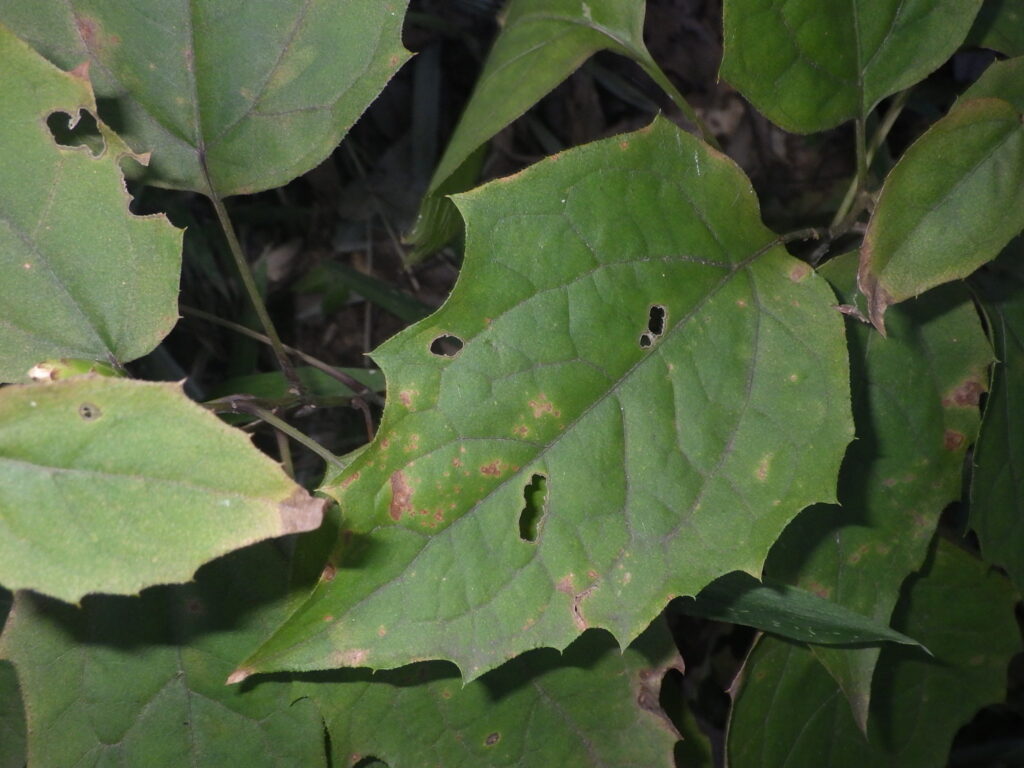
Pertya robusta, also known as oak-leaved white bear, is a perennial herb distributed in Honshu, Shikoku, and Kyushu in Japan, growing in dry fir forests and oak-konara forests in the areas from the oak-castus zone to the lower beech zone.
Both belong to the genus *Asteraceae*, and a major distinguishing feature that allows them to be identified within the vast Asteraceae family is that the tubular florets in the center of the flower head have a two-lipped corolla. They are commonly found in forests.
However, the three types of flower heads are similar, and some people may have difficulty distinguishing them.
What are the differences between *Koyabouki*, *Nagabano Koyabouki*, and *Kashiwaba Haguma*?
The three species can be distinguished primarily by their life cycle and leaf shape.
First, they can be broadly classified into *Aster tataricus*, *Aster tataricus*, and *Aster savatieri*.
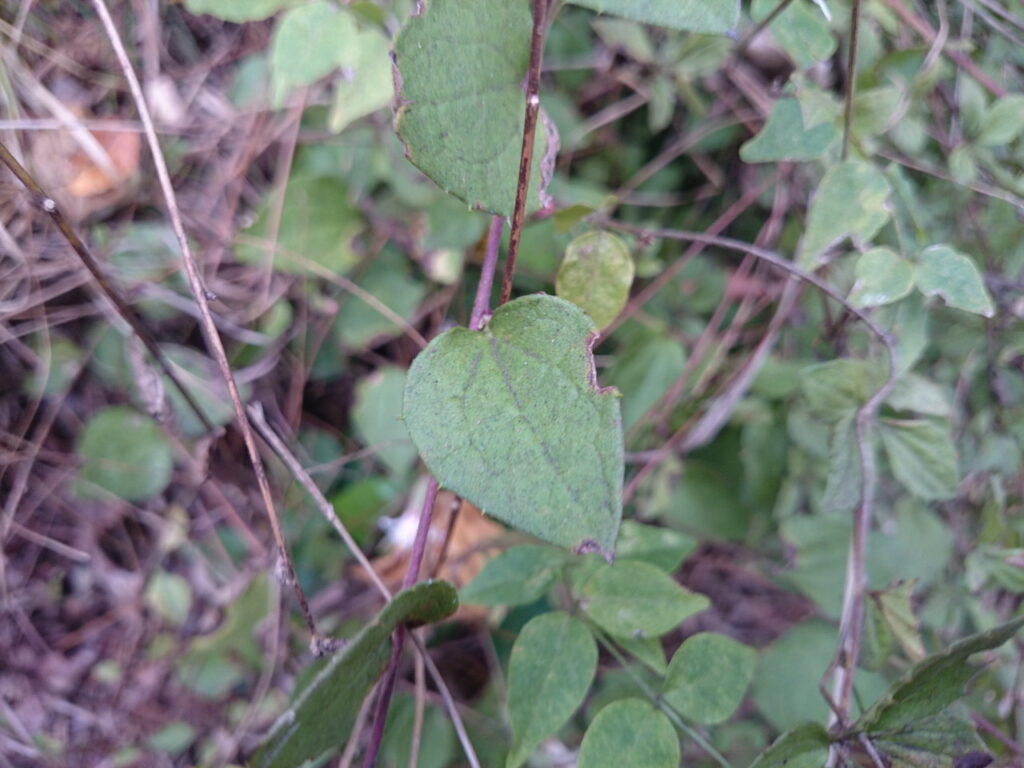
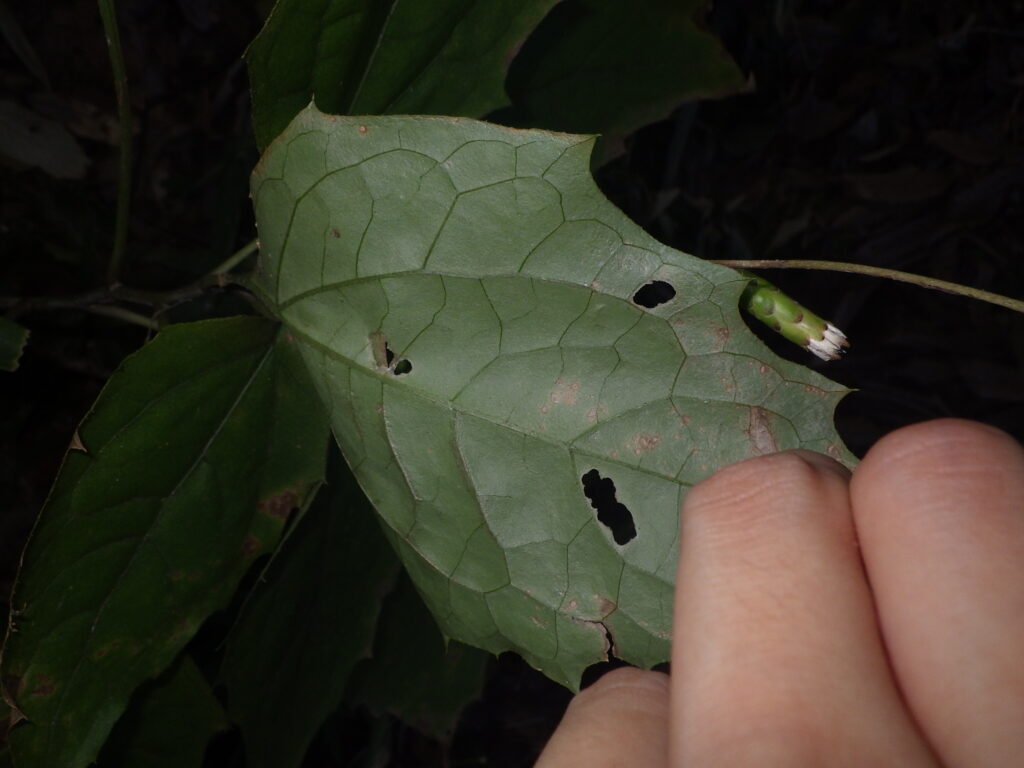
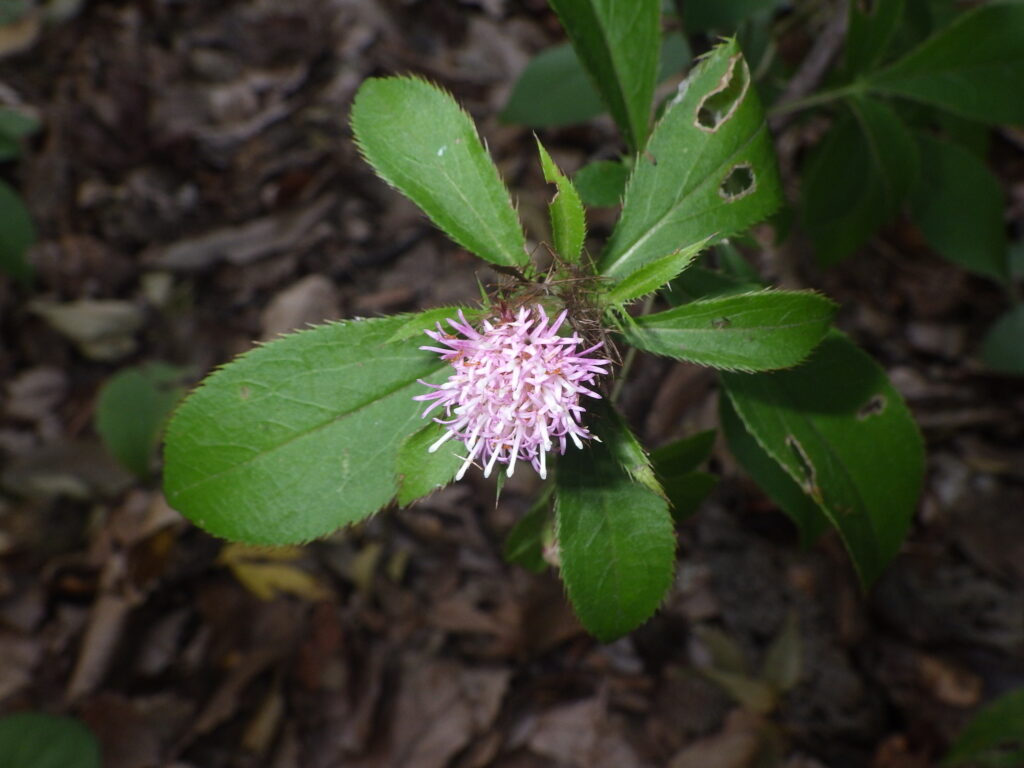
While *Koyabouki* and *Nagabano Koyabouki* may appear herbaceous at first glance, their stems are woody and have hard branches, and their leaves are small with small serrations. In contrast, *Kashiwaba Haguma* is a completely herbaceous plant with large leaves and prominent, coarse serrations.
The difference is clear, so you shouldn't have much trouble deciding.
The situation with *Koyabouki* and *Nagabano-koyabouki* is a bit more complicated. As a prerequisite, it's important to understand that the leaves on flowering branches (branches that have matured and bear flowers) and the leaves on current-year branches (branches that are newly growing in that year) differ in leaf shape and phyllotaxy between *Koyabouki* and *Nagabano-koyabouki*.
In *Aster tataricus*, the leaves on the flowering branches are alternate, hairy, and short, while the leaves on the current year's branches have five or more pairs of projection-like serrations. In contrast, in *Aster tataricus*, the leaves on the flowering branches are whorled, hairless, and long, while the leaves on the current year's branches have two pairs of projection-like serrations.
This is the origin of its Japanese name; if you see a plant with long, whorled leaves, you can assume it is *Long-leaved Koyabouki*.
However, it's important to note that even with *Aster tataricus*, some leaves on the current year's branches are relatively long.
Are there any other similar species?
The genus *Asteraceae* has few species, and there are no other species that are often confused with it.
However, Pertya x hybrida, also known as Oobakoyabouki, is a hybrid of Pertya x japonica and Pertya x oakleaf, and is rarely found in areas where Pertya x japonica and Pertya x oakleaf grow together. It resembles Pertya x oakleaf, but can be distinguished by its dispersed leaves and the fact that its flower heads are clustered at the end of the stem.
It is sometimes confused with the mole cricket, but they are completely different. Please see the separate article for more details.
References
Kanagawa Prefecture Flora Survey Association. (2018). Kanagawa Prefecture Flora 2018 Electronic Edition. Kanagawa Prefecture Flora Survey Association. ISBN: 9784991053726,https://flora-kanagawa2.sakura.ne.jp/efloraofkanagawa.html