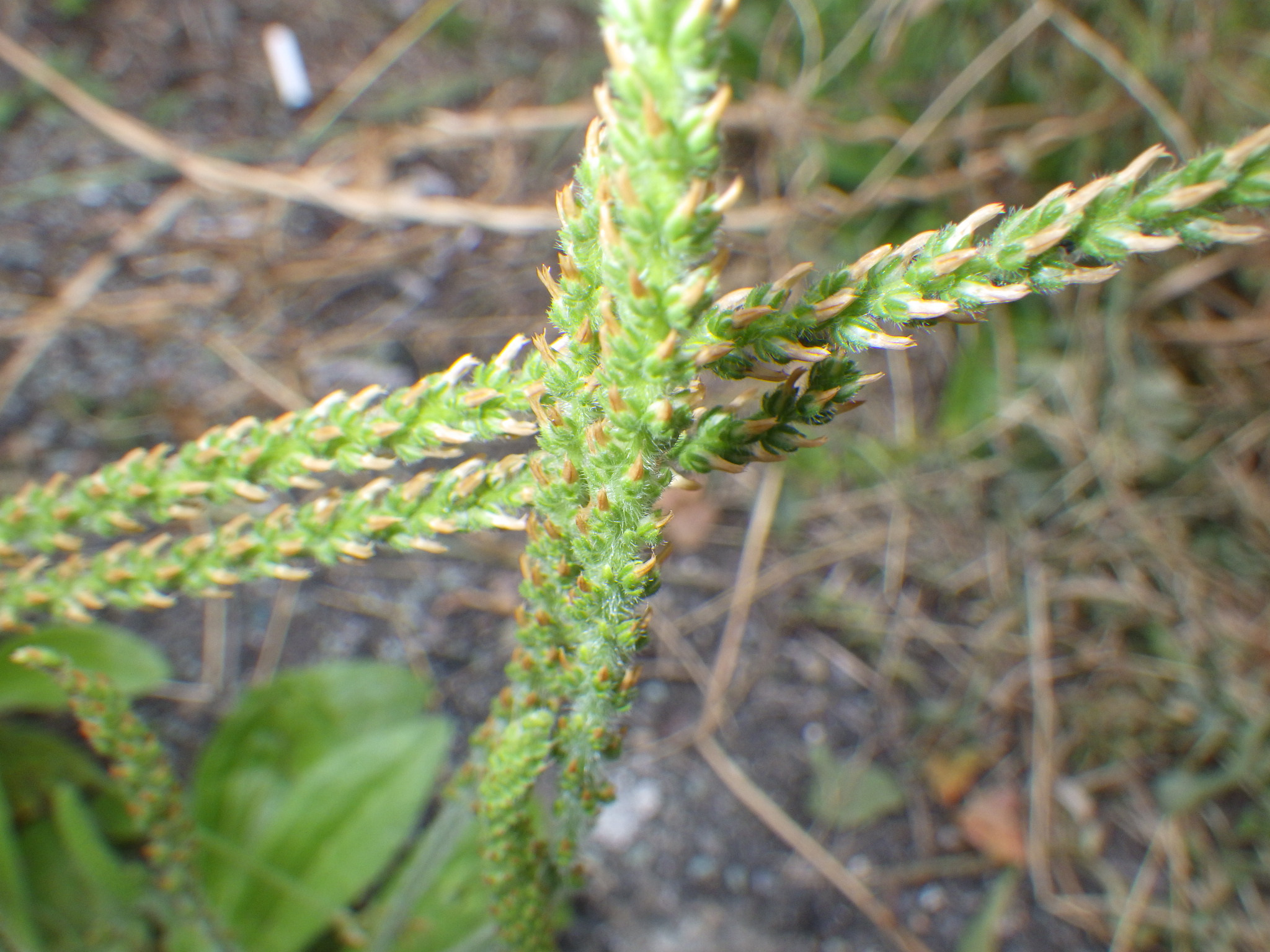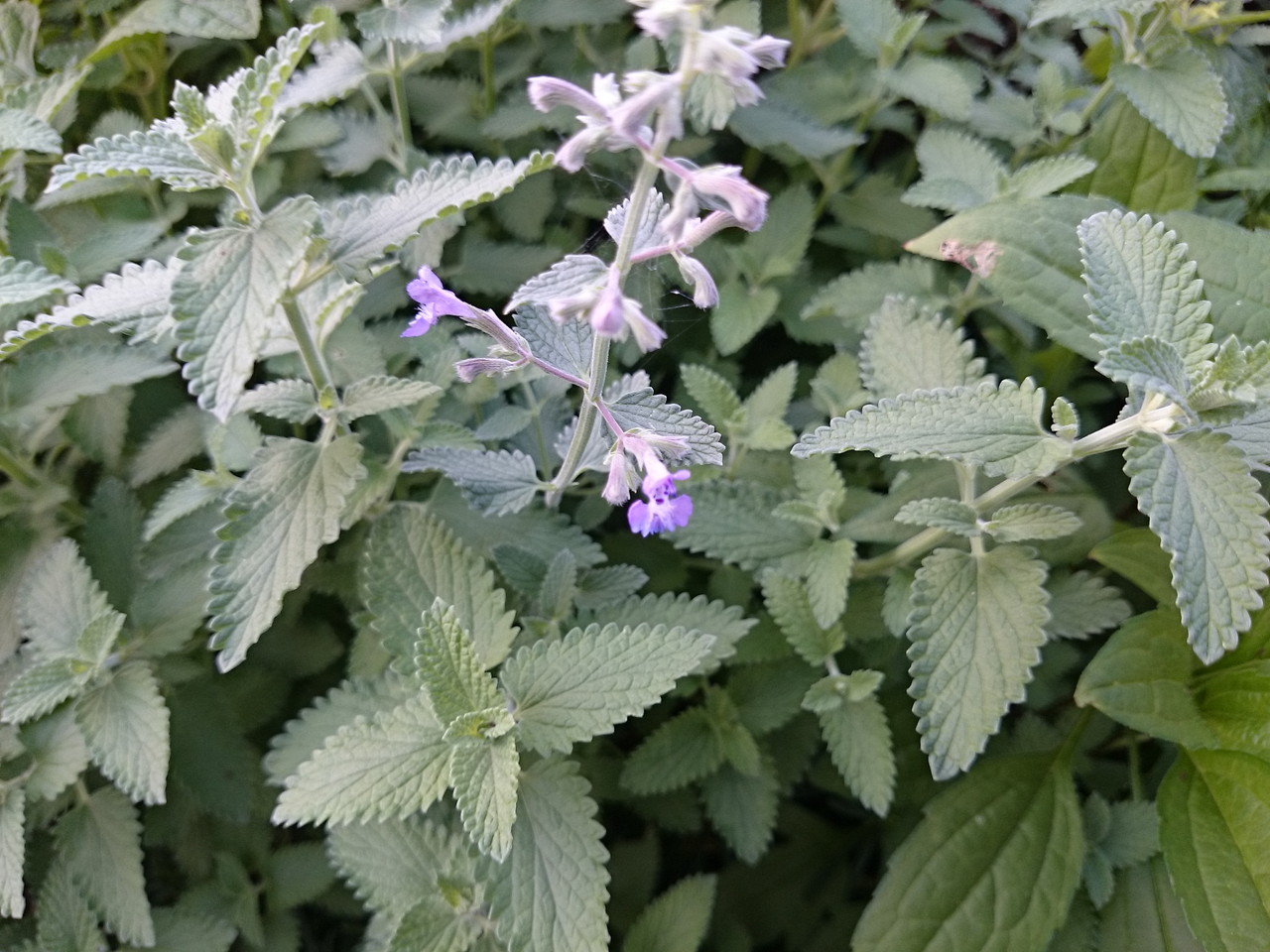
Catmint and catnip belong to the genus Nepeta in the Lamiaceae family and are perennial plants widely cultivated in Japan as herbs or for ornamental purposes. While their large corollas with protruding upper lips are distinctive, they are perhaps best known for causing the "matatabi reaction," a state of intoxication in felines. However, due to a lack of Japanese-language resources, few people seem to correctly understand the difference between catmint and catnip. The two species can be distinguished primarily by examining their leaves and flowers. Furthermore, the variety known as blue catmint is a separate species distinct from both of these. It is also a different species from mint. Regarding the effect of catmint on felines, it has been suggested that the felines, rather than the catmint itself, may be using the leaves as a mosquito repellent. This article will explain the classification, morphology, and ecology of the genus Nepeta.
What is catmint (catnip)?
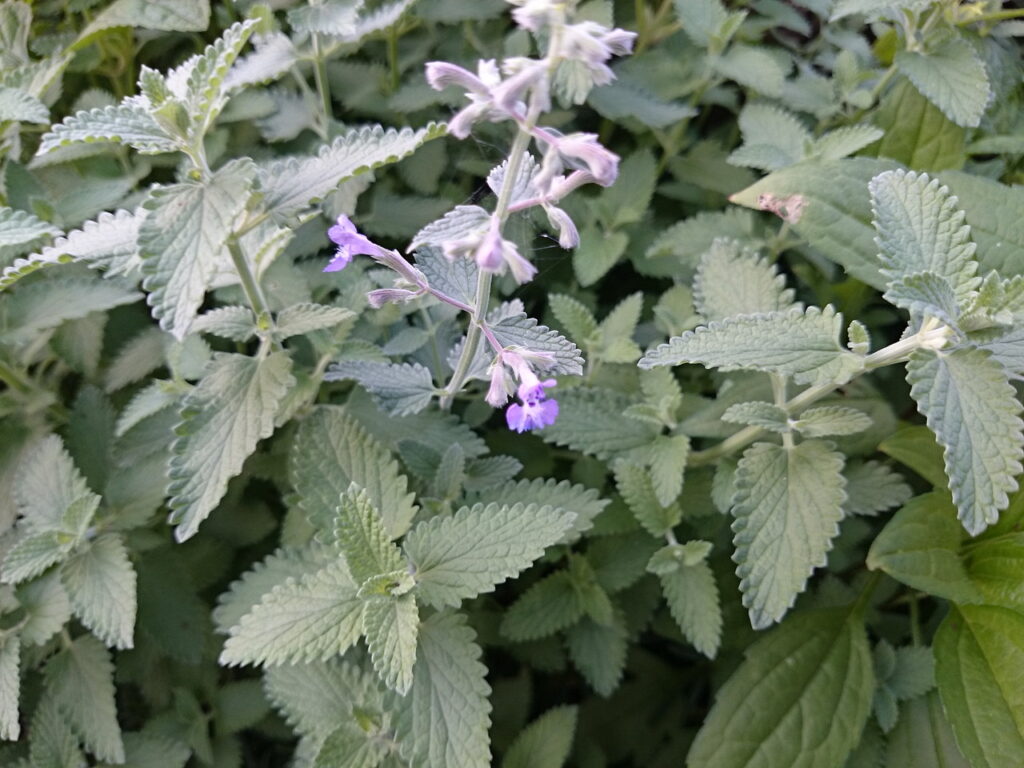
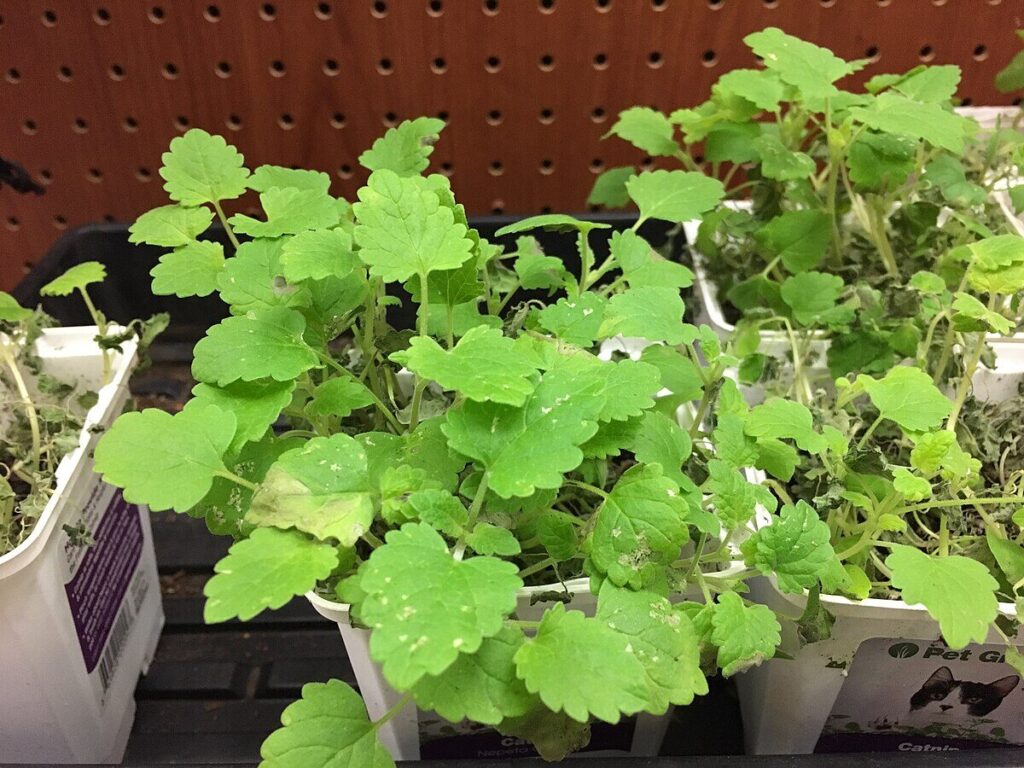
Catmint (Nepeta x faassenii) is a perennial hybrid created by artificial crossbreeding Nepeta nepetella and Nepeta racemosa in cultivated areas. 'Walker's Low' is a representative variety.
Nepeta cataria, also known as catnip, Chikuma mint, or Western silver vine, is a synonym (former scientific name) of Nepeta cataria, but is sometimes mistakenly identified as the scientific name for catmint. It is a perennial plant widely distributed across the Eurasian continent, and it is believed that it escaped cultivation in Japan after being introduced for medicinal purposes (Kanagawa Prefecture Flora Survey Association, 2018).
Both belong to the genus Mentha catkins in the Lamiaceae family, and are perennial plants that are widely cultivated in Japan as herbs or for ornamental purposes.
It can be distinguished from other Lamiaceae species by its four fully formed stamens, large corolla with a protruding upper lip, terminal inflorescence with numerous flowers arranged in a whorl, and erect stem.
However, for the average person, the more important characteristic might be that it induces the "catnip reaction," similar to Actinidia polygama (silver vine), which intoxicates cats. This is the origin of the names catmint and cap nip.
Based on these characteristics, it could be said that catmint is a relatively well-known herb within the mint family, but it's fair to say that catmint and catnip are extremely often confused.
This is partly due to the fact that the range of things referred to differs between English and Japanese.
In Japanese, "catmint" refers to one species with the scientific name Nepeta x faassenii, whereas in English, "catmint" includes both Nepeta x faassenii and Nepeta catkins.
The lack of websites that explain the specific differences in appearance is likely contributing to the confusion.
What is the difference between catmint and catnip?
Here, we will assume that "catmint" refers to one species and will explain the difference between it and catnip (Nepeta catica) (Spencer et al., 2002).
The first difference is the leaves: catmint leaves are about 3 cm long, while catnip leaves are longer than 3 cm.
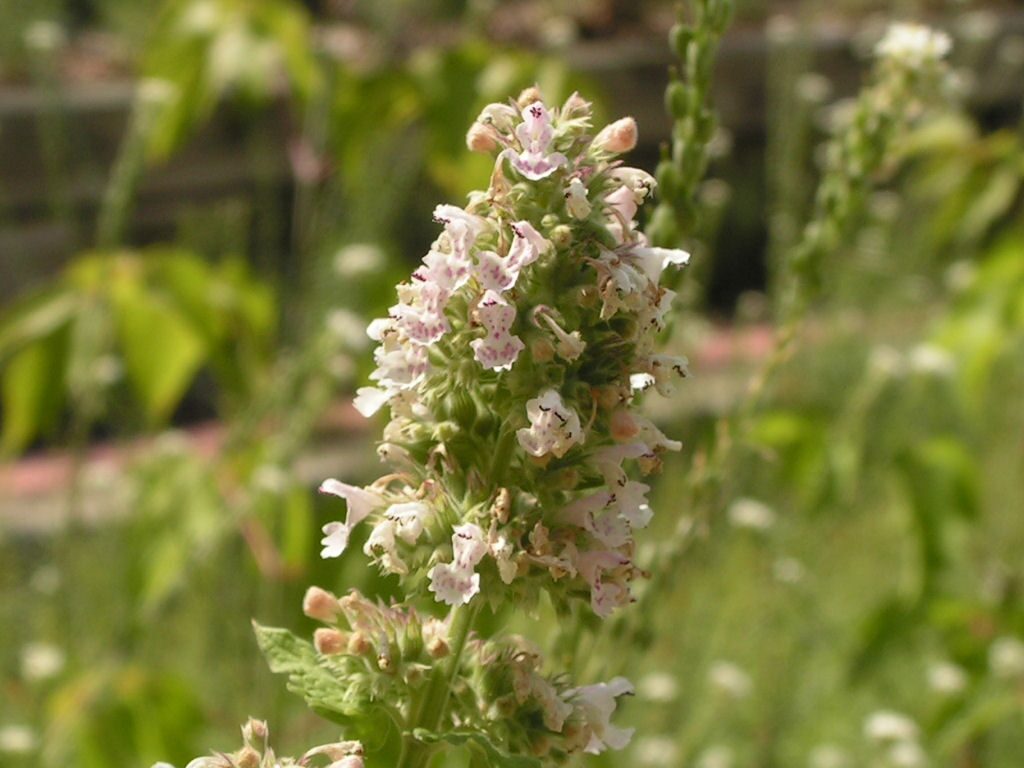
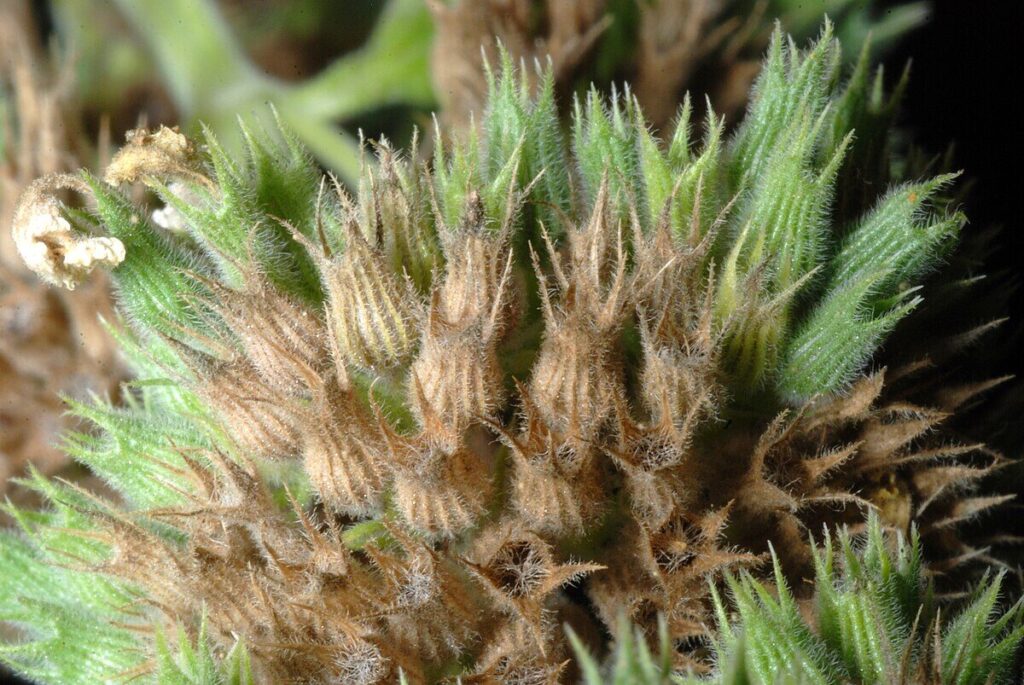
Regarding the flowers, catmint has long corollas up to 12 mm in length, pale lavender with dark spots, and calyxes that are usually green and protrude sharply, while catnip has shorter corollas of 7-10 cm in length, is white to pale purple with purple spots, and calyxes that are usually purple and protrude bluntly.
Because the lengths of the corollas vary considerably, the appearance of the inflorescences is quite different, and catnip flowers appear to be densely clustered together.
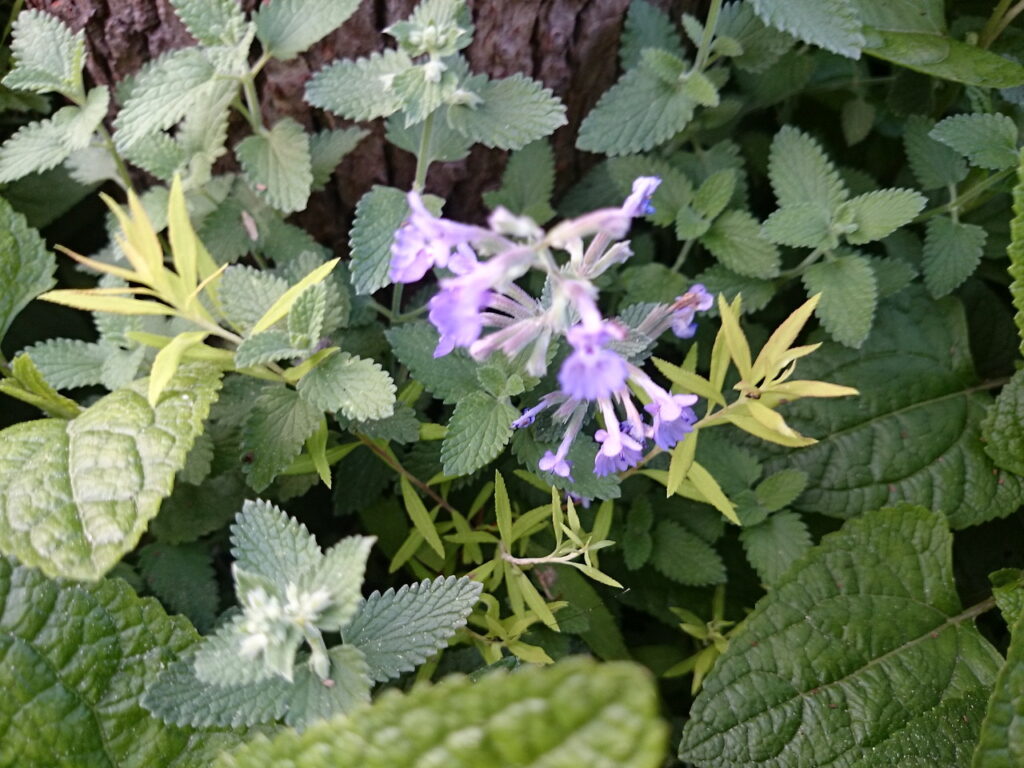
It should be noted that catmint is often confused with Persian catmint (Nepeta racemosa), also known as "blue catmint" in Japanese horticulture.
However, blue catmint is a different plant, being one of the original species of catmint.
Specifically, the difference is that catmint has leaves that are narrowly oblong to narrowly lanceolate with no or slightly heart-shaped base, while blue catmint has ovate leaves with a clearly heart-shaped base.
What is the difference between catmint and mint?
Some people might be wondering about the difference between catmint and mint.
Mint is usually a general term for the genus Mentha.
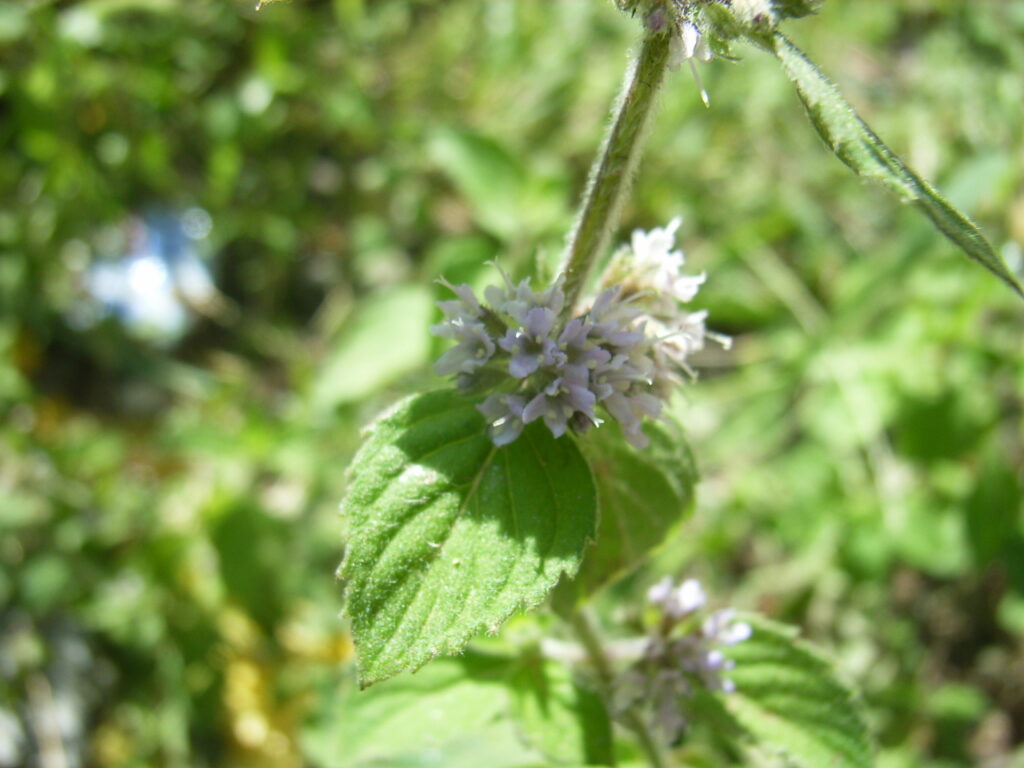
Although they are closely related in terms of classification and are both herbs, catmint differs in that, as plants, it has large flowers with a protruding corolla tip, while mint (Mentha genus) has small flowers with a less pronounced corolla tip.
Why does catnip make cats intoxicated? It's actually an adaptation on the cat's part!?
Catnip, which includes the genus Nepeta, is known to affect about two-thirds of domestic cats (Felis catus) and many wild felines, including lions (Panthera leo), tigers (Panthera tigris), and ocelots (Leopardus pardalis), inducing playful behaviors (the catnip response) such as rolling around, rubbing their cheeks, and pecking with their paws.
This behavior is so cute that some people might even go to the trouble of buying catnip or cat mint to give to their cats.
The substance responsible is believed to be nepetalactone, a type of iridoid and a volatile metabolite thought to mimic feline pheromones (Lichman et al., 2020).
Why did this nepetalactone evolve? Was there any benefit to catmint attracting cats?
At least in the case of the Nepeta genus, this is not the case; it is thought that they evolved to protect themselves from herbivorous insects that eat their own bodies.
Iridoids like nepetalactone were originally widely synthesized in the Lamiaceae family. In the ancestors of the Nepetoideae subfamily (which includes common herbs and mints), monoterpenes and sesquiterpenes replaced iridoids, causing them to lose the ability to synthesize iridoids. However, the ancestors of the Mentha catkins reverted to synthesizing nepetalactone once again.
Therefore, the history of synthesizing iridoids like nepetalactone is actually quite old, dating back to the entire Lamiaceae family.
So why did cats become intoxicated by catmint?
In this regard, an interesting hypothesis has recently been published by Japanese researchers (Uenoyama et al., 2021).
The reason why felines become intoxicated by the leaves of catnip and catnip is that by rubbing the leaves on their bodies, the nepetalactol from catnip and nepetalactone from catnip move to their faces and heads, which prevents them from being bitten by mosquitoes such as Asian tiger mosquitoes.
This experiment shows that domestic cats that have been rubbed with catnip are less likely to be bitten by mosquitoes.
Until now, it had been interpreted as merely a coincidence that feline pheromones matched insect-repellent substances found in catnip and catnip, but this new perspective suggests that there was a clear adaptive reason for this.
However, in my opinion, to what extent were felines and plants of the catnip and catnip genera actually likely to encounter each other in the natural world? And why does this only happen with these two groups of plants? These points remain unclear, and further investigation into these aspects will likely reveal a fascinating world of interspecies interactions.
References
Kanagawa Prefecture Flora Survey Association. 2018. Kanagawa Prefecture Flora 2018 (Electronic Edition). Kanagawa Prefecture Flora Survey Association, Odawara. 1803pp. ISBN: 9784991053726
Lichman, BR, Godden, GT, Hamilton, JP, Palmer, L., Kamileen, MO, Zhao, D., … & O'Connor, SE 2020. The evolutionary origins of the cat attractant nepetalactone in catnip. Science Advances 6(20): eaba0721. https://doi.org/10.1126/sciadv.aba0721
Spencer, R., Holmes, R., McNaughton, V. 2002. Nepeta. In: R. Spencer (Ed.), Horticultural Flora of South-eastern Australia: The identification of garden and cultivated plants (Vol. 4. Flowering plants. Dicotyledons. Part 3). University of New South Wales Press, 576pp. ISBN: 9780868406848, https://hortflora.rbg.vic.gov.au/taxon/ada142f6-5340-11e7-b82b-005056b0018f/key
Uenoyama, R., Miyazaki, T., Hurst, JL, Beynon, RJ, Adachi, M., Murooka, T., … & Miyazaki, M. 2021. The characteristic response of domestic cats to plant iridoids allows them to gain chemical defense against mosquitoes. Science Advances 7(4): eabd9135. https://doi.org/10.1126/sciadv.abd9135