Japanese honeysuckle (Lonicera japonica) is the most common species in Japan, frequently found both in the wild and in gardens. Several closely related species are known, and four species—Japanese honeysuckle, Lonicera japonica, Lonicera caerulea, and Lonicera japonica—can be reliably distinguished by comprehensively examining their tree shape, flowers, fruits, and leaf forms. Some members of the honeysuckle family have distinctive lip-shaped flowers, but do you know what role this shape plays? It is thought to have evolved to appeal to hawk moths, which are active from dusk to nocturnal. However, recent research is showing that it also appeals to bees. On the other hand, Lonicera japonica is a closely related species, but it has a completely different shape from Japanese honeysuckle. This is thought to be the result of adaptation to hummingbirds endemic to the Americas. This article will explain the classification, pollination ecology, and seed dispersal of honeysuckle species.
- Members of the honeysuckle genus are frequently seen both in the wild and in gardens.
- What are the differences between honeysuckle, beach honeysuckle, dwarf honeysuckle, and golden honeysuckle?
- What is the role of the honeysuckle's slender, white, sweet-smelling flowers?
- The ecological reason why honeysuckle flowers bloom in the evening
- What is the role of the red, drooping flowers of the honeysuckle?
- The fruit is a berry and the seeds are dispersed by birds.
- References
- Source
Members of the honeysuckle genus are frequently seen both in the wild and in gardens.
Many species of the honeysuckle genus (Lonicera japonica) in the family Caprifoliaceae are found in Japan.
Lonicera japonica, also known as honeysuckle, is a semi-evergreen climbing woody plant distributed throughout East Asia, including Japan. It grows in mountainous areas, roadsides, and is also cultivated (Mogi et al., 2003).
Lonicera affinis, also known as beach honeysuckle, is a semi-evergreen climbing woody plant distributed from Honshu (Kii Peninsula and Chugoku region) to Okinawa and China, growing in forest edges near the coast.
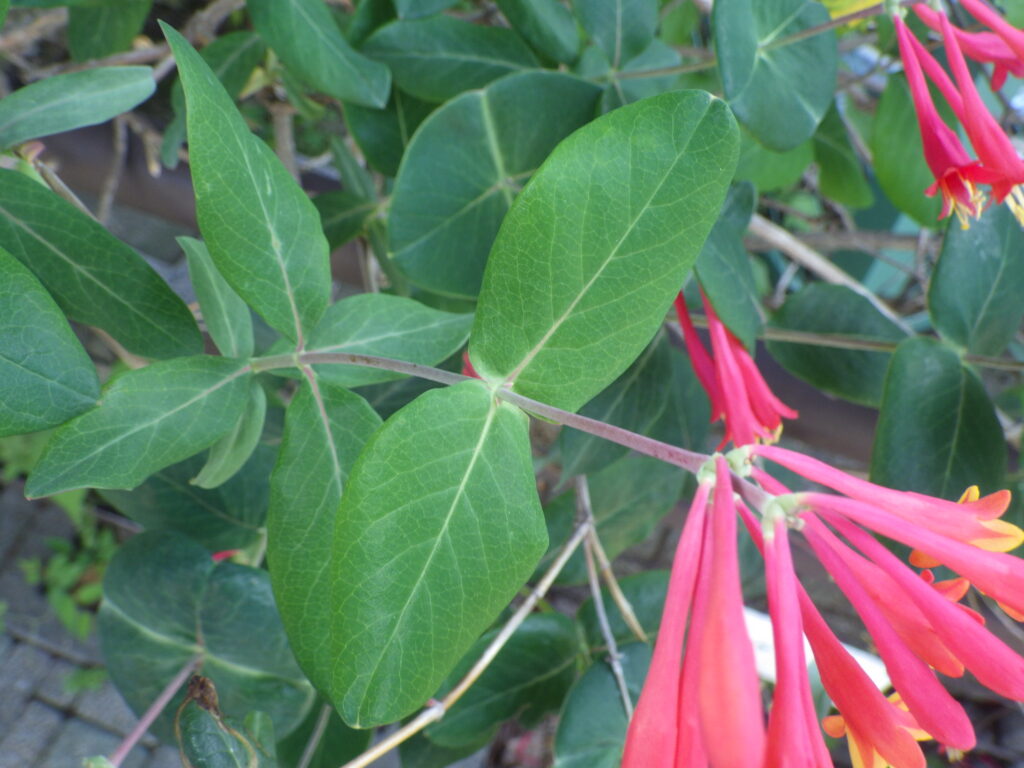
Lonicera sempervirens, also known as "piercing honeysuckle," is an evergreen tree-like vine native to North America that is cultivated in gardens as an ornamental plant in Japan.
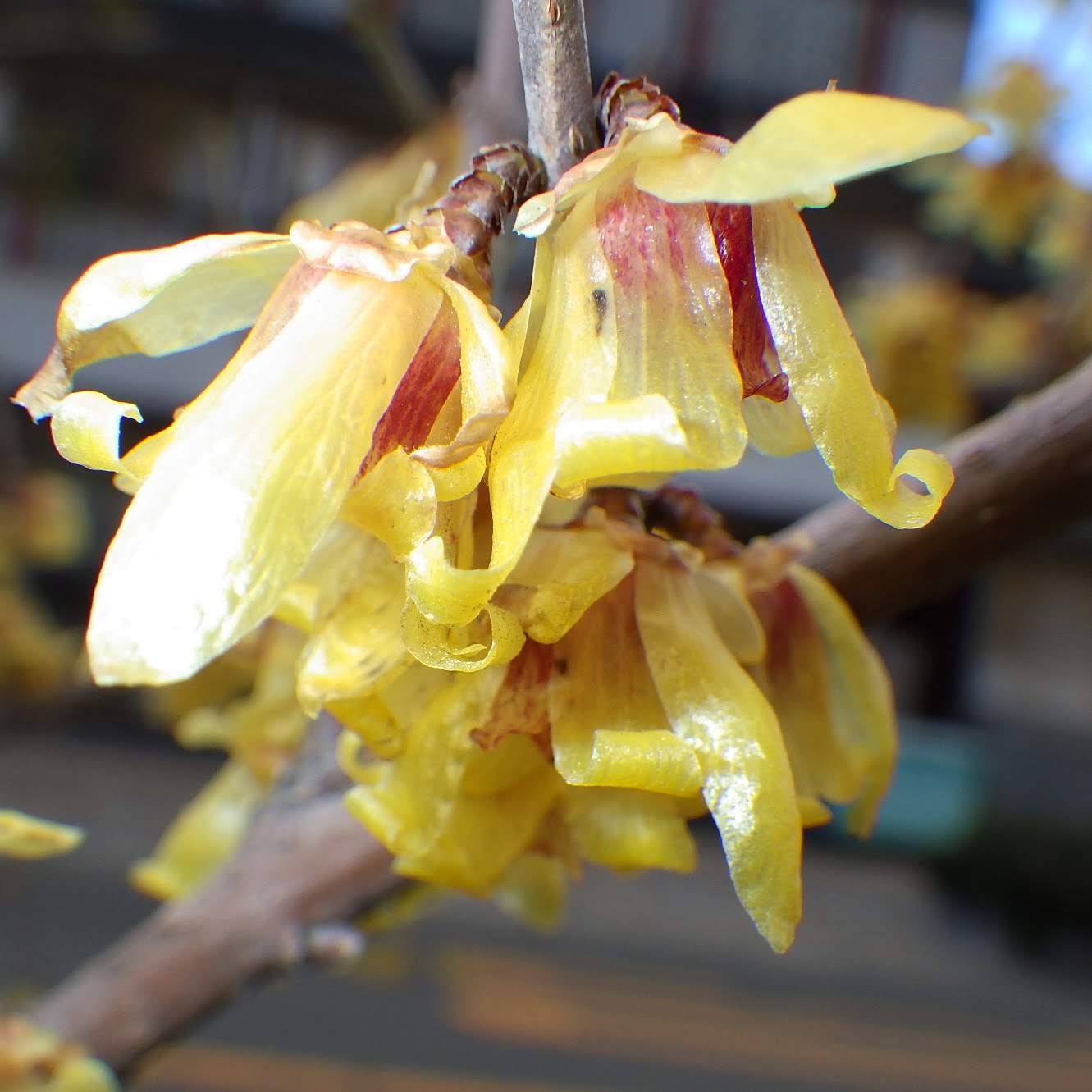
Lonicera morrowii, also known as honeysuckle (Lonicera morrowii), is a deciduous shrub distributed in southwestern Hokkaido, the northeastern part of Honshu, the Sea of Japan side, Shikoku, and Ulleungdo Island in South Korea. It grows in mountainous and coastal areas and is sometimes cultivated. The Japanese name, written with the kanji characters for "gold and silver tree," comes from the fact that the corolla is initially white, later turning yellow, and the mix of white and yellow flowers on a single branch resembles gold and silver. However, this characteristic is also shared with honeysuckle (Lonicera japonica).
While some species in the Lonicera genus, like the Lonicera gracilipes, have funnel-shaped corollas, many others have lip-shaped corollas, which can be a bit confusing.
What are the differences between honeysuckle, beach honeysuckle, dwarf honeysuckle, and golden honeysuckle?
Here, we will focus on explaining how to distinguish between the most frequently searched species: honeysuckle, beach honeysuckle, dwarf honeysuckle, and golden honeysuckle.
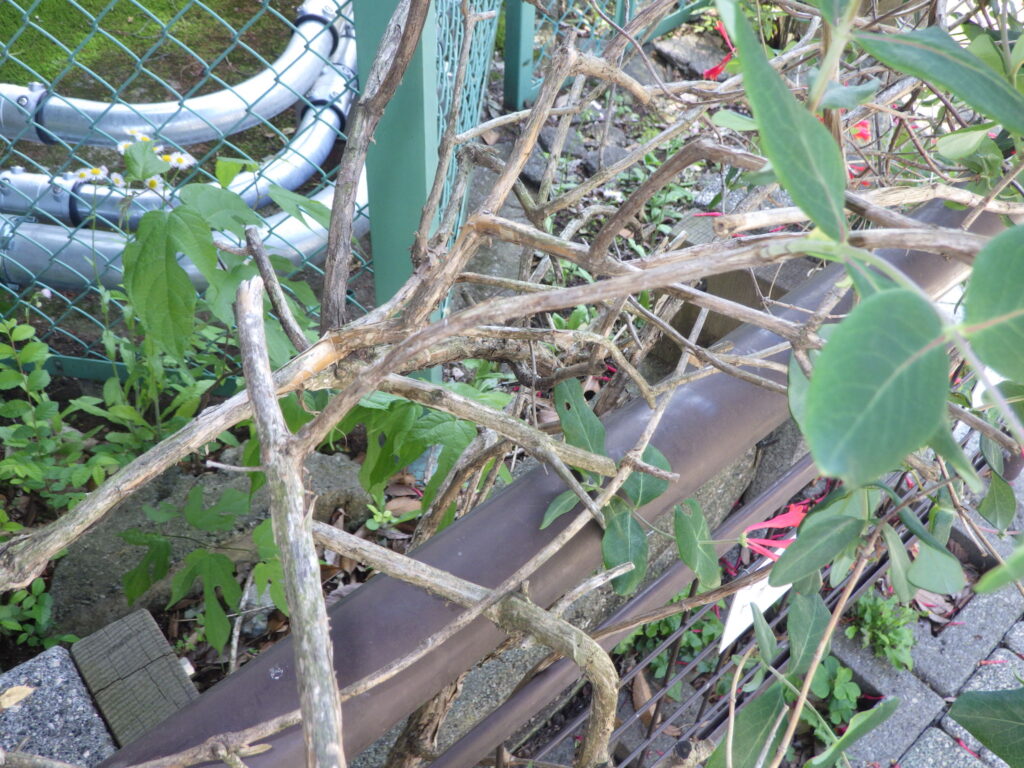
First, these species can be broadly classified into climbing woody plants and upright shrubs (Kanagawa Prefecture Flora Survey Association, 2018). Climbing woody plants, as the name suggests, are species that grow by twining around other plants or objects. Upright shrubs stand on their own, just like normal plants.
The climbing woody plants are honeysuckle, hollyhock, and beach holly, while the upright shrub is the golden holly.
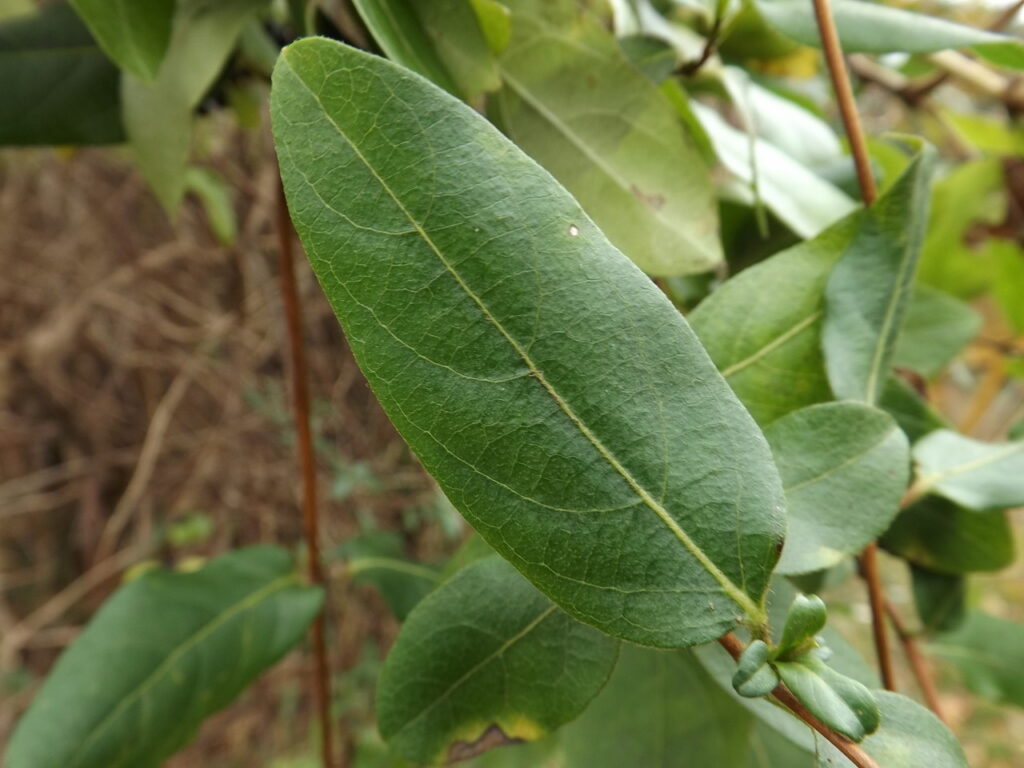
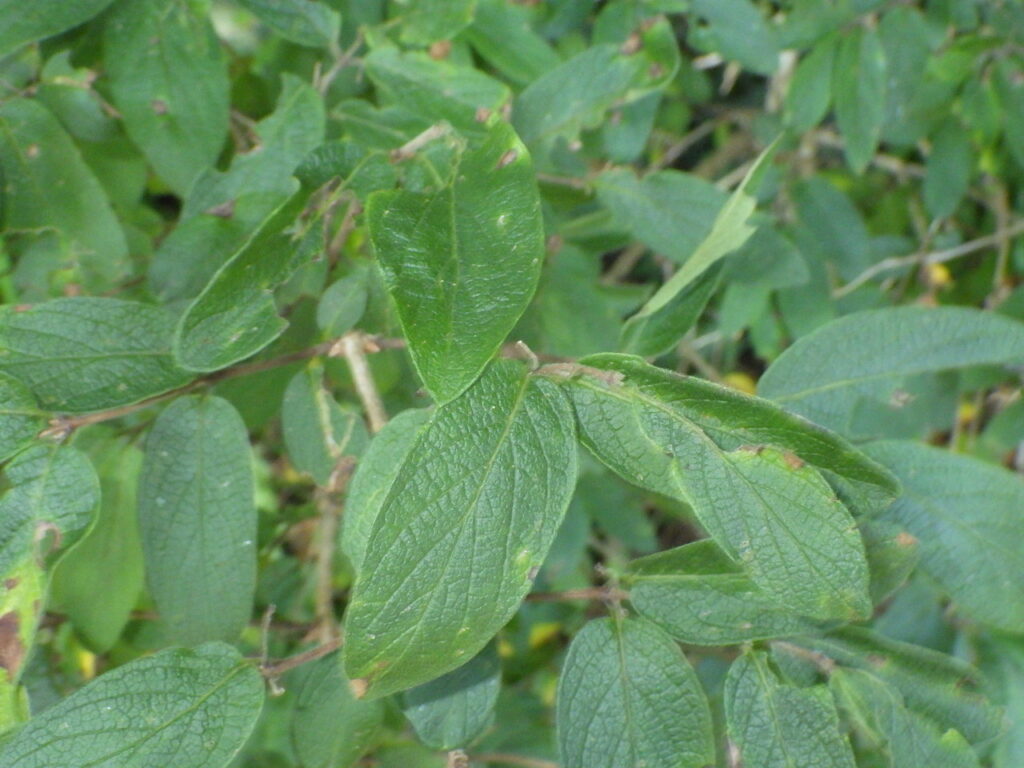
Other distinguishing features include the fact that the corolla of the honeysuckle (Lonicera japonica) is similar to that of the Japanese honeysuckle (Lonicera japonica) and the beach honeysuckle (Lonicera japonica var. japonica), but the anthers of the stamens are considerably longer. Also, the upper surface of the leaves of the honeysuckle (Lonicera japonica var. japonica) is particularly wrinkled.
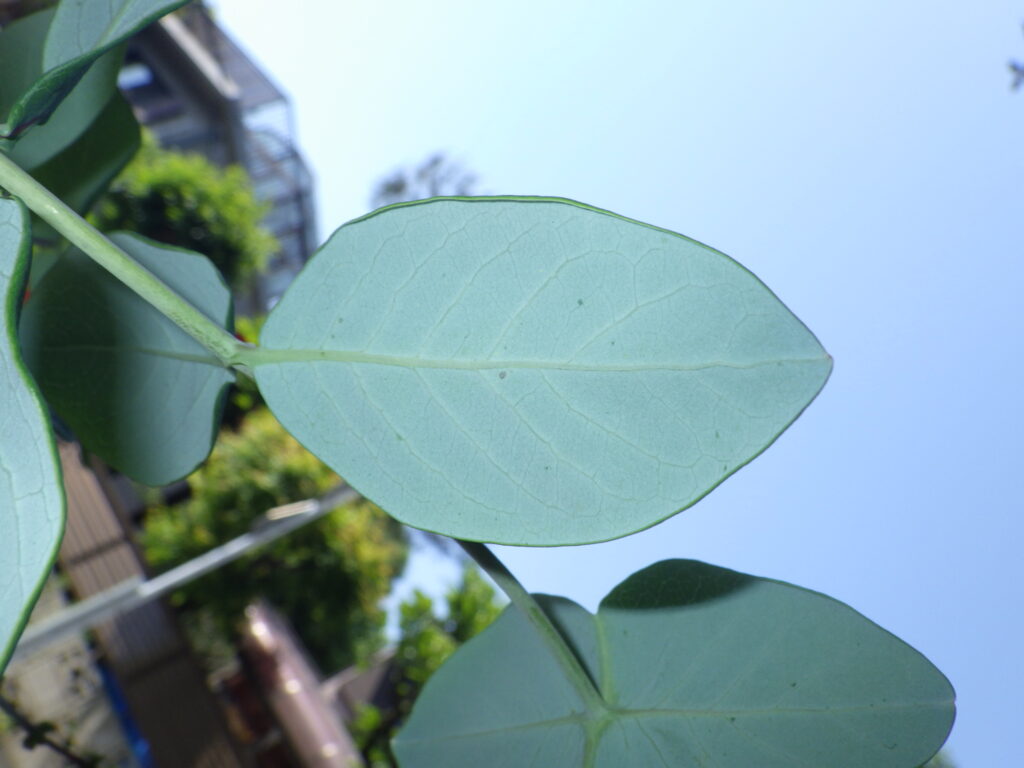
Of the three climbing woody plants, honeysuckle and Japanese honeysuckle have flowers that change from white to yellow, berries that ripen to black, and opposite leaves directly below the inflorescence that are not fused. In contrast, tufted honeysuckle has reddish-orange flowers, berries that ripen to red, and opposite leaves directly below the inflorescence that are fused. Furthermore, the corolla of tufted honeysuckle is tubular, which is completely different from the other two species.
The remaining differences between honeysuckle (Lonicera japonica) and beach linden (Lonicera caerulea) are that honeysuckle has leaf-like, ovate bracts and hairy stems, while beach linden has lanceolate, non-leaf-like bracts and hairless stems. In terms of habitat, honeysuckle grows in mountainous areas and roadsides from the southern tip of Hokkaido to Kyushu, while beach linden grows exclusively in forest edges near the coast from Honshu (Kii Peninsula and Chugoku region) to Okinawa.
Incidentally, it has several alternative names: Suikazura (standard Japanese name) = Honeysuckle (English name) = Nintō (Chinese name).
Also, please note that the standard Japanese name for this plant is *Lonicera gracilis*, which is the same as *Lonicera japonica*.
In addition to these, there are other upright shrubs such as Lonicera gracilis, Lonicera caerulea, Lonicera japonica, and Lonicera sempervirens, but we will omit them here. The name "gourd" in species, including Lonicera gracilis, comes from the fact that two ripe red fruits fuse together to form a gourd shape. This is a good point of identification, but it is important to note that Lonicera gracilis species, which have funnel-shaped, drooping corollas, also have a similar characteristic.
What is the role of the honeysuckle's slender, white, sweet-smelling flowers?
The flowers of the honeysuckle genus are quite polymorphic and belong to closely related groups, yet they exhibit a variety of characteristics.
Broadly speaking, there are those with lip-shaped corollas, like honeysuckle and Lonicera species; those with tubular corollas, like Lonicera japonica; and those with funnel-shaped corollas, like Lonicera gracilipes.
Each has its own evolutionary history, but here we will focus on the flowers of honeysuckle and celery and explain their ecology.
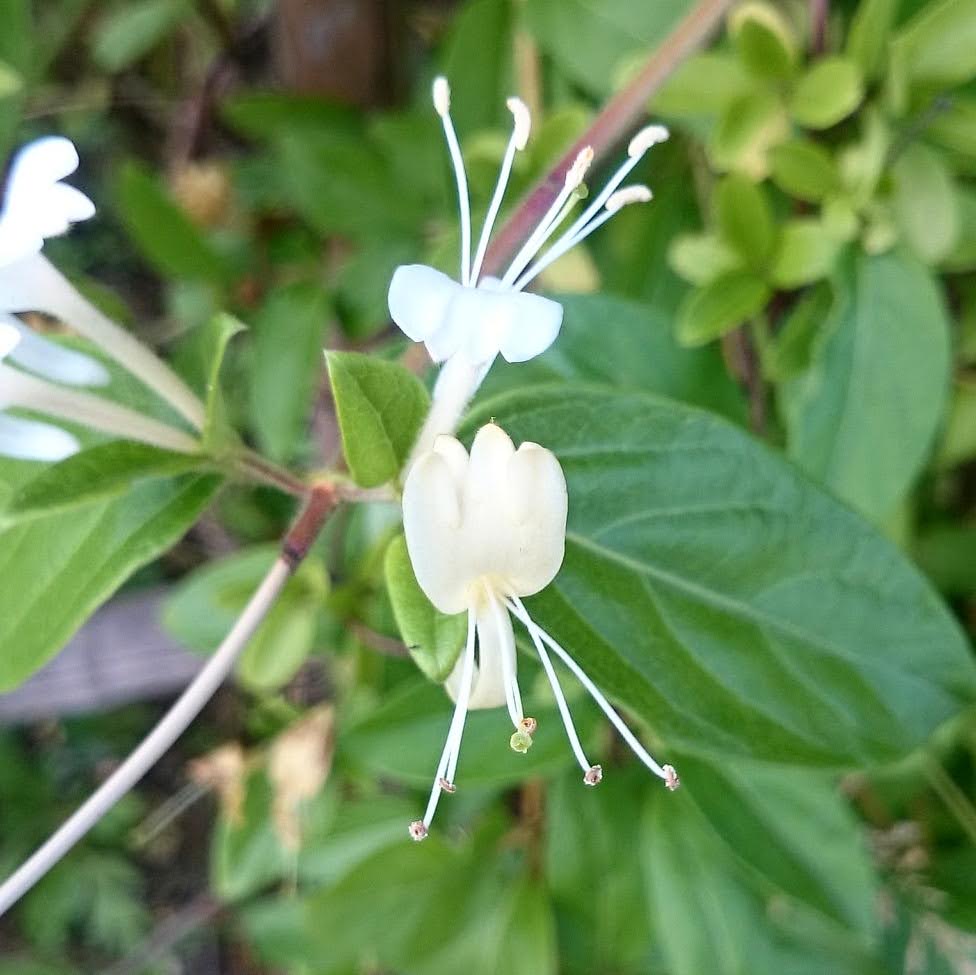
Honeysuckle flowers bloom from May to July. The corollas are initially white, later turning yellow, and simultaneously, white and yellow flowers bloom together on a single branch. They have slender flower tubes and emit a sweet fragrance. The long stamens and pistils, which are easily visible from a distance, may also be a reason for their popularity.
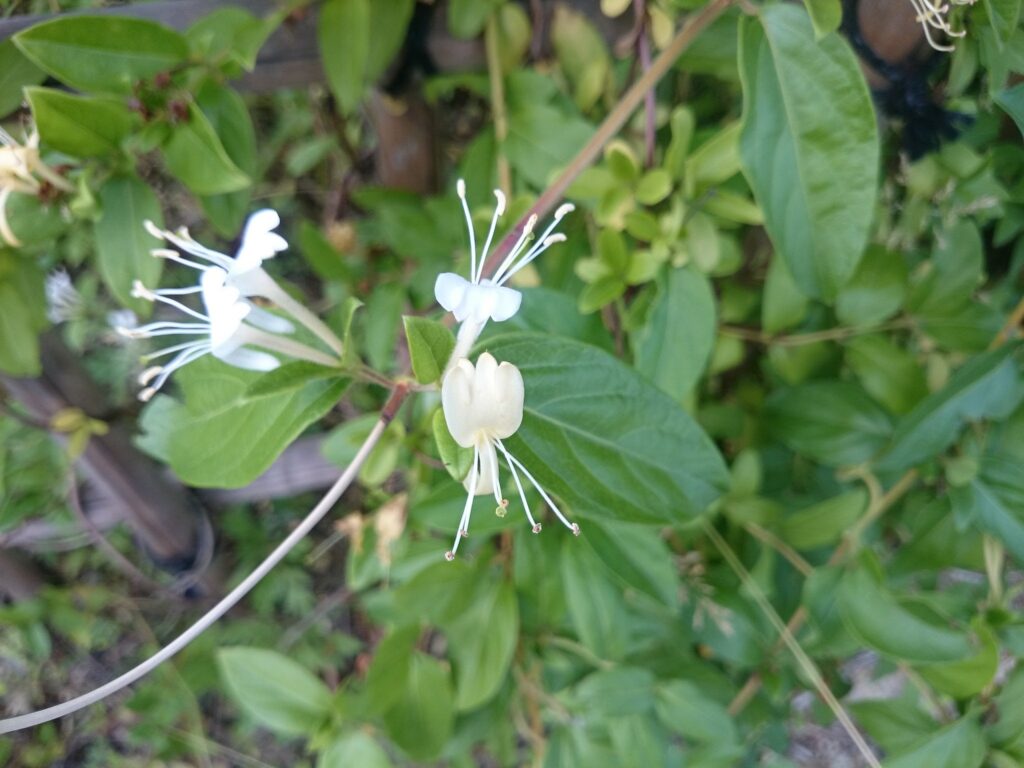
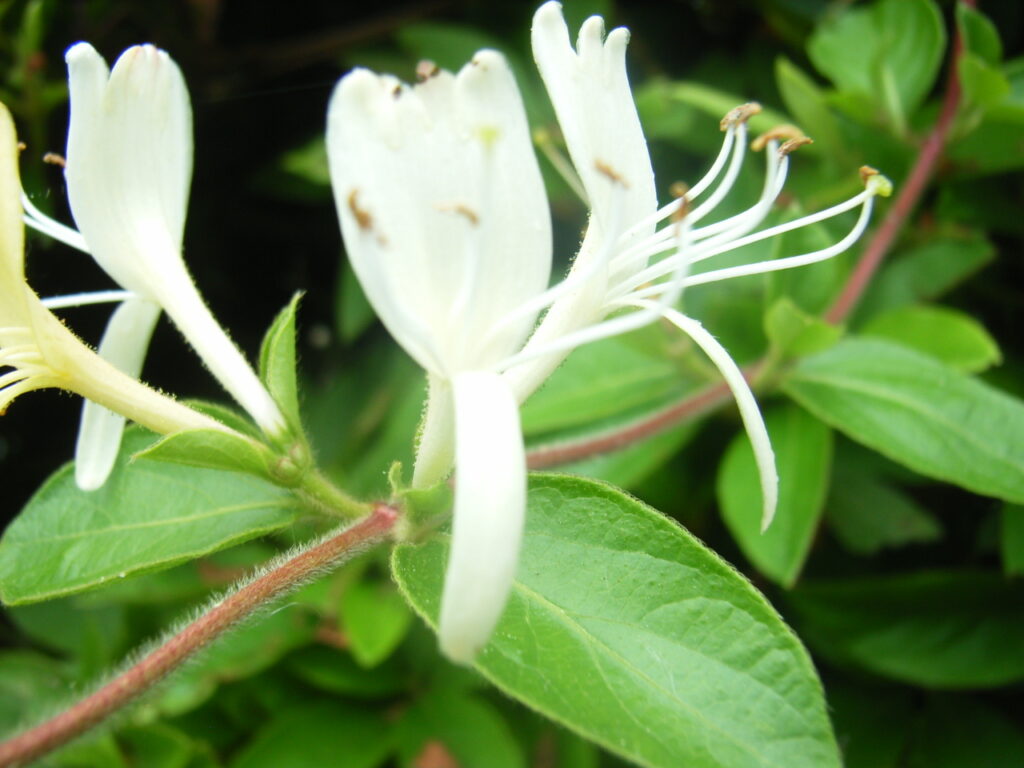
However, it seems quite different from the typical shape of a flower. What role do these kinds of flowers play?
In fact, these characteristics are widely found in flowers whose pollination is carried by nocturnal hawk moths with long mouths, and many studies have shown that hawk moths do indeed visit honeysuckle (Tanaka & Hirano, 2000; Miyake & Yahara, 1998).
The long stamens and pistils, and the T-shaped anthers of the stamens, are thought to be designed to ensure that the nectar can reliably attach to the bodies of hawk moths, which have long mouthparts and try to suck nectar from a distance (Tanaka and Hirano, 2000).
Furthermore, being white and having a sweet scent are common characteristics of flowers that hawk moths prefer. These characteristics of flowers that appeal to specific animals are called "pollination syndrome."
The ecological reason why honeysuckle flowers bloom in the evening
However, this flower's role wasn't limited to just that. It's known that this flower blooms in the evening. If it were only for hawk moths, wouldn't nighttime be sufficient? Why does it bloom in the evening as well?
Research shows that when flowers bloom in the evening, diurnal bees also come to visit. Apparently, bees are more efficient at carrying pollen, so in terms of pollination efficiency, bees are preferred (Miyake & Yahara, 1998). In other words, by simply changing the time of blooming, without the trouble of altering the flower shape which was originally suited to hawk moths, the plant attracts both bees and hawk moths and maximizes pollination.
Furthermore, the morphological feature of the flower, with its upper and lower notches and bilateral symmetry, is thought to be designed to provide bees with a foothold for the stamens and pistils (Tanaka and Hirano, 2000). It could be said that this flower is adapted to both bees and hawk moths.
What is the role of the red, drooping flowers of the honeysuckle?
On the other hand, the shape of the flowers of Lonicera japonica is quite different. It blooms from May to October. The corolla is 4-5 cm long, slender and tubular, with five short lobes at the tip. It is bright red in color, with a yellow or orange interior. It has five stamens and one pistil, both protruding. The flowers usually hang downwards. What role does this flower play?
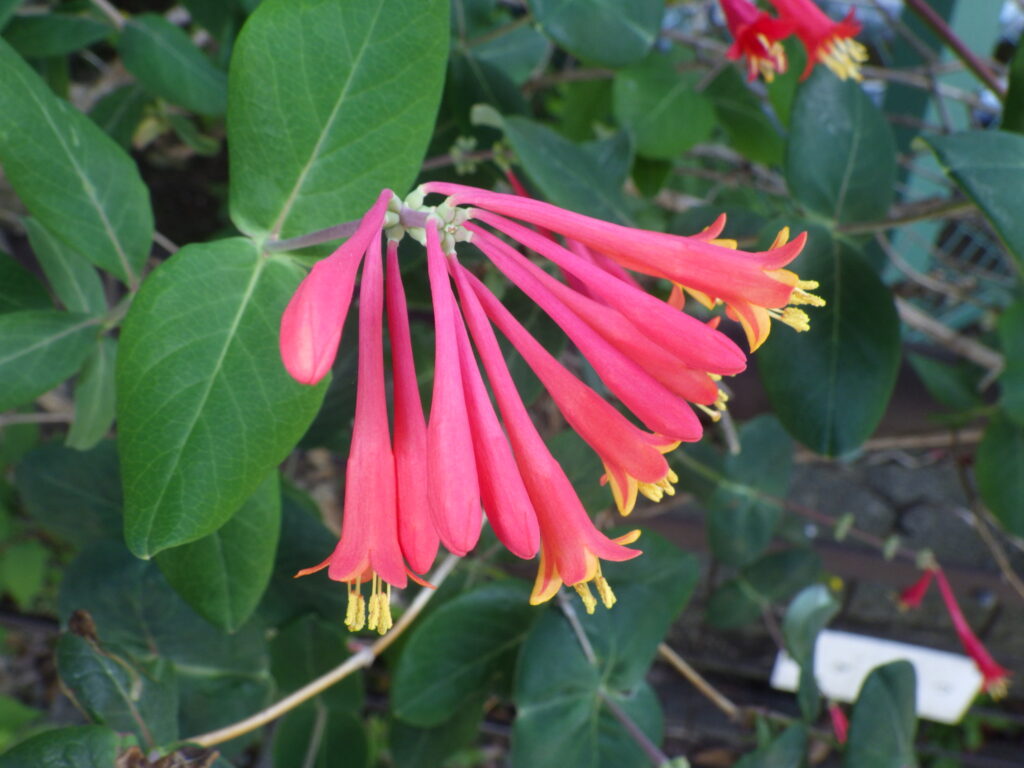
In its native North America, this is explained in detail (Hayden, 2014). According to this, it is an adaptation to a bird called the hummingbird, which is found only on the American continent. Specifically, the red-throated hummingbird is mentioned.
Due to differences in color vision, only a limited number of insect species can see the color red, while birds are strongly attracted to it.
Furthermore, in contrast to honeysuckle, it has almost no scent. It seems that hummingbirds have stopped secreting this scent because they have excellent eyesight but a poor sense of smell.
The flowers secrete abundant nectar because hummingbirds love it. It is thought that the drooping flowers are a way to prevent the nectar from being diluted by rain.
The tubular shape, which is clearly longer than that of honeysuckle, is thought to be a way to counter the length of a hummingbird's tongue.
The hummingbirds, such as the Red-throated Hummingbird, that are lured in this way stick their beaks into the flowers, and the pollen from the stamens touches their collars, cheeks, and chins, which then transfer to the pistils of other plants, completing the pollination process.
The honeysuckle, which targets hawk moths and bees, and the celery honeysuckle, which targets hummingbirds native to North America, represent fascinating examples of contrasting evolutionary outcomes.
The fruit is a berry and the seeds are dispersed by birds.
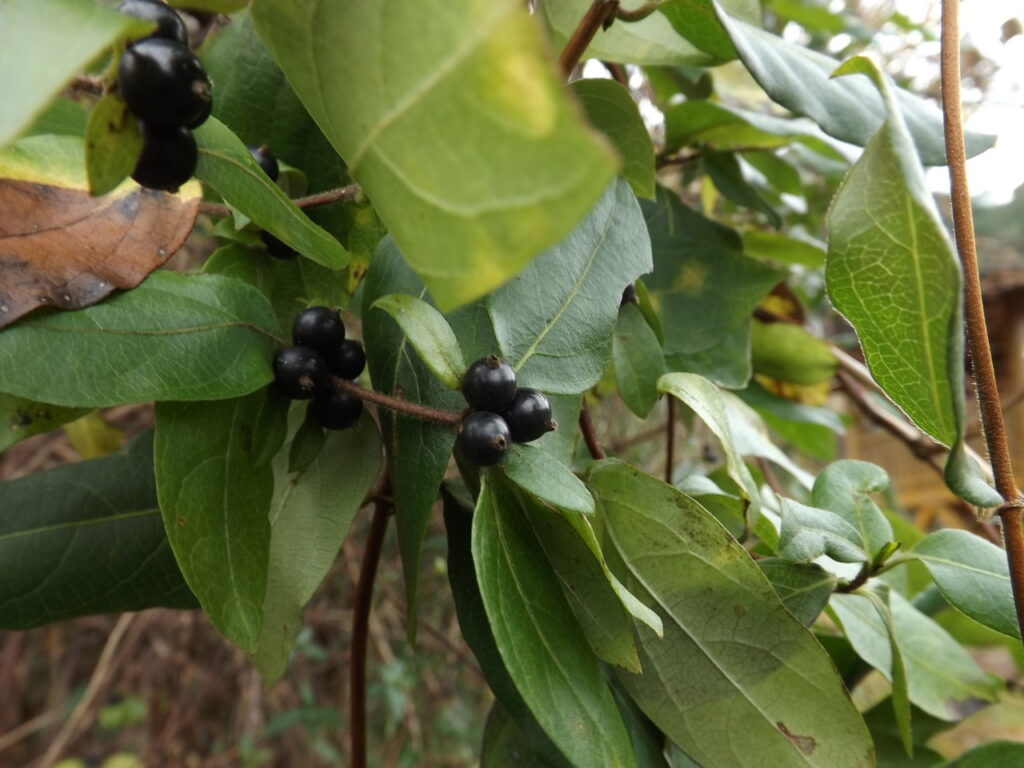
The fruits of the honeysuckle genus are berries and are generally thought to be dispersed by birds.
However, as mentioned earlier, some varieties ripen to black, while others, particularly the berries, ripen to red. Is there a reason for this difference? It seems this hasn't been sufficiently researched yet, but I hope to learn more in the future.
References
Hayden, WJ 2014. Humming Birds: Pollination Facts and Fancy. Bulletin of the Virginia Native Plant Society 33(2): 1,5,8. ISSN: 1085-9632, https://scholarship.richmond.edu/biology-faculty-publications/137/
Kanagawa Prefecture Flora Survey Association. 2018. Kanagawa Prefecture Flora 2018 (Electronic Edition). Kanagawa Prefecture Flora Survey Association, Odawara. 1803pp. ISBN: 9784991053726
Miyake, T., & Yahara, T. 1998. Why does the flower of Lonicera japonica open at dusk?. Canadian Journal of Botany 76(10): 1806-1811. ISSN: 1916-2804, https://doi.org/10.1139/b98-119
Mogi, T., Takahashi, H., Katsuyama, T., & Ishii, E. 2003. Flowers Blooming on Trees: Sympetalous Flowers, Monocotyledons, Gymnosperms. Yama-kei Publishers, Tokyo. 719pp. ISBN: 9784635070058
Tanaka, Hajime & Hirano, Takahisa. 2000. The Face of Flowers: Wisdom for Bearing Fruit. Yama-kei Publishers, Tokyo. 191pp. ISBN: 9784635063043
Source
This article is a significantly expanded version of one included in the following book.