Both Hibiscus mutabilis (Fuyou) and Hibiscus sakishimaensis (Sakishima Fuyou) belong to the Hibiscus genus of the Malvaceae family, producing large, beautiful flowers. When naturalized, both grow in disturbed locations, making them difficult to distinguish. The difference can be made by carefully observing the leaves and stellate hairs. There are also slight differences in flowering period and flower color. Do these subtle differences in flower shape lead to differences in pollination strategies? A study conducted on Hirashima Island in Nagasaki Prefecture, Japan, which examined animals visiting the flowers of both species in the same location, found that many insects visited Hibiscus mutabilis, but because Hibiscus sakishimaensis only blooms in autumn, the number of individuals that could be confirmed was considerably smaller, with only three cases. Unfortunately, the data is insufficient to clarify any clear differences in pollination strategies, but it is possible that Hibiscus sakishimaensis in Kyushu is pollinated by a very small number of insects. The fruit is a capsule, and the seeds are dispersed by wind. This article will explain the classification, pollination ecology, and seed dispersal of Hibiscus mutabilis and Hibiscus sakishimaensis.
- Hibiscus mutabilis is a cultivated variety, while Hibiscus sakishimaensis is a native species from southern regions.
- What are the morphological differences between Hibiscus mutabilis and Hibiscus sakishimaensis?
- Are there any other similar species?
- Are the flower colors and sizes slightly different?
- There are only a few records of insects visiting the flowers of Hibiscus sakishimaensis...
- The fruit is a capsule and the seeds are dispersed by wind.
- References
- Source
Hibiscus mutabilis is a cultivated variety, while Hibiscus sakishimaensis is a native species from southern regions.
Hibiscus mutabilis, also known as the hibiscus flower, is native to central China and has been cultivated worldwide since ancient times, including in its native region. In Japan, it has naturalized in the Izu Peninsula, Kii Peninsula, southern Shikoku, southern Kyushu, and Okinawa (Mogi et al., 2000).
On the other hand, Hibiscus makinoi, also known as Sakishima hibiscus, is distributed from the Goto Islands in Nagasaki Prefecture and Koshikijima Island in Kagoshima Prefecture to the Ryukyu Islands and Taiwan, and is a semi-evergreen shrub that inhabits areas near human settlements (Nakanishi et al., 2007; Liu et al., 2014).
Both belong to the genus Hibiscus in the Malvaceae family and produce large, beautiful flowers. In the wild, both species often grow in disturbed locations such as vacant lots near the coast, roadsides, and abandoned fields (Nakanishi et al., 2007).
Compared to the common hibiscus, the Sakishima hibiscus is a wild species native to southern regions, so you may not have many opportunities to see it.
However, since both can be found south of Kyushu, it can be difficult to determine which is which.
What are the morphological differences between Hibiscus mutabilis and Hibiscus sakishimaensis?
However, there are several differences between these two types (Katanoda and Ohno, 1999).
Basically, the common hibiscus (Hibiscus mutabilis) is originally a cultivated species, while the Sakishima hibiscus is a native species of southern regions. While common hibiscus can become naturalized, as mentioned above, there are differences in the distribution areas of common hibiscus and Sakishima hibiscus, so you can generally assume that any specimens found in Honshu and Shikoku are common hibiscus.
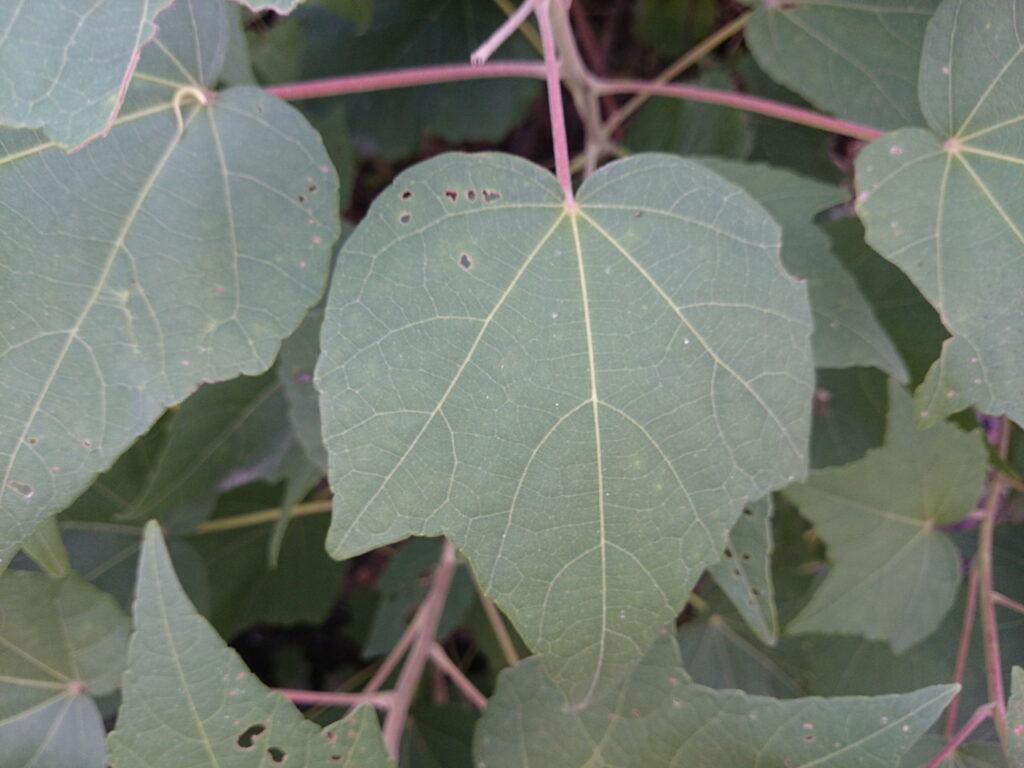
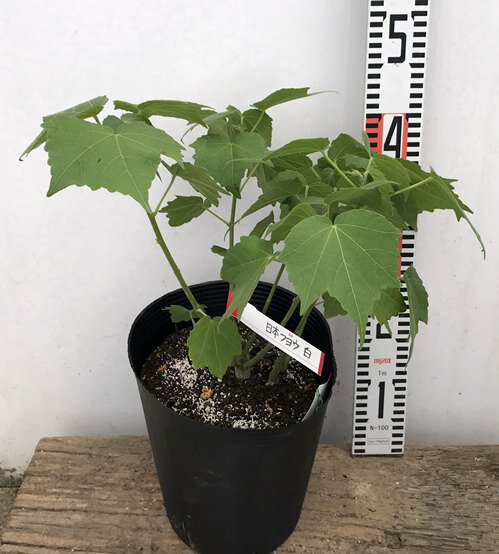
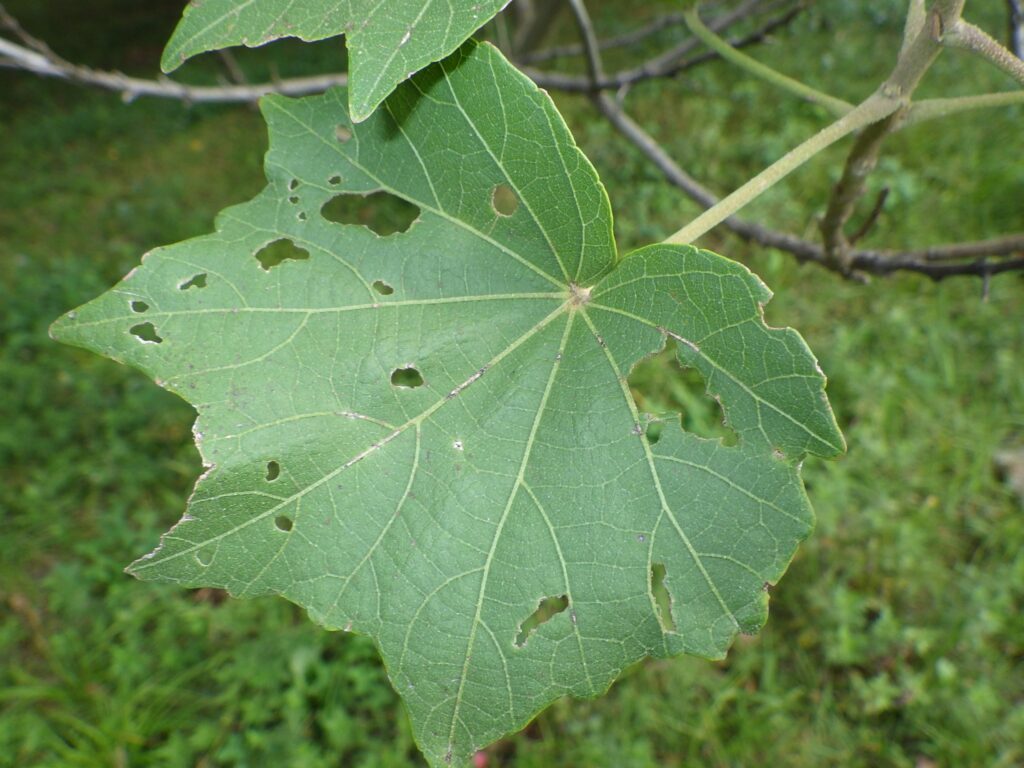
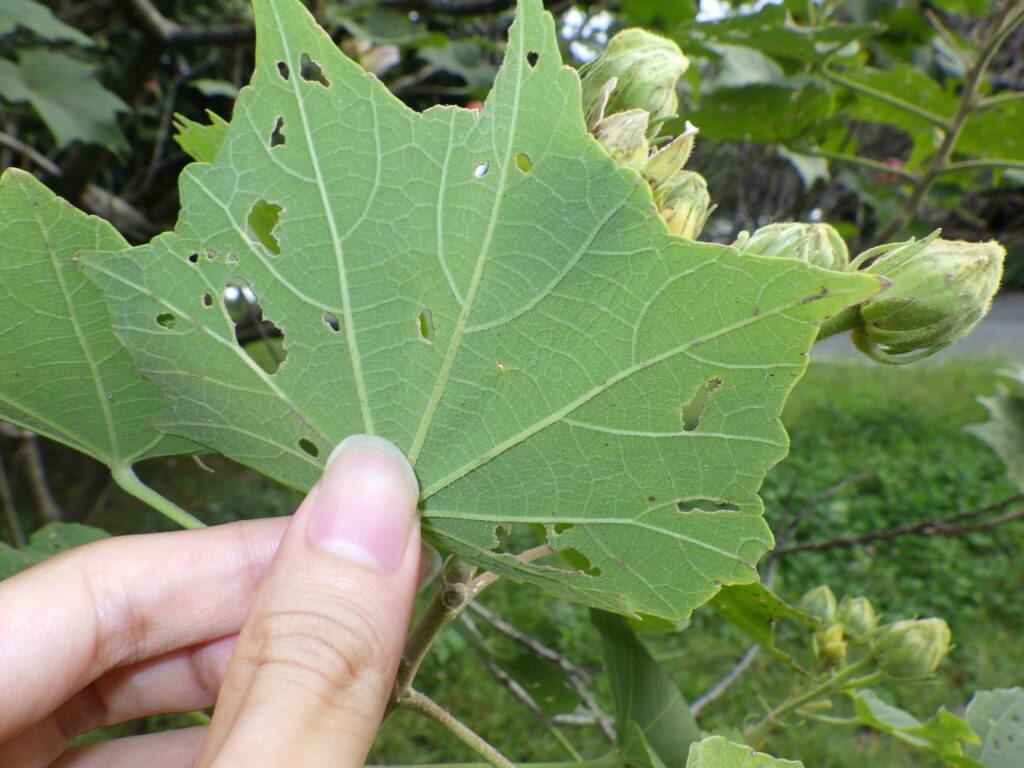
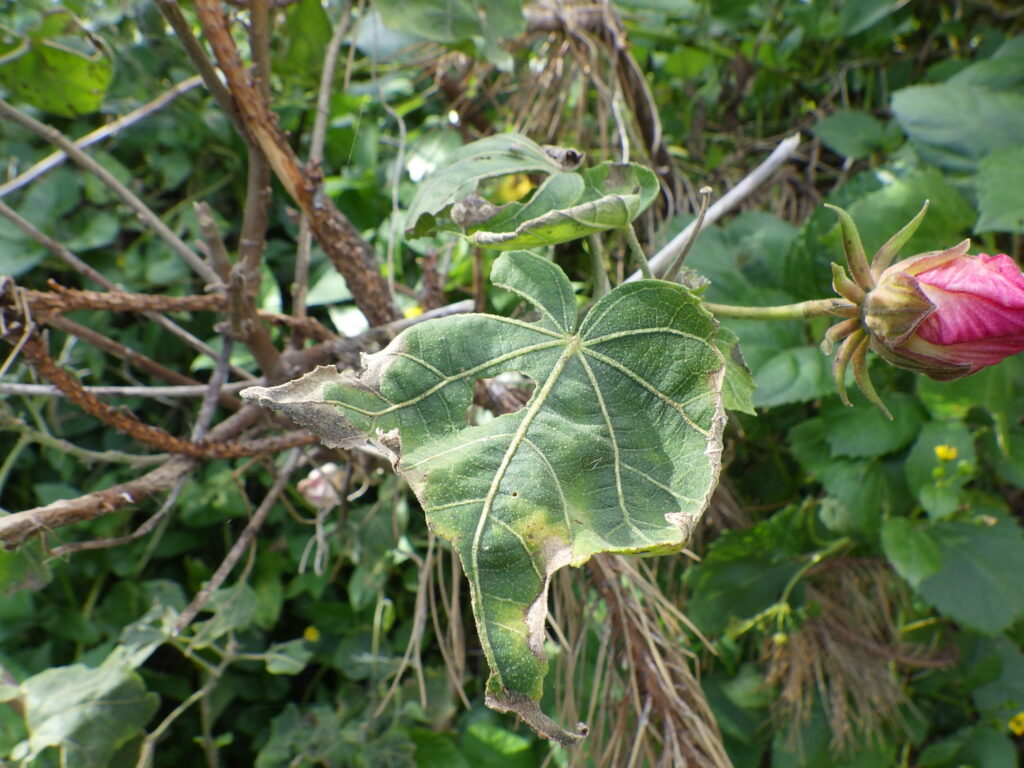
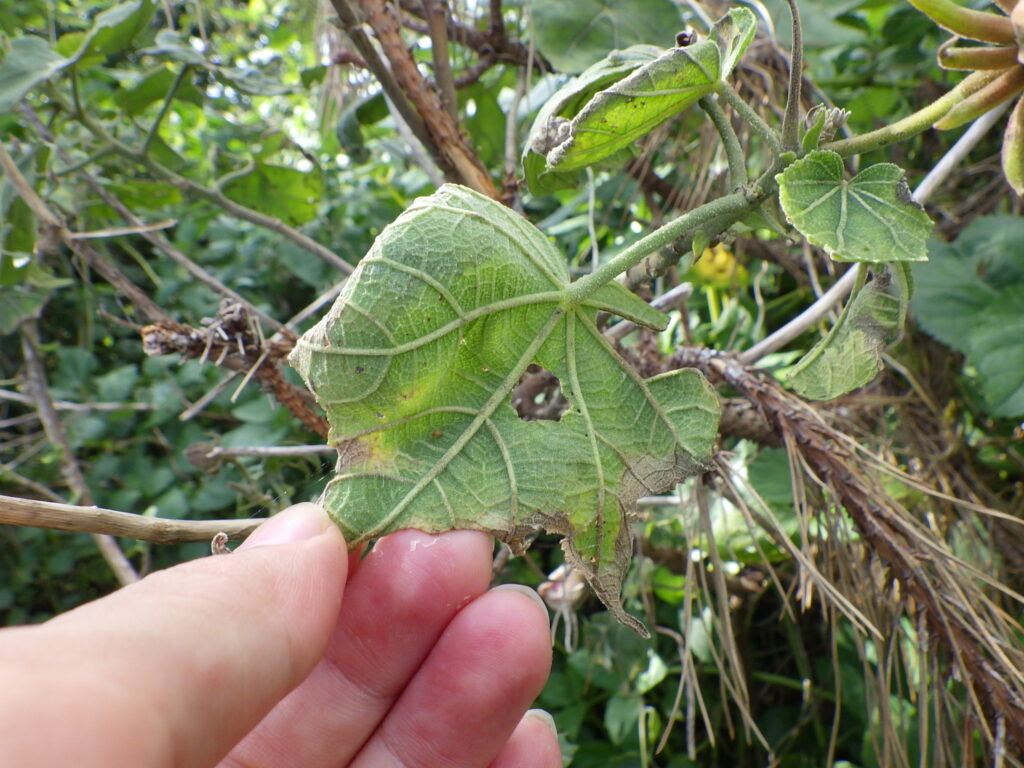
Morphological differences include the leaves. Hibiscus mutabilis has large leaves with pointed lobes and deep incisions, while Hibiscus sakishimaensis has smaller leaves with rounded lobes and shallower incisions. However, there is variation among Hibiscus mutabilis leaves; some have three lobes with less pointed lobes and less developed incisions. This only applies to leaves with five or seven lobes that are well-developed, so please keep that in mind.
Furthermore, regarding the plant itself, in Hibiscus mutabilis, glandular hairs are densely mixed with stellate hairs on young stems, the underside of leaves, veins, sepals, and pedicels, whereas in Hibiscus sakishimaensis, only stellate hairs are densely present, and there are no glandular hairs. Subjectively, Hibiscus sakishimaensis has a rougher texture on its leaves and other parts. This is the most reliable point.
In terms of size, while the common hibiscus (Hibiscus mutabilis) grows to a height of 1-3 meters, the Sakishima hibiscus can reach 2-6 meters in height. Larger specimens are likely to be Sakishima hibiscus.
Based on the above, it takes a little practice, but you can distinguish between the two types.
Are there any other similar species?
In mainland Japan, it closely resembles the rose of Sharon. Please see the separate article for details on the differences.
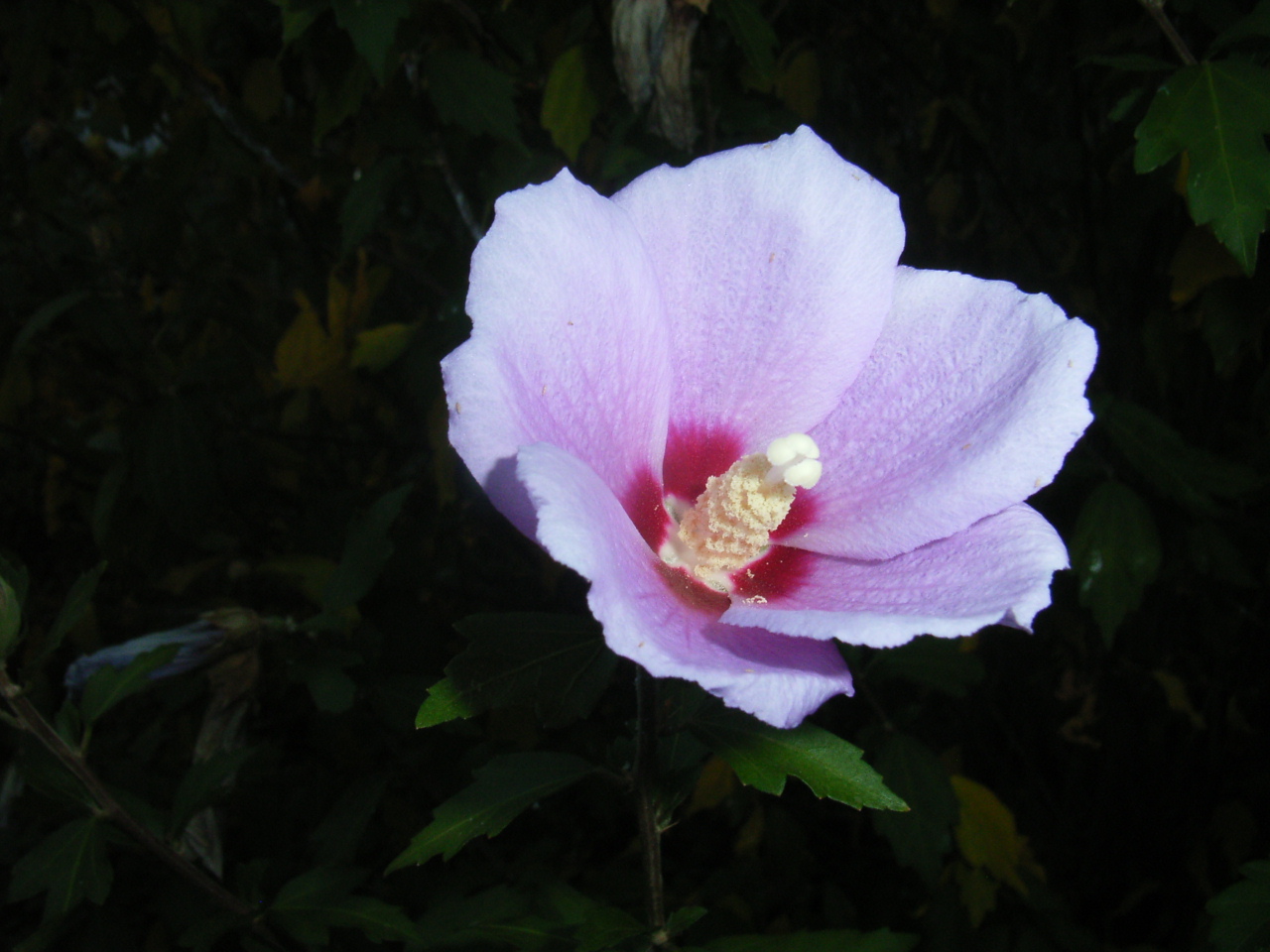
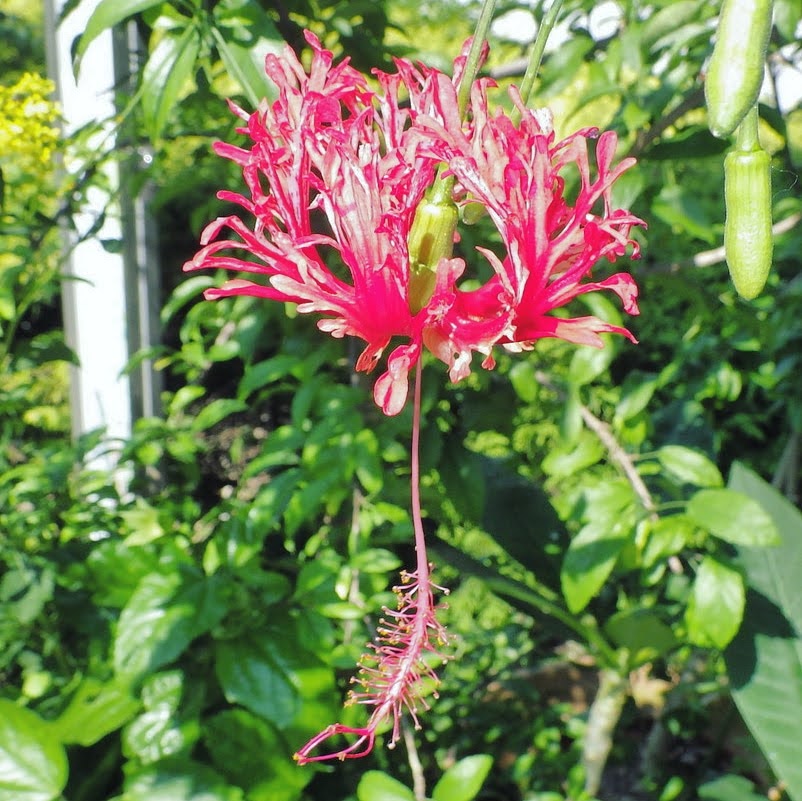
For information on other members of the same Hibiscus genus, please see our separate article.
Are the flower colors and sizes slightly different?
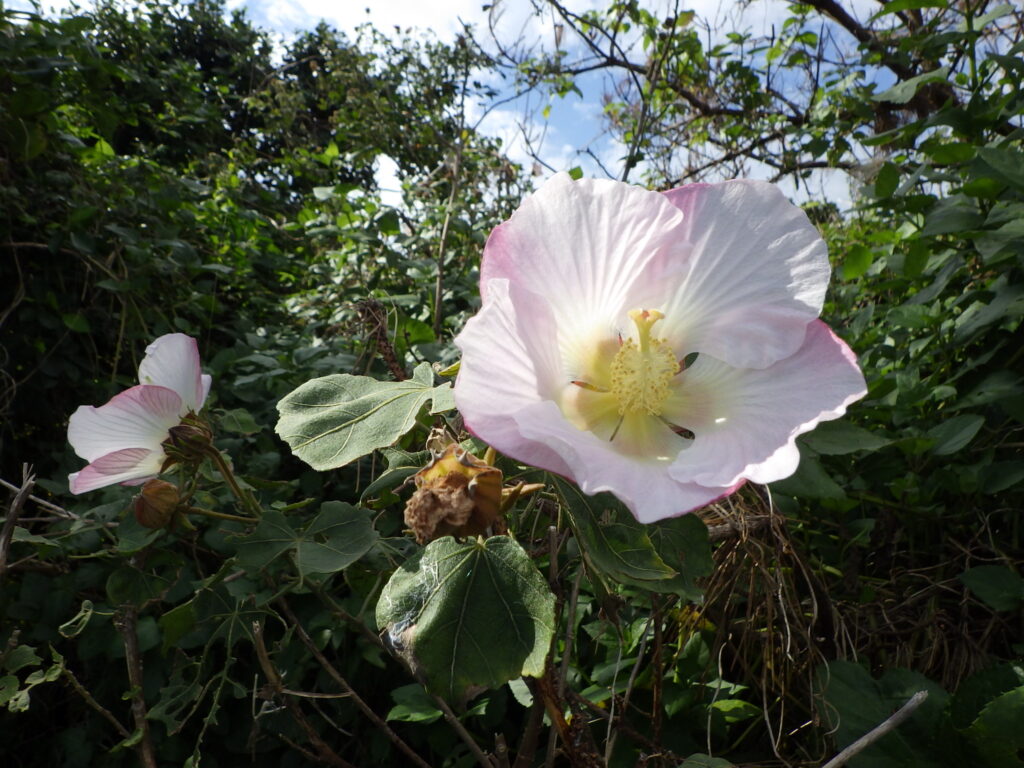
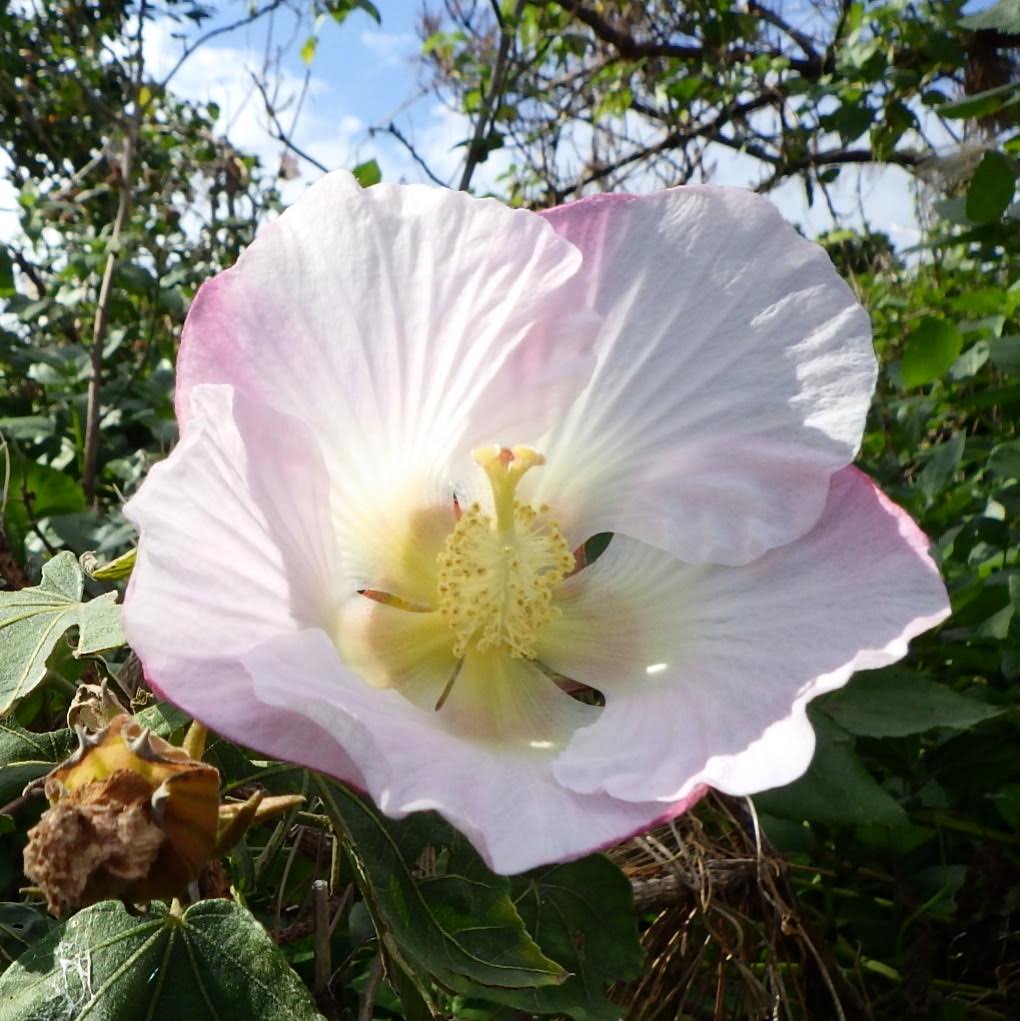
The flowers look very similar, but there are several differences.
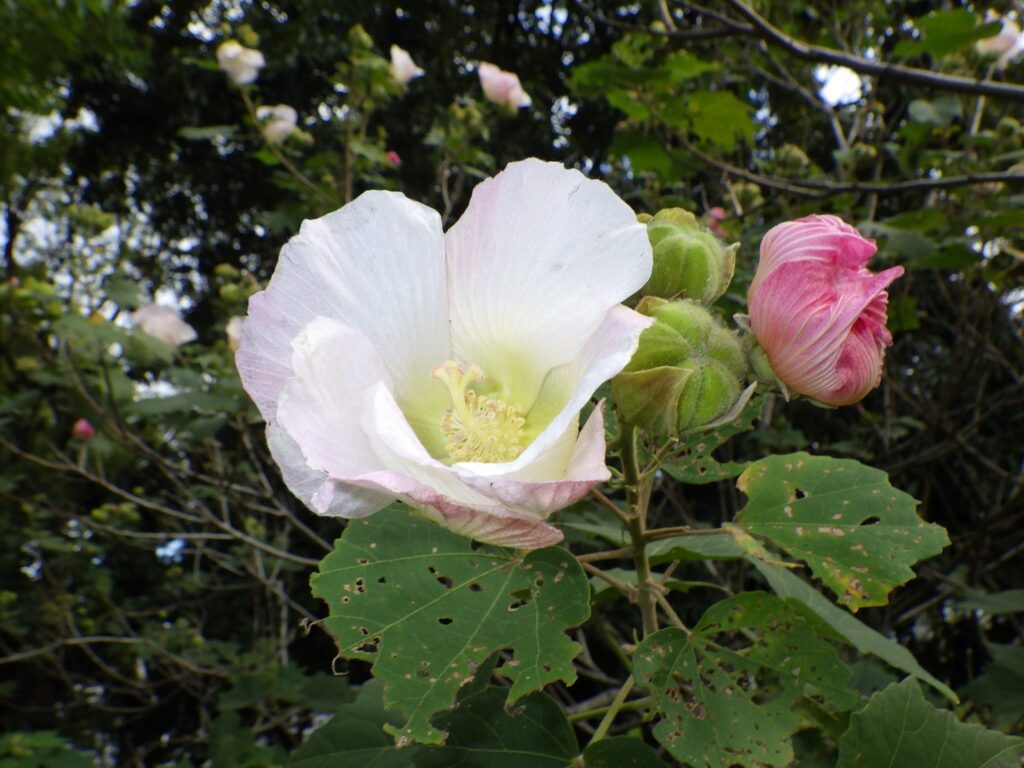
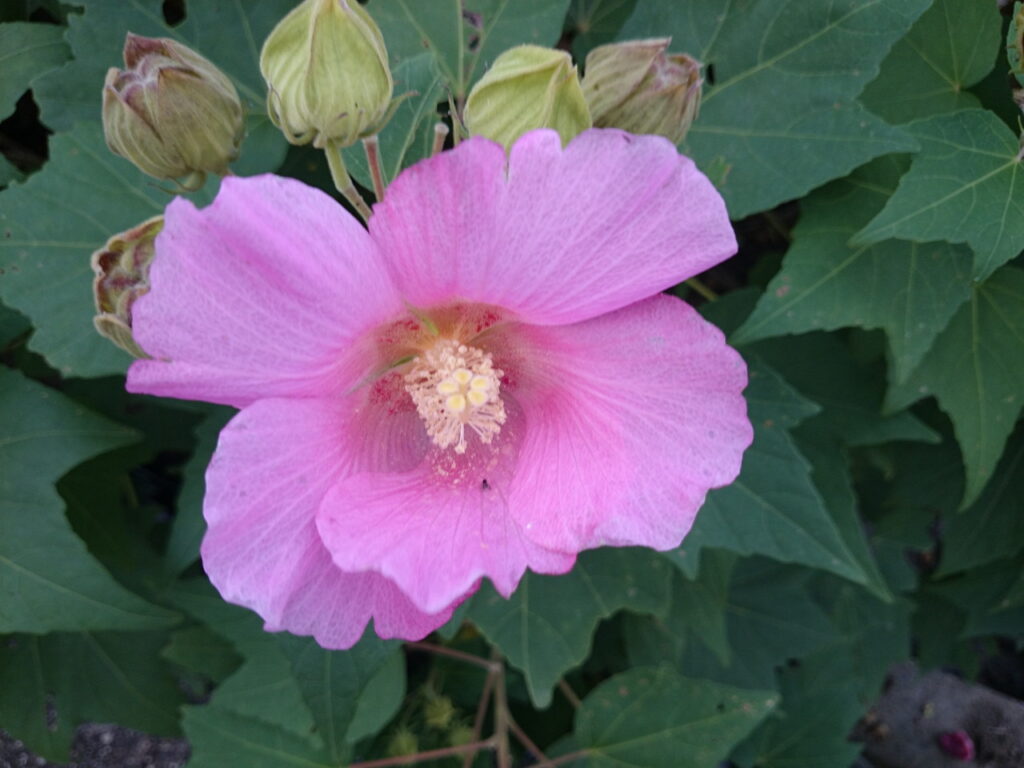
While the flowering period for Hibiscus mutabilis is from July to October (summer to autumn) (Mogi et al., 2000), for Hibiscus sakishimaensis, it is a little later in Nagasaki Prefecture, from late September to mid-November (Nakanishi et al., 2007). However, in the Southwest Islands, it is very long, lasting from September to January, even into winter. The petals of Hibiscus mutabilis are pale pink or white (Mogi et al., 2000), while those of Hibiscus sakishimaensis are often a slightly lighter white to pale pink than those of Hibiscus mutabilis (Nakanishi et al., 2007). Research has also shown that the flowers of Hibiscus sakishimaensis are smaller (Nakanishi et al., 2006).
On the other hand, a common feature of both species is that they both have an indistinct nectar guide (a darker colored area that serves as a marker for insects) in the center of their petals.
Another characteristic is that the pistil penetrates the center of the tubular stamens, and the pistil is positioned above the stamens, thus preventing self-pollination. This is common to the Hibiscus genus. Therefore, cross-pollination is necessary, and pollination by animals is important (Nakanishi et al., 2007).

There are only a few records of insects visiting the flowers of Hibiscus sakishimaensis...
While the two species share some similarities, there are several differences. Do these differences result in differences in the types of animals that visit them?
In a study conducted on Hirashima Island in Nagasaki Prefecture, Japan, which investigated animals visiting flowers in the same location as two species, 57 instances were observed on hibiscus flowers. The most frequent visitor was the hummingbird hawk-moth (Cephonodes hylas), followed by the beetle Oxycetonia jucunda and the butterfly Papilio helenus (Nakanishi et al., 2007). It appears that the species attracts a wide range of larger insects.
On the other hand, there were only three instances of sightings on Hibiscus sakishimaensis, consisting of two butterfly species, Papilio memnon and Parnas guttata, and one species of small bee belonging to the genus Parnassius.
The reason why so few individuals visit the Sakishima hibiscus is thought to be because, unlike the common hibiscus, it only blooms in the autumn. This is because insect activity decreases in the autumn.
However, from the perspective of insect species, although the number is small and there is no definitive proof, it seems that there is not much difference.
Unfortunately, due to a lack of data, it's not possible to determine any clear differences in pollination strategies, but it's possible that the Sakishima hibiscus in Kyushu is pollinated by a very small number of insects.
Further research may reveal that differences in flower color, size, length, and blooming time may contribute to slight variations. Given the limited research on Hibiscus sakishimaensis, this finding is particularly valuable.
This study is based on results from Kyushu, but what will the results be like in the Southwest Islands? Also, it's known that *Hibiscus sakishimaensis* exhibits greater variation in flower morphology and color compared to *Hibiscus mutabilis* (Nakanishi et al., 2006), which may also be a result of some kind of adaptation. Further research is anticipated.
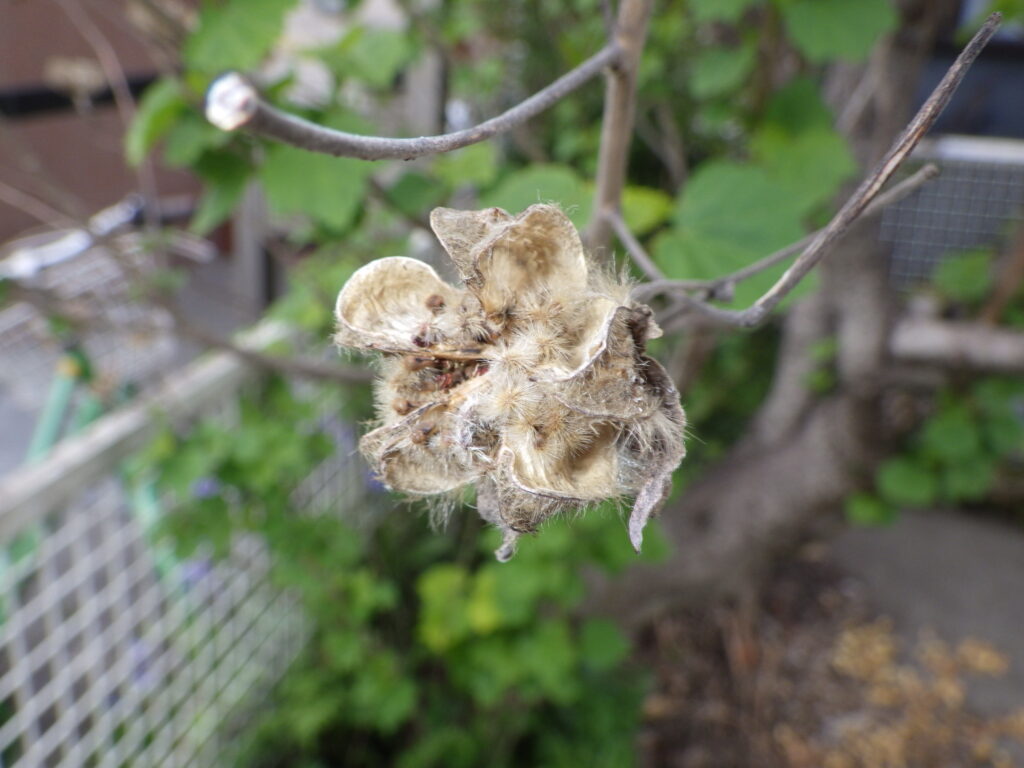
The fruit is a capsule and the seeds are dispersed by wind.
Both fruits are capsules (Kobayashi, 2007).
The capsule is spherical, about 2.5 cm long, in Hibiscus mutabilis, and ovate, 1.7–2.2 cm long, in Hibiscus sakishimaensis. The fruit is divided into five chambers, and in Hibiscus mutabilis, the seeds inside are somewhat flattened and kidney-shaped, about 2 mm long, with long, light brown, coarse hairs on the ridges.
It is thought that these seeds are dispersed by wind using hairs, but due to the size of the hairs and the seeds, the dispersal power is weak and they are not thought to travel very far.
References
Katanoda, Itsuro & Ohno, Teruyoshi. 1999. Wildflowers of the Ryukyu Archipelago from Amami: A Gift from the Sun. Nanpo Shinsha, Kagoshima. 221pp. ISBN: 9784931376212
Kobayashi, Masaaki. 2007. From Flower to Seed: The Science of Seed Dispersal. National Rural Education Association, Tokyo. 247pp. ISBN: 9784881371251
Mogi, Toru; Ota, Kazuo; Katsuyama, Teruo; Takahashi, Hideo; Shirokawa, Shiro; Yoshiyama, Hiroshi; Ishii, Hidemi; Sakio, Hitoshi; and Nakagawa, Shigetoshi. 2000. Flowers Blooming on Trees: Polypetalous Flowers (Vol. 2, 2nd edition). Yama-kei Publishers, Tokyo. 719pp. ISBN: 9784635070041
Okawa, Satoshi & Hayashi, Masayuki. 2016. Nature Guide: Trees of the Ryukyu Islands - An Illustrated Guide to Subtropical Plants of Amami, Okinawa, and Yaeyama. Bun-ichi Sogo Shuppan, Tokyo. 487pp. ISBN: 9784829984024
Nakanishi, Hiroki; Nakanishi, Kozue; and Iwaki, Taro. 2006. Floral traits and variation of Hibiscus sakishimaensis, particularly in comparison with Hibiscus mutabilis. *Phytogeography and Taxonomy* 54(1): 27-33. ISSN: 0388-6212, http://hdl.handle.net/2297/00050043
Nakanishi, Hiroki; Nakanishi, Kozue; and Matsuda, Miki. 2007. Reproductive characteristics of Hibiscus sakishimaensis and Hibiscus mutabilis. *Phytogeography and Taxonomy* 55(2): 85-90. ISSN: 0388-6212, https://doi.org/10.24517/00053367
Source
This article is a significantly expanded version of one included in the following book.