Both Glechoma hederacea and Glechoma hederacea (European Glechoma) belong to the genus Glechoma in the Lamiaceae family. Their names, meaning "through the fence," come from the way their stems creep along the ground and pass through fences. They are characterized by kidney-shaped leaves and labiate flowers with a large opening in the center. Recently, Glechoma hederacea, which is cultivated in horticulture, has been confused with Glechoma hederacea. However, they have different origins and morphological differences, such as the size of the corolla and calyx. They are also sometimes confused with Centella asiatica, Lamium amplexicaule, and Mazus pumilus, but the distinctions are relatively easy. This article will explain the classification and morphology of the genus Glechoma hederacea.
What are Glechoma hederacea and Glechoma hederacea (European Glechoma)?
Glechoma hederacea subsp. grandis, also known as Kakidoshi (fence-piercing grass), is a perennial herb distributed in Japan from Hokkaido to Kyushu, southeastern China, and Taiwan, growing in fields and roadsides (Hayashi et al., 2013; RBG Kew, 2025). In China and the UK, its scientific name is Glechoma grandis.
Glechoma hederacea subsp. hederacea, commonly known as European ground ivy (Glechoma), is a perennial herb distributed in Europe, Russia, and Xinjiang, China, and has been introduced worldwide. It grows in valley meadows. In Japan, it is cultivated as an ornamental plant. In China and the UK, its scientific name is Glechoma hederacea.
Both belong to the genus Glechoma in the Lamiaceae family, and their name, "Kakidoshi" (meaning "through the fence"), comes from the way their stems creep along the ground and pass through hedges.
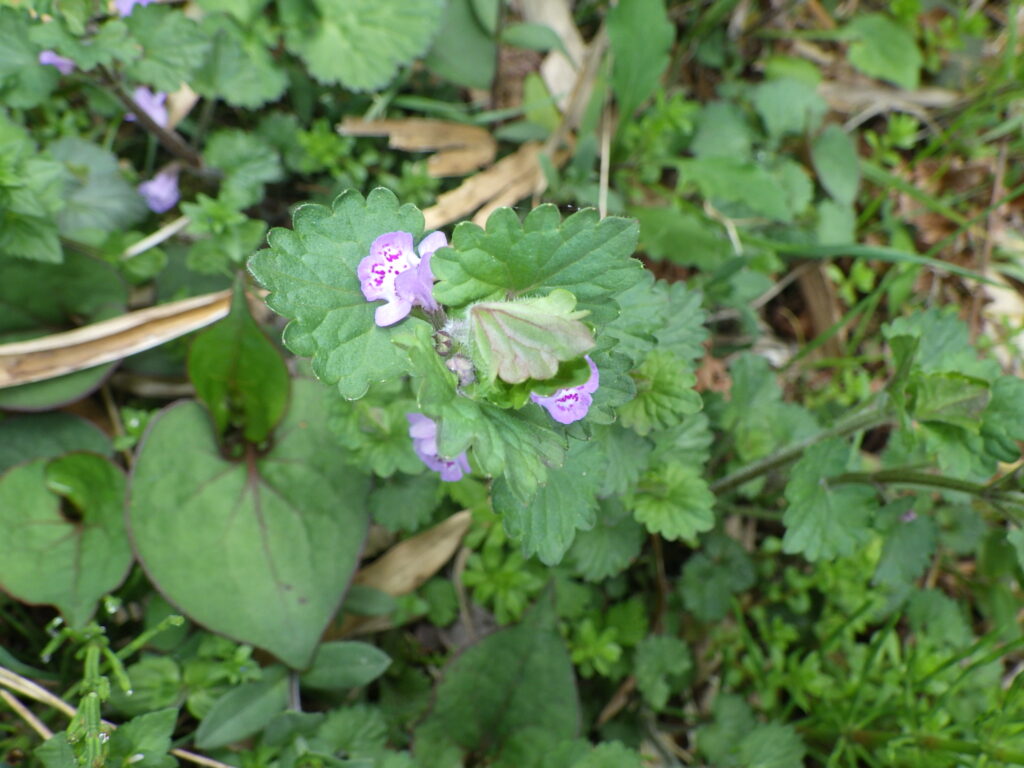
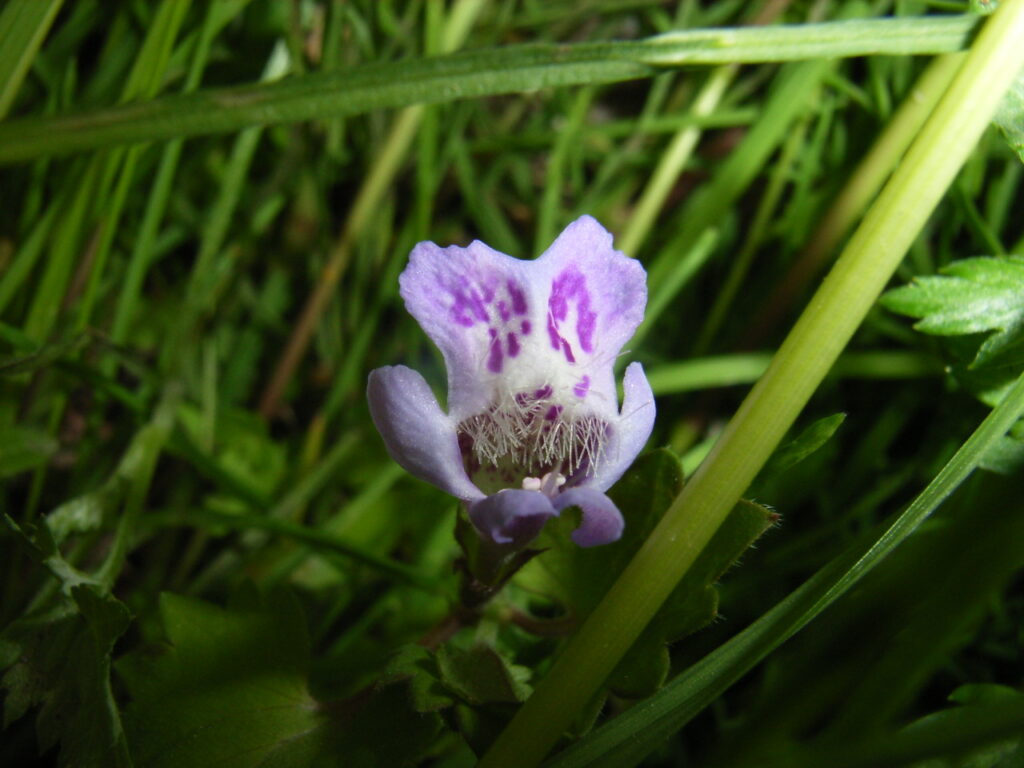
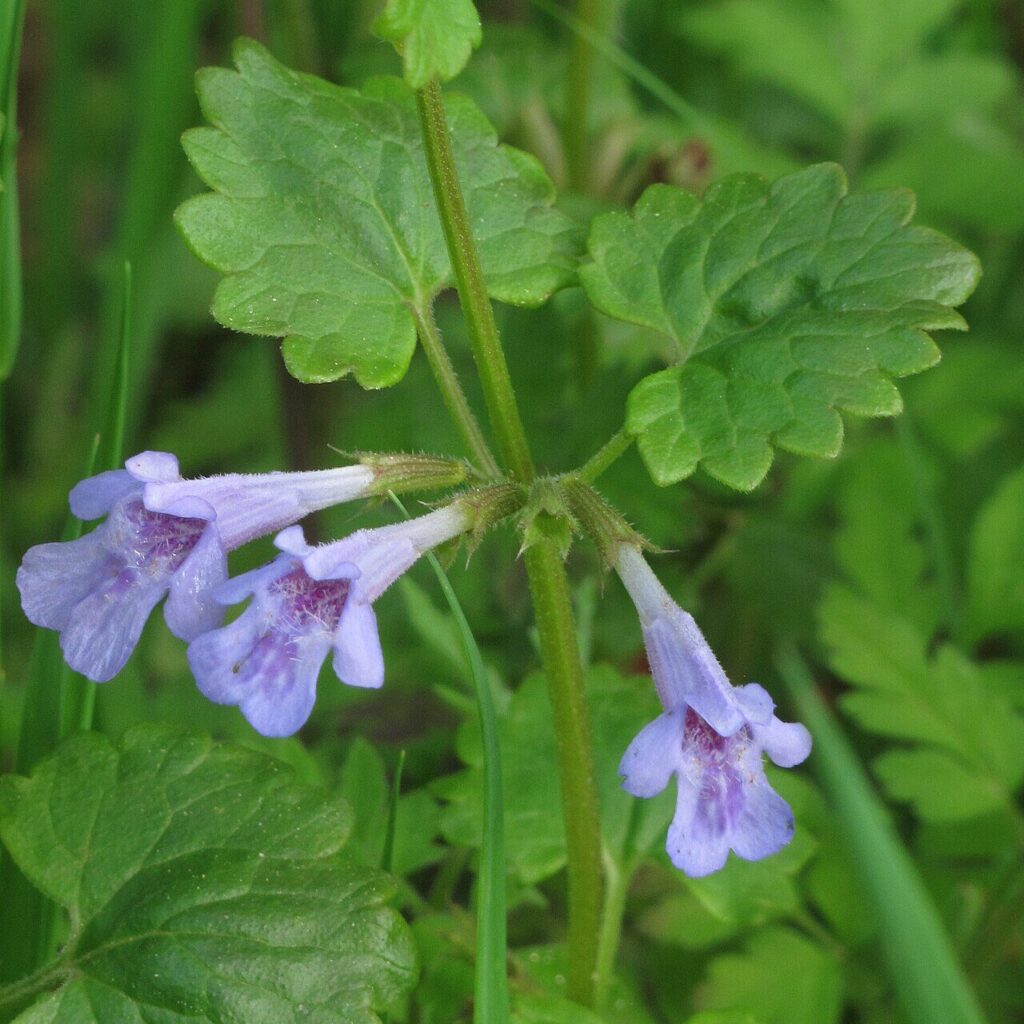
In addition to these features, its kidney-shaped flowers with blunt serrations, the distinctive lip-shaped flowers characteristic of the mint family with a gaping center, a large, protruding lower lip, and white hairs growing on the central side are also unique.
Many people are unaware that the true Glechoma hederacea and the "Glechoma hederacea" cultivated and sold in horticulture under the genus name Glechoma are different subspecies or even different species. The "Glechoma hederacea" currently cultivated in Japan is not a native species.
However, there doesn't seem to be any Japanese website that properly explains how to distinguish between them.
What is the difference between Glechoma hederacea and Glechoma hederacea (European Glechoma hederacea)?
Glechoma hederacea and Glechoma hederacea have different characteristics and are sometimes considered separate species overseas (Wu & Raven, 1994).
As a fundamental point, while Glechoma hederacea grows wild in Japan, Glechoma hederacea does not grow wild, and there is no evidence of it becoming naturalized; it is only cultivated.
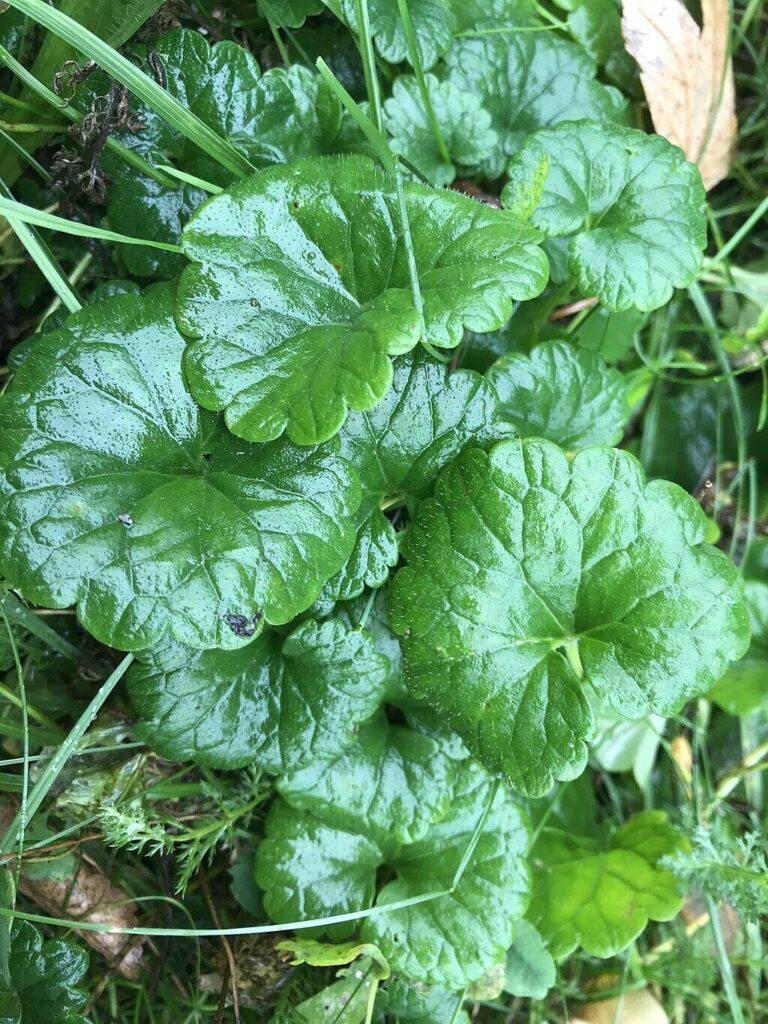
Morphologically, one key difference is that the leaves of Glechoma hederacea are hairy, while those of Glechoma hederacea are hairless.
However, upon actually examining the images, the author found that European ground ivy also has hairs. It's just that European ground ivy has a glossier appearance and lacks the noticeable white hairs of common ground ivy, but that's about the only difference, and it's not entirely clear.
Furthermore, regarding the calyx of the flower, there is a difference in that the sepals of Glechoma hederacea are approximately 7-10 mm long, while those of Glechoma hederacea are 5-7 mm long.
Regarding the corolla of the flowers, there is a difference in size: in Glechoma hederacea, the corolla is large, measuring about 3 cm in length, while in Glechoma hederacea var. japonica, it is small, measuring about 1 cm in length.
Therefore, you will likely get the impression that the flowers of Glechoma hederacea are clearly larger and more conspicuous than those of Glechoma hederacea var. japonica. This is a more obvious difference.
Most variegated seedlings sold in garden centers appear to be European ground ivy (Glechoma hederacea subsp. grandis f. albovariegata). However, there are also variegated varieties of Japanese ground ivy, which are called variegated ground ivy (Glechoma hederacea subsp. grandis f. albovariegata). Those with white flowers are white ground ivy (Glechoma hederacea f. alboflorens).
What are the differences between Glechoma hederacea, Centella asiatica, Lamium amplexicaule, and Mazus pumilus?
The differences between Glechoma hederacea (Kakidōshi) and Lamium amplexicaule (Lamiaceae) , Mazus miquelii (Sudareaceae), and Centella asiatica (Apiaceae) are frequently searched for.
This is likely because *Lamium amplexicaule* and *Centella asiatica* are similar to *Glechoma hederacea* in that they have kidney-shaped leaves, while *Mazus pumilus* is similar to *Glechoma hederacea* in that its flowers are somewhat similar.
However, in terms of classification, they are quite different.
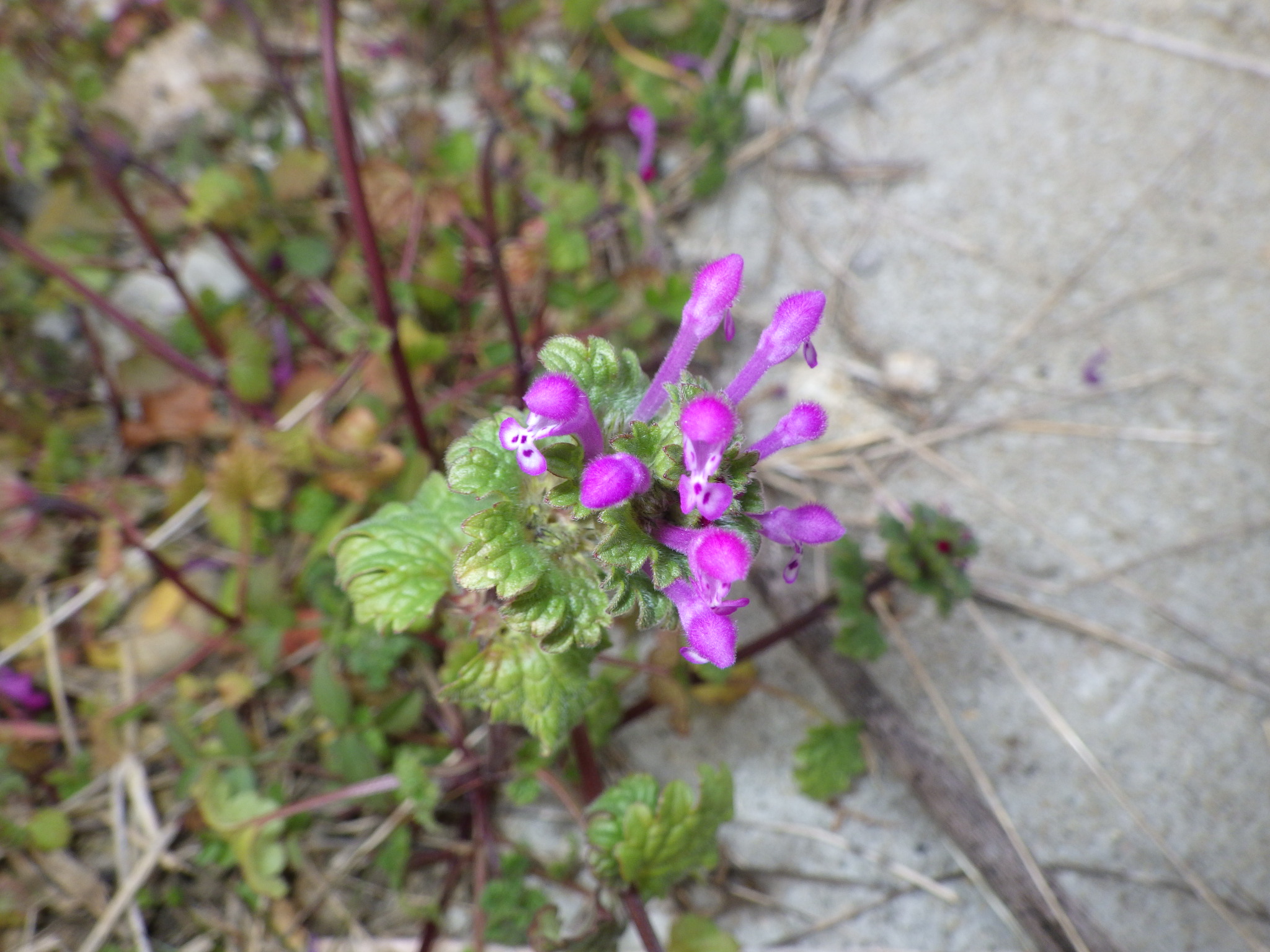
Unlike Glechoma hederacea, Lamium amplexicaule has short petioles on its upper leaves, and its flowers are small and tubular.
Unlike Glechoma hederacea, the lower lip (the lower part of the flower) of the labiate flower of Mazus pumilus is not divided into two but is a single lobe. The leaves are obovate or circular.
Unlike Glechoma hederacea, Centella asiatica has a four-angled stem, coarse short hairs only on the ridges, and lacks glandular dots on the underside of the leaf blade. Its flowers are very small and inconspicuous.
References
Hayashi, Yasaka, Kadota, Yuichi, and Hirano, Takahisa. 2013. Yamakei Handy Illustrated Guide 1: Wildflowers (Revised and Expanded New Edition). Yama-kei Publishers, Tokyo. 664pp. ISBN: 9784635070195
RBG Kew. 2025. The International Plant Names Index and World Checklist of Vascular Plants. Plants of the World Online. http://www.ipni.org and https://powo.science.kew.org/
Wu, ZY, & Raven, PH (Eds.). 1994. Flora of China (Vol. 17 Verbenaceae through Solanaceae). Science Press, Beijing, and Missouri Botanical Garden Press, St. Louis. 342pp. ISBN: 9780915279241