Crape myrtle and Japanese crape myrtle are both commonly planted in Japan and can be seen everywhere, even in urban areas. They are easily distinguishable from other species by their smooth bark, but their morphology is so similar that they are almost always confused. However, they can be distinguished by observing their height and leaf morphology. The sharpness of the leaf tips and the presence or absence of petioles are particularly important distinguishing features. The basic structure of the flowers of crape myrtle and Japanese crape myrtle is the same, consisting of two types of stamens: long, protruding stamens on the outside and short stamens in the center. These two types of stamens are quite distinctive, but various studies have shown that the central stamens are sterile (they do not produce seeds even if pollinated) and have developed as food for insects, while only the outer stamens contribute to pollination. This is a highly advanced adaptation to bees. The fruit is a capsule, and the seeds inside have wings, making it easy to see that they are dispersed by wind. However, it has also been pointed out that the wings swell when they absorb water, allowing for water-based dispersal as well. This article will explain the classification, pollination ecology, and seed dispersal of crape myrtle and Lagerstroemia indica.
- Even monkeys fall from trees? A garden tree native to China with a smooth, glossy trunk.
- What is the difference between crape myrtle and Japanese crape myrtle?
- What is the structure of a crape myrtle flower?
- The crape myrtle had both a decoy stamen and the real stamen!?
- The fruit is a capsule, and the seeds are dispersed by both wind and water currents!?
- References
- Source
Even monkeys fall from trees? A garden tree native to China with a smooth, glossy trunk.
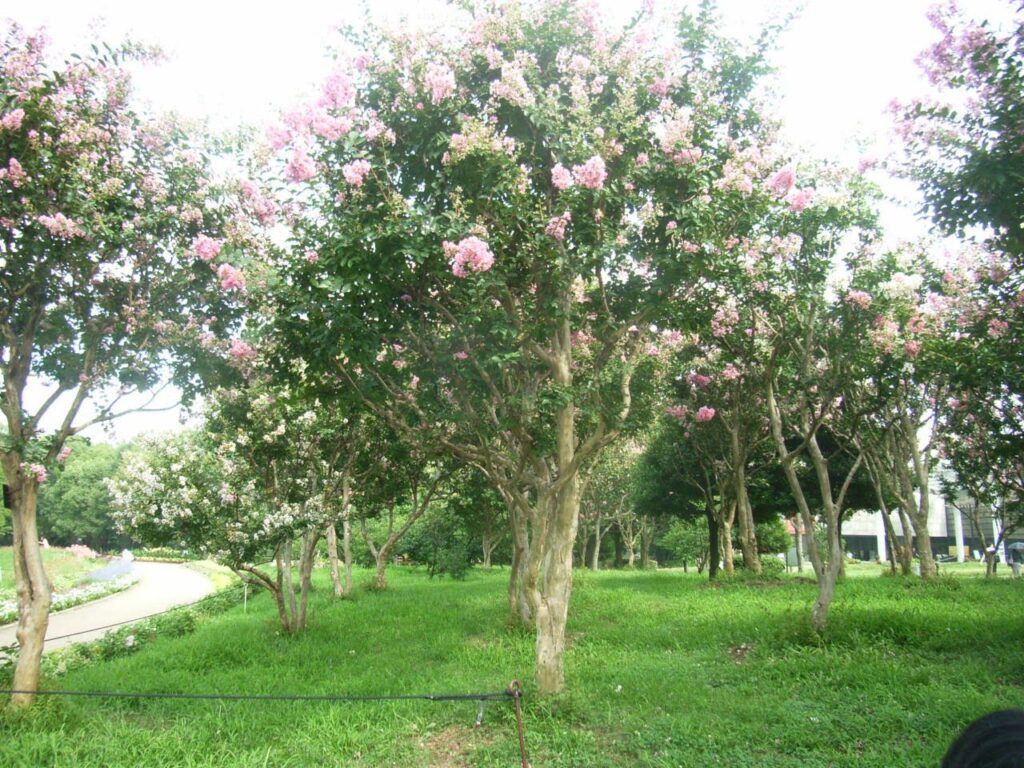
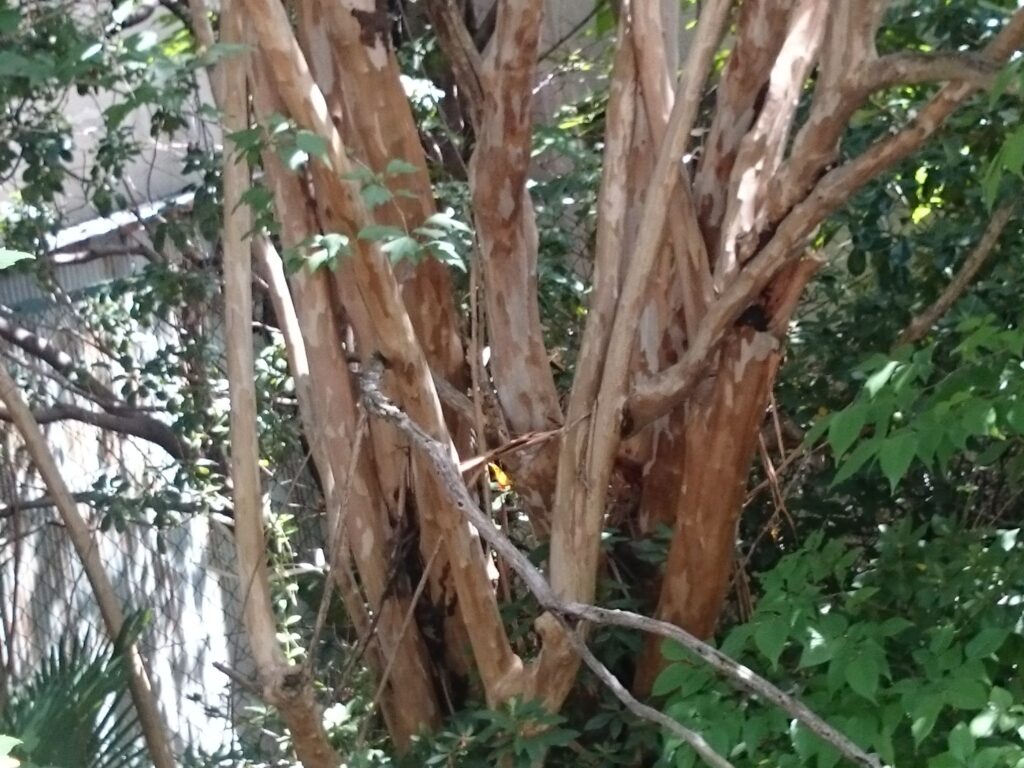
Crape myrtle (Lagerstroemia indica), also known as crape myrtle, is native to southern China and is a deciduous shrub to small tree that grows in partially shaded areas and fertile fields in its native habitat (Mogi et al., 2000; Wu et al., 2007). It is cultivated worldwide and was introduced to Japan before the Edo period, and is widely used as a garden tree, street tree, and park tree. Its Japanese name comes from the fact that its bark peels off in thin layers, revealing a pale-colored trunk, which was said to be so tough that monkeys could not climb it.
Lagerstroemia subcostata, also known as Shima-sarusuberi (broad sense), is a deciduous small to large tree that grows in forest edges and along riverbanks, distributed in China, Taiwan, Japan (Yakushima, Tanegashima, Amami Oshima, Okinawa), and the Philippines (Wu et al., 2007). In mainland Japan, it is rarely used as a park tree or garden tree. Shima-sarusuberi (broad sense) is divided into Shima-sarusuberi (narrow sense) Lagerstroemia subcostata var. subcostata and Yakushima-sarusuberi Lagerstroemia subcostata var. fauriei.
Both belong to the genus Lagerstroemia in the family Lythraceae, and both are sometimes cultivated in Japan. They are easy to distinguish from other species by their bark, but their morphology is so similar that they are almost always confused. In both cases, the corky layer of the bark peels off, leaving the bark smooth, and the shape of the flowers is also almost identical. The leaf arrangement is the type of leopard planting where two leaves are arranged alternately on each side of the branch, and they often appear opposite, which is another common feature.
What is the difference between crape myrtle and Japanese crape myrtle?
While it is indeed a little difficult to distinguish between crape myrtle and Japanese crape myrtle (in the broad sense), they can be differentiated by observing their height and leaf morphology (Hayashi, 2014).
Crape myrtle trees are relatively short, reaching a height of 2 to 10 meters, and their leaves are mostly blunt-tipped, with only a few being slightly pointed. In contrast, Japanese crape myrtle (in the broad sense) is taller, reaching a height of 10 to 20 meters, and its leaves are long and sharply pointed.
Furthermore, what I find most interesting is the petiole. In crape myrtle, the petiole is only 0-1 mm long, practically nonexistent, whereas in crape myrtle (in the broad sense), it is 2-5 mm long, which is shorter but clearly visible.
Regarding flower color, the wild crape myrtle has reddish-purple flowers, but most of the Lagerstroemia indica (broadly defined) found in Japan are said to be white. However, there is a white-flowered variety of crape myrtle called Lagerstroemia indica 'Alba', and it is said that there is variation in Lagerstroemia indica (broadly defined) outside of Japan, so it is best not to use color as the basis for identification and to check the leaves instead.
The difference between Lagerstroemia indica (in the narrow sense) and Lagerstroemia yakushimaensis is that Lagerstroemia indica (in the narrow sense) is distributed in Okinawa, has thick leaves and many hairs on its branches, while Lagerstroemia yakushimaensis is distributed on Yakushima, Tanegashima, and Amami Oshima, has long, narrow leaves and fewer hairs on its branches.
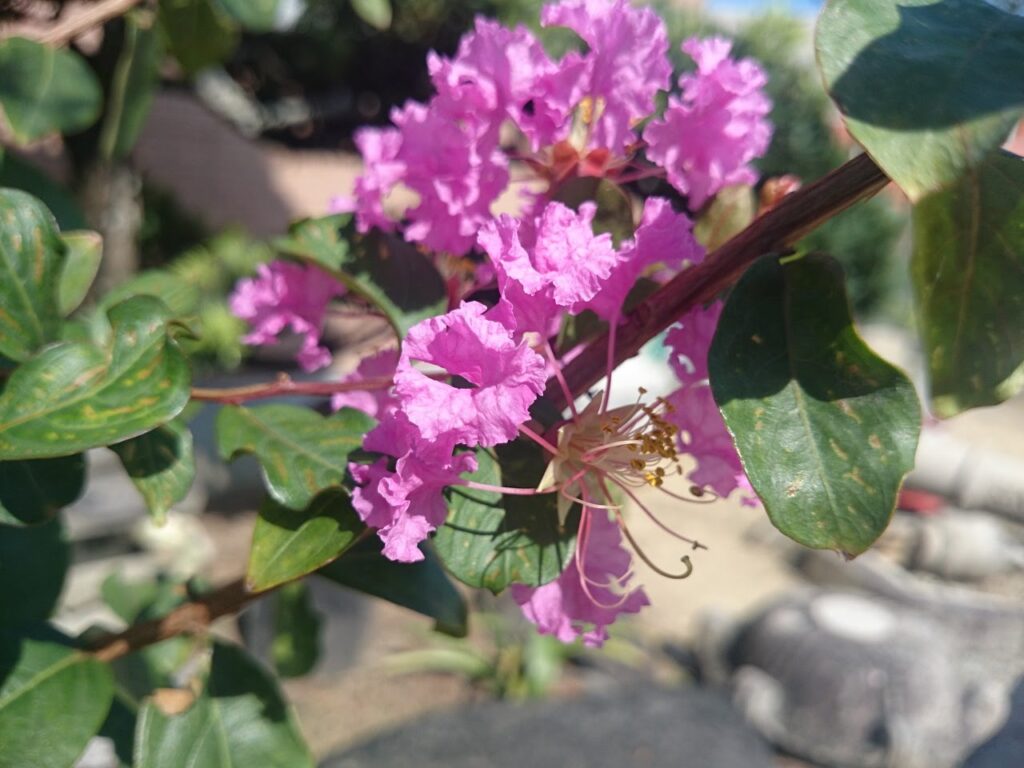
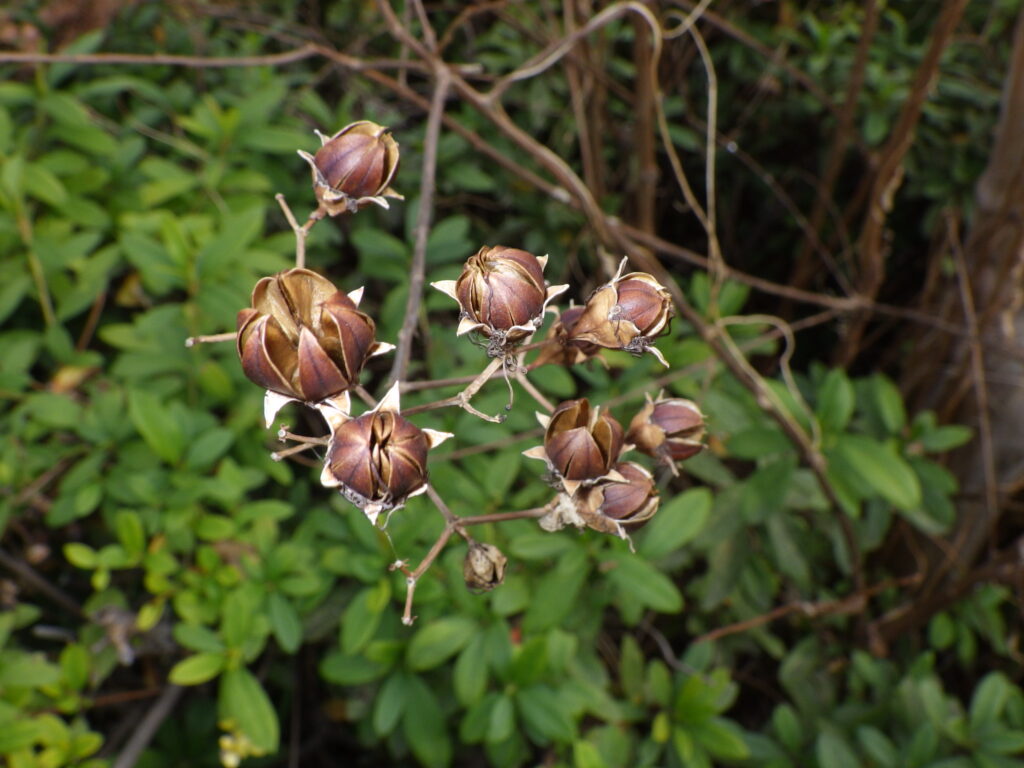
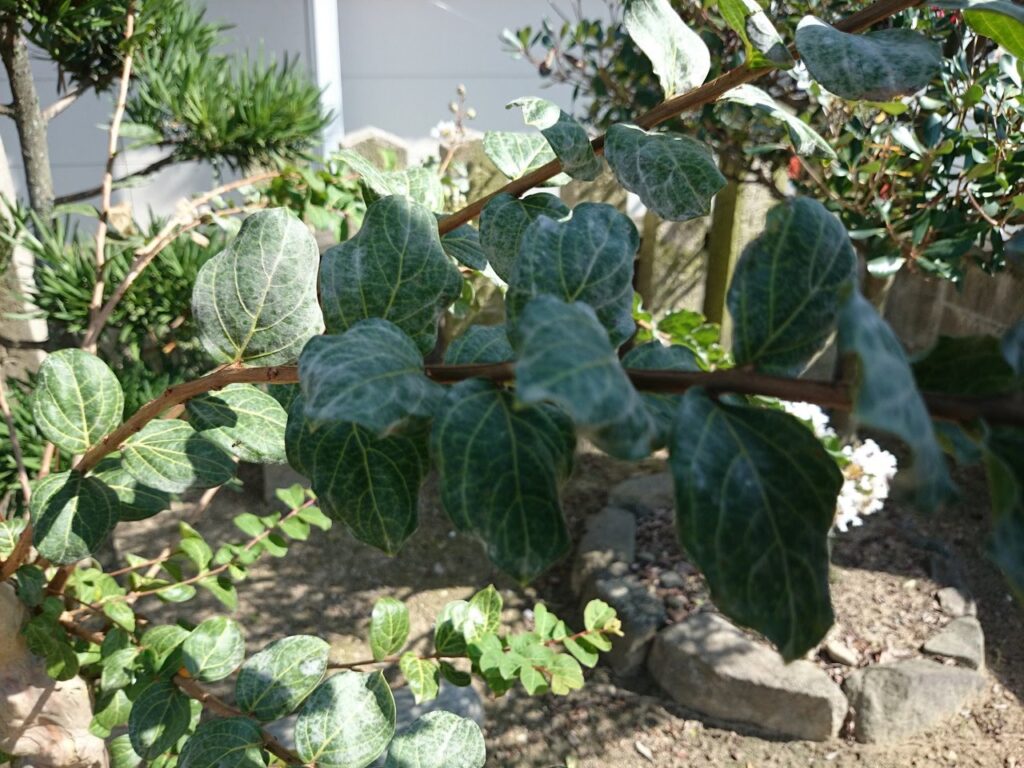
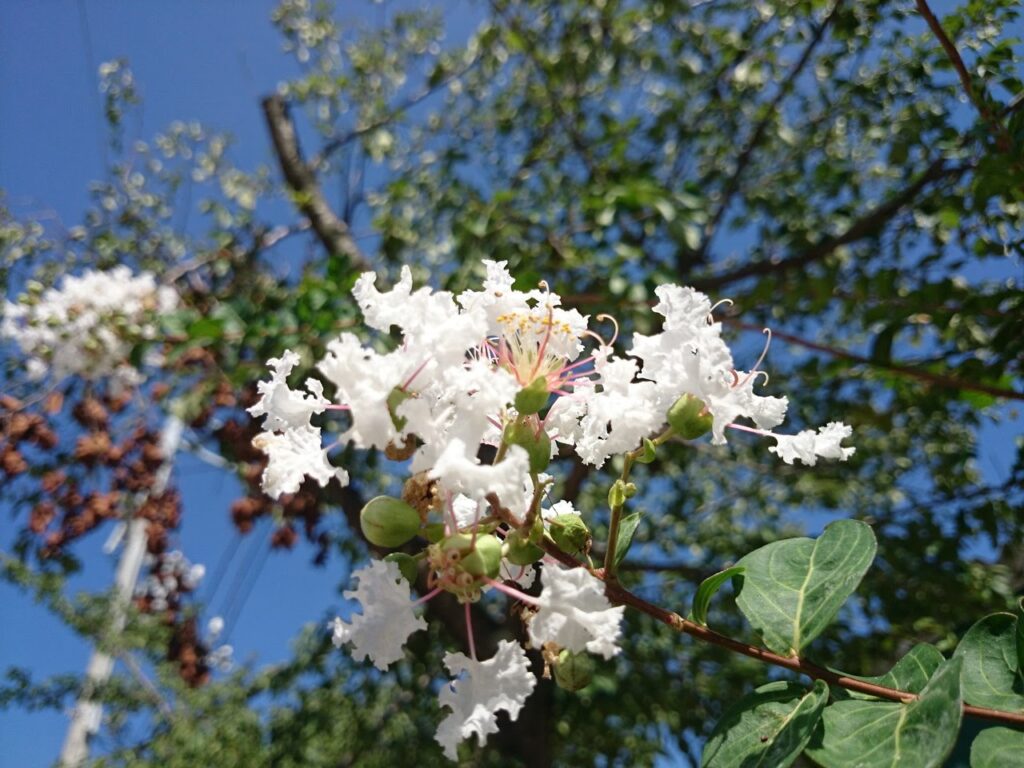
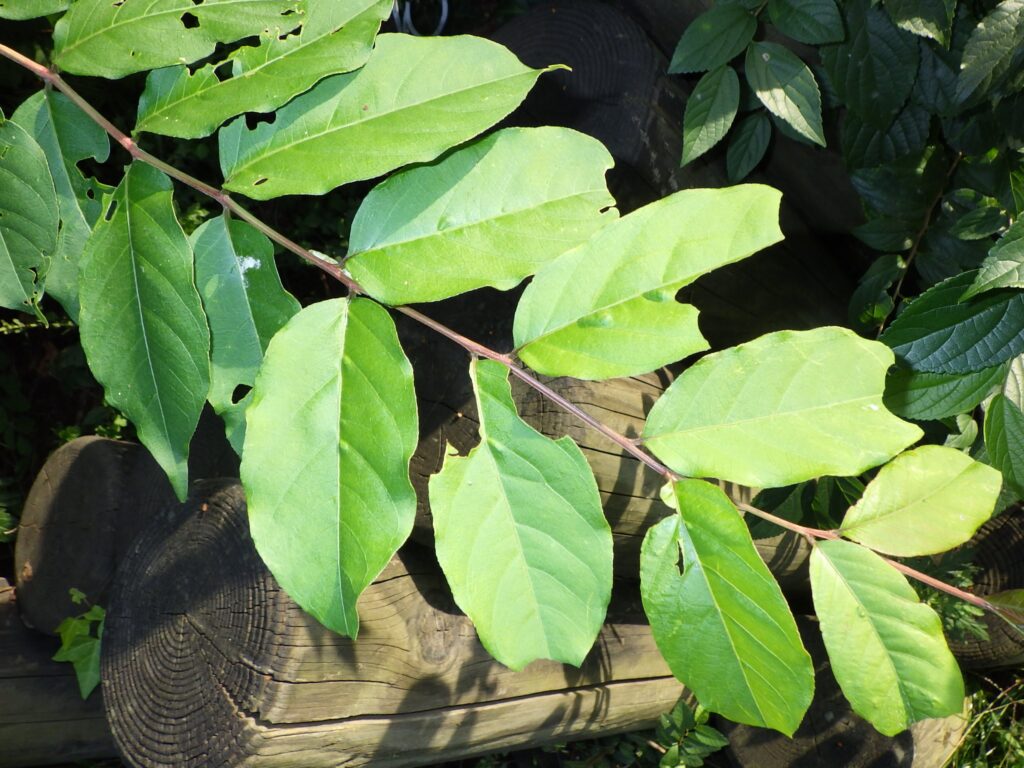
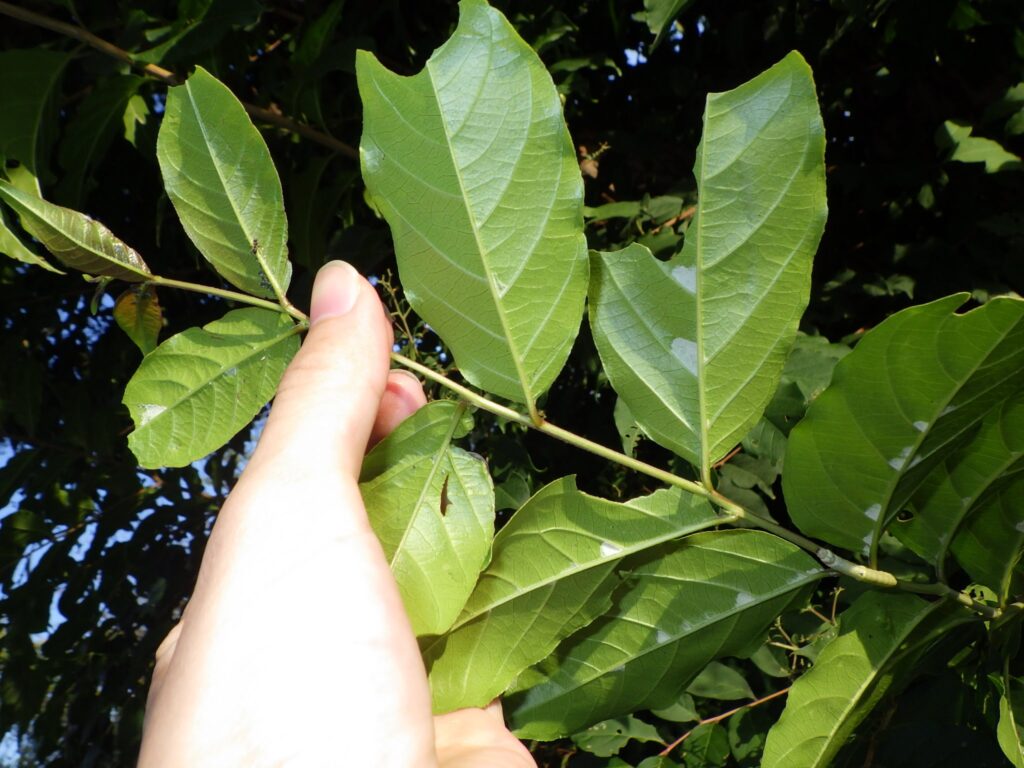
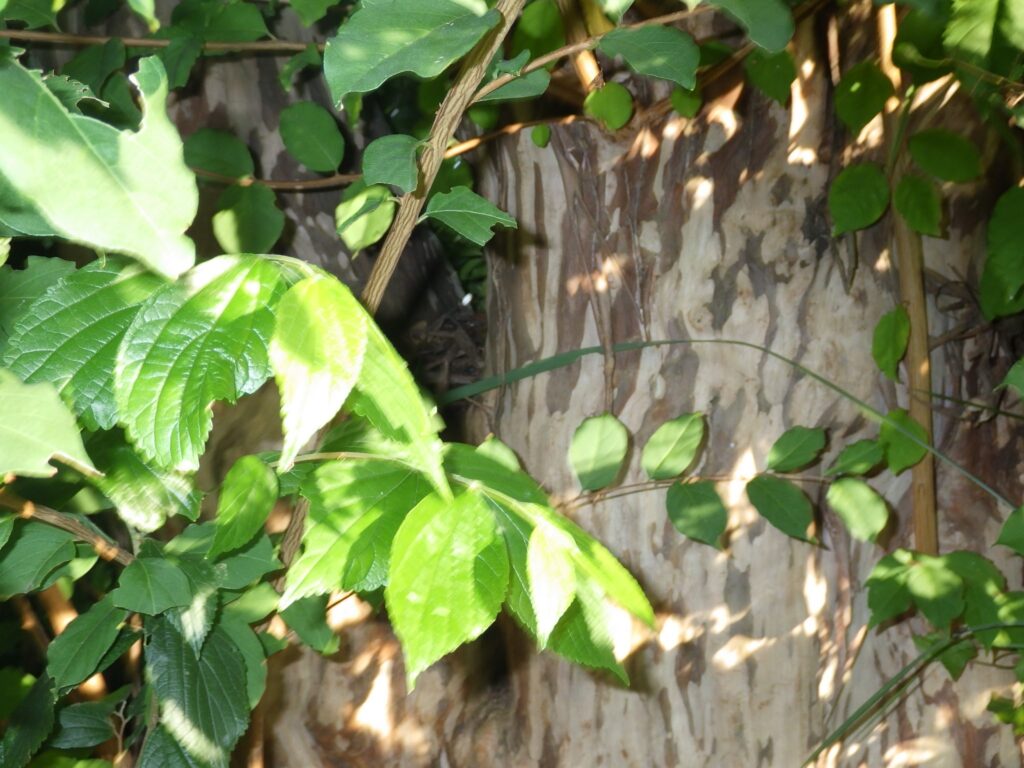
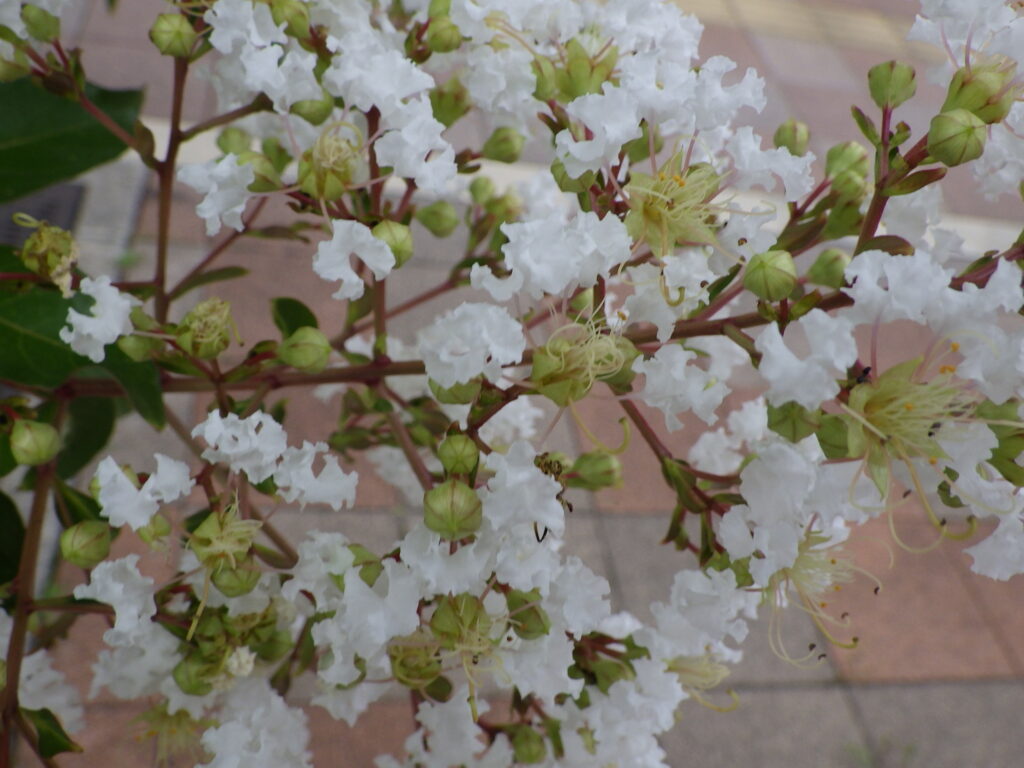
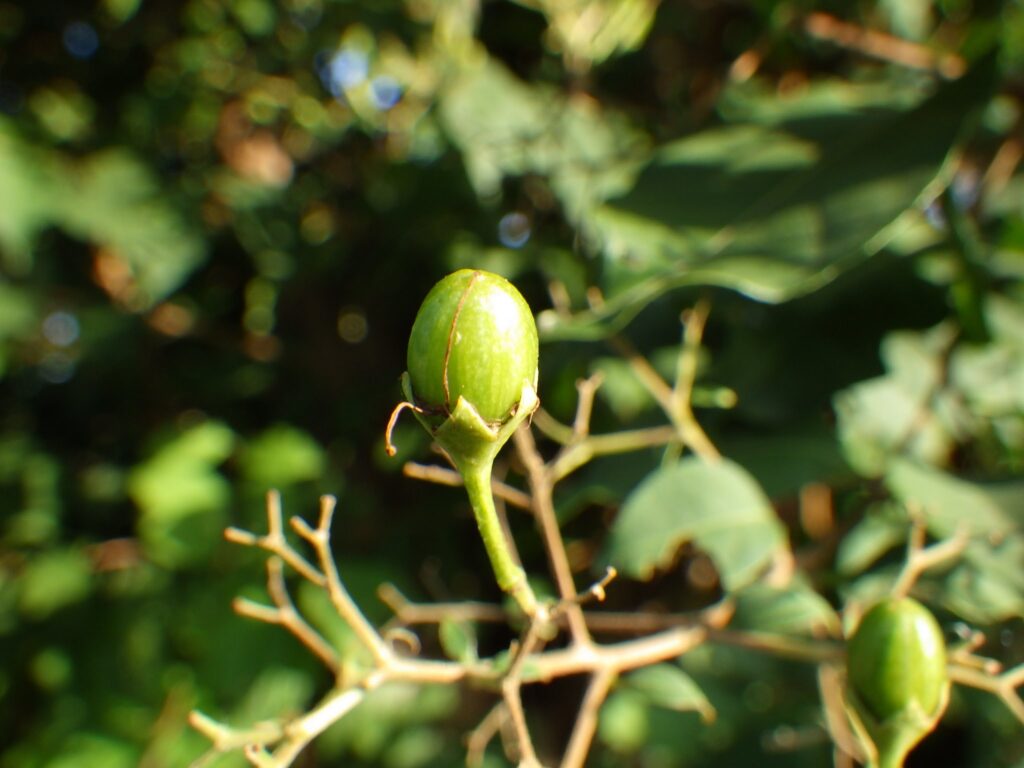
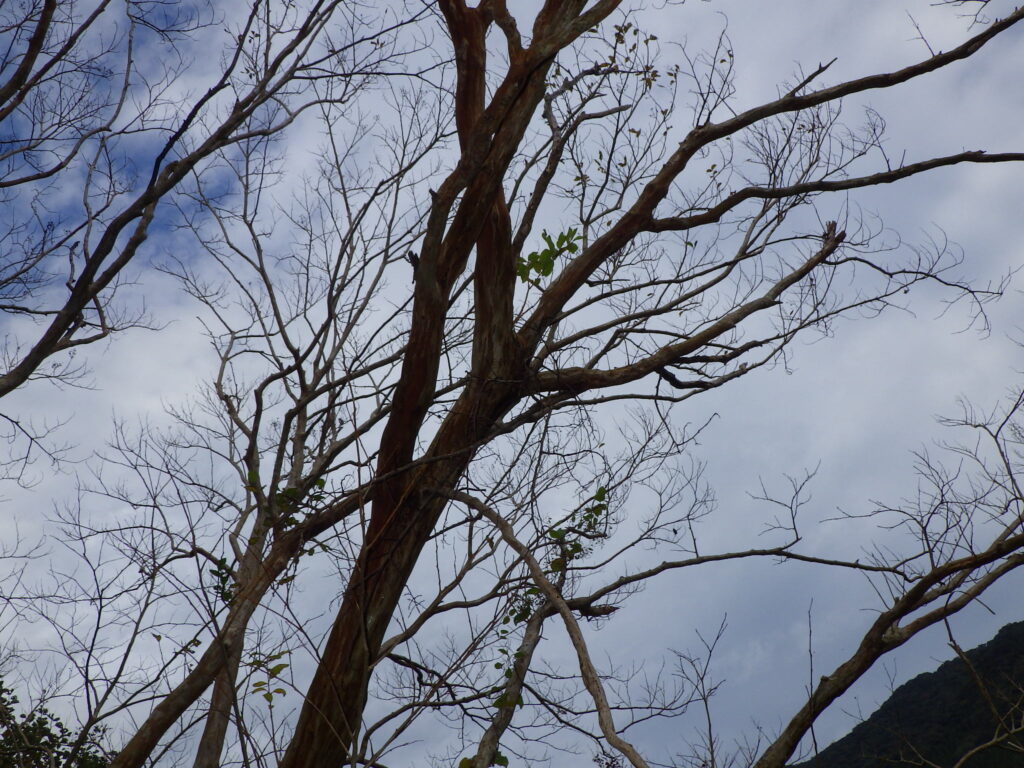
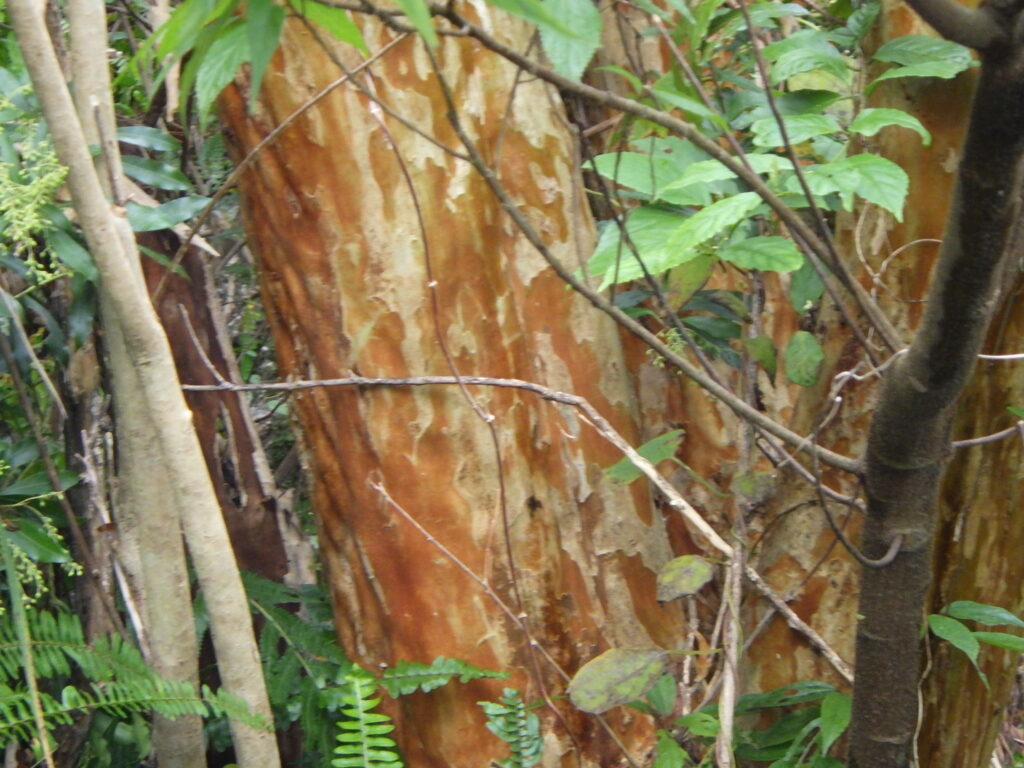
What is the structure of a crape myrtle flower?
The basic structure of the flowers of crape myrtle and Japanese crape myrtle is the same (Mogi et al., 2000; Wu et al., 2007).
Crape myrtle flowers from July to October. The inflorescence is a nearly pyramidal panicle, 7-20 cm long, covered with fine hairs, and densely covered with flowers. The flowers are 3-4 cm in diameter and come in pink, red, and white, with white varieties being called white-flowered crape myrtle. The petals are six in number and fan-shaped, with the lower part being narrow and long, and the upper part being nearly circular with a diameter of about 1.3 cm, and the edges are frilly and wavy. In addition to one pistil, there are 32-42 stamens. The stamens consist of two types: six long, protruding stamens with purple anthers on the outside and a short stamen in the center.
Lagerstroemia subcostata flowers from June to August. Its conical inflorescence is pyramidal, 7-16 cm long, covered in grayish-brown soft hairs, and densely covered with flowers. The flowers are white to pink to purple (most of those found in Japan are white). There are six fan-shaped petals, 0.7-1.0 cm long including the lower part which is 0.35-0.6 cm long, with frilly, wavy edges. There are 15-30 stamens, which consist of two types: six long, protruding stamens on the outside and a short stamen in the center.

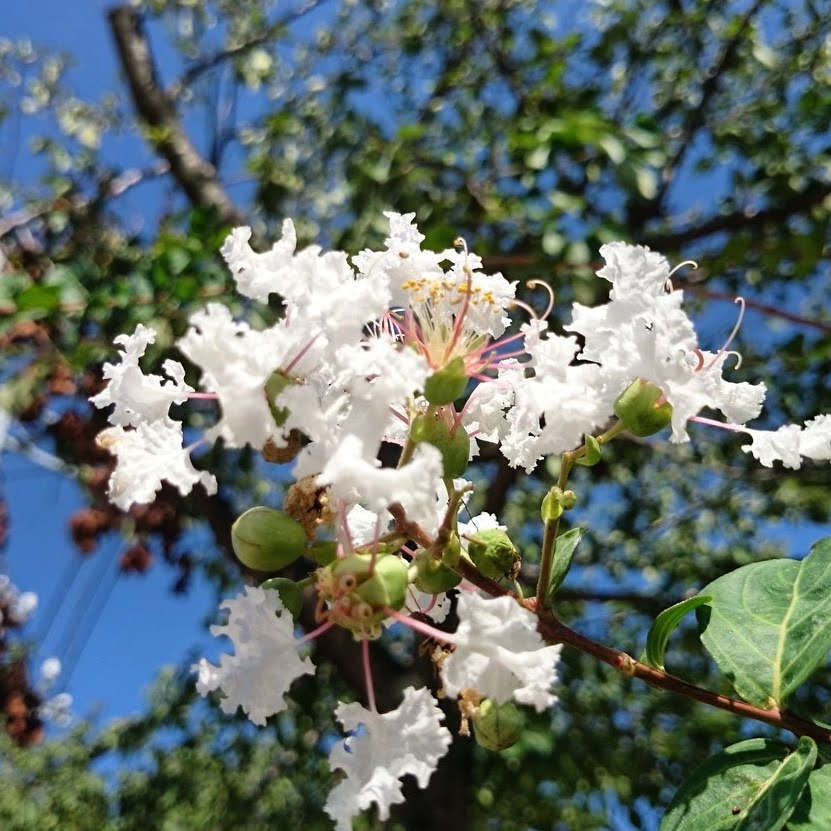
The crape myrtle had both a decoy stamen and the real stamen!?
There's something curious about crape myrtle trees. Why do they have two different types of stamens?
The secrets of this structure have been thoroughly investigated and revealed through numerous studies (Asahi Shimbun, 1997; Tada, 2002; Nepi et al., 2003).
As mentioned above, the anthers of the six outer stamens are purple and long, while the anthers of the central stamens are yellow and short. The central stamens are sterile (they do not produce seeds even if pollinated) and have developed to serve as food for insects.
For crape myrtle trees, the long stamens are the primary target. When an insect latches onto the central stamen, the outer stamens bend under the weight, and pollen automatically attaches to the insect's back. This is thought to prevent the insect from eating all the pollen necessary for pollination.
Furthermore, from a compositional standpoint, the central stamen contains a large amount of energy sources such as the monosaccharides glucose and fructose. Because of its chemically simple structure, it is easy for crape myrtle to produce and easy for insects to digest and absorb.
On the other hand, the outer stamens contain sucrose, a disaccharide that serves as an energy source. Chemically, it is a compound of glucose and fructose, and although it is somewhat difficult to produce, it is considered a higher-quality energy source. As a result, pollen has a higher survival rate and is more likely to successfully pollinate the pistil when it reaches it.
Regarding the specific types of insects that visit, as can be inferred from the previous explanation, they are pollen-eating insects, and Italian research indicates that honeybees are the most common (Nepi et al., 2003). In a Japanese study that examined the ratio of insect species that actually visit, bees that also eat pollen accounted for 801 TP3 T (Yokoi et al., 2008), while moths that only come for nectar did not come at all (Ikenoue & Kanai, 2010). It seems that this is indeed a specialized pollination strategy that targets bees.
Another point of interest is the possibility of variations in flower color, similar to white-flowered crape myrtle and striped crape myrtle. However, this has not yet been studied, and it is unknown whether there are differences in the insects that visit them. It can be said that there are still mysteries surrounding crape myrtle.
The fruit is a capsule, and the seeds are dispersed by both wind and water currents!?
The fruit is a capsule, which is common to all species in the genus Lagerstroemia.
The crape myrtle capsule is spherical, about 7 mm in diameter, and splits into six sections when ripe. The seeds are 4-5 mm long and have broad wings. The fruiting season is from September to November.
The capsules of Lagerstroemia indica are oval-shaped, about 6-9 mm in diameter, and split into six sections when ripe. The seeds, including the wings, are about 4 mm long and have broad wings. The fruiting season is from July to October.
As you might imagine from the presence of "broad wings," seeds are dispersed over long distances by being carried by the wind after being shaken off the open fruit.
However, it has been found that this is not the only role of these wings (Pigg & DeVore, 2005).
When dry, the wings are as thin as paper. However, it has been observed that when soaked in water, the wings expand to several times their original thickness after a few days, becoming a firm pad made of soft tissue.
What role do these changes play?
Although not directly observed, the presence of cavities has been confirmed inside the wings when they are swollen with water. It has been suggested that these cavities may store air, functioning as a means to keep the seeds afloat if they fall into water. Furthermore, when growing in swamps, germination occurs in oxygen-deficient conditions, and it is thought that the air accumulated in the central cavity at this time also functions as a snorkeling device, ensuring oxygen for the seedlings.
These adaptations are thought to be related to the fact that the ancestors of the genus Lagerstroemia originally lived on or near the edge of wetlands. Although Lagerstroemia species do not necessarily live near water today, populations growing near water have still been observed, and it is thought that this function is working effectively in such environments.
It appears that species of the genus Lagerstroemia have expanded their habitat by skillfully combining wind dispersal and water flow dispersal.
References
Asahi Shimbun Company. 1997. The World of Plants 4: Seed Plants. Asahi Shimbun Company, Tokyo. ISBN: 9784023800106
Hayashi, Masayuki. 2014. 1100 Tree Leaves Identified Through Real-Life Scans. Yama-kei Publishers, Tokyo. 759pp. ISBN: 9784635070324
Ikenoue, Toshiyuki & Kanai, Hiroo. 2010. Nocturnal moth flower-visiting activity. Journal of the Botanical Society of Japan 85(4): 246-260. ISSN: 0022-2062, https://doi.org/10.51033/jjapbot.85_4_10230
Mogi, Toru; Ota, Kazuo; Katsuyama, Teruo; Takahashi, Hideo; Shirokawa, Shiro; Yoshiyama, Hiroshi; Ishii, Hidemi; Sakio, Hitoshi; and Nakagawa, Shigetoshi. 2000. Flowers Blooming on Trees: Polypetalous Flowers (Vol. 2, 2nd edition). Yama-kei Publishers, Tokyo. 719pp. ISBN: 9784635070041
Nepi, M., Guarnieri, M., & Pacini, E. 2003. “Real” and feed pollen of Lagerstroemia indica: ecophysiological differences. Plant Biology 5(3): 311-314. ISSN: 0894-4563, https://doi.org/10.1055/s-2003-40797
Pigg, KB, & DeVore, ML 2005. Shirleya grahamae gen. et sp. nov. (Lythraceae), Lagerstroemia -like fruits from the middle Miocene Yakima Canyon flora, central Washington State, USA. American Journal of Botany 92(2): 242-251. https://doi.org/10.3732/ajb.92.2.242
Taeko Tada. 2002. Resilient Plants: A Secret Strategy Using Various Tactics. SCC books, Tokyo. 238pp. ISBN: 9784886479228
Wu, ZY, Raven, PH, & Hong, DY (Eds.). 2007. Flora of China (Vol. 13 Clusiaceae through Araliaceae). Science Press, Beijing, and Missouri Botanical Garden Press, St. Louis. ISBN: 9781930723597
Yokoi, Tomoyuki; Habe, Akifumi; Katori, Ikuo; and Sakuraya, Yasuyuki. 2008. Diversity of pollinating insect communities at Kinki University Nara Campus. Kinki University Faculty of Agriculture Bulletin 41: 77-94. ISSN: 0453-8889, http://id.nii.ac.jp/1391/00005214/
Source
This article is a significantly expanded version of a piece originally published in the following book.