Trachelospermum asiaticum and Trachelospermum asiaticum are climbing plants that can be found widely in Japan, from forests to urban areas, including cultivated varieties. They can be distinguished by the hairs on the underside of their leaves and the length of their flower tubes. In Japan, they have been widely known since the time when the Kojiki was written, and it is likely that the current name is derived from Fujiwara no Teika, although it is questionable whether that anecdote is historically accurate. Did you know that Trachelospermum asiaticum is ecologically specialized in attracting hawk moths by blooming in the evening? This article will explain the classification, history, pollination ecology, and seed dispersal of Trachelospermum asiaticum and Trachelospermum asiaticum.
- Climbing plants found in forests and towns
- What are the differences between Trachelospermum asiaticum, Trachelospermum asiaticum, and Trachelospermum asiaticum?
- A plant wrapped around Princess Shikishi's tomb?
- Two flower shapes that are very similar but subtly different.
- The flowers bloom in the evening and attract hawk moths.
- Are there differences in the insects that visit Trachelospermum asiaticum and Trachelospermum asiaticum?
- The fruit is carried away by the wind.
- References
- Source
Climbing plants found in forests and towns
Trachelospermum asiaticum, also known as Teika-kazura, is an evergreen climbing woody plant distributed in India, Thailand, China, Korea, and Japan (Honshu to Kyushu), inhabiting evergreen forests or rocky areas (Wu & Raven, 1995; Mogi et al., 2003).
Furthermore, Trachelospermum jasminoides var. pubescens is distributed in Vietnam, China, South Korea, and Japan (from the Kinki region westward in Honshu to Okinawa), and is an evergreen climbing woody plant that inhabits sunny forest edges and shrub thickets (Wu & Raven, 1995; Kyoto Prefectural Government Environmental Department, Natural Environment Conservation Division, 2015). Therefore, Trachelospermum jasminoides is commonly found in eastern Japan, excluding cultivated varieties.
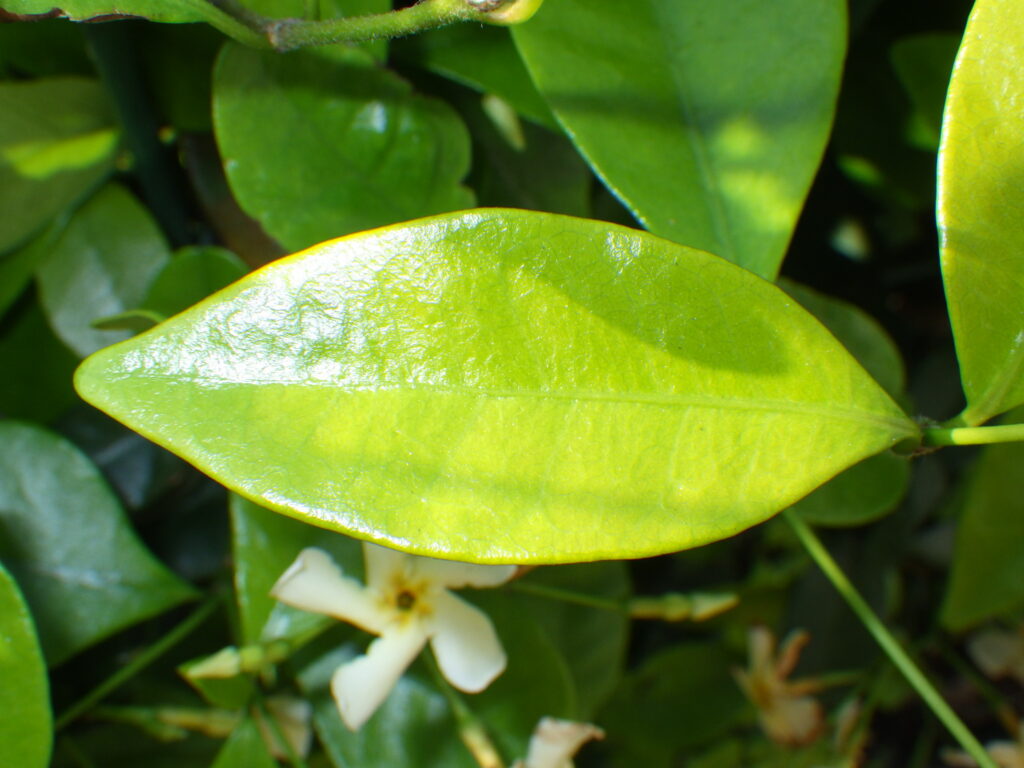
Both belong to the genus Trachelospermum in the family Apocynaceae. Their leaves are oval-shaped with entire margins, leathery in texture, and glossy on the surface. They climb up rocks and other plants.
This poisonous plant releases a white sap when its stem is broken, which can cause a rash upon contact (Satake, 2012). Additionally, although the relationship to this effect is unclear, tracheloside, a compound found in the plant, can cause diarrhea.
What are the differences between Trachelospermum asiaticum, Trachelospermum asiaticum, and Trachelospermum asiaticum?
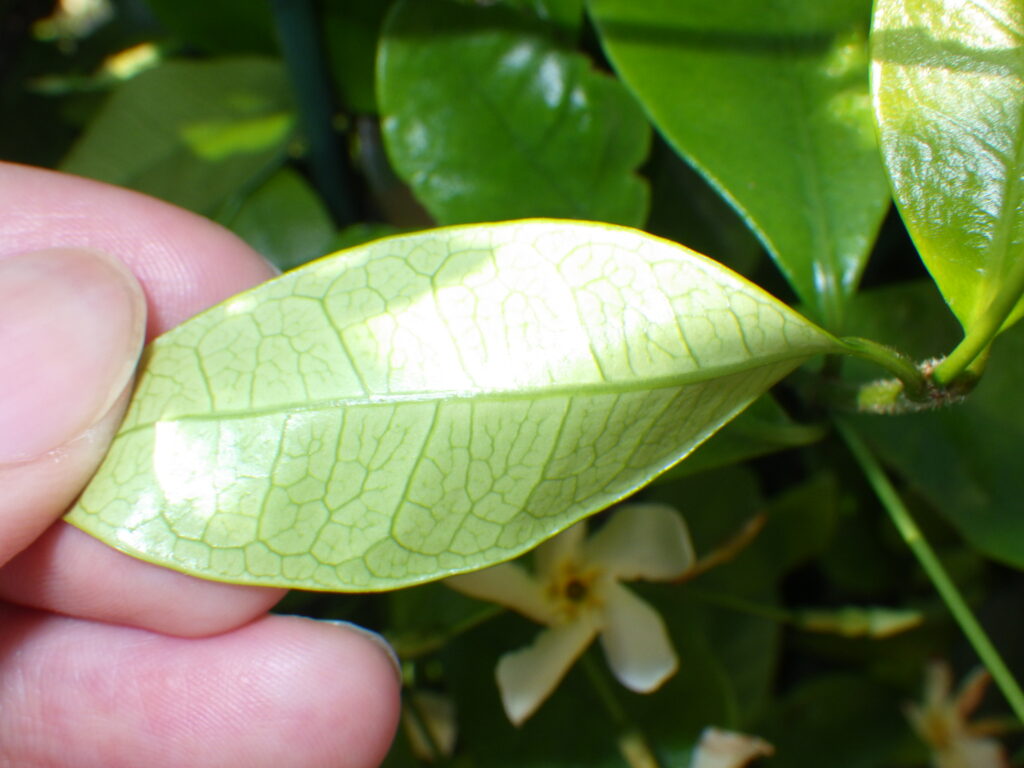
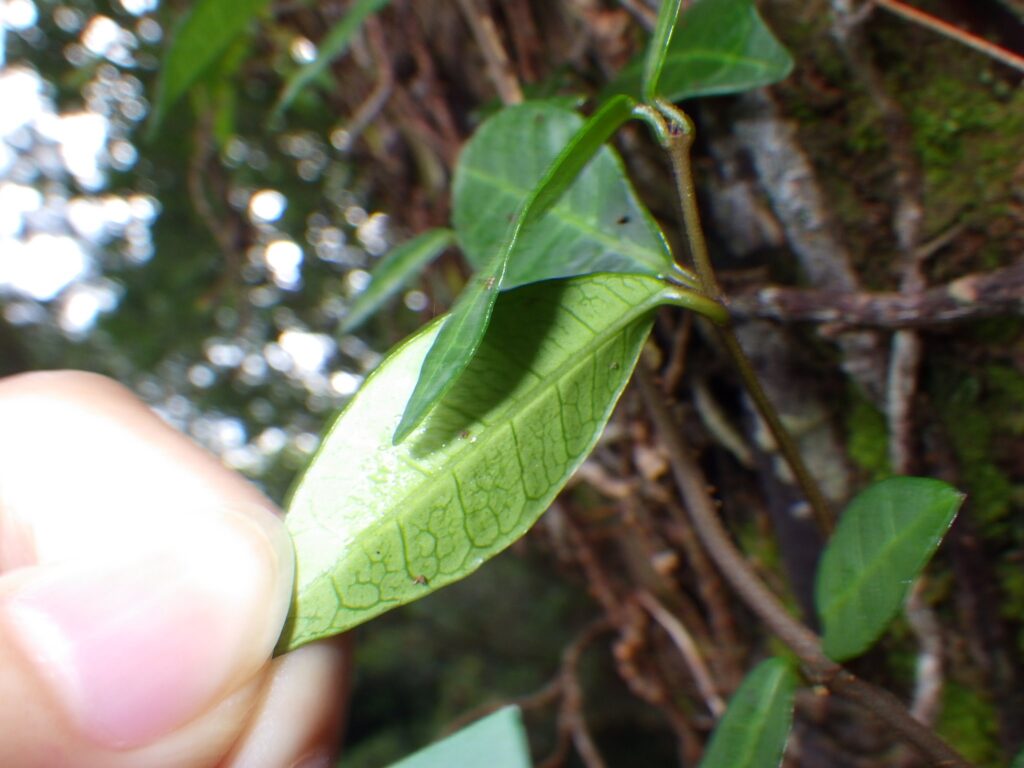
Distinguishing between Trachelospermum asiaticum and Trachelospermum asiaticum is a little difficult, but in Trachelospermum asiaticum, the length of the broad part of the flower tube is about half the length of the narrow part, the sepals are 2-3 mm long, and the underside of the leaves is hairless or only has a few short hairs.
On the other hand, *Tetramorium sempervirens* can be distinguished by the fact that the broad part of the flower tube is almost the same length as or slightly longer than the narrow part, the sepals are 5-6 mm long, and the underside of the leaves is covered with many hairs (Kanagawa Prefecture Flora Survey Association, 2018).
The easiest way to tell them apart is to check the hairs on the underside of the leaves, but since some Trachelospermum asiaticum plants are very hairy, it's more accurate to check the flower tube. In short, Trachelospermum asiaticum has a longer flower tube. Looking at the buds is probably the easiest way to tell them apart.
It is also used as a horticultural plant, and a variety called Trachelospermum jasminoides var. pubescens 'Hatsuyukikazura' can be found. This variety is beautiful with its new leaves having irregular pink and white variegation. Considering the flower tube, it can generally be considered a variety of Trachelospermum jasminoides, but some may be Trachelospermum jasminoides (Kamimachi and Shimomura, 2009). The scientific differences between this variety and the variety called Goshikikazura were unclear in the author's research.
In addition, some horticultural specimens may contain a species called T. asiaticum (Kamimachi and Shimomura, 2009).
Among the wild species found in Japan, Trachelospermum gracilipes var. liukiuense, which is distributed south of Yakushima Island and in the Ogasawara Islands, is also known (Kamimachi and Fukui, 2015).
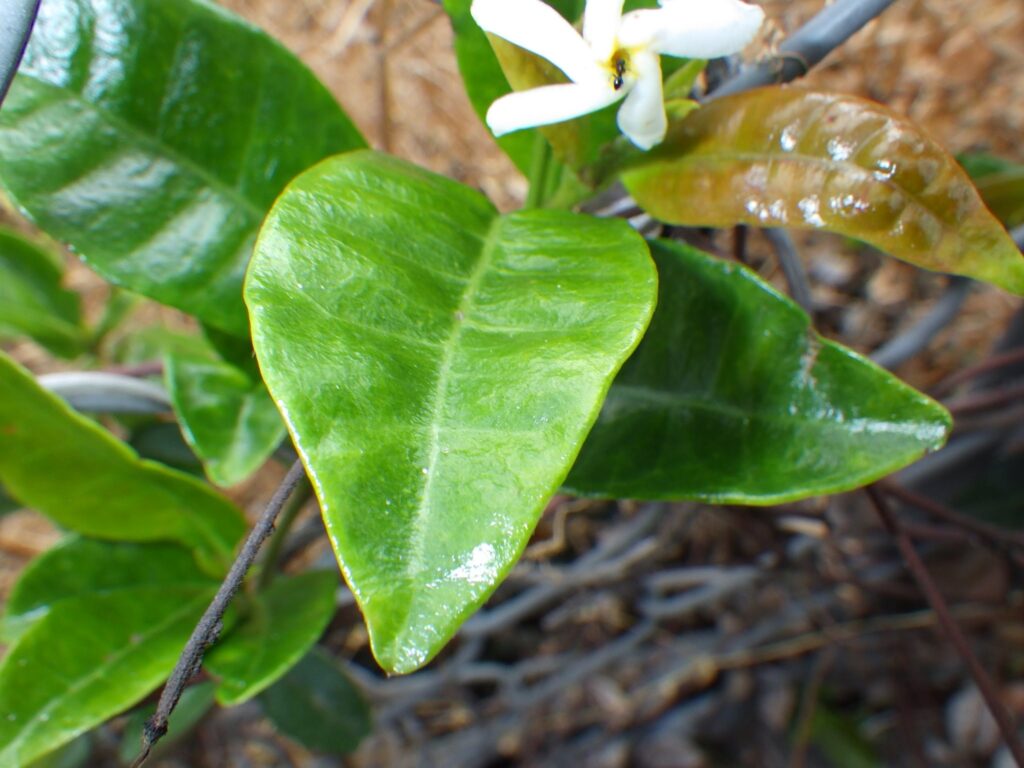
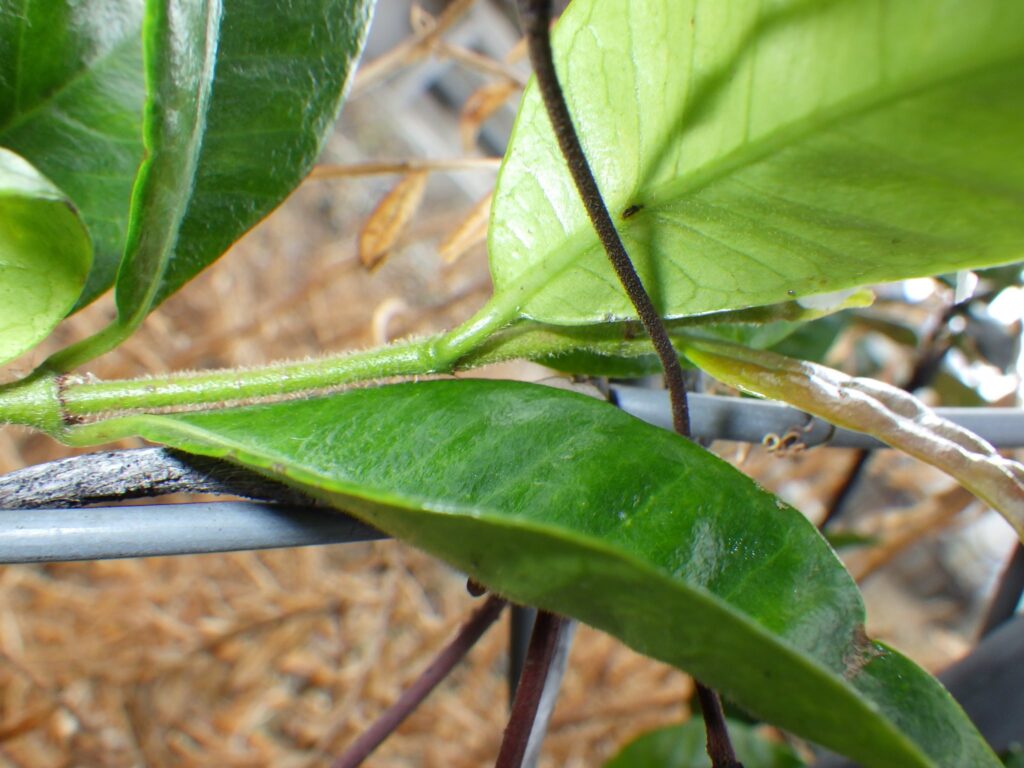
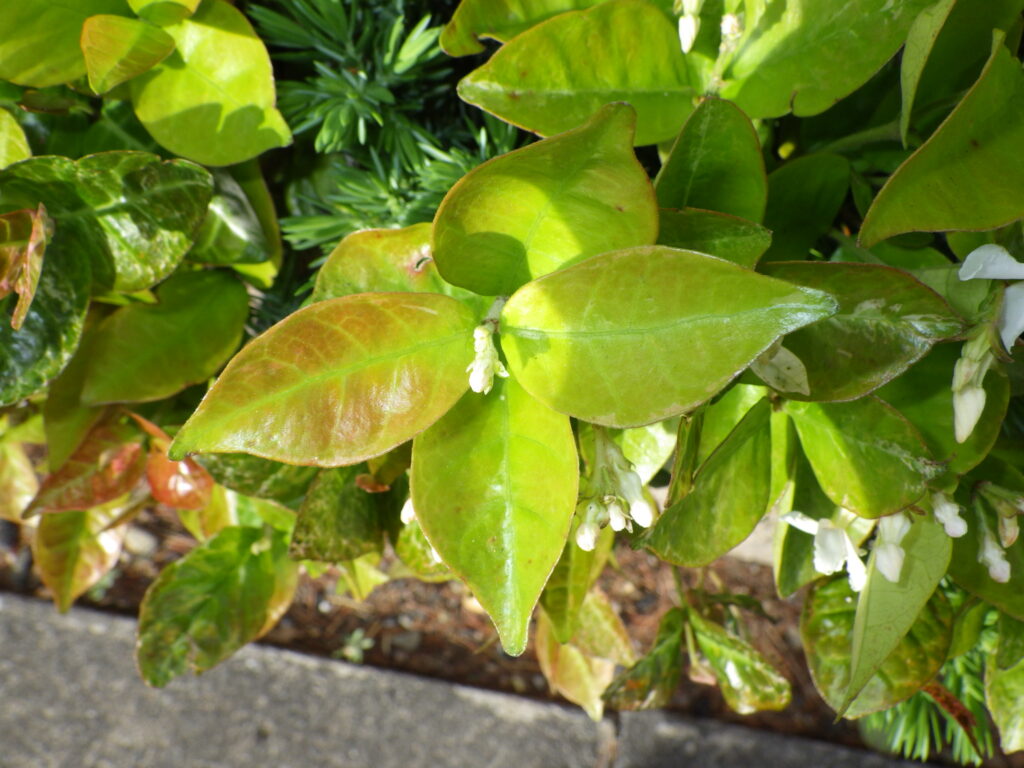
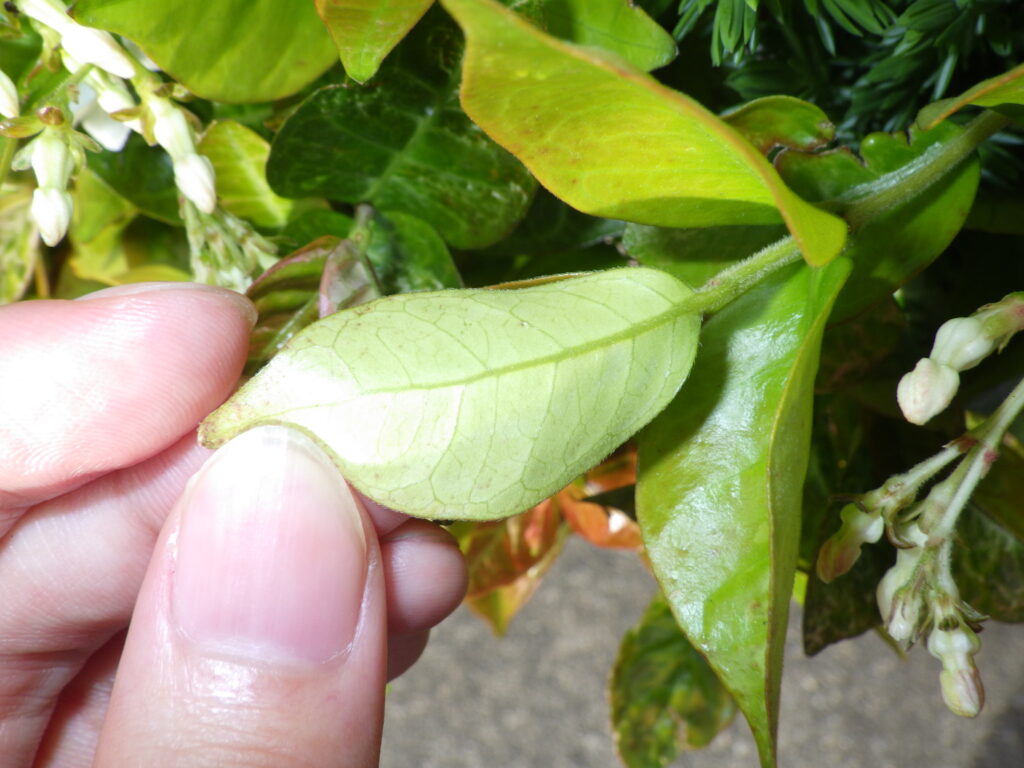
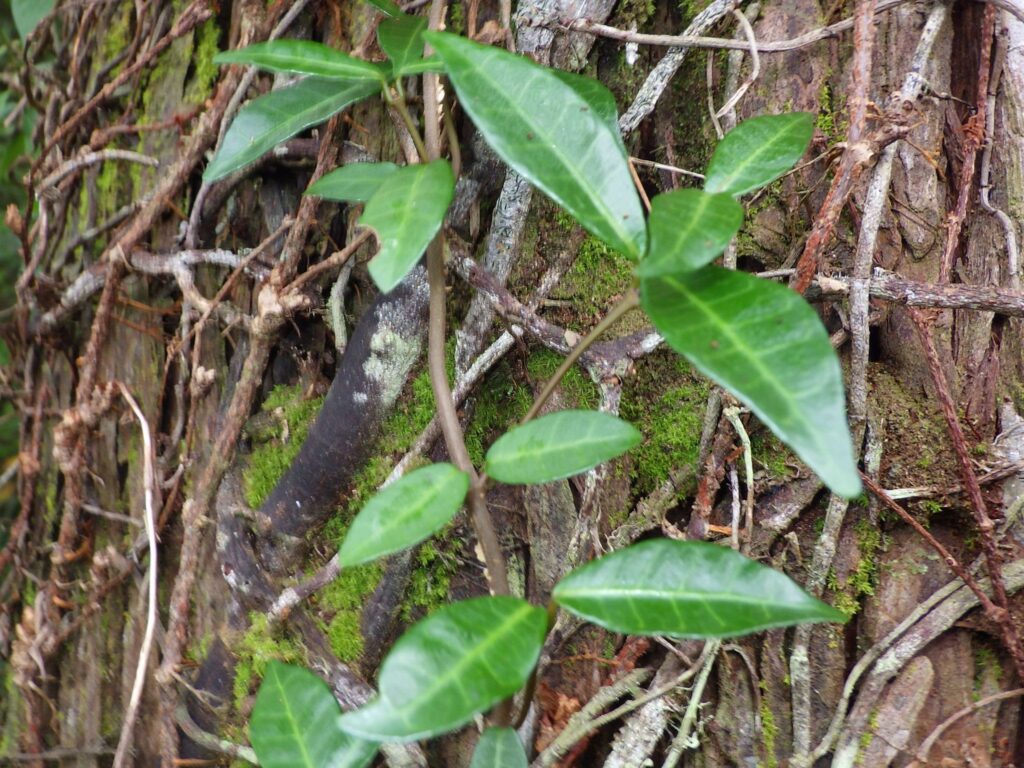
A plant wrapped around Princess Shikishi's tomb?
Trachelospermum asiaticum already appears as "Masakino-kazura" in the Kojiki (compiled in 712), the oldest Japanese document from the Nara period (Isono, 2009). It also appears in poems in the Manyoshu (Kawahara, 2008). It must have been a very familiar climbing plant.
The name change to "Teika-kazura" is said to be related to the Noh play "Teika".
According to the account, Princess Shikishi (a female poet from the late Heian period to the early Kamakura period, the third daughter of Emperor Go-Shirakawa) and Fujiwara no Teika (a court noble and poet from the late Heian period to the early Kamakura period, famous for selecting the "Shin Kokin Wakashū") were in a secret relationship, as Princess Shikishi, being a female member of the imperial family, could not freely pursue romantic relationships. However, Princess Shikishi remained unmarried and died first at the age of 49. Fujiwara no Teika, who continued to cherish Princess Shikishi, is said to have, after his death, become so obsessed with her that he began to cover her tomb with kudzu vines.
It is said that the spirit of Princess Shikishi conveyed this to a Buddhist monk, and after the monk helped Princess Shikishi attain Buddhahood, the plant became known to the people, and this kudzu came to be called "Teika-kazura."
This piece was composed during the Muromachi period, and the name "Teikakazura" likely originates from this. However, while there are various theories about the relationship between Fujiwara no Teika and Princess Shikishi, it is believed that it is not historically accurate (Kishibe, 2015). Nevertheless, its scandalous content stimulated the imagination of the time and seems to have given rise to various literary works. It should be understood purely as a story.
Two flower shapes that are very similar but subtly different.
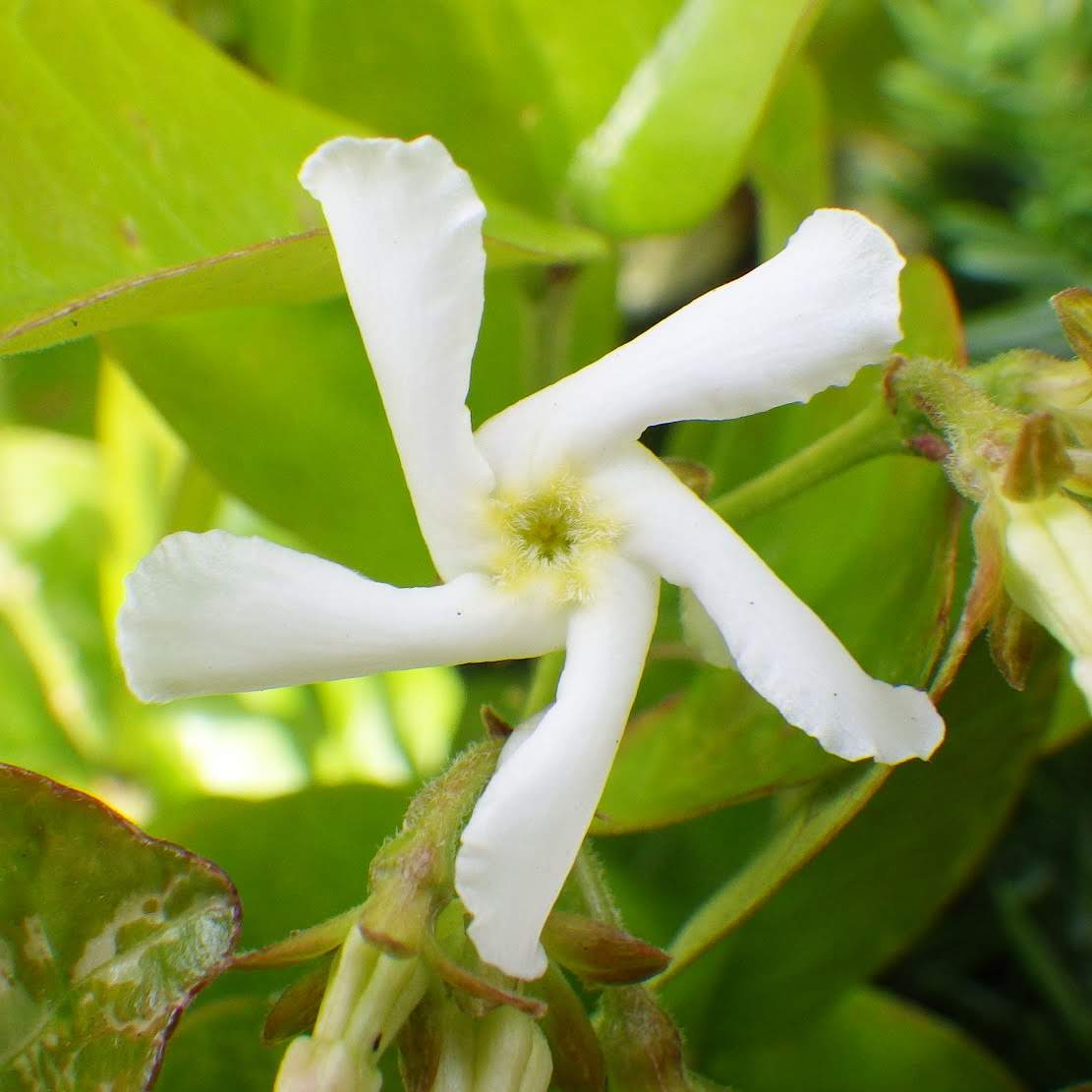
Both species share the characteristic of producing fragrant white flowers in May and June, which change color from white to pale yellow. The petals are described as goblet-shaped and have a long corolla tube. The upper petal-like parts are actually fused petals that have been split into five lobes at the tip (such flowers are called sympetalous flowers), and these lobes are twisted (Mogi et al., 2003).
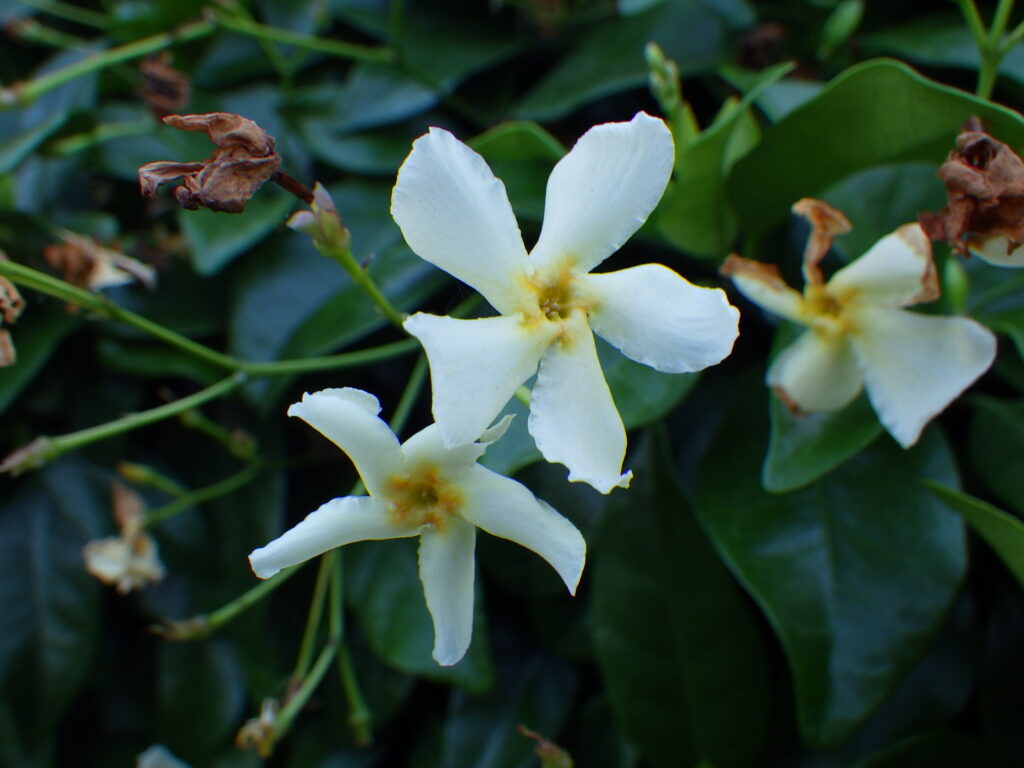
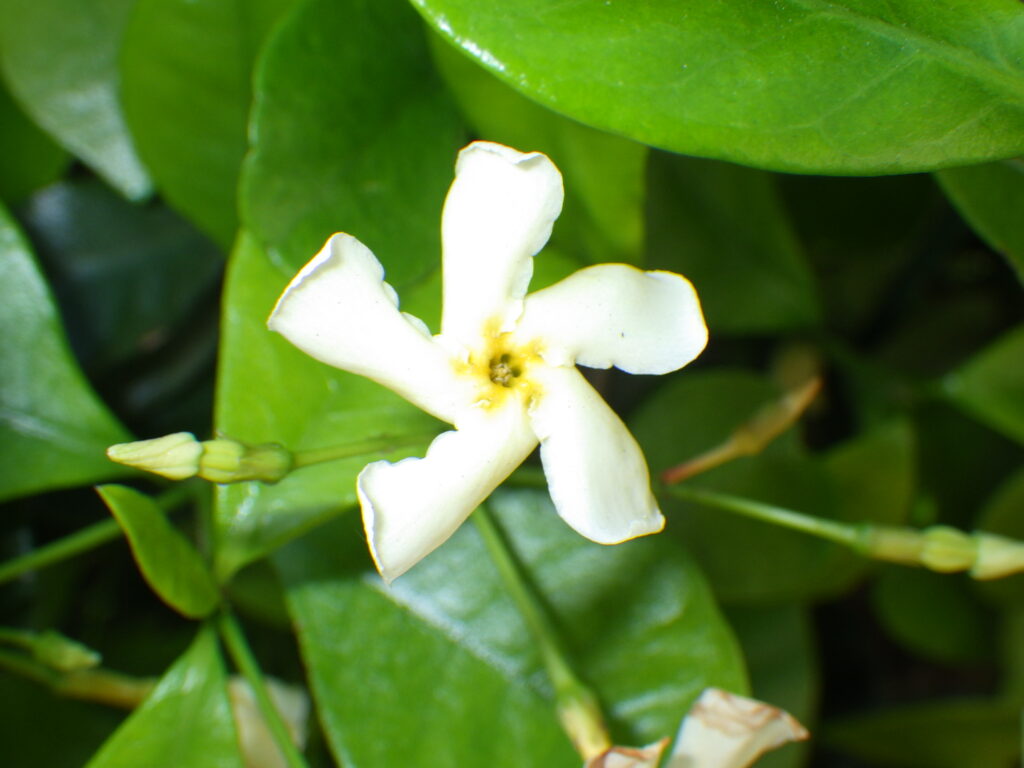
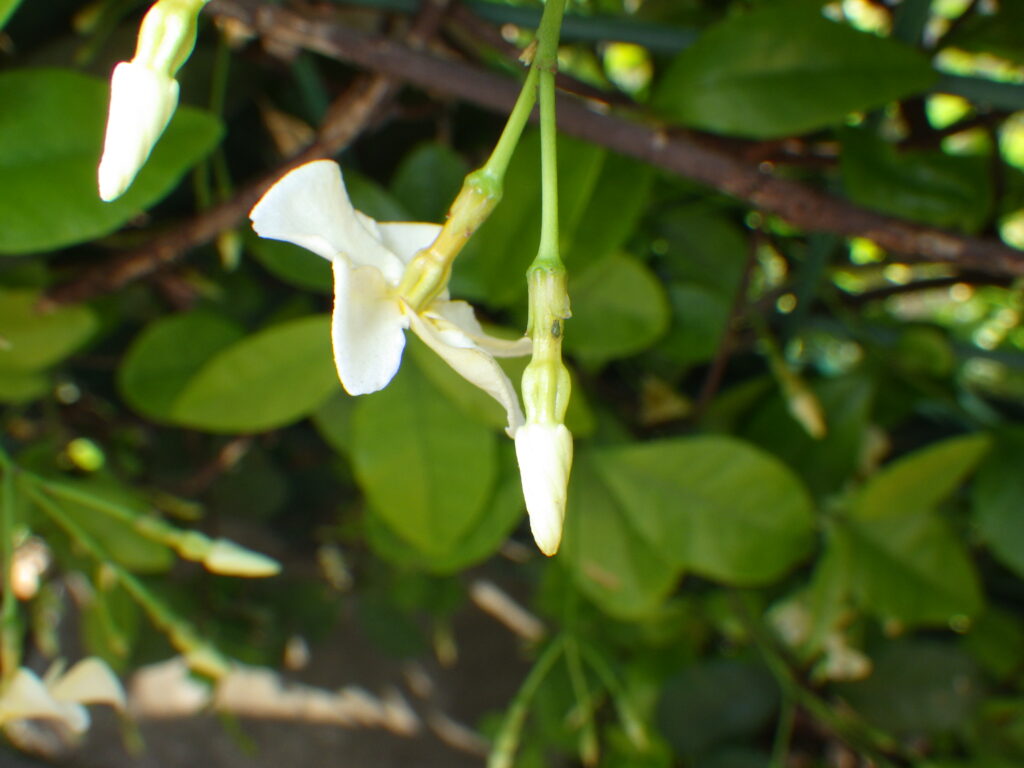
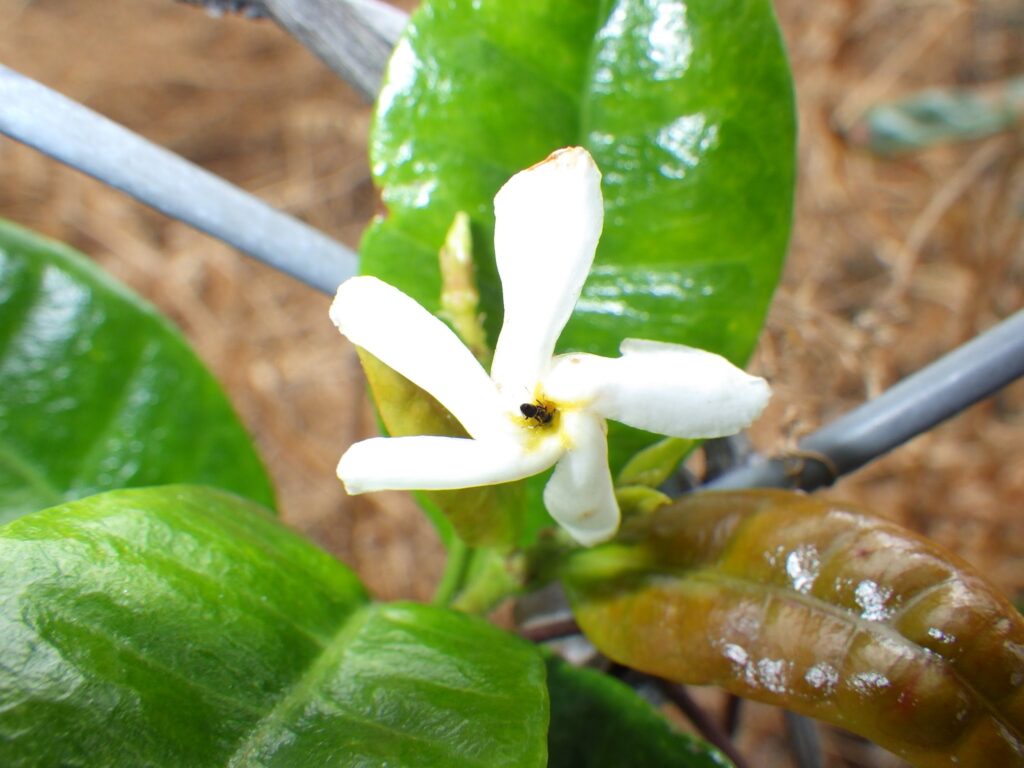
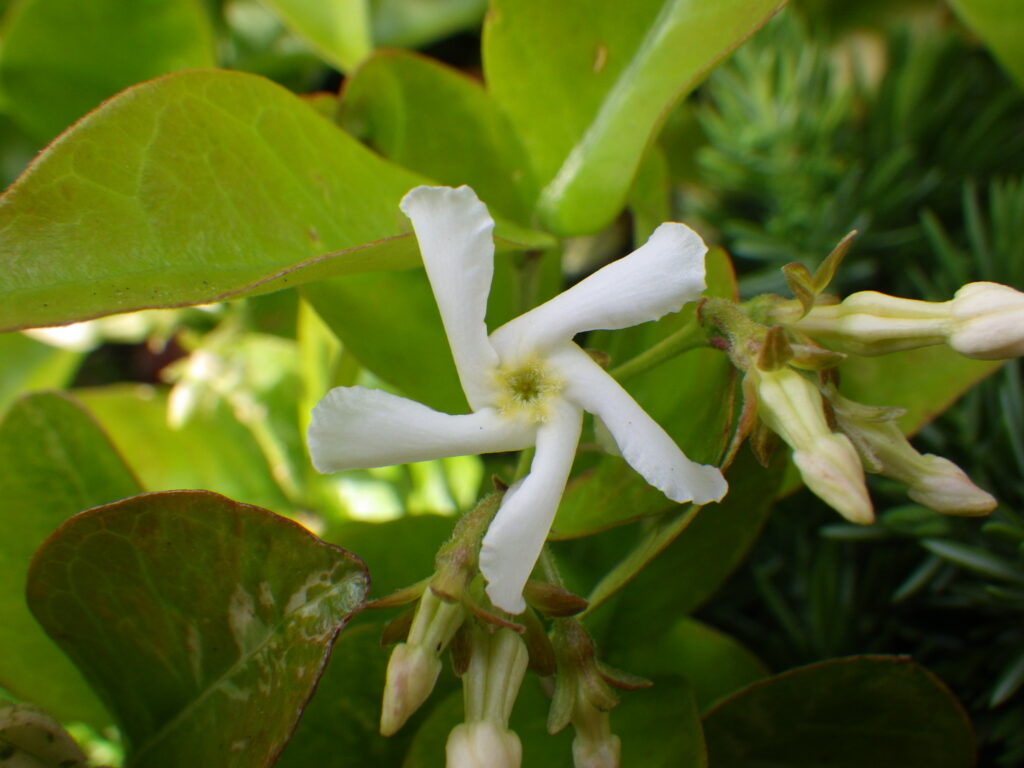
The flower structures of Trachelospermum asiaticum and Trachelospermum asiaticum are almost identical, but in addition to the differences in the structure of the flower tube mentioned earlier, there is a difference in that the stamens of Trachelospermum asiaticum are long enough that the anthers are visible from the outside, while those of Trachelospermum asiaticum are short enough that the anthers are not visible (Kamimachi and Shimomura, 2007).
Also, while the flower tubes of Trachelospermum asiaticum tend to be yellowish, those of Trachelospermum asiaticum are milky white.
The flowers bloom in the evening and attract hawk moths.
Trachelospermum asiaticum and Trachelospermum asiaticum begin to bloom in the evening and emit a jasmine-like fragrance. What kinds of insects do these flowers attract?
While there have been records of butterflies associated with Trachelospermum asiaticum (Nanba, 2020), it is generally believed that the long flower tube and scent attract hawk moths with long proboscises (Tanaka, 2020).
The fact that the long flower tubes limit the insects that can obtain nectar to those with long mouths, and that the flowers begin to bloom in the evening and attract moths with their scent, are characteristics often seen in flowers that attract hawk moths (pollination syndrome).
Upon examining the cross-section, it is found that there is a barb inside the tube. When a hawk moth inserts its mouthparts, it is thought that pollen from other plants attached to its mouthparts is scraped off here, and then, structurally, it comes into contact with the nearby pistil, thus facilitating pollination (Hasebe, 2016).
On the other hand, I couldn't find any research on *Trachelospermum asiaticum*, but it is generally thought to be the same as *Trachelospermum asiaticum*.
Are there differences in the insects that visit Trachelospermum asiaticum and Trachelospermum asiaticum?
It seems that the differences in ecology between Trachelospermum asiaticum and Trachelospermum asiaticum have not yet been properly studied, but it appears that there is a risk of hybridization if there is no separation of habitats.
Since there are no significant differences in the flowers themselves, it seems likely that the insects that visit them would also be largely the same. However, differences in the structure and color of the flower tube, or the length of the anthers, might explain some differences in the insects that visit them. Or perhaps there are no differences at all. I look forward to future research on this.
The fruit is carried away by the wind.
The fruit is a cylindrical follicle (Mogi et al., 2003). The seeds are linear, about 1.3 cm long, with a pappus at the tip. The fruit hangs downwards and splits open from the inside, releasing the seeds into the wind (Kobayashi, 2007 ; Kawahara, 2008). Seeds with hairs are considered a rare method of seed dispersal, found only in willows among trees in Japan (Kobayashi, 2007).
References
Isono, Naohide. 2009. List of First Encounters of Plant Names by Source. Keio University Hiyoshi Journal of Natural Science 45: 69-94. ISSN: 0911-7237, https://koara.lib.keio.ac.jp/xoonips/modules/xoonips/detail.php?koara_id=AN10079809-20090331-0069
Kanagawa Prefecture Flora Survey Association. 2018. Kanagawa Prefecture Flora 2018 (Electronic Edition). Kanagawa Prefecture Flora Survey Association, Odawara. 1803pp. ISBN: 9784991053726
Kawahara, Katsuyuki. 2008. Plants in the Manyoshu. Nanpo Shinsha, Kagoshima. 216pp. ISBN: 9784861241345
Kishibe, Makoto. 2015. Fujiwara no Teika and Princess Shikishi: A Tentative Study from the Perspective of Guardianship. Aichi University Historical Studies, Japanese History, World History, and Geography 24: 45-67. https://aichiu.repo.nii.ac.jp/records/4612
Kobayashi, Masaaki. 2007. From Flower to Seed: The Science of Seed Dispersal. National Rural Education Association, Tokyo. 247pp. ISBN: 9784881371251
Kyoto Prefectural Government, Department of Environment, Natural Environment Conservation Division. 2015. Kyoto Prefecture Red Data Book 2015 (Volume 2: Wild Plants and Fungi). Kyoto Prefectural Government, Department of Environment, Natural Environment Conservation Division, Kyoto. 611pp. https://www.pref.kyoto.jp/kankyo/rdb/index.html
Mogi, T., Takahashi, H., Katsuyama, T., & Ishii, E. 2003. Flowers Blooming on Trees: Sympetalous Flowers, Monocotyledons, Gymnosperms. Yama-kei Publishers, Tokyo. 719pp. ISBN: 9784635070058
Nanba, Yasushi. 2020. Current Status of Butterflies at Okayama Prefectural Nature Conservation Center: A Supplement to the Okayama Prefectural Nature Conservation Center Butterfly Catalog. Okayama Prefectural Nature Conservation Center Research Report 27: 43-80. ISSN: 1340-7465, https://okayama-shizenhogo-c.jp/templates/front/pdf/chosa-kenkyu/vol27/vol27_p43-80.pdf
Satake, Motoyoshi. 2012. Poisonous Plants of Japan. Gakken Educational Publishing, Tokyo. 232pp. ISBN: 9784054052697
Tanaka, Hajime. 2020. Flowers and Insects: A Collection of Discoveries of Mysterious Deception. Chikuma Shobo, Tokyo. 327pp. ISBN: 9784480436573
Hasebe, Mitsuyasu. 2016, June 12. Pollination of Trachelospermum asiaticum. Plant Development and Evolution: A Readable Plant Encyclopedia. http://www.nibb.ac.jp/plantdic/blog/?p=932
Kamimachi, Azusa & Shimomura, Takashi. 2007. An attempt at identifying several species of the genus Trachelospermum based on flower morphology. Journal of the Japanese Society of Landscape Architecture 33(1): 105-110. ISSN: 0916-7439, https://doi.org/10.7211/jjsrt.33.105
Kamimachi, Azusa & Shimomura, Takashi. 2009. Classification of horticultural varieties of the genus Trachelospermum Lem. that are distributed as plants for greening and ornamental purposes. Journal of the Japanese Society of Landscape Architecture 35(1): 75-80. ISSN: 0916-7439, https://doi.org/10.7211/jjsrt.35.75
Kamimachi, Azusa & Fukui, Wataru. 2015. Identification of Trachelospermum Lem. seedlings for landscaping distributed in Japan by PCR-RFLP method. Journal of the Japanese Society of Landscape Architecture 41(1): 151-156. ISSN: 0916-7439, https://doi.org/10.7211/jjsrt.41.151
Wu, ZY, & Raven, PH (Eds.). 1995. Flora of China (Vol. 16 Gentianaceae through Boraginaceae). Science Press, Beijing, and Missouri Botanical Garden Press, St. Louis. 479pp. ISBN: 9780915279333
Source
This article is a significantly expanded version of one included in the following book.