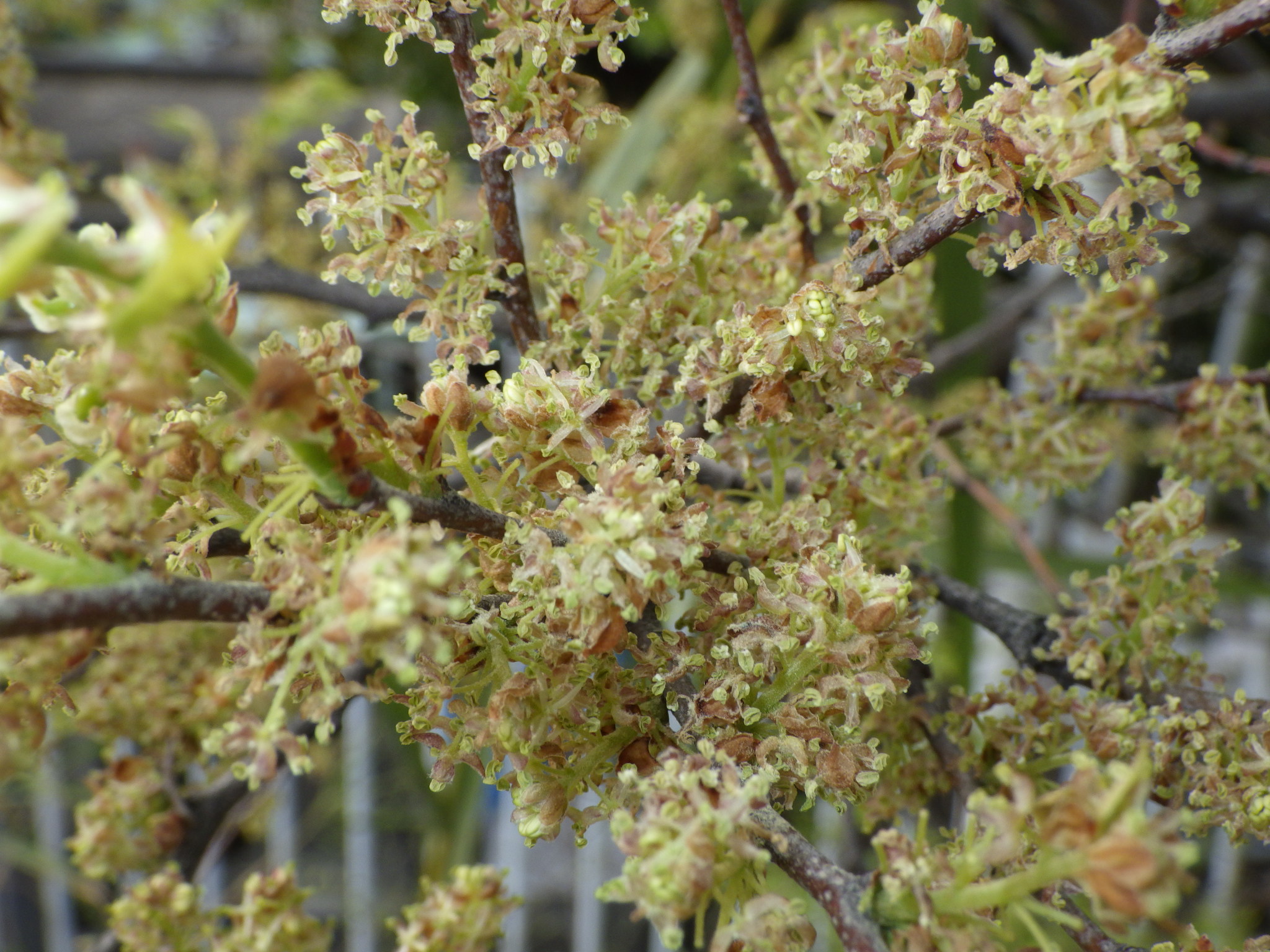
Japanese hackberry (Celtis sinensis), Japanese hackberry (Celtis japonica), and Chinese zelkova (Aphananthe aspera) all belong to the Cannabaceae family. Japanese hackberry and Chinese zelkova are particularly common trees in Japan, and have been used as timber for a long time. Young trees of these species can also be frequently seen along roadsides in urban areas. The best way to distinguish them is to check the shape of their leaves. Specifically, you can reliably distinguish them by checking the veins and the extent and shape of the serrations on the leaf margins. This article will explain the classification and morphology of the genera Celtis and Aphananthe.
What are Enoki, Ezo Enoki, and Mukunoki?
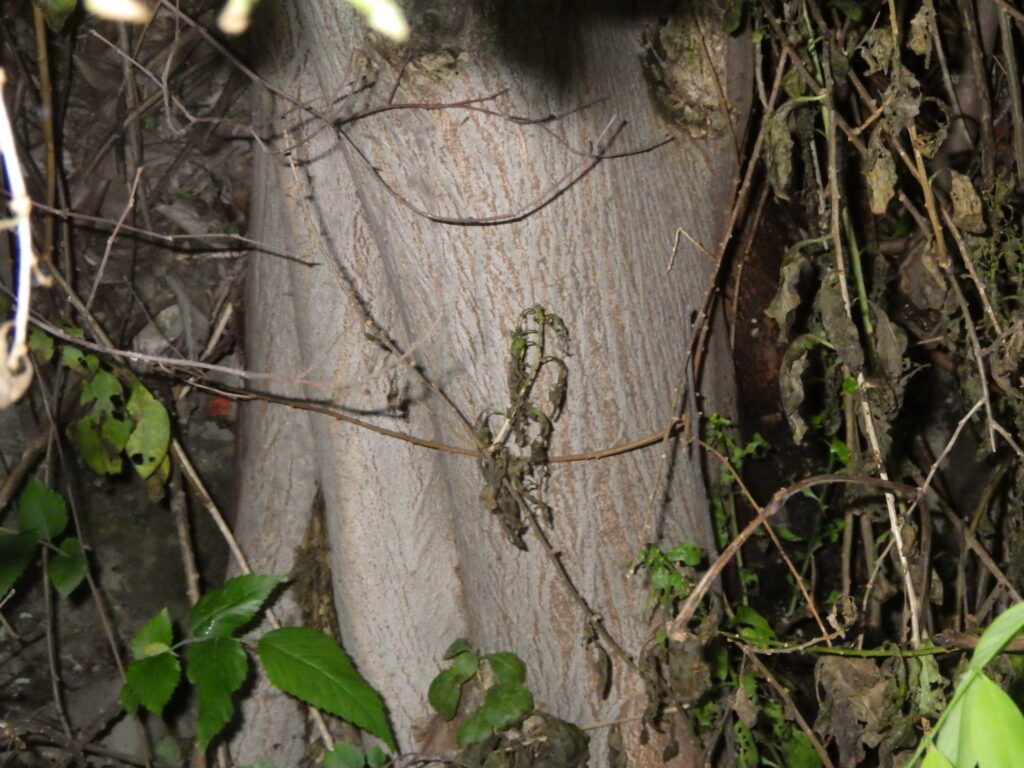
The Japanese hackberry (Celtis sinensis), also known as the long-leaved hackberry or round-leaved hackberry, is distributed in Honshu, Shikoku, and Kyushu in Japan; as well as in Korea and China. It is a deciduous tree that grows in sunny, moderately moist areas from hills to mountains and along coastlines. Wild specimens are frequently found even in urban areas, and it has been cultivated for its timber and as a marker for "ichirizuka," mounds of earth placed every ri (approximately 4 km) along major highways since the Edo period.
Ezo hackberry (Celtis jessoensis), also known as Okuenoki, is a deciduous tree distributed in Hokkaido, Honshu, Shikoku, and Kyushu in Japan. It is commonly found in valleys of mountainous areas with beech forests, growing alongside beech and chestnut trees.
Aphananthe aspera, also known as Muku or Mukuenoki, is a deciduous tree that grows in sunny areas from the oak and chestnut zones to the lower beech zones in Honshu (west of the Kanto region), Shikoku, and Kyushu in Japan; Korea (Jeju Island); China; and Taiwan. Wild specimens are frequently found even in urban areas, and it has been used as timber.
All of these trees belong to the Cannabaceae family, and in particular, the Japanese hackberry (Enoki) and the Chinese zelkova (Hackberry) are extremely common trees in Japan. Even in urban areas, young trees are frequently seen along roadsides, and although they do not produce flowers or fruit at the young stage, if you remember the shape of their leaves, you will see them growing everywhere to the point that you can't go a day without seeing them. They are also used as timber.
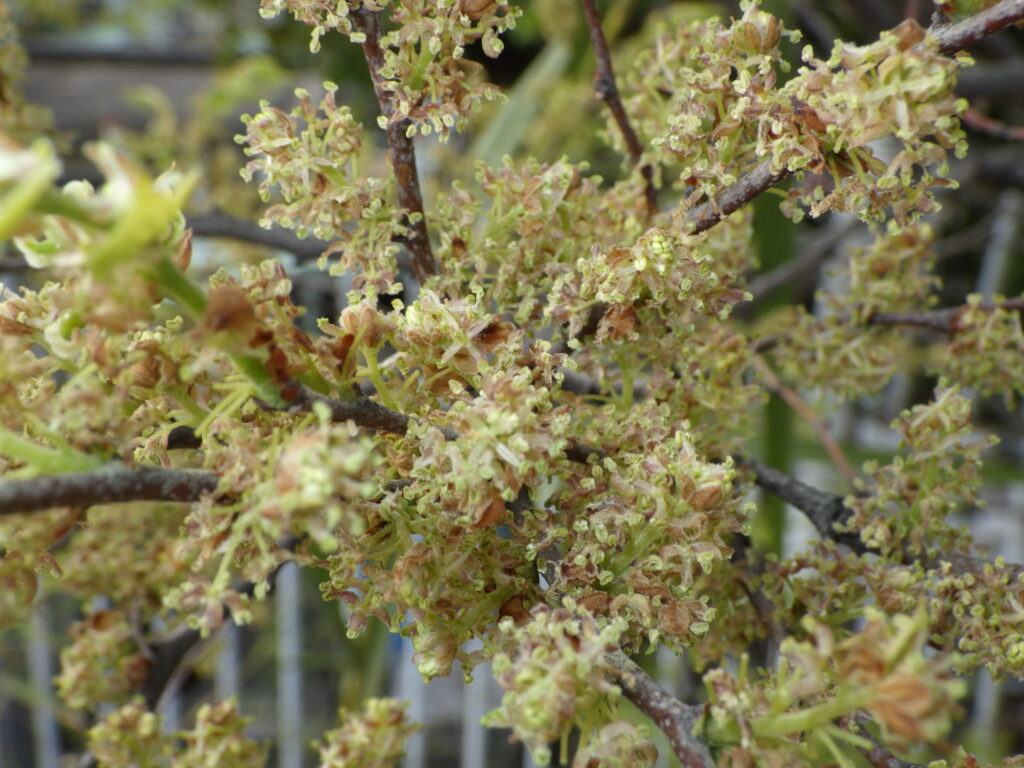
The flowering period is from April to May, but the flowers are wind-pollinated and therefore quite inconspicuous (Leme et al., 2021). To avoid self-pollination, the flowers are separated into male and female.
The Japanese hackberry (Celtis sinensis) is known as a food source for the larval stage of butterflies such as Hestina persimilis and Sasakia charonda charonda, and recently it has also become a food source for Hestina assimilis, a designated invasive species (Matsumoto and Mori, 2021). If you are looking for or raising these butterflies, it is essential to be able to identify Japanese hackberry trees (however, importing, breeding, and releasing Hestina assimilis into the wild is prohibited).
Therefore, many people may want to distinguish between closely related species, including the Japanese hackberry (Enoki).
What are the differences between Japanese hackberry (Enoki), Japanese hackberry (Ezoensis), and Chinese hackberry (Mukunoki)?
All three species belong to the Cannabaceae family, but while hackberry and Japanese hackberry belong to the genus Celtis, zelkova belongs to the genus Aphananthe. Therefore, morphological differences can be observed (Kanagawa Prefecture Flora Survey Association, 2018; Hayashi, 2019).
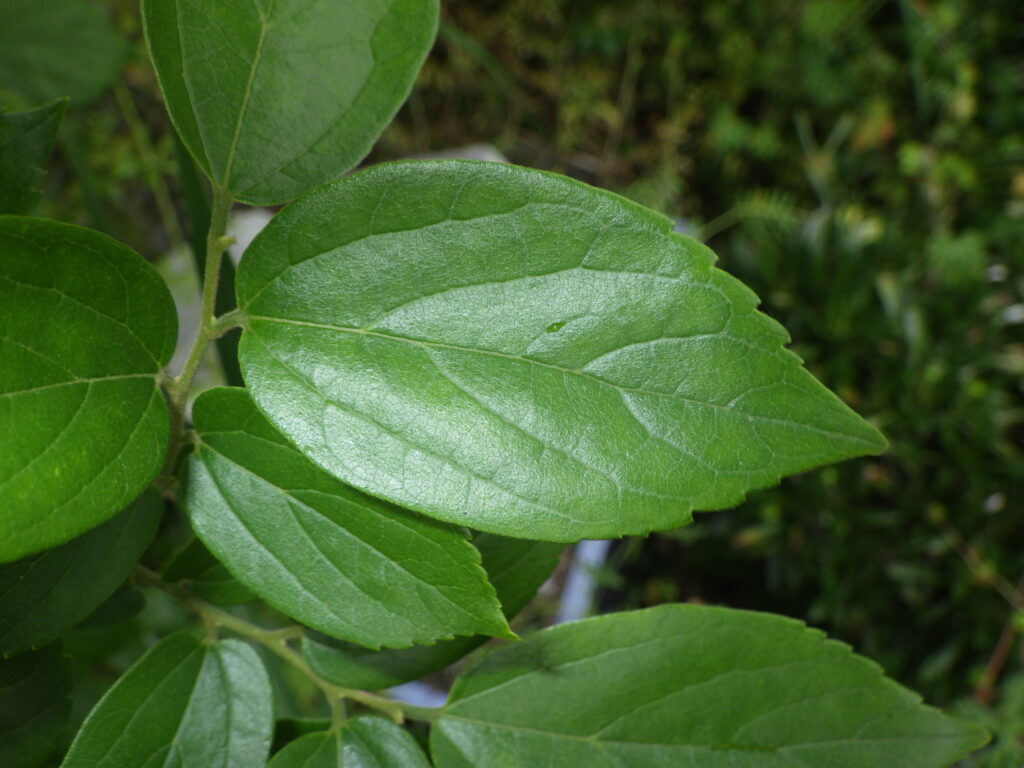
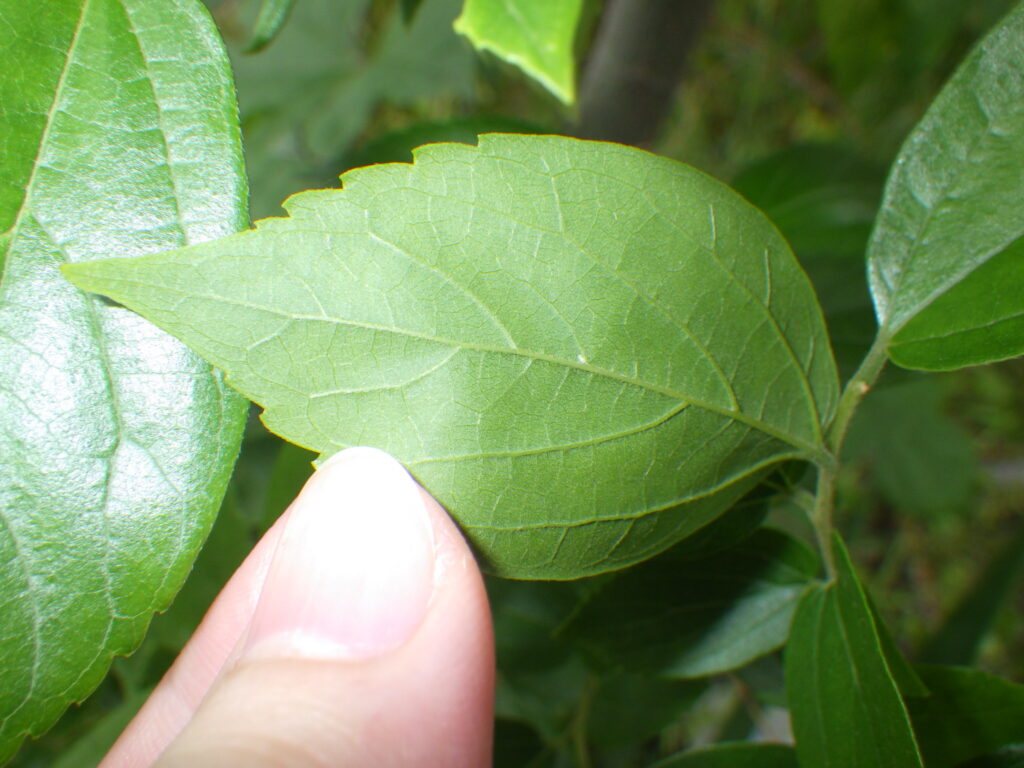
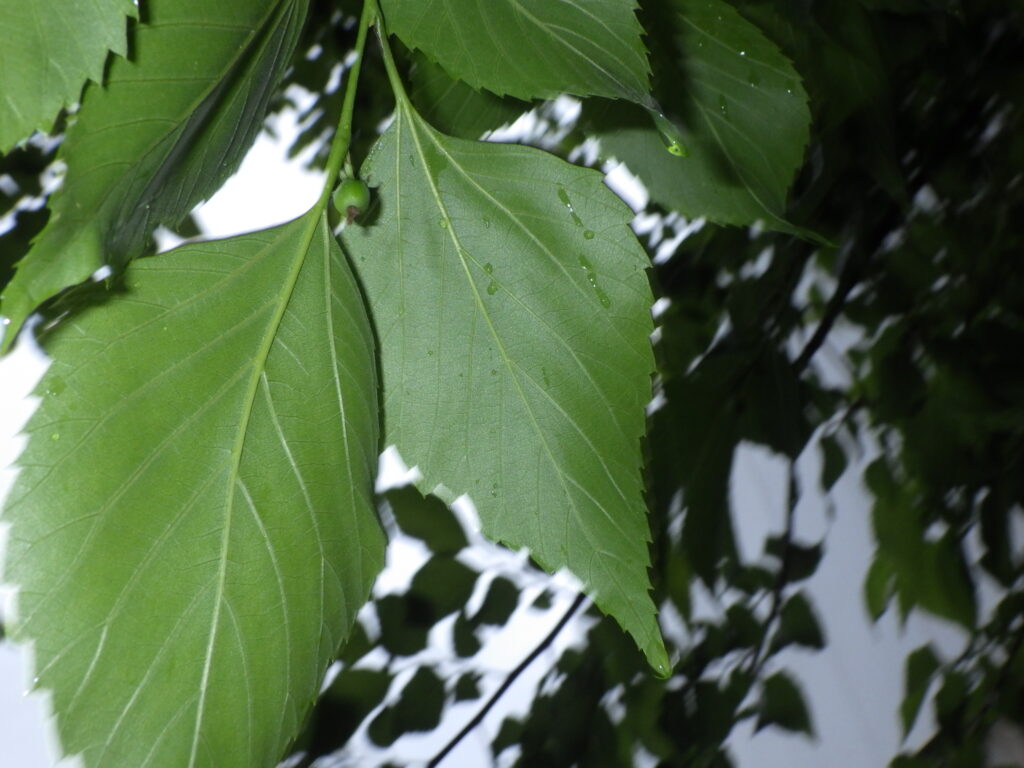
Specifically, the difference is that the leaves of the Japanese hackberry (Enoki) and the Ezo hackberry (Ezo Enoki) are asymmetrical, while the leaves of the Japanese hackberry (Mukunoki) are nearly symmetrical.
While even the Japanese hackberry (Hackberry) has some degree of asymmetry, many of the Japanese hackberry (Celtis sinensis) and the Japanese hackberry (Celtis japonica) clearly exhibit a distorted shape.
Also, this might be for slightly more advanced users, but in Japanese hackberry and Japanese hackberry, the two veins on either side of the three-part vein at the base of the leaf blade, known as the "three-veined vein," are curved, allowing the vein to extend more than halfway down the leaf blade. In contrast, in Japanese hackberry , the two veins on either side of the three-veined vein are straight, so they reach the leaf margin less than halfway down the leaf blade.
This difference is helpful because it eliminates the need to rely on the somewhat ambiguous distinction of leaf distortion.
Regarding the Japanese hackberry (Enoki) and the Ezo hackberry (Ezo Enoki), the difference is that in the Japanese hackberry, the serrations are only at the tip of the leaf, while in the Ezo hackberry, the serrations are present throughout the leaf except at the base.
However, be aware that even young hackberry trees have a wide area of serrations, though not as extensive as the Ezo hackberry.
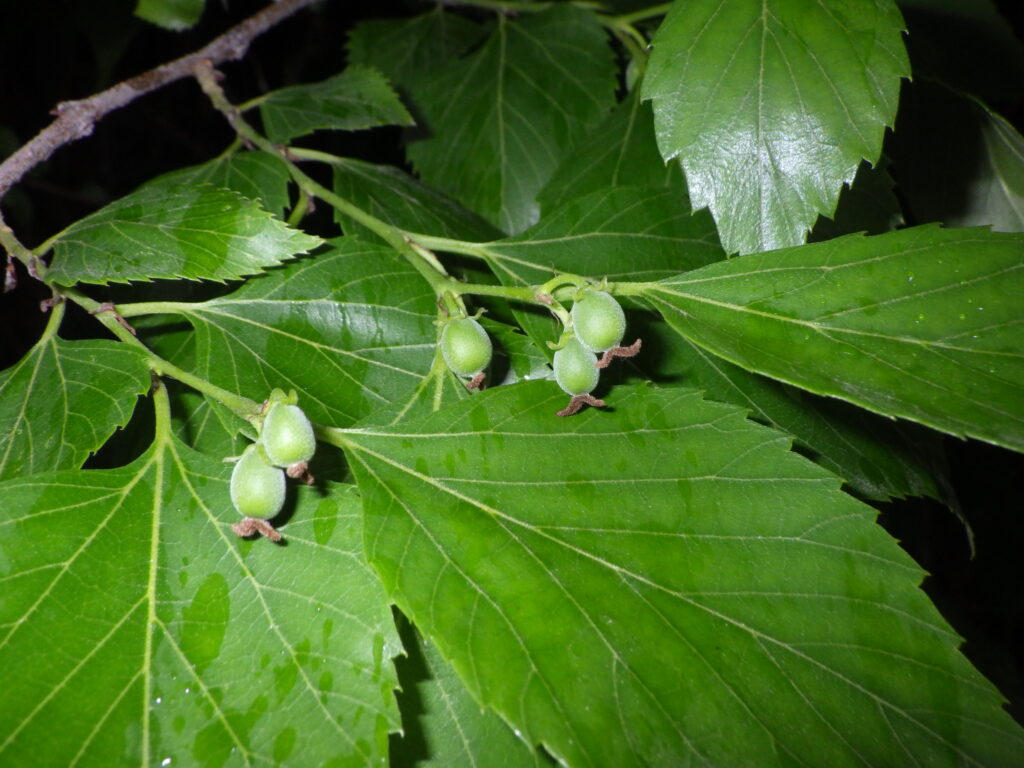
In addition, there are differences between the two species: the Japanese hackberry (Celtis sinensis) has short, soft hairs on its one-year-old branches, its fruits ripen to a reddish-brown color, and its fruit stalks are 0.5 to 1.5 cm long, while the Japanese hackberry (Celtis sinensis var. japonica) has almost no hairs on its one-year-old branches, its fruits ripen to a black color, and its fruit stalks are 2 to 2.5 cm long.
Since the Ezo hackberry (Celtis sinensis) can only be found in high altitudes, you will rarely see it in forests in lowlands or in urban areas. In that case, you only need to distinguish it from the Japanese hackberry (Celtis sinensis) and the Chinese hackberry (Celtis japonica), which can be easily distinguished by looking at the serrations on its leaves.
Specifically, the teeth of the Japanese hackberry (Enoki) are round and shallow, while those of the Japanese aphananthe (Mukunoki) are nearly right-angled and shallow.
Furthermore, in the case of the Japanese hackberry (Hackberry), the area where the teeth are serrated is wider than in the Japanese hackberry (Celtis sinensis), similar to the Japanese hackberry (Celtis japonica).
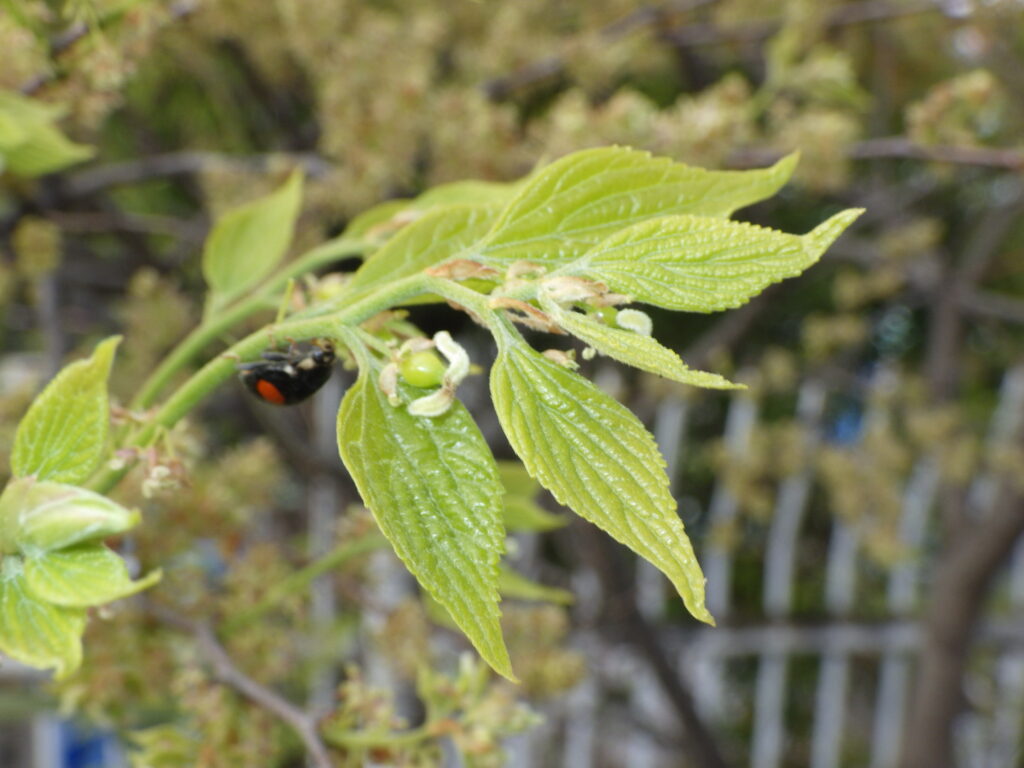
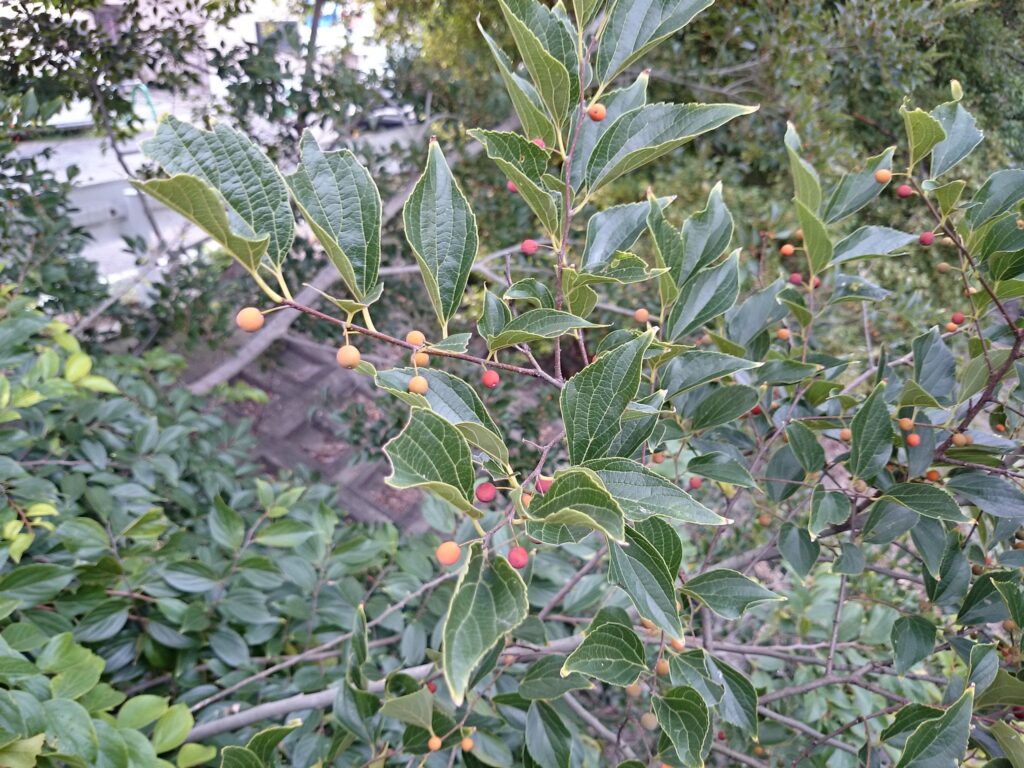
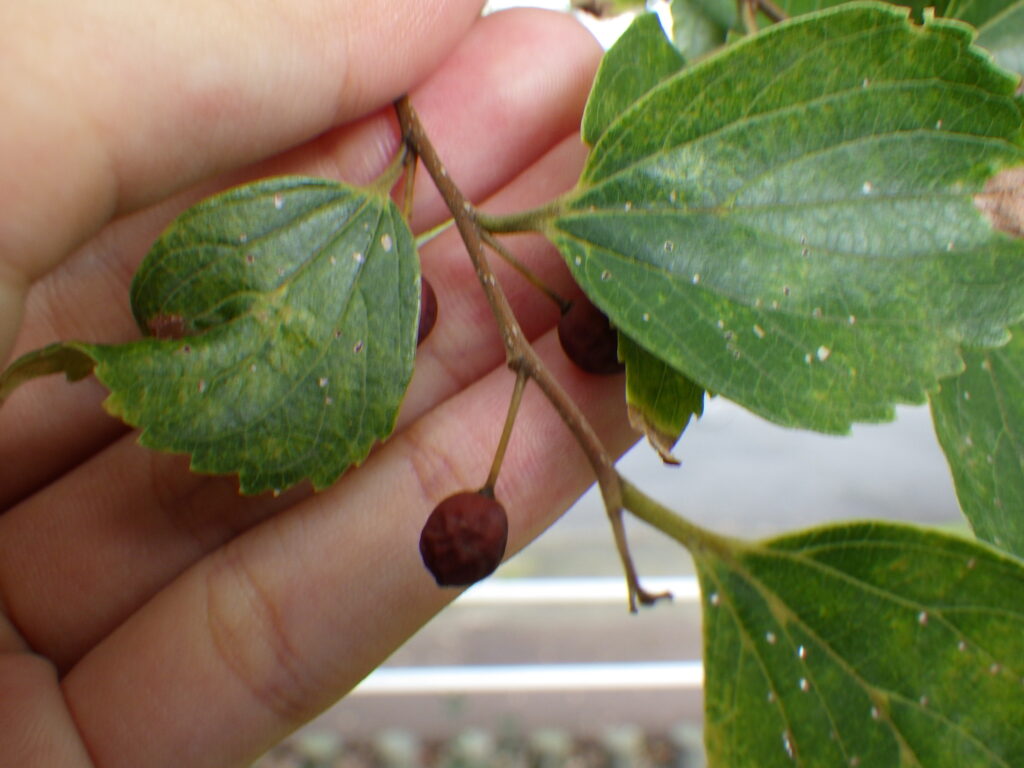
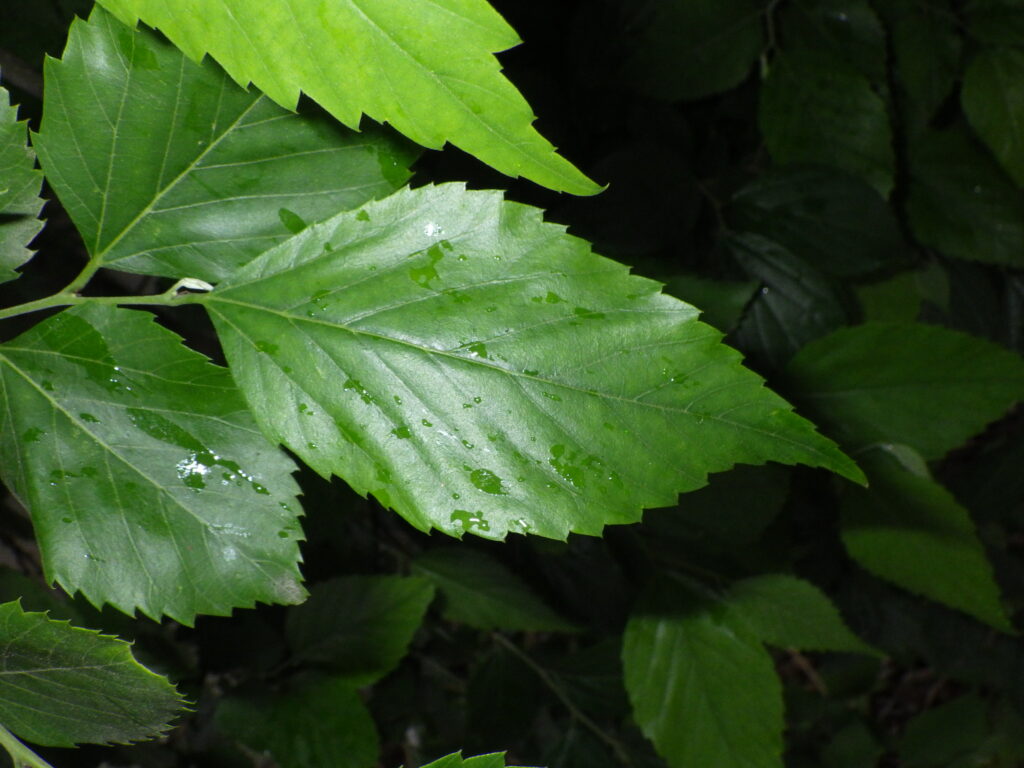
Are there any other similar species?
One known variety of hackberry is the weeping hackberry (Celtis sinensis f. pendula), which has drooping leaves.
Known varieties of Celtis sinensis include Celtis sinensis f. angustifolia, which has narrow leaves, and Celtis sinensis f. hashimotoi, which has white undersides to its leaves.
Other species in the same genus include the following:
Celtis biondii var. heterophylla is distributed from the Tokai region to Okinawa in Japan, growing on hillsides, mountain ridges, and limestone areas. It resembles the Japanese hackberry (Celtis sinensis), but is distinguished by its fine veins on the underside of the leaves and the hairs on the upper surface.
Celtis boninensis, also known as Ryukyu hackberry, is distributed in Japan from Yamaguchi Prefecture to the western coast of Kyushu, the Ogasawara Islands, and Okinawa, growing in forests and limestone areas near the coast. It resembles the Japanese hackberry (Celtis sinensis), but its serrations are as extensive as those of the Ezo hackberry (Celtis japonica).
Although hackberry is a herbaceous plant belonging to a completely different family, it may sometimes be confused with elm. Please see the separate article for the differences.
While the name "enoki" might bring to mind the mushroom, it's actually an abbreviation for Flammulina velutipes, and is naturally different from the plant known as enoki. The name comes from the fact that it grows on enoki trees.
References
Hayashi, Masayuki. 2019. Tree Leaves: Expanded and Revised Edition - Identifying 1300 Species Through Real-Life Scans. Yama-kei Publishers, Tokyo. 824pp. ISBN: 9784635070447
Kanagawa Prefecture Flora Survey Association. 2018. Kanagawa Prefecture Flora 2018 (Electronic Edition). Kanagawa Prefecture Flora Survey Association, Odawara. 1803pp. ISBN: 9784991053726
Leme, FM, Staedler, YM, Schönenberger, J., & Teixeira, SP 2021. Floral morphogenesis of Celtis species: implications for breeding system and reduced floral structure. American Journal of Botany 108(9): 1595-1611. https://doi.org/10.1002/ajb2.1724
Matsumoto, Yuki and Mori, Takahisa. 2021. Comparison of the sizes of food plants used by the overwintering larvae of the invasive species *Hestina assimilis*, the native species *Hestina japonica*, and *Sasakia charonda*. Bulletin of Teikyo University of Science 17: 53-57. ISSN: 1880-0580.
https://doi.org/10.18881/00000745