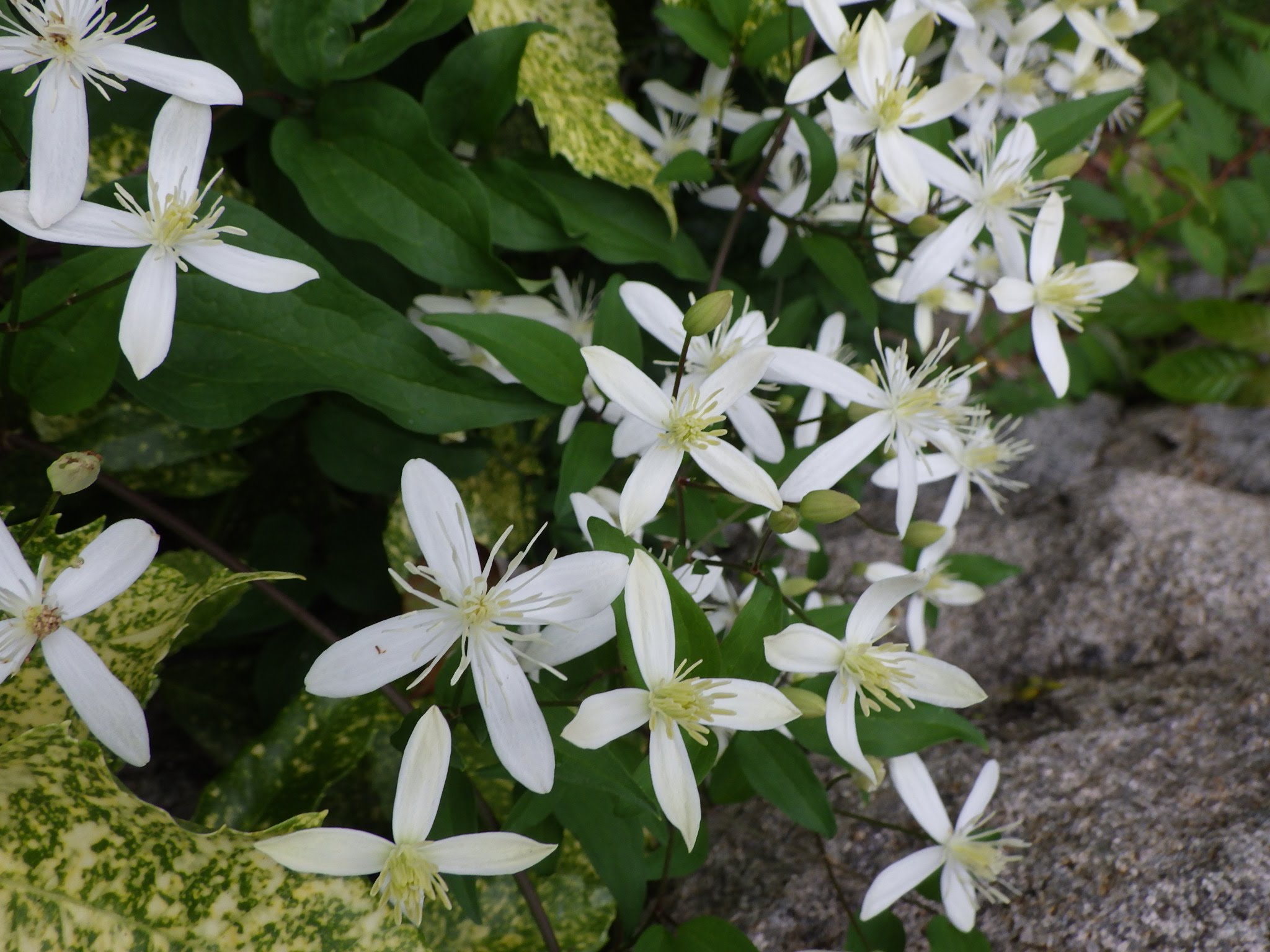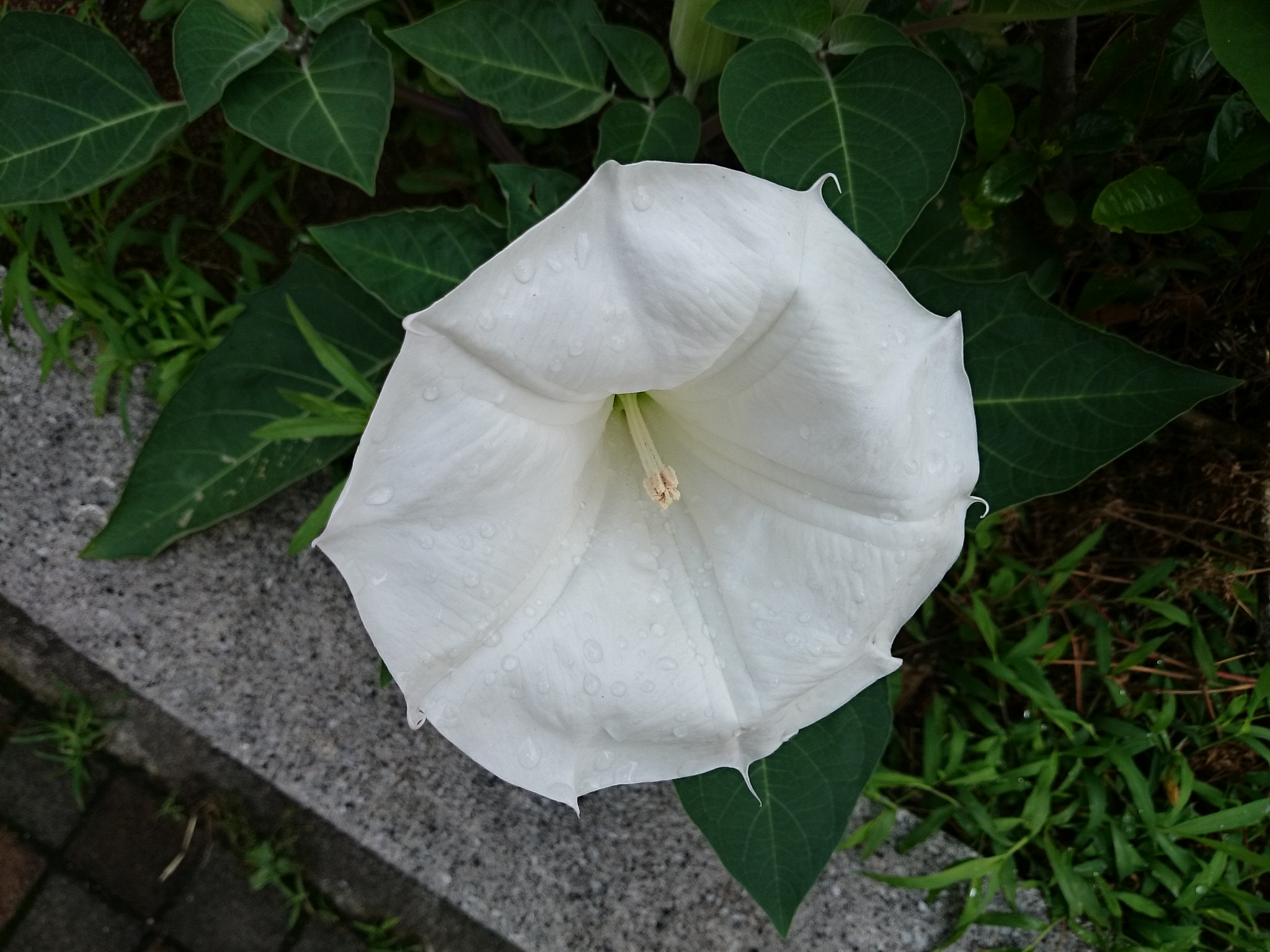
Datura stramonium, Datura stramonium, and Datura arborescens all belong to the Solanaceae family and are cultivated as ornamental plants, as well as being well-known as poisonous and medicinal plants. They are also collectively called "Datura" or "Datura" from their genus name. However, these species are often confused and misunderstood on the internet. First, there is a major classification difference: Datura stramonium and Datura stramonium belong to the Datura genus, while Datura arborescens belongs to the Datura genus. Specifically, there are differences in flower size and the direction in which they bloom. Datura stramonium and Datura stramonium can be roughly distinguished by the presence or absence of hairs, but it is rare to see genuine Datura stramonium in Japan in the first place. There are also many other species in the same genus, so be sure to distinguish them as well. This article will explain the classification of the Datura genus and the Datura genus.
What are Datura stramonium, Datura stramonium, and Datura arborescens?
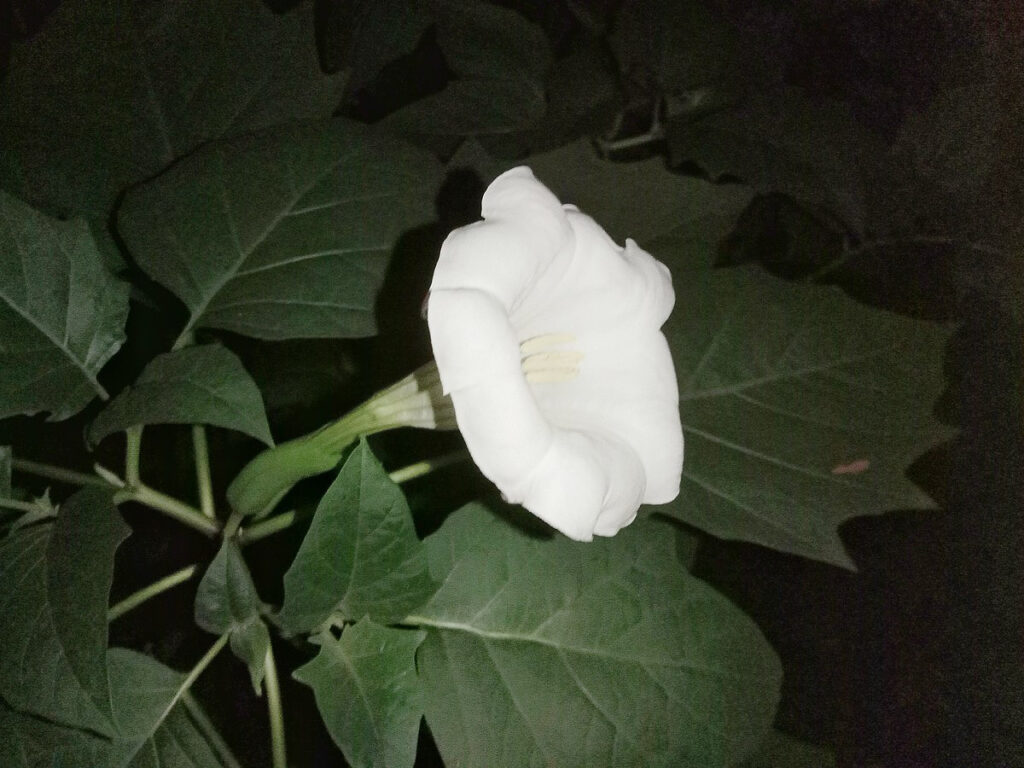
Datura metel, also known as Korean morning glory, is native to Central and South America and is an annual plant that grows on sunny, grassy slopes (Kanagawa Prefecture Flora Survey Association, 2018; RBG Kew, 2023). It was introduced to Asia a long time ago and has naturalized in Africa and other regions. In Japan, it was introduced during the Edo period and cultivated for medicinal purposes, but it is now rarely seen.
Datura wrightii, also known as hairy morning glory, is a perennial plant native to the United States and Mexico, growing in vacant lots and other open spaces. It is cultivated in various parts of the world and sometimes becomes naturalized. It was introduced to Japan at the end of the Edo period, cultivated for ornamental purposes, and sometimes becomes naturalized.
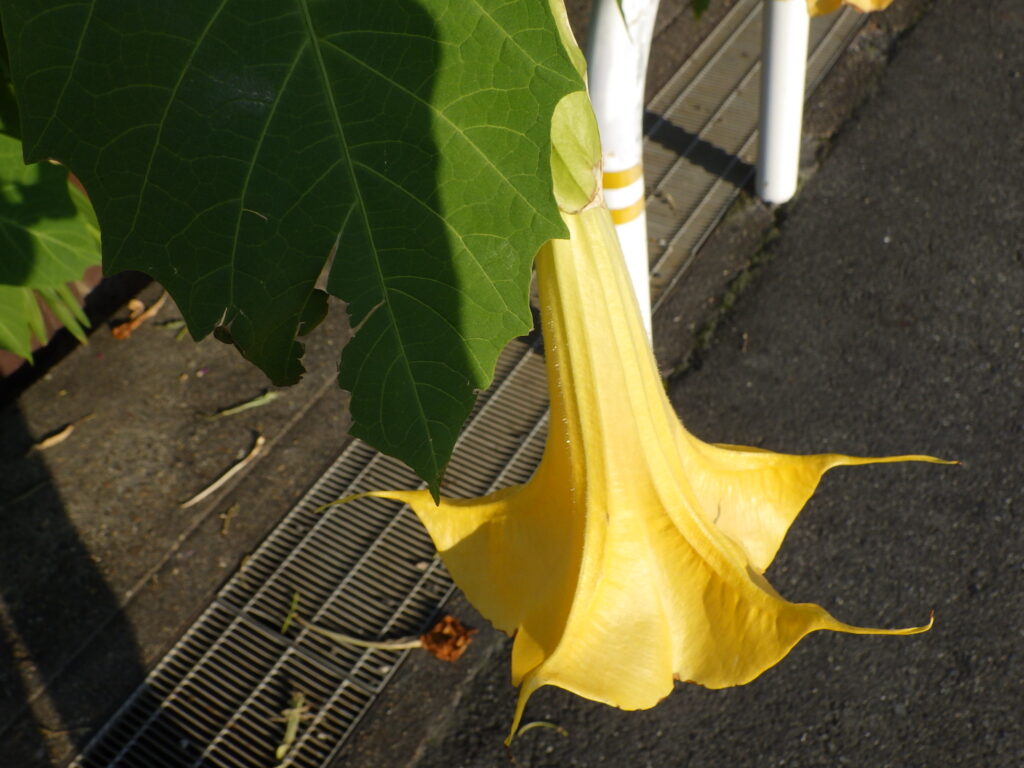
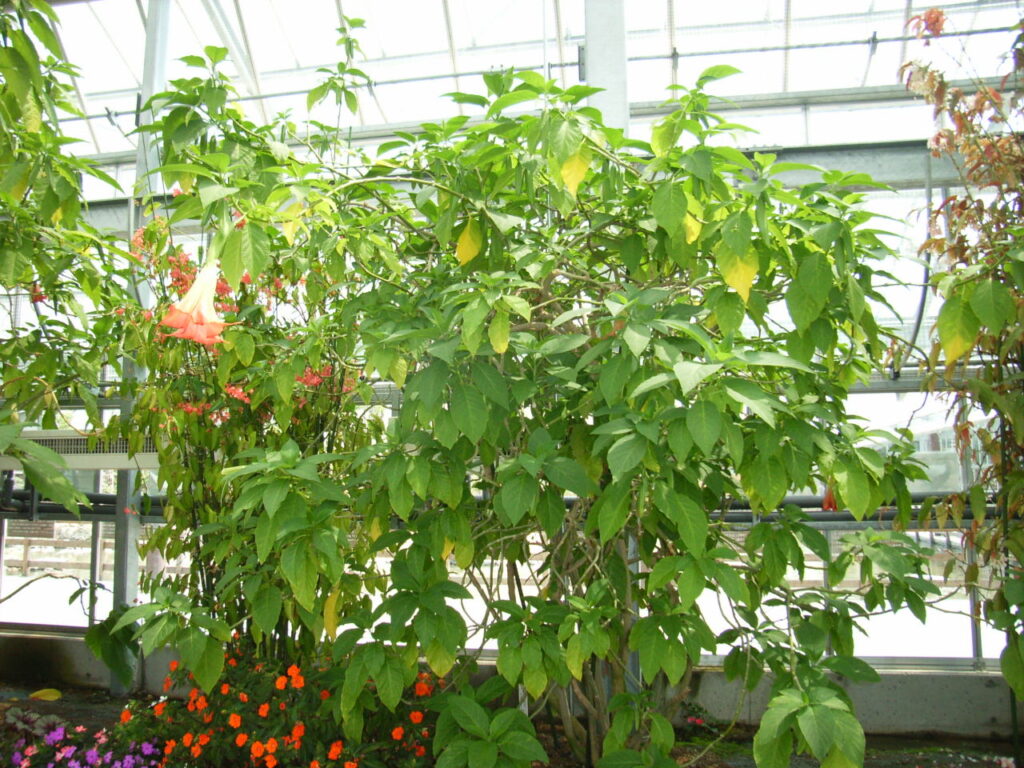
Brugmansia suaveolens, also known as angel's trumpet, is an evergreen shrub native to Brazil. It is cultivated and sometimes naturalized in various parts of the world, including Japan.
All of these plants belong to the Solanaceae family and are cultivated as ornamental plants. They are also well-known as poisonous and medicinal plants containing tropane alkaloids such as atropine, scopolamine, and hyoscyamine. They are collectively referred to as "Datura" or "Datura" from their genus name (however, Datura arborescens is no longer included in the Datura genus).
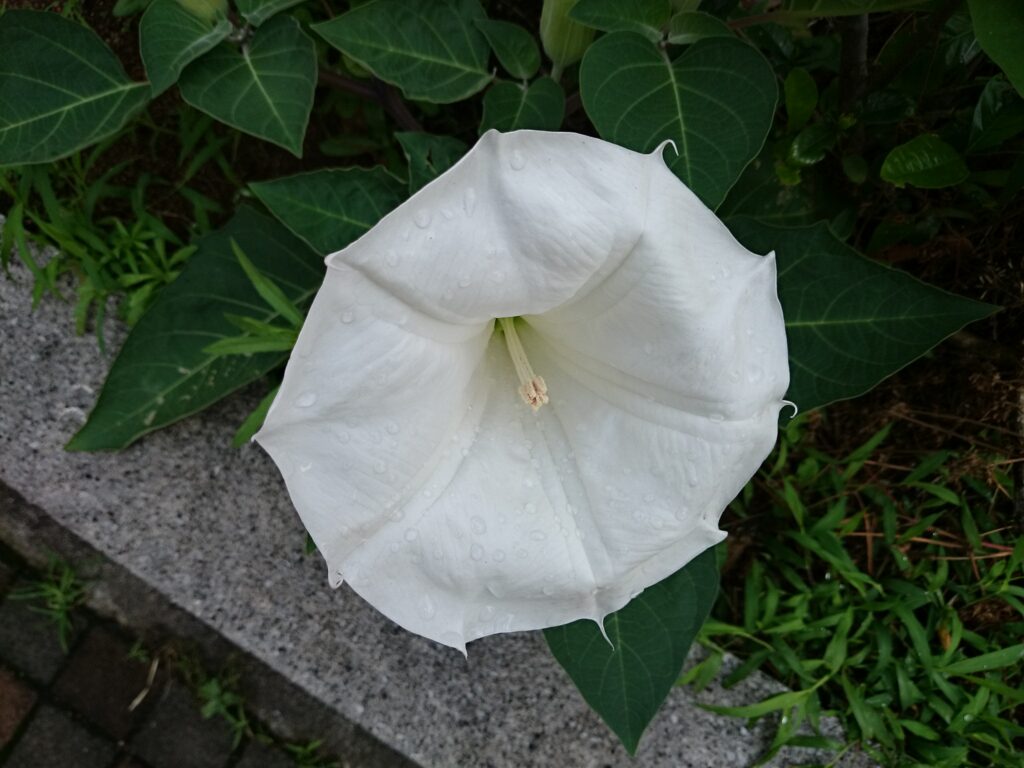
Other common features include flowers that are 5 cm or longer and grow solitary, and fruits that are capsules. These are characteristics that are rare within the Solanaceae family. The fact that the tip of the corolla extends into a tail-like shape is a major difference from sympetalous flowers such as morning glories.
However, these varieties are extremely often confused. In particular, there is almost no mention of the difference between Datura stramonium and Datura metel on the internet, and what should be Datura metel is often mistakenly identified as Datura stramonium.
What are the differences between the Datura genus and the Datura genus?
These species are completely different (Editorial Committee of the Flora of Taiwan, 1998; Spencer, 2002).
First, there is a major difference between Datura stramonium and Datura metel, which belong to the genus Datura, while Brugmansia stramonium belongs to the genus Brugmansia. Brugmansia stramonium was once classified under the genus Datura, but this is its current classification.
Therefore, it can be expected that there will be significant differences in their characteristics.
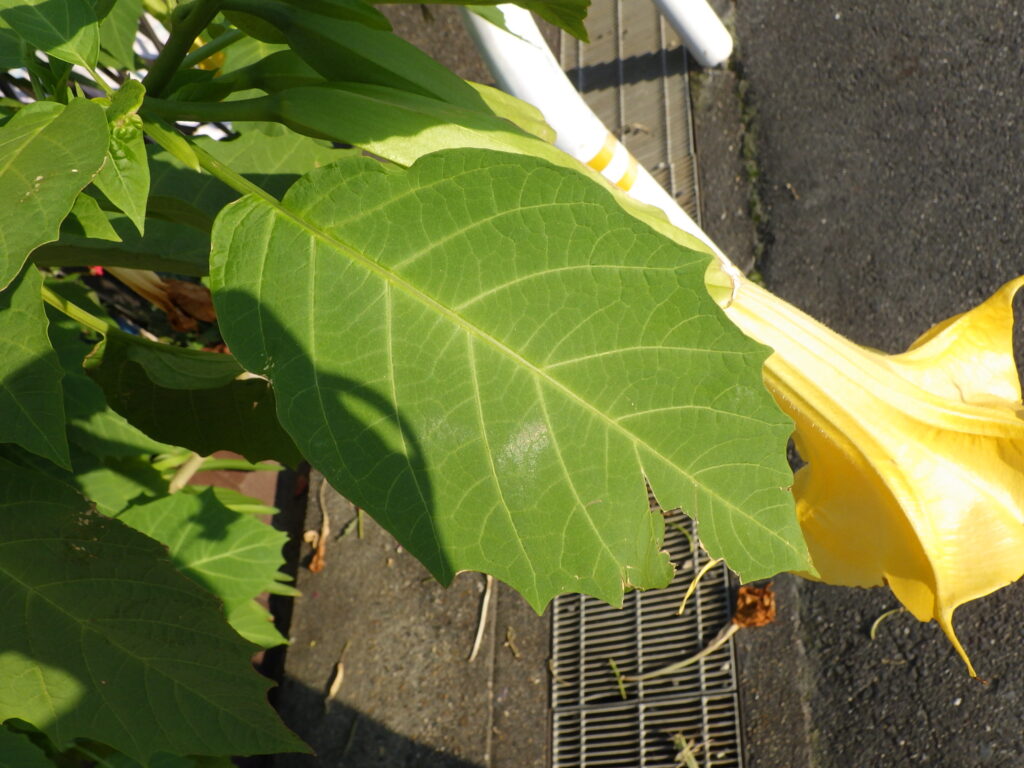
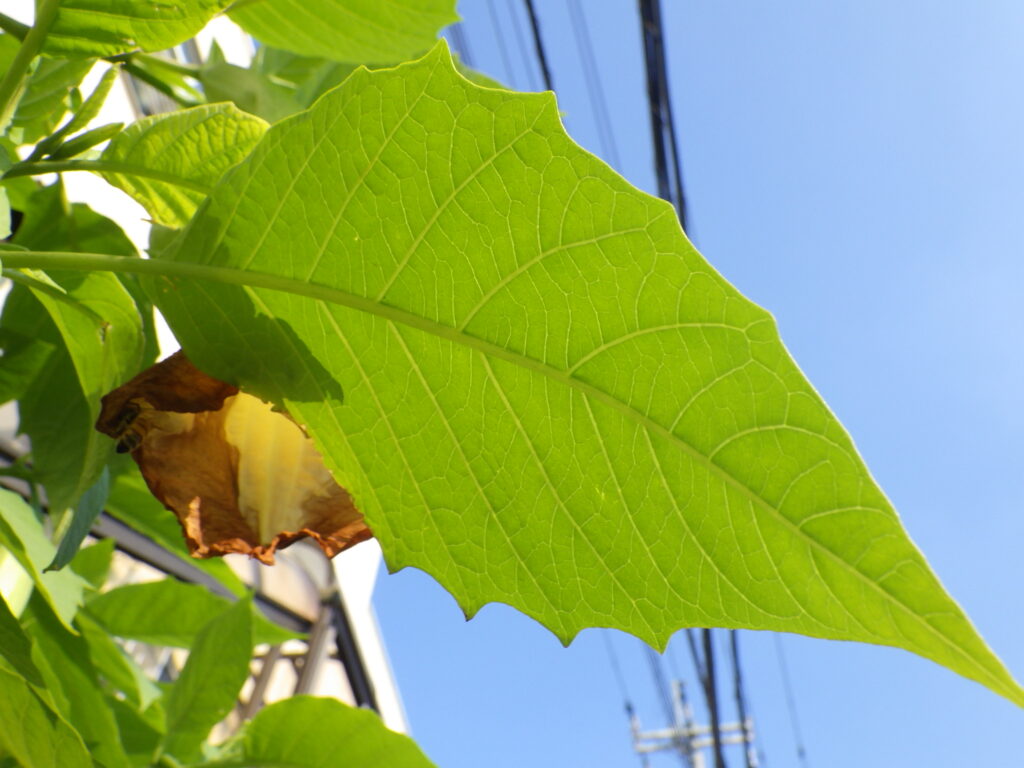
Specifically, while the genus Datura consists of herbs to subshrubs, the genus Datura consists of evergreen shrubs to trees, clearly indicating a larger size. This is as the name "tree" suggests.
Furthermore, while the flowers of the Datura genus are small, less than 20 cm in diameter, and tend to grow somewhat upright, the flowers of the Datura genus are large, more than 20 cm in diameter, and tend to droop downwards.
These two points are arguably the biggest differences. There are other minor differences, but I will omit them here.
Therefore, these characteristics allow us to distinguish the tree dwarf stramonium from the common stramonium and the hairy stramonium.
While *Datura stramonium* is the most common species of the *Datura* genus found in Japan, several other species, such as * Brugmansia x candida*, are also cultivated and have Japanese names. For information on how to distinguish between them, please refer to Spencer (2002).
What is the difference between Datura stramonium and Datura metel?
There are probably very few resources that describe the differences between Datura stramonium and Datura metel.
You might think that the Korean stramonium (Datura stramonium) is a well-known name and can be seen in your local area.
However, while true Datura stramonium was once cultivated as mentioned above, it is now rarely seen, and what is commonly seen today is Datura stramonium (Kanagawa Prefecture Flora Survey Association, 2018).
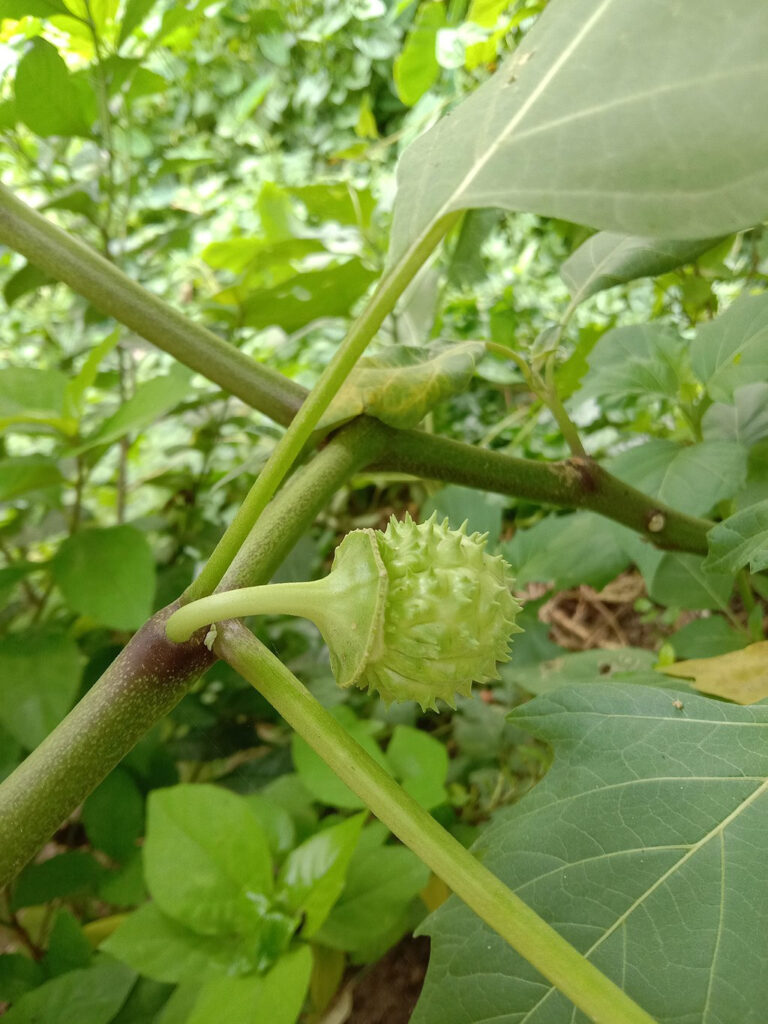
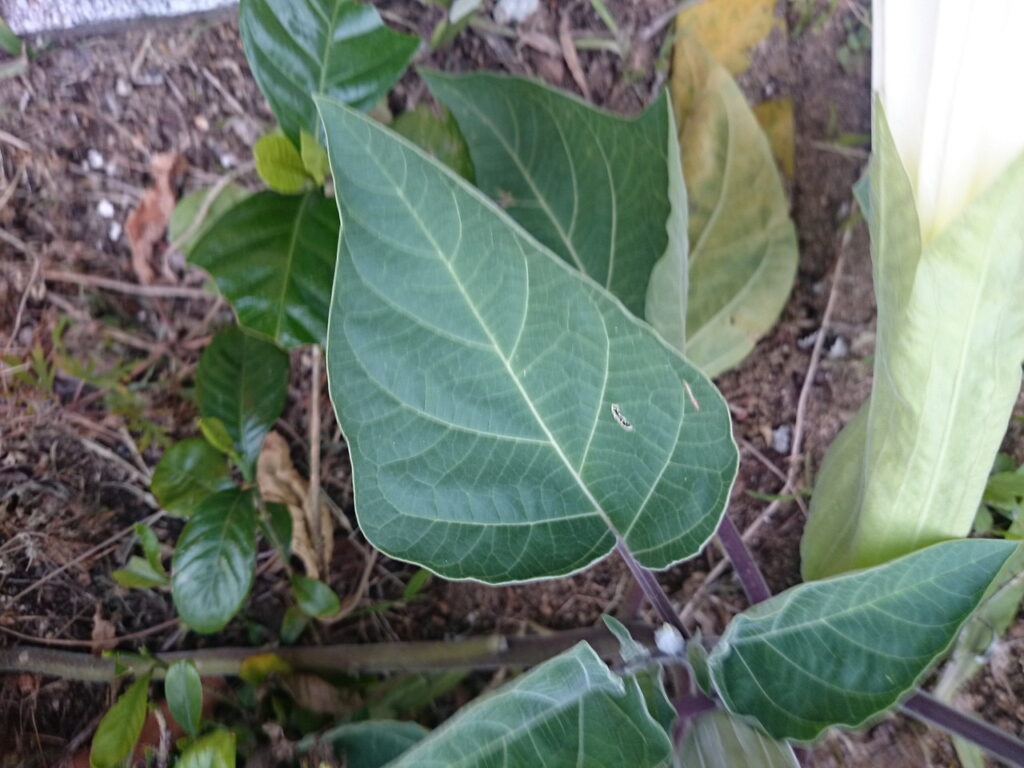
The main difference is that in Datura stramonium, the stems and leaves are almost hairless except for the young parts, and the capsules are erect or obliquely ascending, whereas in Datura stramonium, the stems and leaves are densely covered with fine, soft hairs, and the capsules face downwards.
As you can see, the Datura stramonium has hairs, which gives its stem a whitish appearance, making it easy to spot.
However, other species of the Datura genus found in Japan are also known.
White-flowered Datura stramonium var. stramonium has stems and leaves that are almost hairless, and its fruit has spines less than 1 cm long. It is as common as, or even more common than, the common Datura stramonium. Although its name means "white flower," there is also f. stramonium with pale green stems and white flowers, and there is also f. tatura, which has purplish stems and pale purple flowers.
Datura stramonium var. inermis has stems and leaves that are almost hairless, and its fruits have no thorns.
Datura ferox has stems and leaves that are almost hairless, and its fruit has thick spines 1-2 cm long.
References
Editorial Committee of the Flora of Taiwan. 1998. Flora of Taiwan (2nd ed., Vol. 4). Taiwan University, Taipei. 1217pp. ISBN: 9789570231212, http://www.efloras.org/florataxon.aspx?flora_id=100&taxon_id=10828
Kanagawa Prefecture Flora Survey Association. 2018. Kanagawa Prefecture Flora 2018 (Electronic Edition). Kanagawa Prefecture Flora Survey Association, Odawara. 1803pp. ISBN: 9784991053726
RBG Kew. 2023. The International Plant Names Index and World Checklist of Vascular Plants. Plants of the World Online. http://www.ipni.org and https://powo.science.kew.org/
Spencer, R. 2002. Solanaceae. In: R. Spencer (Ed.), Horticultural Flora of South-eastern Australia: The identification of garden and cultivated plants (Vol. 4. Flowering plants. Dicotyledons. Part 3). University of New South Wales Press, Sydney. ISBN: 9780868406848, https://hortflora.rbg.vic.gov.au/taxon/812e4f6e-edbc-42bc-b528-63c3ac4e14df/key, https://hortflora.rbg.vic.gov.au/taxon/ad9df2e0-5340-11e7-b82b-005056b0018f/key