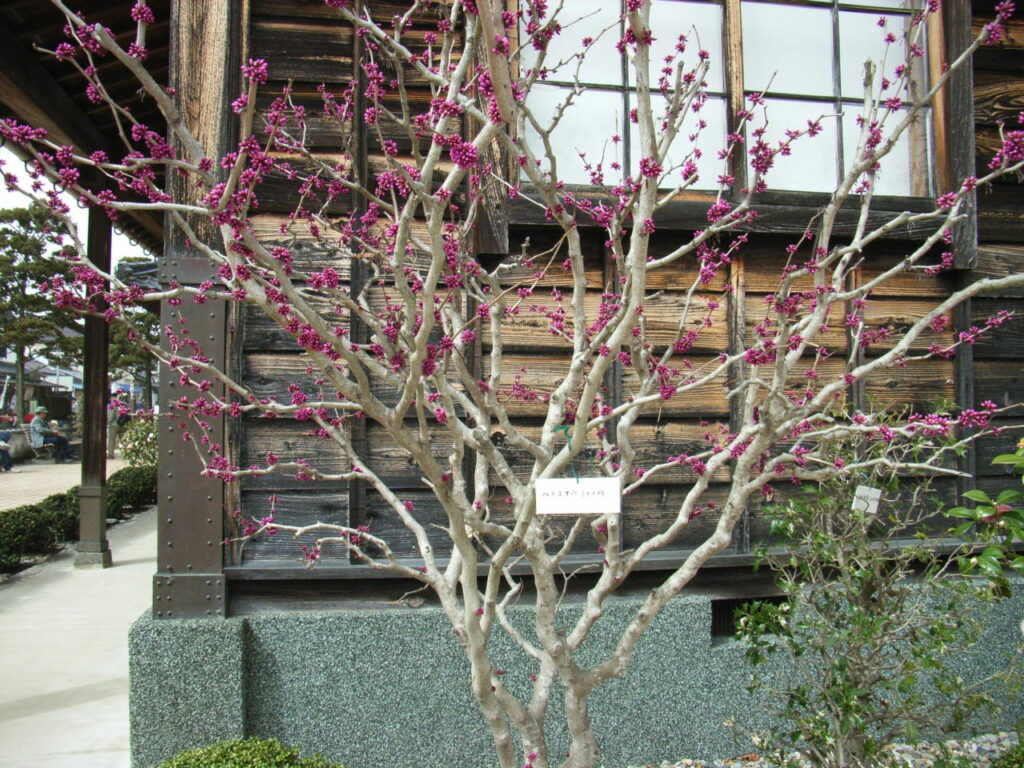
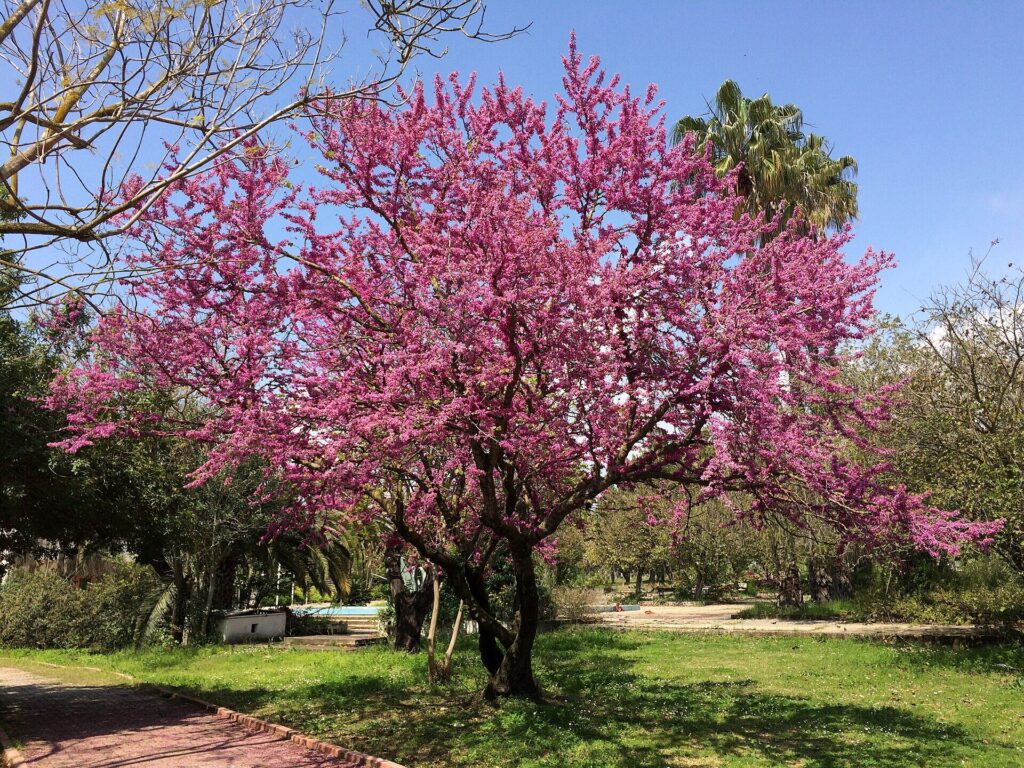
The most distinctive feature of the Japanese redbud (Cercis chinensis), American redbud (Cercis rupestris), and European redbud (Cercis rupestris) is that, like cherry blossoms, they are densely covered in pink to purple, butterfly-shaped flowers characteristic of the legume family in spring before the leaves unfold. The Japanese redbud, which has been cultivated for a long time, is well-known, but in recent years, opportunities to see American redbuds and European redbuds have increased. These are increasingly being confused. However, their original distribution areas are quite different, and they can be clearly distinguished by carefully observing the shape of the leaves, the tree shape, and the flowers. This article will explain the classification and morphology of the genus Cercis rupestris.
What are the Japanese redbud (Cercis chinensis), American redbud (Cercis chinensis), and European redbud (Cercis chinensis)?
Cercis chinensis, also known as Hanazuho or Suoubana, is a deciduous shrub to small tree distributed in eastern China, introduced to the Korean Peninsula, the Caucasus, and Ukraine. In Japan, it has long been cultivated as an ornamental plant in gardens and other areas (RBG Kew, 2025).
American redbud (Cercis canadensis) is a deciduous shrub to small tree distributed in the eastern United States, introduced to the Caucasus, Ukraine, and Romania, and rarely cultivated in Japan for ornamental purposes.
The European redbud, Cercis siliquastrum, is also known as the Judas tree. It is a deciduous shrub to small tree distributed along the Mediterranean coast of Europe (France to Bulgaria) and in West Asia (Turkey to Afghanistan). The name "Judas tree" is sometimes said to originate from the belief that Judas hanged himself from a redbud tree, causing its flowers to turn reddish, but this is likely a translation error, and the original name was probably "Jewish tree."
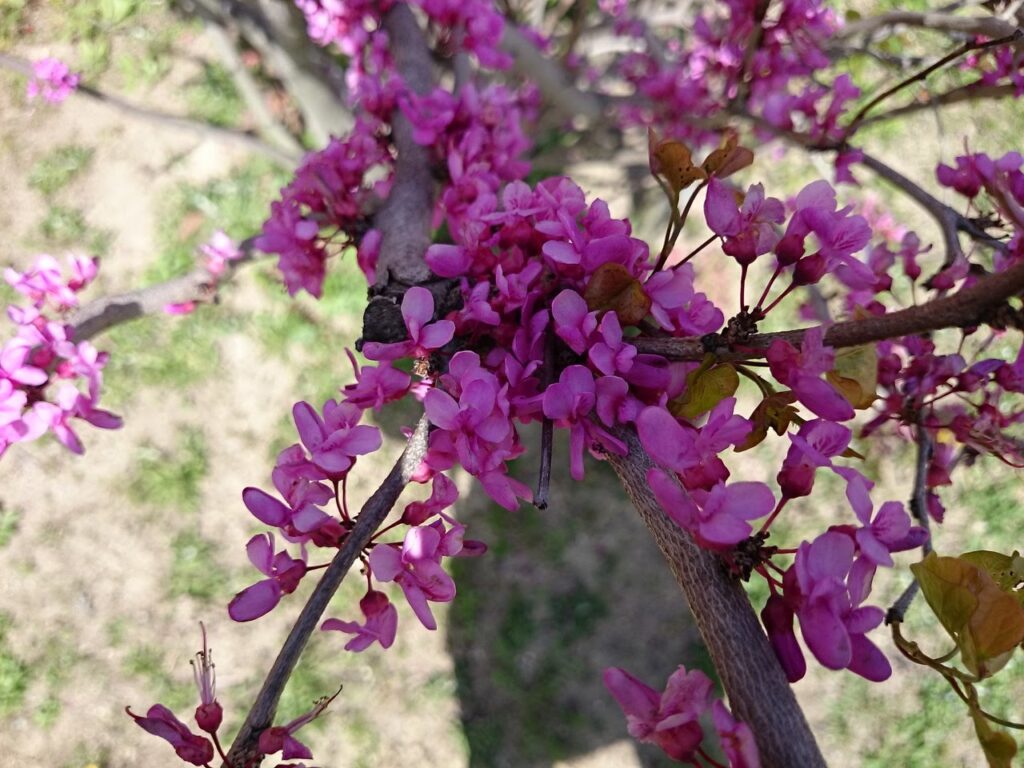
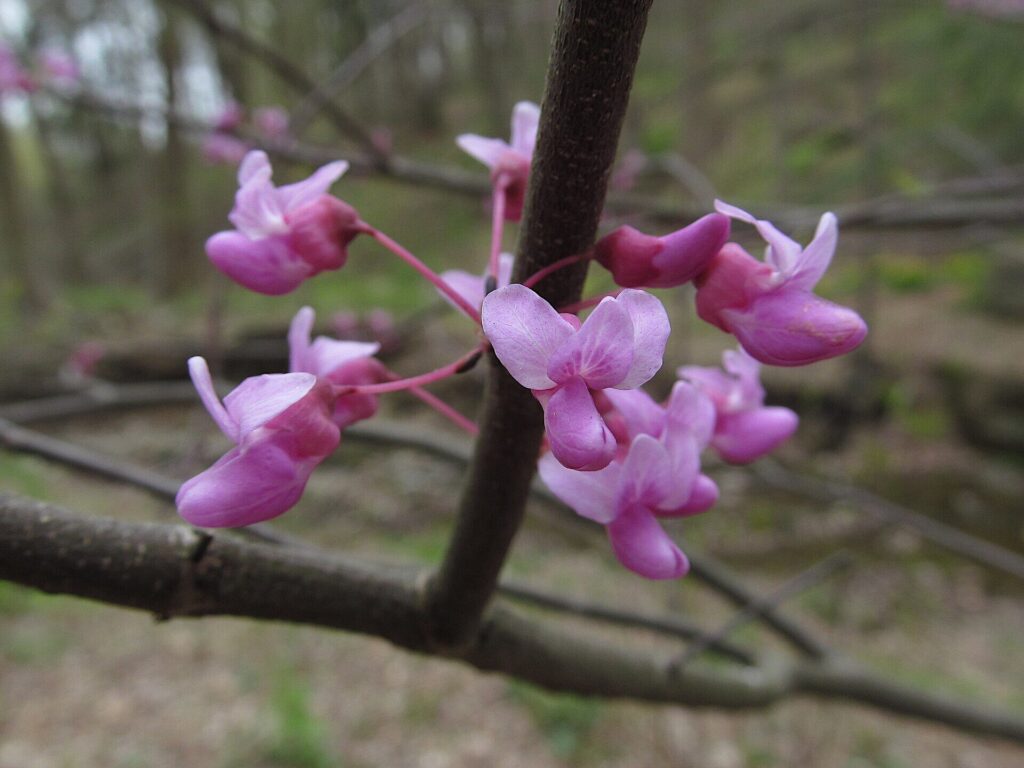
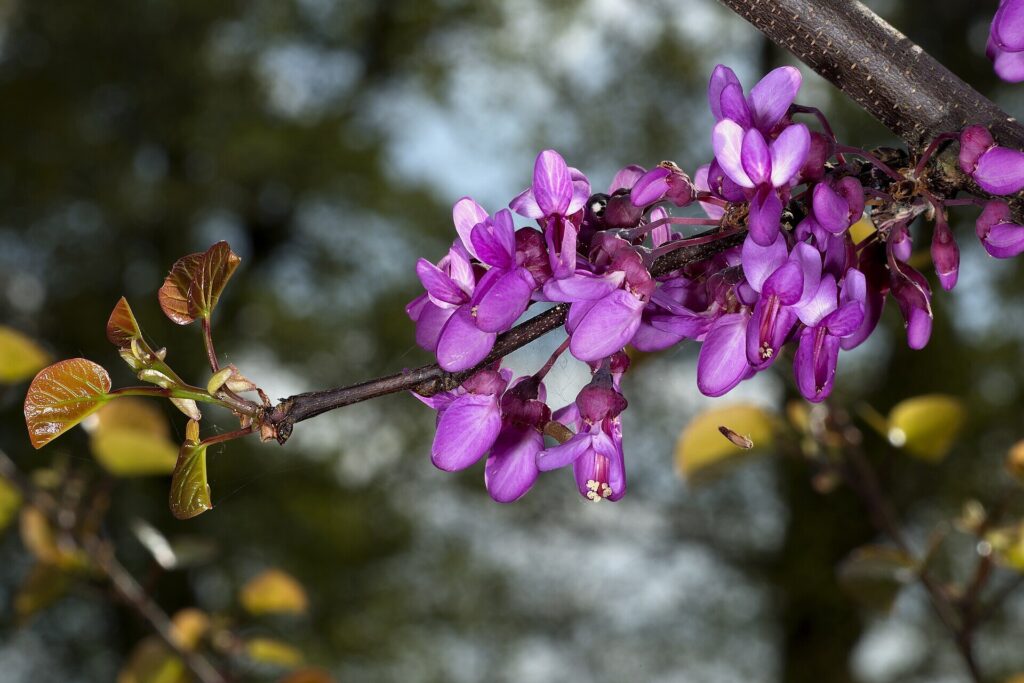
All of these plants belong to the genus Cercis in the legume family, and their most distinctive feature is that clusters of reddish-purple flowers bloom on the previous year's branches or older branches before the leaves unfold.
Therefore, when you see a dense cluster of pink to purple butterfly-shaped flowers, characteristic of the legume family, in spring, just like cherry blossoms, you can immediately recognize it as a member of the Judas tree family. The Japanese name comes from the fact that the color of the flowers resembles the color of the juice used to dye with sappanwood (Biancaea sappan), a dye plant also belonging to the legume family.
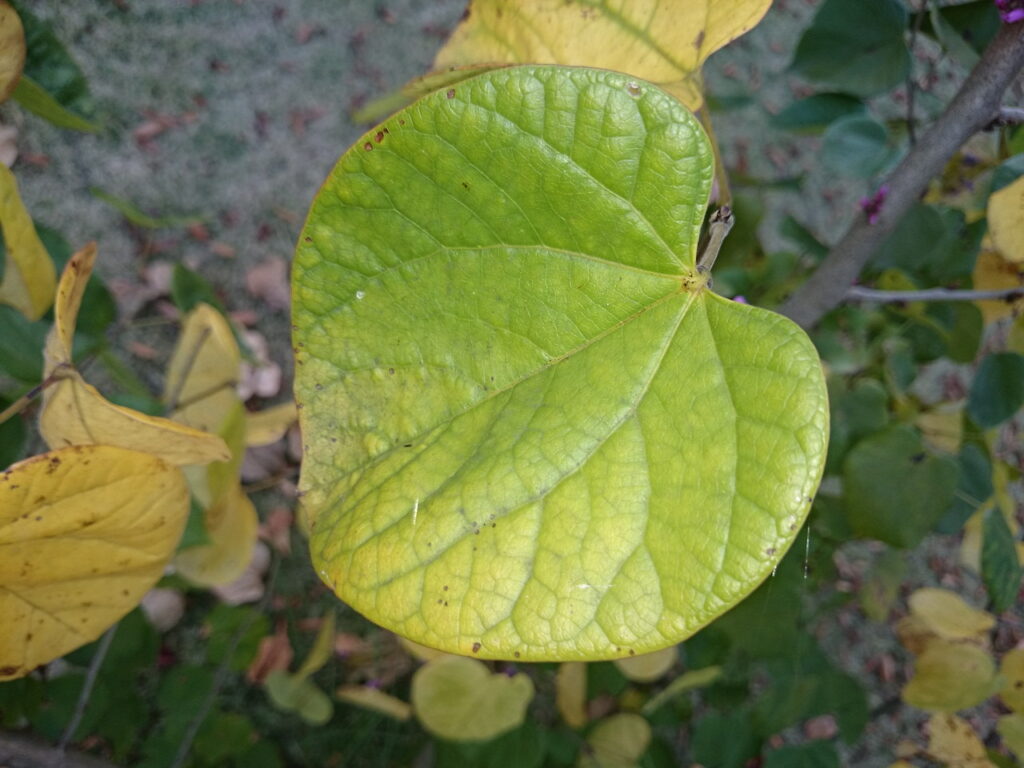
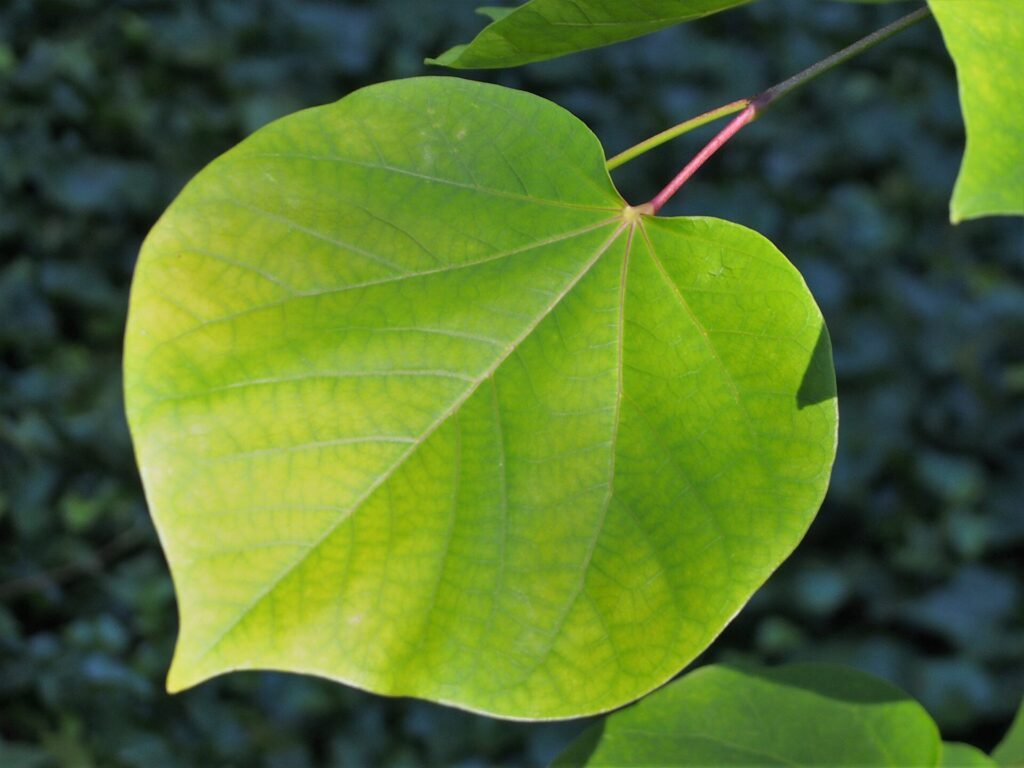
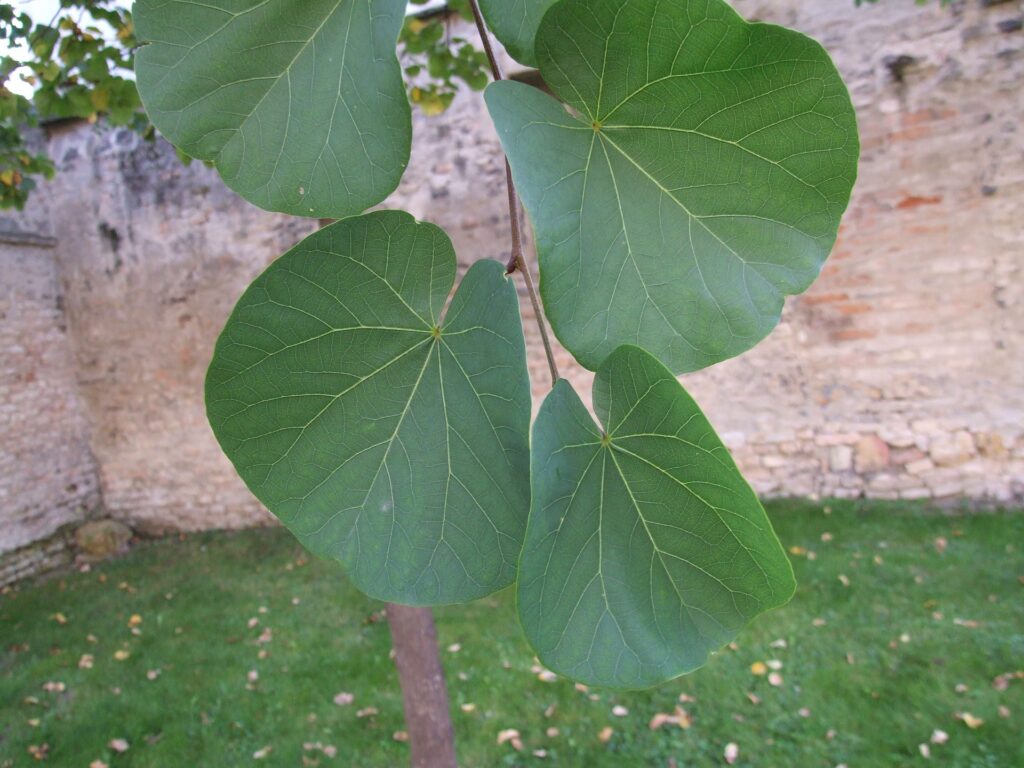
Furthermore, the fact that the entire leaf is circular and the base (leaf leg) is indented in a heart shape is quite unique.
While it is relatively easy to distinguish them from other groups, the cultivation of the American redbud (Cercis chinensis) in recent years has led to increased confusion.
Furthermore, some gardening websites even state that American redbud and European redbud are the same species.
What are the differences between the Japanese redbud (Cercis chinensis), the American redbud (Cercis chinensis), and the European redbud (Cercis ruficollis)?
However, the Japanese redbud (Cercis chinensis), the American redbud (Cercis chinensis), and the European redbud (Cercis erythrosora) are completely different species (Mogi et al., 2000; Flora of North America Editorial Committee, 2023; Ali, 1973).
As a fundamental point, the Japanese redbud (Cercis chinensis) is native to China, the American redbud (Cercis chinensis) is native to the United States, and the European redbud (Cercis erythrosora) is native to Europe and West Asia. These are geographically distant, and it is likely that their ancestors diverged, resulting in them being completely different species.
However, it's true that sometimes it's difficult to distinguish between them.
To accurately distinguish between the three species, it is necessary to observe the leaves that unfold after flowering.
While both have rounded leaves, the difference lies in the fact that the tips of the leaves of the Japanese redbud (Cercis chinensis) and the American redbud (Cercis chinensis) elongate into a tail-like shape, whereas those of the European redbud (Cercis chinensis) do not. This difference is clear.
Comparing the Japanese redbud (Cercis chinensis) and the American redbud (Cercis erythrosora), the Japanese redbud is almost hairless except for hairs at the base of the veins on the underside of the leaf, whereas the American redbud may have hairs all over the underside of its leaf.
However, it's complicated because there are individual differences in the underside of the leaves of the American redbud, with some having no hairs. You'll need to examine several leaves. The leaves of the Japanese redbud and the American redbud are quite similar.
However, this is not the only factor to consider; observing the tree's shape will lead to a more accurate assessment.
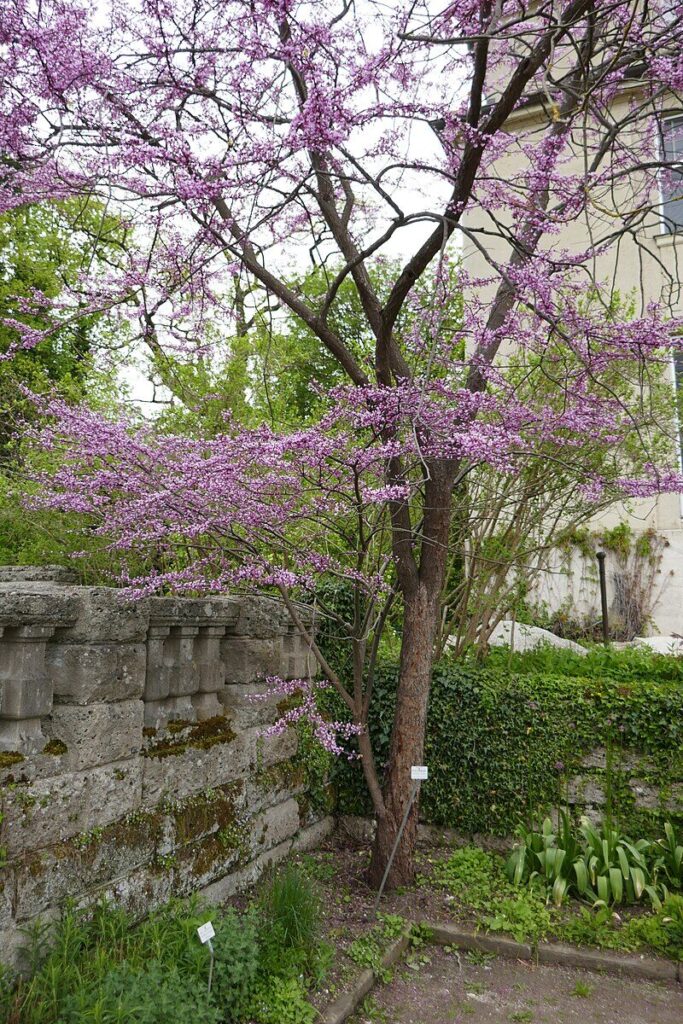
Regarding tree shape, the difference is that the Japanese redbud (Cercis chinensis) grows in clumps, while the American redbud (Cercis chinensis) and European redbud (Cercis rupestris) grow as single stems.
A clump-forming plant refers to a tree shape where multiple stems grow from the base of the plant.
Therefore, the shape of the Judas tree is quite different from the typical image of a tree with a single, sturdy trunk. Another advantage is that its unique shape can be observed throughout the year.
Therefore, if you check the leaves and the shape of the tree, you are unlikely to make a mistake.
There are also differences when it comes to flowers.
One difference between the Japanese redbud (Cercis chinensis) and the European redbud (Cercis chinensis) is that their petals are reddish-purple, while those of the American redbud (Cercis chinensis) are light pink.
Comparing the Japanese redbud (Cercis chinensis) and the European redbud (Cercis chinensis), the Japanese redbud has dark-colored nectar guides (patterns that attract insects) on its standard petal, while the European redbud does not have any special patterns visible to the human eye.
By the way, this is a bit confusing, but in most legumes, the standard petal is on the outside of the wing petals, but in the Judas tree genus, it's on the inside. This is a minor detail, so for Judas trees, it's fine to just think of it as "the flower has a pattern."
References
Ali, SI 1973. Flora of Pakistan (Vol. 54 Caesalpiniaceae). University of Karachi, Karachi. 47pp. http://www.efloras.org/florataxon.aspx?flora_id=5&taxon_id=10142
Flora of North America Editorial Committee. 2023. Flora of North America (Vol. 11 Magnoliophyta: Fabaceae, Parts 1 and 2). Oxford University Press, Oxford. 1108pp. ISBN: 9780197619803
Mogi, Toru; Ota, Kazuo; Katsuyama, Teruo; Takahashi, Hideo; Shirokawa, Shiro; Yoshiyama, Hiroshi; Ishii, Hidemi; Sakio, Hitoshi; and Nakagawa, Shigetoshi. 2000. Flowers Blooming on Trees: Polypetalous Flowers (Vol. 2, 2nd edition). Yama-kei Publishers, Tokyo. 719pp. ISBN: 9784635070041
RBG Kew. 2025. The International Plant Names Index and World Checklist of Vascular Plants. Plants of the World Online. http://www.ipni.org and https://powo.science.kew.org/