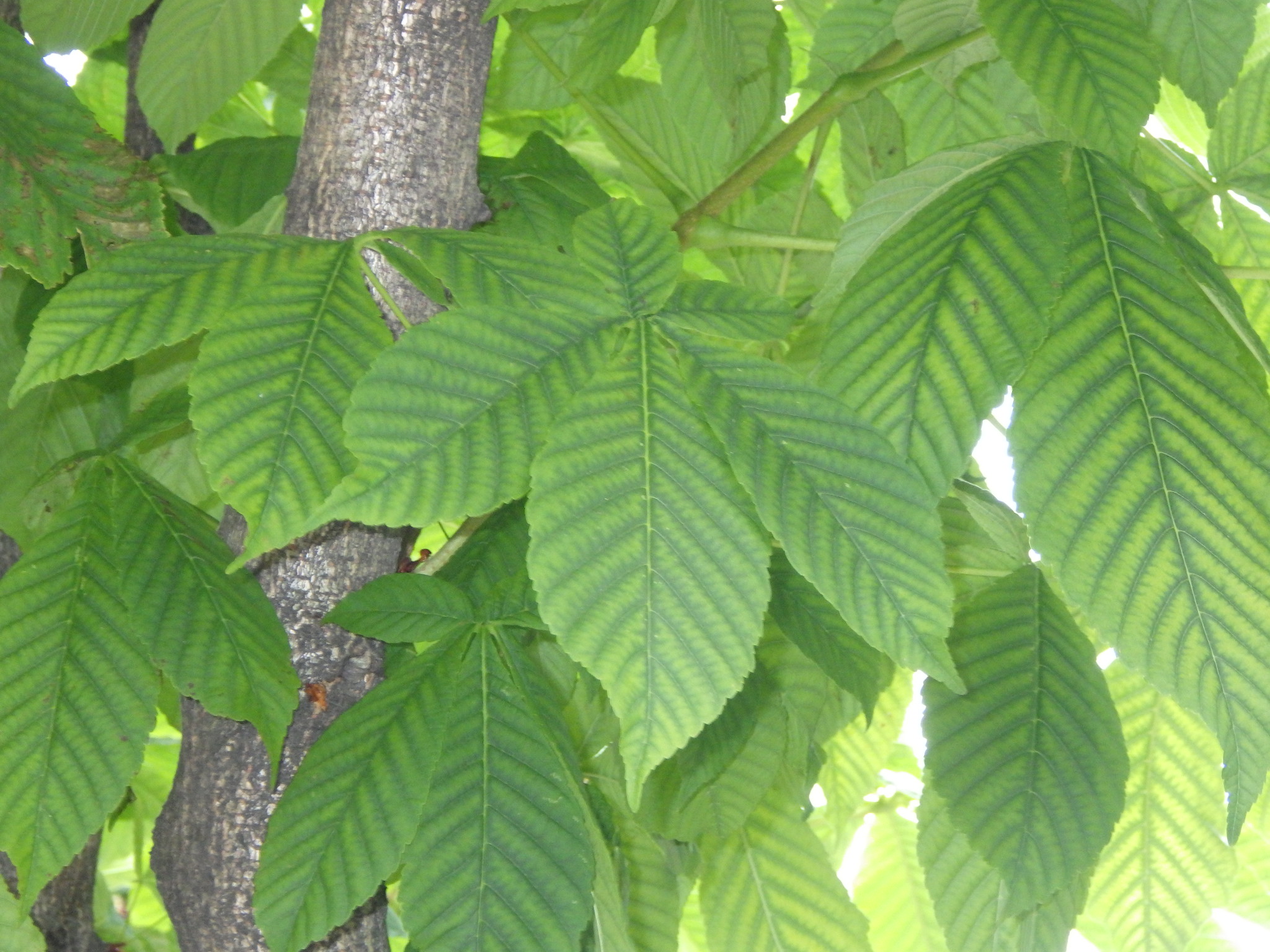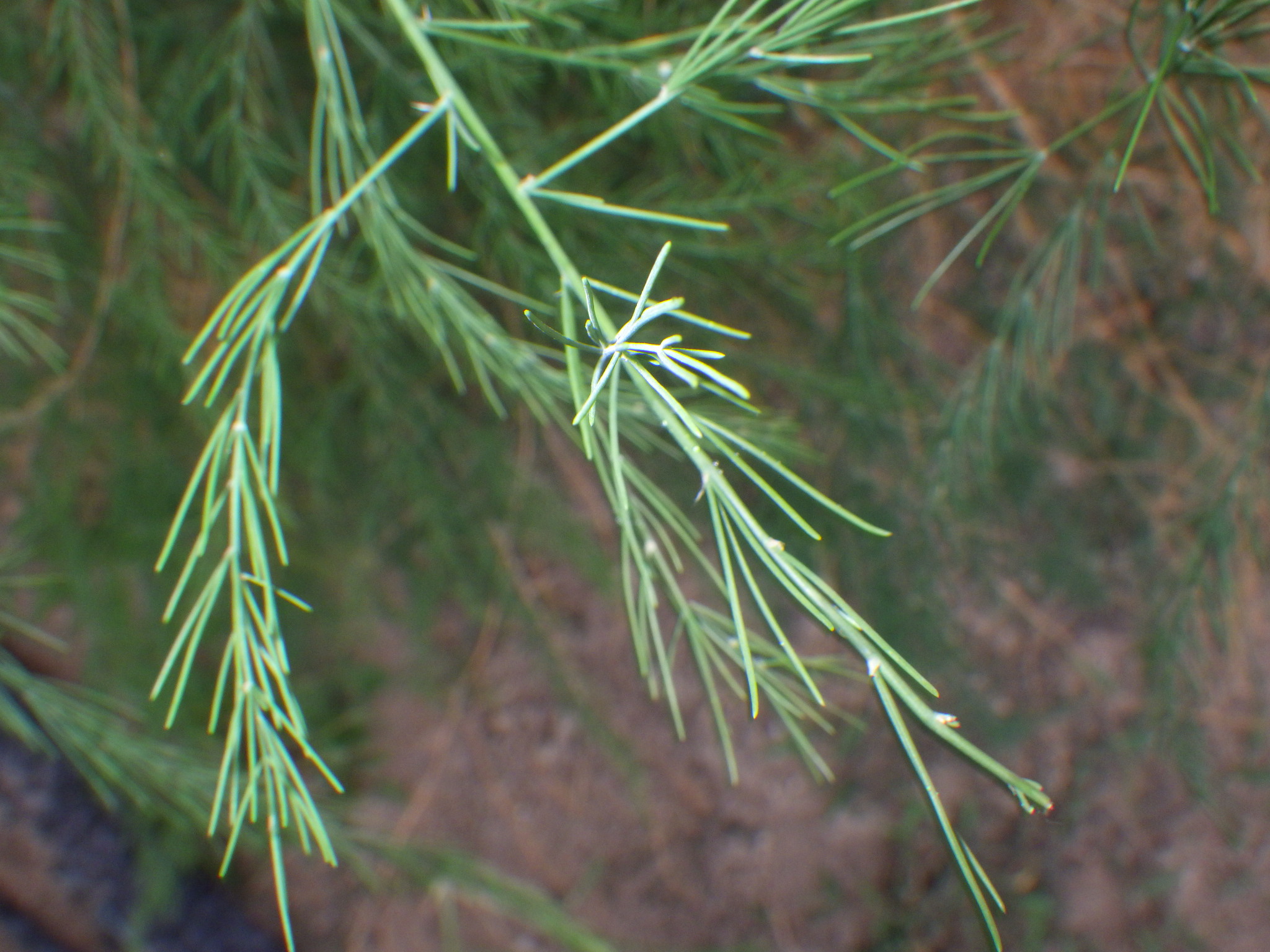
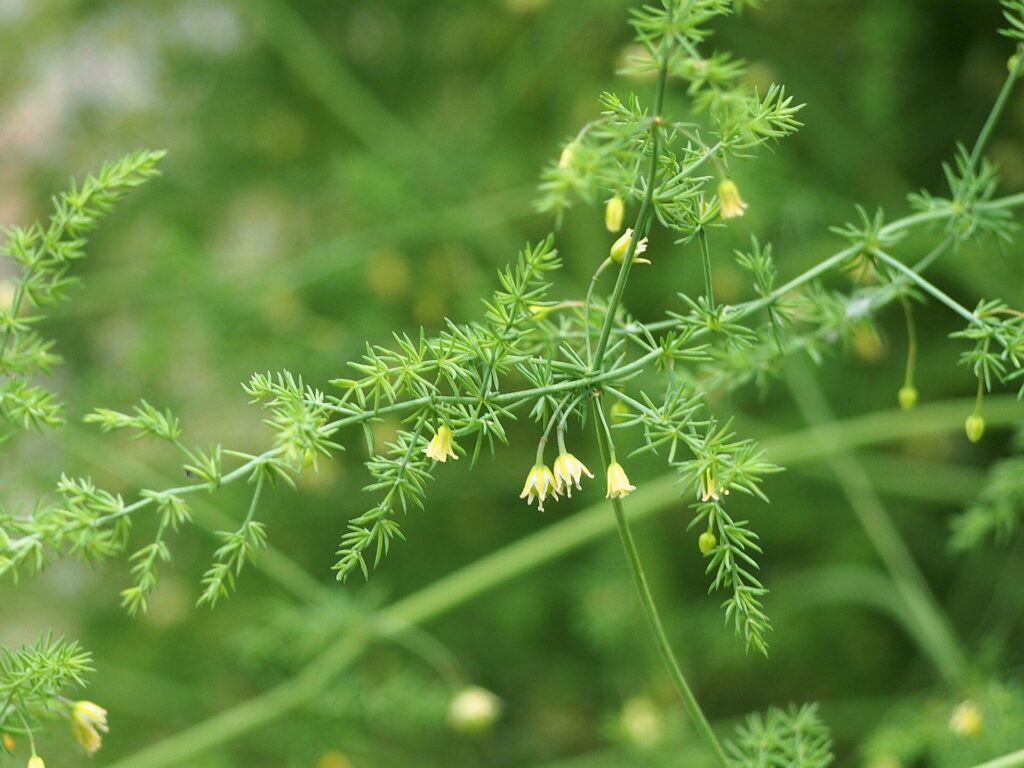
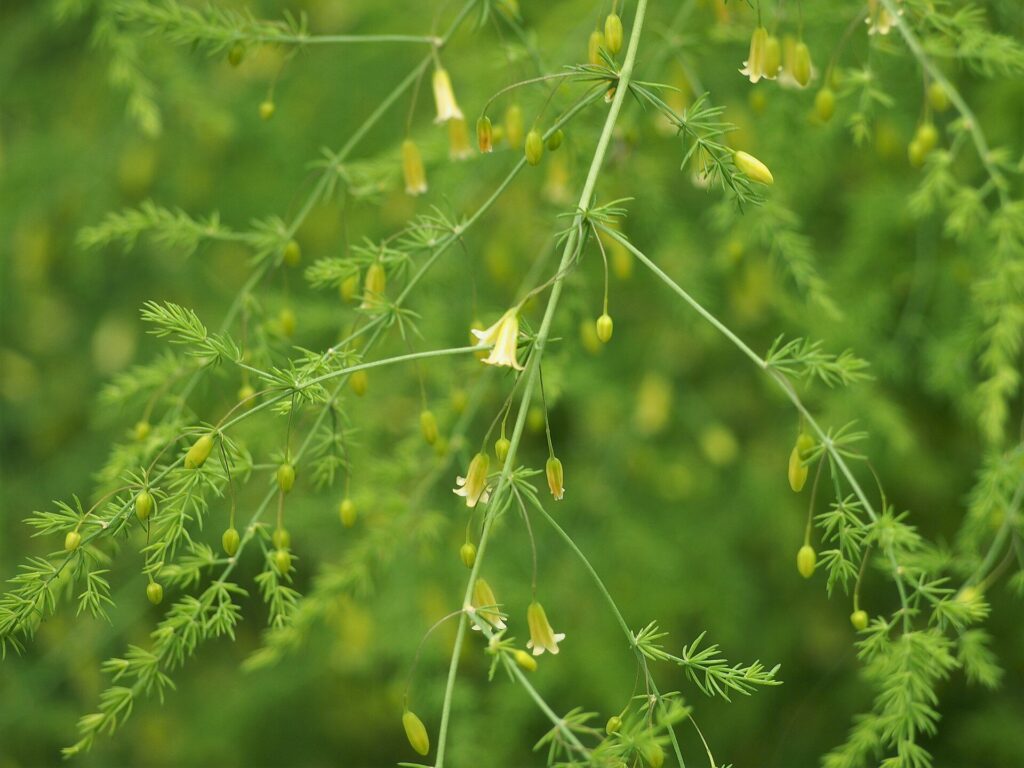
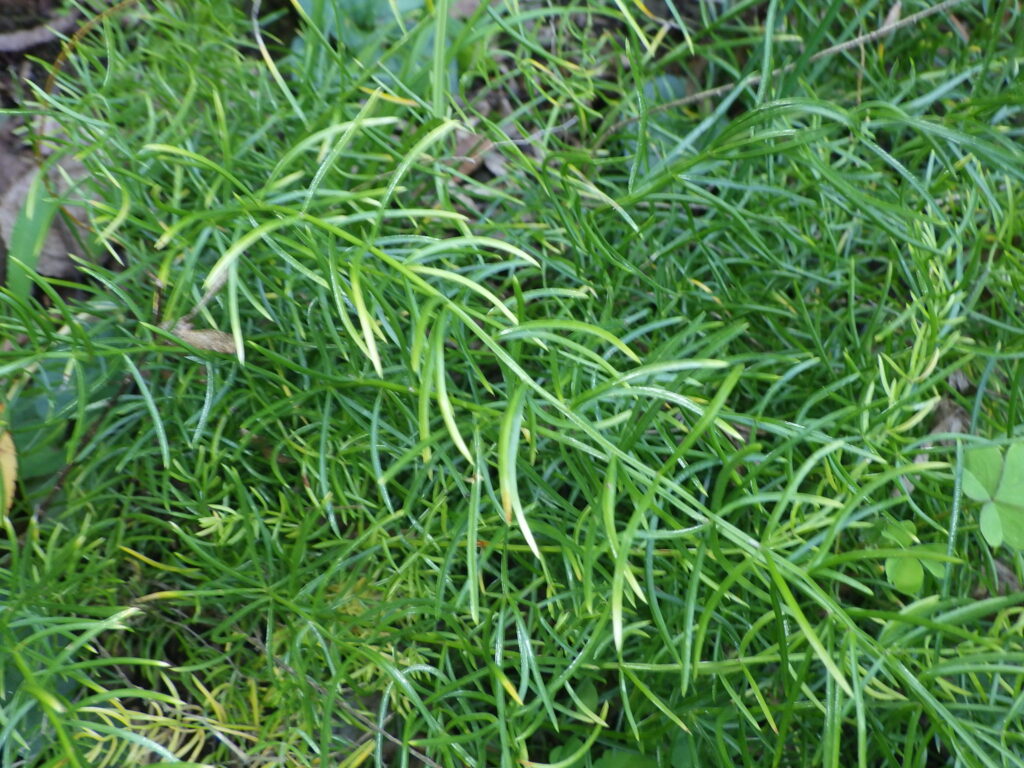
Asparagus, Japanese asparagus, and Chinese asparagus are all perennial herbs belonging to the genus Asparagus in the family Asparagaceae. Their most distinctive feature is the clusters of very thin, spine-like "leaf-like" structures. In reality, these are modified "branches" (called cladodes), and the true leaves are small and vestigial. Asparagus is a very common vegetable, but it can also become naturalized and may be confused with the other two native species. These three species can be distinguished mainly by examining the cladodes. This article will explain the classification and morphology of the genus Asparagus.
What are Asparagus, Asparagus, and Kusasugikazura?
Asparagus schoberioides, also known as pheasant-hiding flower, is a perennial herb distributed in Hokkaido, Honshu, Shikoku, and Kyushu in Japan; as well as in Korea, China, Mongolia, and Russia, growing in grasslands and bright forests from hills to mountains.
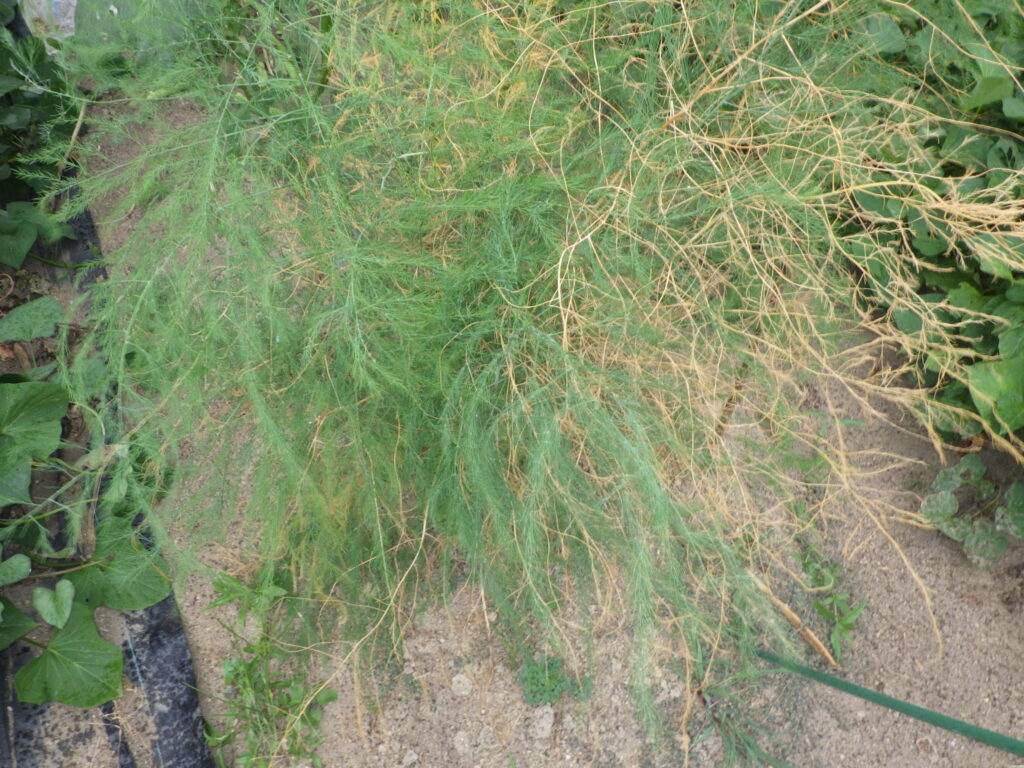
Asparagus officinalis, commonly known as Dutch asparagus, is a perennial plant native to Europe, West Asia, and Central Asia. It is cultivated worldwide, including in Japan, for ornamental purposes or as a vegetable for food, and some have escaped cultivation and become naturalized (RBG Kew, 2024).
Asparagus cochinchinensis var. lucidus, also known as Tenmondou, is a climbing perennial herb distributed in Honshu, Shikoku, Kyushu, and the Ryukyu Islands of Japan, as well as in Korea, Taiwan, and Southeast Asia, growing in coastal forest edges and rocky areas.
All of these are perennial herbs belonging to the Asparagaceae family (Asparagaceae) and the Asparagus genus, and their most distinctive feature is the clusters of very thin, spine-like "leaves."
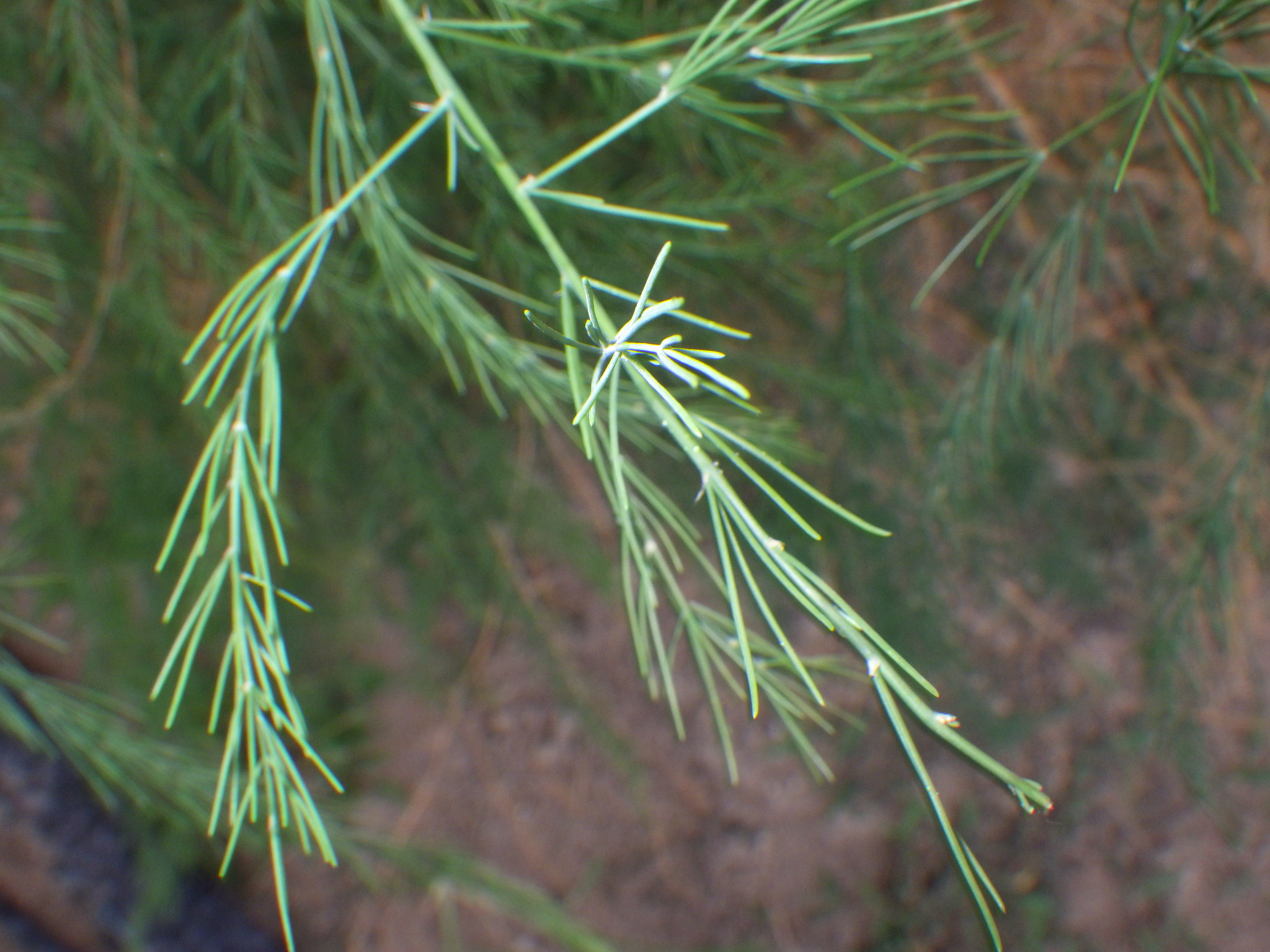
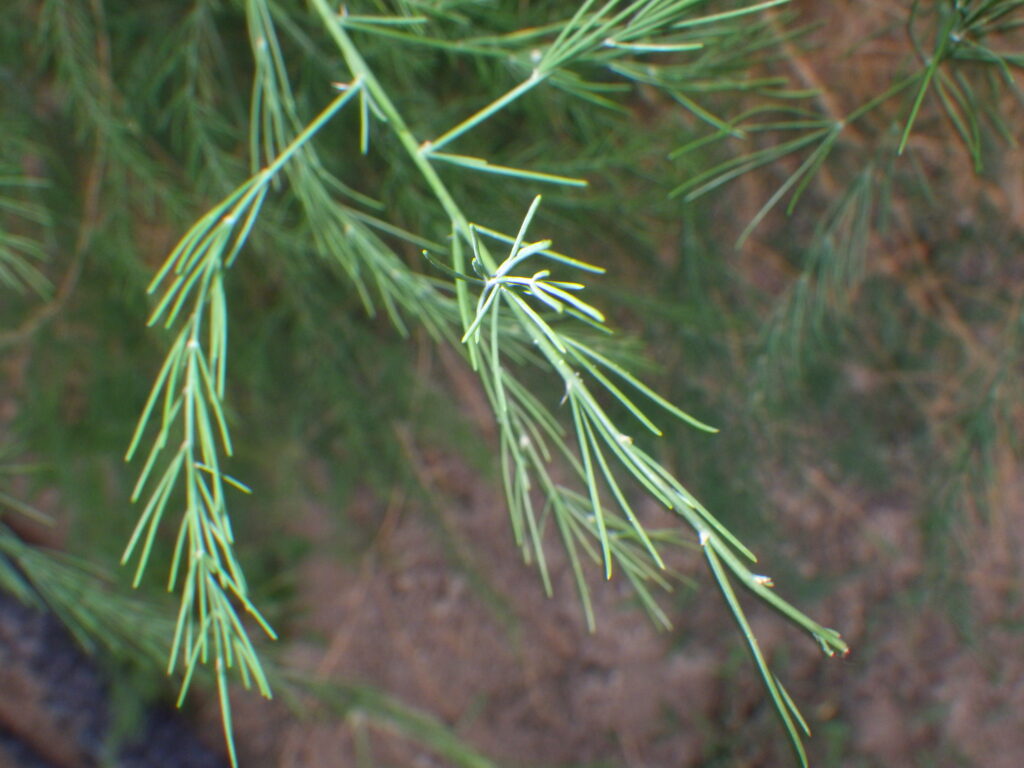
However, botanically speaking, what appears to be "leaves" on plants of the Asparagus genus are actually "twigs" called "cladulate branches (pseudoleaves)." The true "leaves" are broadly ovate and membranous structures that remain at the base of the cladulate branches and are called "scale leaves (hakama)."
Of the three types, asparagus is used for its young shoots that emerge from the third year after planting the seedlings. Due to its unique flavor, it has been used as a vegetable, and also as medicine due to its diuretic and aphrodisiac properties.
Aspartic acid (named after asparagus, one of the umami components, and acts as an excitatory neurotransmitter in the central nervous system in humans), as well as other notable nutrients such as vitamins, folic acid, and rutin, are among the vegetables that contain these nutrients.
Historically, it was already depicted as an offering in friezes (part of architectural decoration) from the Early Dynastic Period of Egypt (3000 BC). There are also records of it being eaten by the ancient Romans and Greeks. In Japan, it was introduced by Dutch ships during the Edo period (after 1781) and cultivated for ornamental purposes, but it was not until the Meiji era (1871) that it was introduced by the Hokkaido Development Commission that it was used as food.
Asparagus is a plant that is very familiar to humankind, and it has become naturalized in Japan, sometimes being confused with native Japanese species such as Asparagus japonica and Asparagus serrata.
What are the differences between Asparagus, Asparagus japonica, and Asparagus serrata?
These three species can first be broadly classified into Asparagus japonica and Asparagus humilis (Kanagawa Prefecture Flora Survey Association, 2018).
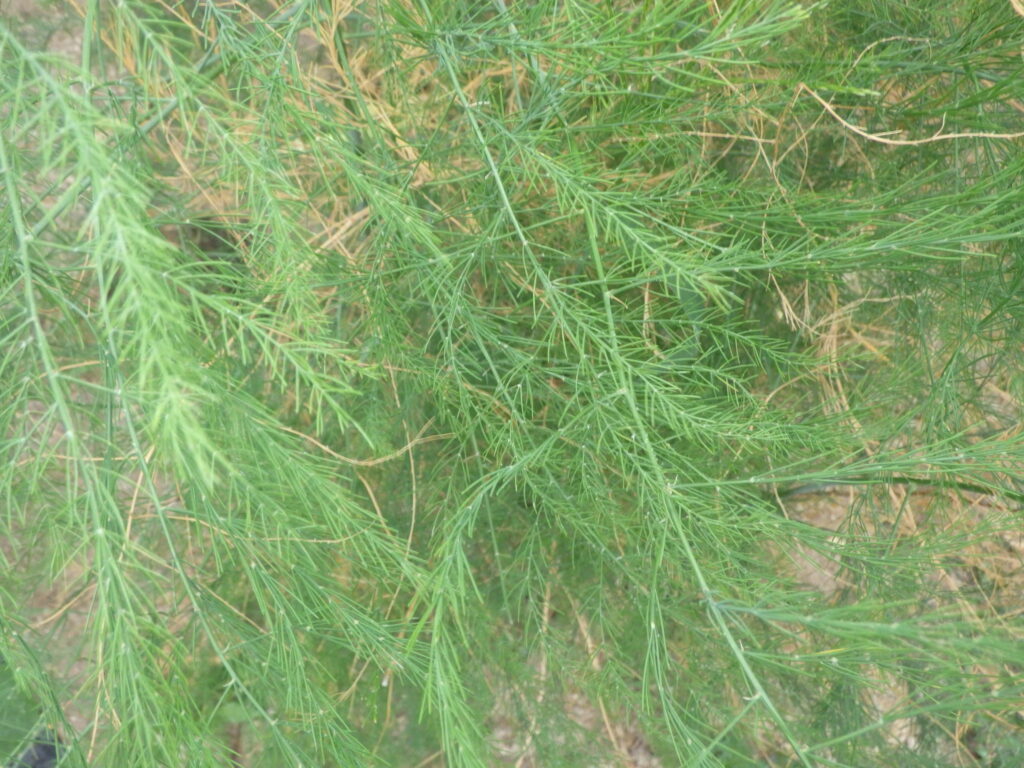
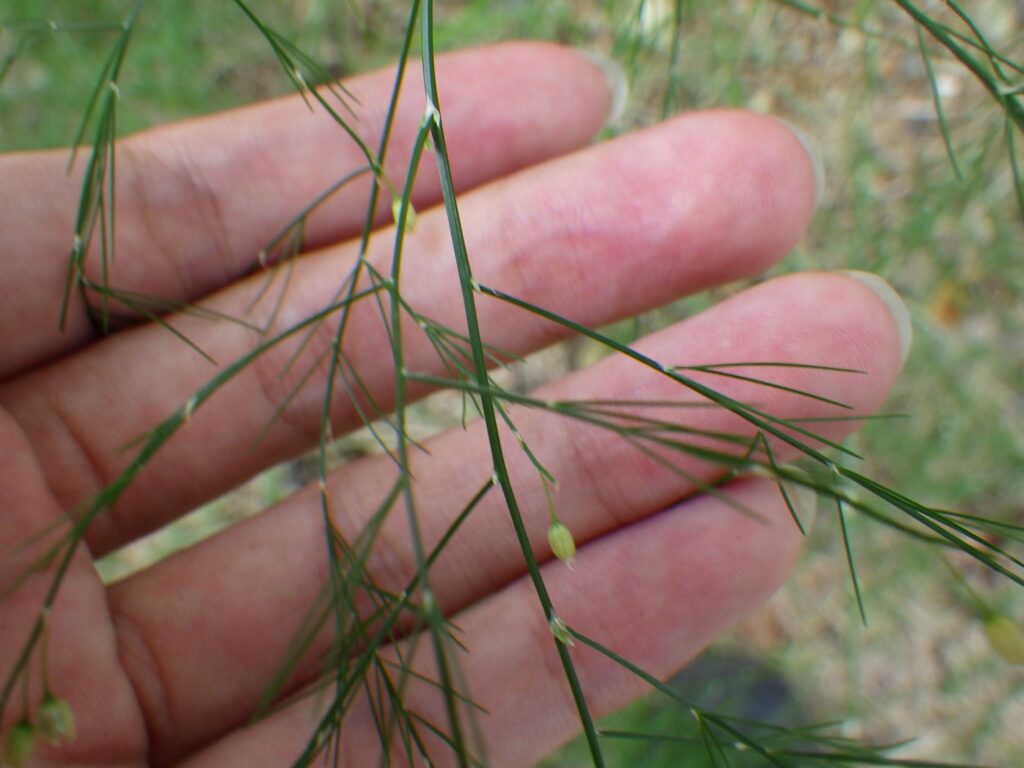
In contrast to Asparagus and Asparagus, the main stem is erect, with 3 to 8 leaf-like branches growing in clusters and lacking ridges (three-dimensionally protruding corners), whereas Asparagus has a creeping main stem, with 1 to 3 leaf-like branches growing in clusters and possessing three ridges.
If you can see only one leaf-like branch on the main stem, it can be identified as Asparagus jasminoides.
Regarding Asparagus and Asparagus, the difference lies in the fact that Asparagus has 3 to 7 leaf-like branches that grow in clusters, are curved and flat in a sickle shape, while Asparagus has 5 to 8 leaf-like branches that grow in clusters, are straight and slender.
Note that the characteristic of "flattened, sickle-shaped leaflets" is also present in Asparagus jasminoides, so be aware of that.
Regarding the flowers, asparagus and rhododendron have bell-shaped flowers, while rhododendron has open petals, which is another difference.
While there are many other species of the Asparagus genus known as ornamental horticultural varieties, we will omit them here due to their large number.


References
Kanagawa Prefecture Flora Survey Association. 2018. Kanagawa Prefecture Flora 2018 (Electronic Edition). Kanagawa Prefecture Flora Survey Association, Odawara. 1803pp. ISBN: 9784991053726
RBG Kew. 2024. The International Plant Names Index and World Checklist of Vascular Plants. Plants of the World Online. http://www.ipni.org and https://powo.science.kew.org/