Physalis, edible physalis (strawberry tomato), and tomatoes all belong to the Solanaceae family and are characterized by producing red fruits. Edible physalis is sold under the names "edible physalis" and "strawberry tomato," and is often introduced as if it is related to physalis or tomatoes, but it is a completely different species. In fact, their distribution areas and classifications are different, and there are various differences in their morphology. It should also be noted that "edible physalis" refers not only to edible physalis but also to other species such as grape physalis (golden berry) and large grape physalis (tomatillo), and is often confused with them. This article will explain the classification and morphology of physalis species.
- What are Chinese lantern plants, edible lantern plants, and tomatoes?
- What are the differences between ground cherry, edible ground cherry, and tomato?
- What are the differences in taste between ground cherries, edible ground cherries, and tomatoes?
- Are there any other similar varieties? It seems that three different types of "edible ground cherries" are being confused!
- References
What are Chinese lantern plants, edible lantern plants, and tomatoes?
Alkekengi officinarum var. franchetii, also known as Chinese lantern plant (Physalis alkekengi var. franchetii), is a perennial plant distributed from central China to the Korean Peninsula and introduced to surrounding countries, including Japan, for ornamental purposes (RBG Kew, 2025). In Japan, cultivated plants sometimes escape cultivation. While the "Flora of Kanagawa Prefecture 2018" and many websites list its scientific name as Physalis alkekengi var. franchetii, this is now considered a synonym (old scientific name) (Whitson, 2011).
Physalis grisea, also known as strawberry tomato, cherry tomato, orange cherry, summer cherry, kasennari, or sticky ground cherry, is a perennial plant distributed in the eastern United States and introduced to North America and Europe for food. It is sometimes listed on websites under the scientific name Physalis pruinosa, but this is a synonym (old scientific name). It is also sometimes described as being native to Europe, but this is false.
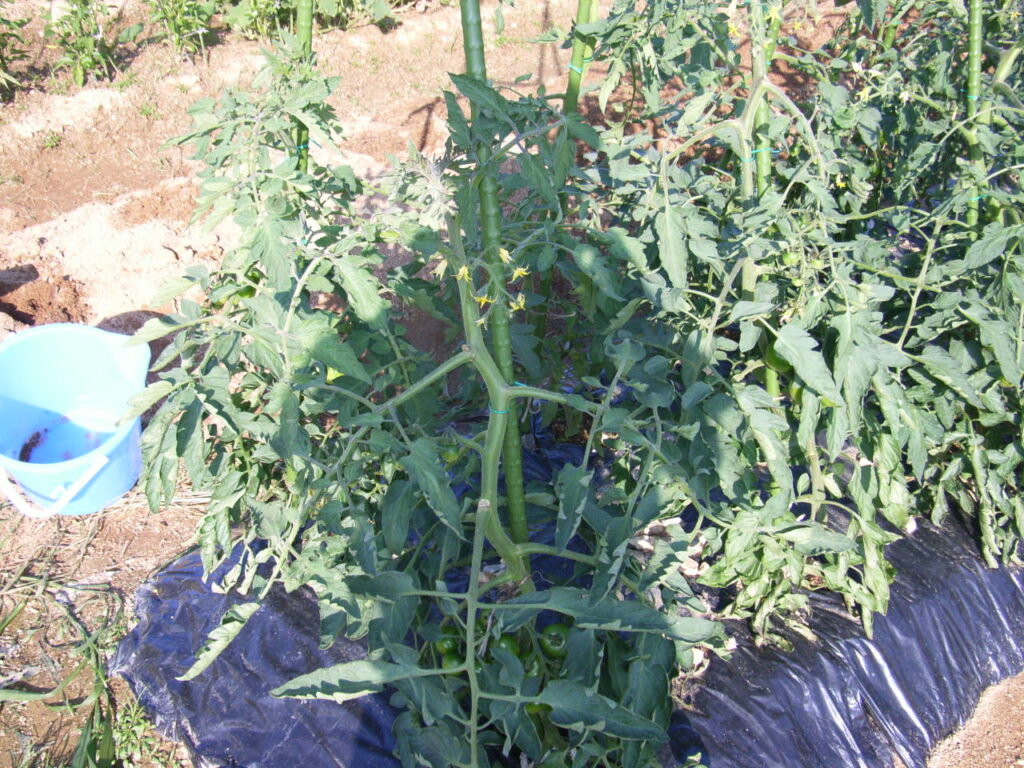
The tomato , Solanum lycopersicum, is also known as red eggplant. It is a perennial plant (though it is treated as an annual in Japan because it cannot survive the winter) that is distributed in Peru (the Andes Mountains plateau) and cultivated for food all over the world.
All of these plants belong to the nightshade family and are characterized by producing red fruits.
The edible ground cherry (Physalis alkekengi) is sold under names such as "edible ground cherry" or "strawberry tomato," giving the impression that it is related to ground cherries and tomatoes. In fact, the shape of its leaves is similar to that of ground cherries, and the shape of its fruit is similar to that of tomatoes.
Therefore, some people may mistakenly believe that edible ground cherry (Physalis alkekengi) is a cultivated variety of the Chinese lantern plant (Physalis alkekengi), or that edible ground cherry (Physalis alkekengi) is a cultivated variety of the cherry tomato (Solanum lycopersicum var. cerasiforme).
When reading articles on the internet, it's common to see descriptions that make it seem as if the difference is simply a matter of variety.
What are the differences between ground cherry, edible ground cherry, and tomato?
However, this is completely wrong, and their distribution in the wild is fundamentally different (Kanagawa Prefecture Flora Survey Association, 2018; Flora of North America Editorial Committee, 2023).
As mentioned above, the distribution of ground cherries is East Asia, edible ground cherries are North America, and tomatoes are South America. It is unlikely that these are the same species.
Furthermore, although there are various theories regarding classification, the Chinese lantern plant (Physalis) belongs to the Physalis genus, the edible lantern plant (Physalis genus) belongs to the Physalis genus, and the tomato belongs to the Solanum genus, which is another point of difference.
Morphologically, there are the following differences:
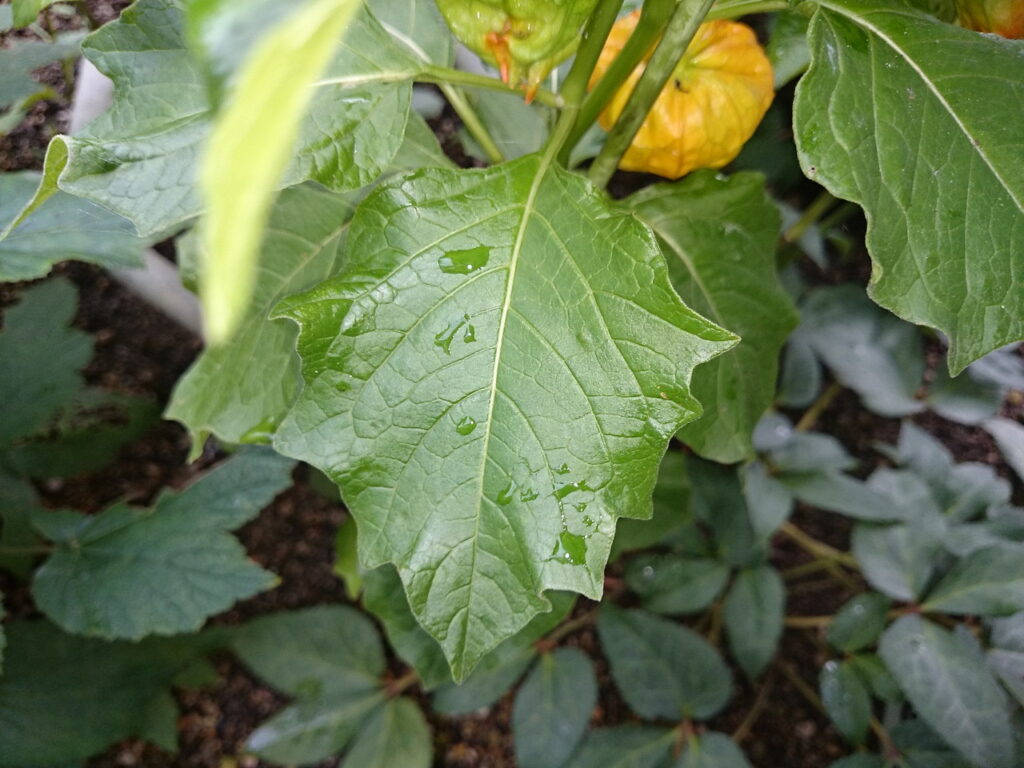
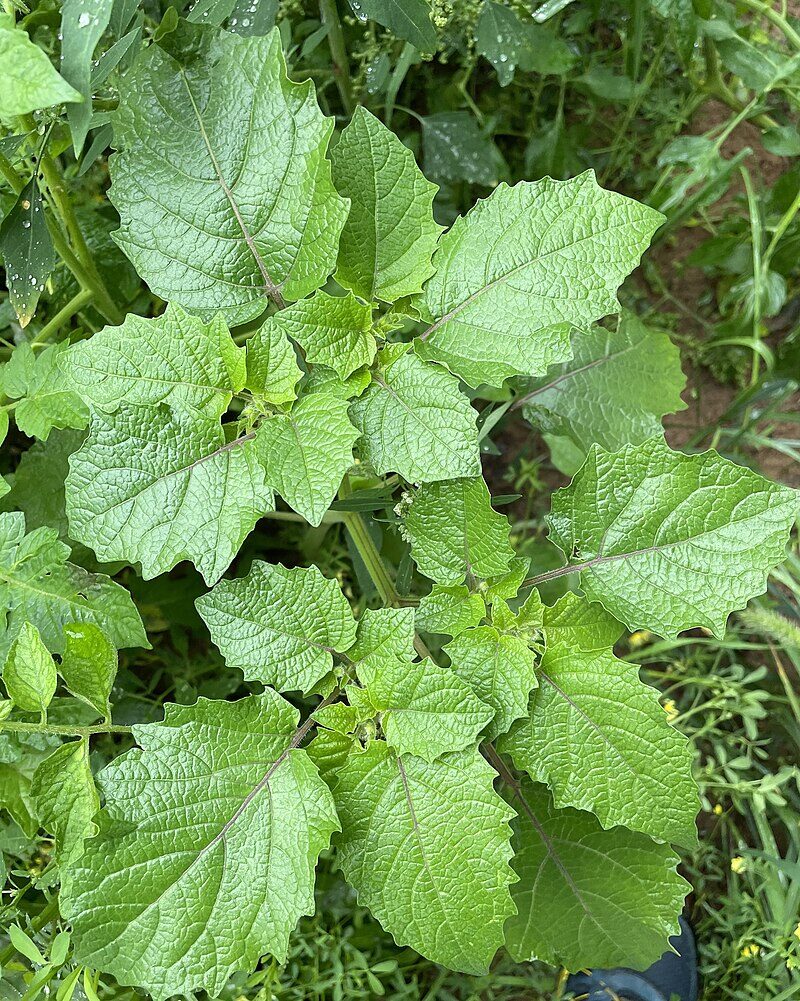
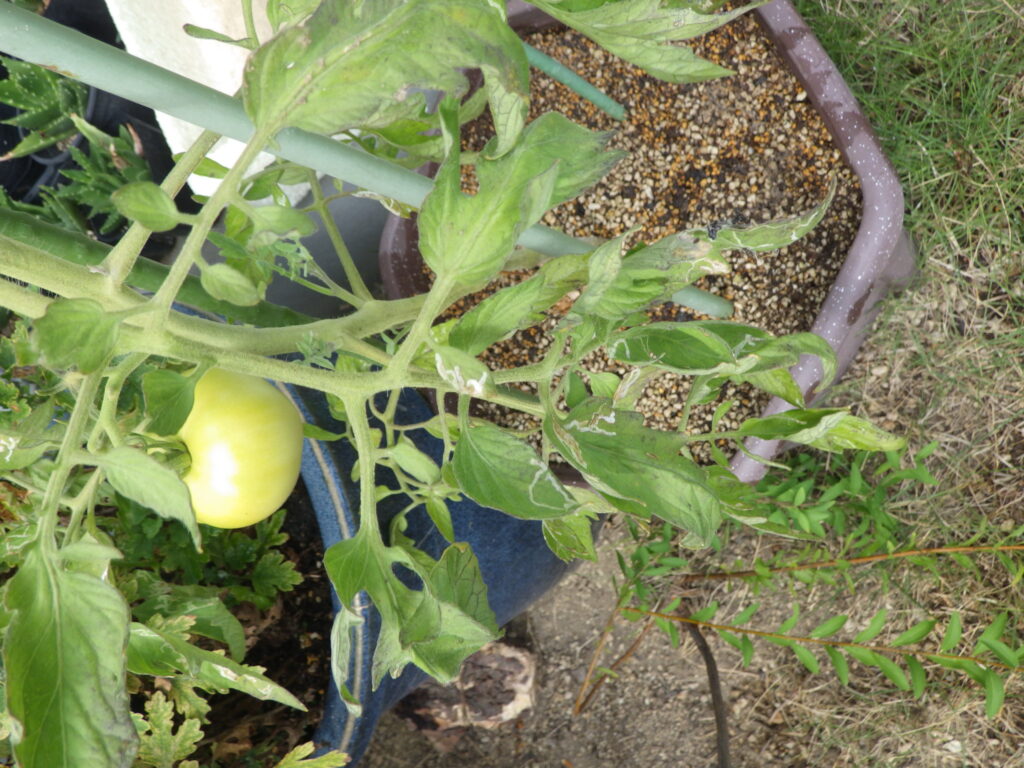
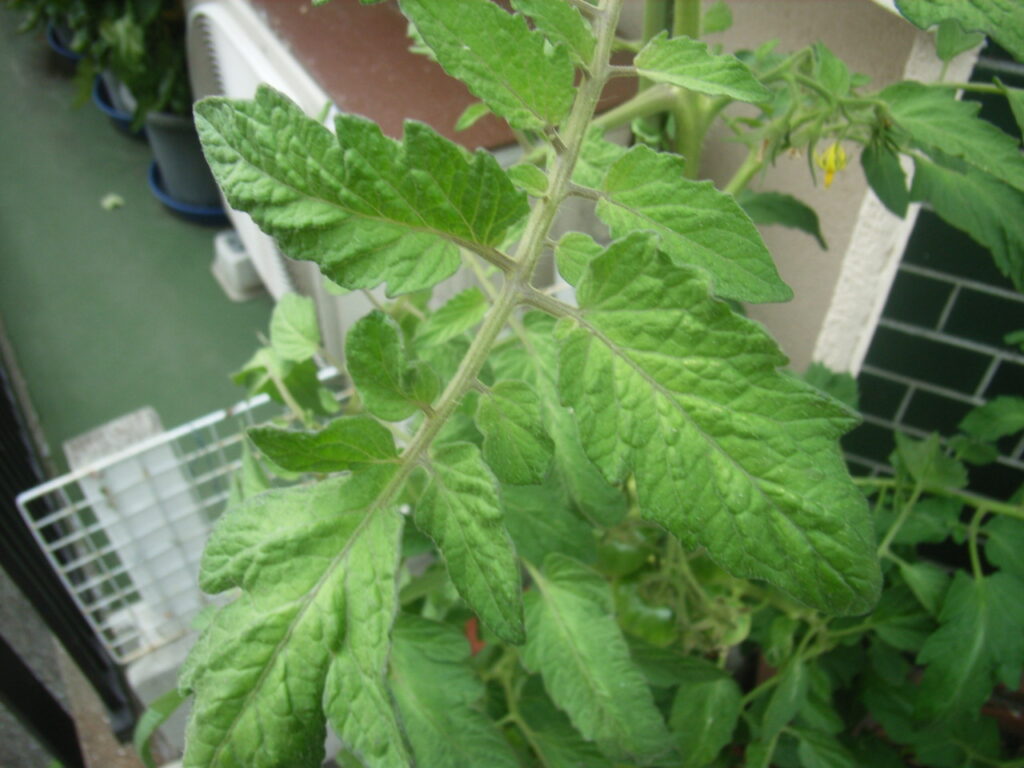
Regarding the leaves, there are differences: Chinese lantern plants have simple leaves with almost no wrinkles on the upper surface, edible lantern plants have simple leaves with many wrinkles on the upper surface, and tomatoes have odd-pinnately compound leaves.
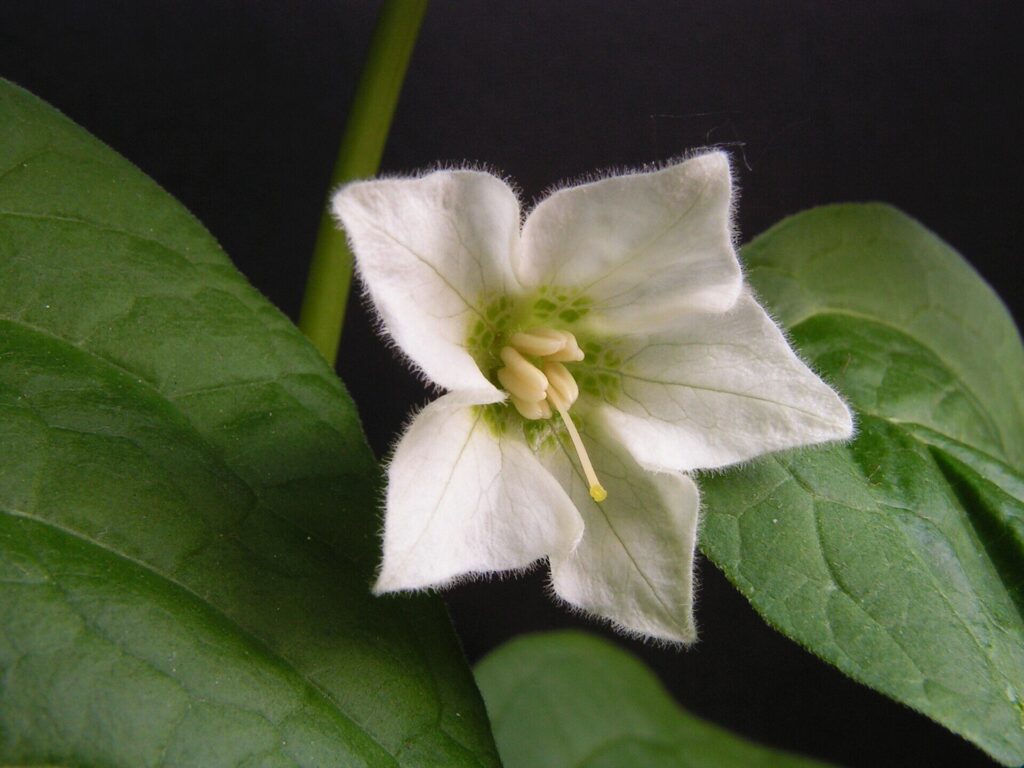
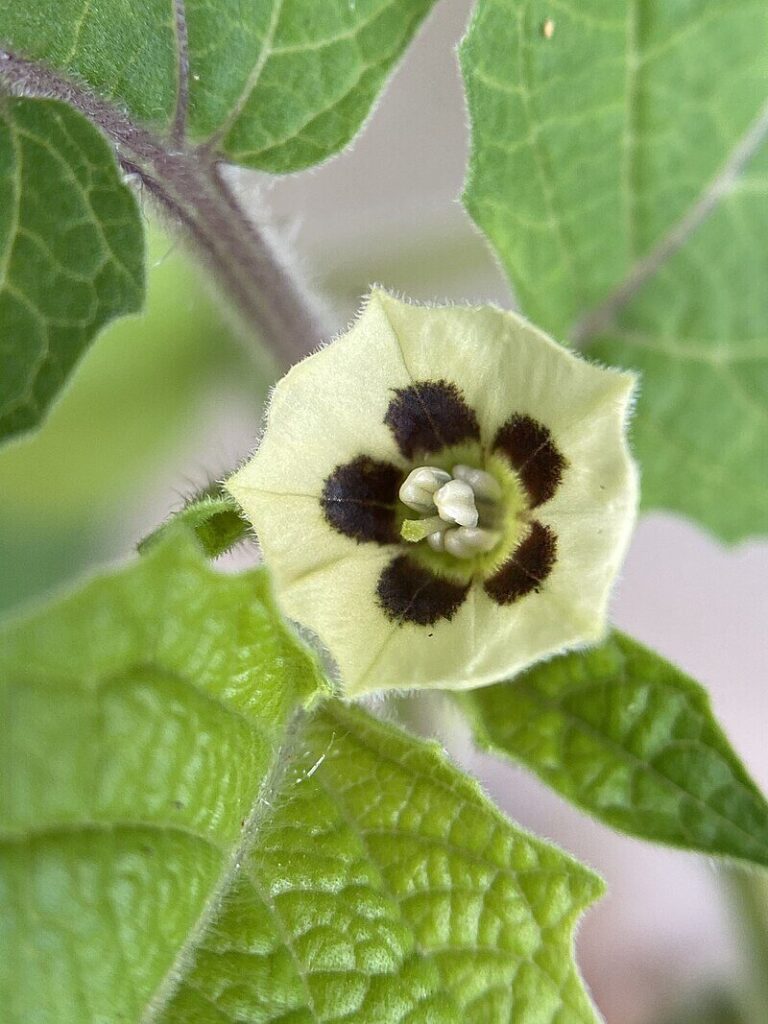
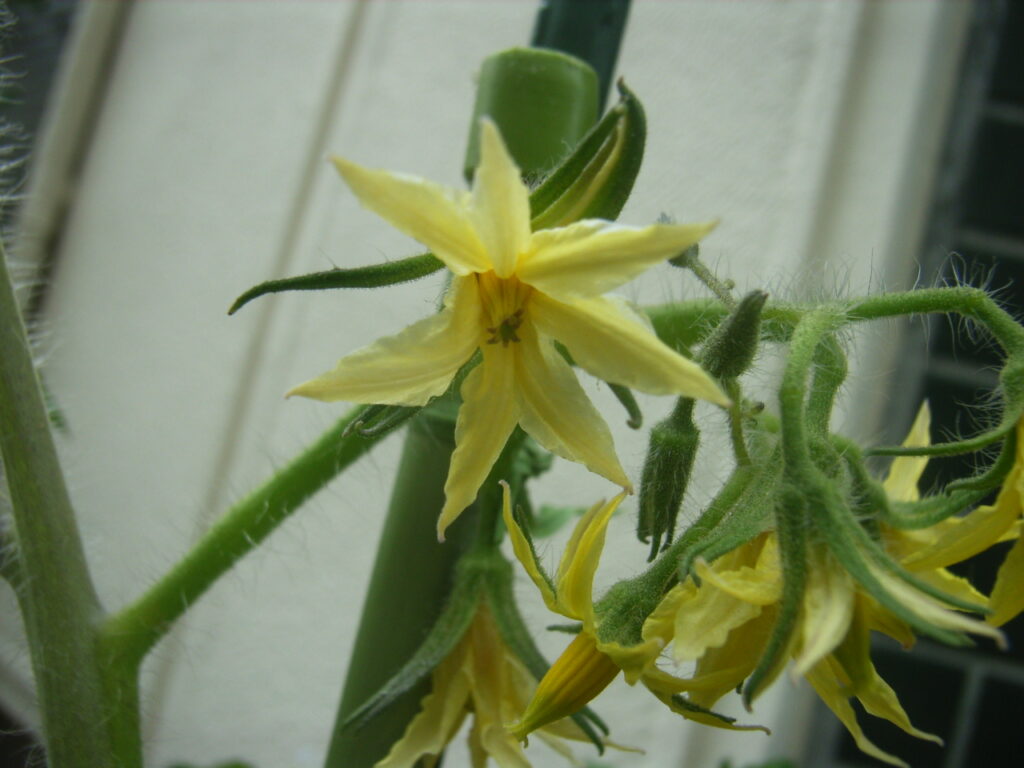
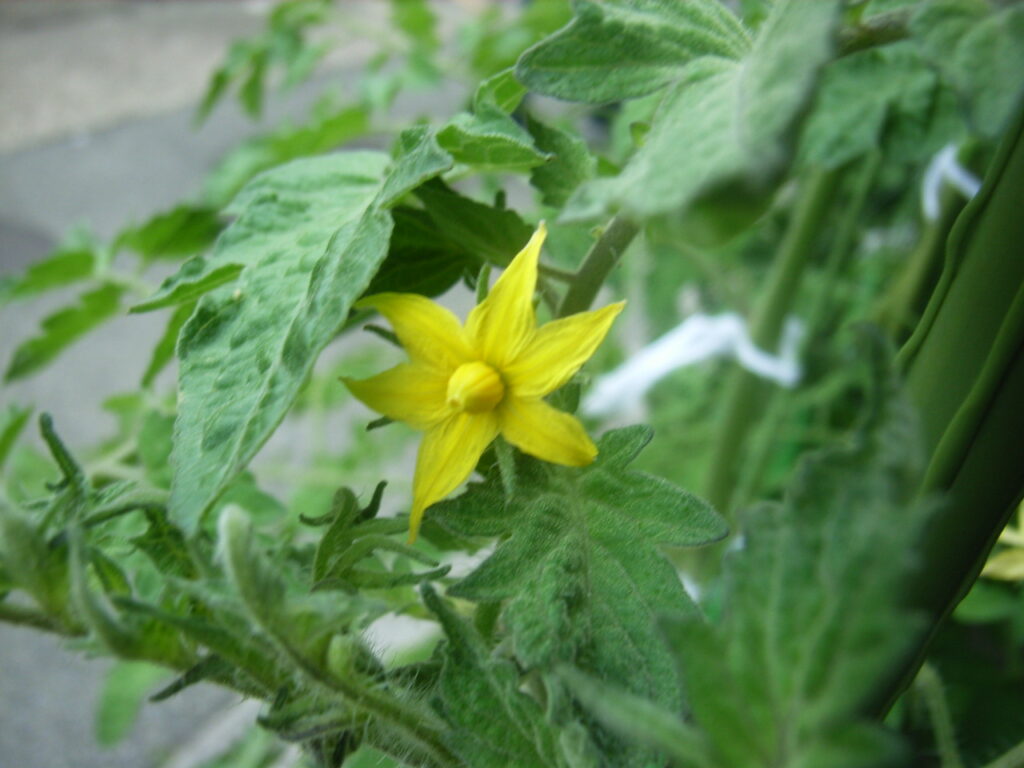
Regarding the flowers, the difference lies in the fact that the Chinese lantern plant and edible lantern plant have coffee bean-shaped anthers on their stamens that split vertically to release pollen, while the tomato plant has large, banana-shaped, yellow anthers on its stamens that open at the top to release pollen. The tomato plant's unique anthers are called "porous anthers" and have evolved specifically for bees such as bumblebees that generate vibrations.
Comparing the Chinese lantern plant (Physalis alkekengi) and the edible Chinese lantern plant (Physalis chinensis), the difference is that the corolla of the Chinese lantern plant is basically white with a green center, while the corolla of the edible Chinese lantern plant is basically cream-colored with a black center.
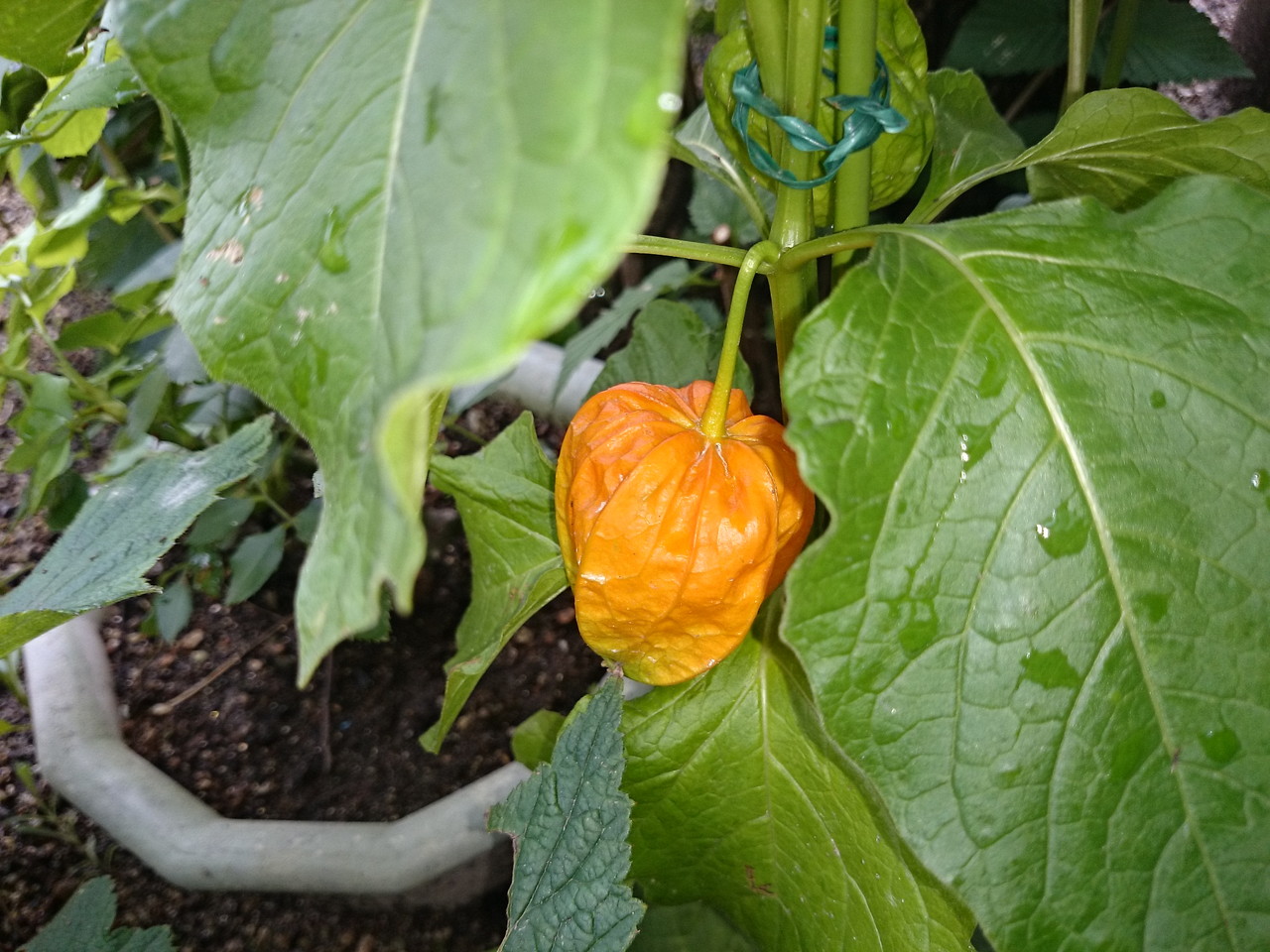
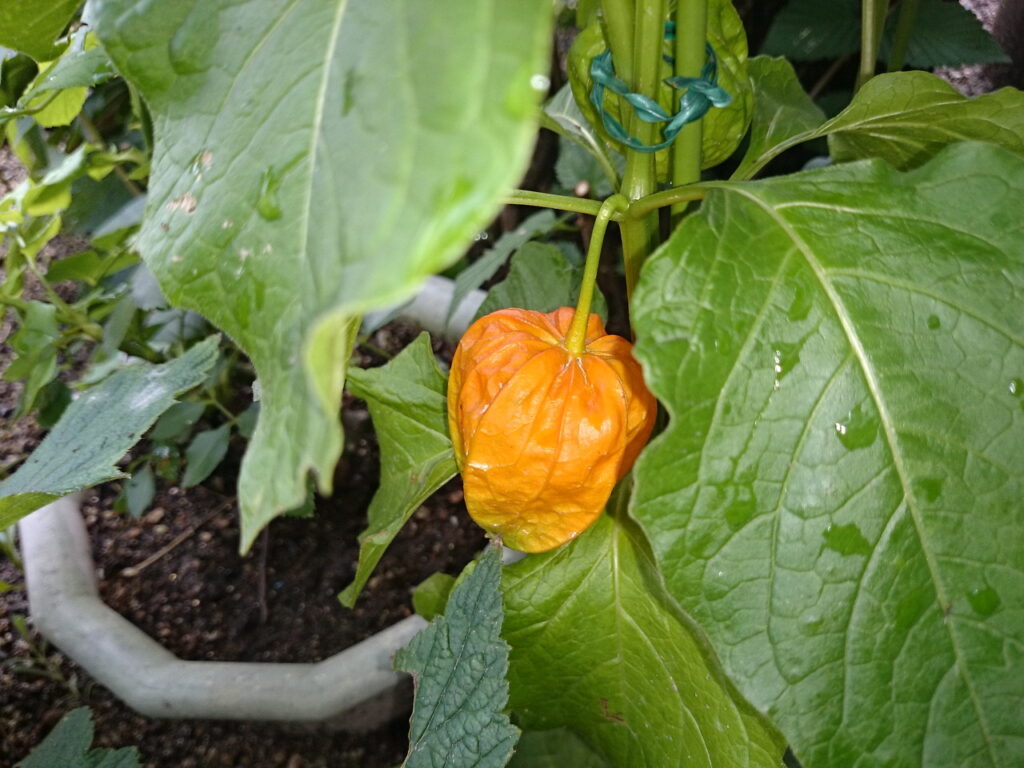
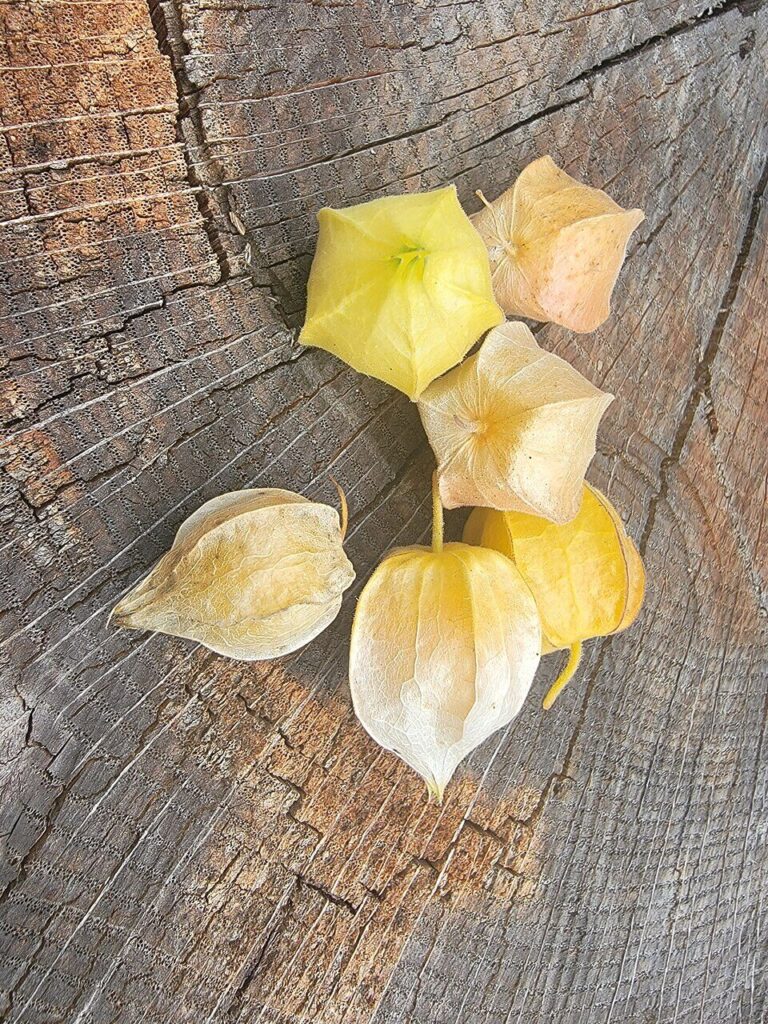
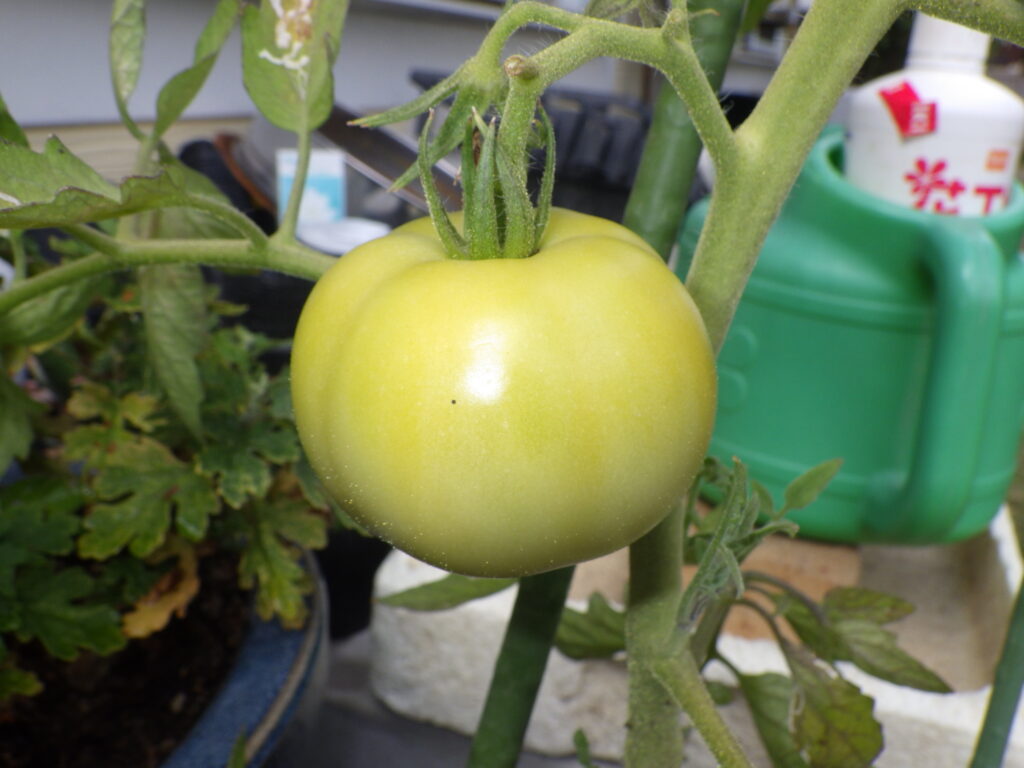
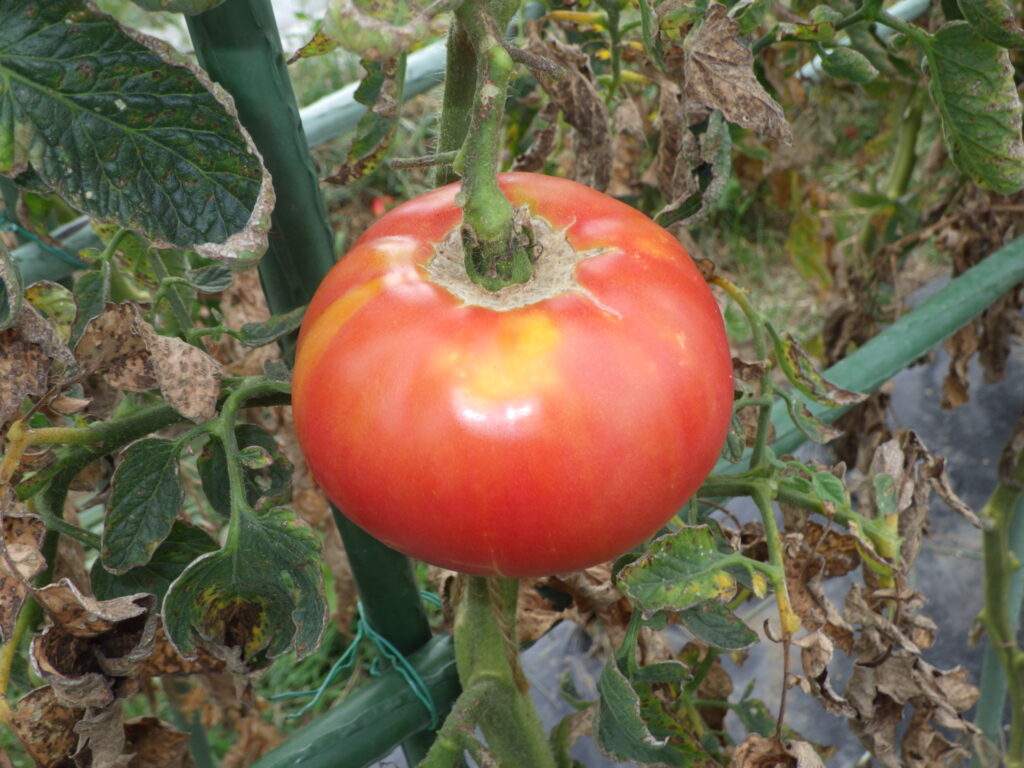
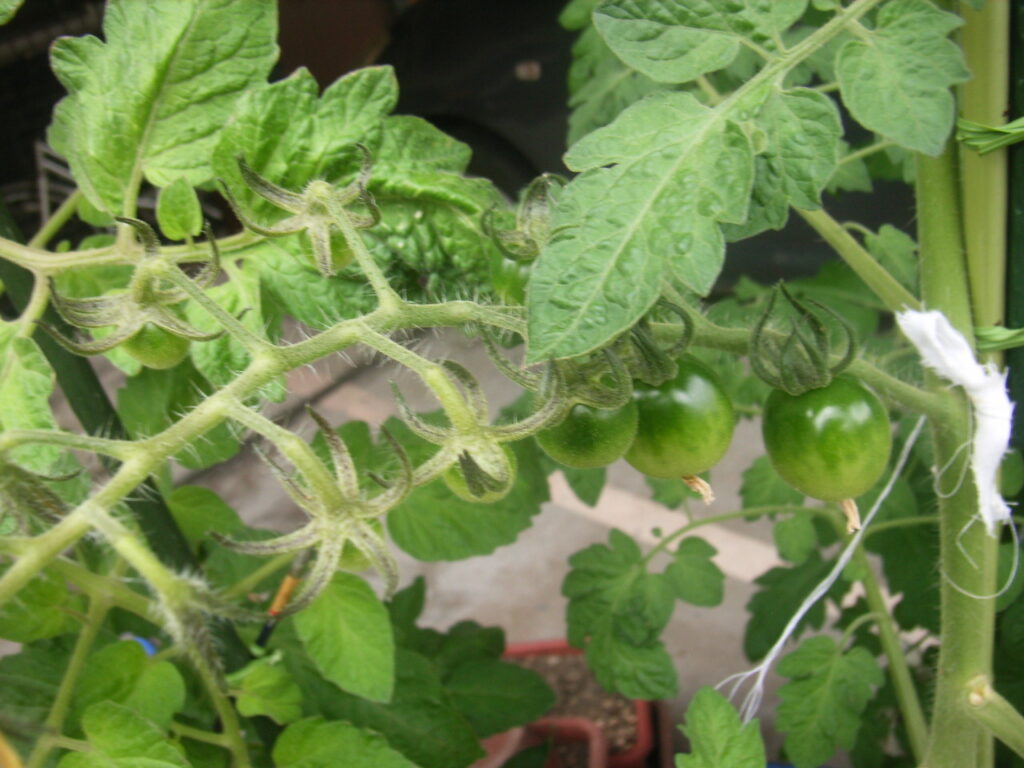
You might be most interested in the difference in the fruit, but in Chinese lantern plants and edible lantern plants, the calyx that was on the flower completely encloses the fruit, which is called a "persistent calyx," whereas in tomatoes this does not happen, and the green calyx remains on top of the fruit.
Comparing the Chinese lantern plant (Physalis alkekengi) and the edible lantern plant (Physalis edulis), the Chinese lantern plant has a persistent calyx that turns red when ripe, and the fruit itself is also red and large, while the edible lantern plant has a persistent calyx that turns yellow when ripe, and the fruit itself is yellow and small. Furthermore, the persistent calyx of the Chinese lantern plant is hairless, while that of the edible lantern plant is hairy.
Incidentally, small tomatoes are called "mame tomato" (bean tomato) Solanum lycopersicum var. cerasiforme, and are also known as mameakanasu or himetomatoma, but the product name "mini tomato," given by Takii Seed Co., Ltd. to its small tomato varieties, has become firmly established.
Hearing this, one might mistakenly think that the large-fruited tomato, Solanum lycopersicum var. lycopersicum, is the original form (the wild species), but in reality, the smaller-fruited variety, like the cherry tomato, is the wild species, and tomatoes have grown larger as a result of selective breeding. If you think about it, if tomatoes that big were to grow in the wild, they would be eaten in abundance.
What are the differences in taste between ground cherries, edible ground cherries, and tomatoes?
Many people might be concerned about the taste.
Ground cherries are poisonous and bitter, containing a lot of solanine, and are not edible.
ショクヨウホオズキは『富士見スカイファーム』では「一見するとオレンジ色のプチトマトを思わせるほおずきですが、ひと口食べてまず驚くのは、その芳醇な味わいです。マンゴーやライチを思わせる高貴な香りと、メロンやブドウのようなジューシーでフルーティな甘み、それにフレッシュな酸味などが加わって、今まで味わったことのない新感覚のおいしさを感じさせてくれます。」と紹介されています。
As many people know, tomatoes have a sweet and sour taste.
Are there any other similar varieties? It seems that three different types of "edible ground cherries" are being confused!
When referred to as "edible ground cherry," it is often confused with the grape ground cherry (Physalis peruviana). However, the edible ground cherry is native to the United States, grows creeping and spreading, and its fruit has a complex, sweet flavor like pineapple or melon, while the grape ground cherry is native to northern South America, grows very large and upright, and its fruit has a citrusy flavor (Ristvey, 2025). The leaves of the grape ground cherry are less wrinkled. Other names for the grape ground cherry include striped ground cherry, hairy ground cherry, golden berry, and Inca berry. It is sometimes said that the grape ground cherry is native to Europe, but this is false.
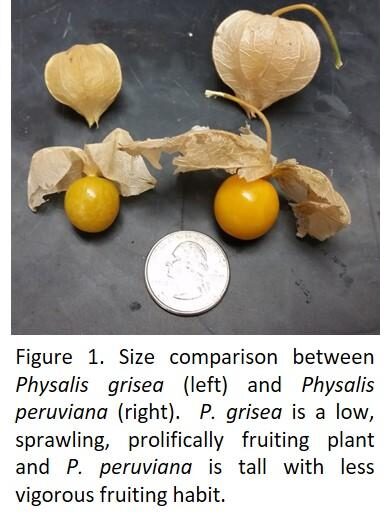
When searching for edible ground cherries, you might come across the name "tomatillo," but this is a completely different species from the edible ground cherry (Physalis philadelphica). Tomatillos have yellow flowers, and their persistent calyxes are attached to large fruits. They are used in Latin American cuisine.
Physalis angulata, also known as edible ground cherry, is similar to the edible ground cherry, but its persistent calyx remains green even when mature. The center of the flower may be colorless or purple, but it never turns black. It is not edible.
References
Flora of North America Editorial Committee. (2023). Flora of North America (Vol. 14 Magnoliophyta: Gentianaceae to Hydroleaceae). Oxford University Press. ISBN: 9780197691465
Kanagawa Prefecture Flora Survey Association. (2018). Kanagawa Prefecture Flora 2018 Electronic Edition. Kanagawa Prefecture Flora Survey Association. ISBN: 9784991053726
RBG Kew. (2025). The International Plant Names Index and World Checklist of Vascular Plants. Plants of the World Online. http://www.ipni.org and https://powo.science.kew.org/
Ristvey, A. (2025, April 26). Goldenberry. University of Maryland Extension. https://extension.umd.edu/programs/agriculture-food-systems/program-areas/fruit-vegetable-production/alternative-crops/goldenberry/
Whitson, M. (2011). (2016) Proposal to conserve the name Physalis (Solanaceae) with a conserved type. Taxon, 60 (2), 608-609. https://doi.org/10.1002/tax.602047