
Houttuynia cordata and Saururus chinensis both belong to the Saururus family and are perennial herbs that prefer humid conditions. Houttuynia cordata, in particular, is commonly consumed as "Houttuynia cordata tea" and is often seen growing in clusters along roadsides even in urban areas. People who have never seen them before may not know how to distinguish between them. Distinguishing between these two species is easy, as there are significant differences in both the inflorescence and the leaves. Houttuynia cordata is also similar to a plant with a very similar name, Polygonum cuspidatum, which belongs to the Polygonaceae family. While its leaves are quite similar to Houttuynia cordata, there are differences upon closer inspection, and its flowers and fruits are completely different. This article will explain the classification and morphology of the Saururus family.
What are Houttuynia cordata and Hangesho?
Houttuynia cordata, also known as dokudami, is a perennial herb distributed in Honshu, Shikoku, Kyushu, and the Ryukyu Islands of Japan; as well as in China, the Himalayas, and Southeast Asia, growing in shady areas and wetlands in mountainous regions.
Hangesho (Saururus chinensis), also known as Katashirogusa, is a perennial herb distributed in Honshu, Shikoku, Kyushu, and the Ryukyu Islands of Japan; as well as in Korea, China, and Southeast Asia, growing in damp places such as swamps and wetlands.
Both belong to the Saururaceae family and are perennial plants that prefer damp conditions. Saururaceae, in particular, is commonly consumed as "salvia tea" and can often be seen growing in clusters along roadsides even in urban areas. However, it emits a distinctive odor when stepped on, which some people may find unpleasant.
Some people might be wondering about the differences between these two types.
What is the difference between Houttuynia cordata and Saururus chinensis?
Although Houttuynia cordata and Saururus chinensis belong to the same family, they look quite different and are easy to distinguish (Kanagawa Prefecture Flora Survey Association, 2018). This can be expected from the fact that Houttuynia cordata belongs to the genus Houttuynia, while Saururus chinensis belongs to the genus Saururus.
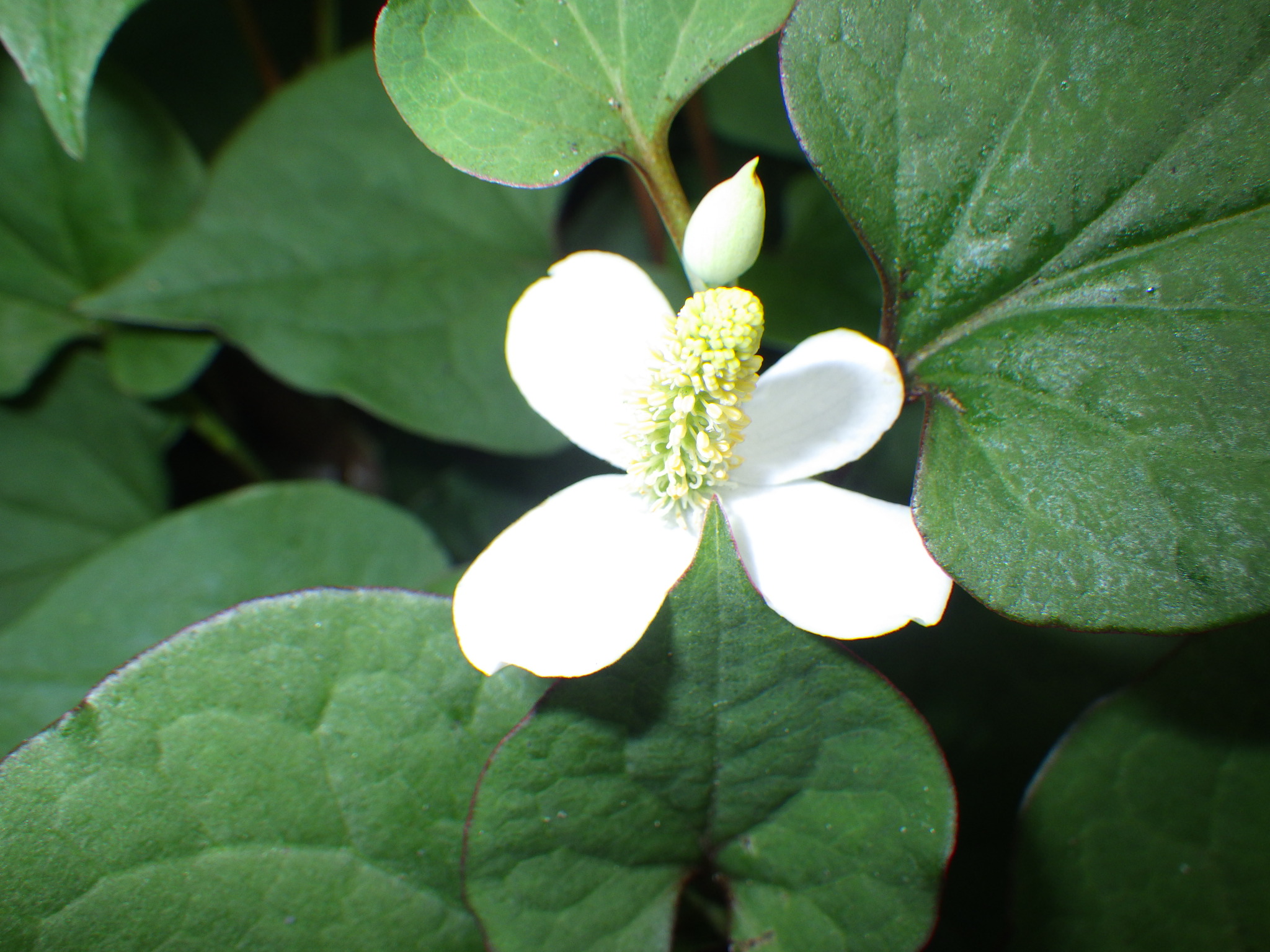
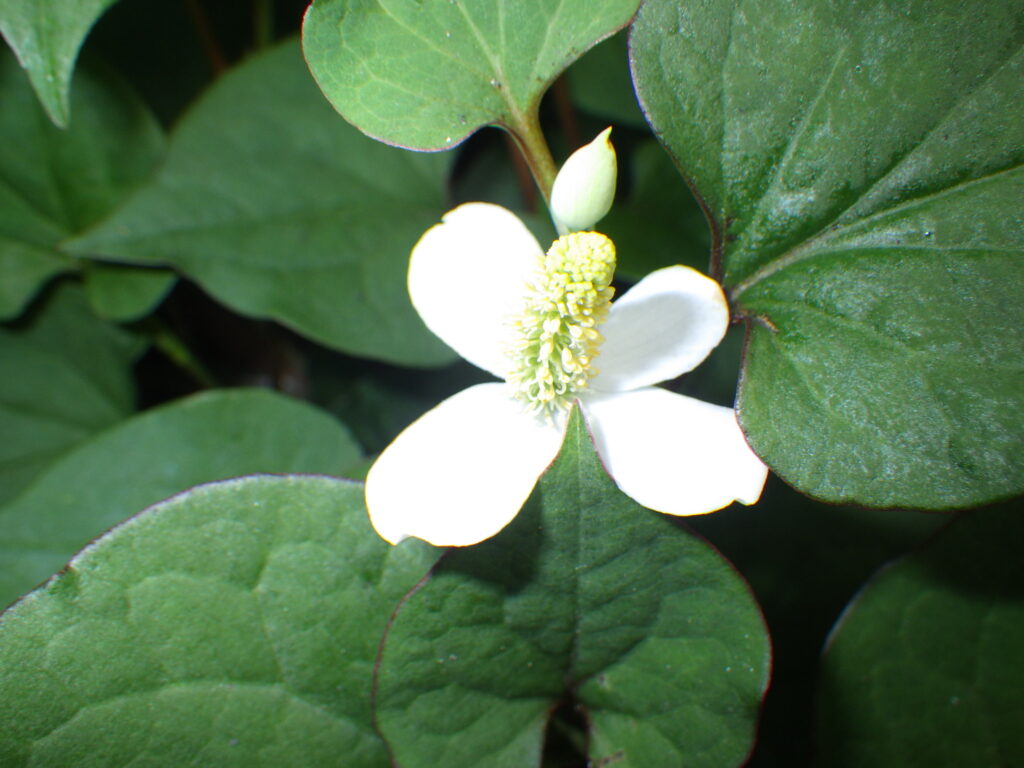
The first difference that can be mentioned is that Houttuynia cordata has 4 to 6 white bracts at the base of the inflorescence, while Saururus chinensis does not have any bracts at the base of the inflorescence.
The white parts of the Houttuynia cordata plant are often mistaken for "petals," but these are not petals but rather structures called "involucral bracts," which are modified leaves.
Instead, during its flowering season, a portion of the upper surface of the leaves of Hangesho (Saururus chinensis) turns white. This is not the case with Houttuynia cordata (Houttuynia thunbergii). This is the origin of the Japanese names "Hangesho" (half-makeup) and "Katajirogusa" (one-sided white grass).
Another difference is that the inflorescence of Houttuynia cordata is only 1-3 cm long, while that of Saururus chinensis is 10-15 cm long.
Therefore, you might get the impression that Hangesho is larger.
In the case of Houttuynia cordata, the part surrounded by white bracts is the "inflorescence." If you look closely, you will be able to see that there are many flowers with stamens and pistils inside the inflorescence.
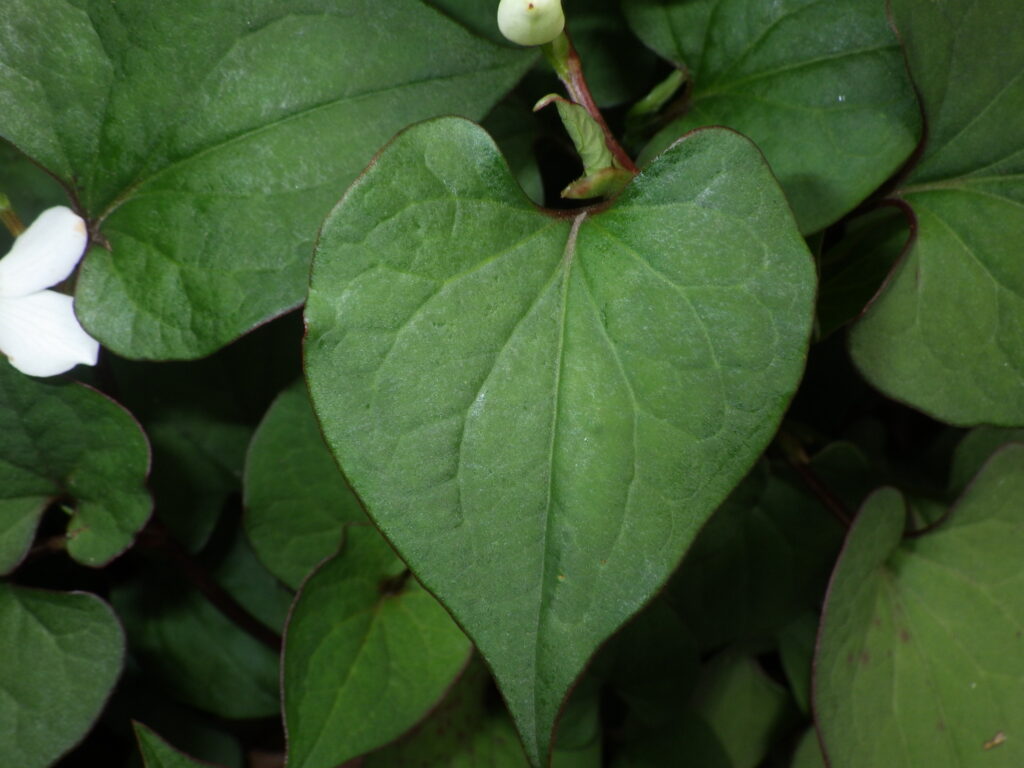
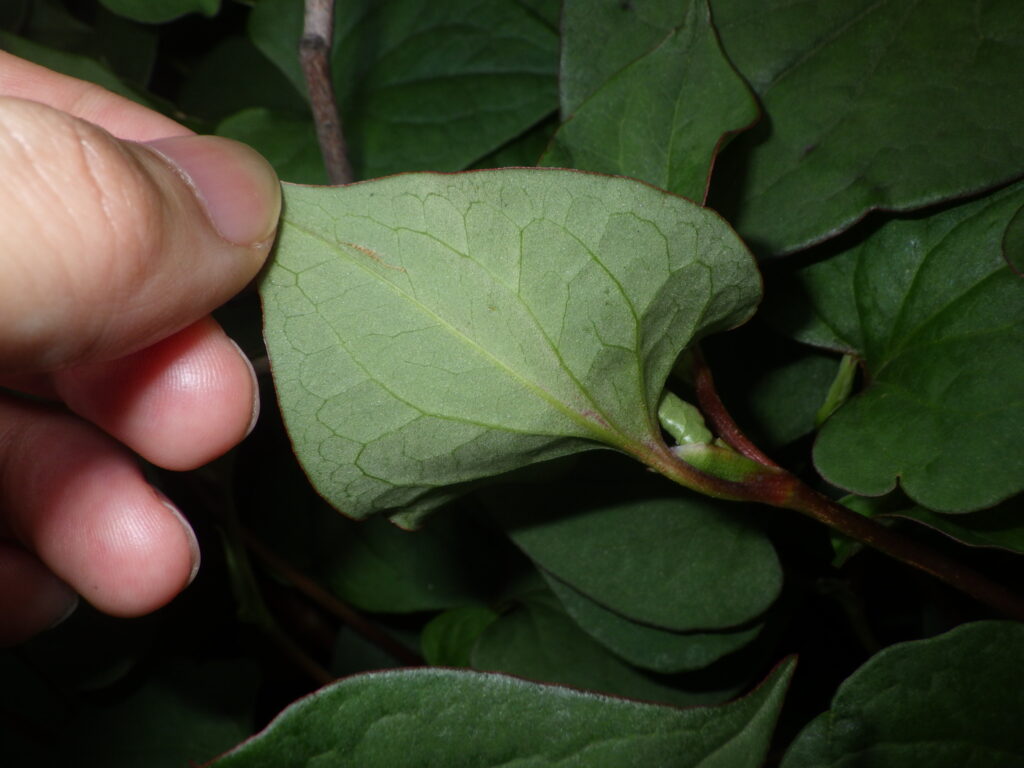
As you can see in the photos, the leaves are also completely different in size, with the leaves of Hangesho being longer than those of Dokudami.
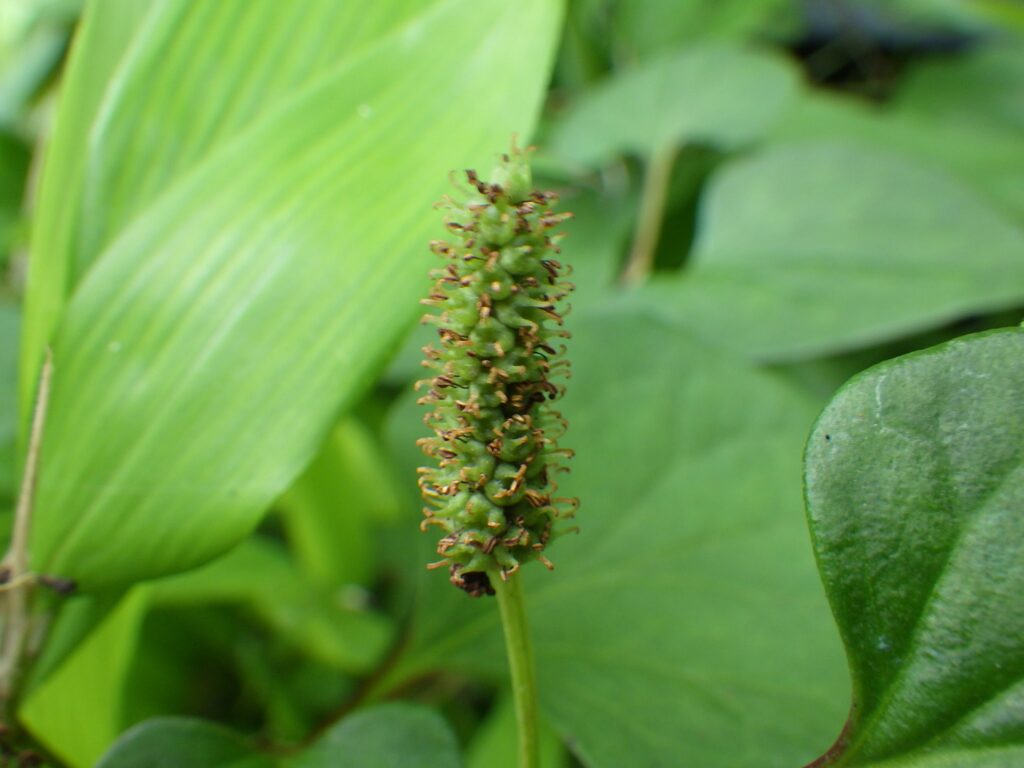
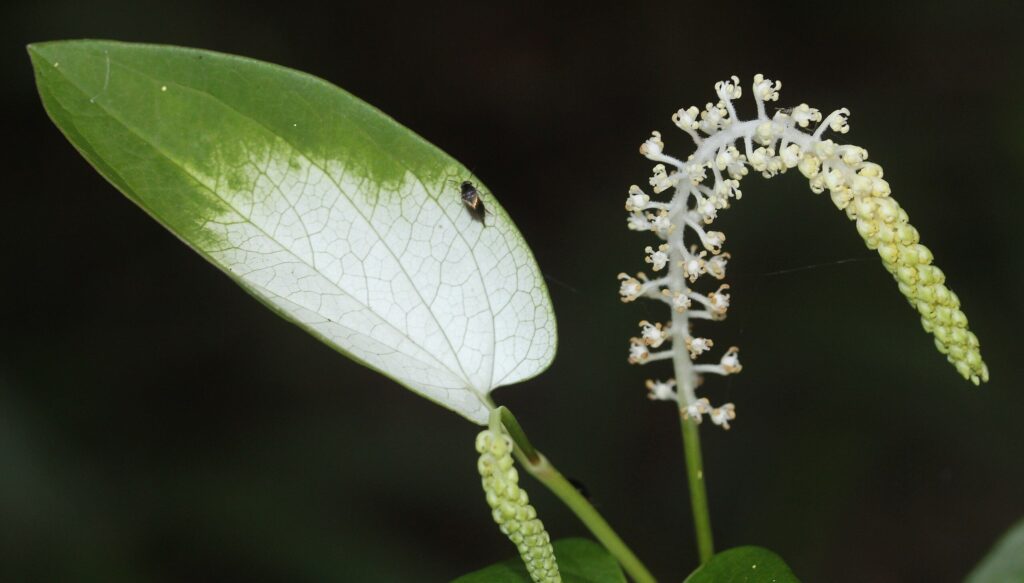
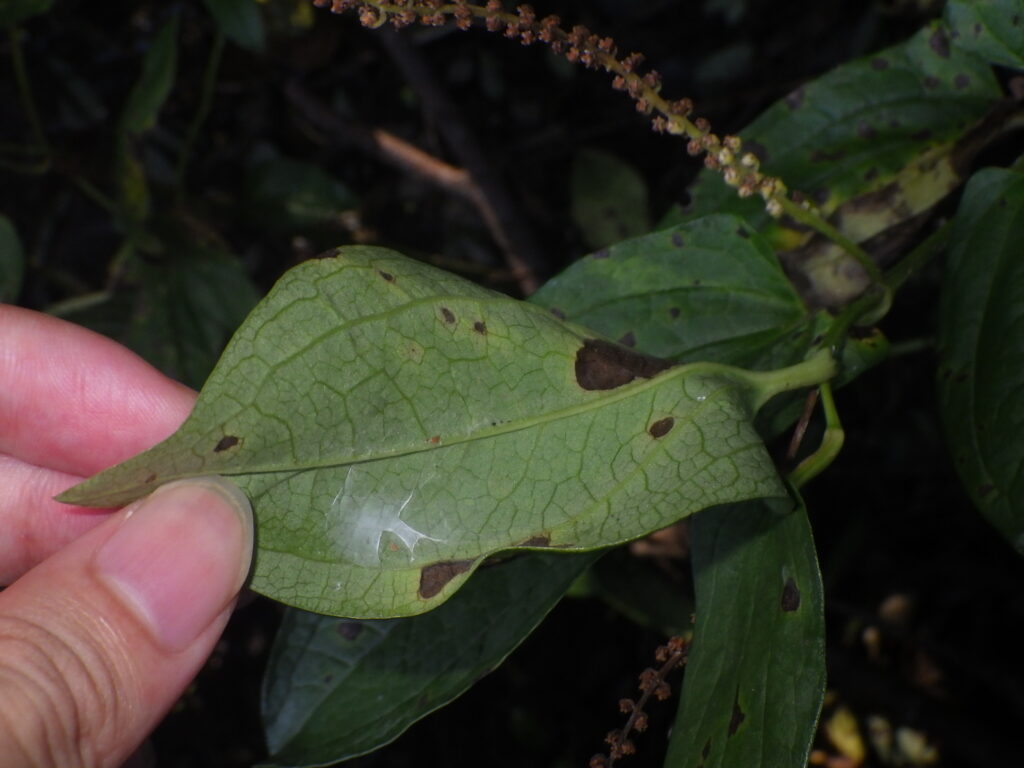
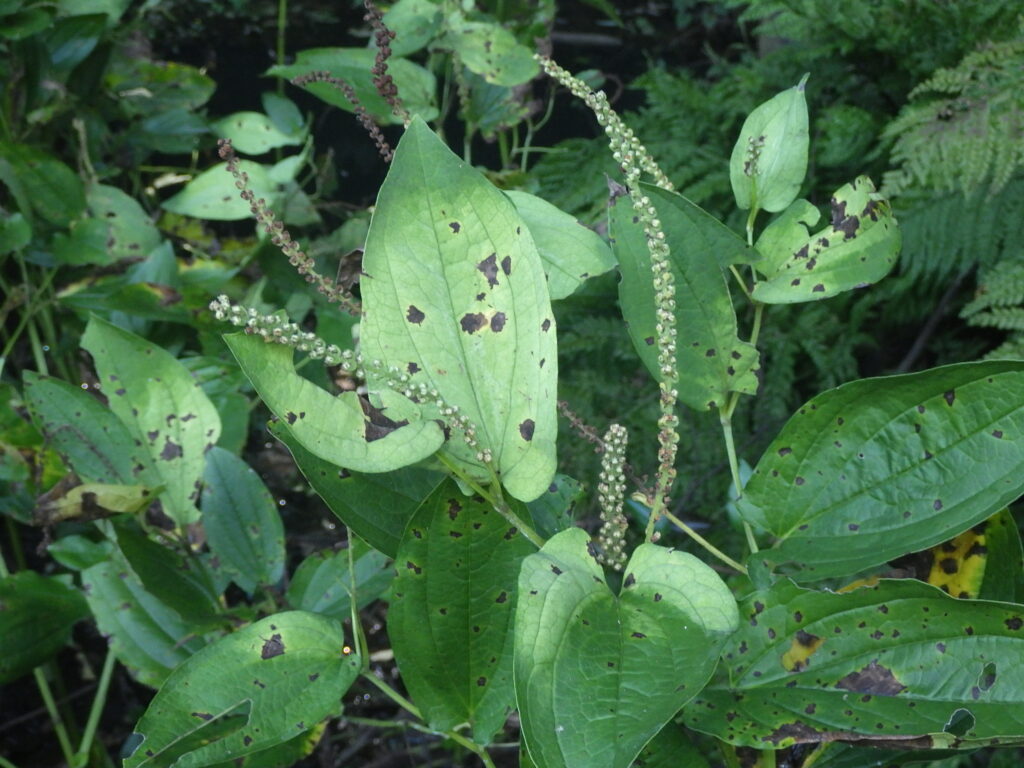
What is the difference between Houttuynia cordata and Polygonum multiflorum?
Fallopia multiflora is native to eastern China, Taiwan, Vietnam, and Thailand. It is said to have been imported to Japan for medicinal purposes and is now found growing wild in mountainous areas and along roadsides throughout the country.
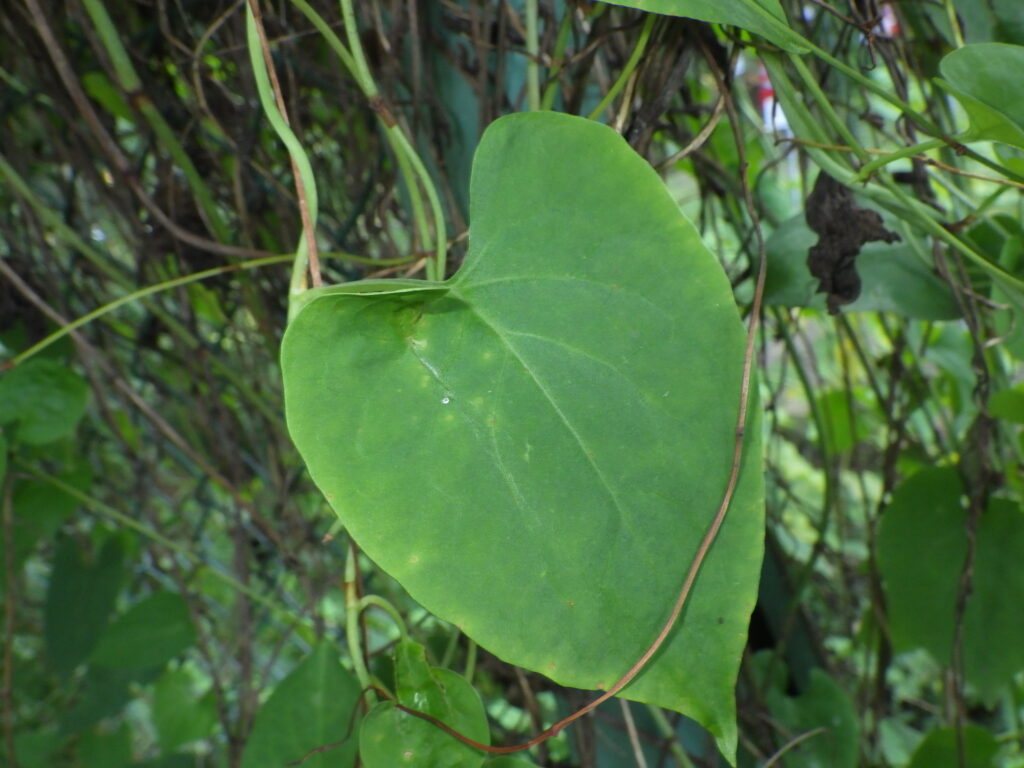
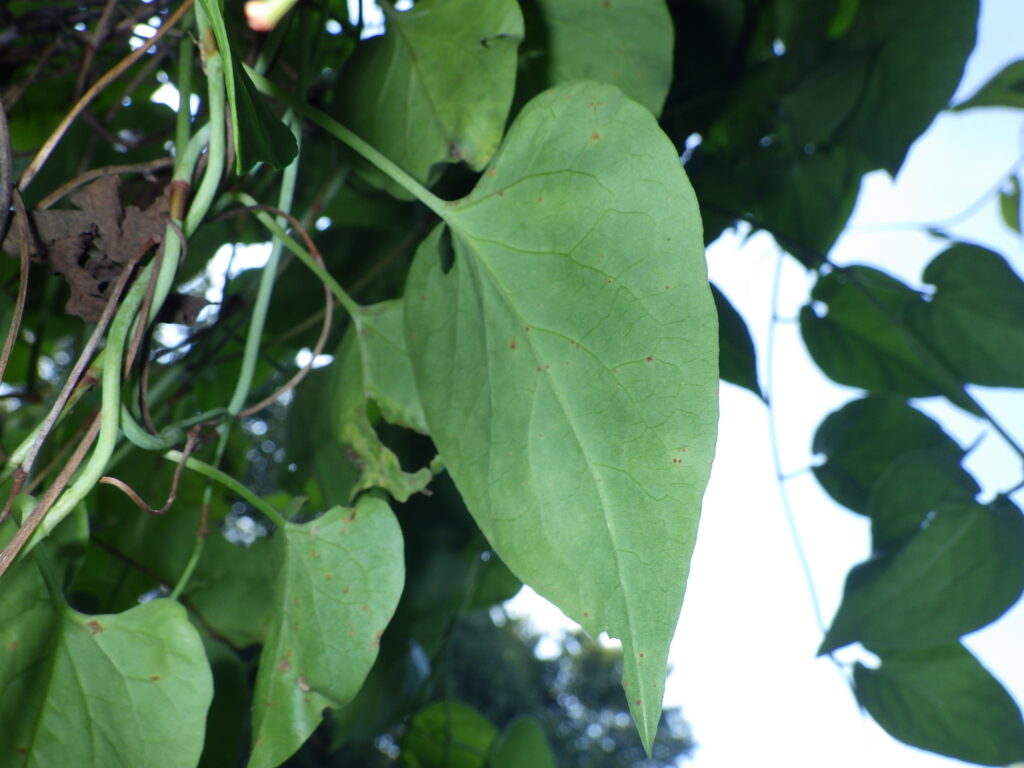
Houttuynia cordata is a plant with a similar name to Houttuynia cordata, and as its name suggests, its heart-shaped leaves with palmate veins are very similar to those of Houttuynia cordata, so some people may have trouble distinguishing them.
However, they are completely different in terms of classification. As mentioned above, Houttuynia cordata belongs to the Polygonaceae family, while Polygonum multiflorum belongs to the Polygonaceae family.
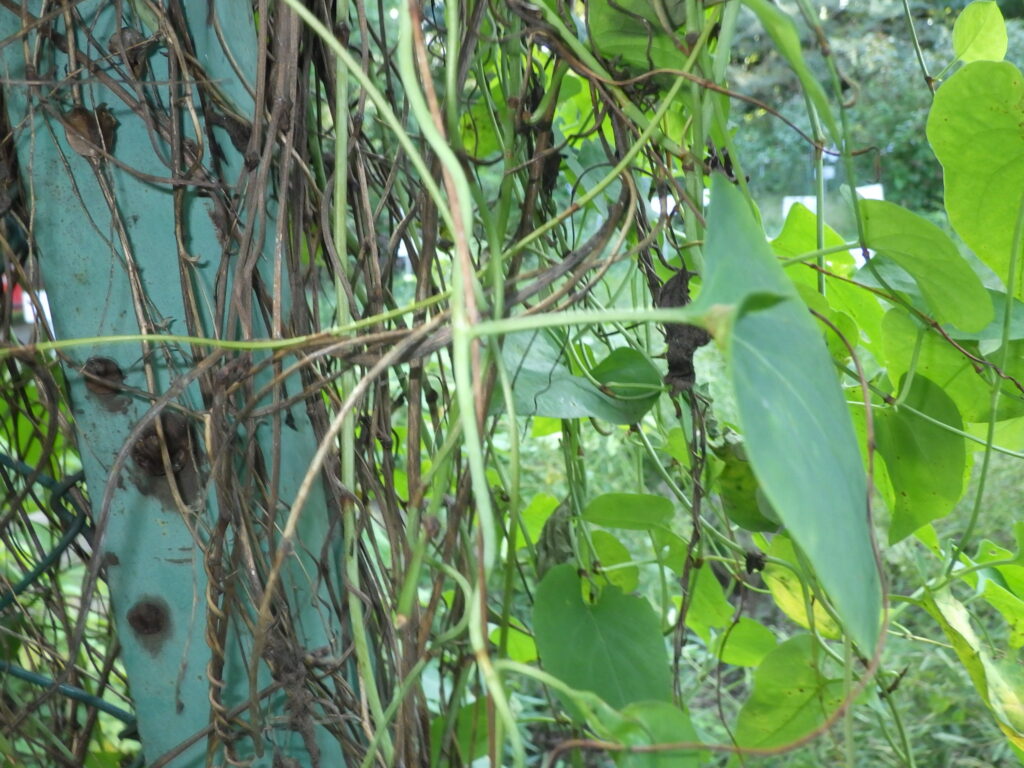
Regarding the leaves, there is a difference in that the rounded upper part (ear-like projection) of the heart shape protrudes only slightly in Houttuynia cordata, but it protrudes considerably longer in Polygonum multiflorum.
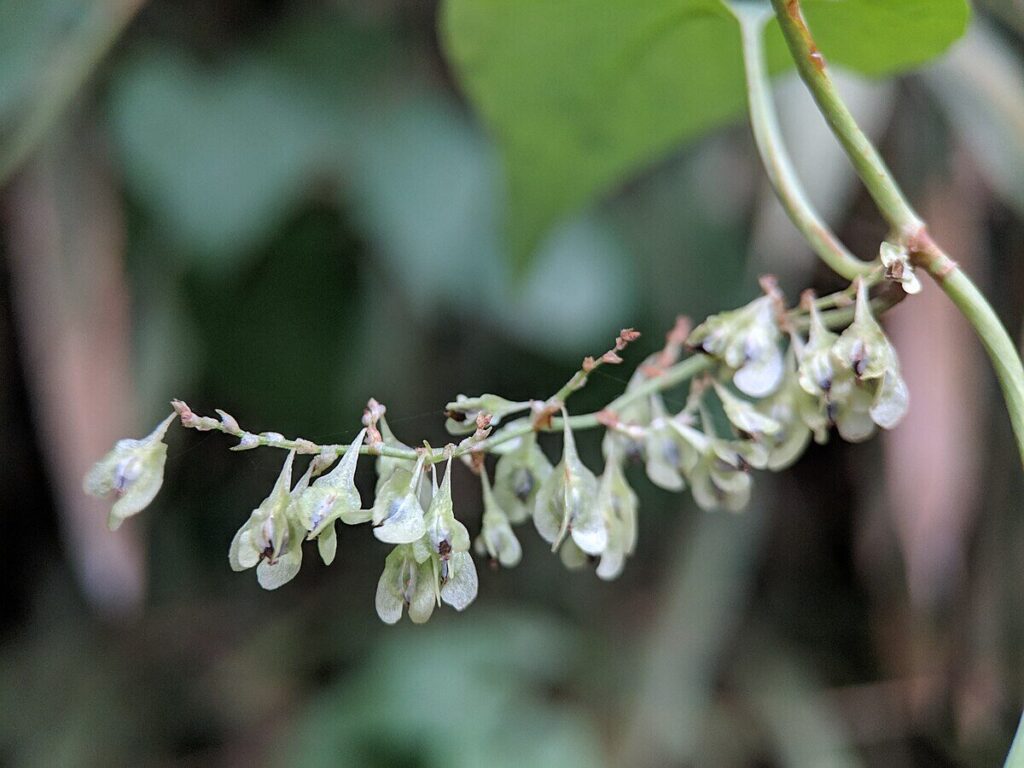
The flowers are completely different; Houttuynia cordata produces a dense inflorescence called a "flower spike," while Polygonum multiflorum produces a panicle inflorescence. Of course, Polygonum multiflorum does not have the white bracts that are present in Houttuynia cordata.
The fruits are also completely different. Houttuynia cordata has a capsule that is green and almost spherical, while Polygonum multiflorum has an achene with a thin part called a "wing" that catches the wind.
Are there any other similar species?
There are no other species of Houttuynia cordata in Japan, but several varieties are known. *Houttuynia viridis * (green Houttuynia) is a variety with some green bracts. *Houttuynia plena* (double-flowered Houttuynia) is a variety with double bracts. *Houttuynia 'Variegata' (variegated Houttuynia) is a variety with variegated leaves.
A related species, Saururus cernuus, is known to exist in the Americas. The upper surface of the leaves of Saururus cernuus does not turn white even during the flowering season. It is sometimes planted in aquariums and biotopes in Japan.
References
Kanagawa Prefecture Flora Survey Association. 2018. Kanagawa Prefecture Flora 2018 (Electronic Edition). Kanagawa Prefecture Flora Survey Association, Odawara. 1803pp. ISBN: 9784991053726

