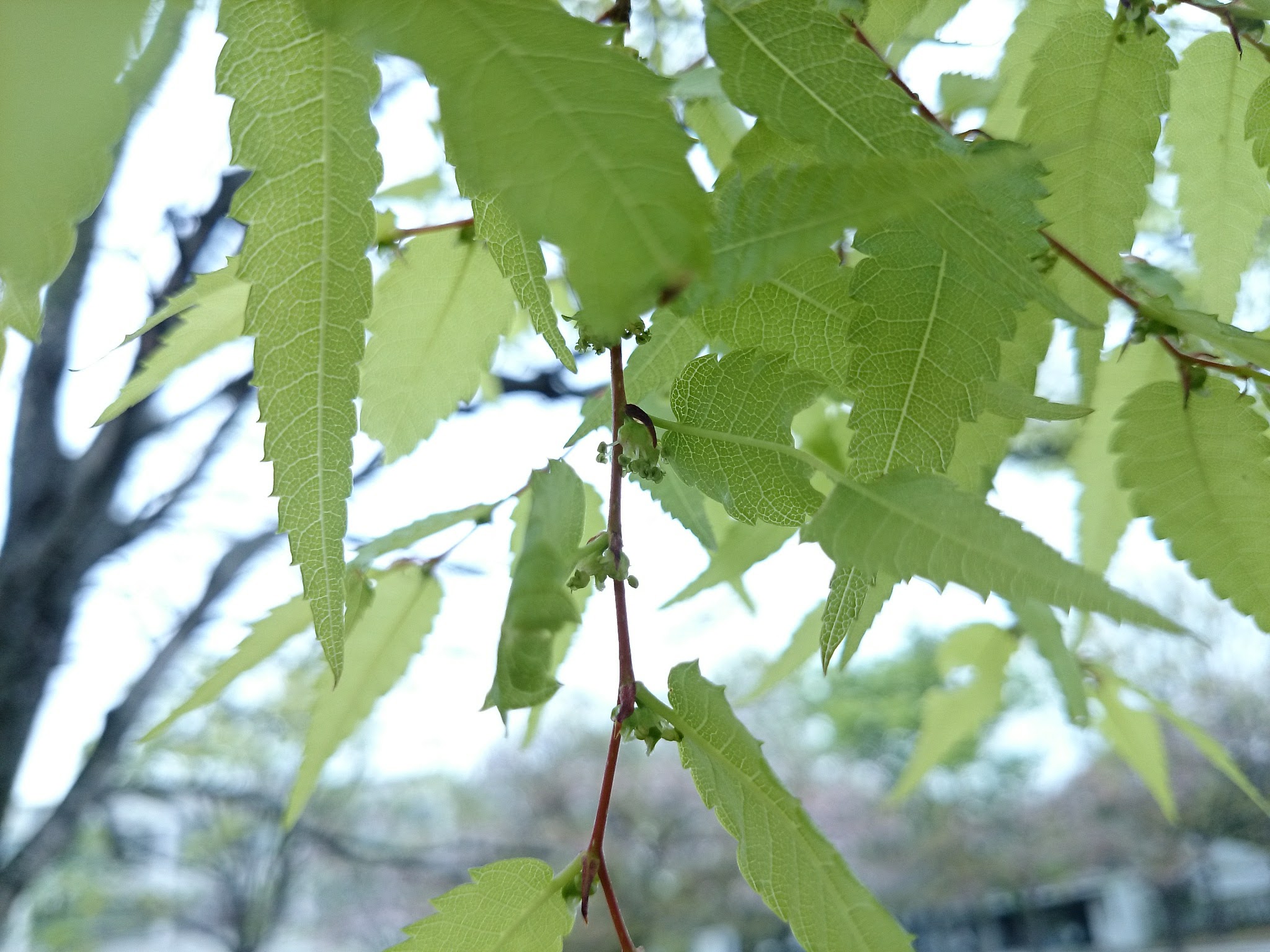
Enkianthus perulatus, Enkianthus campanulatus, and Rhododendron molle all belong to the genus Enkianthus in the family Ericaceae. Enkianthus perulatus and Enkianthus campanulatus are especially commonly seen cultivated as garden trees and park trees. They are known for their charming downward-facing, urn-shaped flowers. However, their leaf shapes are very similar, which can make them difficult to distinguish. To differentiate them, you need to carefully observe the size of the leaves and the amount of hairiness. They are relatively easy to distinguish when in bloom. This article will explain the classification and morphology of the genus Enkianthus.
What are Enkianthus perulatus, Enkianthus campanulatus, and Rhododendron molle?
Enkianthus perulatus, also known as the "lighthouse azalea" or "starry sky azalea," is a deciduous shrub distributed from southern Kanto to Kyushu in Japan, as well as eastern China and Taiwan. It rarely grows on rocky areas in hills and low mountains. In Japan, it is commonly cultivated as a garden tree, hedge, and park tree. The Japanese name "Dōdan" is believed to be a corruption of "Tōdai" (lighthouse), and is thought to originate from the fact that the way its branches branch into three resembles the three-legged "musubi tōdai" (tied lighthouse) used in the imperial court of ancient Japan.
Enkianthus campanulatus, also known as Sarasa-dodan or Fuurin-tsutsuji, is a deciduous shrub to small tree distributed from western Hokkaido to Kyushu in Japan, commonly growing on ridges and rocky areas in high-altitude mountainous regions. In Japan, it is commonly cultivated as a garden tree and park tree in colder regions.
Enkianthus subsessilis, also known as Abura-doudan-tsutsuji or Abura-doudan, is a deciduous shrub distributed in the Tohoku and eastern Chubu regions of Japan, growing somewhat rarely on rocky areas in mountainous regions.
All of these species belong to the genus Enkianthus in the family Ericaceae, and you'll often see Enkianthus perulatus and Enkianthus campanulatus cultivated as garden trees and park trees in many places.
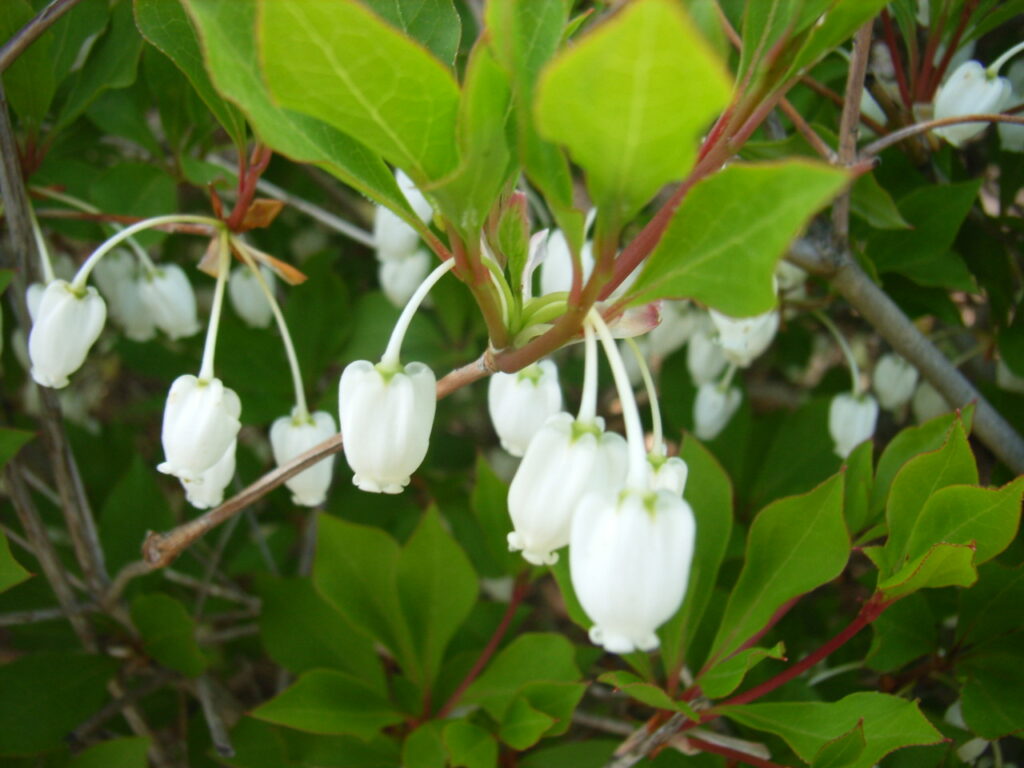
Like the Pieris and Lyonia genera within the Ericaceae family, it is a woody plant characterized by its downward-facing, urn-shaped flowers. During its flowering season in spring (April-May), you can observe many of these "urn-shaped" flowers hanging downwards. Its autumn foliage is also vibrant, so you can enjoy it twice.
They also share the characteristics of having leaves that grow in clusters, are obovate in shape, and have serrated edges.
Therefore, you might sometimes get confused about the difference. Sarasa-doudan is sometimes sold as "Doudan-tsutsuji" in garden centers.
What are the differences between Enkianthus perulatus, Enkianthus campanulatus, and Rhododendron molle?
However, although the three species belong to the same genus, differences can be observed in both their leaves and flowers (Hayashi, 2019).
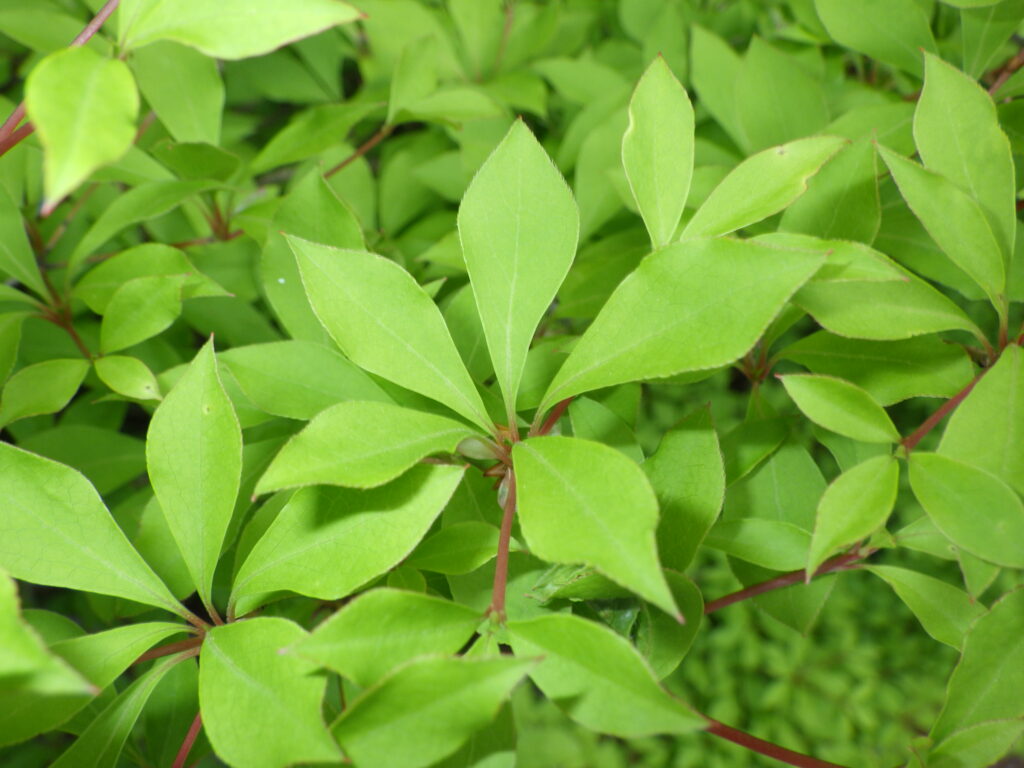
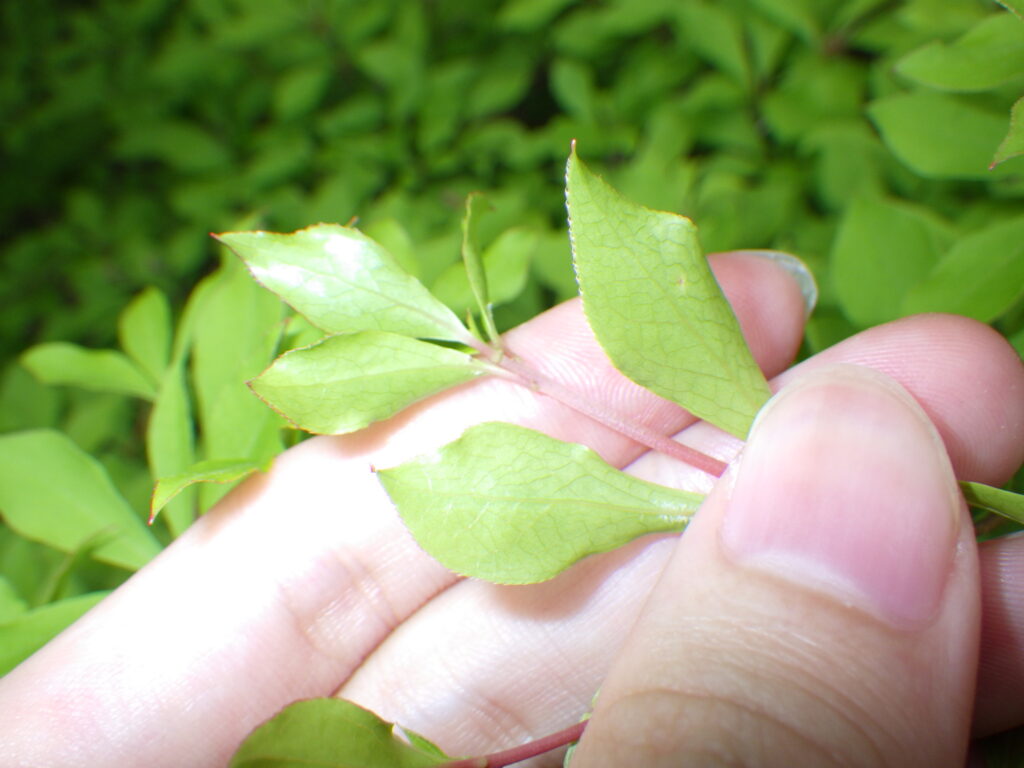
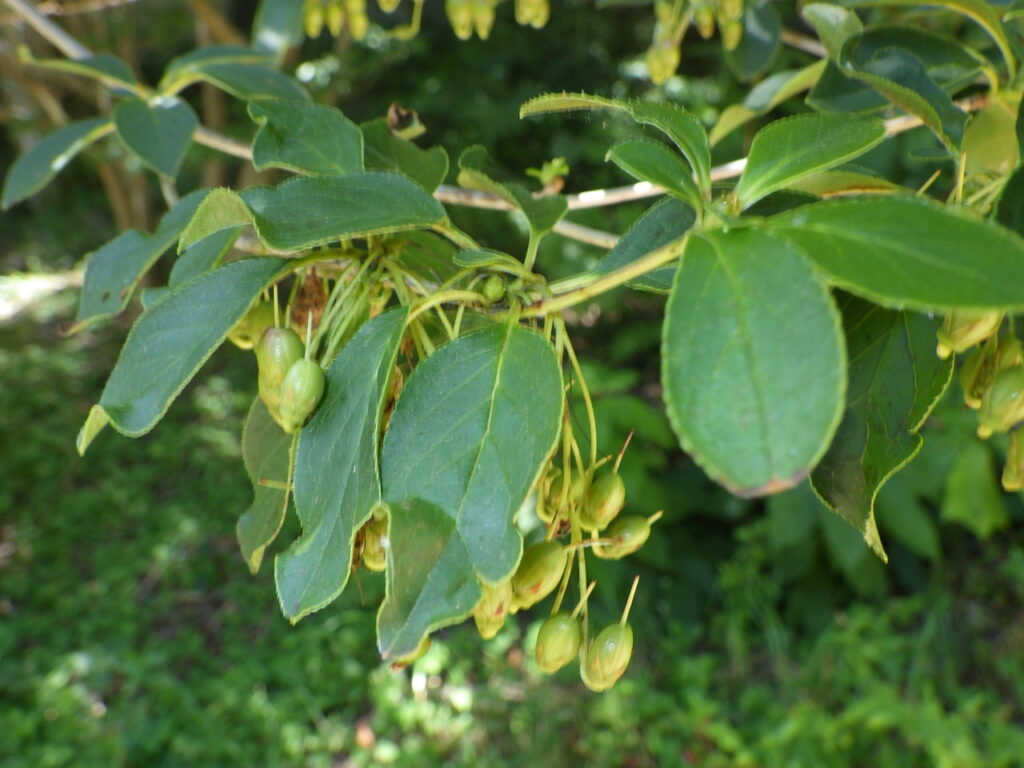
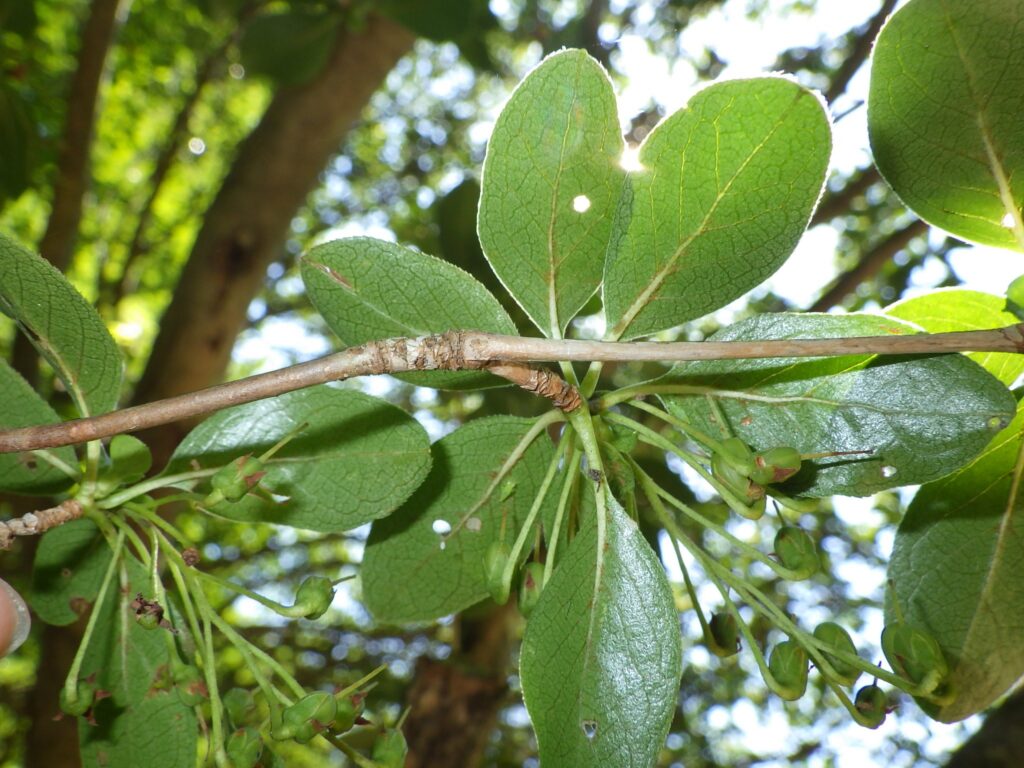
First, regarding the leaves, the differences are that the leaf blades of Enkianthus perulatus and Rhododendron molle are small, 2-4 cm long, the lateral veins are not prominent, and there are almost no brown, curly hairs at the branching point of the main vein and lateral veins on the underside of the leaf. In contrast, Enkianthus campanulatus has larger leaf blades, 3-7 cm long, the lateral veins are prominent, and there are brown, curly hairs on the underside of the leaf.
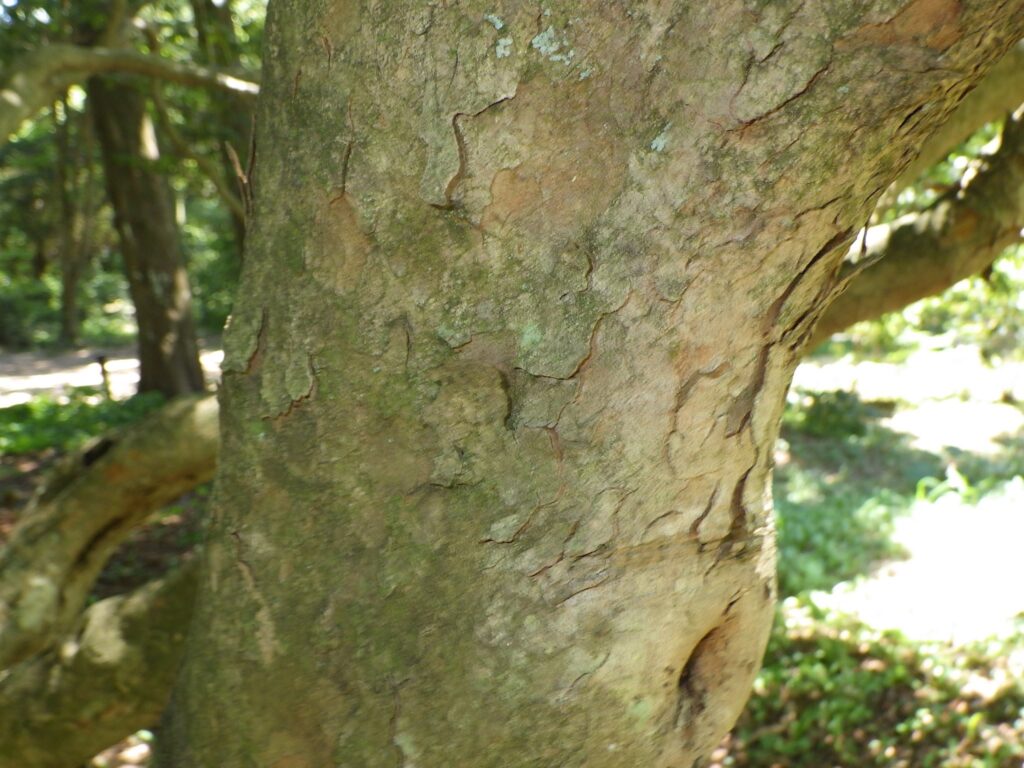
Enkianthus campanulatus is exceptionally large, even among the Enkianthus genus. Its growth pattern is also unique; it grows quite large, sometimes developing a thick trunk, even as it becomes a small tree.
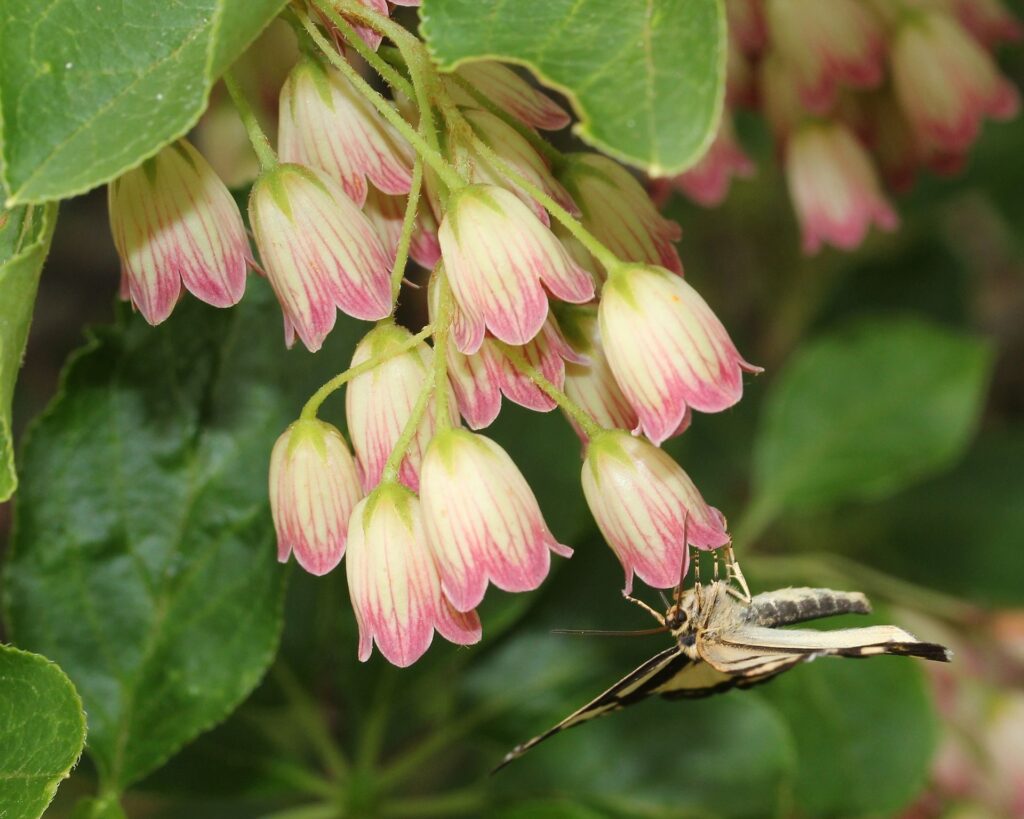
Furthermore, only the flowers of the Enkianthus campanulatus have red tips on their corollas. The Japanese name "Sarasa-dodan" comes from the fact that the flower's pattern resembles the pattern of sarasa dyeing.
Since the leaves of Enkianthus perulatus and Rhododendron molle are quite similar, it may be a little difficult to distinguish between them.
However, there is a difference in that Enkianthus perulatus has hairless petioles and generally few hairs on the underside of the leaves, with only soft hairs at the base along the main vein, whereas Rhododendron molle has hairy petioles with brown, curly hairs, and the underside of the leaves is generally hairier, especially along the main vein.
Regarding the flowers, the corolla of the Enkianthus perulatus is long and slender, while the corolla of the Rhododendron molle is shorter and rounder, truly resembling a "vase."
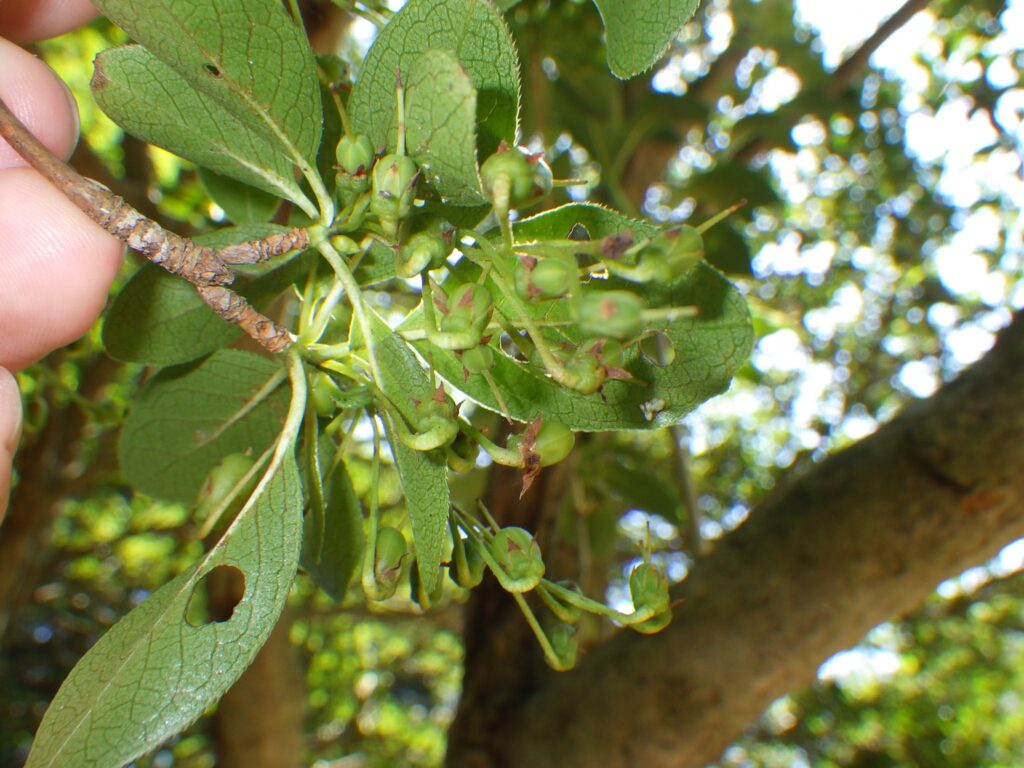
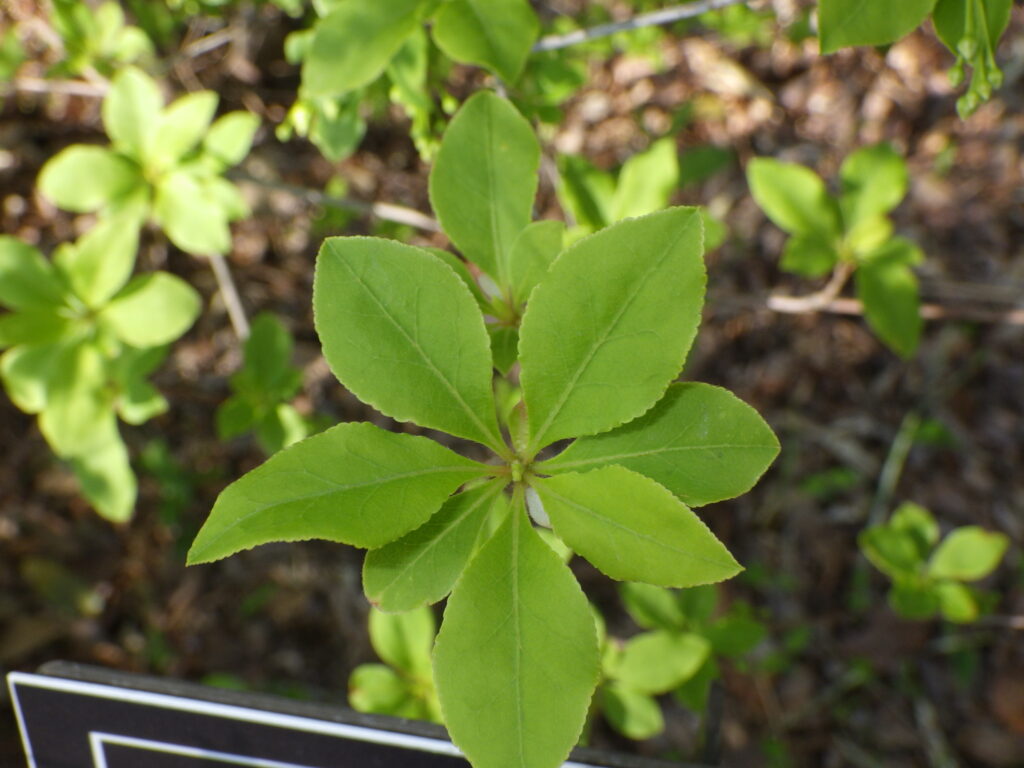
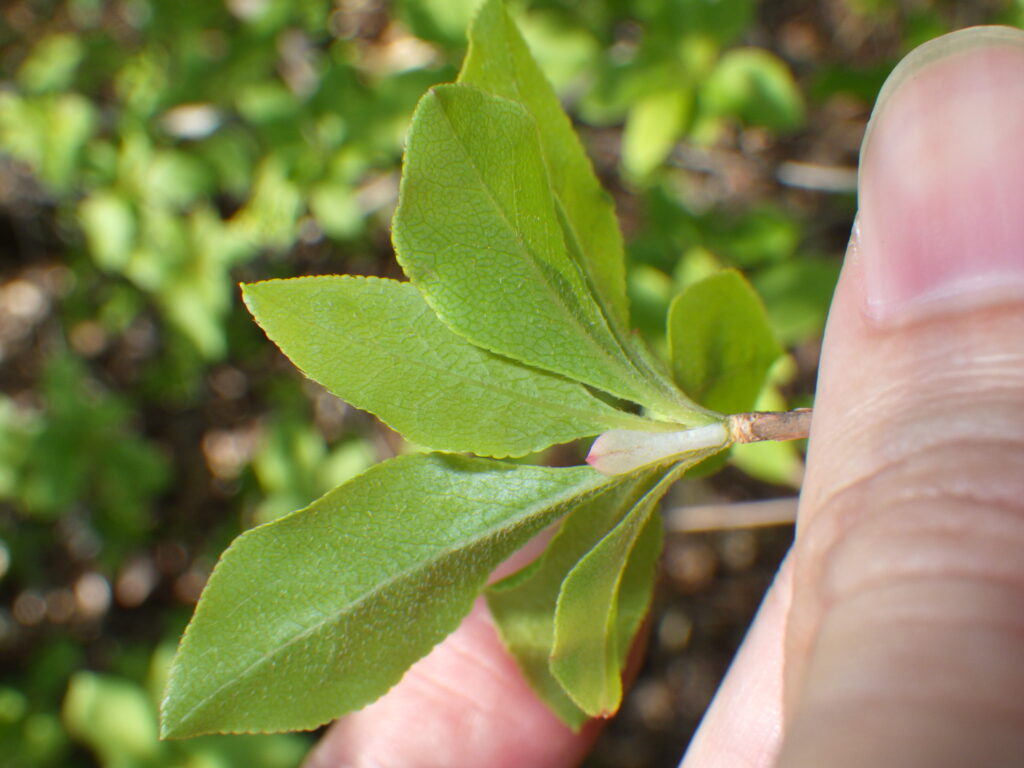

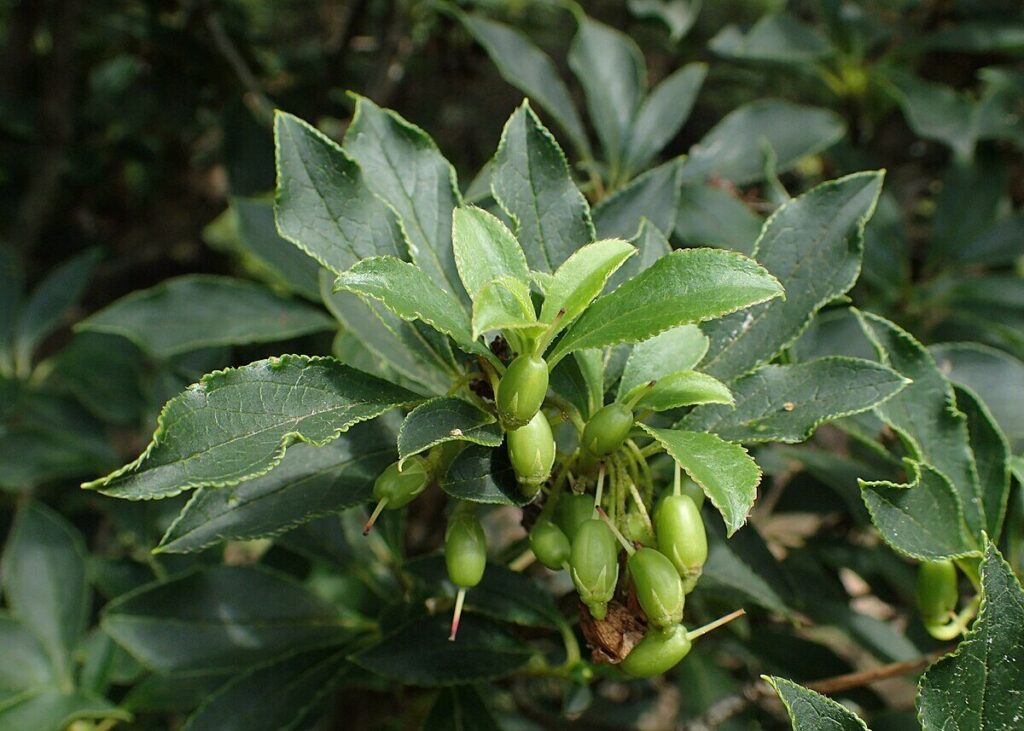
Are there any other similar species?
Among the Enkianthus perulatus species, there is a known variety called Enkianthus perulatus f. japonicus, which has broad leaves.
Several varieties and cultivars of Enkianthus campanulatus are known. Benisarasadoudan var. palibinii is distributed in the highlands of northern Honshu and is a variety with entirely deep red flowers. Tsukushidoudan var. longilobus is a variety with deep flower color and deeply lobed corollas, and Kibanafuurintsutsuji f. lutescens is a variety with yellow flowers.
There are 16 other species in the Enkianthus genus distributed in Japan, so there are even more species that are difficult to distinguish. Here, we will briefly introduce some similar species.
Enkianthus cernuus f. rubens is quite similar to Enkianthus perulatus, but its petioles are shorter, the serrations are more pronounced, and the corolla is bell-shaped rather than tapering at the tip. As the name suggests, the corolla is red, but there is also a white variety called Enkianthus cernuus f. cernuus.
Enkianthus nudipes closely resembles Rhododendron molle, but its leaves are smaller, and the underside of the leaves, petioles, young branches, and inflorescences are usually hairless. It grows in rocky areas from the Chubu region to the Kinki and Shikoku regions of Japan.

References
Hayashi, Masayuki. 2019. Tree Leaves: Expanded and Revised Edition - Identifying 1300 Species Through Real-Life Scans. Yama-kei Publishers, Tokyo. 824pp. ISBN: 9784635070447
Kanagawa Prefecture Flora Survey Association. 2018. Kanagawa Prefecture Flora 2018 (Electronic Edition). Kanagawa Prefecture Flora Survey Association, Odawara. 1803pp. ISBN: 9784991053726