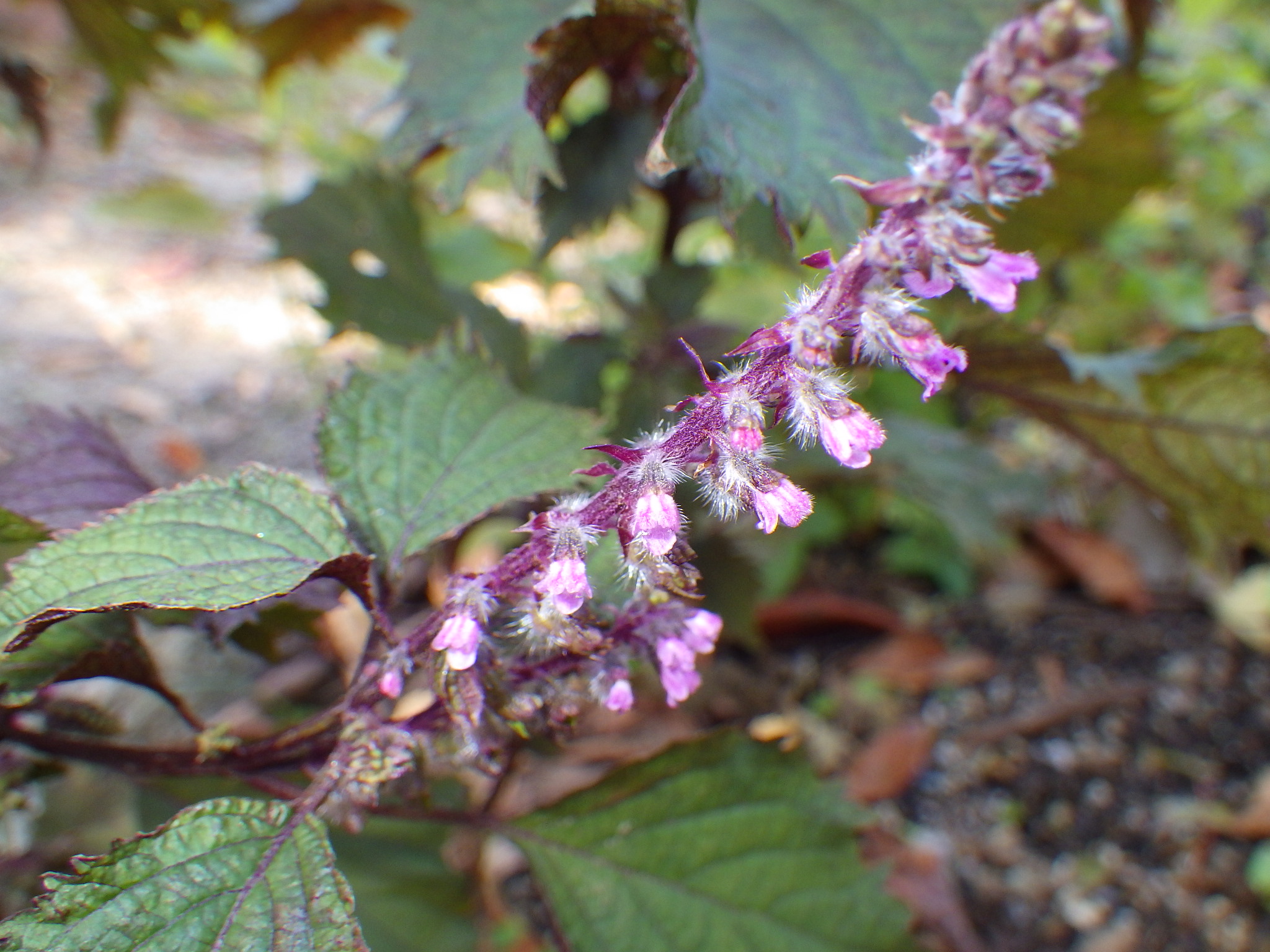
Shiso, egoma, and lemon egoma are all annual plants belonging to the Lamiaceae family, genus Perilla, and possess a distinctive smell and taste. Shiso and egoma, in particular, have been cultivated since ancient times and are now used mainly in pickled plums and dressings, making them extremely familiar plants to Japanese people. However, shiso and egoma easily hybridize, and there are many intermediate individuals, making it difficult to distinguish between them. The name "lemon egoma" is also easily confused with egoma. However, by paying attention to their habitat, the condition of the hairs on the stem, and the shape of the bracts, it is possible to distinguish between shiso, egoma, and lemon egoma. The biggest difference between shiso and egoma is the difference in their chemical composition, and they also differ in the condition of their leaves and the size of their fruits. However, depending on the individual plant, clear distinction may be difficult. Due to the difference in their chemical composition, shiso leaves are eaten directly, while egoma has been used in Japan as "egoma oil (shiso oil)." This article will explain the classification and uses of the Perilla genus.
What are shiso, egoma, and lemon egoma?
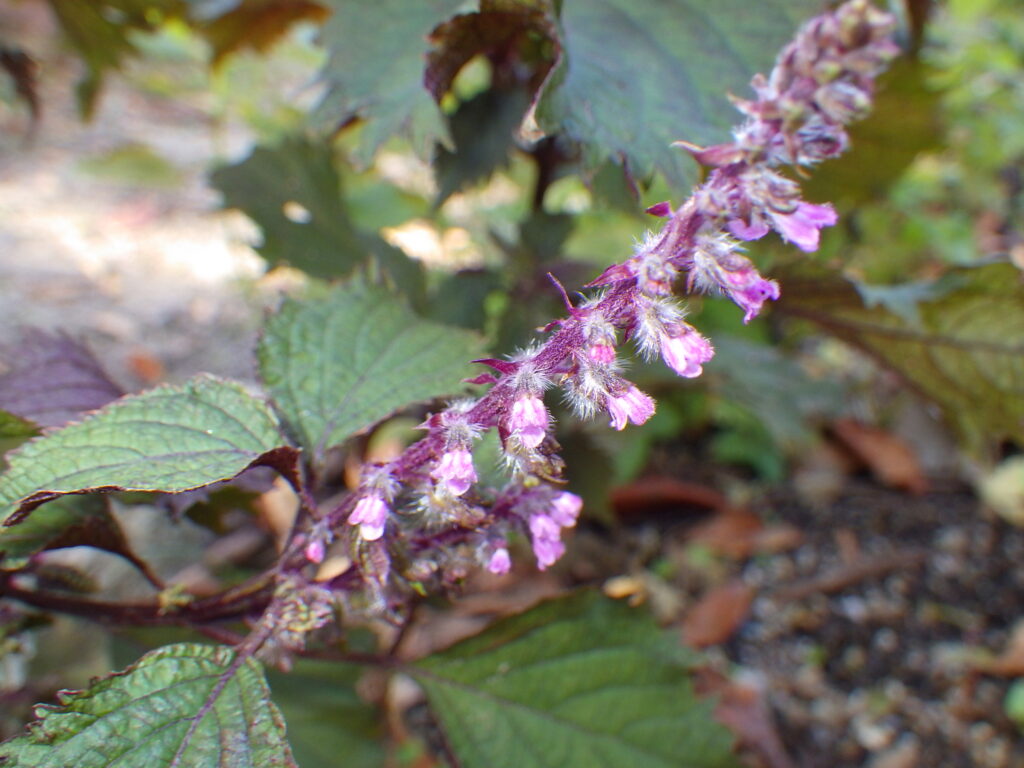
Shiso (Perilla frutescens var. crispa) is an annual plant native to south-central China and Japan (RBG Kew, 2023). In Japan, seeds have been found in Jomon period archaeological sites, and it is mentioned in Heian period documents, indicating its use since ancient times (Murakami, 2023). Cultivated for food frequently escapes cultivation and has naturalized in semi-shaded areas such as roadsides and forest edges in the vicinity of farmland, foothills, and hills (Kanagawa Prefecture Flora Survey Association, 2018). The leaves of the green shiso are sold under the name "ooba" (大葉).
Perilla frutescens var. frutescens, also known as egoma (perilla), is an annual plant distributed in the Himalayas, East Asia, Southeast Asia, and South Asia, and is believed to be native to Southeast Asia. In Japan, seeds have been found in Jomon period ruins, and it is also mentioned in wooden tablets from the Asuka period, indicating that it has been used since ancient times (Murakami, 2021). Cultivated for food, it has escaped cultivation and is found along forest roads and farm roads at the foot of mountains and hills (Kanagawa Prefecture Flora Survey Association, 2018).
Lemon perilla (Perilla citriodora) is an annual plant distributed in Honshu (Pacific coast west of the Kanto region), Shikoku, and Kyushu in Japan, growing in the forest edges from the upper part of the Castanopsis and Quercus zone to the lower part of the Beech zone (Kanagawa Prefecture Flora Survey Association, 2018).
Both belong to the Lamiaceae family, genus Perilla, and are annual plants with a distinctive smell and taste.
From a taxonomic standpoint, it is important to note that the calyx is lip-shaped with the upper lip divided into three lobes and the lower lip into two lobes, the corolla is clearly lip-shaped, the anthers are two-chambered, it is an annual plant, and the fruit has a reticulated pattern on its surface.
Perilla and egoma, in particular, have been cultivated since ancient times and are now mainly used in pickled plums and salad dressings, making them extremely familiar plants to the Japanese people.
However, since shiso and egoma are taxonomically the same species but are varieties of each other, they easily hybridize, resulting in many intermediate individuals and often making it difficult to distinguish between them.
Furthermore, the name "lemon egoma" sounds like it's an invasive species, and it's easily confused with egoma (perilla).
These three types are often confused due to these factors.
What is the difference between shiso egoma and lemon egoma?
First, the three species can be broadly classified into perilla/egoma and lemon egoma (Kanagawa Prefecture Flora Survey Association, 2018).
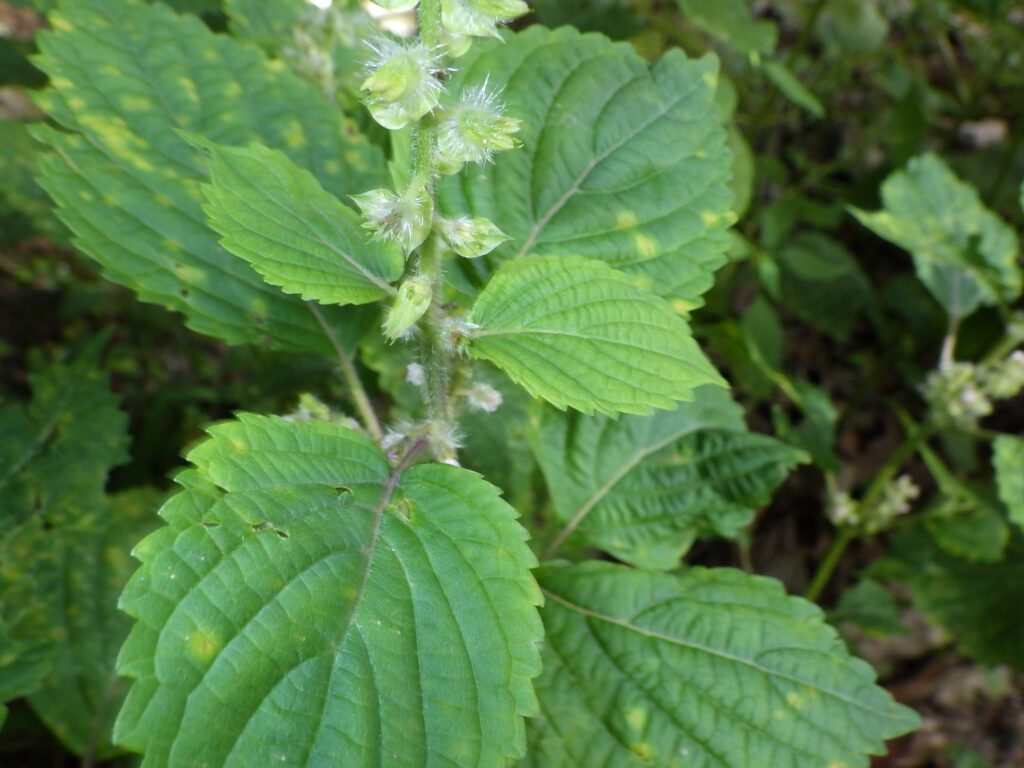
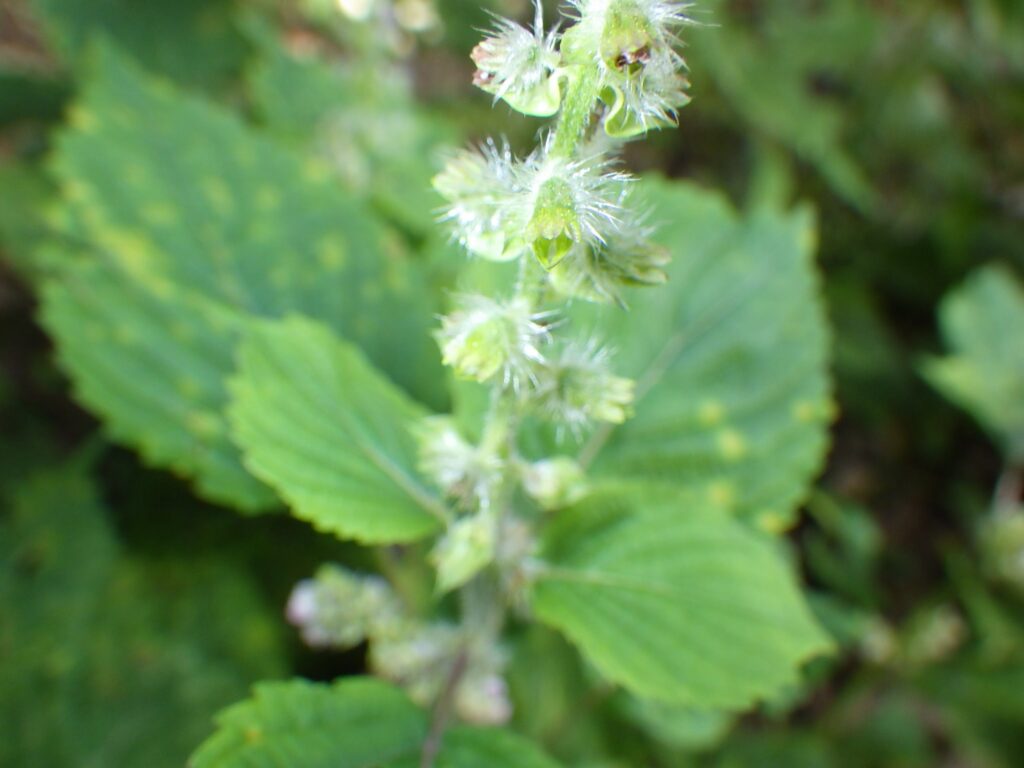
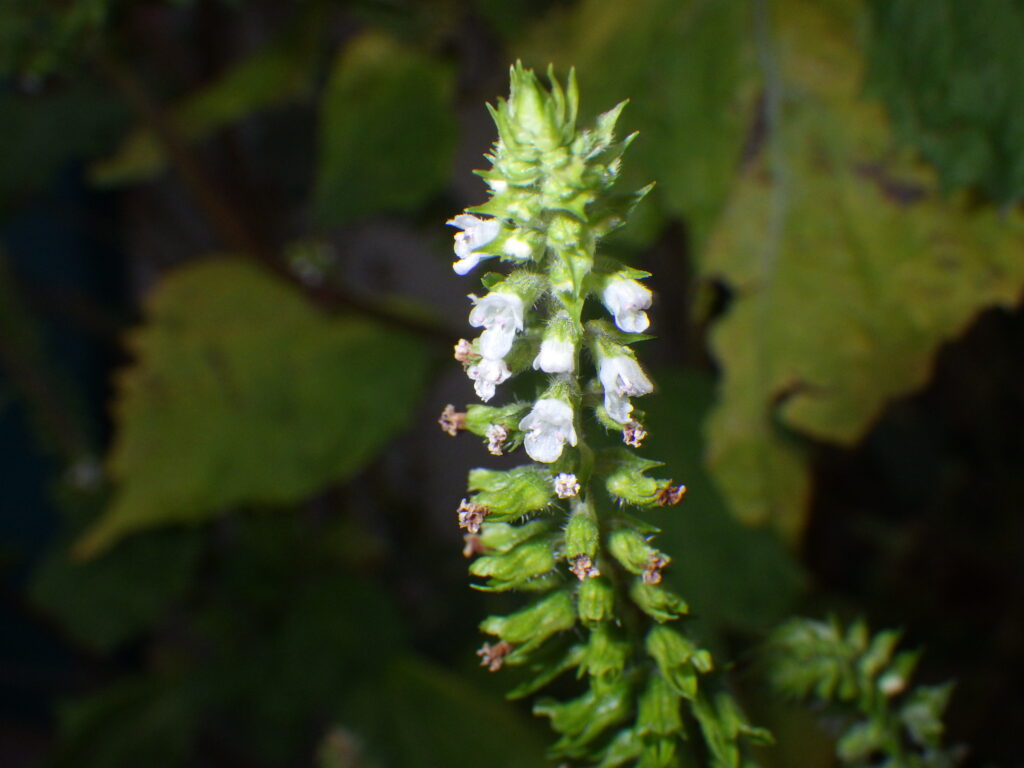
In perilla and egoma, the lower and middle parts of the stem are sparsely covered with short hairs and curly long hairs, the bracts are green or reddish-purple, and the bracts are ovate to broadly ovate, with no laterally broad elliptical ones appearing.
In contrast, lemon perilla has dense, downward-pointing short hairs on the lower middle part of the stem, white bracts, and the bracts at the base of the inflorescence are broadly oval in shape.
The term "bract" might be unfamiliar, but here it refers to a leaf-like structure that surrounds a flower or fruit from below. The Lamiaceae genus is quite conspicuous. In particular, in lemon perilla, the bracts are broadly oval in shape and almost completely cover the flower or fruit.
While perilla and sesame are considered cultivated varieties based on chromosome number, lemon perilla is considered a wild species. Despite its name, "lemon perilla" is surprisingly a wild species; it's simply named because it smells like lemons.
Therefore, while perilla and egoma grow in areas close to human settlements, lemon egoma usually grows in mountainous areas at slightly higher elevations with a greater degree of naturalness. Keep this point in mind as well.
Furthermore, the other species, Perilla hirtella, can be distinguished by the fact that its leaf blades have serrations all the way to the base, while Perilla setoyensis can be distinguished by its white flowers and hairy calyx.
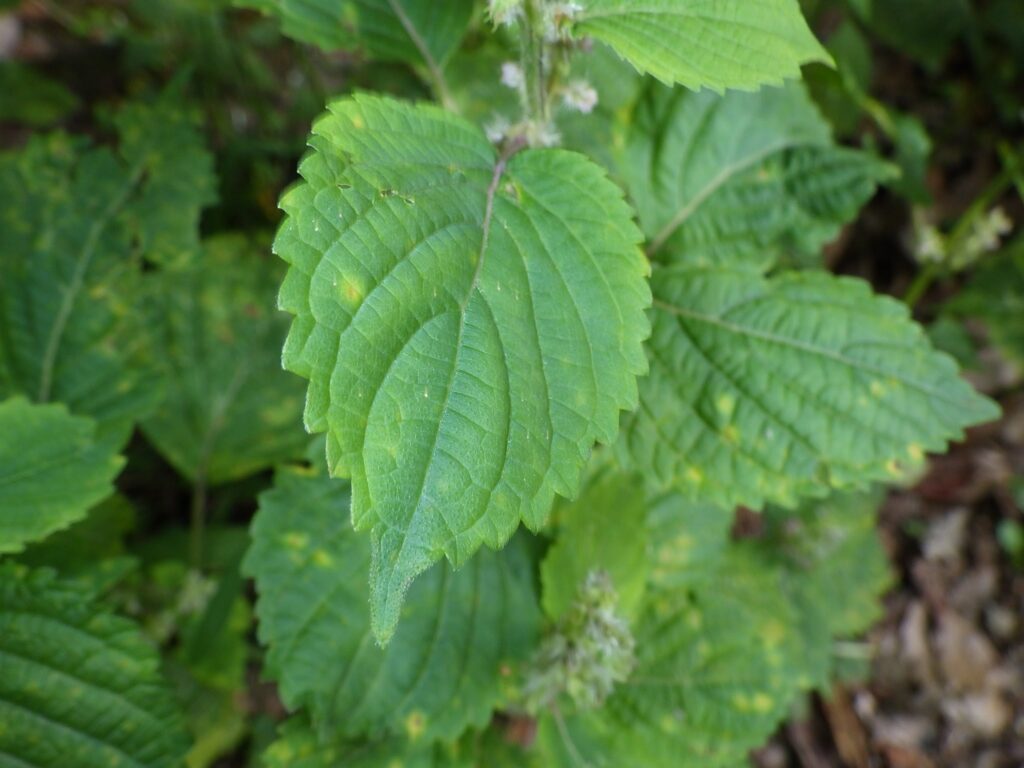
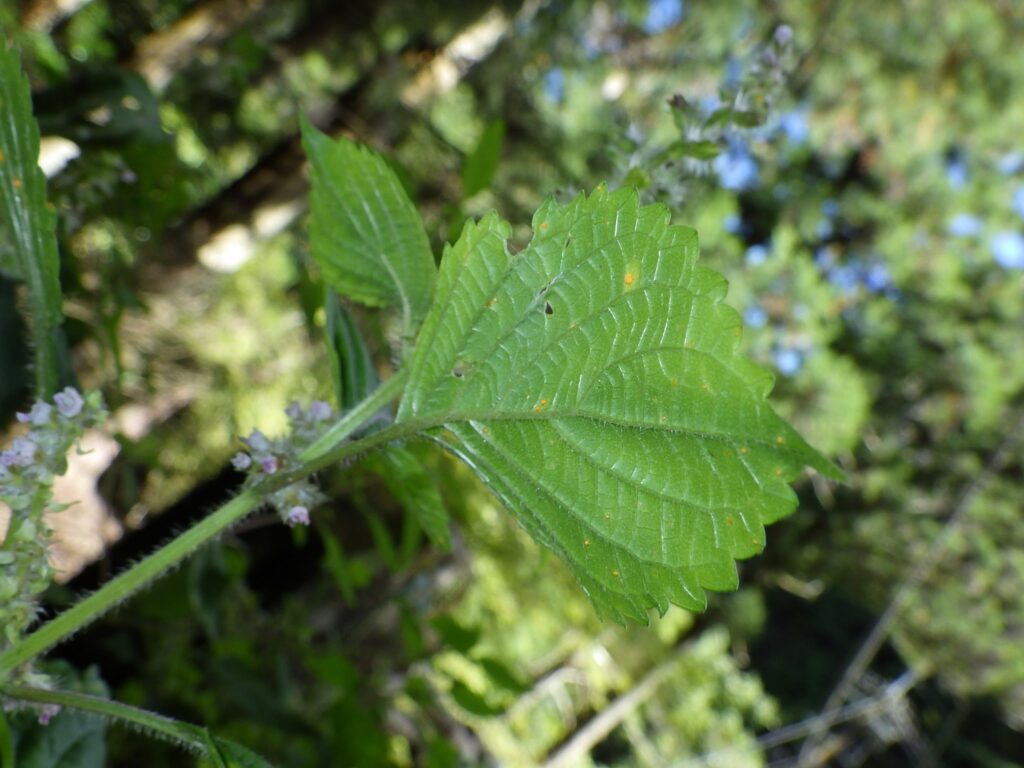
What is the difference between shiso and egoma?
Distinguishing between shiso (perilla) and egoma (perilla) is more difficult than you might think. This is because, taxonomically, they are the same species but are varieties of each other, making them prone to hybridization and resulting in many intermediate individuals.
The most fundamental difference lies in the "ingredients" they contain and the "scent" that results from them.
Perilla contains perillaldehyde (approximately 55% in essential oil), which gives it the smell you get when eating pickled plums, while egoma contains perillaketone and egomaketone, which have a somewhat unpleasant smell.
Therefore, it exhibits allelopathy, inhibiting the growth of other plants and possessing antibacterial properties (Komai et al., 1989). In the case of perilla, this property is why it is used in pickles.
However, this method requires directly smelling the living plant, which is a bit inconvenient.
Several morphological differences have also been observed.
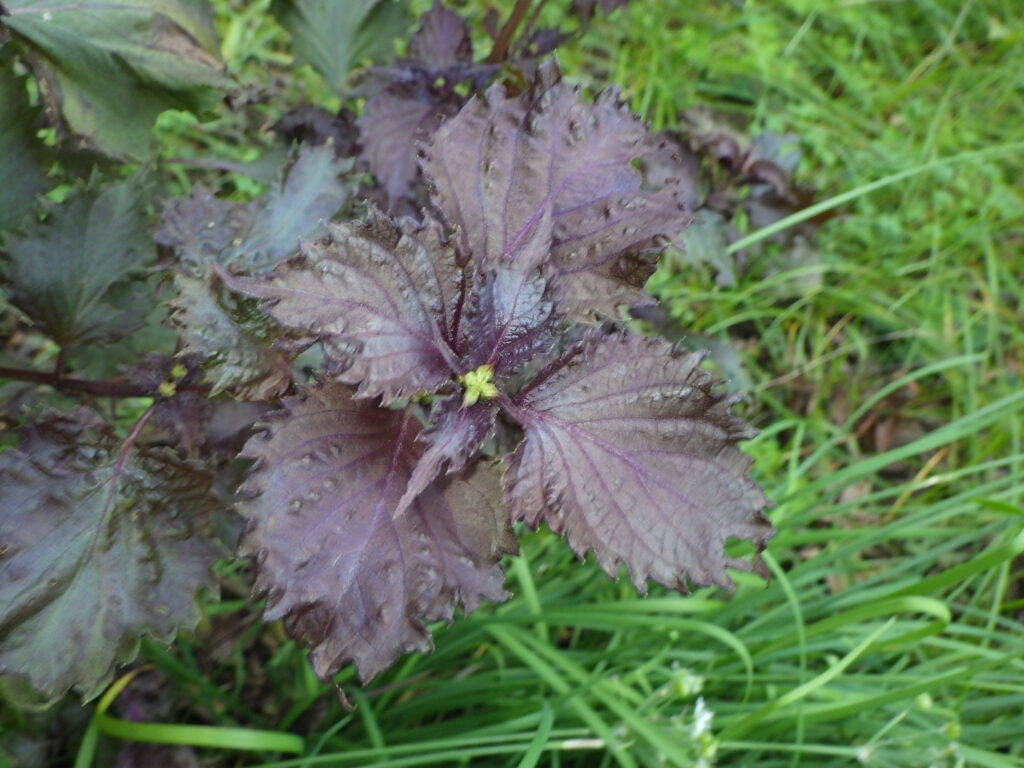
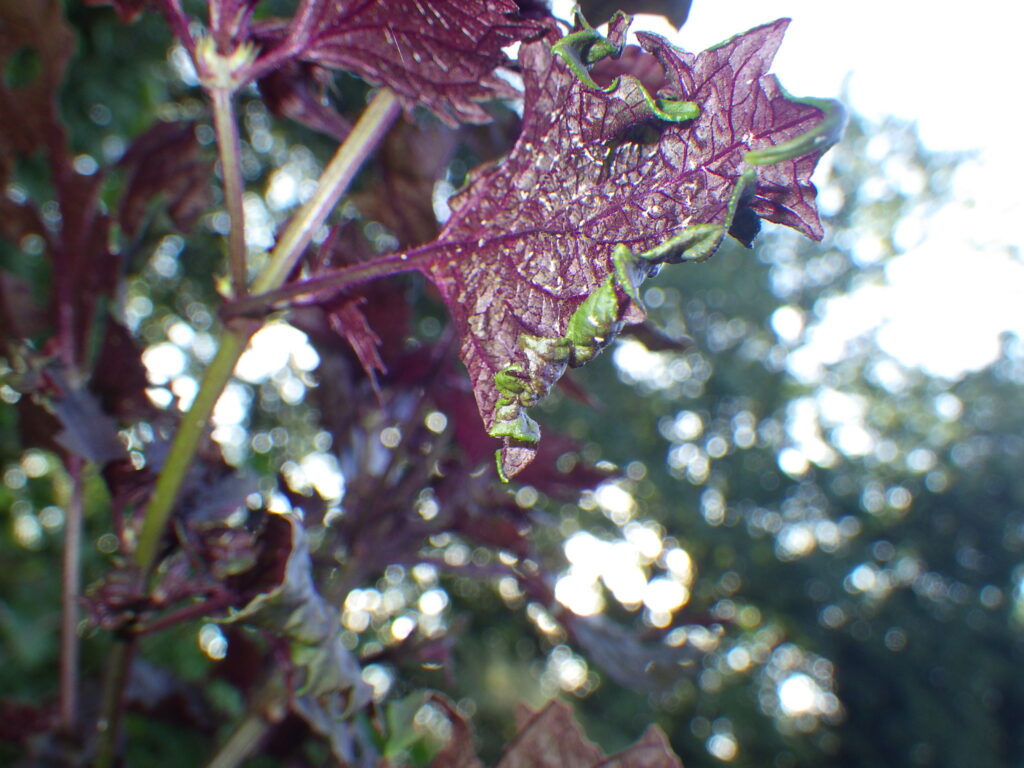
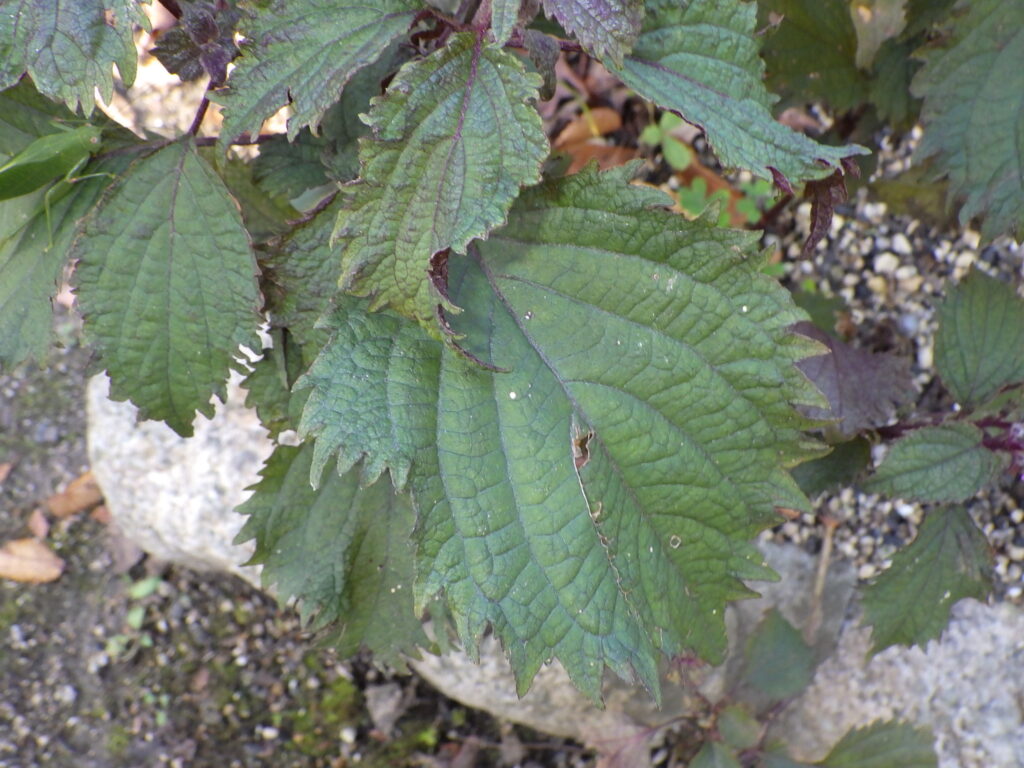
In perilla, the leaf blade is membranous, wrinkled or flat, reddish-purple or green, the calyx is 5-6 mm long when fruiting, and the schizocarp is 0.7-1.5 mm long. In contrast, in egoma, the leaf blade is somewhat thicker, membranous, flat, and usually green, the calyx is 8-9 mm long when fruiting, and the schizocarp is 1.5-2 mm long.
Therefore, if it is clearly very red, you can probably determine that it is shiso (perilla).
However, as mentioned above, due to hybridization, many plants do not fit the characteristics described, and many have been found to have intermediate smells and shapes. Known smells include those that are intermediate between perilla and shiso, those that are almost odorless, and those that are similar to lemon perilla but with a slightly grassy smell.
Therefore, it may be difficult to definitively say which category a non-cultivated specimen belongs to.
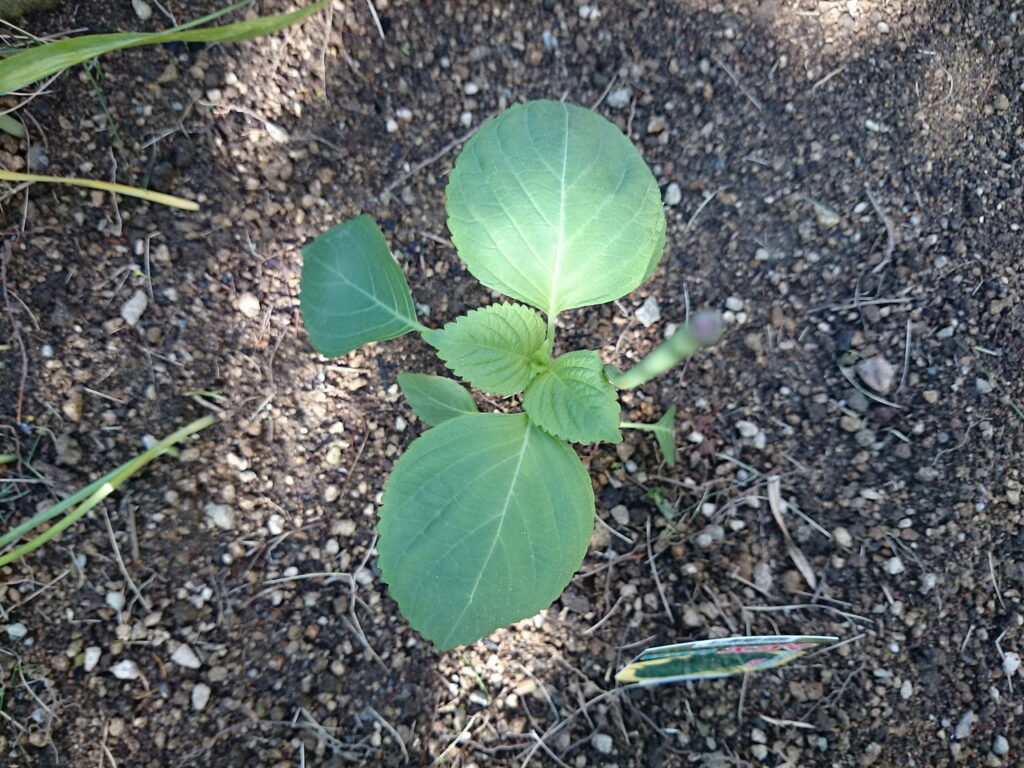

What are the differences in uses between shiso and egoma?
While both shiso and egoma are sometimes used as food, their uses differ.
Due to the flavor of perillaldehyde, shiso leaves, sprouts, flower spikes, and fruits are often eaten as is. They are mainly used as a garnish for dishes such as sashimi, hand-rolled sushi, and chilled tofu, to add flavor and color, and to mask the fishy smell.
Typical local products include shibazuke (pickled eggplant) and umeboshi (pickled plums), and shiso dressing, shiso furikake (rice seasoning), and shiso juice are also sold.
On the other hand, perilla seeds contain perilla ketones and perilla ketones, so they are more commonly used as perilla oil than eaten raw. In Japan, they were used for lighting until the Heian period and were the most commonly used oil until rapeseed oil became widespread. After rapeseed oil became popular, its use declined for a time, but it has been re-evaluated because it contains a large amount of alpha-linolenic acid, an essential fatty acid, and is now quite commonly found in the market. It is sometimes sold under the name "shiso oil," but it is usually perilla oil itself, not shiso. Alpha-linolenic acid is believed to have cardiovascular disease prevention and antidepressant effects, and research is progressing on it.
In Korea, the leaves are used in samgyeopsal (pork belly), and like lettuce, meat and pickled foods are wrapped in perilla leaves before eating. Perilla oil is called "chaso oil" and has been used in Korea for a longer time than in Japan.
What variety of shiso is it?
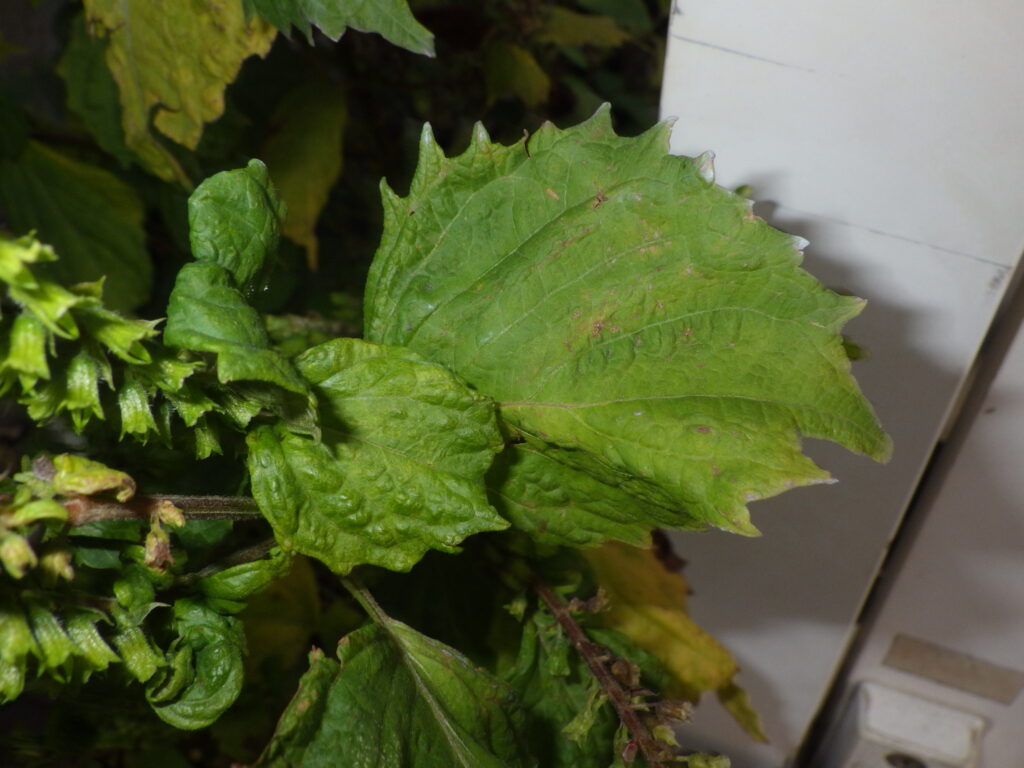
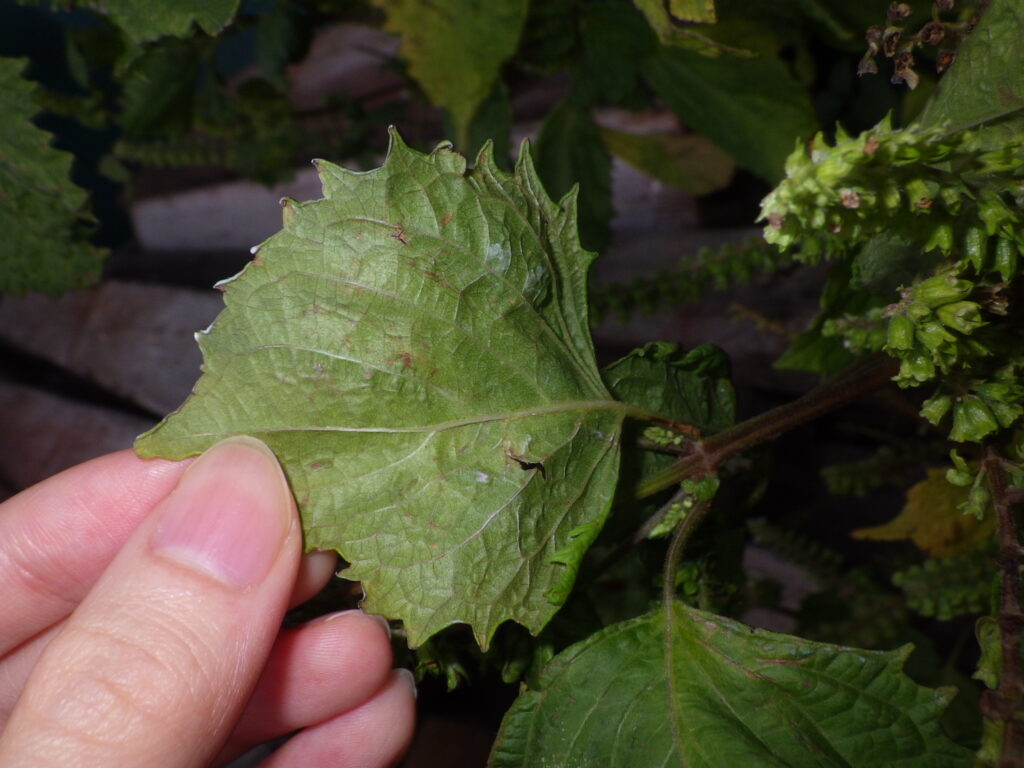
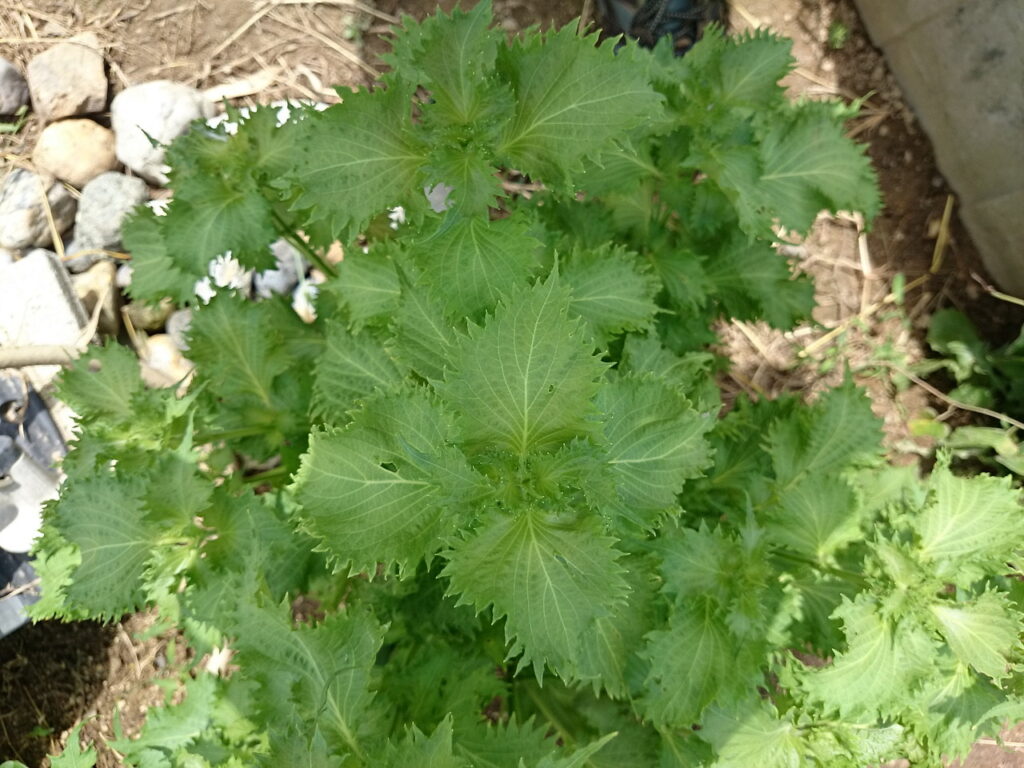
Several varieties of perilla are known.
Perilla frutescens var. crispa f. purpurea is a variety with leaves that have shallow serrations, are wrinkle-free, and are reddish-purple in color.
Perilla frutescens var. crispa f. viridis is a green variety with leaves that have shallow serrations, are wrinkle-free, and are green in color.
Perilla frutescens var. crispa f. rosea is a variety with leaves that have shallow serrations and few wrinkles, and the upper surface of the leaves is green while the lower surface is reddish-purple.
Perilla frutescens var. crispa f. crispa is a variety with deeply serrated and wrinkled leaves and a reddish-purple color.
Perilla frutescens var. crispa 'Viridi-crispa' is a green variety with deeply serrated and wrinkled leaves.
Perilla frutescens var. crispa 'Discolor' is a variety with deeply serrated and wrinkled leaves, and the upper surface of the leaves is green while the lower surface is reddish-purple.
However, this classification is continuous, and clear distinctions are difficult. There are also obvious hybrids that are mixed together.
References
Kanagawa Prefecture Flora Survey Association. 2018. Kanagawa Prefecture Flora 2018 (Electronic Edition). Kanagawa Prefecture Flora Survey Association, Odawara. 1803pp. ISBN: 9784991053726
Komai, K., Hamada, M., Iwamura, J., & Shindo, T. 1989. Allelopathic substances in egoma, Perilla frutescens var. japonica. Memoirs of the Faculty of Agriculture of Kinki University 22: 23-29. https://kindai.repo.nii.ac.jp/records/4989
Murakami, Moriichi. 2021. About the cover. Perilla. Tomiyaku 43(11): 28. https://www.tomiyaku.or.jp/file_upload/100809/_main/100809_02.pdf
Murakami, Moriichi. 2023. About the cover: Perilla. Tomiyaku 45(9): 24. https://www.tomiyaku.or.jp/file_upload/101122/_main/101122_02.pdf
RBG Kew. 2023. The International Plant Names Index and World Checklist of Vascular Plants. Plants of the World Online. http://www.ipni.org and https://powo.science.kew.org/