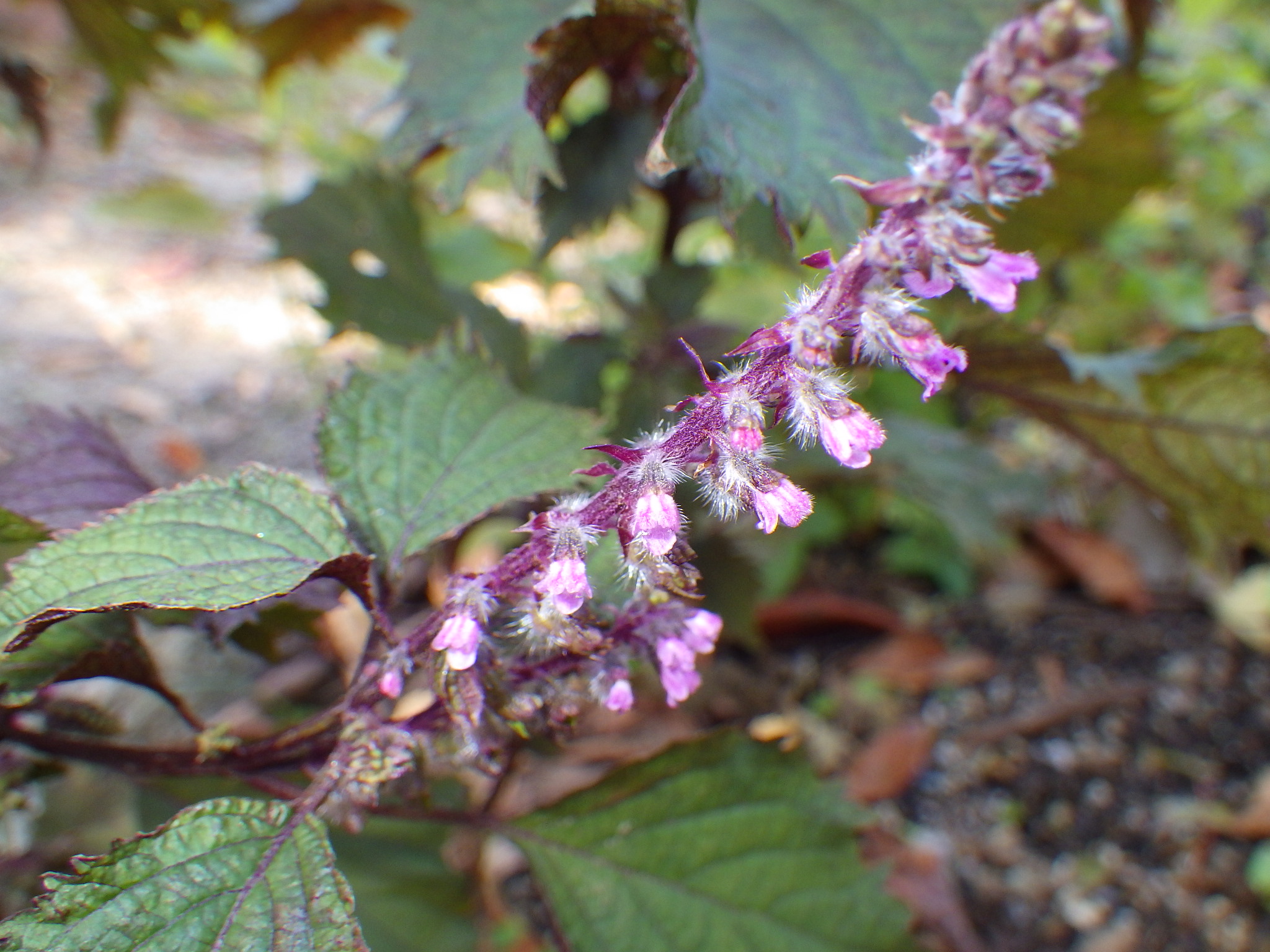
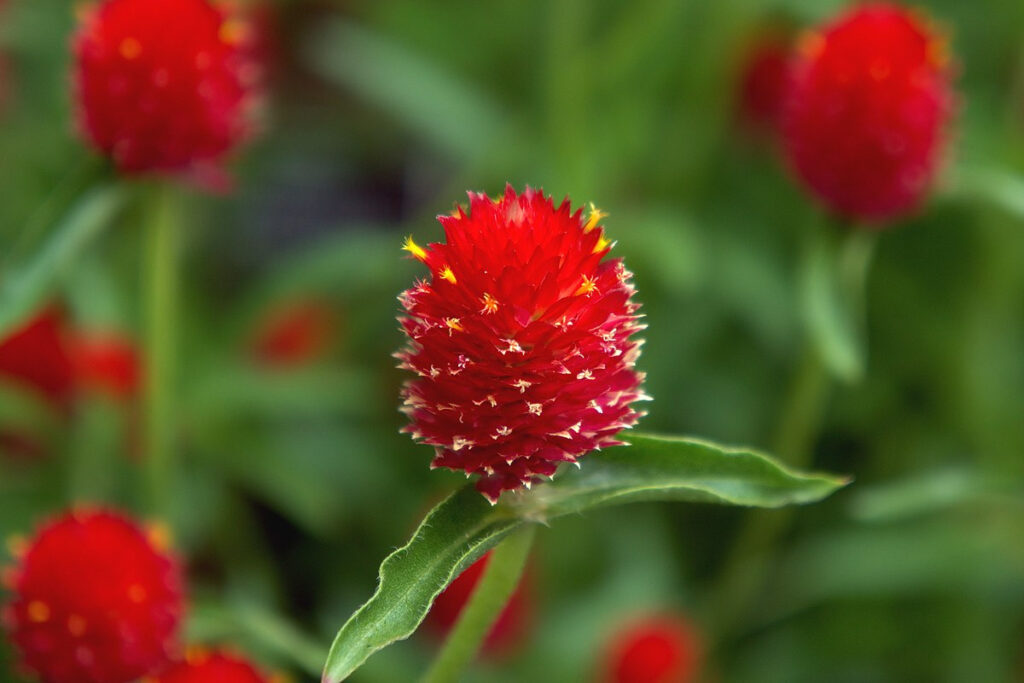
Both Gomphrena globosa (globe amaranth) and Gomphrena globosa (yellow globe amaranth) belong to the genus Gomphrena in the Amaranthaceae family. Their bright, almost fluorescent-colored flowers and long flowering periods make them popular ornamental plants frequently planted in gardens. However, some people may not fully understand the differences between these two species. While the Japanese name includes "American" to distinguish them, both are native to the Americas. These two species can be distinguished by observing their leaves and flowers. Observing the leaves, in particular, will allow for accurate differentiation. We have also listed other distinguishing features from commonly confused species. This article will explain the classification of the genus Gomphrena.
- What are Gomphrena globosa and Gomphrena globosa (yellow Gomphrena)?
- What is the difference between Gomphrena globosa and Gomphrena globosa (yellow Gomphrena)?
- What is the difference between Gomphrena globosa (Gomphrena globosa) and Crape Myrtle (Lagerstroemia indica)?
- What is the difference between Gomphrena globosa (Gomphrena globosa) and Sanguisorba officinalis (Sanguisorba officinalis)?
- What is the difference between globe amaranth and white clover?
- References
What are Gomphrena globosa and Gomphrena globosa (yellow Gomphrena)?
Gomphrena globrosa, also known as globe amaranth, is an annual plant native to Central and South America (Mexico to Brazil) that grows in barren land (Flora of North America Editorial Committee 2004; RBG Kew, 2023). It is cultivated as an ornamental plant all over the world, including Japan.
American globe amaranth (Gomphrena haageana) is also known as yellow globe amaranth (Yellow Gomphrena). This is the more common name used in horticulture. Native to Central America (southern United States to Mexico), it is a perennial plant that grows on rocky banks. It is cultivated as an ornamental plant all over the world, including Japan. The variety called 'Strawberry Fields' is commonly available.
Both belong to the genus Gomphrena in the Amaranthaceae family, and are popular ornamental plants frequently planted in gardens, perhaps due to their vivid, almost fluorescent-colored flowers and long flowering periods. In Japan, they are also commonly seen as cut flowers placed on Buddhist altars. The name Sennichikou (千日紅) comes from the belief that they bloom longer than Sarusuberi (百日紅).
Since they belong to the Amaranthaceae family, there is no distinction between petals and sepals in the flowers; they are simply called "perianth segments." Among them, the genus Gomphrena shares the common characteristics of having opposite leaves and inflorescences that are capitulum.
However, some people may not fully understand the difference between these two species. In Japan, they are distinguished by the addition of "America" to their names, but both are native to the Americas.
What is the difference between Gomphrena globosa and Gomphrena globosa (yellow Gomphrena)?
Gomphrena globosa and Gomphrena globosa (yellow gomphrena) can be distinguished by their flowers and leaves (Flora of North America Editorial Committee 2004; RBG Kew, 2023).
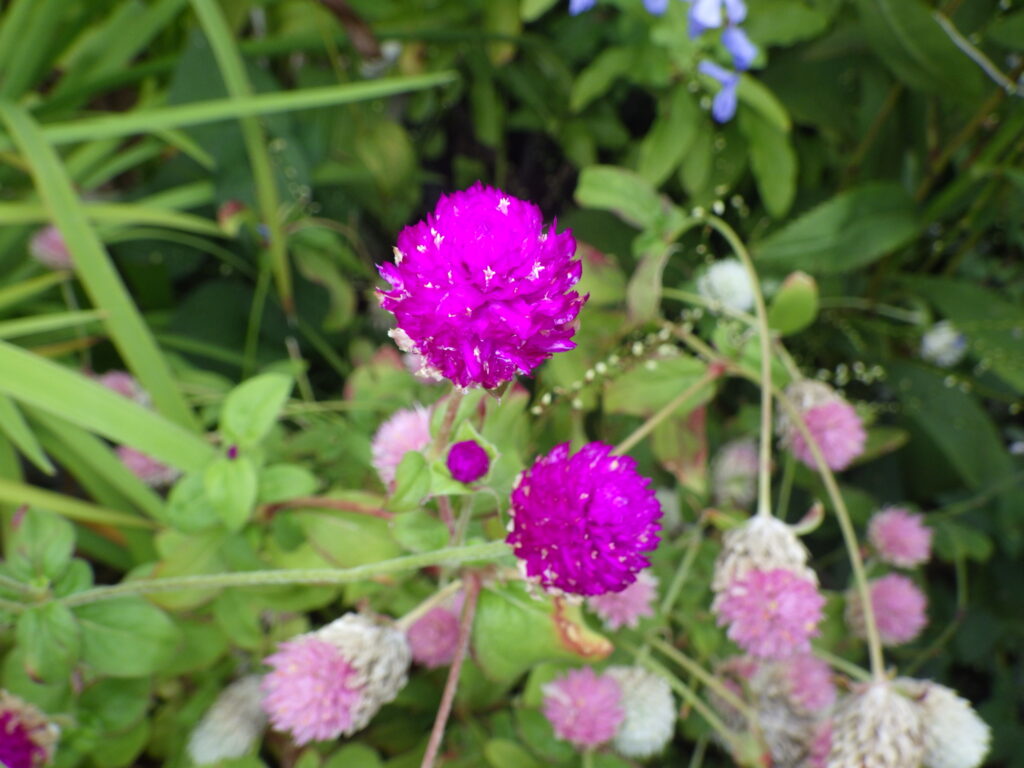
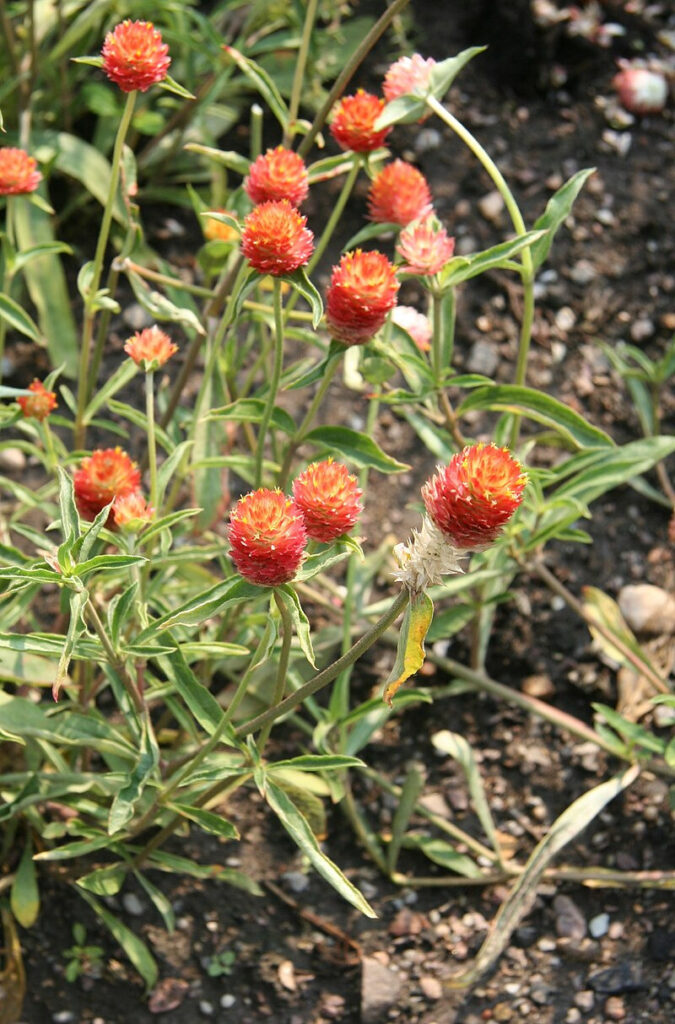
First, while the flowers of the common globe amaranth are usually pink, white, or crimson, the flowers of the American globe amaranth are bright red to yellow. This is consistent with the Japanese name.
Both globe amaranth and American globe amaranth have been selectively bred for ornamental purposes, so there is considerable variation in color, but this method of distinguishing between most varieties seems to be sufficient.
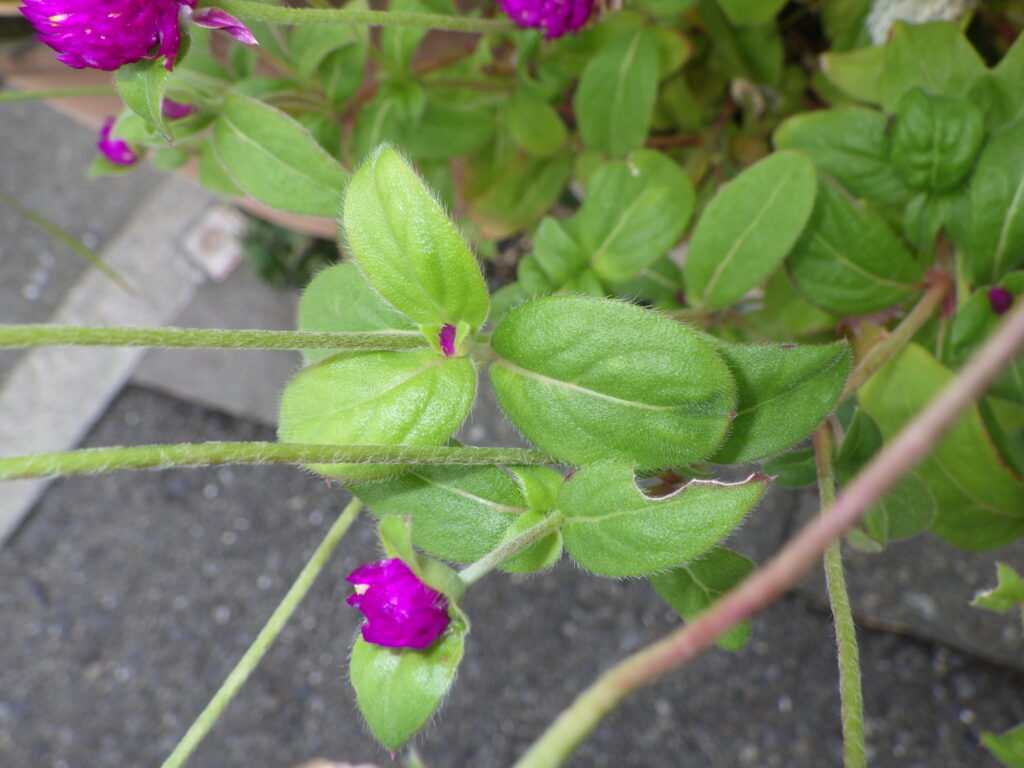
Even more reliable is observing the leaves. Since the leaves haven't been selectively bred, they provide a valuable clue for distinguishing between species.
The difference between Gomphrena globosa and Gomphrena globosa lies in their leaf shape: Gomphrena globosa has leaves that are oblong to oblong-obovate, while Gomphrena globosa var. japonica has leaves that are oblanceolate to oblong-linear.
These are technical terms, so they might be a little difficult to understand, but basically, you can think of it as the leaves of Gomphrena globosa being thick, and the leaves of Gomphrena globosa being thin.
As mentioned above, another difference is that globe amaranth is an annual plant, while American globe amaranth is a perennial plant.
What is the difference between Gomphrena globosa (Gomphrena globosa) and Crape Myrtle (Lagerstroemia indica)?
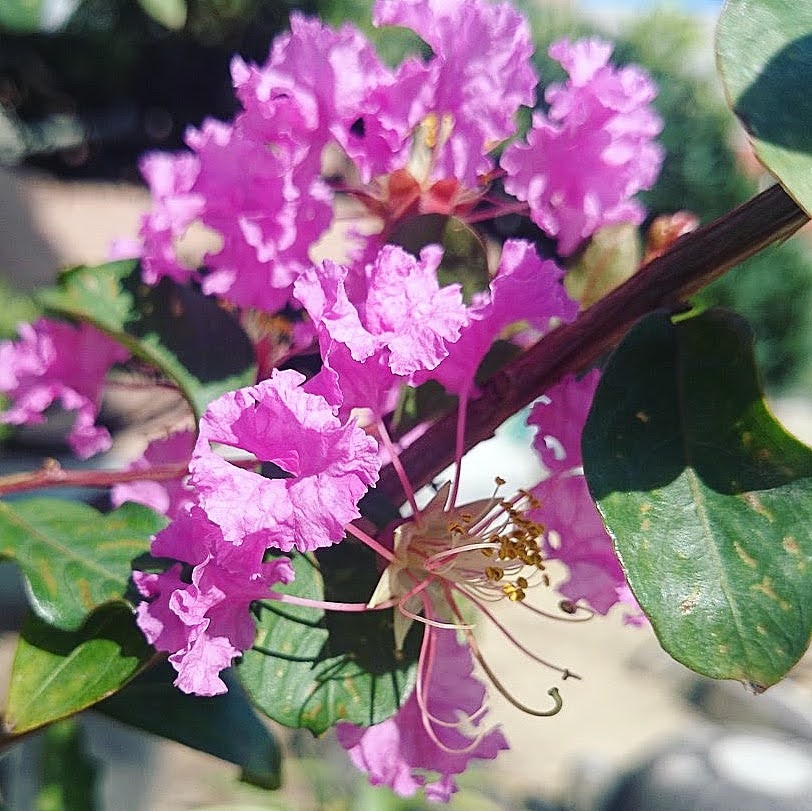
The difference between Gomphrena globosa (Gomphrena globosa) and Lagerstroemia indica (Crape Myrtle) seems to be a frequently searched topic.
However, Lagerstroemia indica belongs to the genus Lagerstroemia in the family Lythraceae, and its classification is completely different.
Gomphrena globosa is a herbaceous plant, while crape myrtle is a tree, and their flower shapes are not similar. They may share some similarity in that they both have pink flowers, but they are completely different species. The name is merely a reference to the other plant.
What is the difference between Gomphrena globosa (Gomphrena globosa) and Sanguisorba officinalis (Sanguisorba officinalis)?
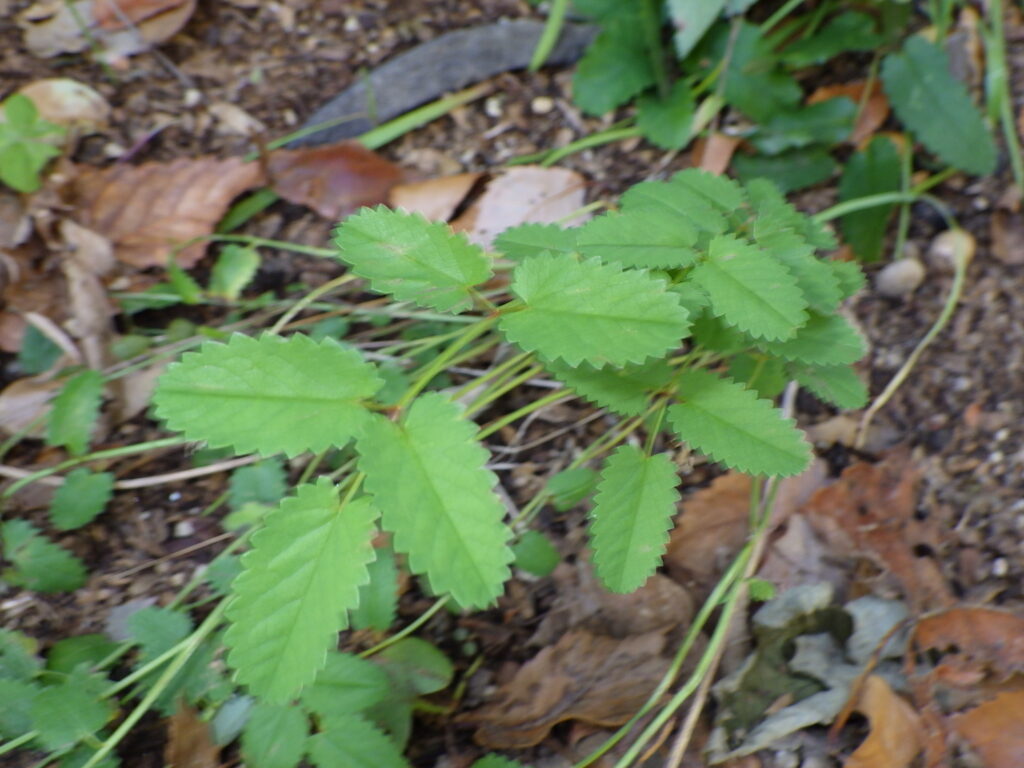
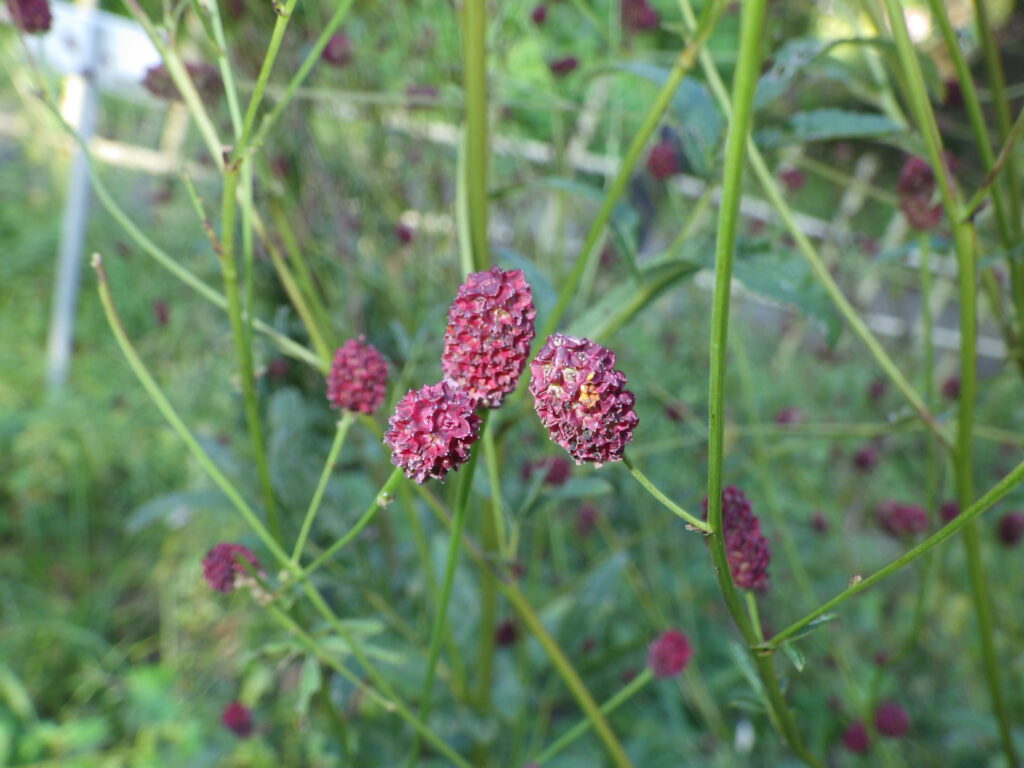
The difference between Gomphrena globosa (Gomphrena globosa) and Sanguisorba officinalis (Sanguisorba officinalis) is also a frequently searched topic. Indeed, the shape of their red inflorescences is somewhat similar.
However, Sanguisorba officinalis belongs to the genus Sanguisorba in the family Rosaceae, and is classified completely differently from Gomphrena globosa.
A clear difference between Sanguisorba officinalis and Gomphrena globosa is that Sanguisorba officinalis has odd-pinnately compound leaves with 5 to 15 leaflets, and the oblong leaflets have fine serrations.
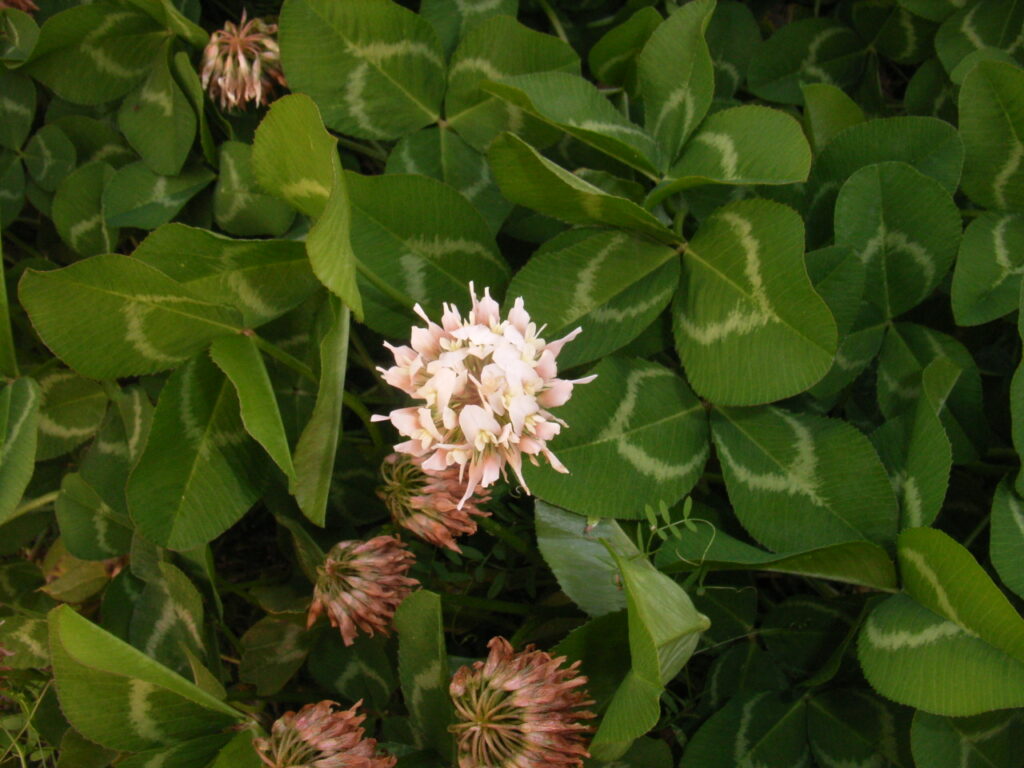
What is the difference between globe amaranth and white clover?
The difference between Gomphrena globosa (globe amaranth) and white clover (Trifolium repens) is also a frequently searched topic. Their inflorescences may be somewhat similar.
However, white clover (Trifolium repens) belongs to the legume family, and its leaves are compound leaves, consisting of three leaflets. You can easily see the difference by observing the leaves.
References
Flora of North America Editorial Committee. 2004. Flora of North America (Vol. 4 Magnoliophyta: Caryophyllidae, Part 1). Oxford University Press, 584pp. ISBN: 9780195173895
RBG Kew. 2023. The International Plant Names Index and World Checklist of Vascular Plants. Plants of the World Online. http://www.ipni.org and https://powo.science.kew.org/