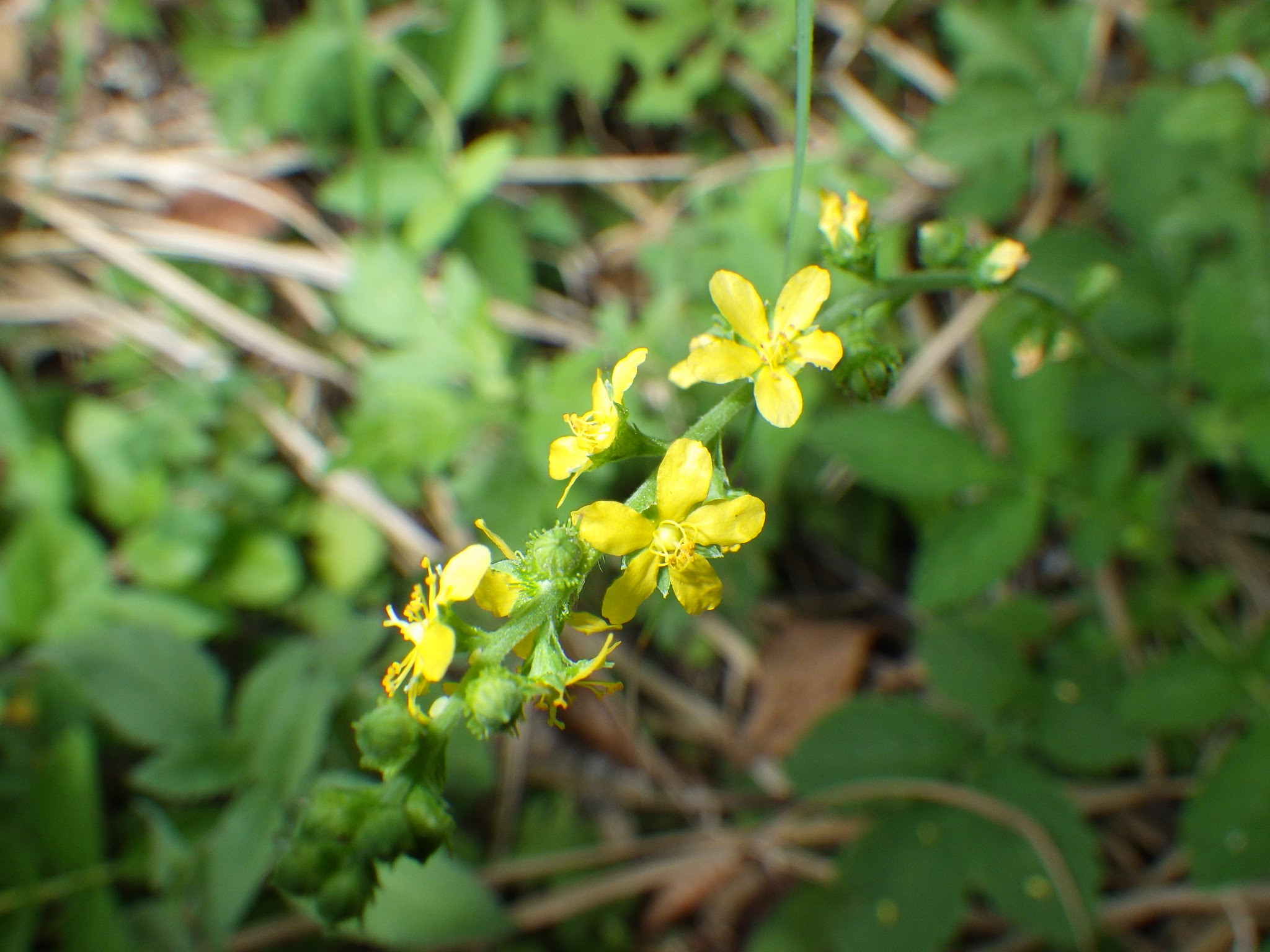
Both wild soybeans (Amphicarpaea rhynchophylla) and wild soybeans (Glycine soja) are annual vines belonging to the legume family. In Japan, they grow in very similar environments such as embankments, grasslands, and forest edges, and their trifoliate compound leaves look similar at first glance, which can lead to confusion. However, there are differences at the genus level, and these differences are clearly evident in the leaves, flowers, and fruits, so they can be distinguished with careful observation. Wild soybeans are said to be the ancestor of soybeans, and their basic structure is quite similar, but a major difference is that wild soybeans are vines while soybeans are upright. In addition, they have undergone evolution that is very convenient for human cultivation. This article will explain the classification of wild soybeans, wild soybeans, and soybeans.
What are wild beans and wild beans?
Amphicarpaea edgeworthii, also known as wild bean (Amphicarpaea edgeworthii), is a climbing annual plant distributed in Honshu (west of the Kanto region), Shikoku, and Kyushu in Japan; as well as in Korea and China, growing on embankments, grasslands, and forest edges (Kanagawa Prefecture Flora Survey Association, 2018). It flowers from September to October.
Glycine max subsp. soja, also known as wild soybean (Glycine max subsp. soja), is a climbing annual plant distributed in Hokkaido, Honshu, Shikoku, and Kyushu in Japan; Korea; China; and eastern Siberia. It grows in grasslands, embankments, and forest edges. It flowers from August to September.
Both are annual climbing plants belonging to the legume family, and in Japan they grow in very similar environments such as embankments, grasslands, and forest edges. Morphologically, both have trifoliate compound leaves, and their fruits are legumes, composed of a "bean" and a "pod." Both also have purple, butterfly-shaped flowers.
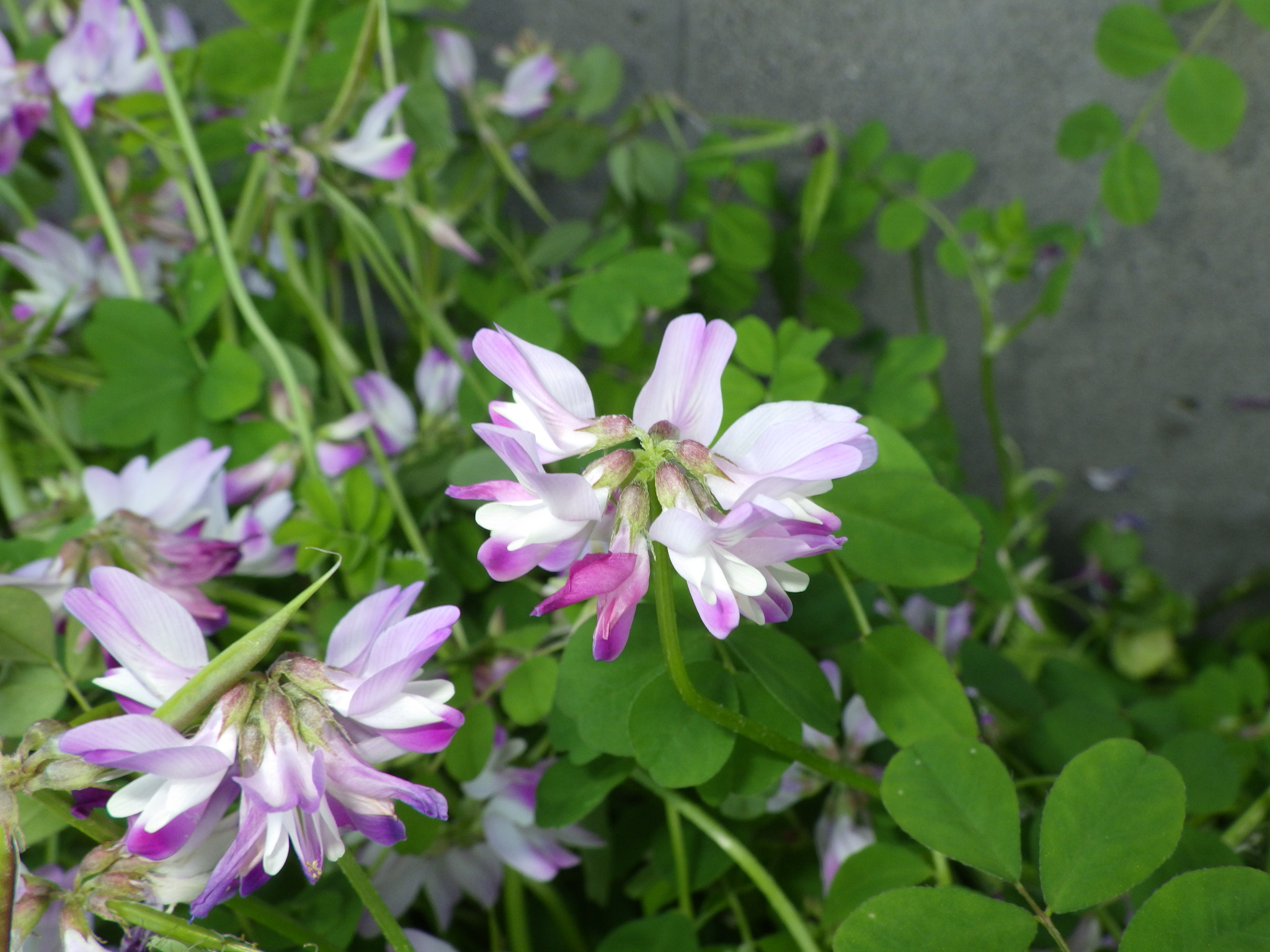
Therefore, they may sometimes be confused.
What is the difference between wild soybean and wild soybean?
However, there are various differences between wild soybeans and wild soybeans (Hayashi et al., 2013; Kanagawa Prefecture Flora Survey Association, 2018).
First, wild soybeans belong to the genus *Amphicarpa*, while wild soybeans belong to the genus *Glycine soja*. Therefore, it can be expected that there are significant differences between these two species.
Specifically, the difference is that the genus *Amphicarpa* has two stamens, while the genus *Soybean* has one stamen.
"Single stamen" refers to a stamen where all the filaments are fused together, while "single stamen" refers to a stamen where the filaments are fused together to form two pairs.
However, this stamen structure is not visible from the outside, so it's probably not a very practical difference.
If we focus specifically on wild soybeans and climbing soybeans, there are several more easily recognizable characteristics.
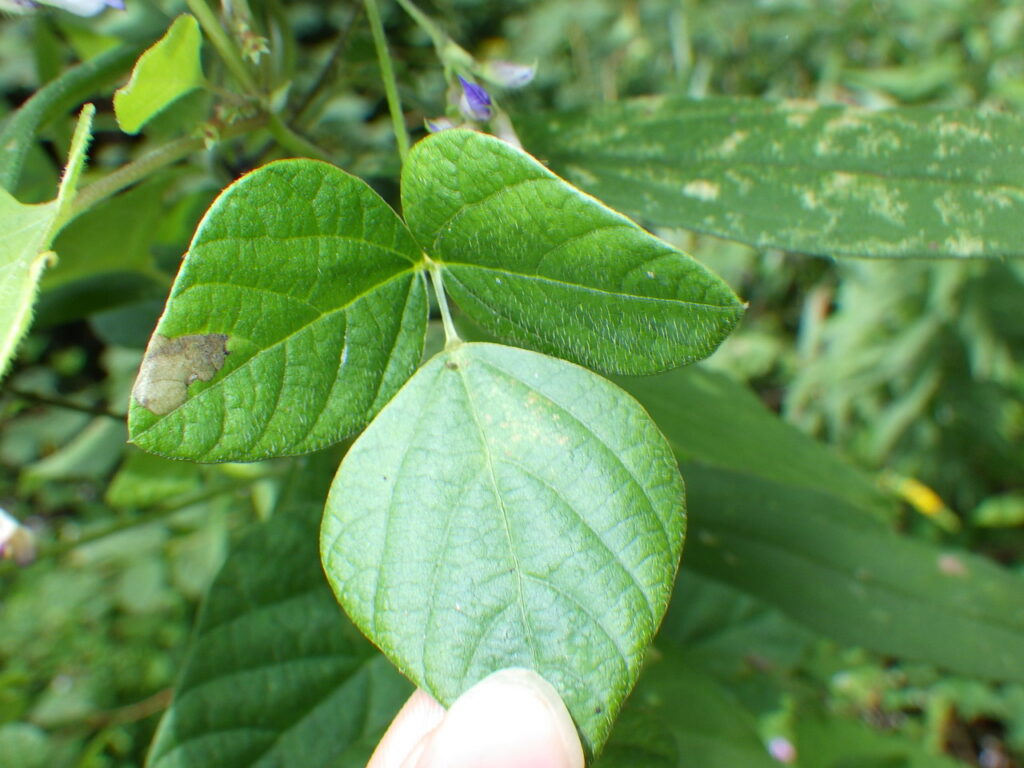
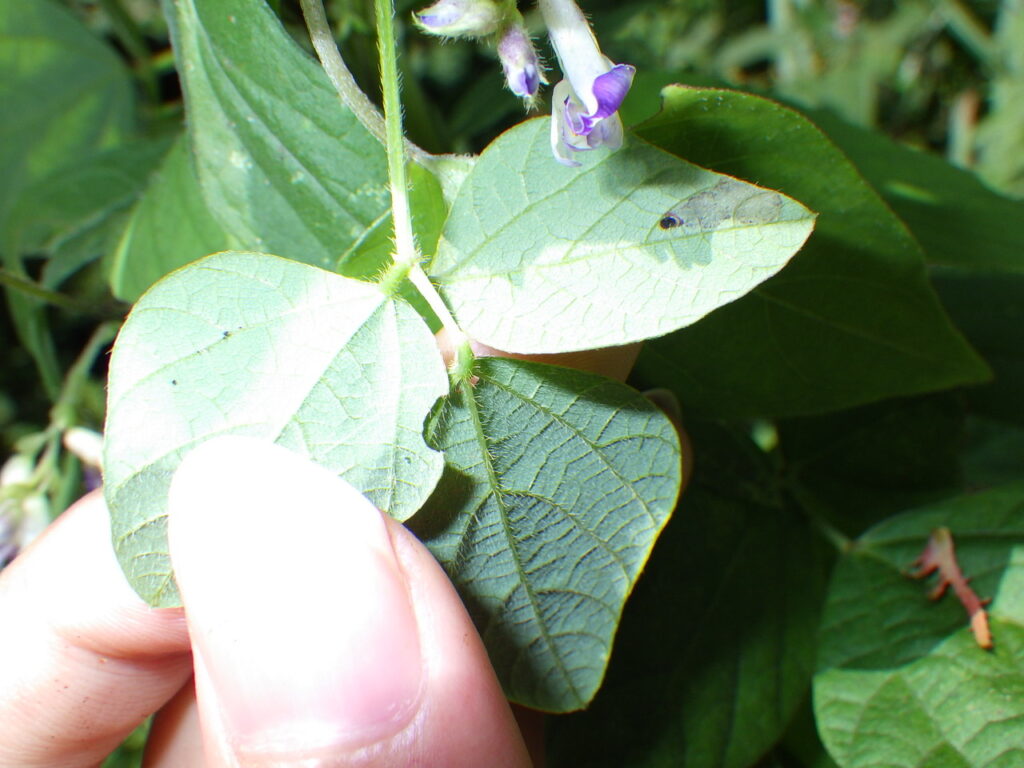
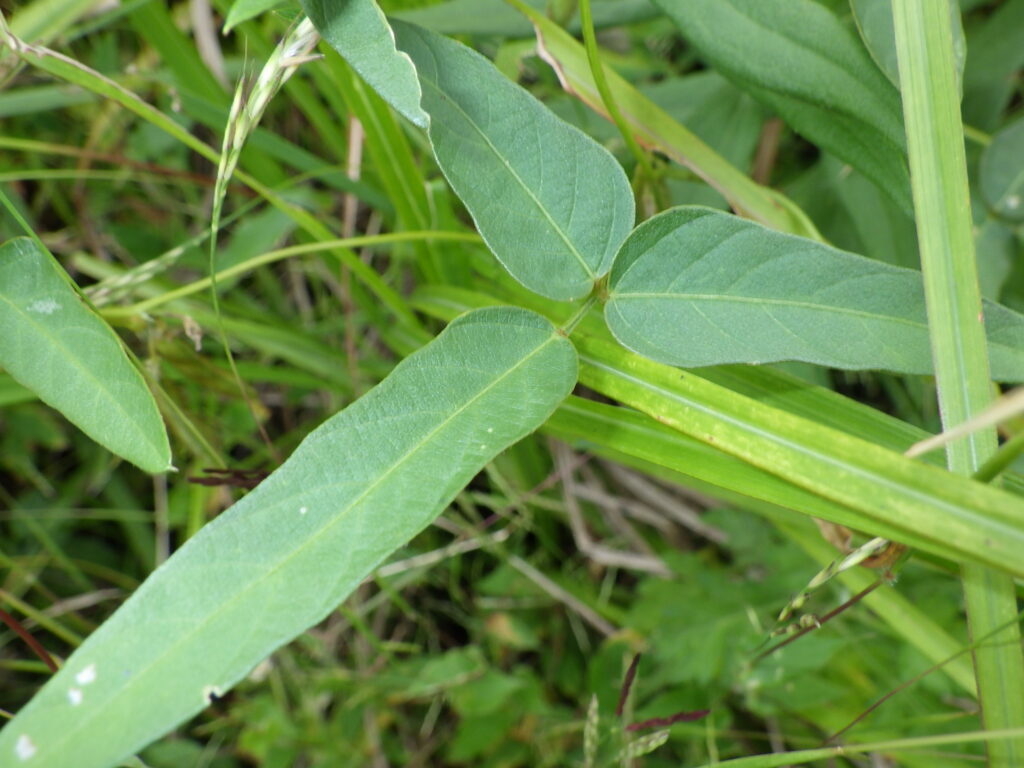
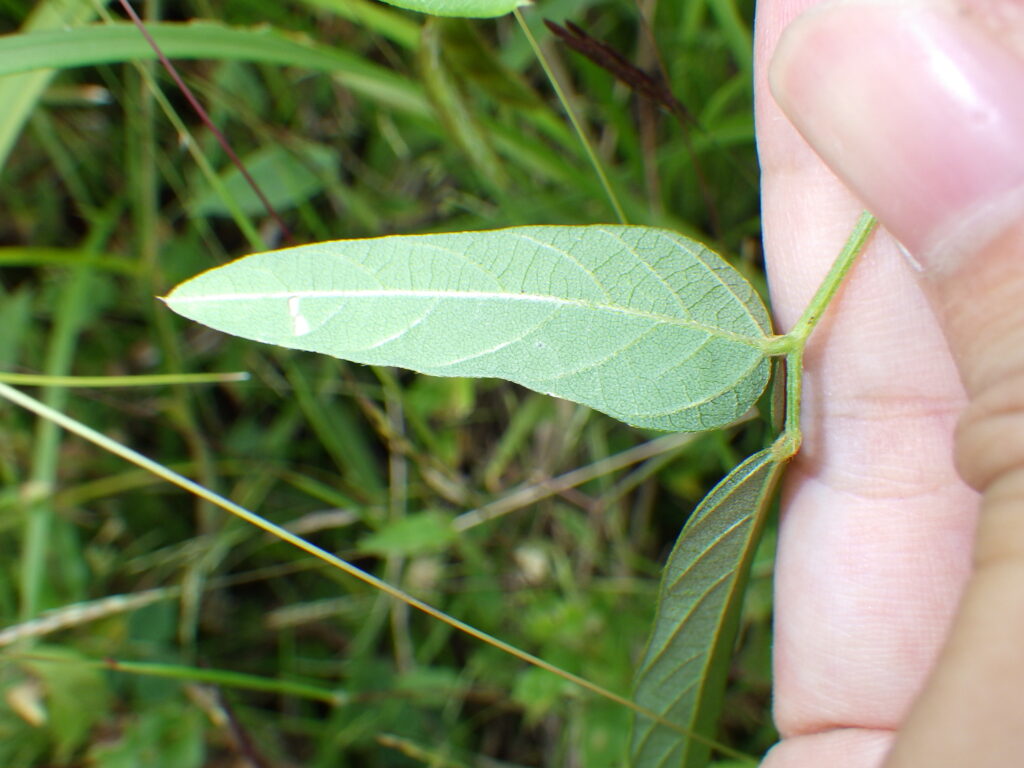
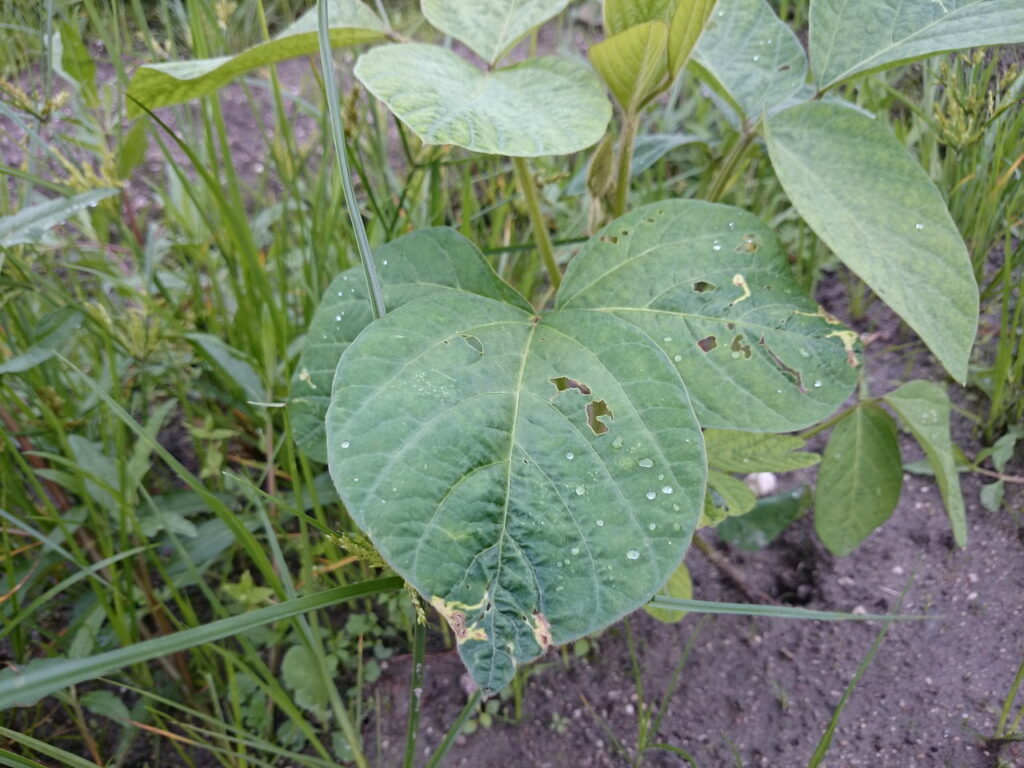
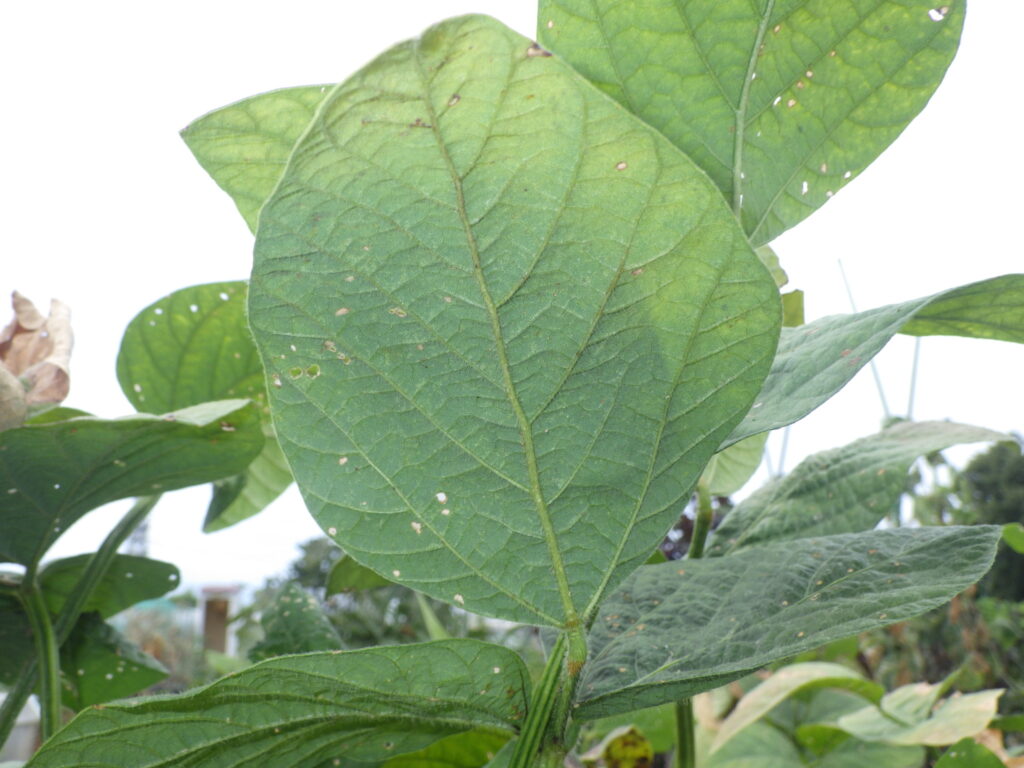
Regarding the leaves, there is a difference in that the leaflets of wild soybean (Amphicarpaea rhynchophylla) are ovate, while those of wild soybean (Glycine soja) are narrowly ovate to lanceolate.
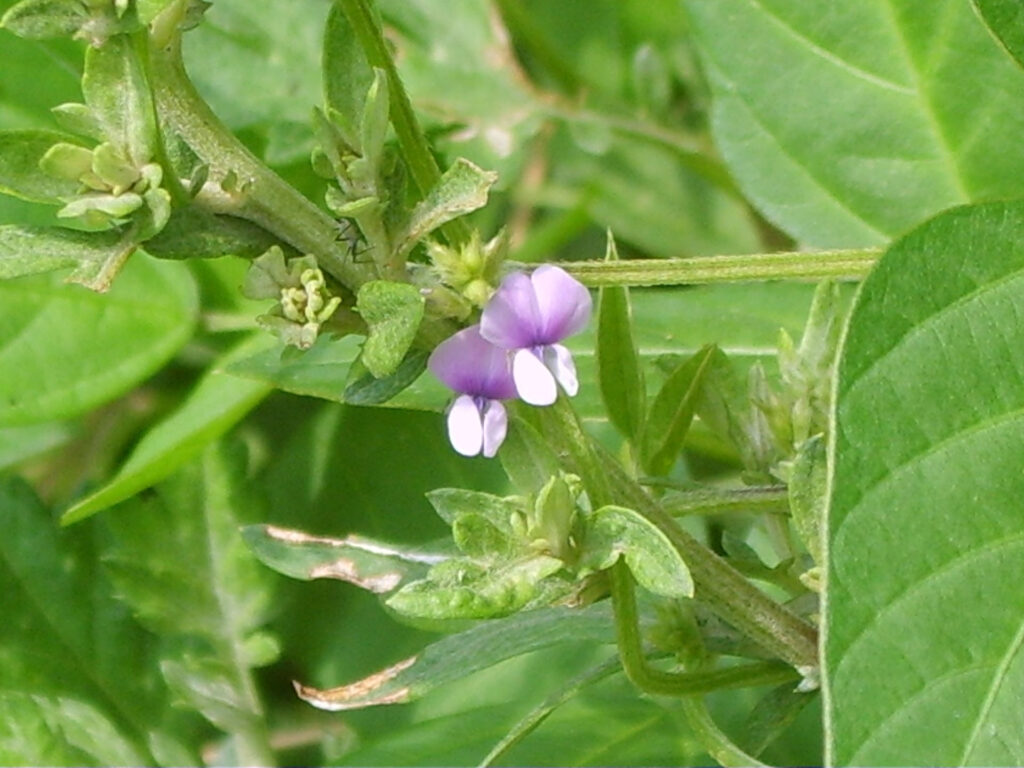
Regarding the flowers, in wild soybean (Amphicarpa rhynchophylla), the standard petal (the large upper petal of the butterfly-shaped flower) is dark purple, protrudes forward, and has a slightly pointed tip, while in wild soybean (Glycine soja), the standard petal is pale reddish-purple, does not protrude forward, and has a rounded tip.
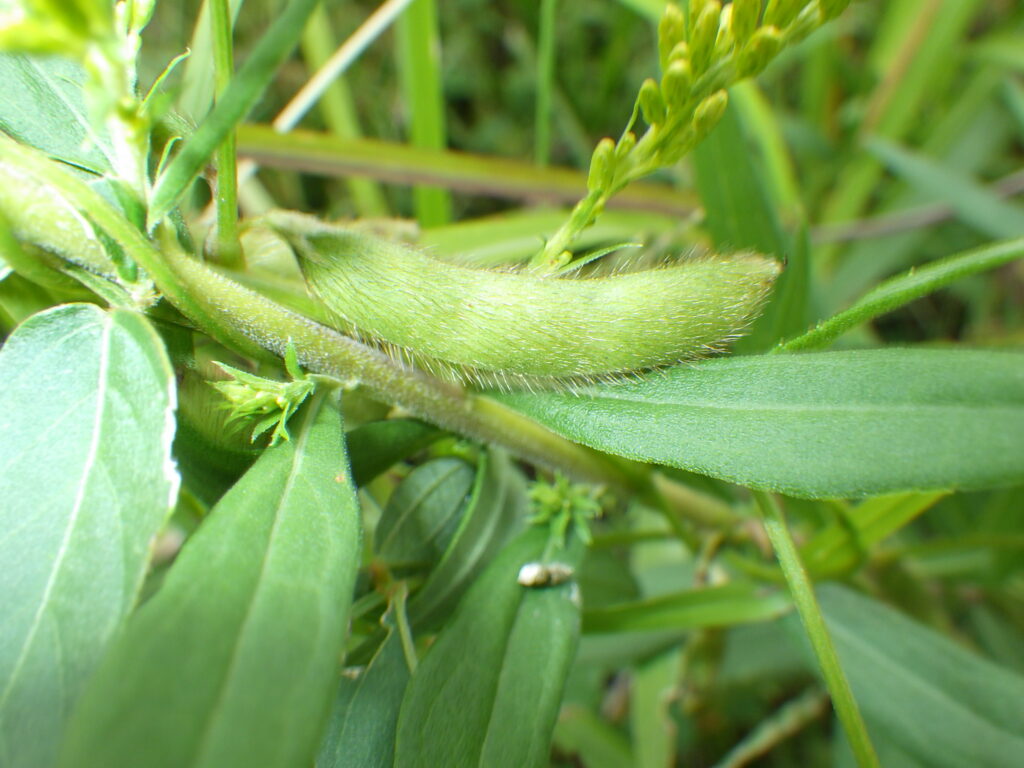
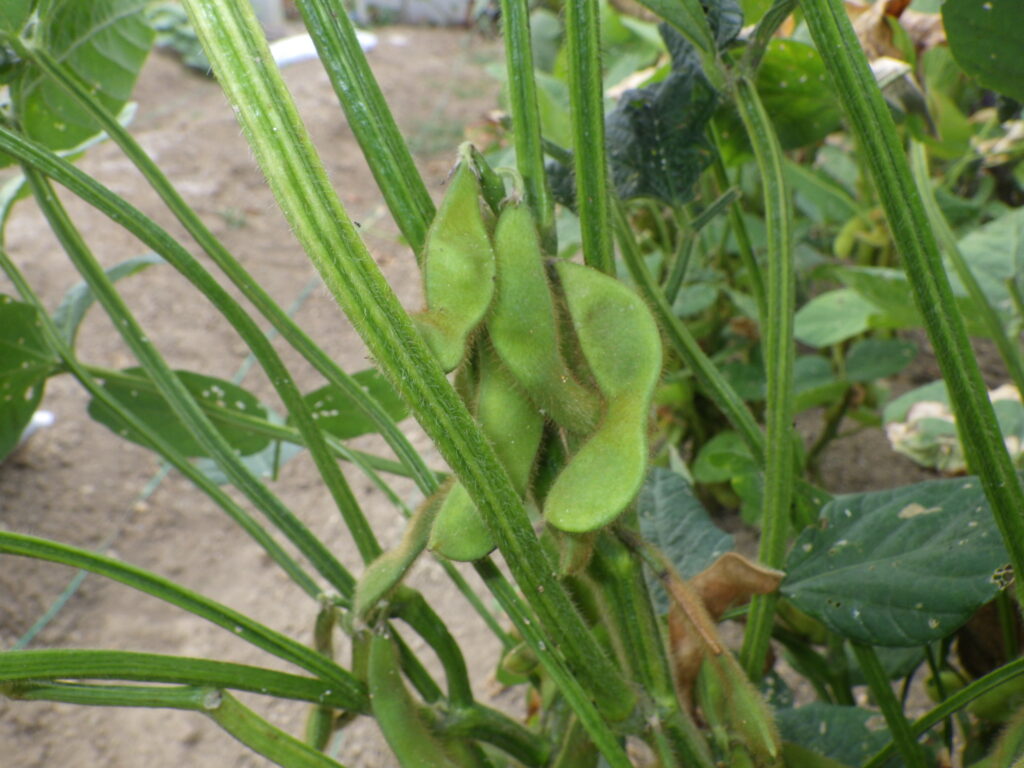
Regarding the fruit, in wild soybeans (Amphicarpaea rhynchophylla), the bristles are only present along the suture line (between the pods), whereas in wild soybeans (Glycine soja), the bristles are present throughout the entire pod. This can be easily remembered by thinking of the pods of soybeans (edamame).
Although it cannot be seen from the outside, another difference is that wild beans have cleistogamous flowers on thin rhizomes, which then bear fruit, and the pods emerge from the ground.
It should be noted that *Amphicarpaea japonica* var. *trisperma* is also known as a species of *Amphicarpaea japonica* with slightly smaller, thinner leaves and an oval terminal leaflet, but recently they are not distinguished due to their continuity.
Among the wild soybeans, there is also a variety called white-flowered wild soybean f. albiflora.
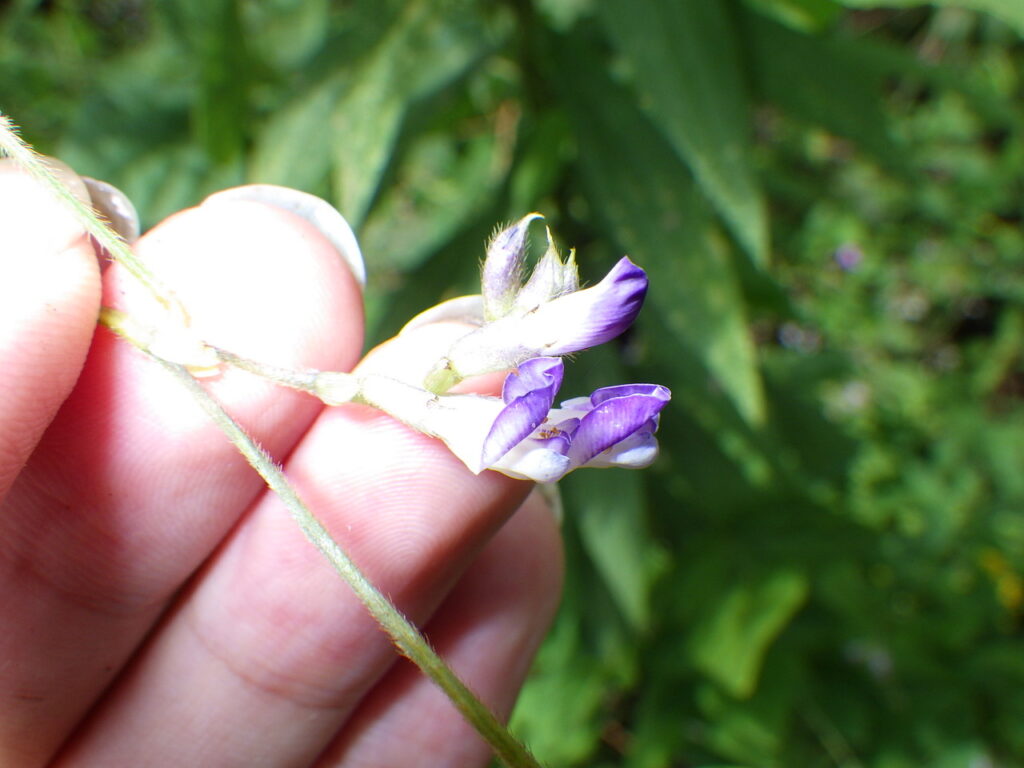
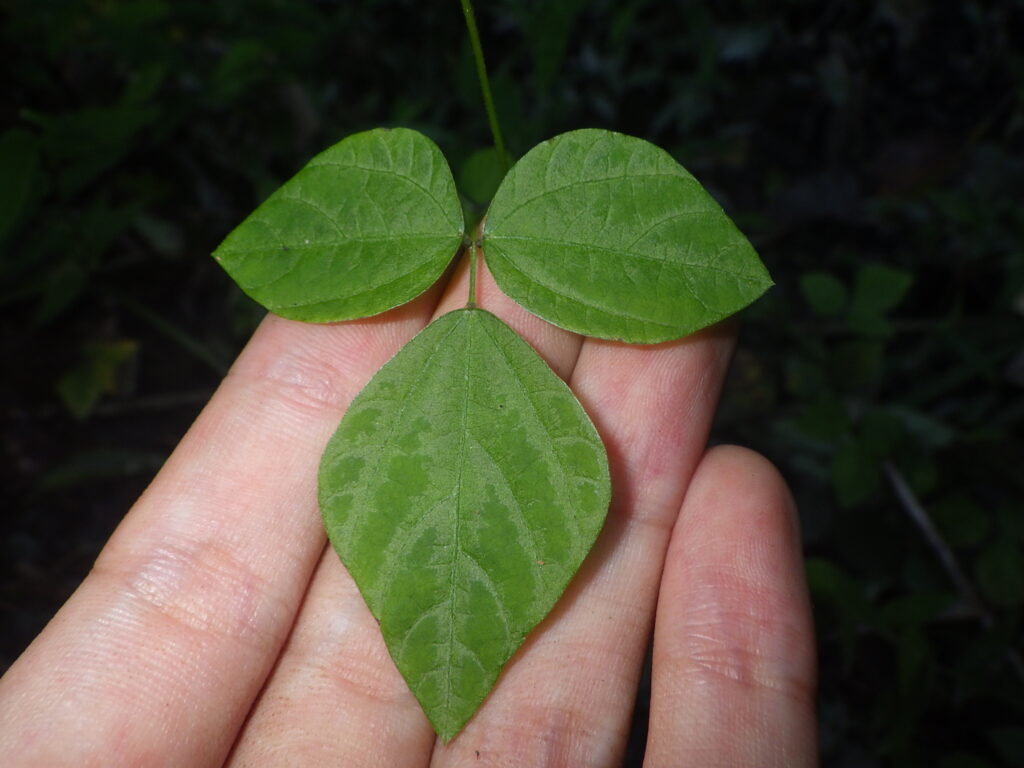
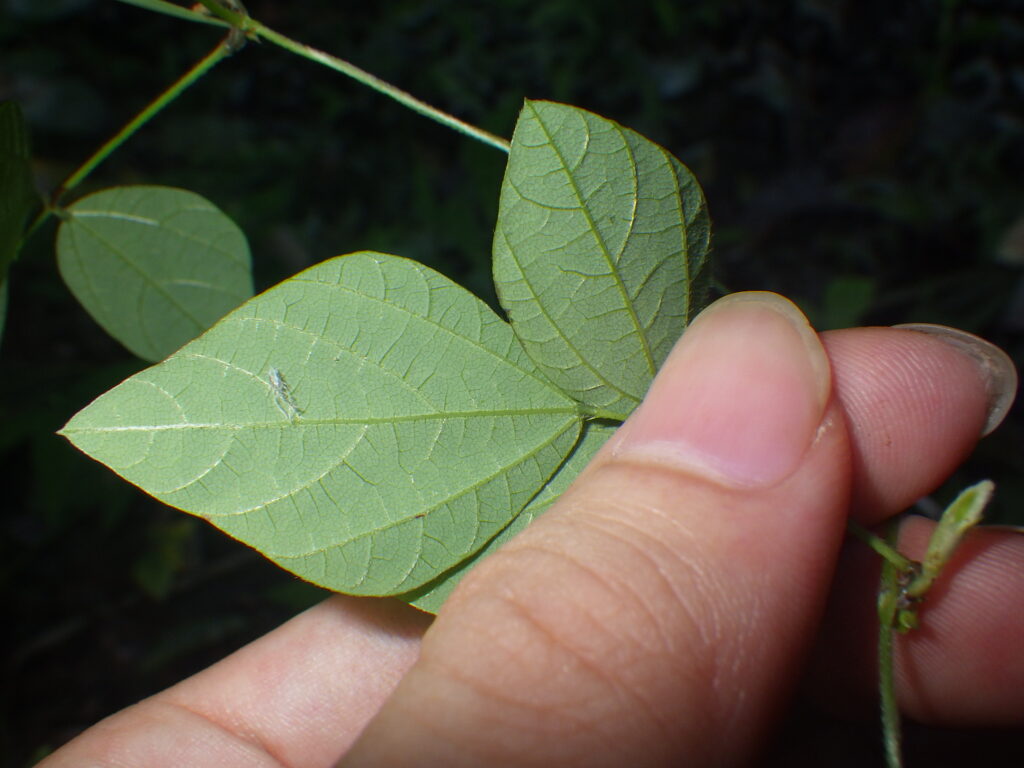
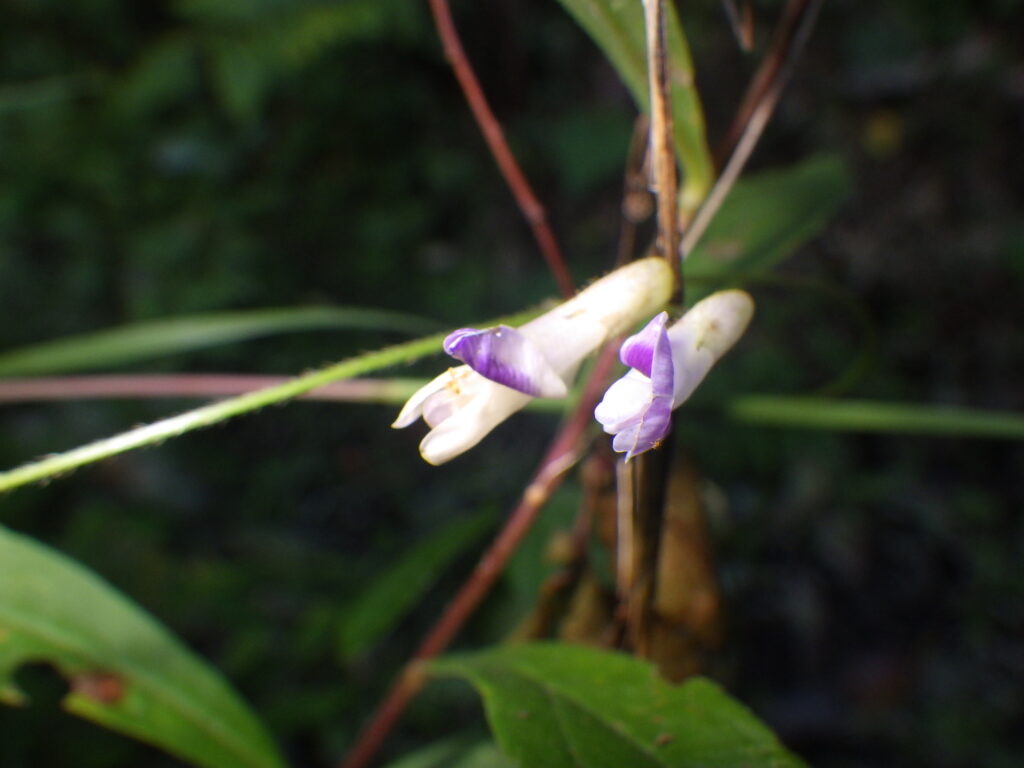
What is the difference between wild beans and soybeans?
Glycine max subsp. max is considered to be the wild ancestor of soybeans (Glycine max subsp. max). It can also be said that soybeans evolved as a result of human cultivation of Glycine max. Of course, both are classified under the genus Glycine. Therefore, some people may be curious about the differences between Glycine max and soybeans.
The biggest difference between wild soybeans and common soybeans is whether or not they are vining plants; wild soybeans are vining plants, while common soybeans are upright (Yamaguchi and Shimamoto, 2001; Wu et al., 2010). However, there are rare varieties of common soybeans that are vining plants.
In other words, wild soybeans cannot grow normally unless they entwine with other plants or structures, but soybeans do not. This is likely a result of how they have been cultivated by humans for their own convenience.
Similarly, another change that is convenient for humans is that soybean seeds (beans) are softer and larger than those of wild soybeans, which is also a significant difference.
Furthermore, while the pods of wild soybeans burst open when ripe to scatter the seeds (shattering), soybean pods do not. This is also to make it easier for humans to harvest the seeds.
Regarding the leaves, there is another difference: the leaflets of wild soybeans are ovate, while those of soybeans are broadly ovate.
There are many other differences as well. For more details, please refer to Yamaguchi and Shimamoto (2001) and Yoshimura et al. (2016).
Edamame refers to a variety of soybean that is harvested while the seeds are still immature and green, along with the pods, and boiled for consumption. It does not have a specific scientific name.
How do you pollinate wild beans and soybeans?
Soybeans are known to be completely self-pollinating, with the stamens elongating before the flower fully opens, and the dehisced anthers coming into contact with the stigma, completing pollination before flowering (Yoshimura et al., 2016).
On the other hand, while wild soybeans can self-pollinate, they can also be cross-pollinated by insects.
Specifically, it has been confirmed that bees and wasps (Hymenoptera: Japanese honeybee, Apidae, Leafcutteridae, Bumblebee, Scolopacidae, Pterocaryidae, Potter wasps), flies (Syrphidae, Flies), lepidoptera, and thrips) visit the flowers.
However, because the flowers of the wild soybean have a "butterfly-shaped" structure, which is characteristic of the legume family, requiring the petals to be pushed open in order to collect nectar, it is possible that only bees actually contribute to pollination. This has not been investigated further.
Are there any other similar species?
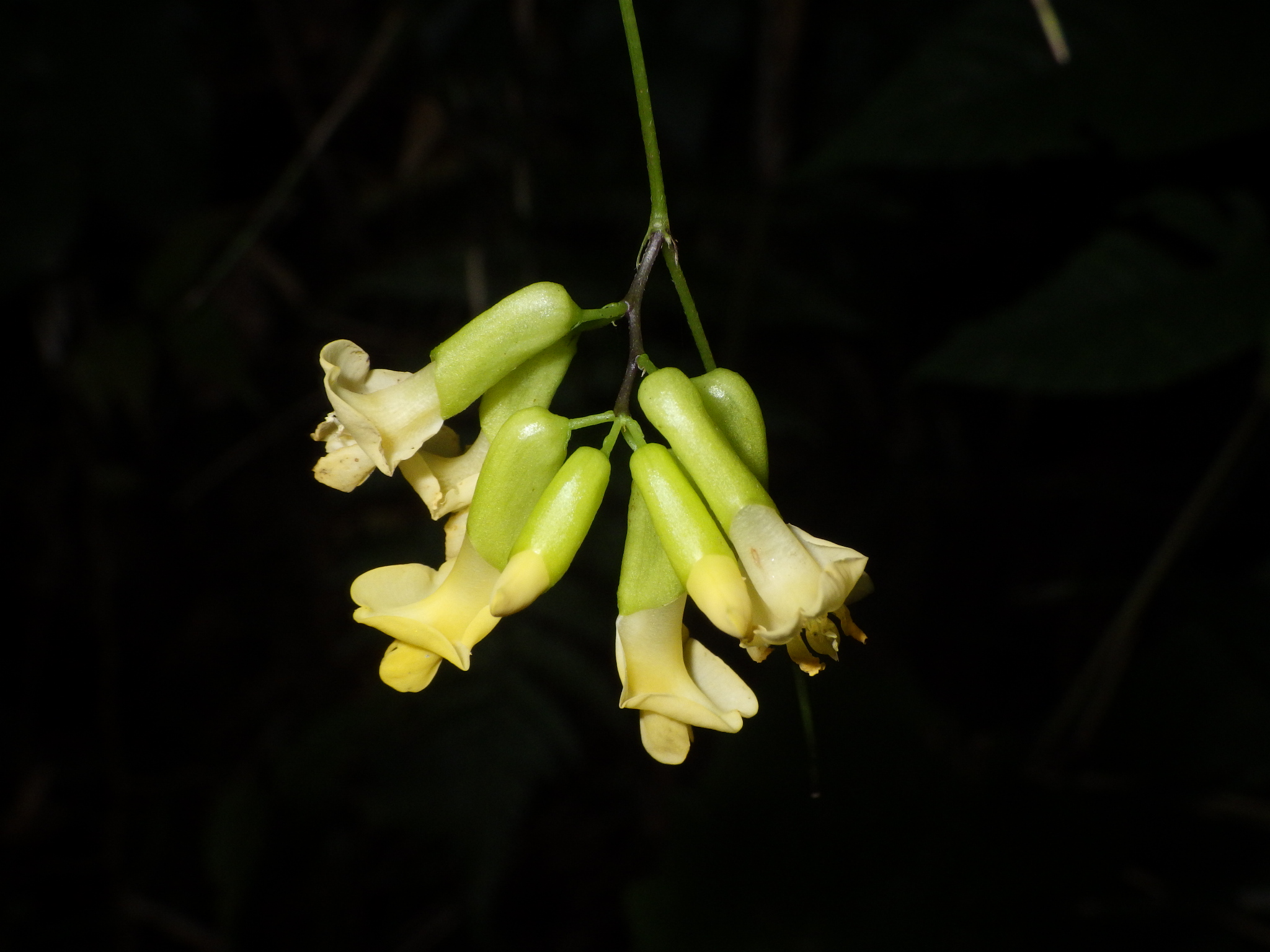
For information on how to distinguish between this and other wild climbing plants belonging to the legume family that have yellow flowers, please see our separate article.
References
Hayashi, Yasaka, Kadota, Yuichi, and Hirano, Takahisa. 2013. Yamakei Handy Illustrated Guide 1: Wildflowers (Revised and Expanded New Edition). Yama-kei Publishers, Tokyo. 664pp. ISBN: 9784635070195
Kanagawa Prefecture Flora Survey Association. 2018. Kanagawa Prefecture Flora 2018 (Electronic Edition). Kanagawa Prefecture Flora Survey Association, Odawara. 1803pp. ISBN: 9784991053726
Wu, ZY, Raven, PH, & Hong, DY (Eds.). 2010. Flora of China (Vol. 10 Fabaceae). Science Press, Beijing, and Missouri Botanical Garden Press, St. Louis. ISBN: 9781930723917
Yamaguchi, Hirofumi & Shimamoto, Yoshiya. 2001. Natural History of Cultivated Plants: Co-evolution of Wild Plants and Humankind. Hokkaido University Press, Sapporo. 256pp. ISBN: 9784832999312
Yoshimura, Y., Kaga, A., & Matsuo, K. 2016. A collection of biological information on *Glycine soybean* necessary for assessing the biodiversity impact of genetically modified soybeans. Bulletin of the National Institute for Agro-Environmental Sciences 36: 47-69. https://doi.org/10.24514/00003022