Mahonia japonica, Narrow-leaved Mahonia japonica, and Flat-leaved Mahonia japonica all belong to the genus Berberis in the family Berberidaceae. They have odd-pinnately compound leaves with coarse, needle-like serrations and are frequently cultivated as ornamental plants due to their ease of growth. However, few people may be able to properly distinguish between the three species. Narrow-leaved Mahonia japonica and Flat-leaved Mahonia japonica are particularly often confused. The three species can be correctly distinguished by checking not only the size of the leaves but also the leaflets and the number of serrations on the leaflets. This article will explain the classification and morphology of the genus Berberis.
What are Mahonia japonica, Narrow-leaved Mahonia japonica, and Flat-leaved Mahonia japonica?
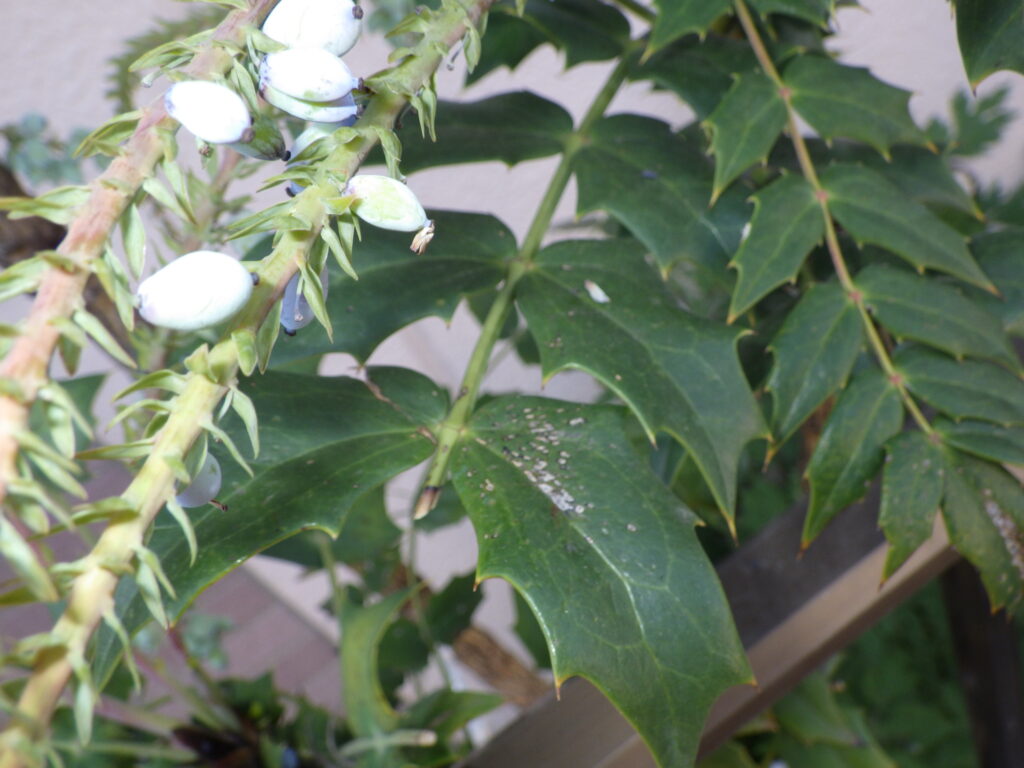
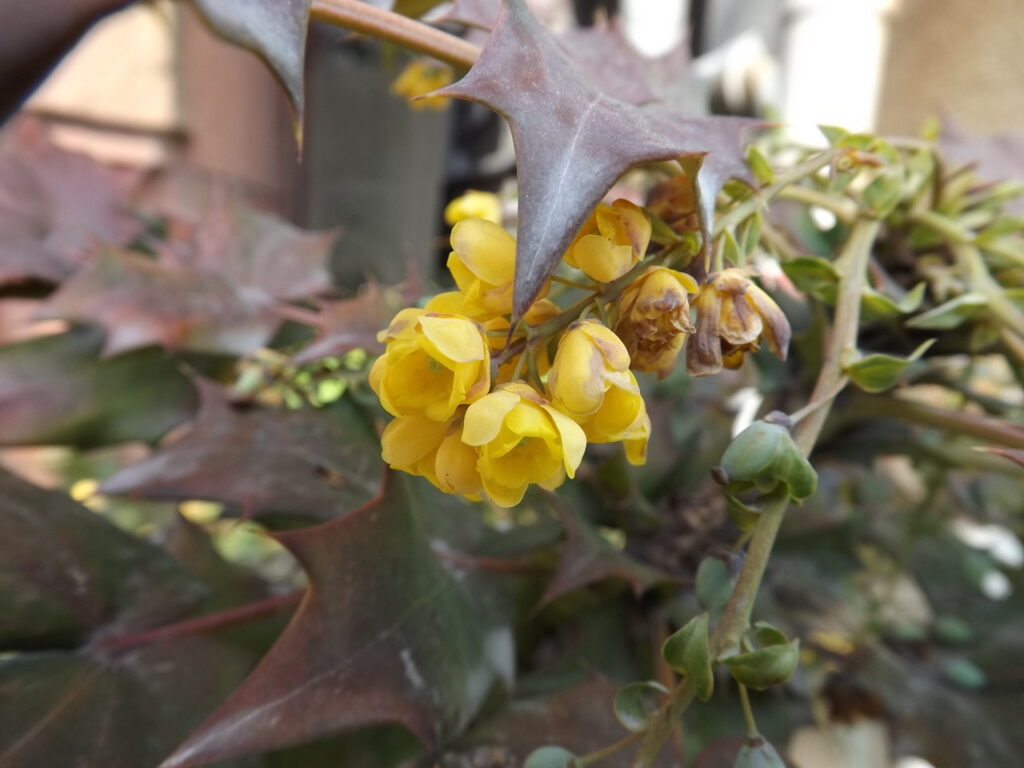
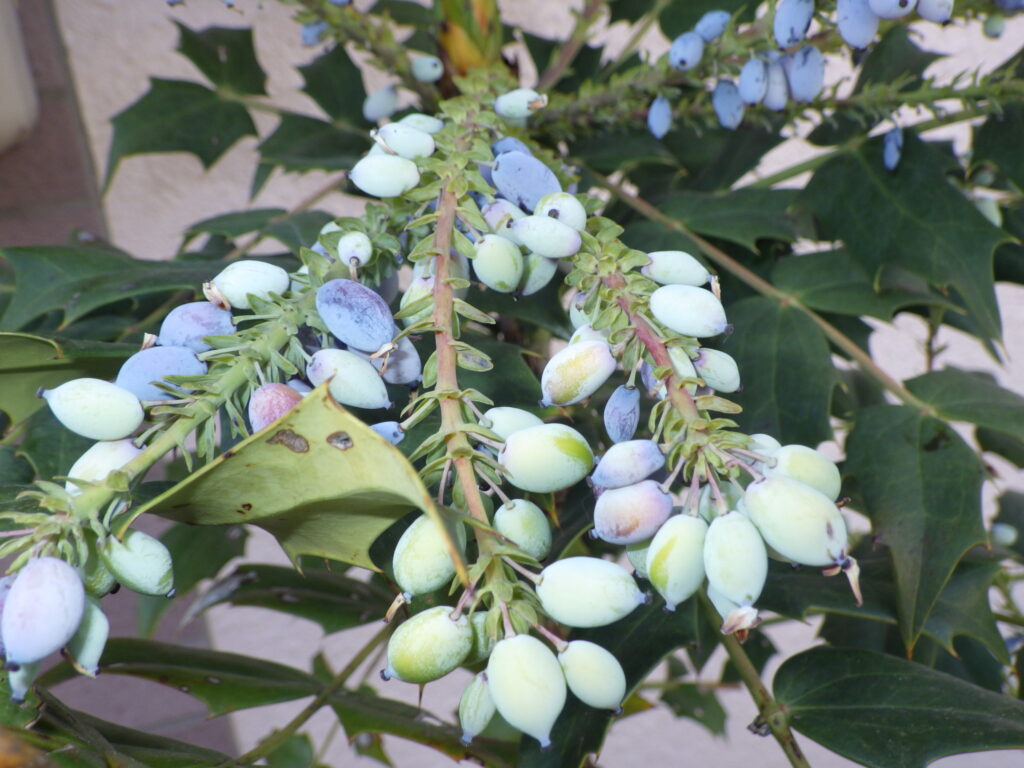
Berberis japonica (synonym: Mahonia japonica), also known as holly maize, is an evergreen shrub native to the Himalayas, China, and Taiwan. It is believed to have been introduced to Japan in the early Edo period and is planted in parks and gardens, and sometimes escapes into woodlands in plains.
Narrow-leaved holly mauve, also known as Berberis fortunei (synonym: Mahonia fortunei), is native to China and was introduced to Japan in the early Meiji period. It is an evergreen shrub that is commonly planted in parks and private gardens.
Narihirahiira Nandina (Berberis eurybracteata subsp. eurybracteata, synonyms: Mahonia eurybracteata, Mahonia confusa) is also known as Mahonia confusa. Native to China, it is an evergreen shrub that has recently become popular in gardens and parks in Japan. In horticulture, it is sold under the older scientific names Mahonia confusa and Mahonia confusa.
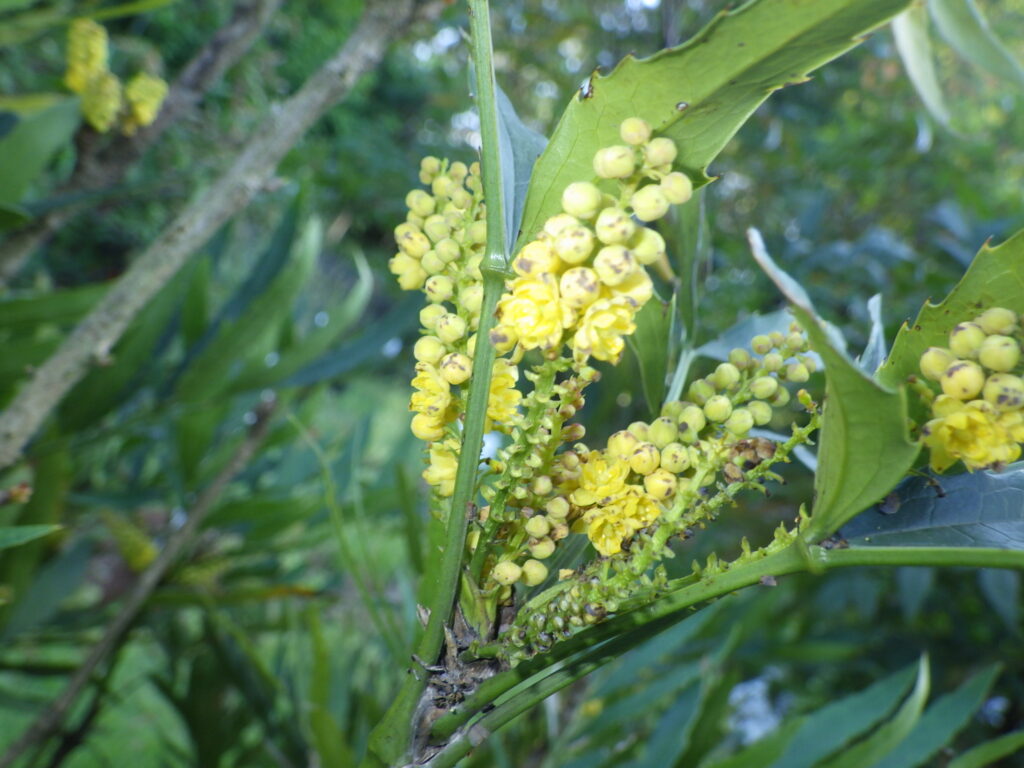
All of these plants belong to the genus Berberis in the family Berberidaceae, and they share the characteristics of having odd-pinnately compound leaves with needle-like, coarse serrations, producing yellow flowers, and bearing spherical berries that ripen to a powdery white, dark purple color. In older classifications, they were sometimes included in the genus Mahonia.
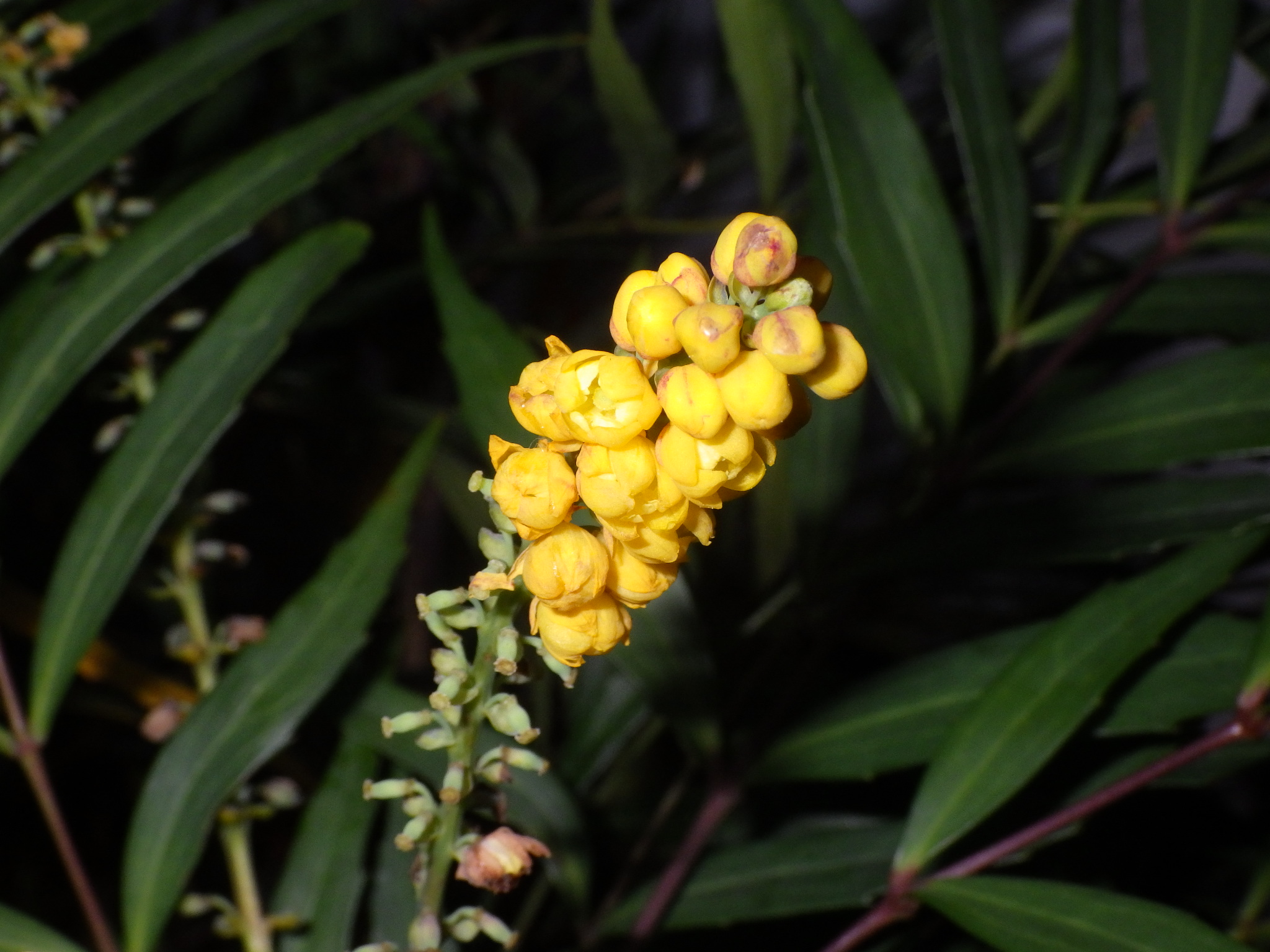
The Japanese name comes from the fact that its needle-like, coarse serrations resemble those of holly, and its odd-pinnately compound leaves resemble those of nandina, which is taxonomically close.
Because it is evergreen, it is tolerant of shade and is less susceptible to pest damage. Furthermore, its leaves turn red in winter when exposed to sunlight, making it visually appealing, and it is frequently seen planted in parks and gardens.
The flowers of Mahonia are mainly pollinated by honeybees, and an interesting phenomenon has been observed in which the stamens move in a reflex action when they touch them while trying to collect nectar (Tanaka and Hirano, 2000).
Furthermore, the fruit is dispersed by birds, and in Japan, it has been observed that brown-eared bulbuls eat the fruit (Fujita and Shinohara, 2001).
However, the three species are often confused, and especially with the recent introduction of Mahonia japonica, few people can correctly distinguish between Narrow-leaved Mahonia and Flat-leaved Mahonia.
What are the differences between Mahonia japonica, Narrow-leaved Mahonia japonica, and Flat-leaved Mahonia japonica?
The three species can be distinguished relatively easily by their leaves (Wu et al., 2011; Kanagawa Prefectural Flora Survey Association, 2018; Hayashi, 2019).
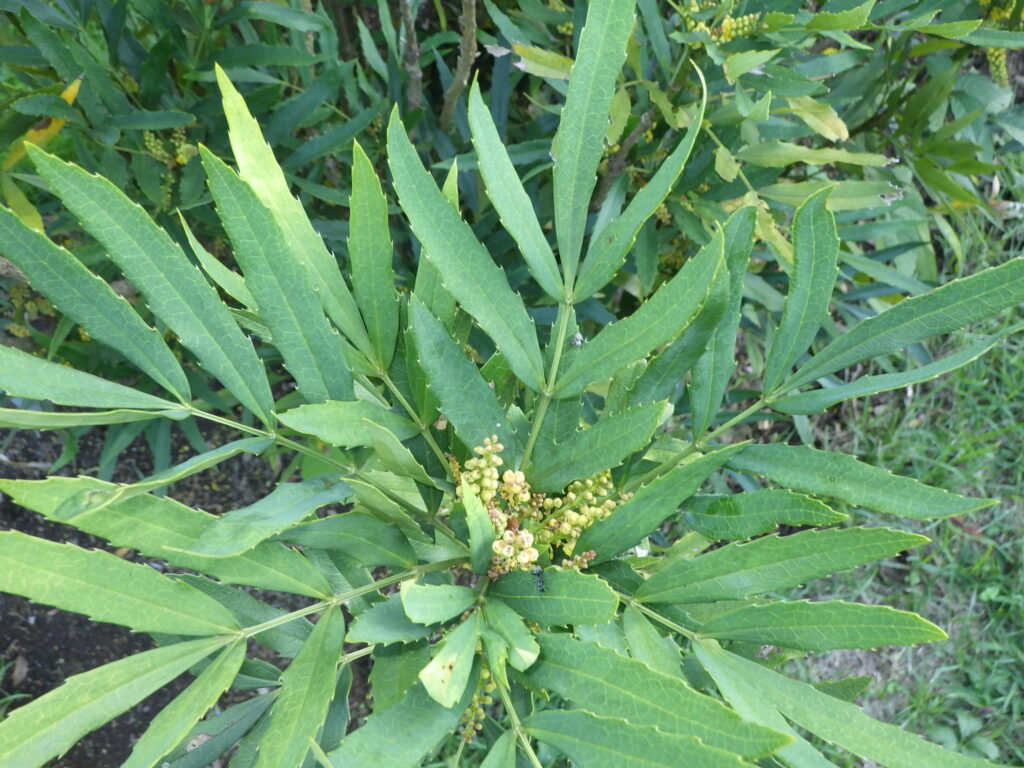
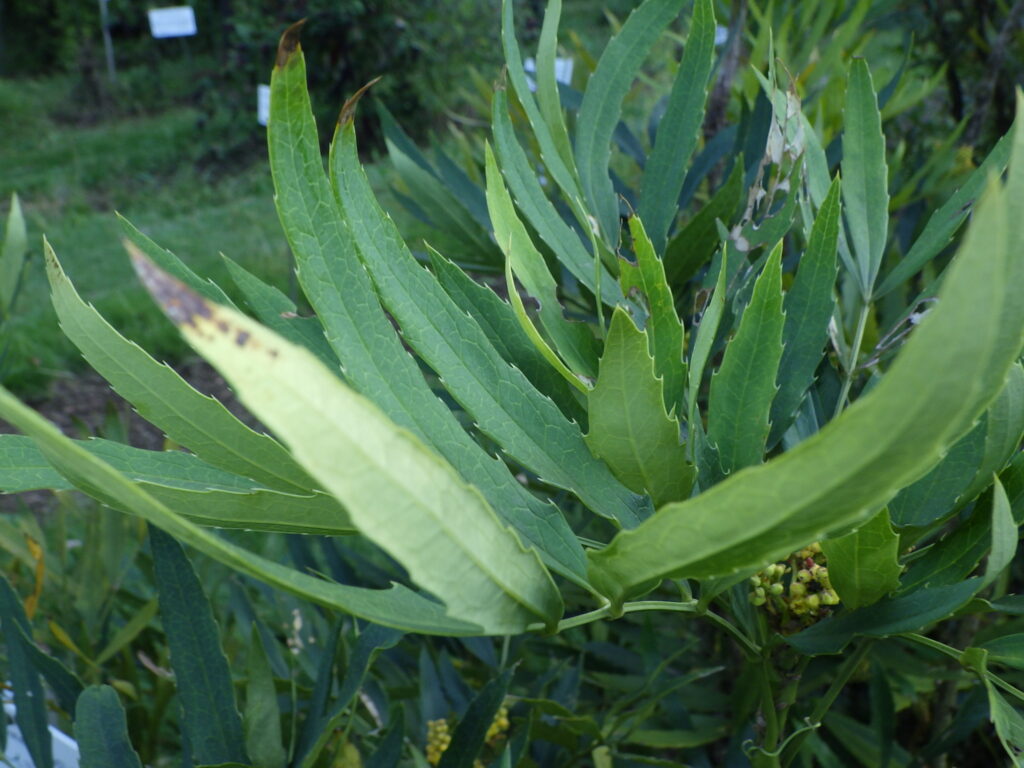
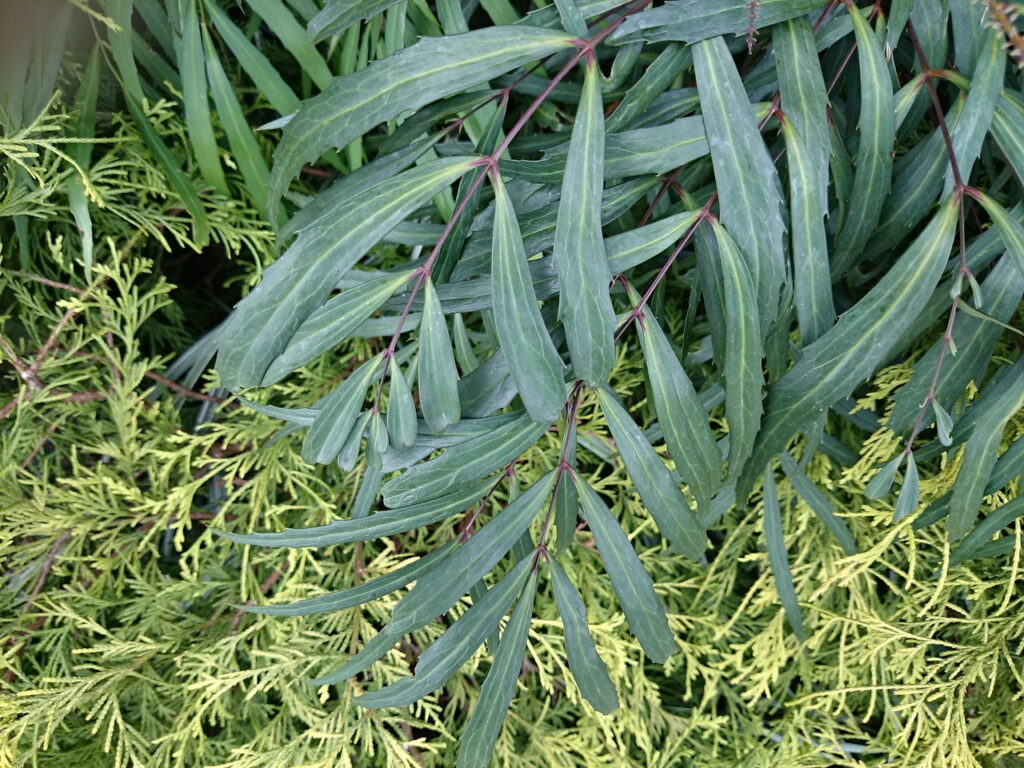
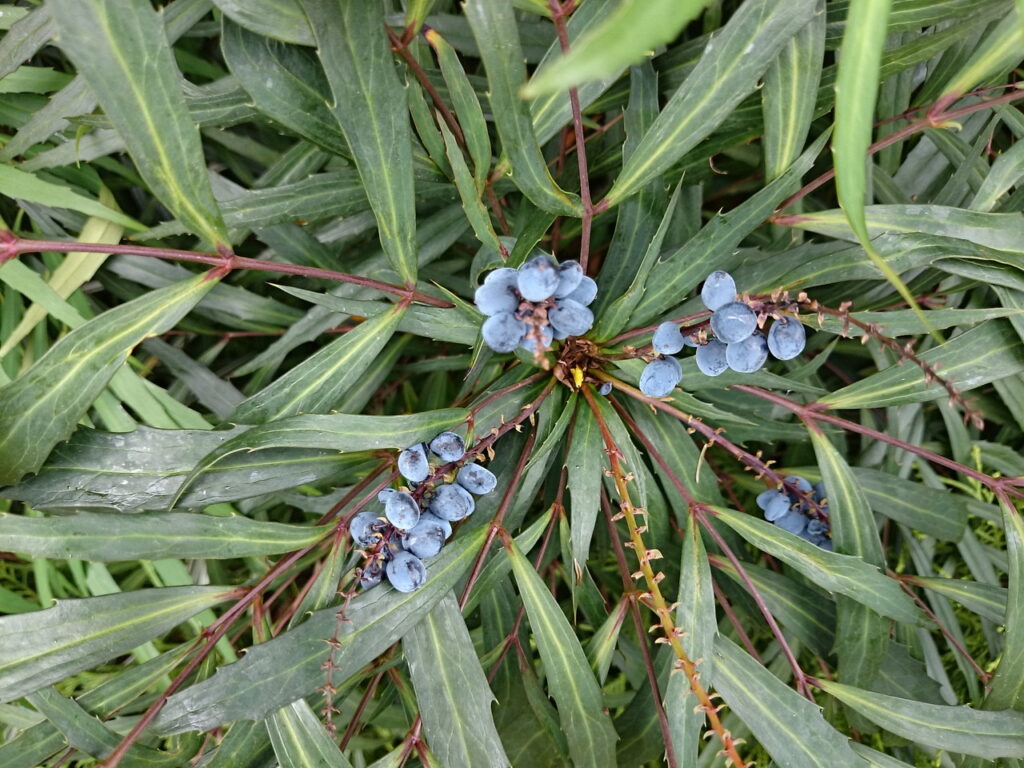
First, while the leaflets of Mahonia japonica are thick, those of Mahonia japonica var. japonica and Mahonia japonica var. japonica var. japonica are narrow. This is immediately obvious and can be predicted from the Japanese name "Nahonia japonica var. japonica var. japonica".
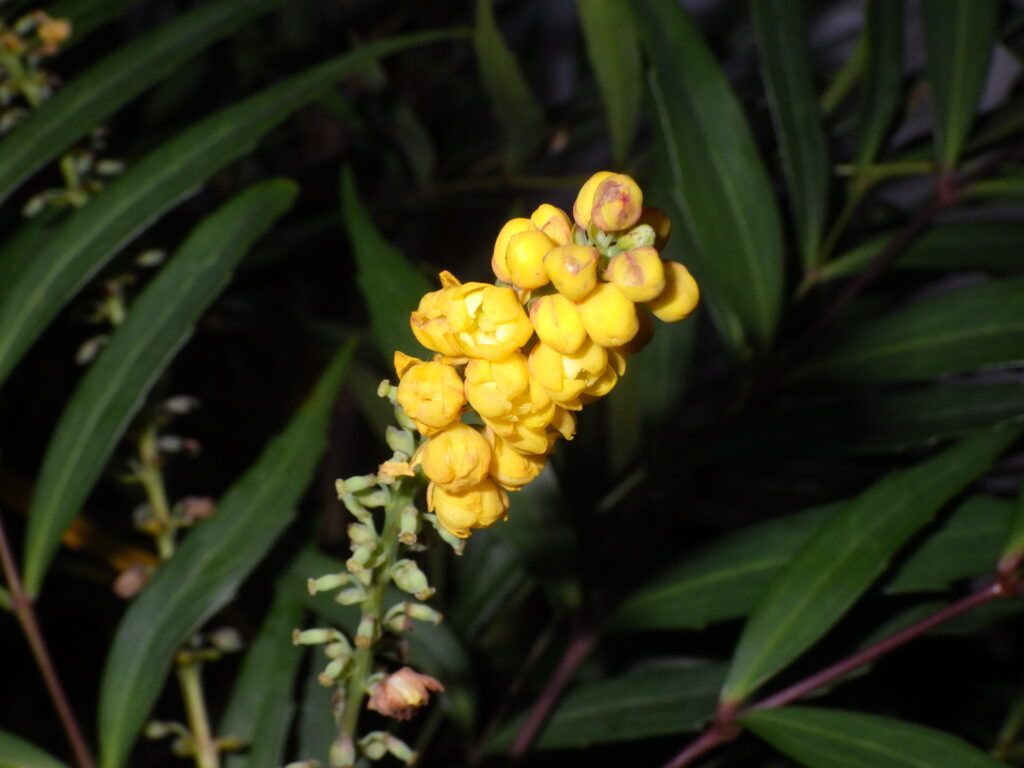
Furthermore, while Mahonia japonica flowers from March to April and its fruit ripens in the autumn, Narrow-leaved Mahonia japonica and Flat-leaved Mahonia japonica flower from September to November and their fruit ripens in the spring.
The slightly tricky ones are the narrow-leaved holly mahonia and the flat-leaved holly mahonia. They look quite similar from a distance.
However, there is a difference between the two: Narrow-leaved holly mahonia has 3 to 4 pairs of leaflets with many sharp serrations, while flat-leaved holly mahonia has 5 to 10 pairs of leaflets with fewer blunt serrations.
While it's true that in Narrow-leaved Holly Mahonia, the flower stalk is almost the same length as the bract, and in Flat-leaved Holly Mahonia, the flower stalk is much longer than the bracts, these differences are difficult to confirm outside of the flowering season.
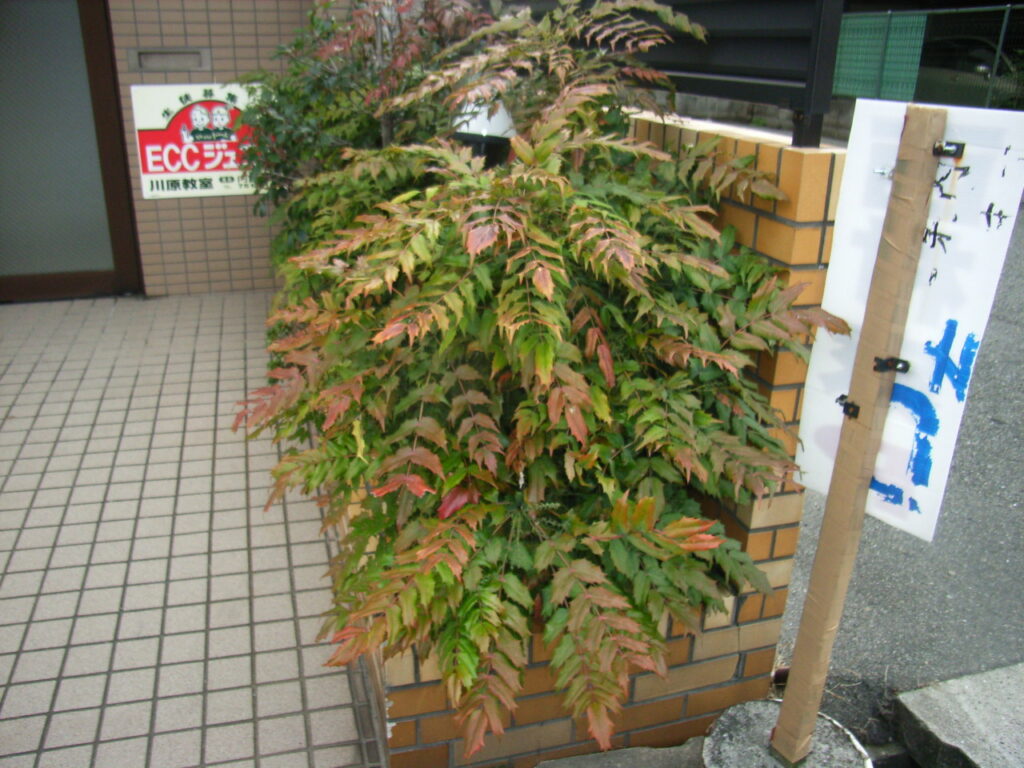
Although it's not mentioned in the botanical guide, my understanding is that in Narrow-leaved Holly Mahonia, the petioles (the parts connecting the leaflets) are green, while in Flat-leaved Holly Mahonia, they are purple.
Are there any other similar types?
While the three species mentioned above are generally cultivated in Japan, there are also suggestions of a horticultural variety that is a hybrid with Berberis lomariifolia, which is native to China, and has a slightly more upright inflorescence that blooms earlier than Mahonia japonica (January-February). I am not very familiar with this particular variety.
Nandina is the species from which the name "holly nandina" originates, but its fruit is red and its leaves do not have serrations.
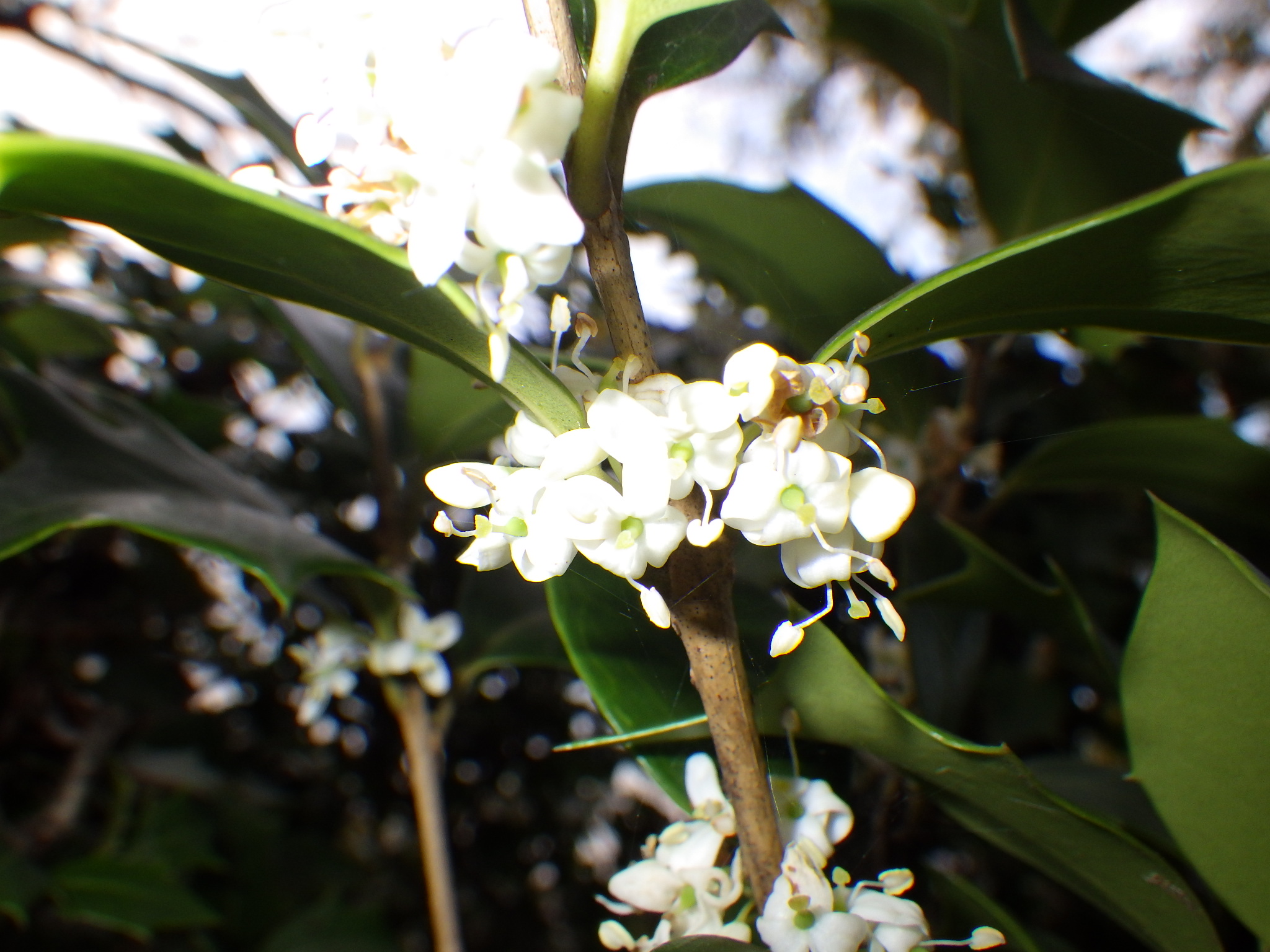
While holly is also a species from which the name "holly-leafed mahonia" originates, it belongs to a completely different classification and has simple leaves rather than odd-pinnately compound leaves. Please see the separate article for more details.
References
Fujita, Kaoru & Shinohara, Yukiko. 2001. Dispersal of planted trees into natural forests by birds and mammals. Strix 19: 103-113. ISSN: 0910-6901, https://mobile.wbsj.org/nature/public/strix/19/Strix19_12.pdf
Hayashi, Masayuki. 2019. Tree Leaves: Expanded and Revised Edition - Identifying 1300 Species Through Real-Life Scans. Yama-kei Publishers, Tokyo. 824pp. ISBN: 9784635070447
Kanagawa Prefecture Flora Survey Association. 2018. Kanagawa Prefecture Flora 2018 (Electronic Edition). Kanagawa Prefecture Flora Survey Association, Odawara. 1803pp. ISBN: 9784991053726
Tanaka, Hajime & Hirano, Takahisa. 2000. The Face of Flowers: Wisdom for Bearing Fruit. Yama-kei Publishers, Tokyo. 191pp. ISBN: 9784635063043
Wu, ZY, Raven, PH, & Hong, DY (Eds.). 2011. Flora of China (Vol. 19 Cucurbitaceae through Valerianaceae, with Annonaceae and Berberidaceae). Science Press, Beijing, and Missouri Botanical Garden Press, St. Louis. ISBN: 9781935641049