Aucuba japonica is distributed in evergreen broad-leaved forests of East Asia and is a very common plant in Japan , even in urban areas, where it's rare to go a day without seeing it. Several varieties of Aucuba japonica are known, and they are often divided into Aucuba japonica (in the narrow sense), Aucuba japonica var. These Aucuba species bear small, unassuming purplish-brown flowers. They are so inconspicuous that most insects would likely ignore them, but research has shown that these flowers are exclusively visited by fungus gnats. This is thought to be a clever pollination strategy within the forest. Furthermore, their conspicuous red fruits are frequently eaten by bulbuls for some reason, thus dispersing their seeds. This article will explain the classification, evolution, pollination ecology, and seed dispersal of Aucuba species.
- Evergreen trees can be found everywhere, from forests to urban areas.
- What are the differences between Aucuba japonica, Aucuba japonica var. japonica, and Aucuba japonica var. japonica?
- What are the different varieties of Aucuba japonica?
- Why did Aucuba japonica and Aucuba japonica diverge into two varieties?
- How did Japanese laurel adapt to the heavy snowfall areas on the Sea of Japan side?
- Why did Aucuba japonica and Aucuba japonica diverge into two varieties?
- What is the structure of the Aucuba flower?
- Aucuba flowers are only for tiny flies!?
- How do flowers attract flies? Why are they purplish-brown?
- For some reason, only brown-eared bulbuls were eating the red berries of the Aucuba japonica plant!?
- References
Evergreen trees can be found everywhere, from forests to urban areas.
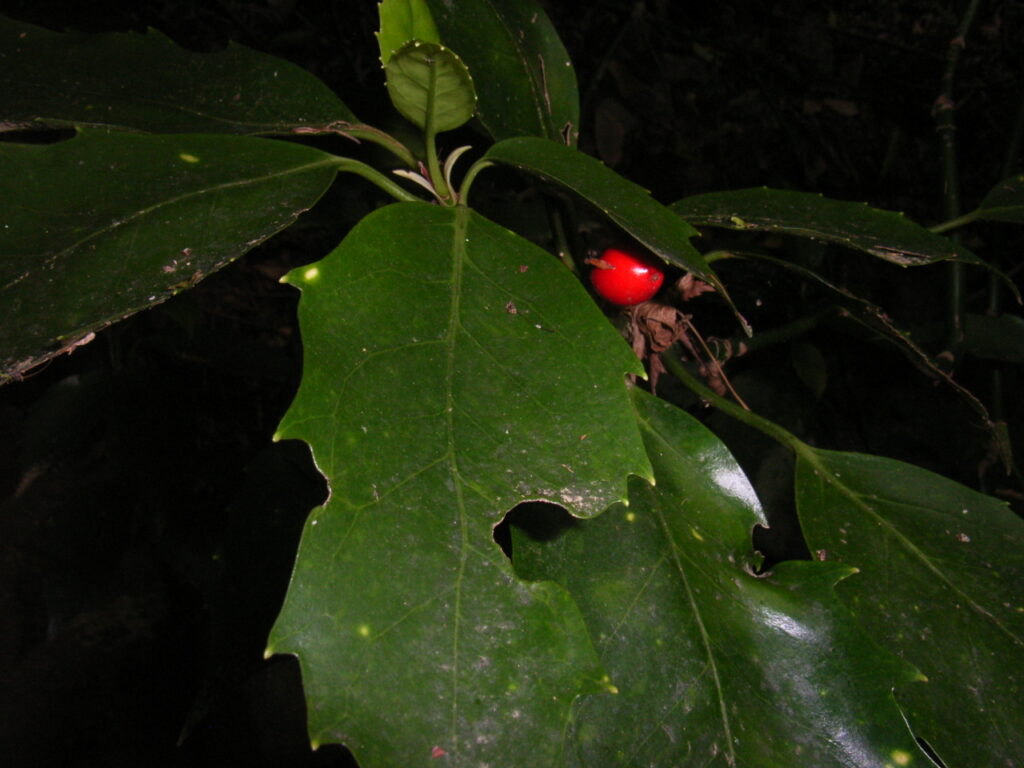
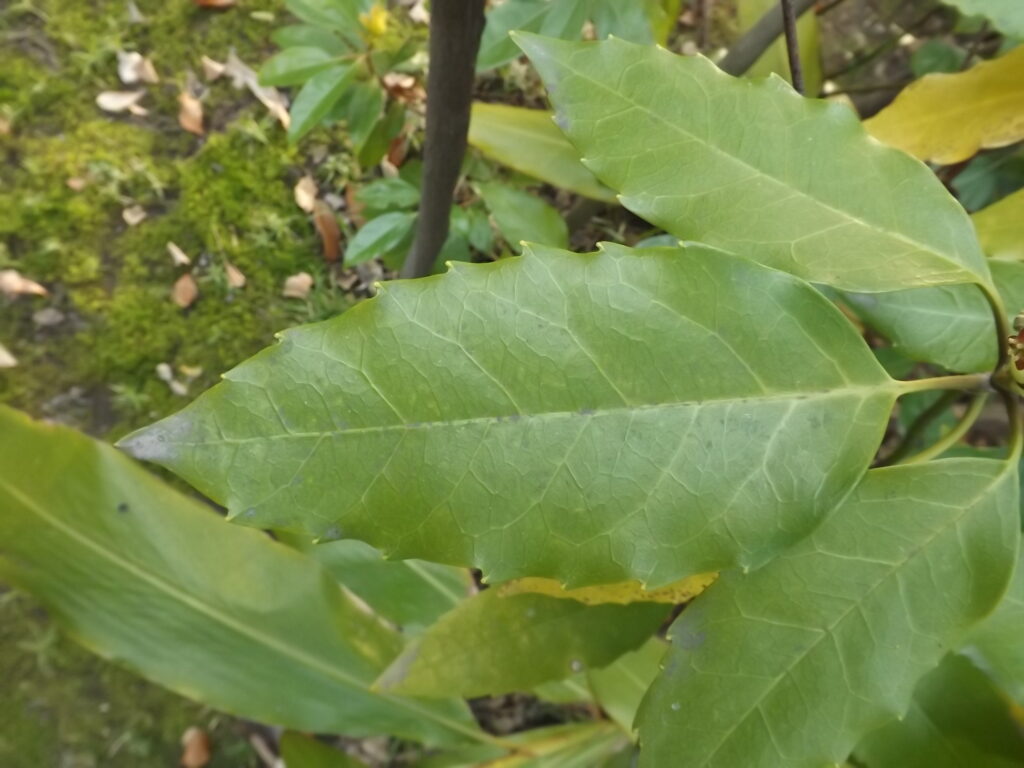
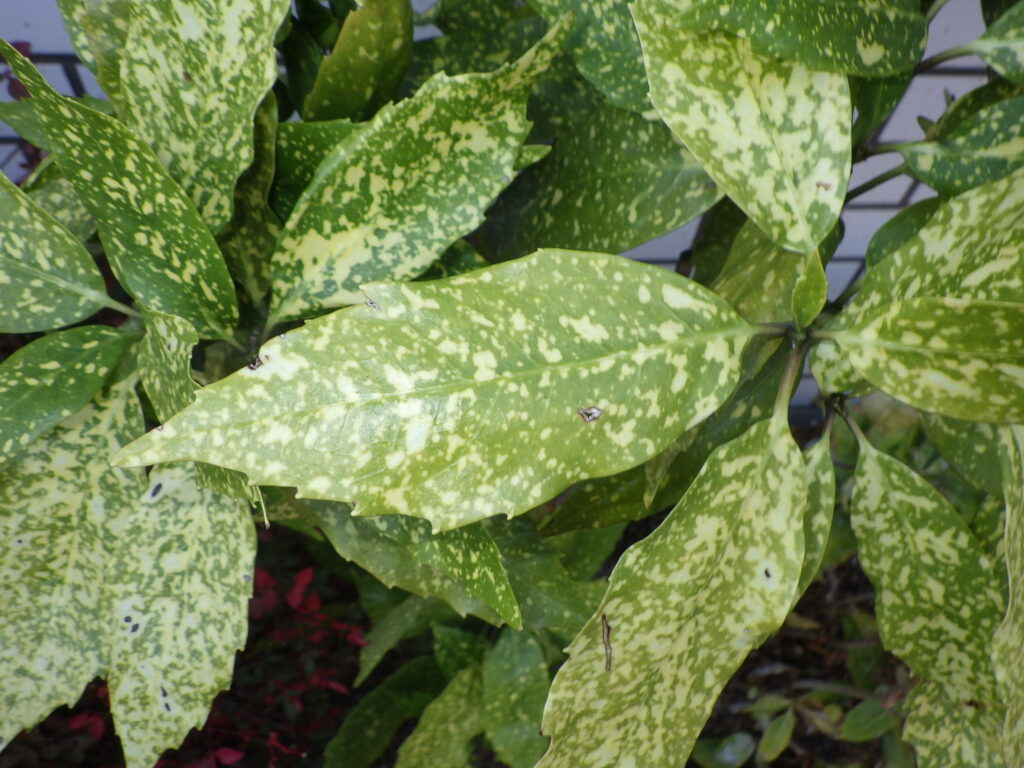
Aucuba japonica var. japonica (in the narrow sense) is an evergreen shrub distributed in Honshu, Japan (Tohoku to eastern Shikoku), and Korea, growing in evergreen broad-leaved forests, bright deciduous forests, and plantations (Mogi et al., 2000). It is abundant and frequently encountered when observing in evergreen broad-leaved forests. It is tolerant of both heat and cold, can grow in shade, and is often cultivated as a garden tree and park tree due to its red fruits and dark green leaves. Some varieties, such as Aucuba japonica 'Variegata', have variegated leaves.
Aucuba japonica var. ovoidea, also known as Southern Aucuba, is an evergreen shrub distributed in Honshu (west of the Chugoku and Shikoku regions), Kyushu, and Okinawa in Japan, as well as in Taiwan (Oi, 2004; Tsusaka et al., 2011). It grows in forests as a substitute for Aucuba japonica (in the narrow sense) and is cultivated as a garden tree and park tree.
Aucuba japonica var. borealis, also known as Hime-aoki, is an evergreen shrub distributed in southwestern Hokkaido and the snowy regions along the Sea of Japan on Honshu in Japan. It grows in slightly shaded areas within and at the edges of mountain forests.
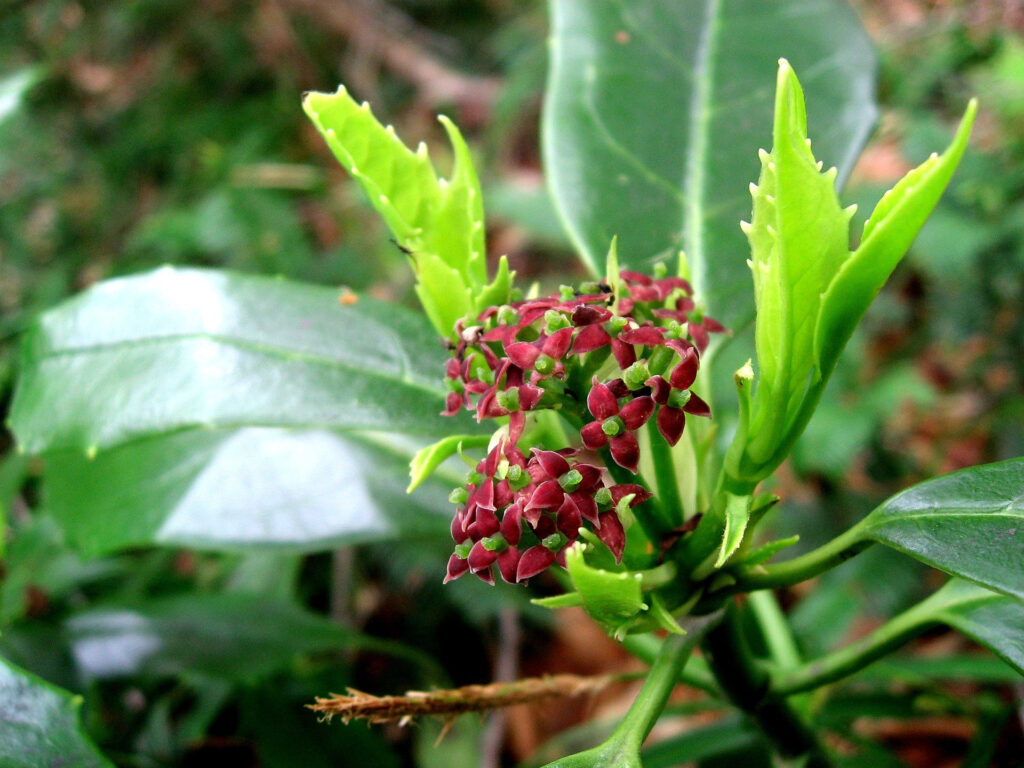
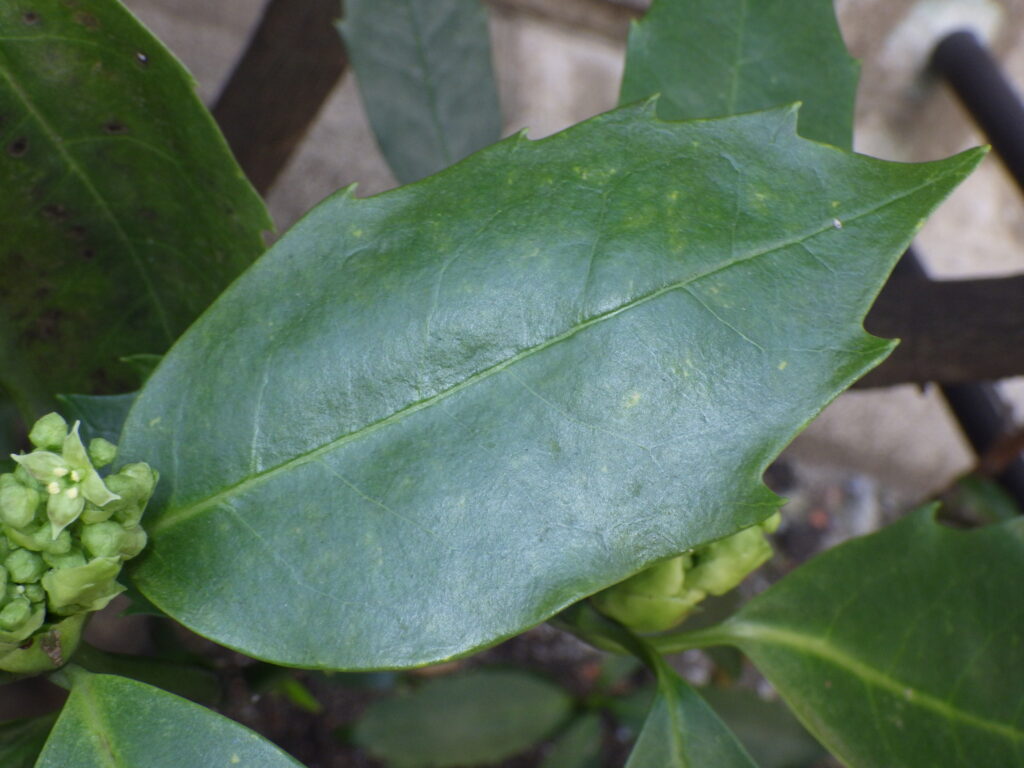
All of these species belong to the genus Aucuba in the family Aucubaceae, and are included within the broad category of Aucuba japonica. Including all varieties, they are distributed very widely in Japan, from southwestern Hokkaido to Okinawa. They have large, glossy, oval leaves that grow opposite each other. There is considerable variation in leaf size, width, and serration size, but they are generally easily distinguished from other species by the presence of large, sparsely spaced serrations. The thicker branches are green. They are dioecious, meaning that male plants bear male flowers and female plants bear female flowers.
However, some people may find it difficult to distinguish between varieties based solely on their names.
What are the differences between Aucuba japonica, Aucuba japonica var. japonica, and Aucuba japonica var. japonica?
To distinguish between these three varieties, it is necessary to examine their distribution and morphology.
As mentioned above, Aucuba japonica is found in Honshu, Japan (from Tohoku to eastern Shikoku); and in Korea; Aucuba japonica var. nagoshu is found in Honshu, Japan (west of the Chugoku and Shikoku regions), Kyushu, and Okinawa; and Aucuba japonica var. japonica is found in southwestern Hokkaido and the snowy regions along the Sea of Japan on Honshu. These species are basically mutually exclusive, so they can be distinguished to some extent just by the regions where they are found.
However, the distribution of Aucuba japonica and Aucuba japonica var. serrata overlaps in the Chugoku and Shikoku regions, and the same is true for Aucuba japonica var. japonica var. japonica. It is probably not a good idea to distinguish them while ignoring their morphology.
Firstly, *Aucuba japonica* is a small plant, reaching a height of about 1 meter, with leaves less than 15 cm long, creeping branches, and short hairs on its young branches and leaves. In contrast, *Aucuba japonica* and *Aucuba japonica var. serrata* are larger plants, reaching a height of 2 to 3 meters, with leaves 8 to 25 cm long, upright branches, and no hairs on their young branches or leaves (Hayashi, 2014).
Regarding Aucuba japonica and Aucuba japonica var. japonica, Aucuba japonica tends to have relatively small leaves with sharp serrations, while Aucuba japonica var. japonica tends to have relatively large leaves with blunt serrations.
Let's make a distinction based on all of the above.
However, recent research suggests that Aucuba japonica var. nangokuensis is indistinguishable from Aucuba japonica (Ohashi et al., 2017). This is likely because Aucuba japonica (in the broad sense) exhibits considerable variation in leaf shape. It remains to be seen whether it will be treated as a separate variety in the future, or whether such a distinction will cease to be made, but observing it with the understanding that there are differences might reveal various insights.
What are the different varieties of Aucuba japonica?
While there are only three officially recognized varieties of Aucuba japonica, there are several populations that are treated as "cultivars" due to subtle differences, even though these differences are not significant enough to warrant the designation of "varieties."
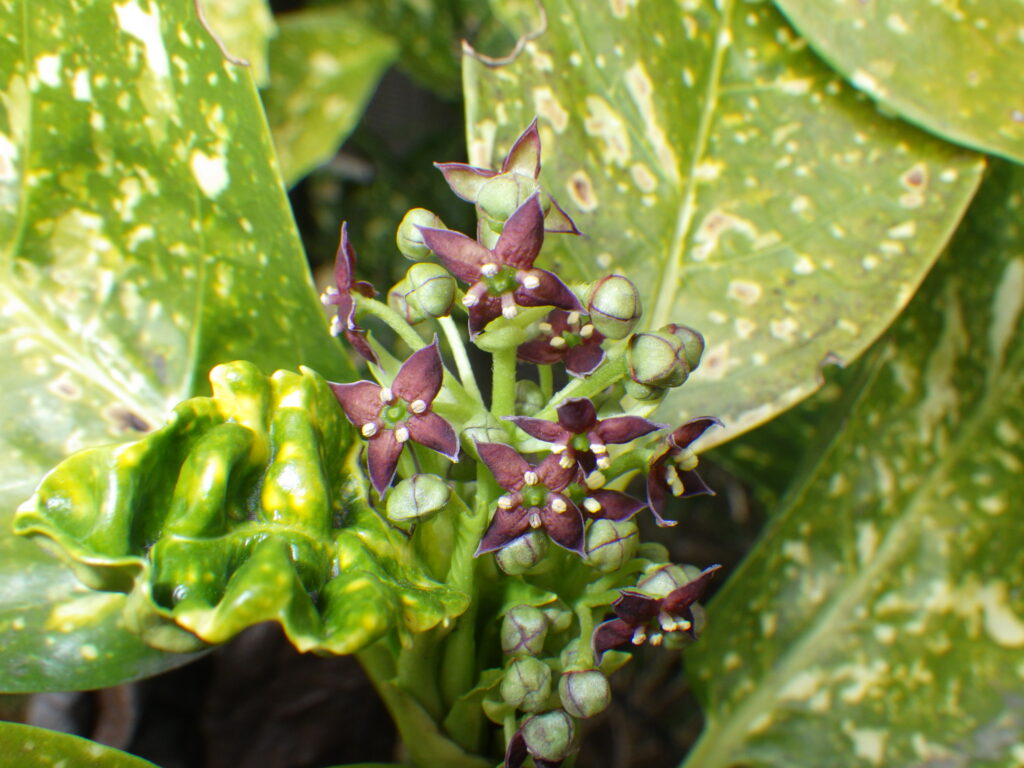
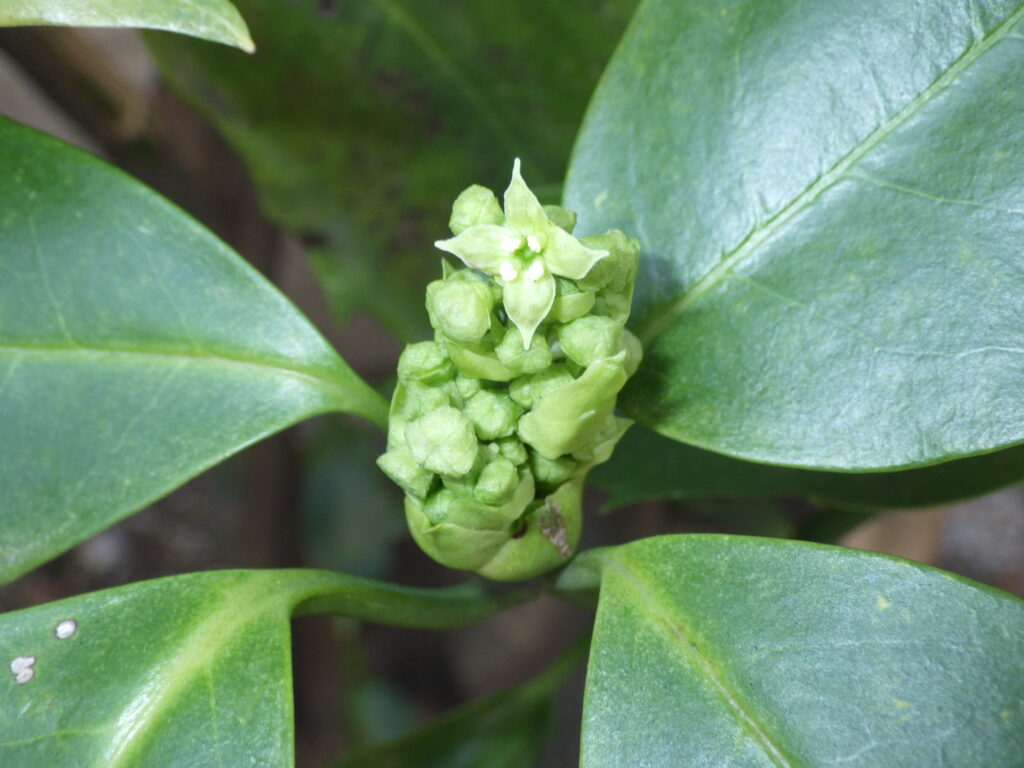
The Japanese laurel (Aucuba japonica var. japonica) includes several wild varieties: white-fruited Aucuba japonica f. leucocarpa, yellow-fruited Aucuba japonica f. luteocarpa, and green-petaled Aucuba japonica f. viridiflora. Cultivated varieties include 'Variegata' with variegated leaves, 'Luteo-marginata' with white variegation on the leaf margins, and 'Picturata' with variegation in the center of the leaves.
Wild varieties of Aucuba japonica var. borealis include Aucuba japonica f. albivariegata, which has variegated leaves, and Aucuba japonica f. albivariegata, which (although direct confirmation is not possible due to the scarcity of literature) has uneven leaves.
Why did Aucuba japonica and Aucuba japonica diverge into two varieties?
Hime-aoki is a variety found only in Japan. This means it branched off from Aucuba japonica (in the narrow sense) within Japan, but why did this branching occur?
The main reason for this is that *Aucuba japonica* is distributed along the Sea of Japan coast. Let's start by understanding Japan's climate.
The Japanese archipelago stretches long and narrow from north to south, with the Eurasian continent and the Sea of Japan to the northwest and the Pacific Ocean to the southeast. As a result, the Sea of Japan side and the Pacific Ocean side of Honshu experience vastly different weather conditions due to the seasonal winds of summer and winter.
Japanese monsoon winds are generated by the difference in specific heat (the amount of heat required to raise the temperature of a substance by 1 degree Celsius per gram) between the Eurasian continent and the Pacific Ocean.
The concept of "specific heat" is a little difficult to understand, but essentially it is a value that indicates the difference in how easily heat is transferred. Comparing the specific heat of the Eurasian continent and the Sea of Japan, heat conduction occurs easily in the solid, dense Eurasian continent, so it heats up and cools down quickly (low specific heat), while heat conduction is difficult in the liquid, less dense Pacific Ocean, so it heats up and cools down slowly (high specific heat). In other words, continents are more susceptible to seasonal changes than oceans.
Therefore, the response to the sun's heat (sunlight) differs. In summer, the sunlight is strong, and the air over the Eurasian continent is warmed, becoming less dense and lighter, which creates updrafts and low pressure systems. On the other hand, the Pacific Ocean is less affected by sunlight, but it becomes relatively colder, and the air over the Pacific cools and becomes denser, creating downdrafts and high pressure systems.
In this situation, a circulation of air flows from the Pacific Ocean to the Eurasian continent near the ground, and from the Eurasian continent to the Pacific Ocean in the upper atmosphere, resulting in the generation of a "southeasterly monsoon" from the Pacific Ocean to the Eurasian continent near the ground.
Conversely, in winter, sunlight weakens, but the air over the Eurasian continent cools, becomes denser and heavier, creating downdrafts and high pressure systems. On the other hand, the Pacific Ocean is less affected by sunlight but becomes relatively warmer, and the air over the Pacific warms up, becoming less dense, creating updrafts and low pressure systems.
In this scenario, air circulation occurs from the Eurasian continent to the Pacific Ocean near the ground, and from the Pacific Ocean to the Eurasian continent in the upper atmosphere, resulting in the generation of a "northwest monsoon" from the Pacific Ocean to the Eurasian continent near the ground.
We now understand the mechanism of seasonal wind generation, but how are the climates of the Japanese archipelago affected by these seasonal winds?
The Japanese archipelago is divided into two sides by the Japanese Alps, which form the backbone of the mountain range, separating the Sea of Japan side from the Pacific Ocean side.
In summer, southeasterly monsoon winds blow from the Pacific Ocean, carrying moisture from the sea. On the Pacific side, these winds collide with the Japanese Alps, removing moisture and resulting in heavy rainfall. However, on the Sea of Japan side, the air flows after crossing the Japanese Alps, resulting in drier air, more sunny days, and very little rainfall.
On the other hand, in winter, cold northwesterly monsoon winds blow from the Eurasian continent, but they also draw in the warm moisture from the Sea of Japan. On the Sea of Japan side, from the plains to the mountainous areas north of Honshu, it brings heavy snowfall rather than rainfall, as is typical in winter. The snow that accumulates from December to February often remains until March to May because there are few sunny days. In contrast, on the Pacific side, dry air flows after crossing the Japanese Alps, resulting in many sunny days and very little snowfall.
Thus, the Japanese archipelago experiences significant differences in rainfall and snowfall between summer and winter, with the Japanese Alps as the dividing line. Of these, plants are most greatly affected by the amount of snowfall in winter.
Japanese laurel (Aucuba japonica) evolved through various adaptations to cope with the reduced sunlight and decreased photosynthesis caused by heavy snowfall in winter on the Sea of Japan side, as well as to withstand the weight of the snow. In particular, it has been found that the annual photosynthetic production decreases by more than 301 TP3 T on the Sea of Japan side.
Plants that have undergone such adaptations are known as "Sea of Japan elements," and many others are known, including Camellia japonica (corresponding to Camellia japonica on the Pacific side), Daphniphyllum macropodum (corresponding to Daphniphyllum macropodum on the Pacific side), Skimmia japonica (corresponding to Skimmia japonica on the Pacific side), Ilex crenata (corresponding to Ilex rotunda on the Pacific side), Ilex crenata (corresponding to Ilex crenata on the Pacific side), and Ilex integra (corresponding to Ilex integra on the Pacific side) (Kume, 1996; 1998).
How did Japanese laurel adapt to the heavy snowfall areas on the Sea of Japan side?
Specifically, how does *Aucuba japonica* adapt to the climate of the snowy regions on the Sea of Japan side?
Morphologically, as mentioned above, the plant body is small and its branches creep along the ground. This could simply be due to a low rate of photosynthesis and a lack of resources to strengthen the plant, but it is also possible that this prevents the branches from breaking under the weight of the snow (Sakai, 1976).
Furthermore, it has been found that because branches and trunks break and they cannot grow tall, they allocate resources to increasing the amount of leaves per stem (Kume, 1996). This certainly allows them to increase photosynthesis even in low sunlight, and can be said to be a win-win adaptation.
Although I couldn't find any literature that directly mentions the reason why short hairs grow on young branches and leaves, it is thought that they serve to prevent snow from directly contacting the plant body and to provide insulation.
Furthermore, in terms of reproduction, the plant not only reproduces through seed propagation, a type of sexual reproduction through insect pollination, but also through vegetative reproduction, a type of asexual reproduction through branching of rhizomes and the development of non-adoptive roots (Sakai, 1976; Higashi & Ino, 2003). This is thought to serve as a safety net in case photosynthesis is insufficient and nutrients prevent the plant from producing flowers or seeds.
On the other hand, no significant physiological differences have been observed between Aucuba japonica and Aucuba japonica var. japonica (Kume, 1996). This is in contrast to the relationship between Camellia japonica and Camellia japonica var. japonica, and is thought to be because the ancestors of Aucuba japonica originally developed adaptations for cold environments.
By the way, after hearing all this, you might feel that living in the snow has only disadvantages. While there are certainly such aspects, it's not entirely accurate to say so. Several advantages have also been pointed out (Kume, 1998).
For example, the temperature near the ground surface beneath the snow remains at 0°C, which prevents freezing and provides insulation. It's similar to a snow hut.
Furthermore, humidity is maintained at nearly 100% under and within snow cover, providing a moisturizing effect.
And because there is a large amount of snowmelt water, they never have to worry about water shortages.
Why did Aucuba japonica and Aucuba japonica diverge into two varieties?
On the other hand, for what reason did Aucuba japonica and Aucuba japonica 'Nangoku' diverge?
Studies examining chromosomes have revealed that there is a difference in chromosome number between Aucuba japonica and Aucuba japonica var. serrata. According to this study, Aucuba japonica (and Aucuba japonica var. serrata) is tetraploid with a chromosome number of 2n=32, while Aucuba japonica var. serrata is diploid with a chromosome number of 2n=16 (Tsusaka et al., 2011).
This is thought to be the reason for the difference between Aucuba japonica and Aucuba japonica var. serrata. So why did the number of chromosomes change between Aucuba japonica and Aucuba japonica var. serrata?
The reason is not fully understood, but it is thought that the ancestors of Aucuba japonica once reduced their distribution within the Japanese archipelago during the last glacial period.
During the last glacial period, when the Earth cooled, the ancestors of Aucuba japonica were forced to move to very limited areas within the Japanese archipelago, known as refuges. At this time, the number of chromosomes changed due to some genetic cause, such as a "bottleneck effect" or mutation.
After the last glacial period, the diploid Aucuba japonica and tetraploid Aucuba japonica that remained in the refuge likely expanded their distribution again in the Chugoku and Shikoku regions, with Aucuba japonica spreading from the west and Aucuba japonica from the east, respectively, due to the subsequent warming of the climate.
Furthermore, it is believed that current climatic factors also play a role in the areas where the distributions overlap. It is thought that in warmer regions such as the Sea of Japan side and the Setouchi region, Aucuba japonica spread slightly eastward, while in cooler regions such as the Chugoku Mountains, Aucuba japonica spread slightly westward, thus forming the current distribution.
What is the structure of the Aucuba flower?
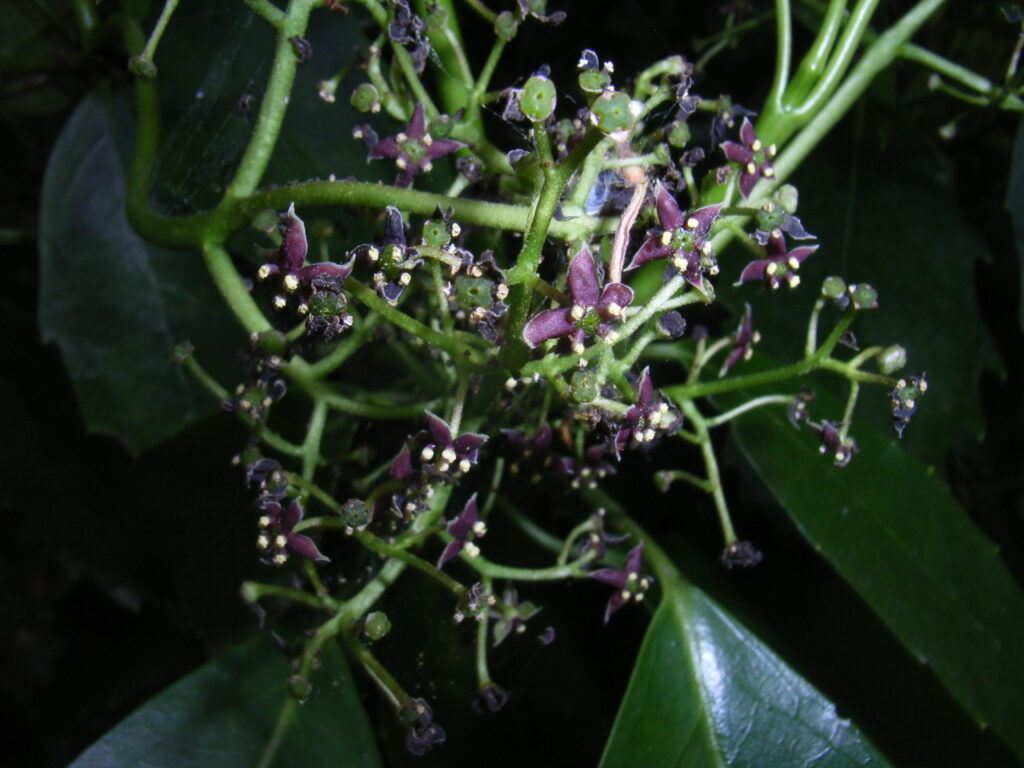
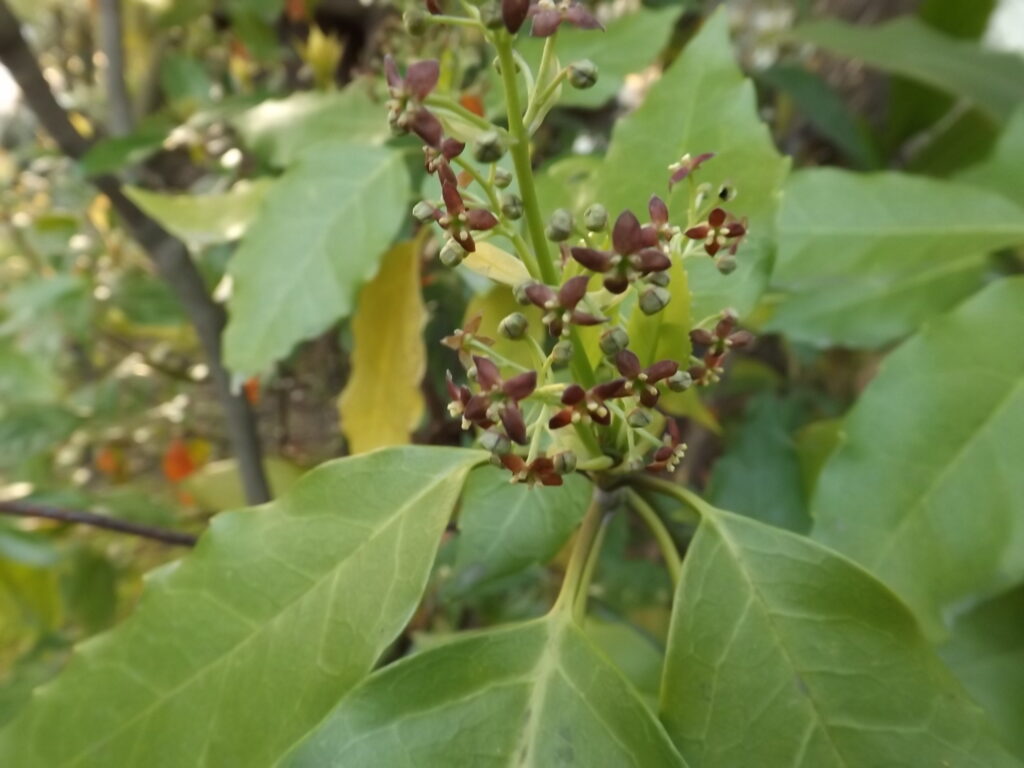
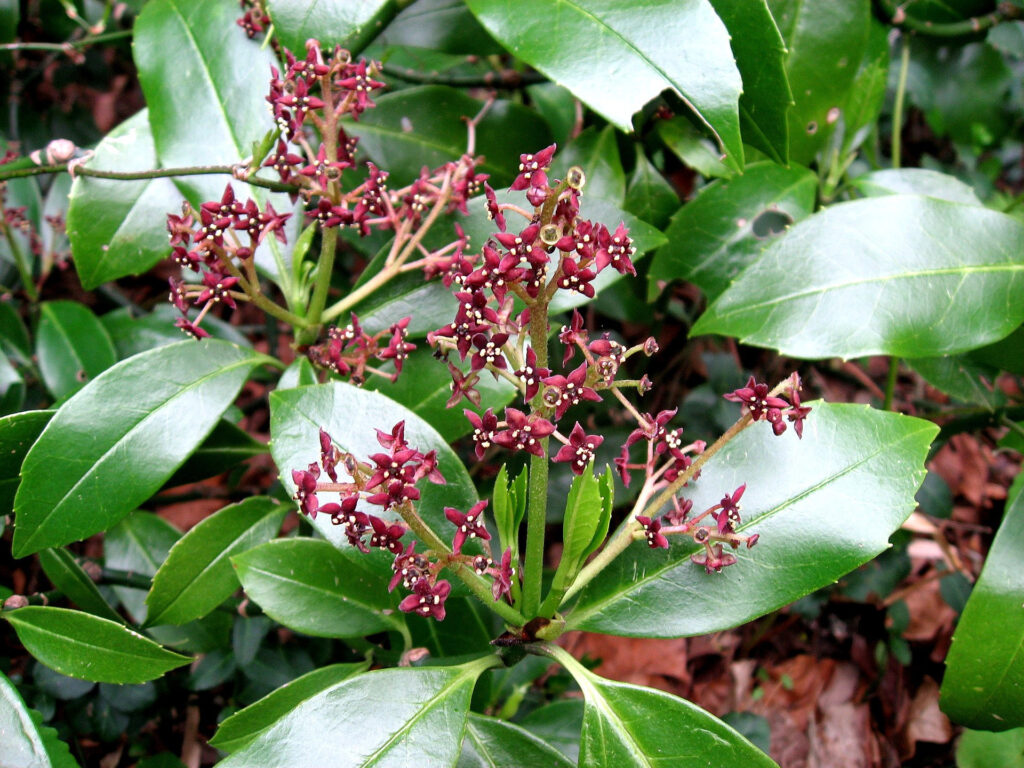
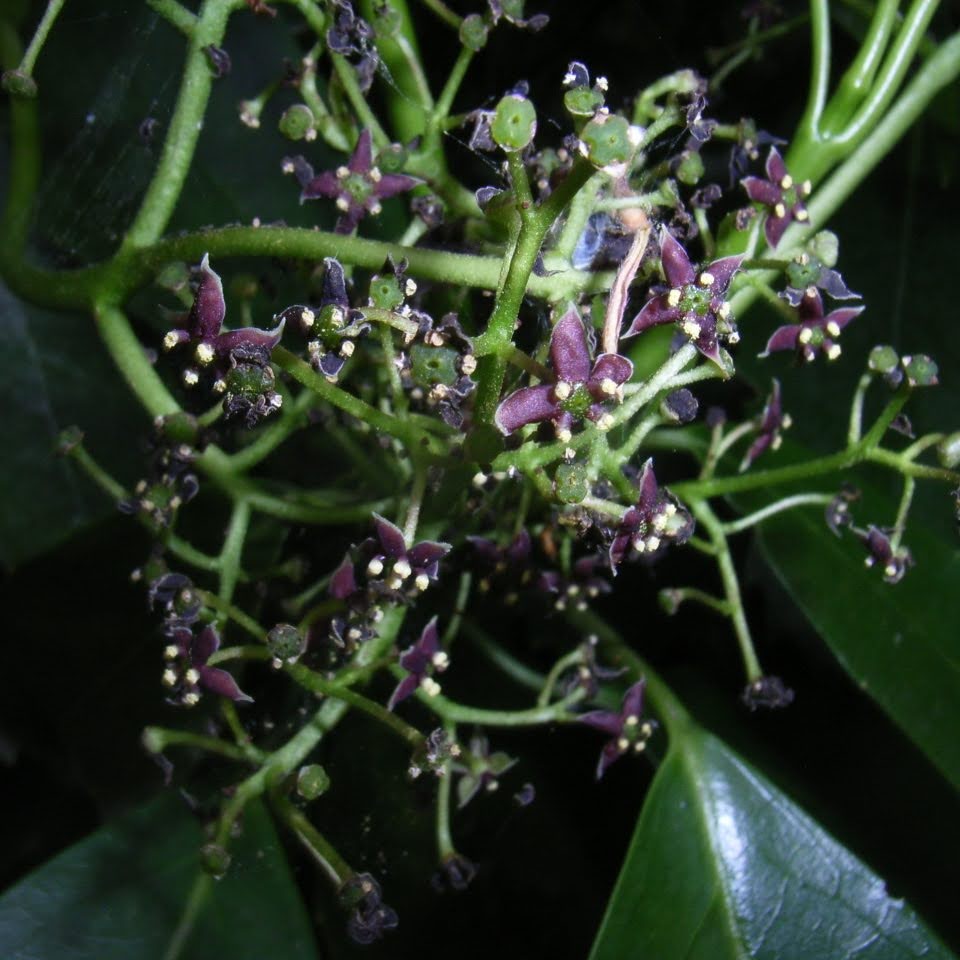
Aucuba japonica (in the narrow sense) blooms in spring, from March to April. It produces a conical inflorescence bearing numerous small, purplish-brown flowers. Both male and female flowers are about 1 cm in diameter and have four petals. The petals are oblong-ovate in shape with sharply pointed tips. Male flowers have four stamens with pale yellow anthers, while female flowers have a pistil in the center and no stamens.
The flowering period of Aucuba japonica is from March to May, and otherwise it is almost the same as Aucuba japonica (in the narrow sense). Aucuba japonica also has almost the same characteristics as Aucuba japonica (in the narrow sense).
It appears that the flowers have not evolved significantly from one variety to the next.
Aucuba flowers are only for tiny flies!?
As you can see, the flowers of the Aucuba japonica are purplish-brown and not particularly conspicuous, at least to humans. Furthermore, because they commonly grow in forests, they are even harder to spot. Of course, we can't say for sure without imagining the feelings and sensations of the insects that visit the flowers, but it seems that they are also quite inconspicuous to insects. Why is this the case?
A study that observed insects visiting for 33 hours found that while various types of insects such as flies, beetles, moths, bees, and caddisflies were observed, 88.6% were flies (Mochizuki & Kawakita, 2018). Furthermore, it was found that 68.6% of these were very small and inconspicuous flies belonging to the families Mycetophilidae and Sciaridae.
They are known to be abundant in forests because their larval stage involves feeding on mold and fungal mycelium. Therefore, it is reasonable to assume that they rely heavily on flies for pollination.
Research has revealed that many plant species besides Aucuba japonica rely on fungus gnats and black fungus gnats for pollination. Flowers of plants pollinated by these flies are generally flat, have short stamens, and are dark red in color. These plants all grow in forests, in environments with little light. Therefore, they cannot attract ordinary insects by using color to stand out, as is common with ordinary flowers. On the other hand, color vision is not currently known to be developed in fungus gnats. Therefore, they haven't evolved to make their flowers more conspicuous. Wouldn't it be considered very rational for these plants to rely on insects that are abundant in the forest to carry their pollen, without relying on color vision?
How do flowers attract flies? Why are they purplish-brown?
So, if that's the case, how do you attract fungus gnats?
While it's not fully understood, scent is thought to be important. Similarly, in the Euonymus family, which has similar flowers and relies on fungus gnats and black fungus gnats for pollination, they produce a very rare plant-derived scent substance called "acetoin." It's still unclear whether fungus gnats are truly attracted to this substance, but it seems highly likely that Aucuba japonica also attracts them with a scent substance.
However, if the goal is to attract insects with scent, wouldn't any dark color work, not just dark red? Upon further investigation, it has been discovered that dark red flowers have a structure that does not reflect ultraviolet light, which insects should be able to see. This makes them the least conspicuous color for insects. In other words, it is currently believed that dark red is the optimal color for keeping away unwanted insects other than fungus gnats.
It should be noted that no research has been conducted on Aucuba japonica var. japonica or Aucuba japonica var.
For some reason, only brown-eared bulbuls were eating the red berries of the Aucuba japonica plant!?
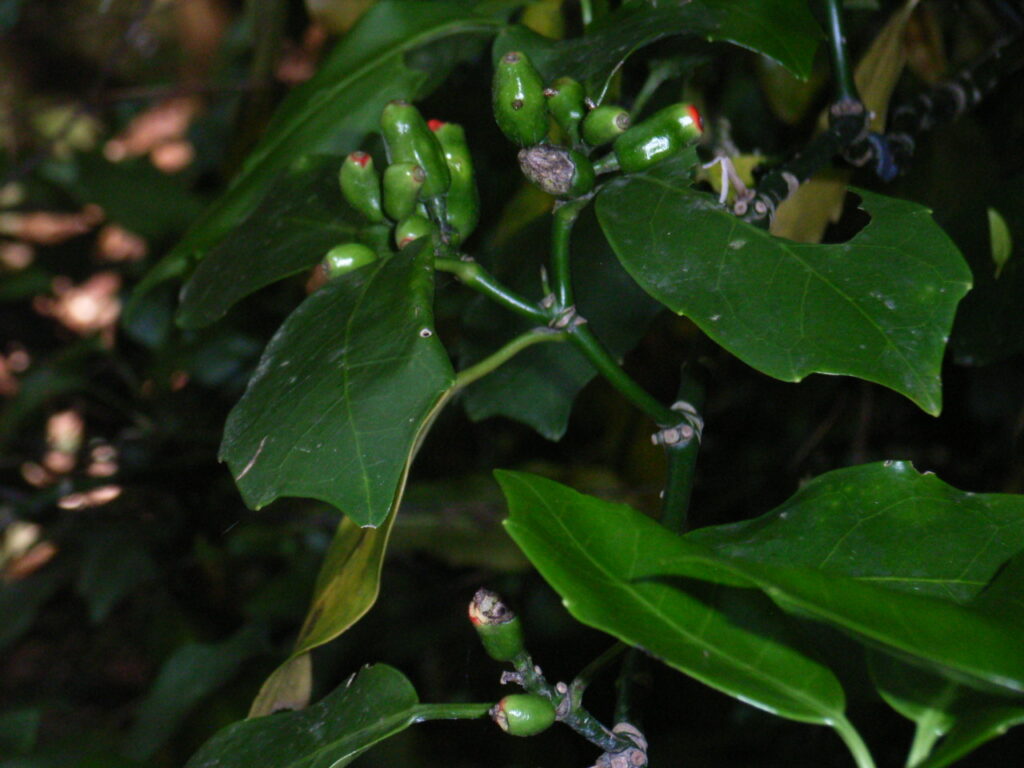
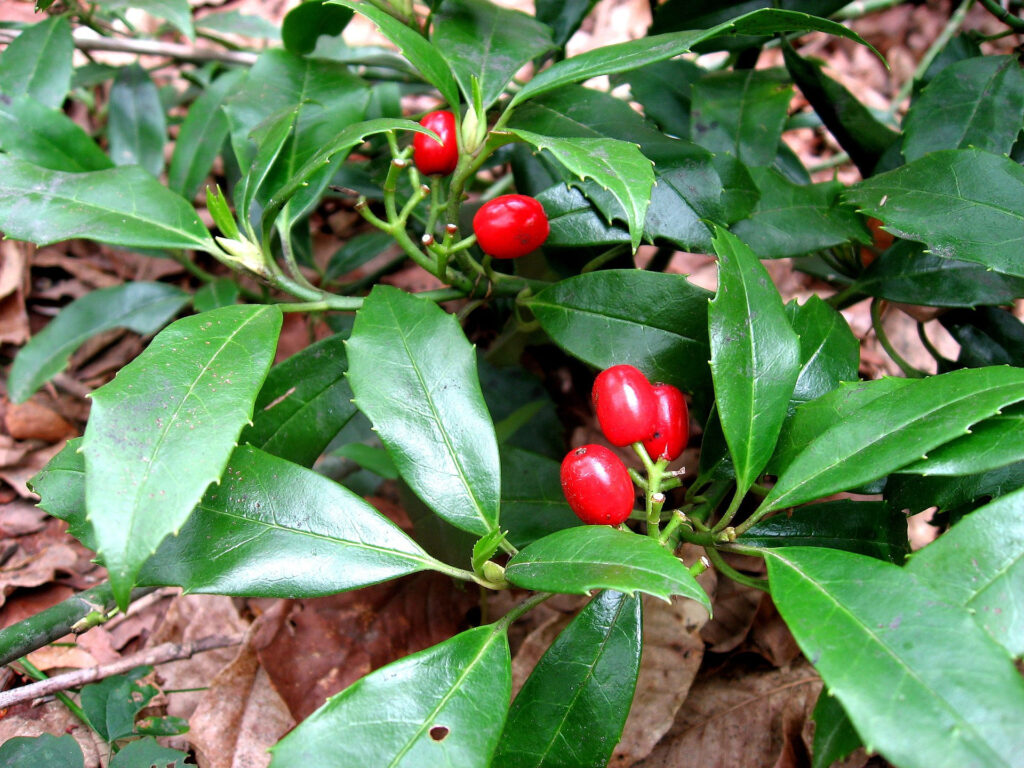
The fruits of Aucuba japonica are all drupe. They are oblong or ovate-oblong, 1.5-2 cm long, and ripen red from December to May. The surface is glossy, and there is a single seed inside. The seed is oblong, 1.3-1.5 cm long and 7-8 mm wide, with a groove in the center. The fruits remain on the branches for a long period, and flowers and fruits are often seen together.
What animals eat these very conspicuous red fruits and disperse their seeds?
Of the three varieties, *Aucuba japonica* has been studied in detail. There are two studies, both of which point out that it is mainly eaten by the brown-eared bulbul * Hypsipetes amaurotis * and the field mouse * Apodemus speciosus* (Yamaguchi and Hayashida, 2009; Nakagawa and Kitamura, 2017).
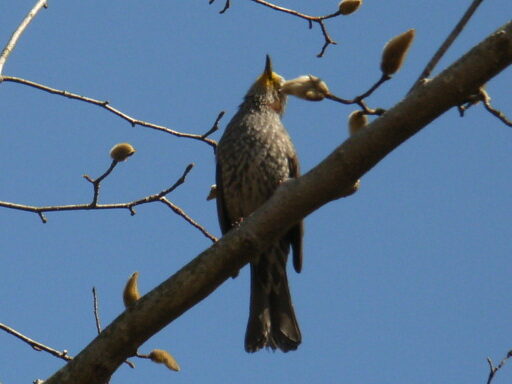
In particular, a study conducted at the Ishikawa Prefectural Forestry Experiment Station counted the number of fruits on 980 individual Aucuba japonica trees and recorded the number of fruits remaining on the trees once a week using an automatic camera (Nakagawa and Kitamura, 2017). The results showed that 45.21 TP3T of the fruits were eaten by bulbuls and 27.11 TP3T by field mice, with these two species accounting for 72.31 TP3T, while the remainder were consumed only slightly by numerous birds and mammals.
However, since the Japanese field mouse (Acer palmatum) was found to be damaging not only the fruit but also the seeds of Aucuba japonica (Yamaguchi and Hayashida, 2009), rodents are not considered to be effective seed dispersers of Aucuba japonica (Nakagawa and Kitamura, 2017). Therefore, it can be said that the brown-eared bulbul is the main seed disperser.
In late April, as the cherry blossoms finish blooming, it has been observed that brown-eared bulbuls, which previously fed on cherry blossom nectar, switch their diet to the fruits of the Japanese laurel.

But why is it only the brown-eared bulbul that eats the fruit of the Japanese laurel?
Unfortunately, the reason for this is not entirely clear. However, given that the fruits of Aucuba species are as wide as 8 mm, it is likely that only birds with large mouths would be able to eat them. It has also been pointed out that the pulp layer of Aucuba species is extremely thin compared to the seeds (Ueda, 1999), which makes it an unsuitable food source and suggests that the fruit may be a form of mimicry. Nevertheless, it is possible that only a limited number of species prefer to eat them as a food source.
Although not reflected in this study, the authors of this paper have observed thrushes such as the Blackbird, Pale Thrush, and Red-flanked Thrush feeding on the fruits of Aucuba japonica in the same study area. For some reason, this was not observed in this photographic experiment, but it is possible that birds other than the Brown-eared Bulbul also contribute to the dispersal of Aucuba japonica seeds to some extent.
On the other hand, you might be wondering what the situation is like with Aucuba japonica (in the narrow sense), which is widely found on Honshu.
Unfortunately, there are no studies yet that have examined the proportion of animals that ate the fruit, but there are records of the fruit being eaten by bulbuls, azure-winged magpies, thrushes, pale thrushes, starlings, pheasants, copper pheasants, and Japanese grosbeaks (Nakagawa and Kitamura, 2017). In a previous study in which bulbuls were experimentally fed the fruit, the seeds showed a germination rate as high as that of seeds from which the pulp had been artificially removed. Furthermore, since Aucuba japonica seeds have been found in the droppings of bulbuls captured in the wild, it is highly likely that bulbuls are indeed the main carriers of the seeds.
References
Higashi, Naoyoshi and Ino, Yoshio. 2003. Analysis of the clonal structure of *Aucuba japonica* populations using the AFLP method. Abstracts of the Annual Meeting of the Ecological Society of Japan 50: 259. https://doi.org/10.14848/esj.ESJ50.0_259_4
Hayashi, Masayuki. 2014. 1100 Tree Leaves Identified Through Real-Life Scans. Yama-kei Publishers, Tokyo. 759pp. ISBN: 9784635070324
Kume, Atsushi. 1996. Physiological and ecological studies on the adaptation of evergreen shrubs to heavy snow environments. [Doctoral dissertation, Waseda University]. https://doi.org/10.11501/3123934, http://www.forest.kyushu-u.ac.jp/staff/kume/KumeDoc1996rev.pdf
Kume, Atsushi. 1998. On the effects of heavy snowfall on flora. Waseda Biology 31: 19-24. ISSN: 0511-1978, http://www.forest.kyushu-u.ac.jp/staff/kume/TaniSnow.pdf
Ohashi, Hiroyoshi; Kadota, Yuichi; Murata, Hitoshi; Yonekura, Koji; and Kihara, Hiroshi. 2017. Wild Plants of Japan (Revised New Edition, Vol. 4 Malvaceae to Apocynaceae). Heibonsha, Tokyo. 348pp. ISBN: 9784582535341
Oi, Tetsuo. 2004. Distribution changes of widely distributed species in the Japanese archipelago as seen from chloroplast DNA polymorphisms. Koishikawa Botanical Garden Lecture Series Newsletter 26: 8-10.
Sakai, Akira. 1976. Adaptation of plants to snow cover. Low Temperature Science, Biology Edition 34: 47-76. ISSN: 0439-3546, https://hdl.handle.net/2115/17828
Tsusaka, Machiko, Yamamoto, Nobuko, and Ikeda, Hiroshi. 2011. A cytogeographical study of Aucuba japonica (Aucubaceae)—particularly regarding its distribution near boundaries. Naturalistae 15: 13-22. ISSN: 1349-7731, https://ous.repo.nii.ac.jp/records/3389
Mochizuki, K., & Kawakita, A. 2018. Pollination by fungus gnats and associated floral characteristics in five families of the Japanese flora. Annals of Botany 121(4): 651-663. ISSN: 0305-7364, https://doi.org/10.1093/aob/mcx196
Mogi, Toru; Ota, Kazuo; Katsuyama, Teruo; Takahashi, Hideo; Shirokawa, Shiro; Yoshiyama, Hiroshi; Ishii, Hidemi; Sakio, Hitoshi; and Nakagawa, Shigetoshi. 2000. Flowers Blooming on Trees: Polypetalous Flowers (Vol. 2, 2nd edition). Yama-kei Publishers, Tokyo. 719pp. ISBN: 9784635070041
Nakagawa, Koyo & Kitamura, Shunpei. 2017. The quantitatively effective seed disperser of the evergreen shrub *Aucuba japonica* in cedar forests of central Japan is the brown-eared bulbul. Bird Research 13: A55-A68. https://doi.org/10.11211/birdresearch.13.A55
Ueda, Keisuke. 1999. Unexpected Birds' Unexpected Preferences: Who Eats the Inconspicuous "Dry Fruit"?. In: Ueda, Keisuke (Ed.), Seed Dispersal: The Evolution of Mutual Aid Vol. 1: Seeds Carried by Birds (pp. 64-75). Tsukiji Shokan. ISBN: 9784806711926
Yamaguchi, Yoshihiko and Hayashida, Kosuke. 2009. Effects of gall formation by the gall midge Aucuba japonica on seedling regeneration. Journal of the Japanese Forestry Society 91(3): 159-167. https://doi.org/10.4005/jjfs.91.159