Japanese madder (Akane), European madder (Akane serrata), and Indian madder (Akane umbellata) all belong to the genus Rubiaceae, and are well-known for their roots being used primarily for red dyeing. The color "akane-iro" (madder red) is derived from the plant "akane," and is also frequently used in personal names. Even though its use has declined, it remains a well-known Japanese word. However, few people may be familiar with the plant itself. Furthermore, while the three species mentioned above are generally known in the dyeing industry, descriptions often confuse them considerably. When distinguishing these three species, the number of leaves growing from a single point, the thorns on the stem, and the color of the flowers are important. Although all three are used for dyeing, their histories differ significantly. This is likely due in part to the significant differences in the chemical composition of the three species. Because of these differences in composition, the "akane-iro" of Japan is actually different from the "akane-iro" of other countries. This article will explain the classification, uses, and chemical composition of the genus Rubiaceae.
- What are madder, European madder, and Indian madder?
- What are the differences between Japanese madder, European madder, and Indian madder?
- What are the differences in uses between the Japanese madder (Rubia japonica), European madder (Rubia nigrofasciata), and Indian madder (Rubia japonica)? Did they actually decline during the Heian period?!
- What are the differences in composition and color between Japanese madder, European madder, and Indian madder?
- References
What are madder, European madder, and Indian madder?
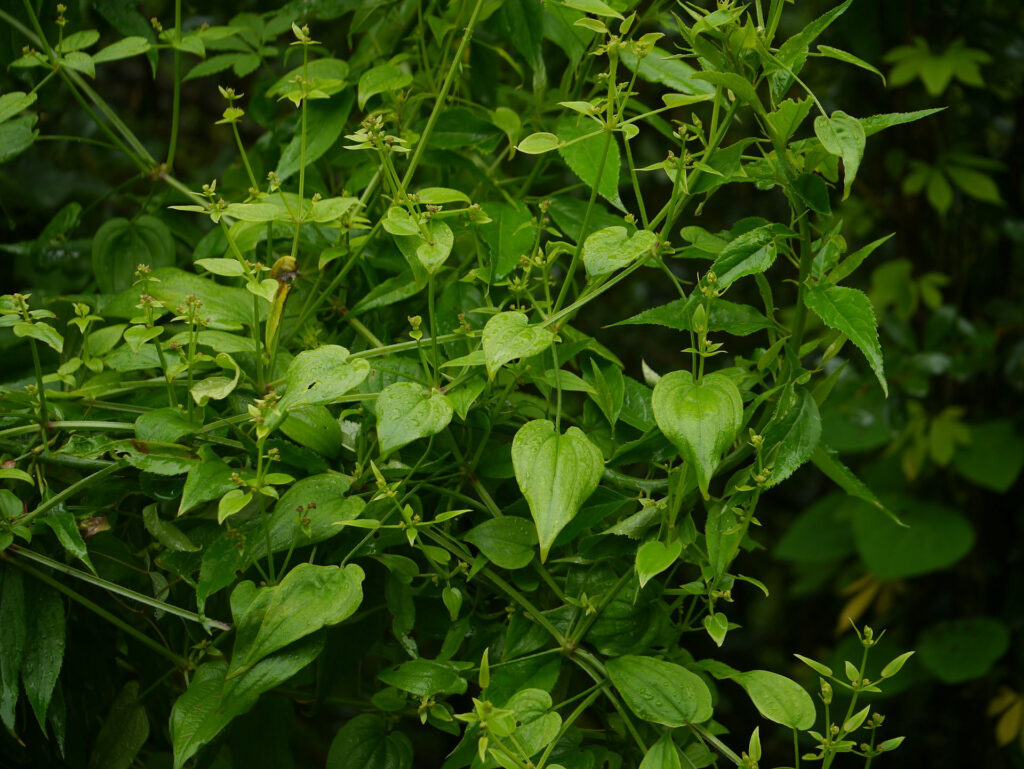
Rubia argyi, also known as Japanese madder, is a climbing perennial herb distributed in Honshu, Shikoku, and Kyushu in Japan; as well as in Korea, Taiwan, and southern China, growing in forest edges and thickets (Kanagawa Prefecture Flora Survey Association, 2018). In Japan, it has been used for dyeing. Although its use has declined, it can still be commonly found in the wild.
Rubia tinctorum, also known as European madder, is a climbing perennial plant distributed in Europe and North Africa. It was cultivated for dyeing purposes throughout the world, mainly in West Asia, Central Asia, and South Asia, and has since escaped cultivation in various regions (RBG Kew, 2023). In Japan, the plant itself is rarely cultivated, mainly in botanical gardens.
Indian madder (Rubia manjith) is a climbing perennial plant distributed in southern China, Nepal, and India. It has been cultivated primarily for dyeing purposes, mainly in its native regions.
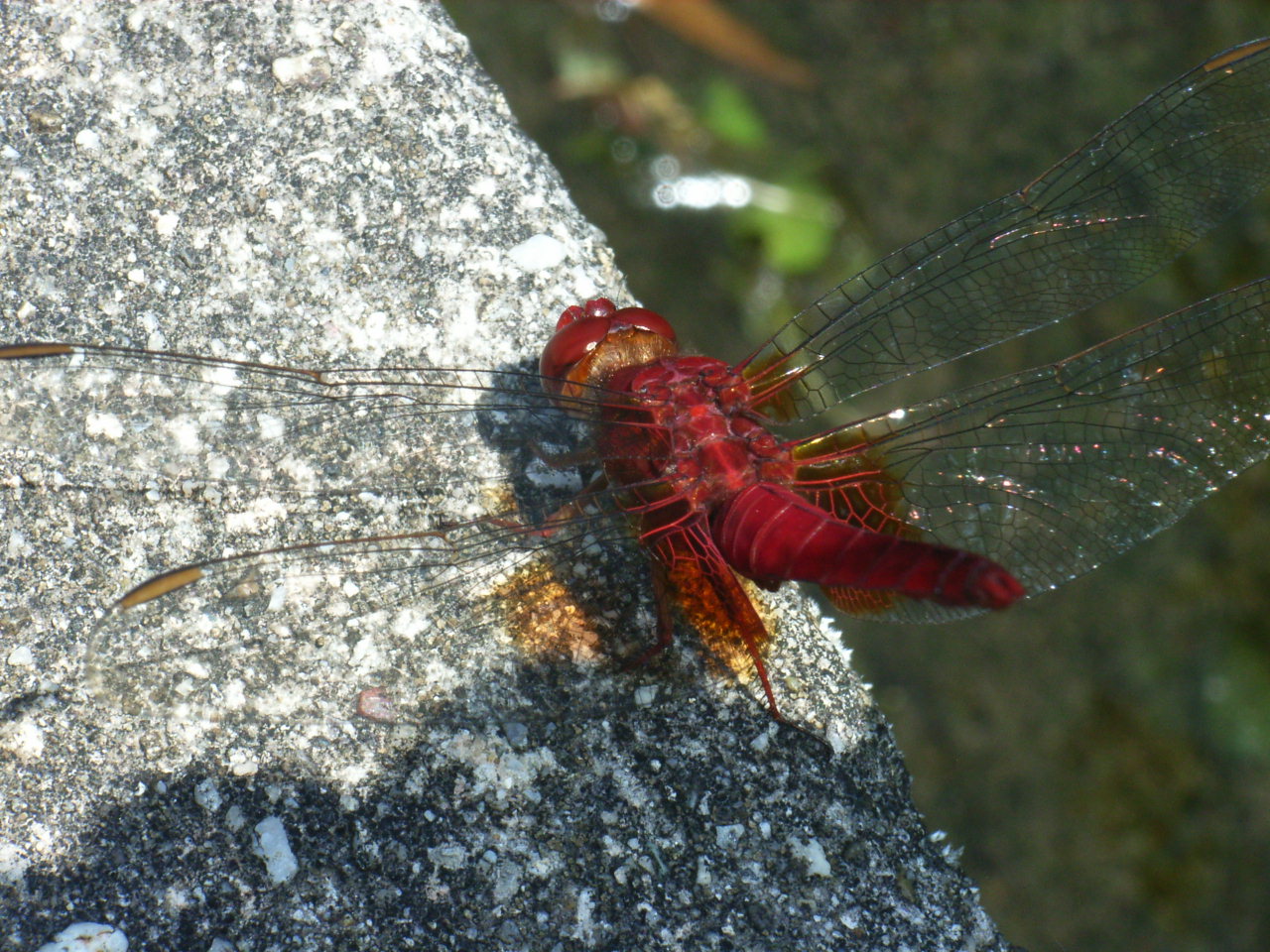
Both belong to the genus Rubia in the family Rubiaceae, and it is well known that their roots have been used primarily for dyeing red colors. In fact, European madder was used as a food additive in Japan until 2004. The color "akane-iro" (madder red) is derived from the plant "akane," and it is also a common personal name. Even though its use has declined, it remains a well-known Japanese word. The names of insects such as "akiakane" (autumn madder) and "natsuakane" (summer madder) are derived from the color, but these names would not have been given without akane.
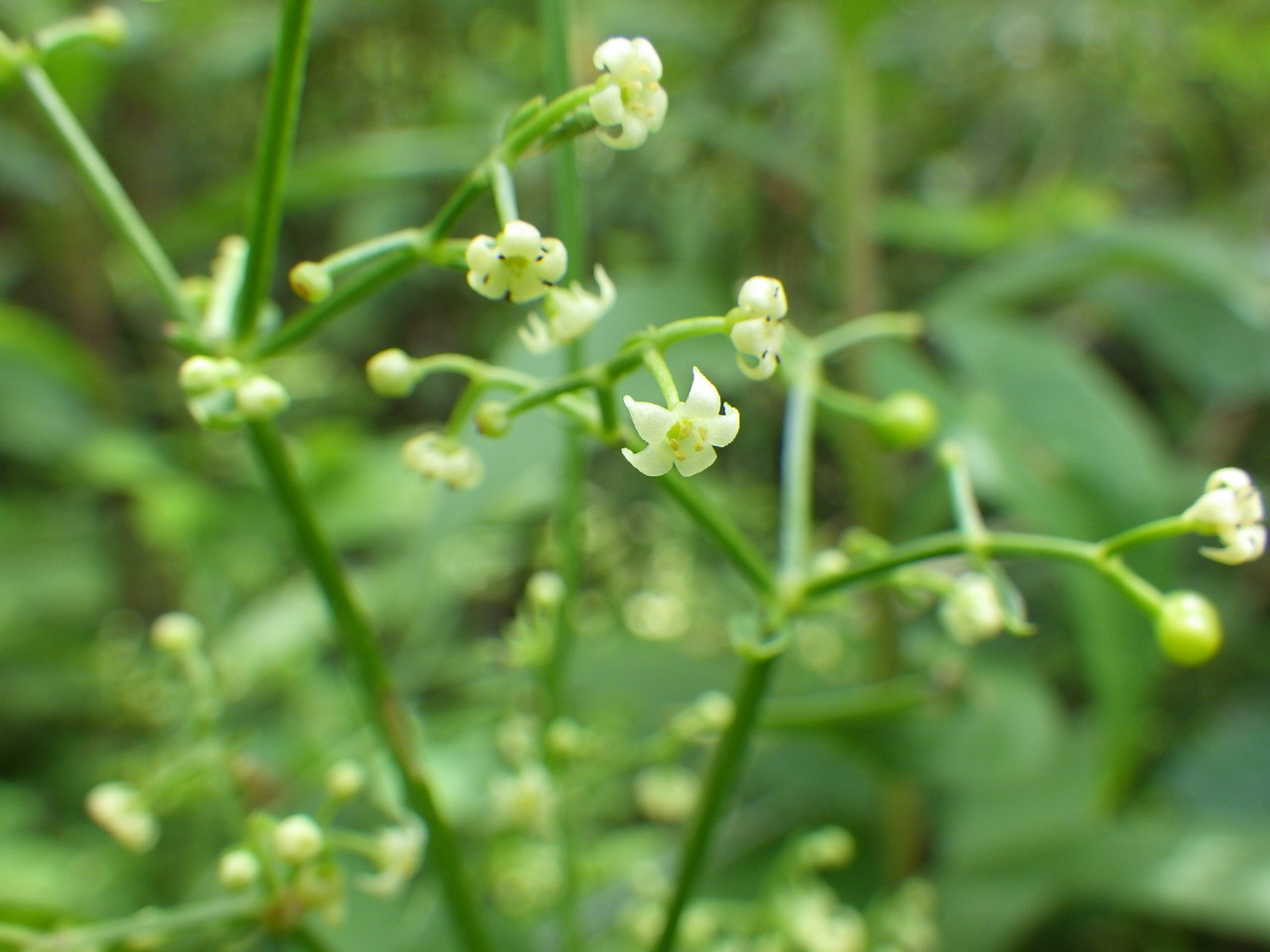
However, few people may know about madder as a plant. The genus madder is characterized by its stipules, which are the same shape as the leaves, appearing as if 4 to 10 leaves are arranged in a whorl, its flowers are stalked, its corolla is 5-lobed, and its fruit is a siphon.
While the three types mentioned above are generally known in the dyeing and finishing industry, there is a considerable amount of confusion in their descriptions. In particular, what is actually madder is often referred to simply as "madder."
What are the differences between Japanese madder, European madder, and Indian madder?
Biologically, *Sympetrum frequens*, *Sympetrum parvulum*, and *Sympetrum indica* are completely different species (Wu et al., 2011).
As a fundamental premise, as mentioned above, the distribution differs in Japan, Europe, and South Asia, and originally, the types of dyes used varied depending on the region.
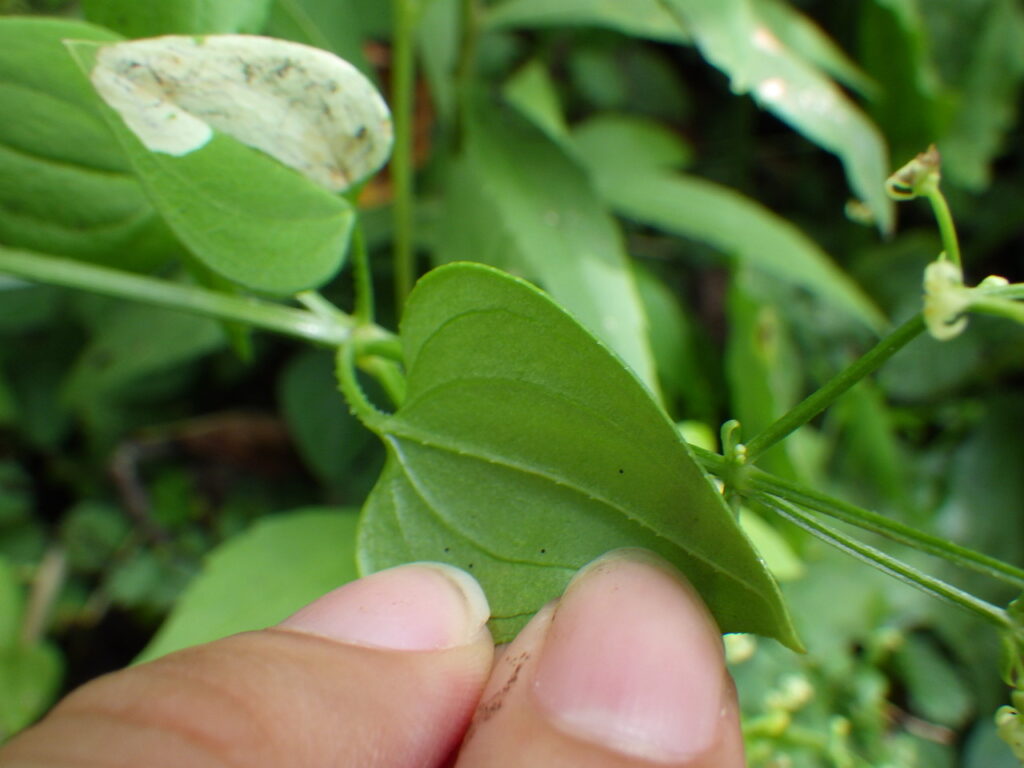
Morphologically, all members of the genus Sympetrum have leaves (more precisely, leaves and stipules) arranged in whorls, but while Sympetrum frequens and Sympetrum indica have four leaves in their whorls, Sympetrum parvifolium has six.
Furthermore, regarding the leaf veins, there is a difference between madder and Indian madder, which have palmate venation (veining that runs palmately from the base of the leaf), and European madder, which has pinnate venation (the typical venation composed of a main vein and lateral veins).
The difference between madder and Indian madder is that madder has downward-pointing thorns on its stem, while Indian madder does not.
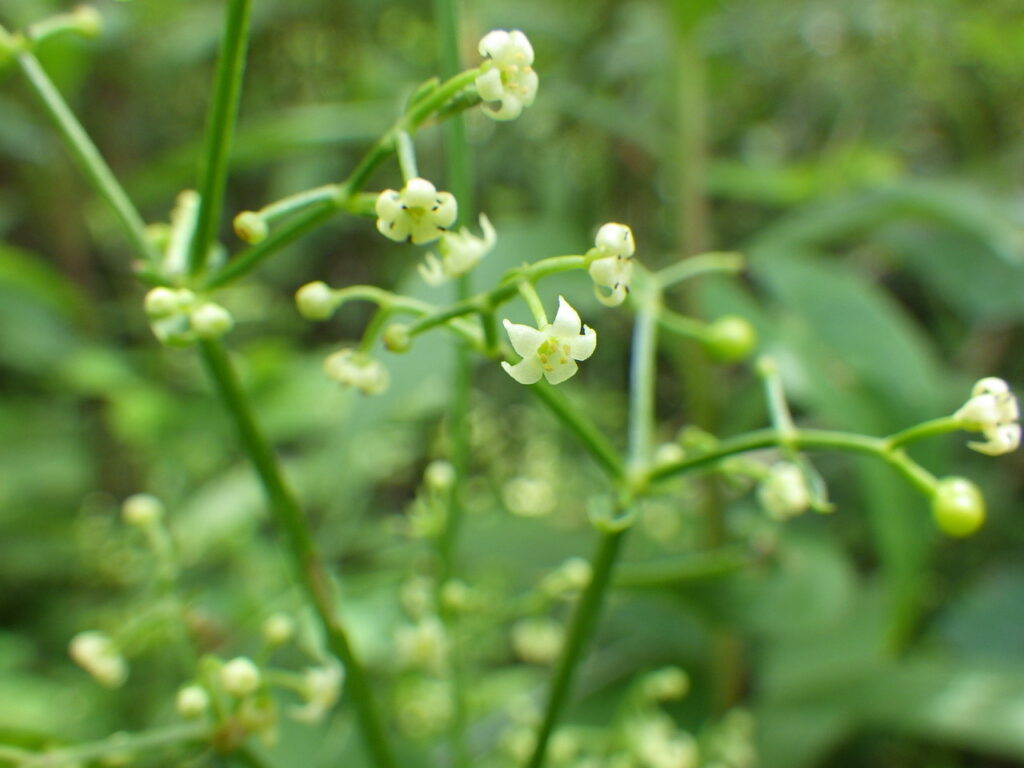
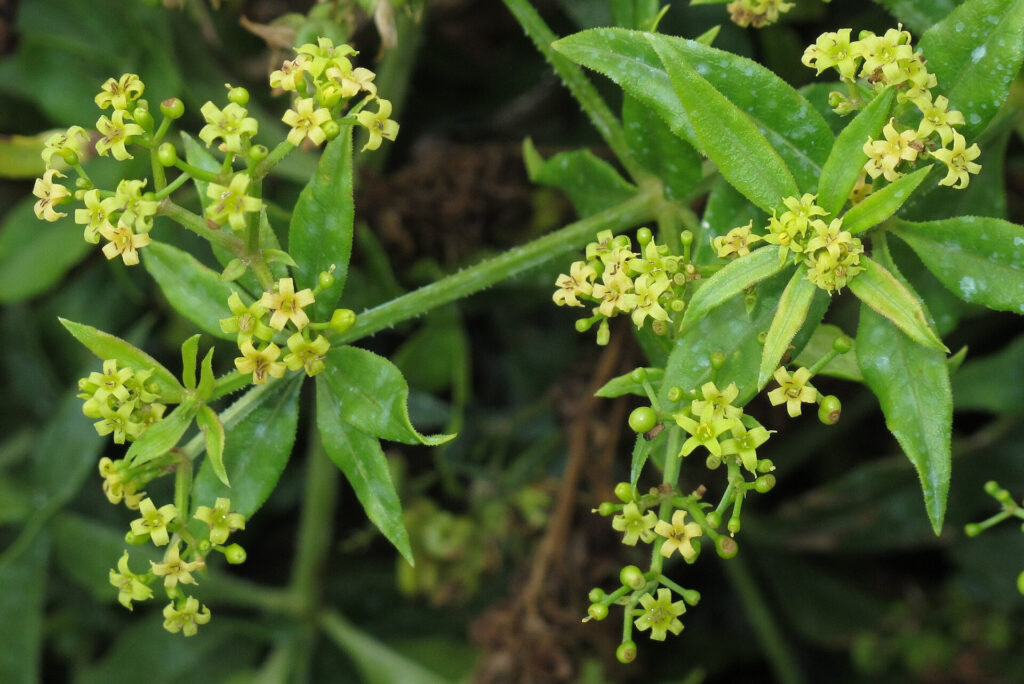
Furthermore, regarding the flowers, there is a difference in that the flowers of *Rubia japonica* are white, while those of *Rubia nigricans* are red.
Based on the above, you should be able to distinguish between the three species as plants.
In addition, Japan has other species such as Rubia cordifolia var. lancifolia and Rubia hexaphylla, but both have leaves arranged in whorls of 6 to 8, and Rubia jesoensis can be distinguished from it by its upright growth rather than its climbing habit.
What are the differences in uses between the Japanese madder (Rubia japonica), European madder (Rubia nigrofasciata), and Indian madder (Rubia japonica)? Did they actually decline during the Heian period?!
Russula madder, Rubia verna, and Rubia tinctoria have all historically been used to extract pigment from their roots and dye cloth. The name "Akane" comes from the Japanese word for "red root." Its use seems to have developed independently in Japan, Europe, and India. However, nowadays, the use of these plants simply for dyeing cloth has declined.
Madder is one of the oldest red dyes used in Japan. It is already mentioned in written records in the Kojiki (compiled in 712), which was written during the Nara period (Gocho et al., 2023), but it is highly likely that it was used even earlier. Its color changes to various shades through chemical reactions; it becomes reddish-purple with lye mordant, scarlet with aluminum mordant, and red with the combined use of alkali and aluminum (Toko and Komashiro, 2007). During the Heian period, it was also used to dye armor and helmets, perhaps with the aim of boosting morale.
However, the madder dyeing technique was time-consuming and difficult, so it declined from around the late Heian period, and dyeing shifted to safflower (Carthamus tinctorius var. spinosus) and sappanwood (Biancaea sappan). In other words, the Japanese method of dyeing with madder has now become a "lost technology."
Rubia verniciflua has been cultivated as a dye in Central Asia and Egypt since ancient times, with records dating back to 1500 BC. Its use in the tomb of Pharaoh Tutankhamun is a particularly noteworthy example (Pfister, 1937). Records of its use in Europe are later, but the oldest known use is in textiles unearthed from the tomb of Merovingian queen Arnegundis in Paris, dating from 565 to 570 AD. The British New Model Army (the army of the English Civil War) also used it.
When mixed with clay and treated with alum and ammonia, it becomes "madder lake." Japanese madder produced a crimson color, but the color dyed with European madder is called "garance."
As for madder, it was used for a long time, perhaps because its production method was simpler than that of madder, and it was cultivated until the 19th century. However, in 1869, a German chemist chemically synthesized alizarin, the main component of madder dye, and from 1871 onwards it began to be produced industrially, leading to a decline in the cultivation of madder.
Although alizarin has largely been replaced by quinacridone pigment, a more lightfast pigment developed by DuPont in 1958, it has now found a use in biochemical assays to quantitatively determine the presence or absence of calcification by osteogenic cells using colorimetric methods (Smith et al., 2018). In other words, the presence or absence of bone can be confirmed using alizarin. This can be considered an important application.
In Japan, the red pigment from madder was used as a food additive under the name "madder dye," but it was banned in 2004 due to suspected carcinogenicity.
Finally, regarding Indian madder, cotton dyed with madder has been unearthed from the ruins of Mohenjo-daro (3000 BC) in India, indicating its use since ancient times. It is known as "manjishtha" in Sanskrit and was used by monks to dye their clothes.
What are the differences in composition and color between Japanese madder, European madder, and Indian madder?
Are there differences in the pigment components extracted from madder, European madder, and Indian madder?
There is a significant difference between these two (Oshita & Sakamoto, 2014).
Madder contains purpurin and mundistin as its main components, and pseudopurpurin as a secondary component.
Rubia vernalis contains alizarin as its main component, and rubiadin and alizarin glycosides as secondary components.
Indoor madder contains alizarin and purpurin, and its main component is anthraquinone-based pigment.
Therefore, there are also differences in color.
In the case of madder and rufous-green madder, the fibers are dyed red, while in madder, they are dyed a yellowish-red.
Considering this, it's safe to say that while both Japanese madder red and Western garance are in the red family, they are distinct.
References
Hiromi Gocho, Midori Muta, Mai Tsukazaki, and Miyuki Shiobara. 2023. Dyeing Methods and Color Characteristics in the Heian Period. Annual Report of the Institute for Literary Studies, Women's University 42: 1-12. ISSN: 0910-0679, https://doi.org/10.34388/1157.00002449
Kanagawa Prefecture Flora Survey Association. 2018. Kanagawa Prefecture Flora 2018 (Electronic Edition). Kanagawa Prefecture Flora Survey Association, Odawara. 1803pp. ISBN: 9784991053726
Oshita, Koji & Sakamoto, Akane. 2014. A Study on the Dyeing Behavior of Madder Dye. Journal of Cultural Heritage Informatics, Kibi International University Center for Cultural Heritage Research Bulletin 11: 21-24. ISSN: 1349-1628, https://www1.kiui.jp/pc/bunkazai/kiyo11/04_oshita_pp21-24.pdf
Pfister, R. 1937. Les textiles du tombeau de Toutankhamon. Revue des Arts Asiatiques 11(4): 207-218. ISSN: 0995-7510, https://www.jstor.org/stable/43475067
RBG Kew. 2023. The International Plant Names Index and World Checklist of Vascular Plants. Plants of the World Online. http://www.ipni.org and https://powo.science.kew.org/
Smith, WL, Buck, CA, Ornay, GS, Davis, MP, Martin, RP, Gibson, SZ, & Girard, MG 2018. Improving vertebrate skeleton images: fluorescence and the non-permanent mounting of cleared-and-stained specimens. Copeia 106(3): 427-435. https://doi.org/10.1643/CG-18-047
Toko, Yukiko & Komashiro, Motoko. 2007. Natural red dyes. Journal of Life Engineering Research 9(1): 136-139. http://hdl.handle.net/10083/3267
Wu, ZY, Raven, PH, & Hong, DY (Eds.). 2011. Flora of China (Vol. 19 Cucurbitaceae through Valerianaceae, with Annonaceae and Berberidaceae). Science Press, Beijing, and Missouri Botanical Garden Press, St. Louis. ISBN: 9781935641049