Both Tibouchina urvilleana and Tibouchina urvilleana belong to the Melastomataceae family. Tibouchina urvilleana is particularly well-known and, although it is a southern species, is relatively cold-hardy and is commonly cultivated in Honshu. In horticulture, Tibouchina urvilleana is sometimes called "Tibouchina," which is a source of confusion. Google Image Search also shows both species mixed together. Therefore, it may be difficult to distinguish between them. However, the two are completely different species: Tibouchina urvilleana is a native species, while Tibouchina urvilleana is a cultivated variety. Morphologically, they can be distinguished by the color of their petals and stamens. This article will explain the classification of Tibouchina urvilleana and Tibouchina urvilleana.
What are Tibouchina and Tibouchina urvilleana?
Melastoma candidum, also known as wild peony, is distributed in the southwestern islands of Japan (south of Amami Oshima), southern China, Taiwan, Indonesia, and the Philippines. It is a shrub that grows in open fields, grasslands, shrublands, woodlands, sparse forests, bamboo groves, and along mountain trails (Wu et al., 2007). Globally, many consider it to be the same species as Melastoma malabathricum, in which case its distribution extends to Southeast Asia, South Asia, and Australia (RBG Kew, 2023).
Pleroma urvilleanum, also known as the purple purplish-green peony, is native to Brazil and has naturalized in Central America. It is cultivated as an ornamental plant worldwide, including in Japan (RBG Kew, 2023). In Japan, the scientific name Tibouchina urvilleana is still used in Ylist and the Japanese Wikipedia, but globally, based on molecular phylogenetic analysis, it is considered a synonym (former scientific name) (Guimarães et al., 2019). Furthermore, the scientific name Tibouchina semidecandra corresponds to "Kobano-shikon-nobotan" and is a different species. Globally, Pleroma semidecandrum is the more common name for this plant.
All of these belong to the Melastomataceae family, and Tibouchina urvilleana, in particular, is well-known. Although it is a southern species, it is relatively cold-hardy and can be commonly seen cultivated in Honshu. 'Cote d'Azur', a dwarf variety particularly suited for potted plants, is a frequently available cultivar.
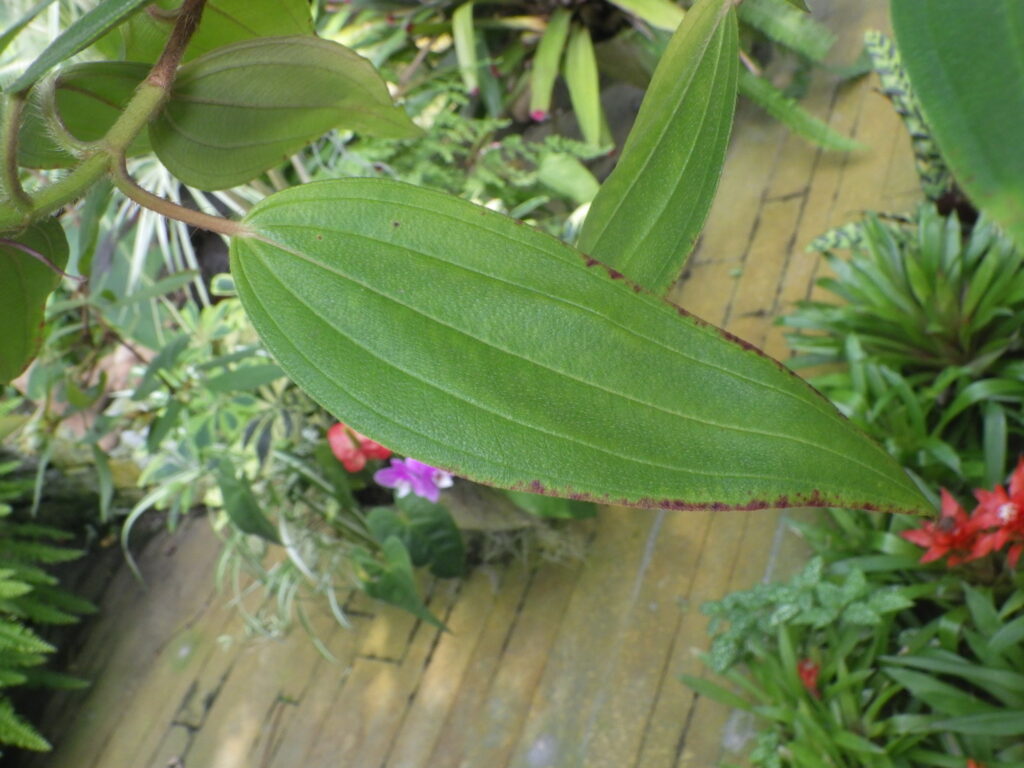
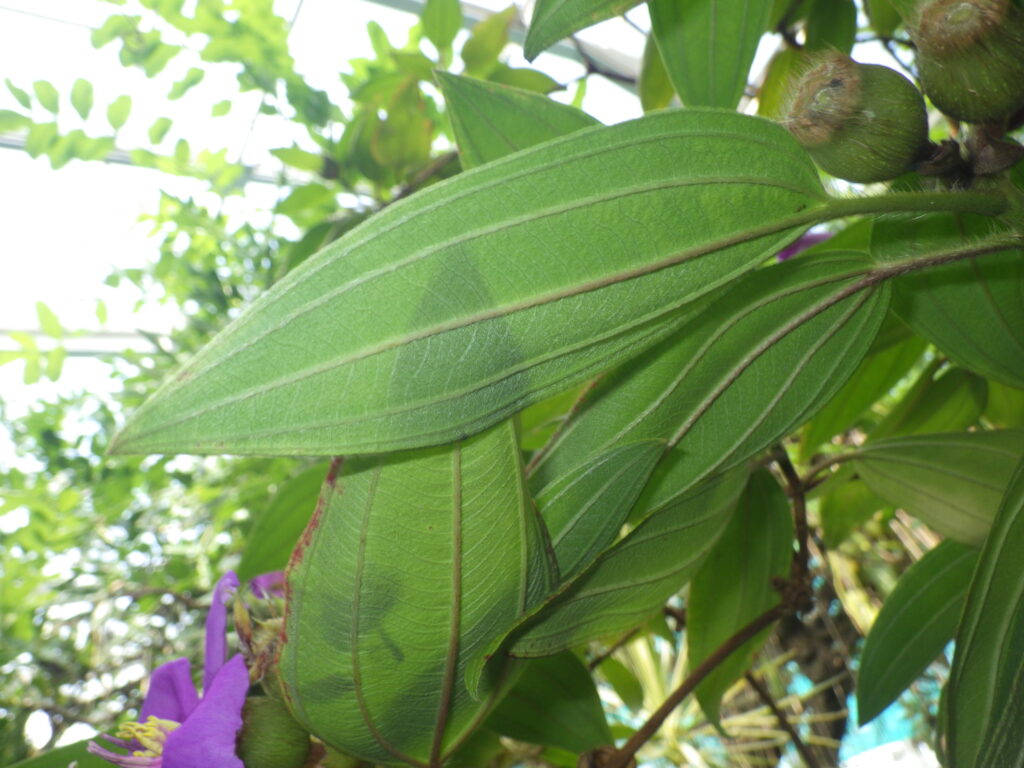
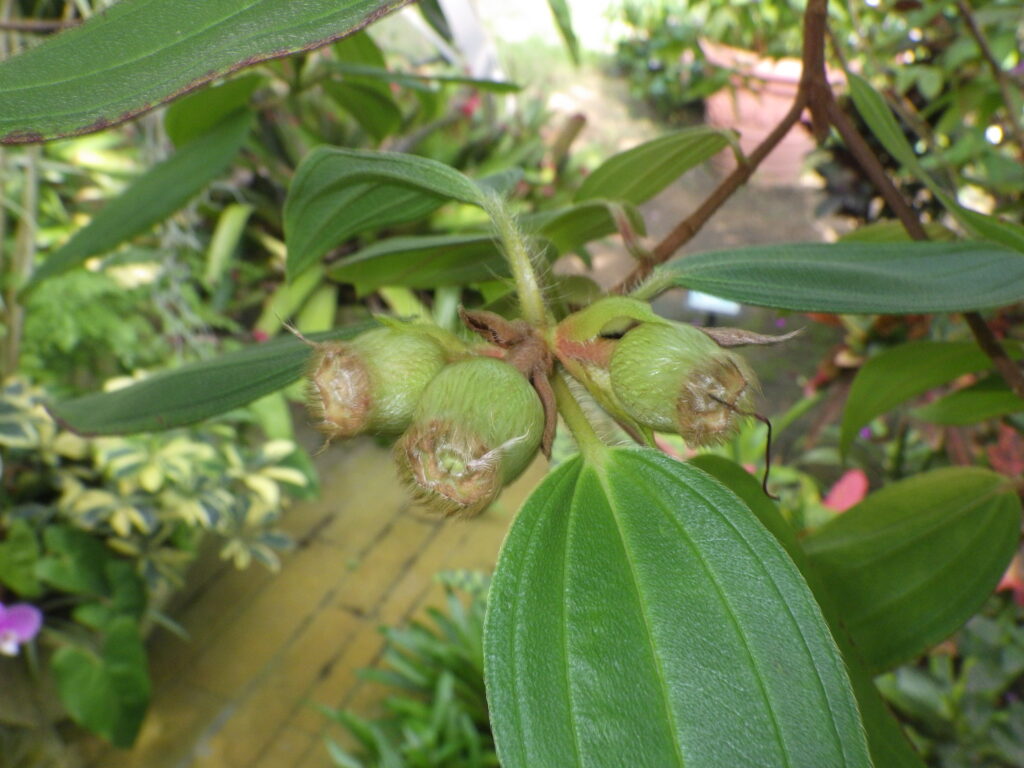
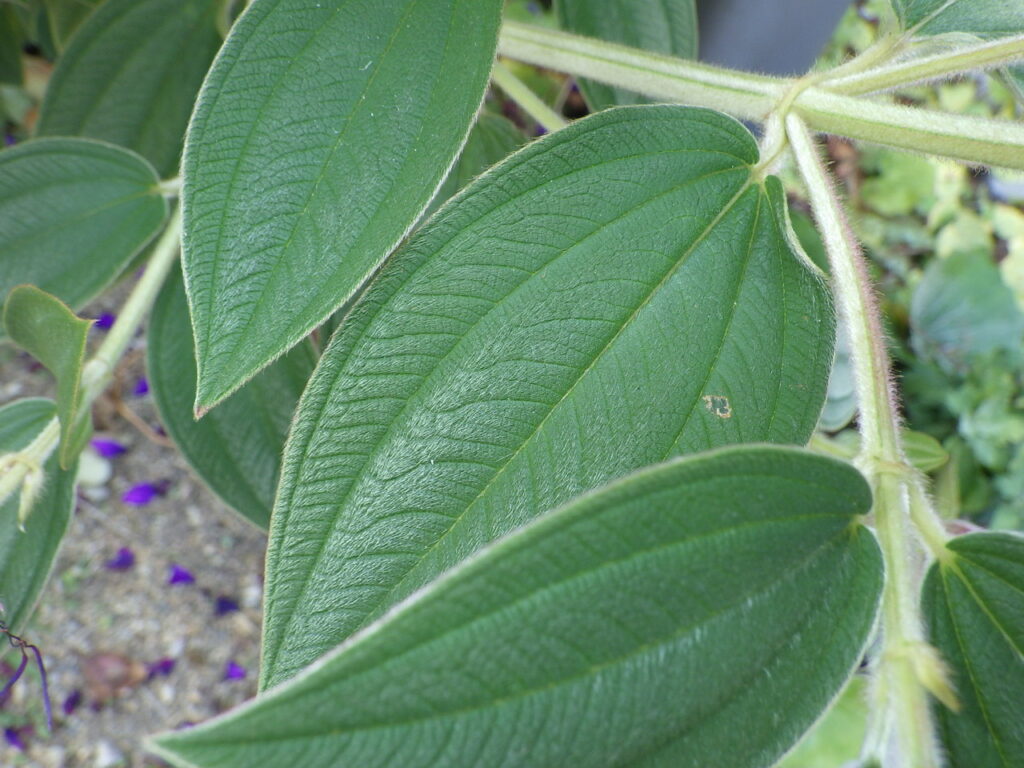
Common characteristics of species belonging to the Melastomataceae family include two types of ovate to ovate-elliptic leaves, palmate venation, abundant hairs, and a glossy appearance.
In horticulture, *Tibouchina urvilleana* is sometimes simply called "Tibouchina," which can be confusing. Even Google Image Search shows both species mixed together. Therefore, distinguishing between them can be difficult.
What is the difference between Tibouchina and Tibouchina urvilleana?
However, Tibouchina and Tibouchina urvilleana are completely different species (Spencer, 2002; Wu et al., 2007).
In terms of classification, *Tibouchina* belongs to the genus *Tibouchina*, while *Tibouchina urvilleana* belongs to the genus *Tibouchina urvilleana*.
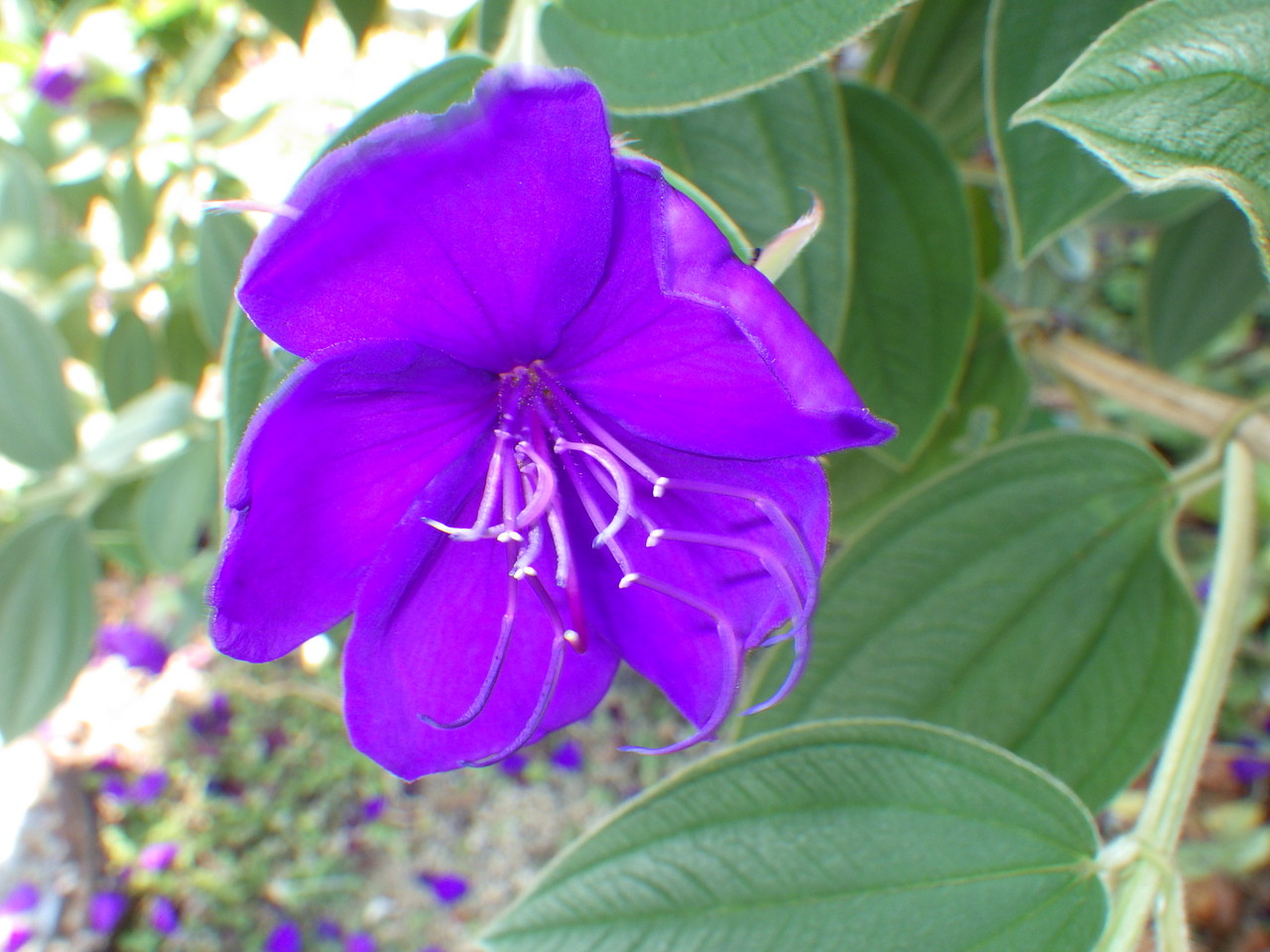
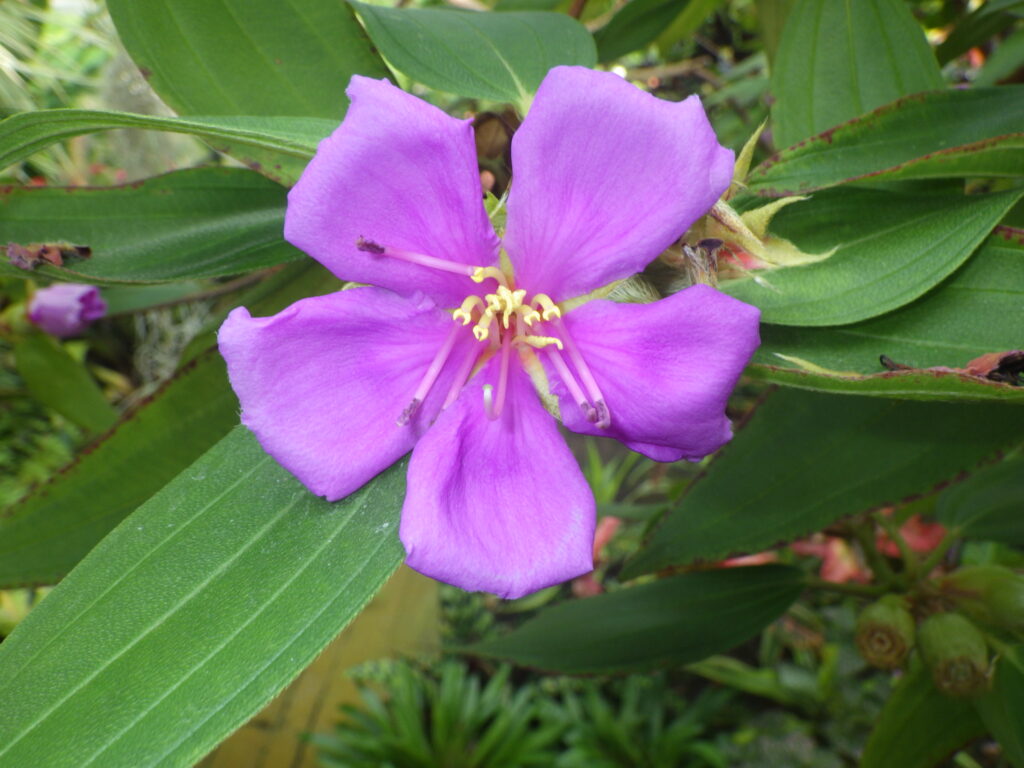
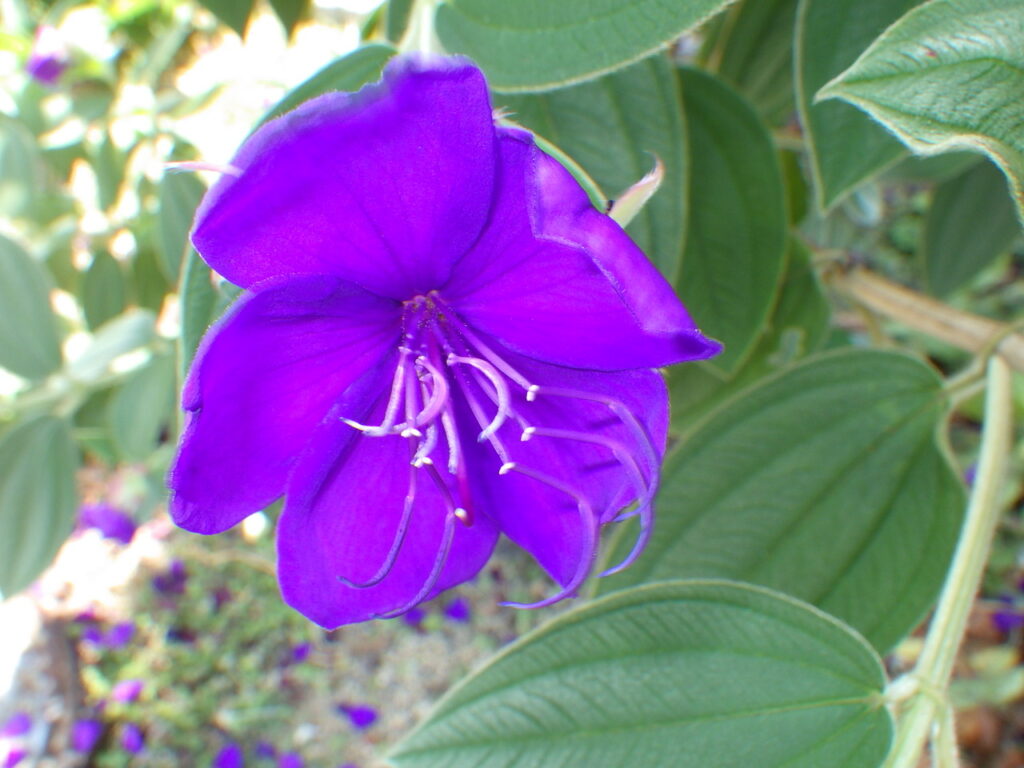
The specific difference is that the flowers (petals) of Tibouchina japonica are pink, while those of Tibouchina urvilleana are a deep purple. This is as the Japanese name "Shikon-nobotan" (purple-blue wild peony) suggests.
This alone is a significant difference, but there are other differences as well.
It is known that the stamens of plants in the Melastomataceae family consist of two types: "short stamens" and "long stamens." The long stamens have a unique structure in which they bend in a straight line midway due to the presence of a "tubercle."
Regarding the stamens, in Tibouchina japonica, the short stamens are yellow, and the long stamens are also yellow up to the nodule, whereas in Tibouchina urvilleana, both the short and long stamens are entirely purple.
Therefore, by focusing on this point, it should be possible to distinguish between different varieties even if there are variations in the color of the petals.
As mentioned above, in Japan, wild specimens of Tibouchina can be found in the southwestern islands, while Tibouchina urvilleana are usually only found as cultivated plants.
When distinguishing between Tibouchina japonica and Tibouchina kotoensis, the difference is that Tibouchina japonica has five clearly visible leaf veins, with two more located very close to the edge of the leaf, while Tibouchina kotoensis has only three prominent leaf veins, with the two located very close to the edge barely visible.

Are there any other similar species?
There is a variety of Tibouchina f. albiflorum with white petals, and Tibouchina var. alessandrense, an endemic variety of Kita Iwo Jima, is also known for its recurved petals.
References
Guimarães, PJF, Michelangeli, FA, Sosa, K., & de Santiago Gómez, JR 2019. Systematics of Tibouchina and allies (Melastomataceae: Melastomateae): a new taxonomic classification. Taxon 68(5): 937-1002. https://doi.org/10.1002/tax.12151
RBG Kew. 2023. The International Plant Names Index and World Checklist of Vascular Plants. Plants of the World Online. http://www.ipni.org and https://powo.science.kew.org/
Wu, ZY, Raven, PH, & Hong, DY (Eds.). 2007. Flora of China (Vol. 13 Clusiaceae through Araliaceae). Science Press, Beijing, and Missouri Botanical Garden Press, St. Louis. ISBN: 9781930723597
Spencer, R. 2002. Melastomataceae. In: R. Spencer (Ed.), Horticultural Flora of South-eastern Australia: The identification of garden and cultivated plants (Vol. 3 Flowering plants. Dicotyledons. Part 2). University of New South Wales Press. ISBN: 9780868406602, https://hortflora.rbg.vic.gov.au/taxon/1d6e97d2-21dc-4049-a530-ed8b1a76755d/key