Lobelia (also known as blue-flowered bellflower), Lobelia sessilifolia, and Lobelia sessilifolia are all members of the Campanulaceae family, and are characterized by their blue flowers and bilaterally symmetrical blooms. They are commonly cultivated in gardens, especially in horticulture. However, these species are often confused in image searches. In reality, they are completely different species with distinct flower shapes, growth patterns, and leaf characteristics. This article will explain the classification and morphology of the Lobelia genus.
What are Lobelia (Lobelia chinensis), Lobelia chinensis, and Lobelia sessilifolia?
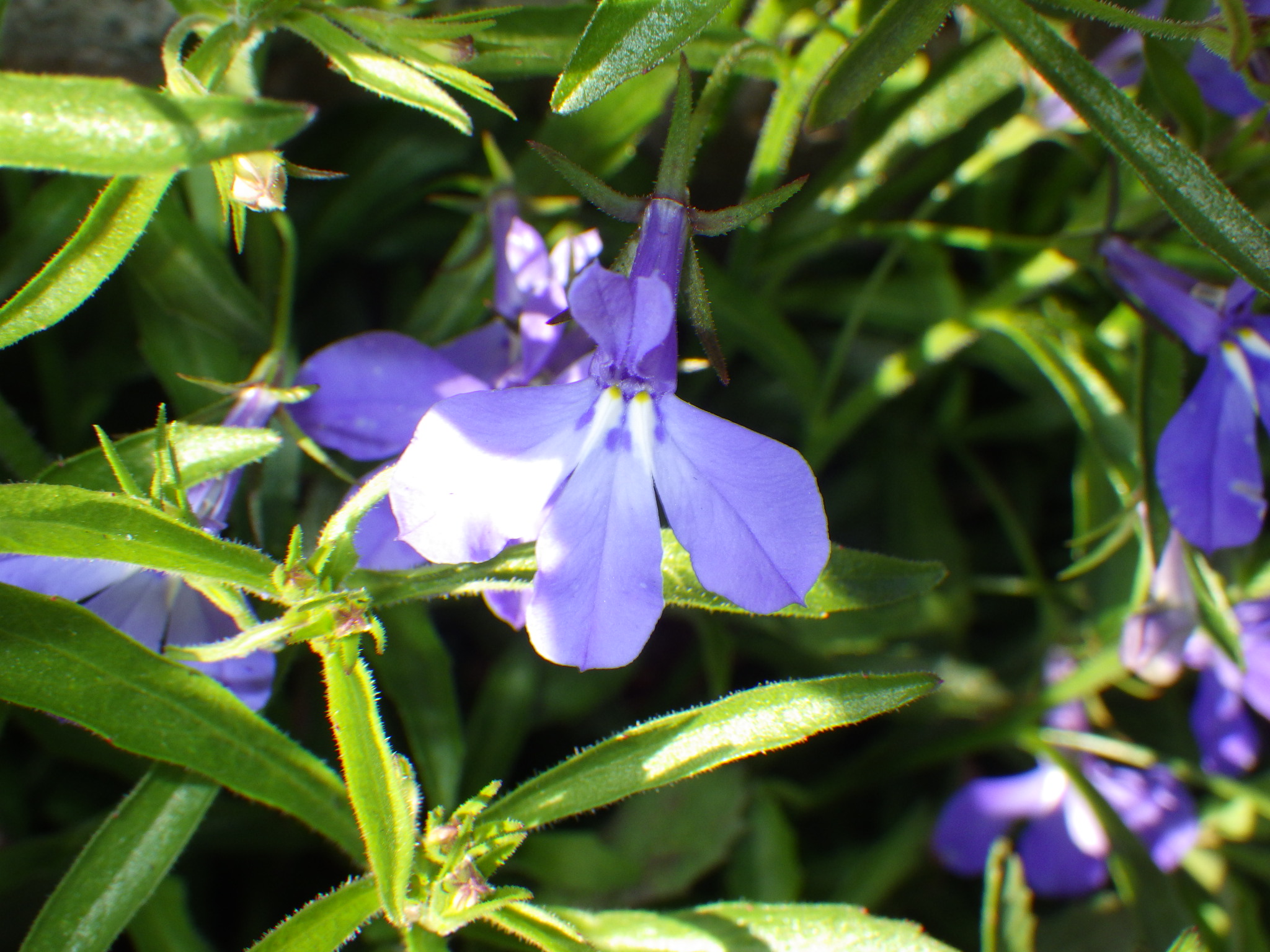
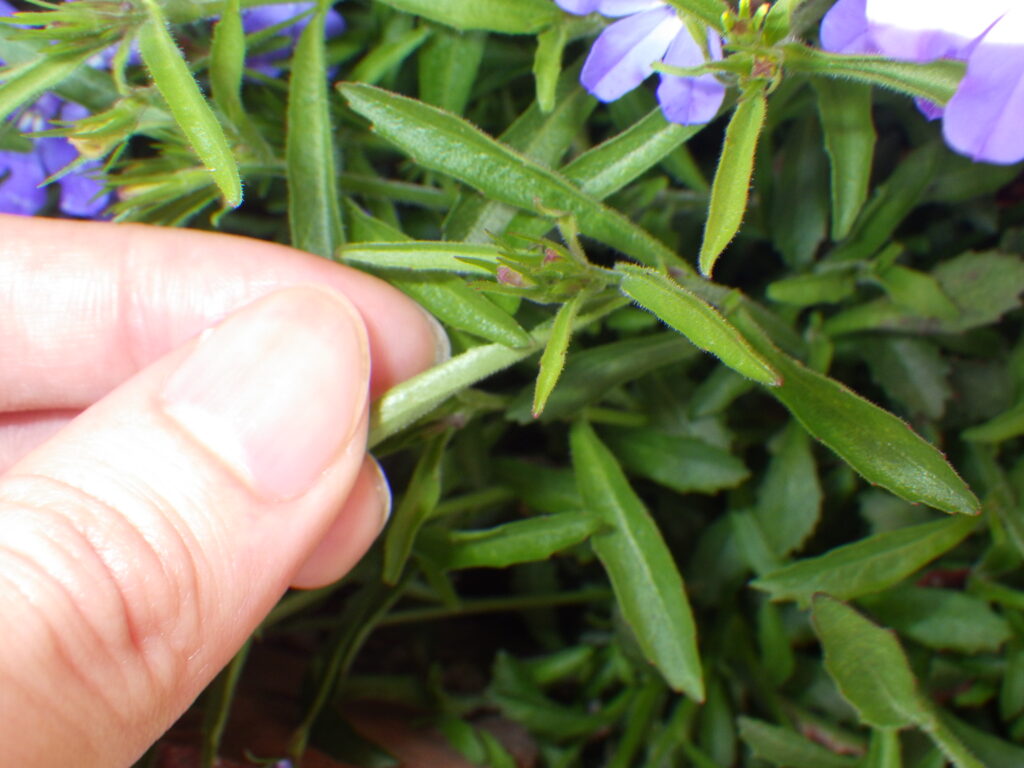
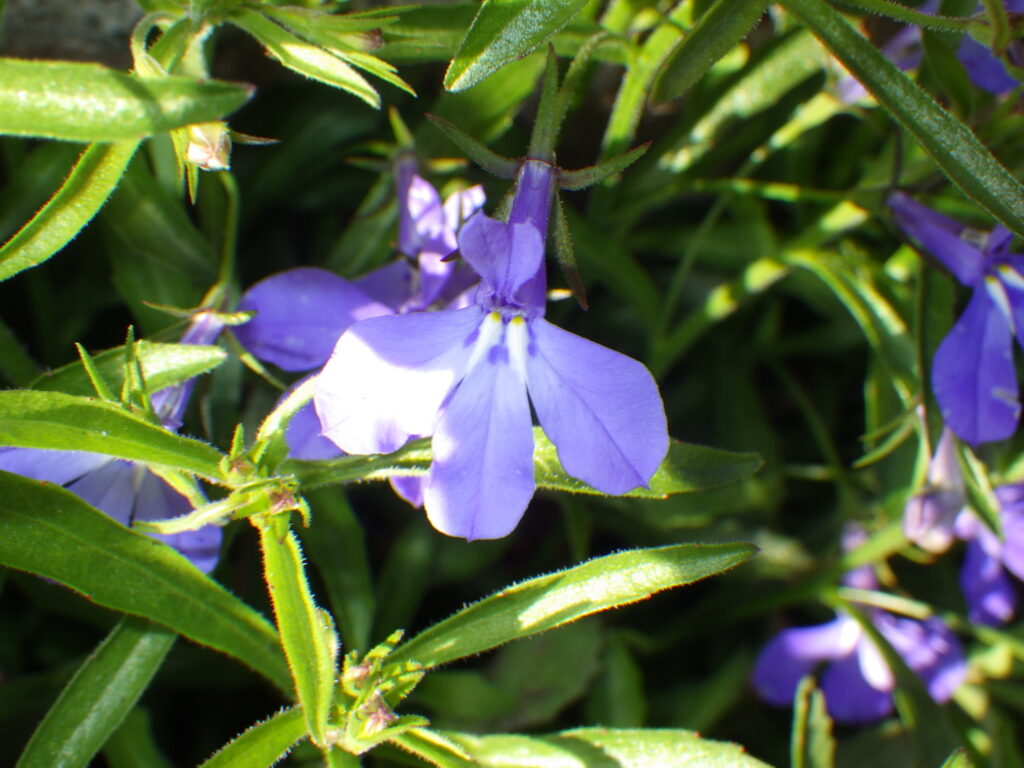
Lobelia erinus, also known as blue-flowered lobelia, is native to central and southern Africa and is cultivated as an ornamental plant worldwide, including in Japan (RBG Kew, 2024).
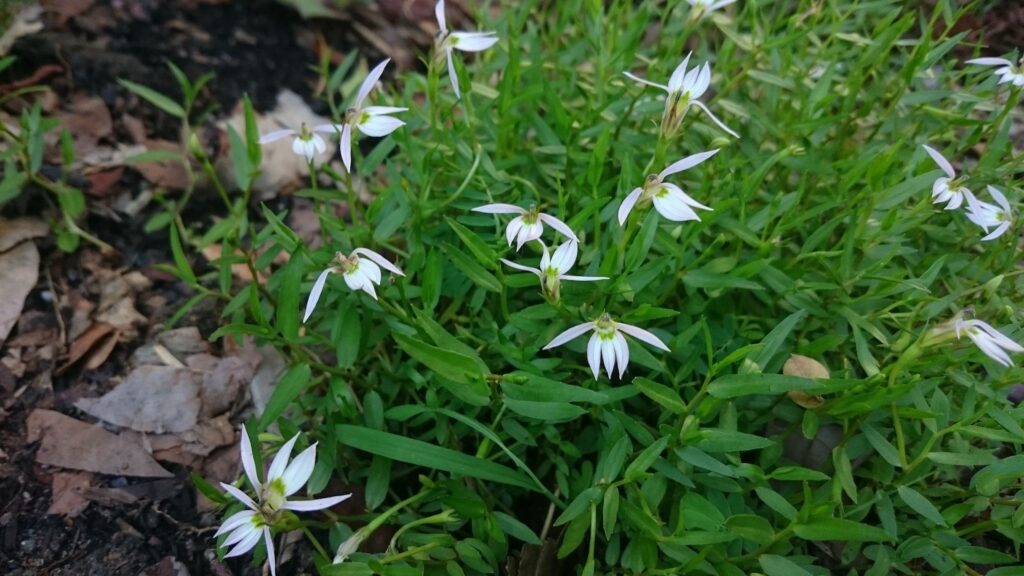
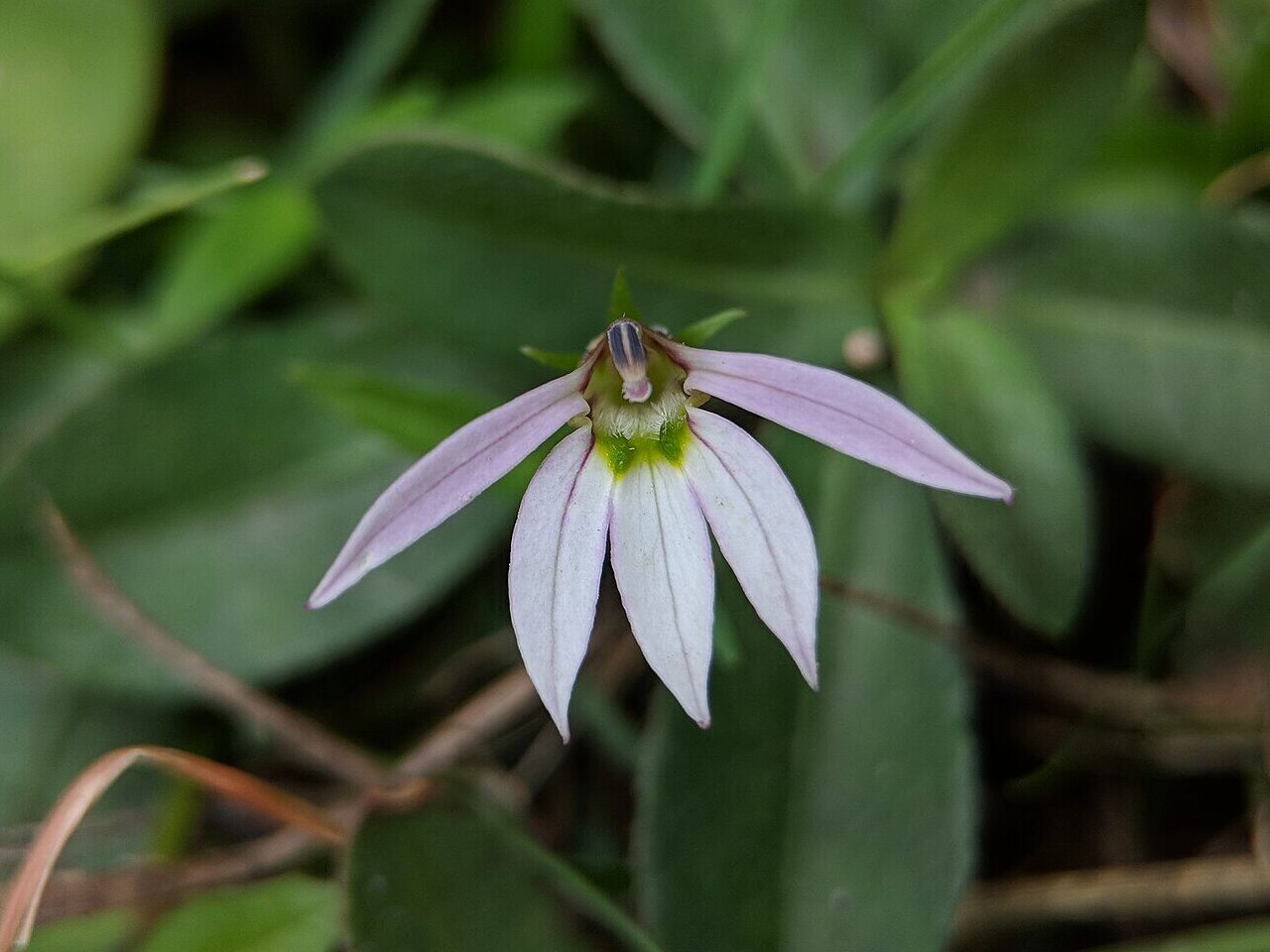
Lobelia chinensis, also known as Mizokakushi (furrow cover), is a perennial herb that grows in damp places such as rice paddy ditches and ditches. It is distributed in Hokkaido, Honshu, Shikoku, Kyushu, and the Ryukyu Islands in Japan; as well as in Korea, China (south of central China), Taiwan, India, and Malaysia (Kanagawa Prefecture Flora Survey Association, 2018). Its Japanese name comes from the fact that it grows in a way that hides ditches.
Lobelia sessilifolia, also known as marsh bellflower, is a perennial herb that grows in wetlands in hilly to mountainous areas and is distributed in Hokkaido, Honshu, Shikoku, and Kyushu in Japan; as well as in Korea, China, Sakhalin, the Kuril Islands, eastern Siberia, and Kamchatka.
All of these species belong to the genus Lobelia in the family Campanulaceae. In addition to having blue flowers typical of the Campanulaceae family, they share the common characteristics of the genus Lobelia, such as bilaterally symmetrical flowers and fused anthers that form a tube.
In horticulture, Lobelia sessilifolia and Lobelia sessilifolia are commonly cultivated. Lobelia sessilifolia is hybridized with Lobelia cardinalis and sold under names such as "perennial lobelia."
However, a Google image search for "perennial lobelia" clearly shows that Lobelia japonica is mixed in, suggesting a confusion between the two species.
Also, while "Lobelia" is actually a general term for species belonging to the genus Lobelia, the name "Lobelia" is sometimes used to refer to *Lobelia japonica*, which may lead to confusion.
What are the differences between Lobelia sessilifolia, Lobelia sessilifolia, and Lobelia sessilifolia?
The clear difference between these three species lies in their flowers. All members of the genus Lobelia belong to the family Campanulaceae, so they have "sympetalous flowers," and what appear to be petals are actually "corolla lobes."
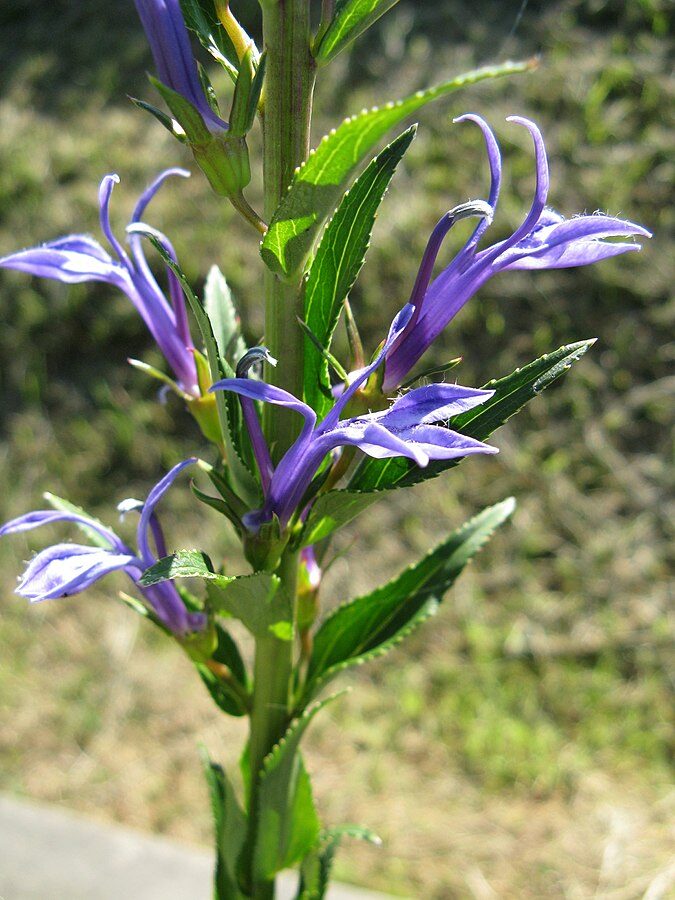
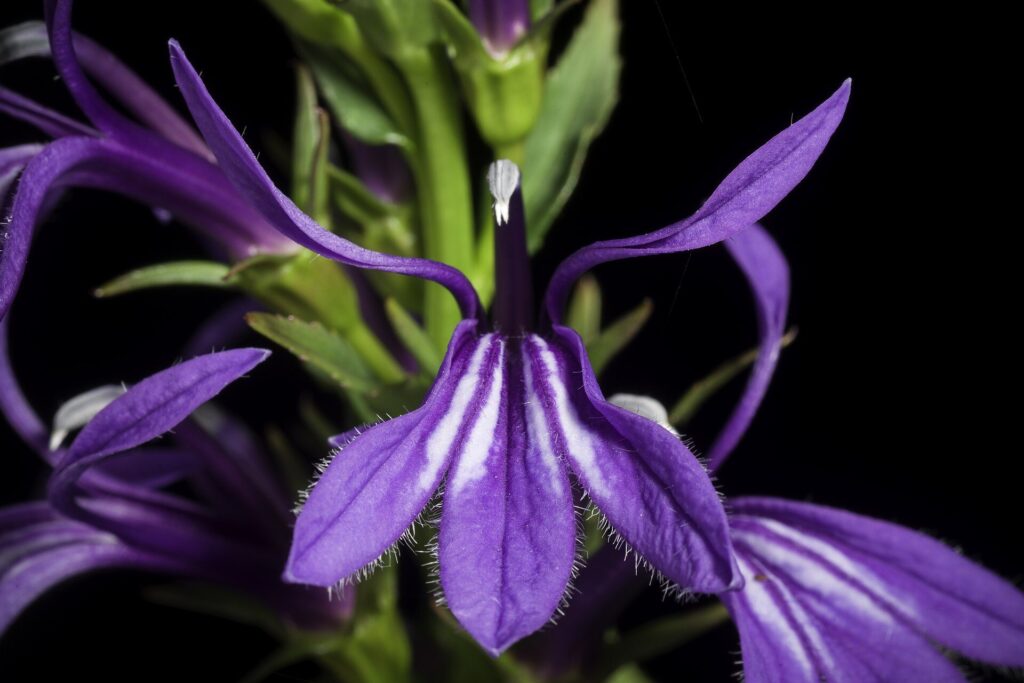
In Lobelia sessilifolia, the corolla is pale reddish-purple and the upper pair of the five lobes points diagonally downwards, whereas in Lobelia sessilifolia and Lobelia sessilifolia, although there are exceptions, the corolla is usually bluish-purple and the upper pair of the five lobes points upwards or diagonally upwards.
Regarding Lobelia sessilifolia and Lobelia sessilifolia, in Lobelia sessilifolia, the lower three of the five corolla lobes are obovate, and the upper pair protrudes upward, while in Lobelia sessilifolia, the lower three of the five corolla lobes are lanceolate, and the upper pair protrudes diagonally upward.
This involves a bit of technical jargon, but essentially, the corolla lobes of Lobelia sessilifolia are more elongated than those of Lobelia sessilifolia.
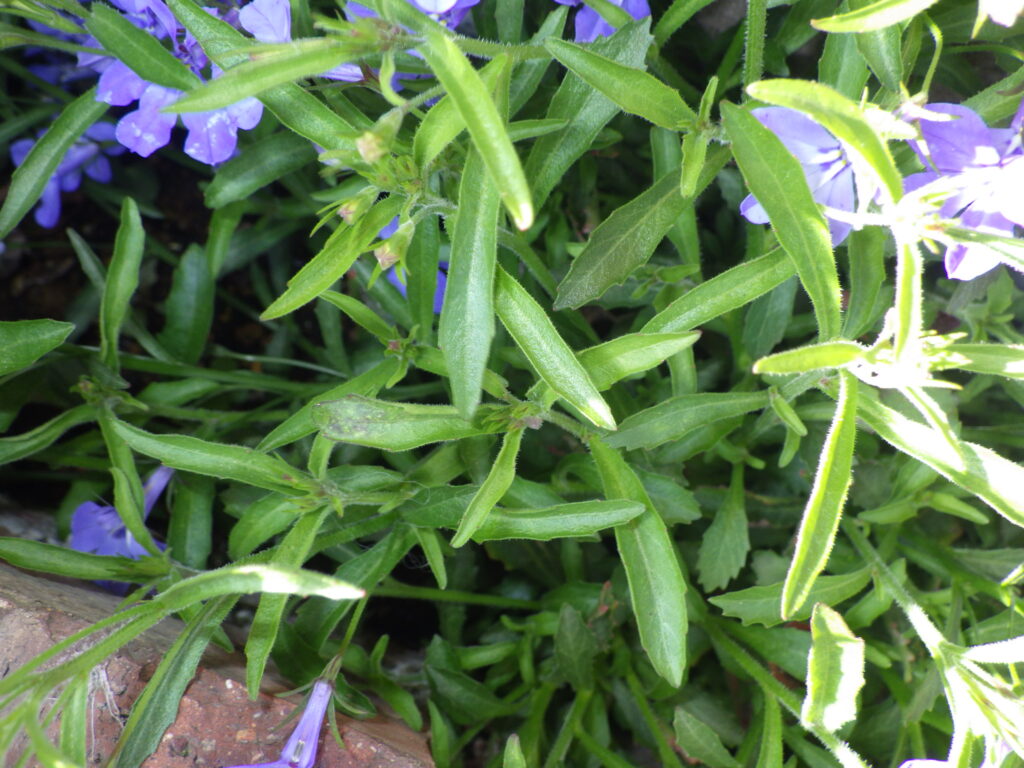
Furthermore, their growth patterns differ; the stems of Lobelia sessilifolia and Lobelia laciniata grow in a creeping manner, while the stems of Lobelia sessilifolia grow upright (Kanagawa Prefecture Flora Survey Association, 2018).
Only the leaves of Lobelia sessilifolia are covered with hairs, while only the leaves of Lobelia sessilifolia have clearly visible lateral veins.
The above explains how to distinguish them. However, I am not aware of the difference between Lobelia sessilifolia and perennial lobelia, which is a hybrid of Lobelia sessilifolia and Lobelia sessilifolia. As the name suggests, Lobelia sessilifolia itself has red corollas.
What are the varieties of Lobelia sessilifolia and Lobelia sessilifolia?
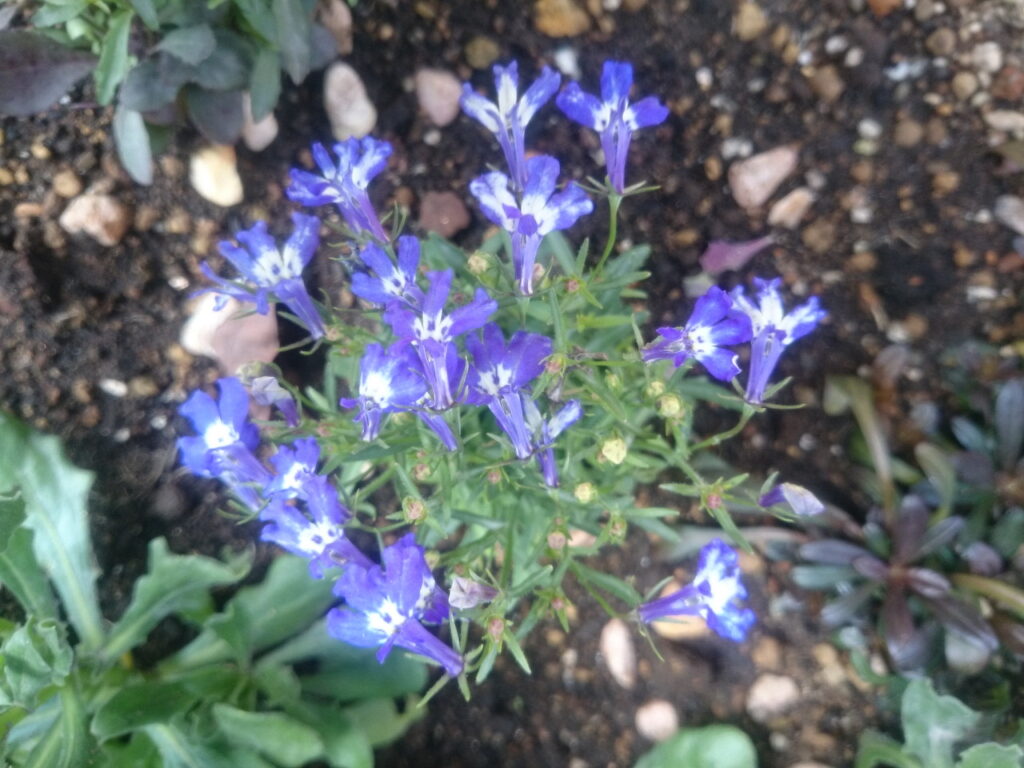
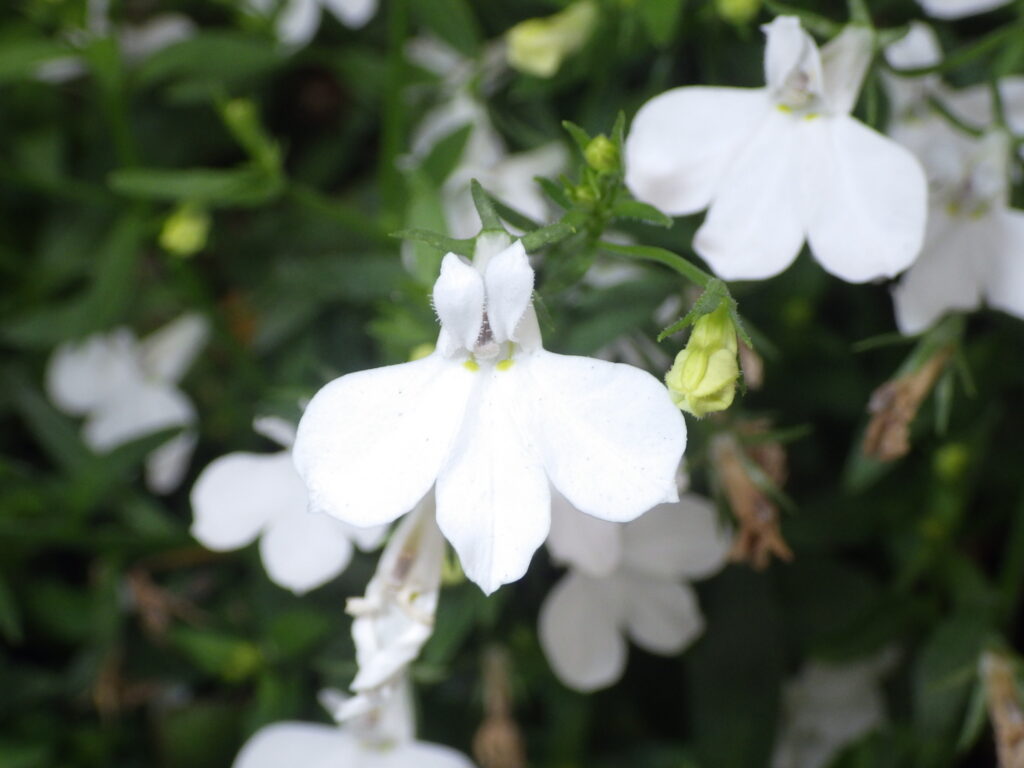
Lophophora williamsii has undergone extensive breeding, resulting in countless cultivated varieties. While it's impossible to introduce them all, in terms of flower color, some have entirely white corollas, while others have white only in the center.
There is a variety of Lobelia sessilifolia called white-flowered Lobelia sessilifolia f. leucantha.
References
Kanagawa Prefecture Flora Survey Association. 2018. Kanagawa Prefecture Flora 2018 (Electronic Edition). Kanagawa Prefecture Flora Survey Association, Odawara. 1803pp. ISBN: 9784991053726
RBG Kew. 2024. The International Plant Names Index and World Checklist of Vascular Plants. Plants of the World Online. http://www.ipni.org and https://powo.science.kew.org/