Sow thistle (Sonchus oleraceus), prickly sow thistle, autumn sow thistle, and narrow-leaved autumn sow thistle all belong to the Asteraceae family and are very commonly observed even in urban areas of Japan. Although their names are very similar, sow thistle and prickly sow thistle belong to completely different genera from autumn sow thistle and narrow-leaved autumn sow thistle. The most reliable way to distinguish them is by their flowers or fruits. It is also recommended to distinguish sow thistle and prickly sow thistle by the leaves at the base of the stem. Among the species with "sow thistle" in their name, autumn sow thistle has been studied extensively in terms of its ecology. It has ultraviolet light that is invisible to humans, and its exposed, table-like leaves make it easy for beetles, butterflies, hoverflies, and bees to access its nectar. However, strangely, it seems to perform the cumbersome process of transferring its own stamen pollen to its own pistil pollen. This article will explain the classification, pollination ecology, and seed dispersal of sow thistle (sprout sow thistle), prickly sow thistle, and autumn sow thistle.
- What is the difference between sow thistles and autumn sow thistles?
- What is the difference between sow thistle and prickly sow thistle?
- The center of the autumn sowthistle flower's corolla absorbs ultraviolet light!?
- For some reason, the pollen from the stamen was transferred to the pistil before being passed on to the insect!?
- Many different types of flowers visit the flower heads, but there seems to be a bias!?
- The fruit is an achene and the seeds are dispersed by wind.
- References
- Source
What is the difference between sow thistles and autumn sow thistles?
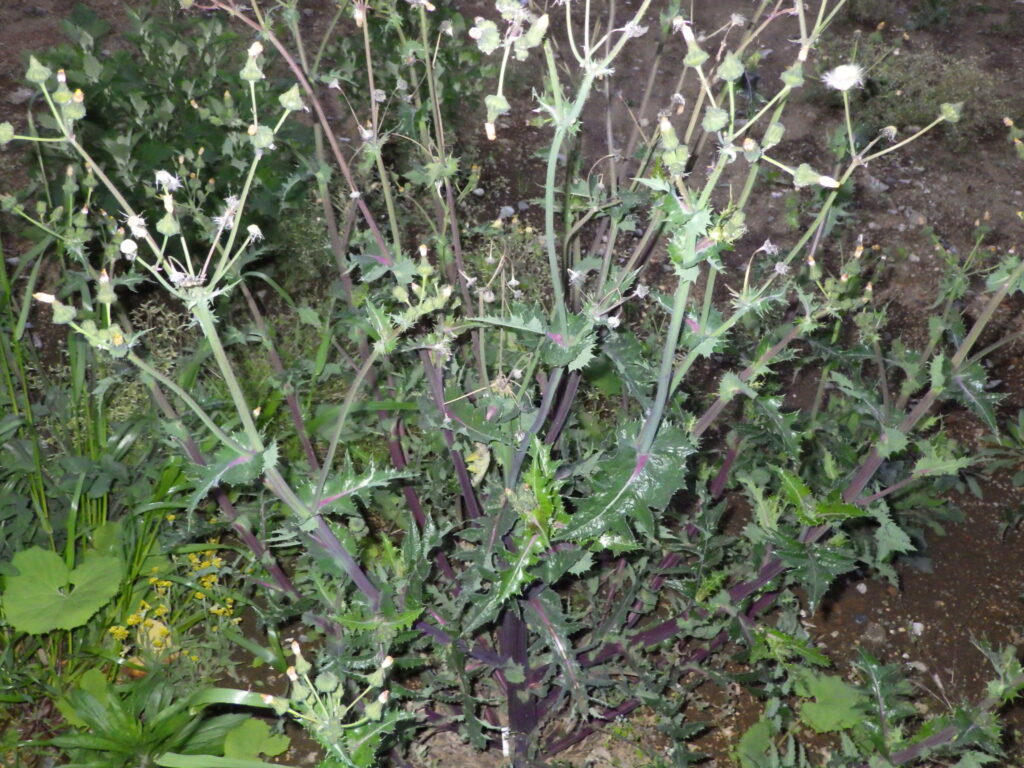
Sonchus oleraceus, also known as spring sow thistle, is native to Europe and is now naturalized worldwide. It is a common annual or biennial plant found along roadsides, forest edges, cultivated fields, and embankments in lowlands, hills, and lower mountainous areas.
Sonchus asper, also known as prickly sow thistle, is a naturalized plant originally from Europe that was introduced to Japan during the Meiji era. It is a common annual or biennial plant that grows along roadsides and in fields.
Lactuca indica, also known as autumn sow thistle, is widely distributed throughout Japan, Korea, China, Taiwan, and Southeast Asia. It is an annual or biennial herb that inhabits sunny wastelands and grasslands (Wu et al., 2011; Hayashi et al., 2013). It is thought to be a prehistoric naturalized plant that arrived in Japan along with rice cultivation (Maekawa, 1943).
The three species of sow thistle (Sonchus oleraceus), prickly sow thistle, and autumn sow thistle all belong to the Asteraceae family and have similar names, but at the genus level, they are classified completely differently (Kanagawa Prefecture Flora Survey Association, 2018). Autumn sow thistle is actually very closely related to lettuce. It also secretes a milky sap from its stem.
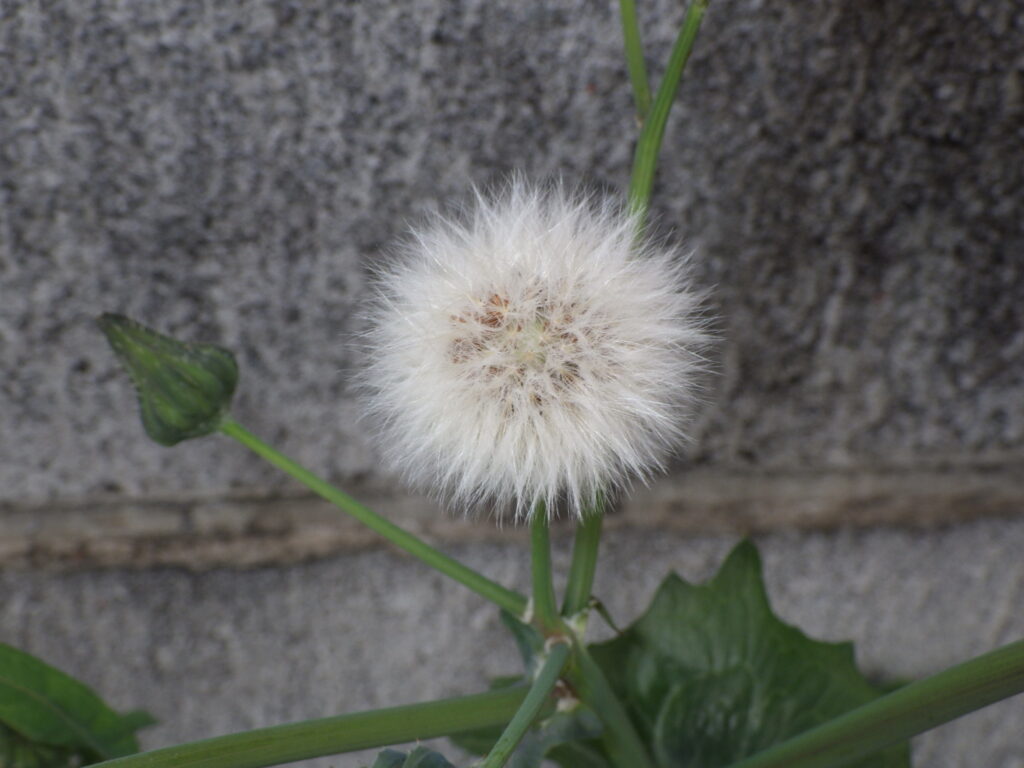
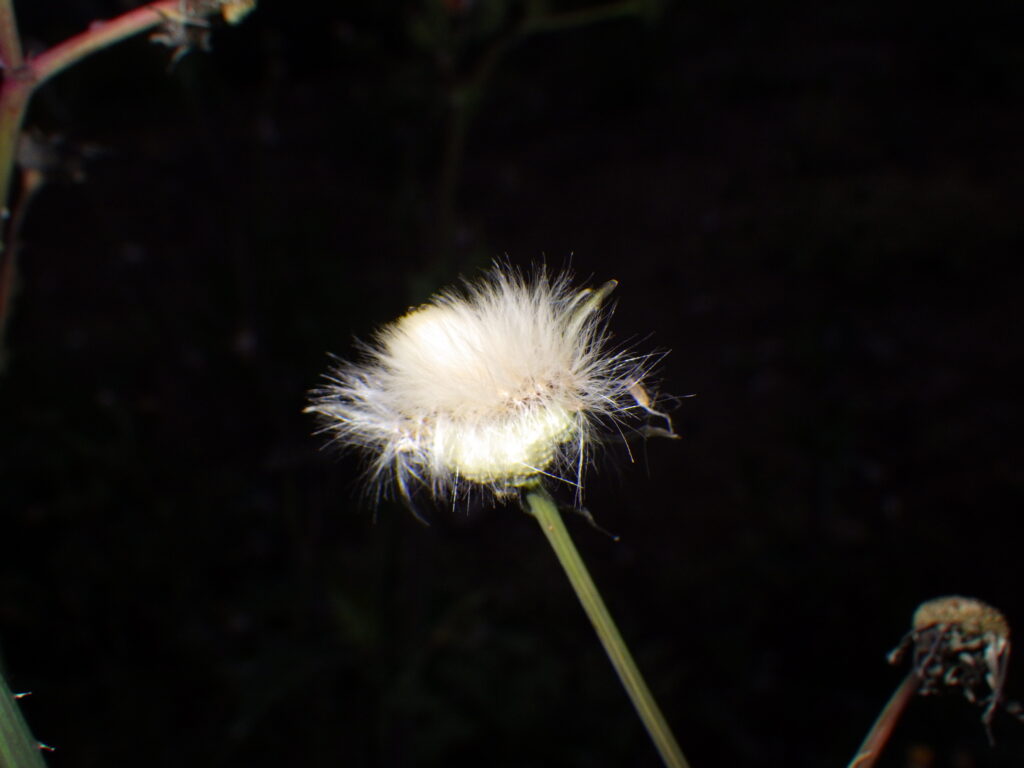
One botanically important difference is that while the fruits of sow thistle and prickly sow thistle are slender and rod-shaped with no protruding part, those of autumn sow thistle are flattened and banana-shaped with a beak-like protrusion at the tip.
Please note that, although it is often misunderstood, the "fruit" referred to here is the part that is mistaken for a "seed" and is covered with downy hairs (called pappus).
Of course, you can observe the fruit, but it's difficult because the timing is quite limited. There are many other differences, so don't worry.
First, as the names suggest, sow thistle and prickly sow thistle bloom from April to October, while autumn sow thistle blooms from September to November. However, their flowering periods overlap, so calling sow thistle "spring sow thistle" is actually quite inaccurate.
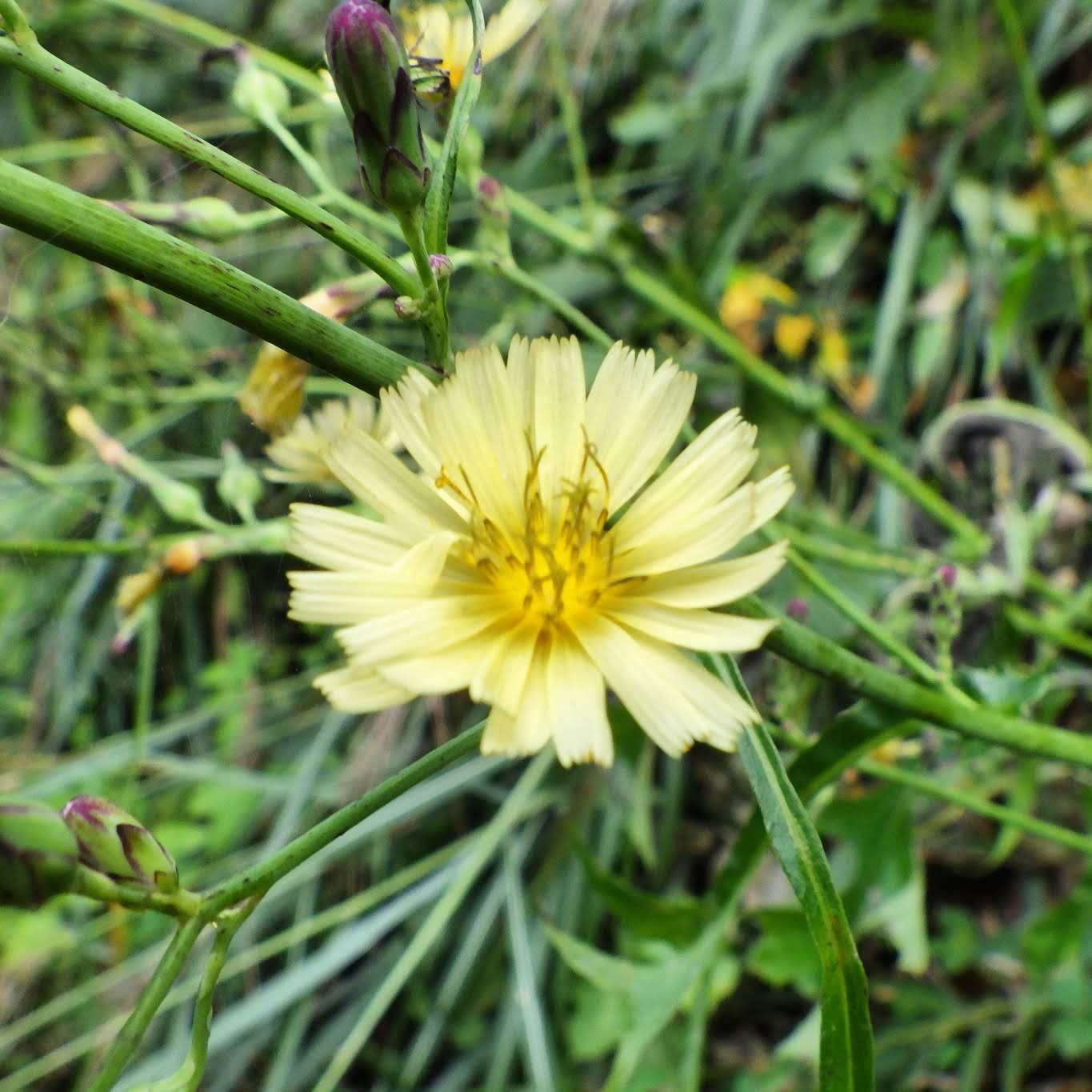
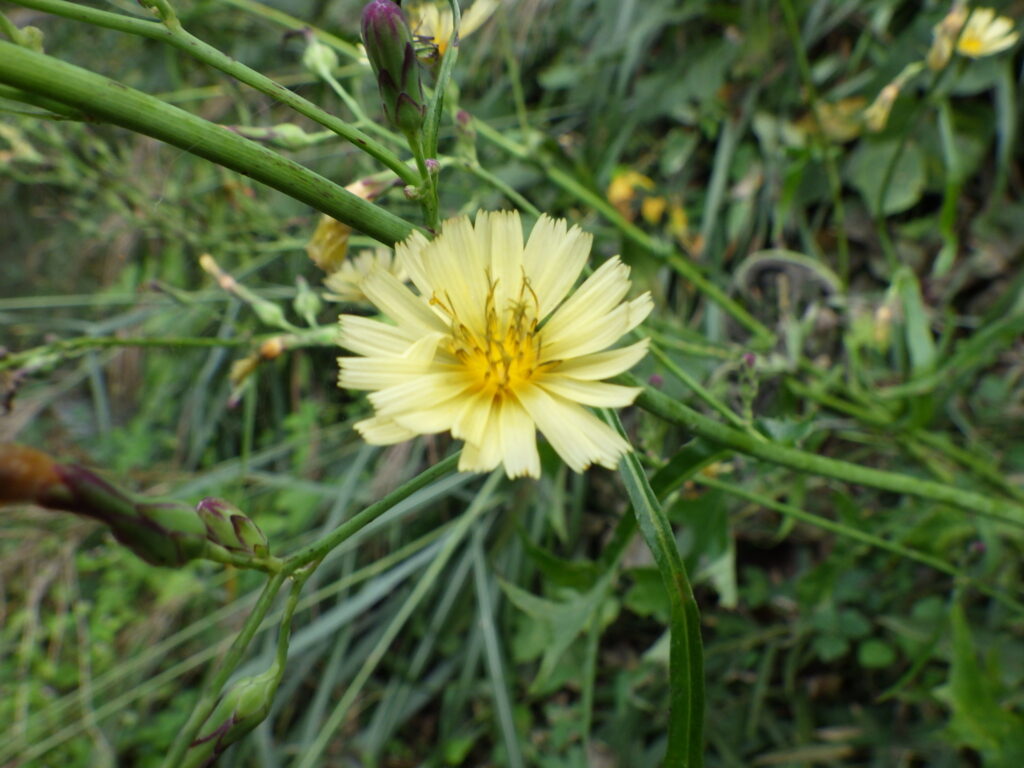
The flower shapes are completely different. In sow thistle and prickly sow thistle, the flower head is composed of more than 80 florets (ray florets), giving a dense impression, while in autumn sow thistle, there are not as many, giving a sparse impression. Also, autumn sow thistle is lighter in color than sow thistle and prickly sow thistle, being pale yellow or closer to cream.
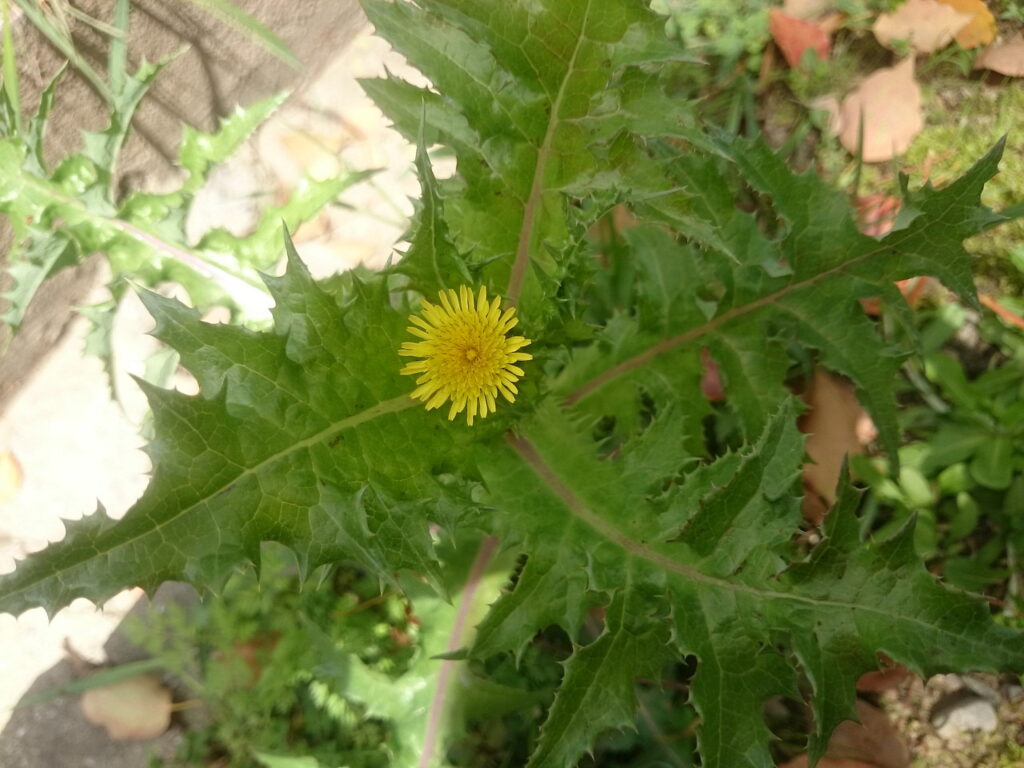
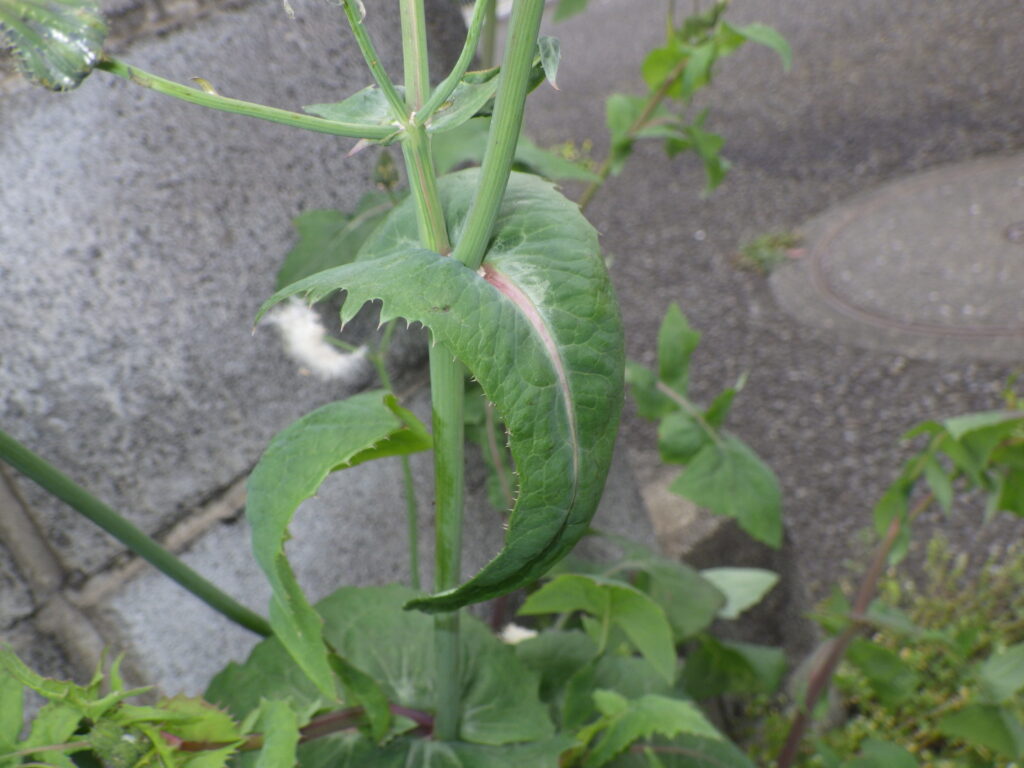
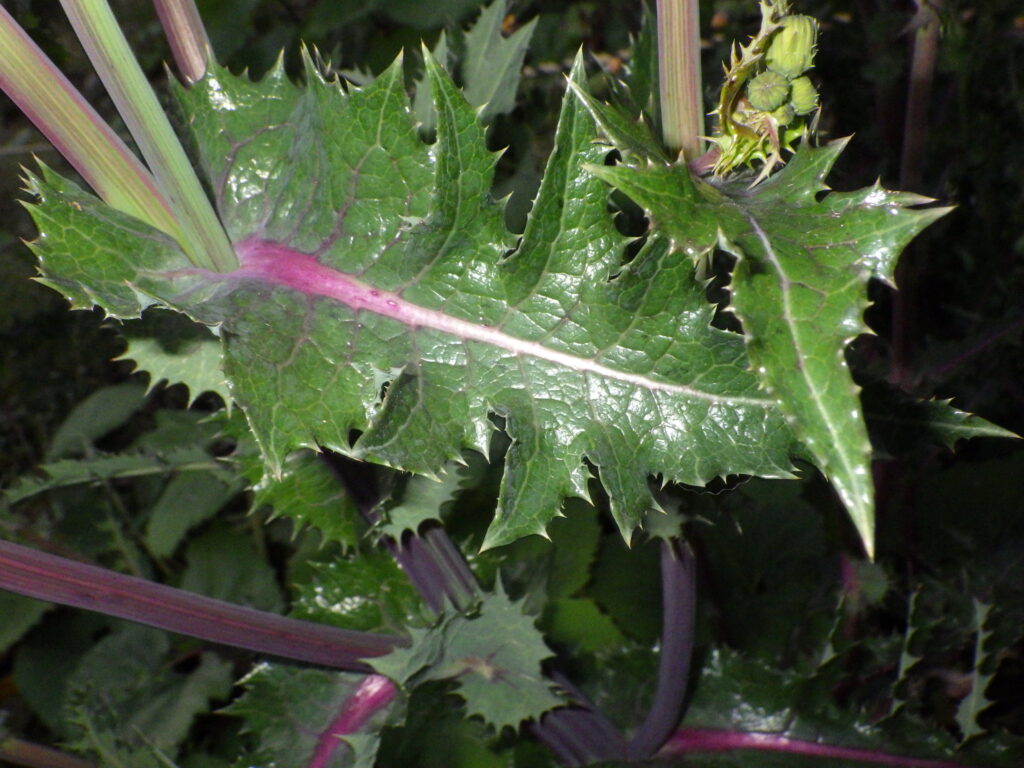
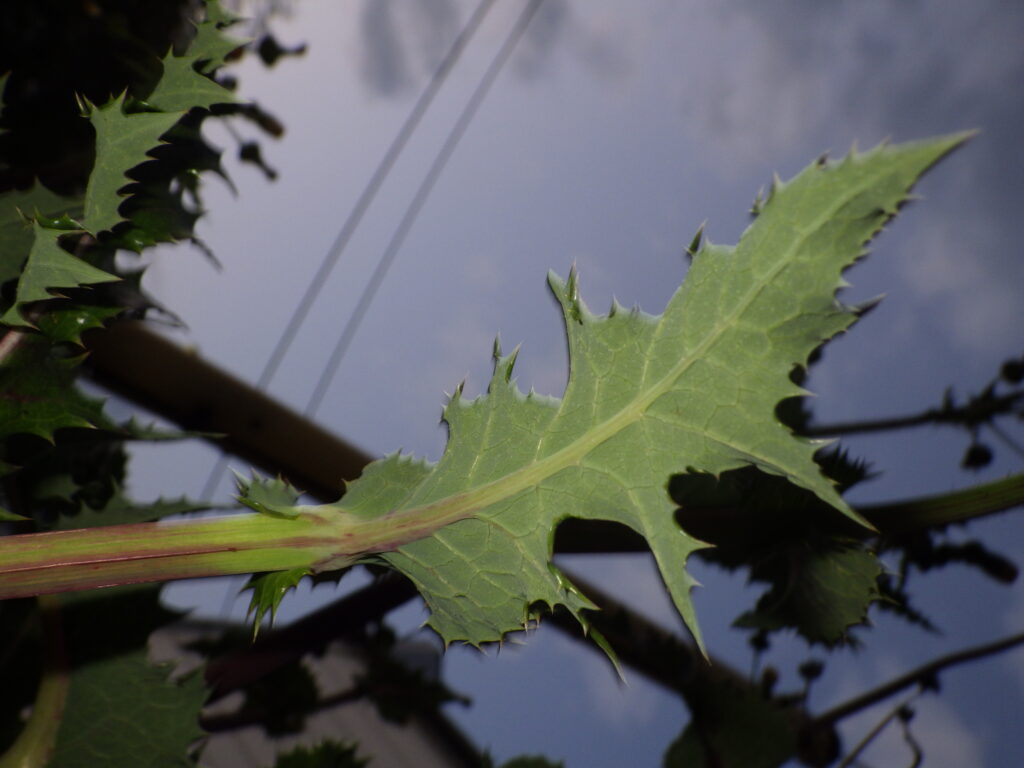
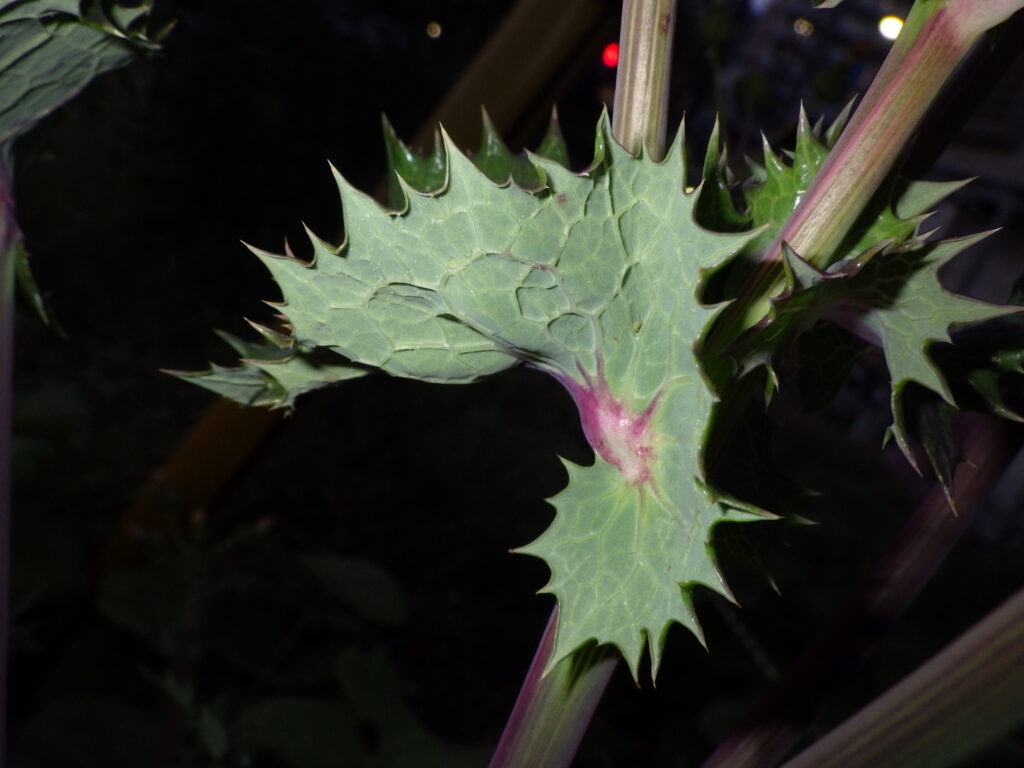
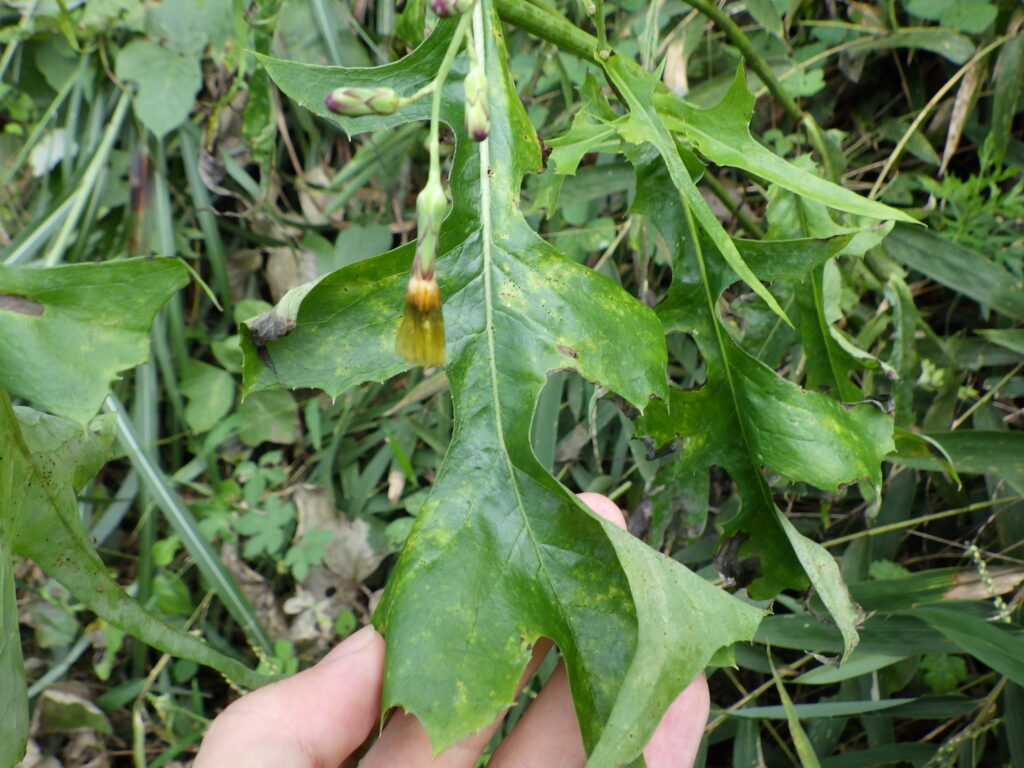
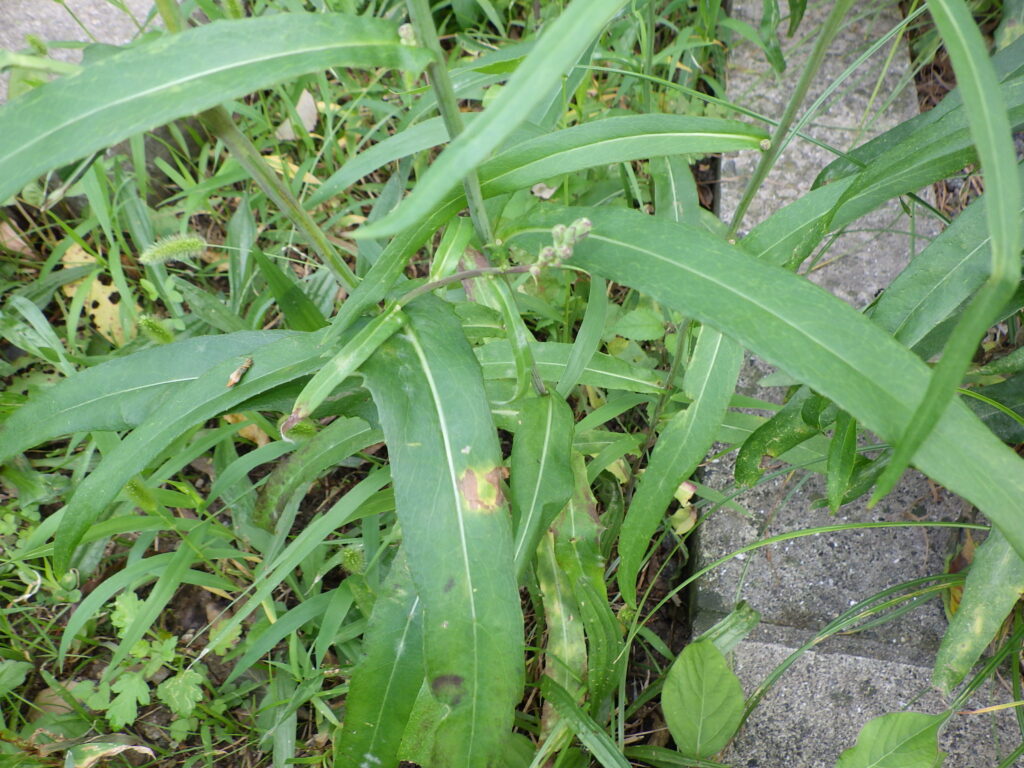
In sow thistle and prickly sow thistle, the leaves have many thorns along the margins and clearly clasp the stem, but in autumn sow thistle, there are fewer thorns and the leaves do not clasp the stem as much.
By considering the above points, the two groups can be distinguished.
What is the difference between sow thistle and prickly sow thistle?
The difference between sow thistle (Sonchus oleraceus) and prickly sow thistle (Sonchus oleraceus) lies in the fact that in sow thistle, the leaves in the middle of the stem are triangular, ear-shaped with pointed bases that clasp the stem, the leaves are pale green with little gloss, and the achenes have transverse stripes between the longitudinal ribs, while in prickly sow thistle, the leaves in the middle of the stem are rounded, ear-shaped with rounded bases that clasp the stem, the leaves are dark green with a strong gloss, and the achenes do not have transverse stripes between the longitudinal ribs.
The shape and sheen of the leaves, especially those in the middle of the stem, are particularly important.
It might be a little difficult to understand, but roughly speaking, while sow thistle (Sonchus oleraceus) has many thorn-like serrations but is soft to the touch, sow thistle (Sonchus oleraceus) has noticeably hard, thin, and long thorns that protrude and are painful to the touch. However, this method of identification is quite vague and has exceptions, and there is a possibility of injury, so please use it only as a reference.
Incidentally, there is a variety of autumn sowthistle called *Sonchus oleraceus* var. *laciniata *. This variety has broadly linear leaves that are not lobed at all, from the lower to the upper part of the stem, but otherwise it is exactly the same as the original autumn sowthistle.
There is also a variety called agave var. dracoglossa. This variety is believed to have been introduced from Taiwan in the early Meiji era and was artificially selected as feed for livestock such as chickens. Although its leaves are narrow like those of the slender-leaved autumn sowthistle, they are noticeably larger, measuring 23-40 cm in length, and are conspicuous even from a distance. It seems to escape cultivation occasionally. Currently, it is well-known as food for pet tortoises.
Other species in Japan include *Sonchus* (including *Sonchus oleraceus*) and *Sonchus umbellatus* (including *Sonchus japonica* and *Sonchus oleraceus*), but these will be omitted here. For more detailed information, please refer to the Kanagawa Prefectural Flora Survey Association (2018).
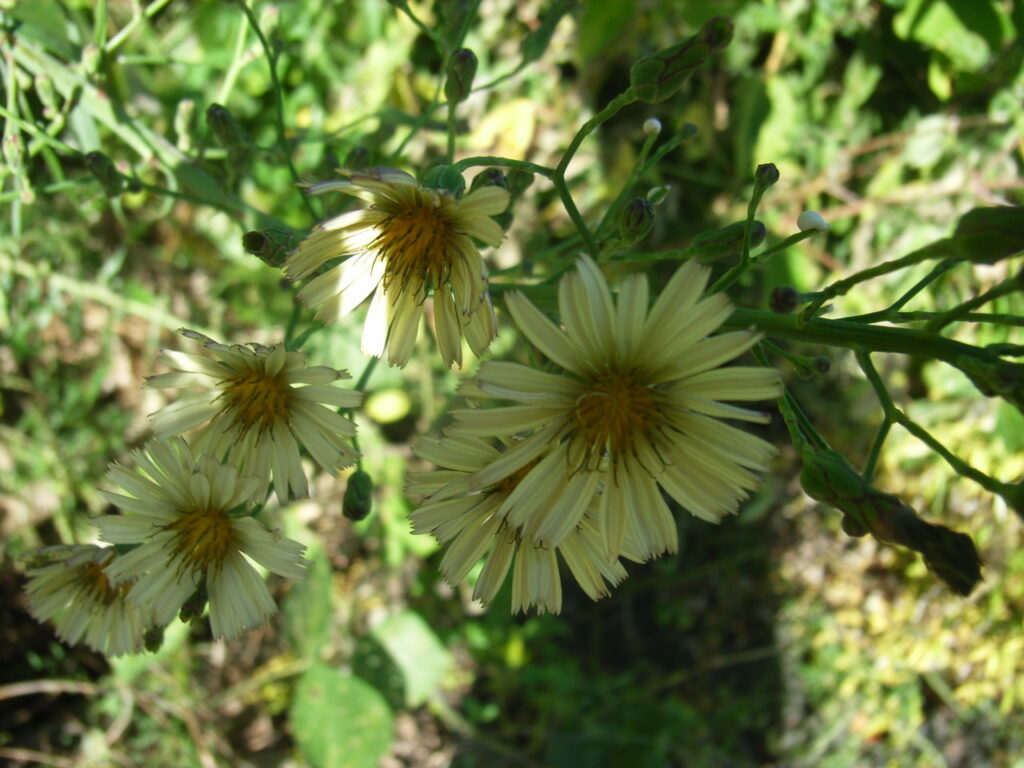
The center of the autumn sowthistle flower's corolla absorbs ultraviolet light!?
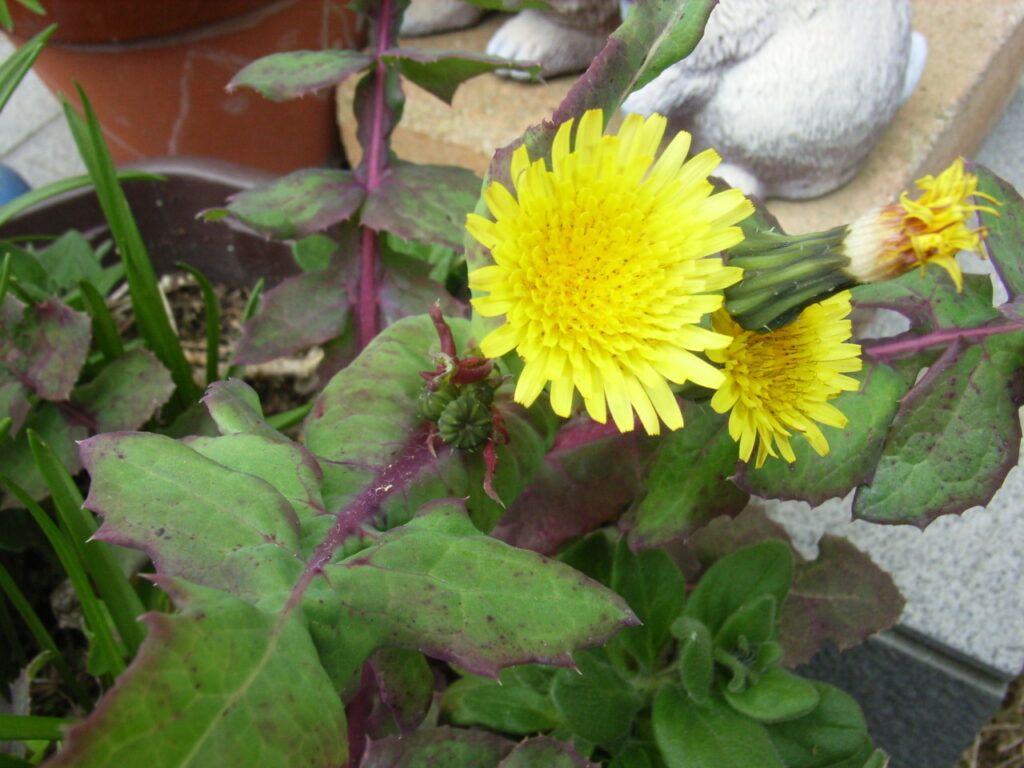
Not only sow thistle, prickly sow thistle, and autumn sow thistle, but all plants in the Asteraceae family produce "flower heads" (capitulum inflorescences). Flower heads are commonly found in the Asteraceae family and are the inflorescences (arrangements of flowers) that make up the clusters of flowers found in other plants. As evidence of this, each flower has the structure of stamens and pistils, and is sometimes specifically called a "flora." Most people call flower heads "flowers," but they are actually different. In sow thistle, prickly sow thistle, and autumn sow thistle, the florets consist only of ray florets.
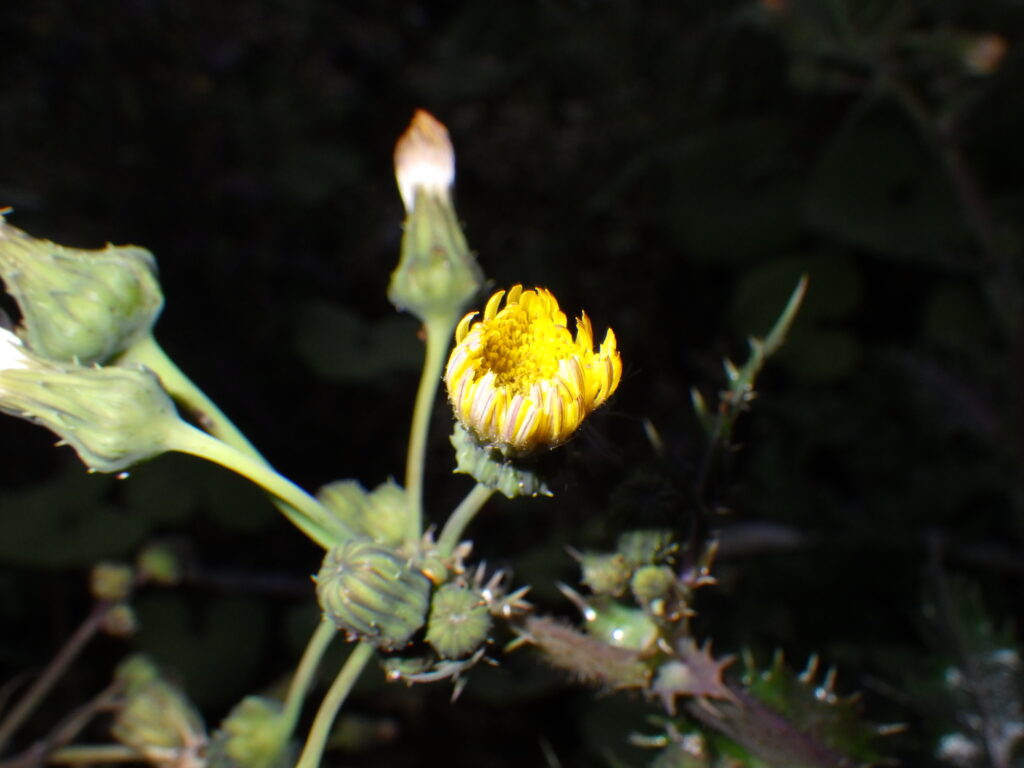
Sow thistle flowers from April to October. The flower heads are yellow and about 2 cm in diameter. There are numerous ray florets. The involucre is 1.2 to 1.5 cm long. The pedicels and involucres are often covered with glandular hairs and are sticky.
Prickly sowthistle flowers from April to October. The flower heads are yellow and about 2 cm in diameter. There are numerous ray florets. The pedicels and involucral bracts sometimes have glandular hairs.
As its name suggests, autumn sowthistle (Lactuca indica) blooms only in autumn, from September to November. Its flower heads are usually pale yellow, rarely white or pale purple, and unlike typical Asteraceae plants, its pale yellow, almost creamy color is quite distinctive. It has fewer ray florets than the two species mentioned above. It opens during the day and closes in the evening. The involucre is about 1 cm long. The involucral bracts overlap in an imbricate pattern, and the edges are dark.
There is something a little unusual about the autumn sow thistle. Although it is not visible to the human eye, the tip of the corolla reflects ultraviolet light, while the center absorbs it (Yamaoka, 2009). It is thought that the center appears darker to insects, which helps to attract them.
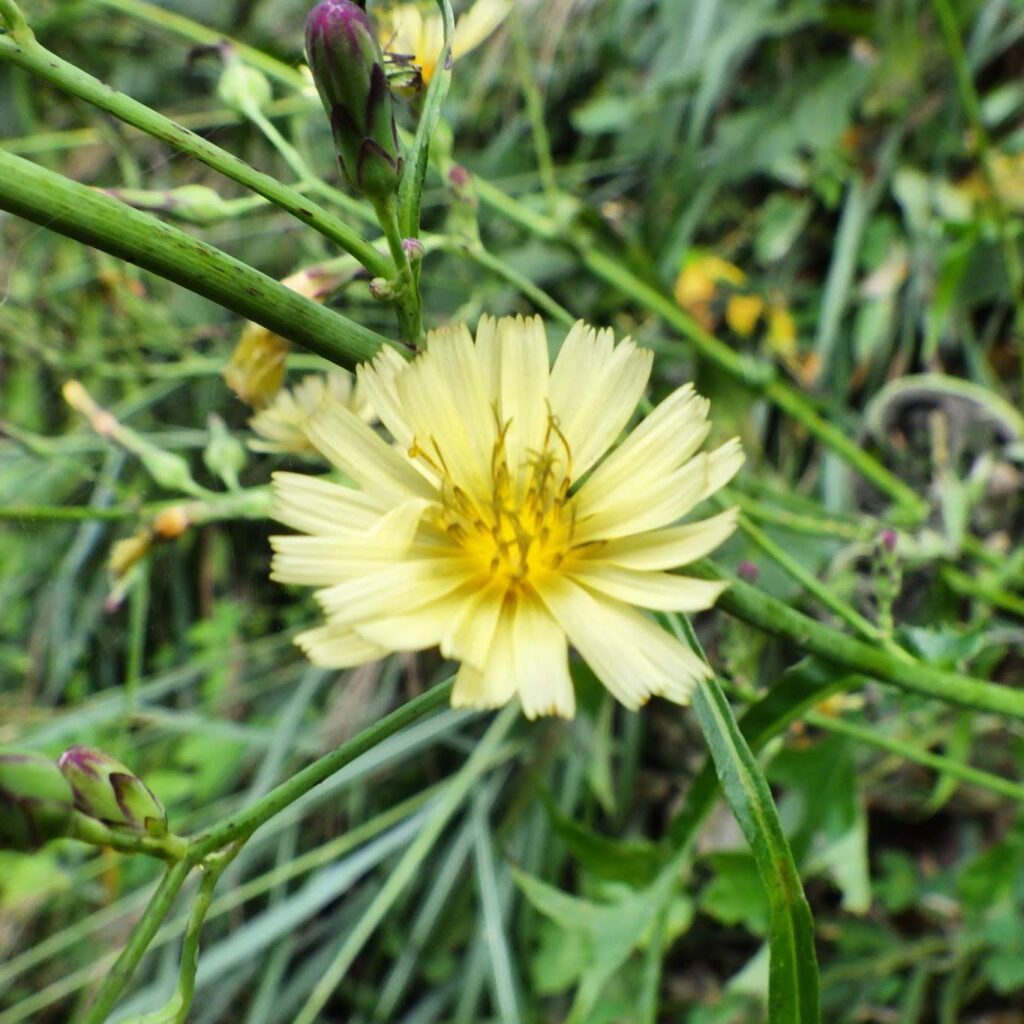
For some reason, the pollen from the stamen was transferred to the pistil before being passed on to the insect!?
Autumn sowthistle has a slightly unusual pollination method (Tanaka and Hirano, 2000). The pistil protrudes from the tubular stamens and is covered in pollen inherited from the stamens. When an insect comes along, it gets this pollen on its body. Then, as time passes, the tip of the pistil splits in two, and the stigma (the part of the pistil that receives pollen) inside is exposed, and it then begins to receive pollen from other plants that is attached to the insect's body.
Why go through all this roundabout stuff?
This could be considered a form of partial "protandry," where self-pollination is prevented.
In the case of autumn sowthistle, as time passes, the tip of the flower splits further, allowing its own pollen to attach to the stigma, suggesting that self-pollination may be a last resort. To make this self-pollination more efficient, it may be transferring pollen to the pistil first. This is thought to be related to the fact that the flower only blooms for one day. However, it is still not entirely clear how beneficial this is for autumn sowthistle.
Many different types of flowers visit the flower heads, but there seems to be a bias!?
The types of insects that visit autumn sowthistle have been studied relatively well. Because it is an exposed, table-shaped plant that makes it easy for any insect to drink nectar, various insects such as beetles, butterflies, hoverflies, and bees visit it (Tanaka, 1997; Sakuraya et al., 1999; Hisamatsu, 2010). However, some studies show that hoverflies account for half of the visitors, and most of the bees are European honeybees (Yokoi et al., 2008; Yuri and Kitamura, 2014), so there is more of a bias in the types of insects that visit than one might think. There may be differences in the attractiveness of the plant as food for insects, or preferences for colors including ultraviolet light, which are aspects that humans do not understand.
However, it seems that no comparison has yet been made between the flower heads of sow thistle and prickly sow thistle, which have very common shapes and colors. It will be interesting to see if subtle differences in color and shape affect the insects that visit them.
The fruit is an achene and the seeds are dispersed by wind.
Sow thistle, prickly sow thistle, and autumn sow thistle all have different fruit shapes, but they are all called achenes, and they have a pappus that allows them to be dispersed by the wind. These look like seeds, but strictly speaking they are not seeds; the seeds are contained within the achene, so they are not visible from the outside.
It appears that no research has yet been conducted on whether differences in fruit morphology lead to differences in flight ability or other related factors.
References
Hayashi, Yasaka, Kadota, Yuichi, and Hirano, Takahisa. 2013. Yamakei Handy Illustrated Guide 1: Wildflowers (Revised and Expanded New Edition). Yama-kei Publishers, Tokyo. 664pp. ISBN: 9784635070195
Masaki Hisamatsu. 2010. Relationship between bee communities and flowering flora in Ibaraki Prefecture. Research Report of the Ibaraki Prefectural Museum of Nature 13: 33-64. ISSN: 1343-8921, https://www.nat.museum.ibk.ed.jp/wp-content/uploads/2021/03/2021-03-17_17-23-20_483986.pdf
Kanagawa Prefecture Flora Survey Association. 2018. Kanagawa Prefecture Flora 2018 (Electronic Edition). Kanagawa Prefecture Flora Survey Association, Odawara. 1803pp. ISBN: 9784991053726
Maekawa, Fumio. 1943. On prehistoric naturalized plants. Plant Classification, Geography 13: 274-279. ISSN: 0001-6799, https://doi.org/10.18942/bunruichiri.KJ00002992577
Sakuraya, Y., Nishinaka, K., & Iwasaki, E. 1999. Butterfly fauna of Kinki University Nara Campus. Bulletin of the Faculty of Agriculture, Kinki University 32: 21-35. ISSN: 0453-8889, http://id.nii.ac.jp/1391/00004859/
Tanaka, Hajime. 1997. Ecology Guide: Nature Created by Flowers and Insects. Hoikusha, Tokyo. 197pp. ISBN: 9784586312054
Tanaka, Hajime & Hirano, Takahisa. 2000. The Face of Flowers: Wisdom for Bearing Fruit. Yama-kei Publishers, Tokyo. 191pp. ISBN: 9784635063043
Yamaoka, K. 2009. Improvement of Biology Teaching Materials for Humanities Students (4) Nectar Guides of Angiosperms (Part 2): Pseudo-ultraviolet Color Images of Nectar Guides. Toyo University Bulletin, Natural Sciences Series 53: 69-87. ISSN: 1346-8987, http://id.nii.ac.jp/1060/00002546/
Yokoi, Tomoyuki; Habe, Akifumi; Katori, Ikuo; and Sakuraya, Yasuyuki. 2008. Diversity of pollinating insect communities at Kinki University Nara Campus. Kinki University Faculty of Agriculture Bulletin 41: 77-94. ISSN: 0453-8889, http://id.nii.ac.jp/1391/00005214/
Yuri, Moe & Kitamura, Shunpei. 2014. Diversity of pollinating insects on *Lactuca indica* and *Solidago altissima* (Asteraceae) on the Ishikawa Prefectural University campus. Research Report of the Ishikawa Prefectural Museum of Natural History 4: 45-53. ISSN: 2187-7289, https://www.n-muse-ishikawa.or.jp/wp-content/uploads/2019/06/BIMNH_No4_p45-53_Yuri.pdf
Wu, ZY, Raven, PH, & Hong, DY (Eds.). 2011. Flora of China (Vol. 20-21 Asteraceae). Science Press, Beijing & Missouri Botanical Garden Press, St. Louis. ISBN: 9781935641070
Source
This article is a significantly expanded version of the one included in the following book.