Hibiscus syriacus, Hibiscus mutabilis, and Confederate rose are all members of the Hibiscus genus in the Malvaceae family and are trees frequently cultivated in horticulture for ornamental purposes. Their most distinctive feature is the large, beautiful red to white flowers they produce, but they can often be confused with each other. These can be clearly distinguished by first examining the leaf shapes of Hibiscus syriacus, Hibiscus mutabilis, and Confederate rose. While the differences between Hibiscus syriacus and Confederate rose are minor and at the cultivar level, they differ in how the flowers bloom and the color variations of the flowers. This article will explain the classification and morphology of Hibiscus syriacus and Hibiscus mutabilis.
What are Hibiscus syriacus, Hibiscus mutabilis, and Confederate rose?
Hibiscus syriacus, also known as rose of Sharon, is a deciduous shrub native to China and Korea, with records of its cultivation in Japan dating back to the Azuchi-Momoyama period. It is cultivated in gardens, parks, and along roadsides, and escaped plants can be found growing in fields and on riverbanks (Kanagawa Prefecture Flora Survey Association, 2018).
Hibiscus mutabilis, also known as the hibiscus flower, is native to central China and has been cultivated worldwide since ancient times, including in its native region. In Japan, it has naturalized in the Izu Peninsula, Kii Peninsula, southern Shikoku, southern Kyushu, and Okinawa (Mogi et al., 2000).
'Versicolor', also known as the 'Drunken Hibiscus ', is a horticultural variety of hibiscus.
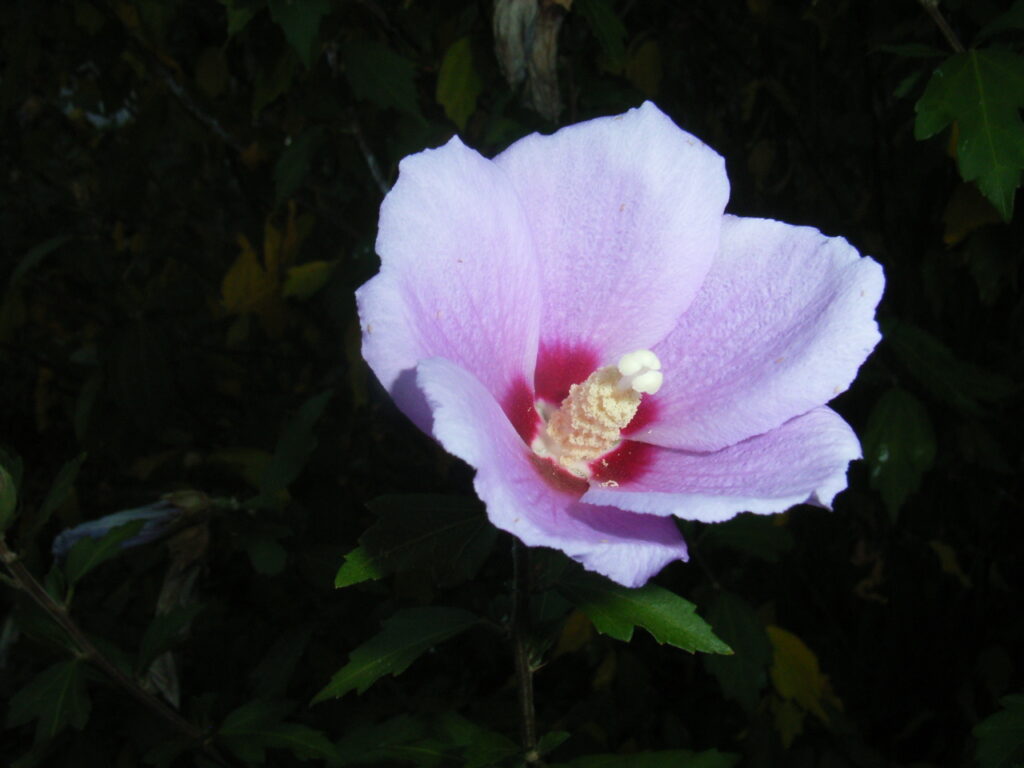
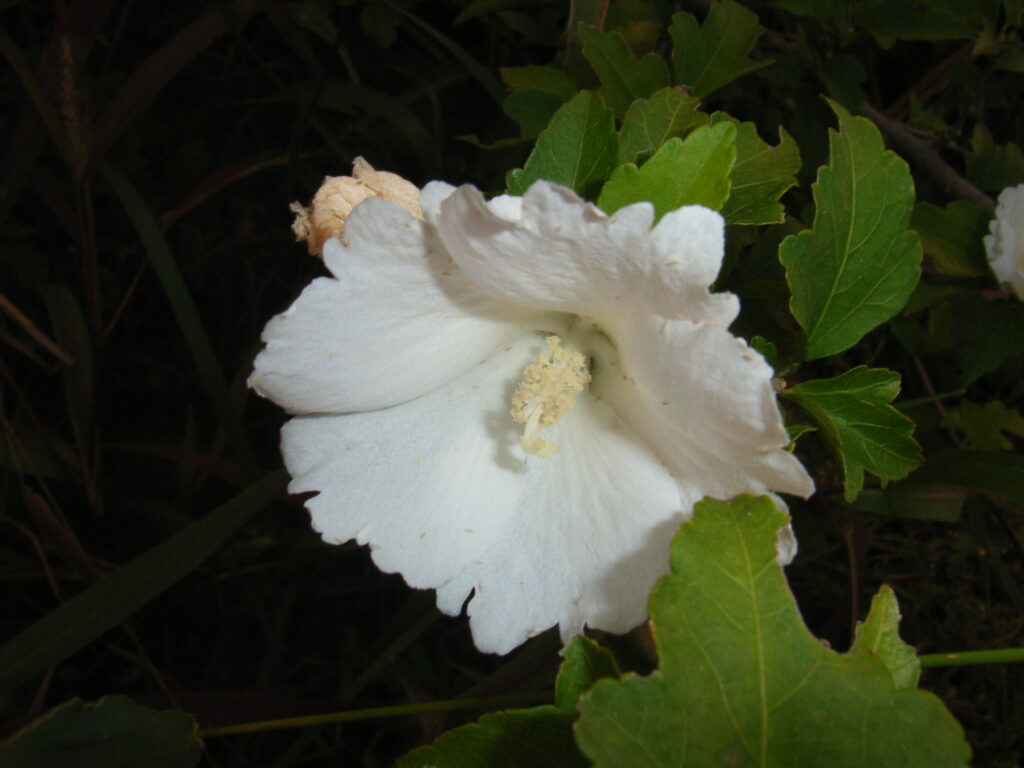
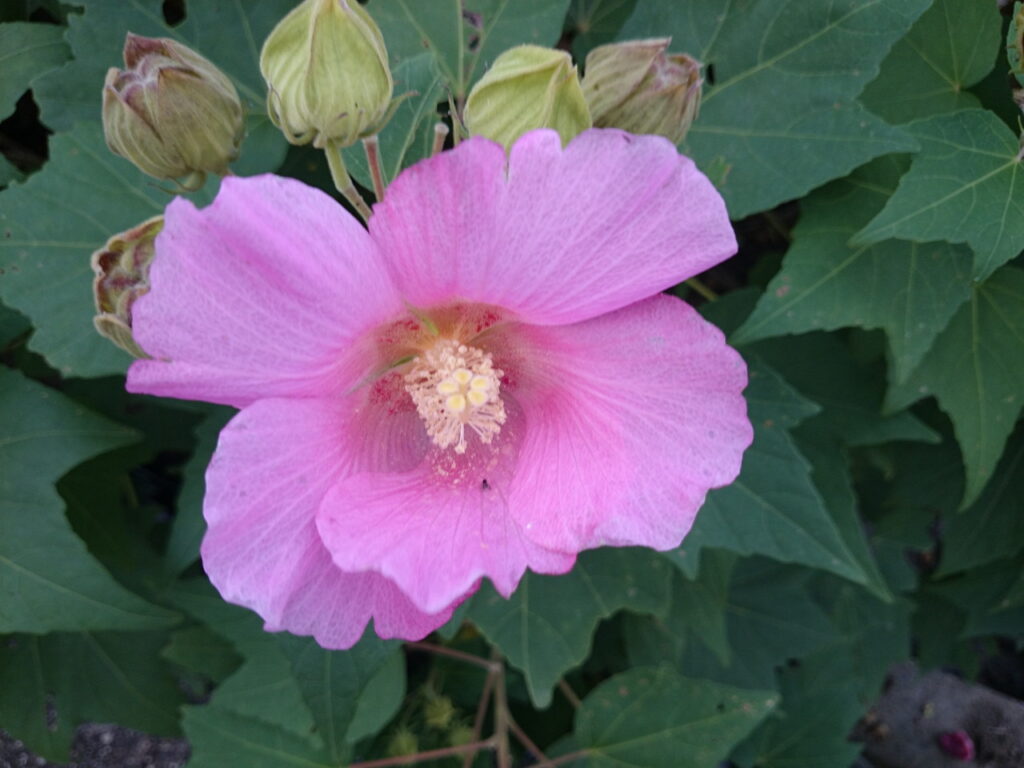
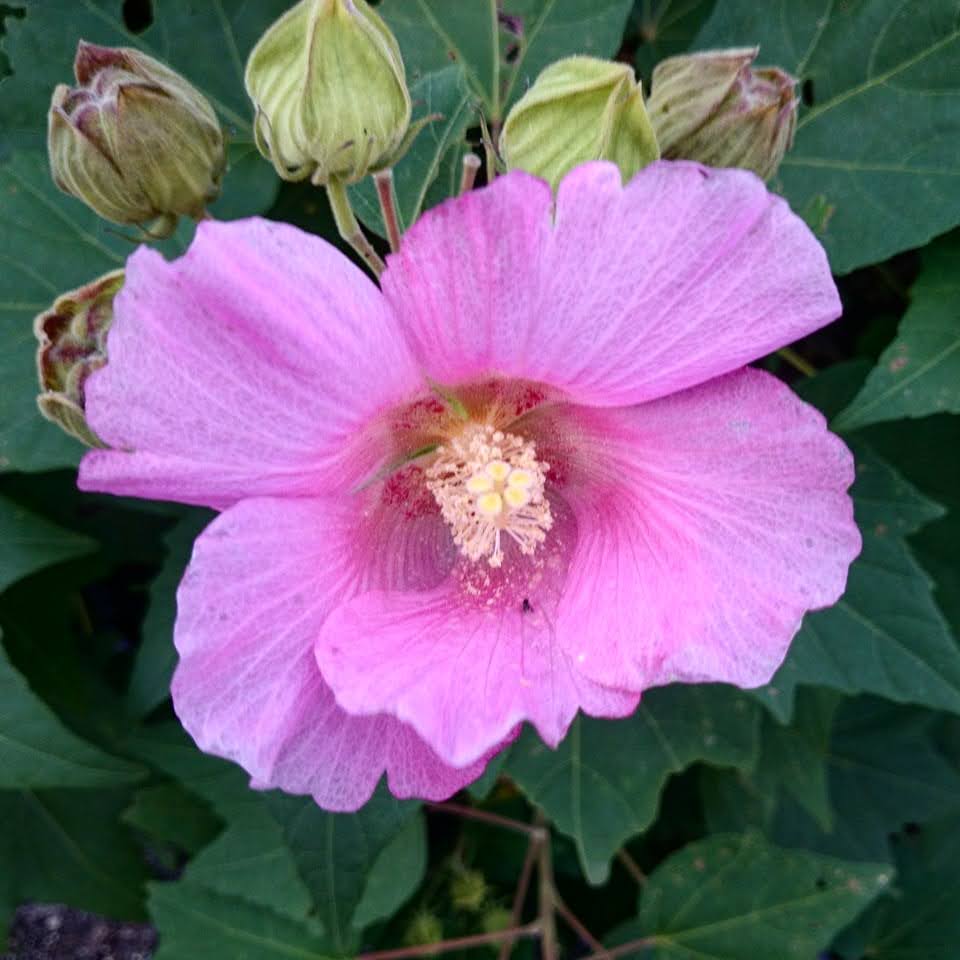
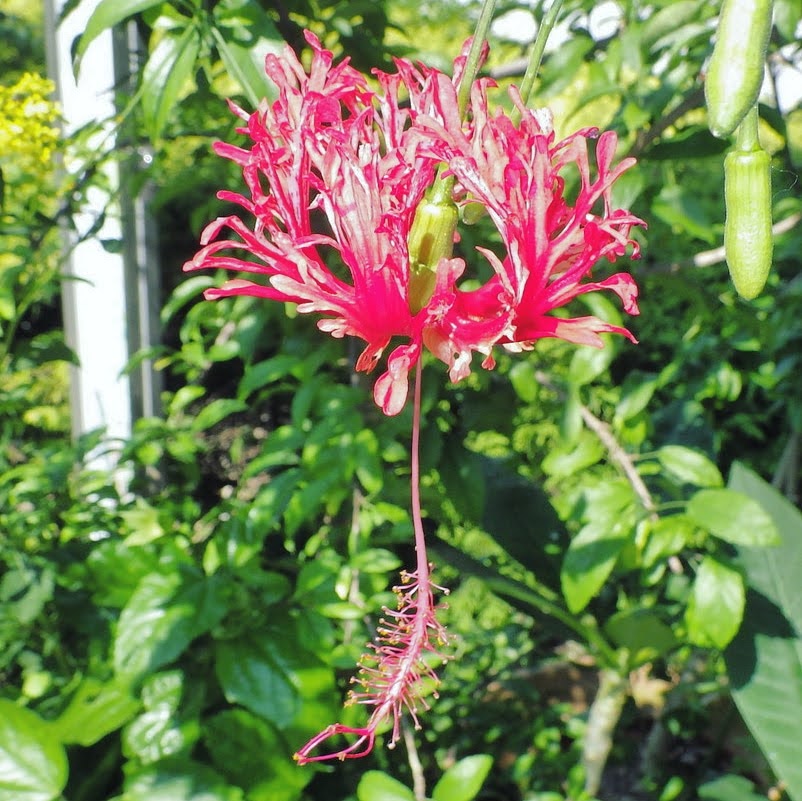
All of these trees belong to the genus Hibiscus in the Malvaceae family and are frequently cultivated in horticulture for ornamental purposes. Their most distinctive feature is the large, beautiful red to white flowers they produce. In the case of single-flowered varieties, a structure called the "pillar," which is a fusion of stamens and pistils, extends from the center of the five-lobed corolla.
These characteristics may often lead to confusion.
What are the differences between Hibiscus syriacus, Hibiscus mutabilis, and Hibiscus mutabilis?
Of these three species, the rose of Sharon and the hibiscus and Confederate rose are completely different species, with the Confederate rose being a variety of the hibiscus (Kanagawa Prefecture Flora Survey Association, 2018; Hayashi, 2019).
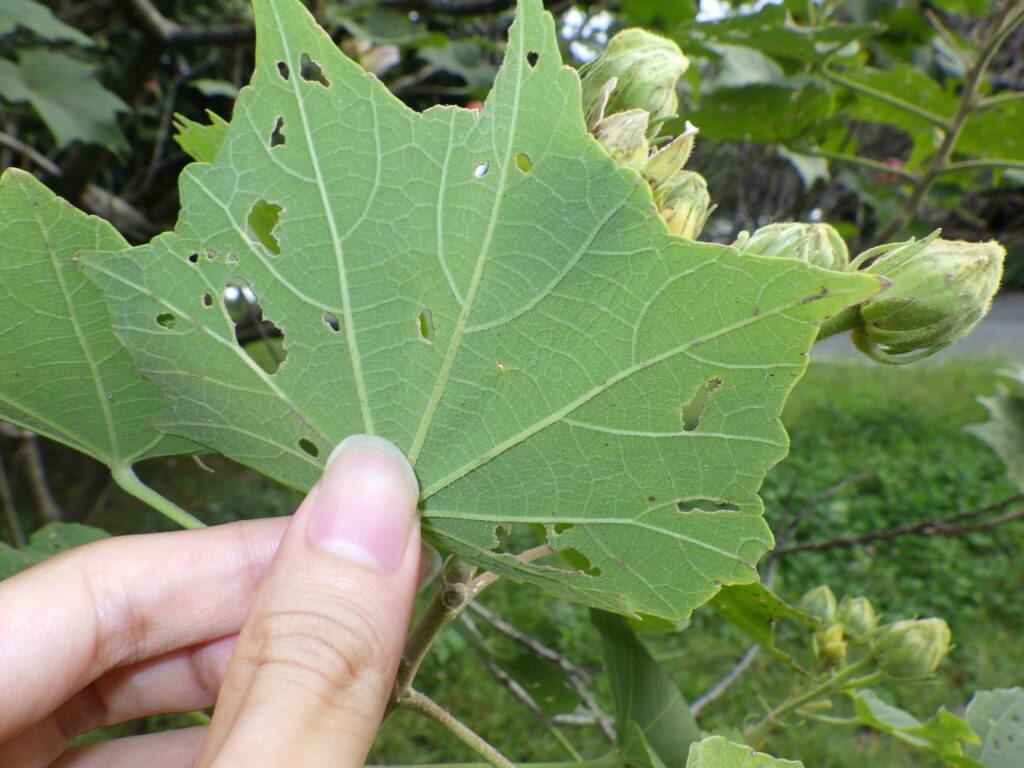
Looking at the leaves is crucial to understanding the specific differences.
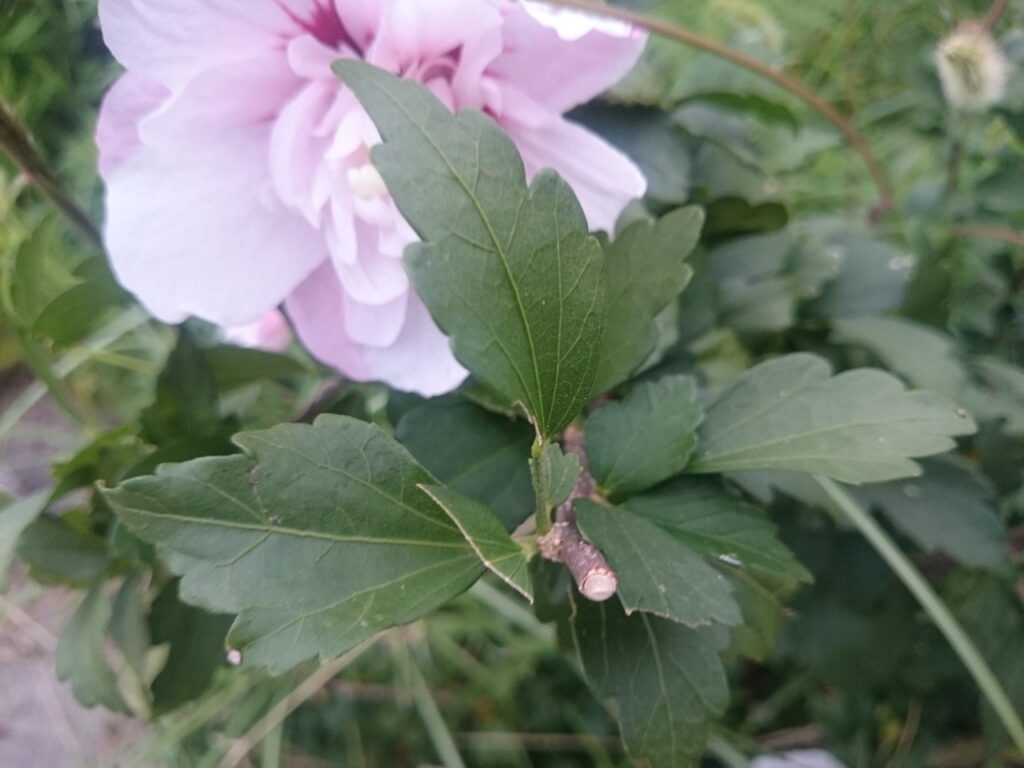
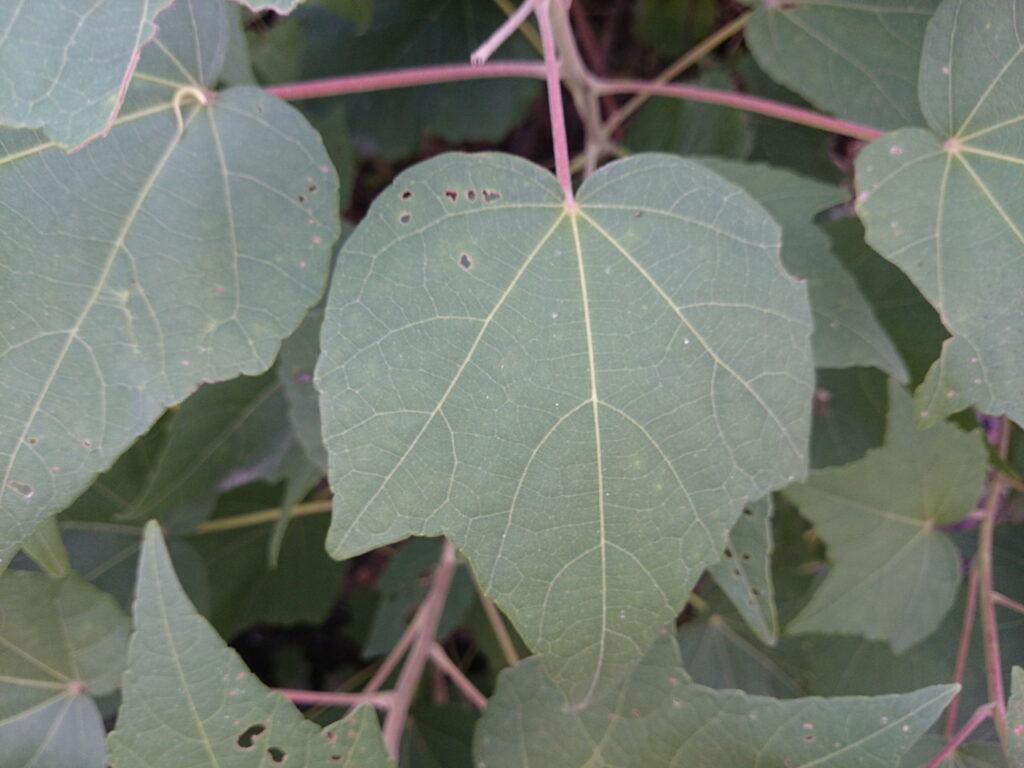
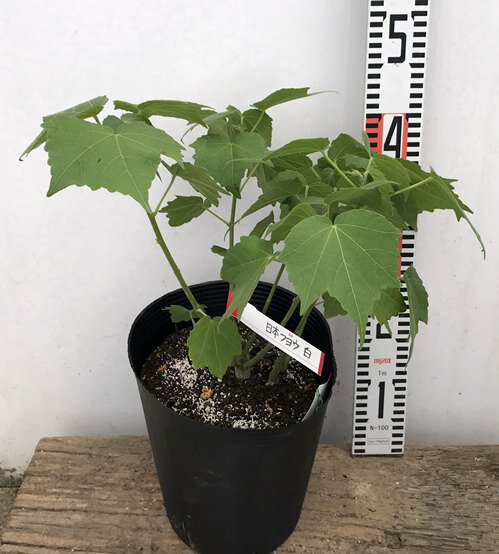
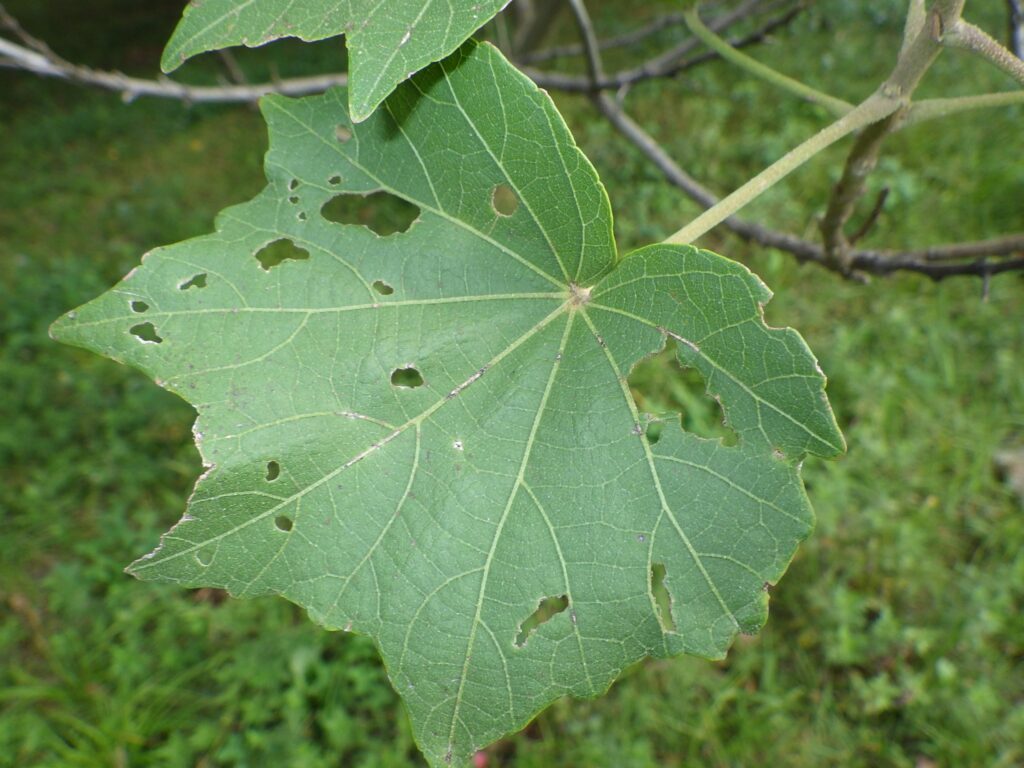
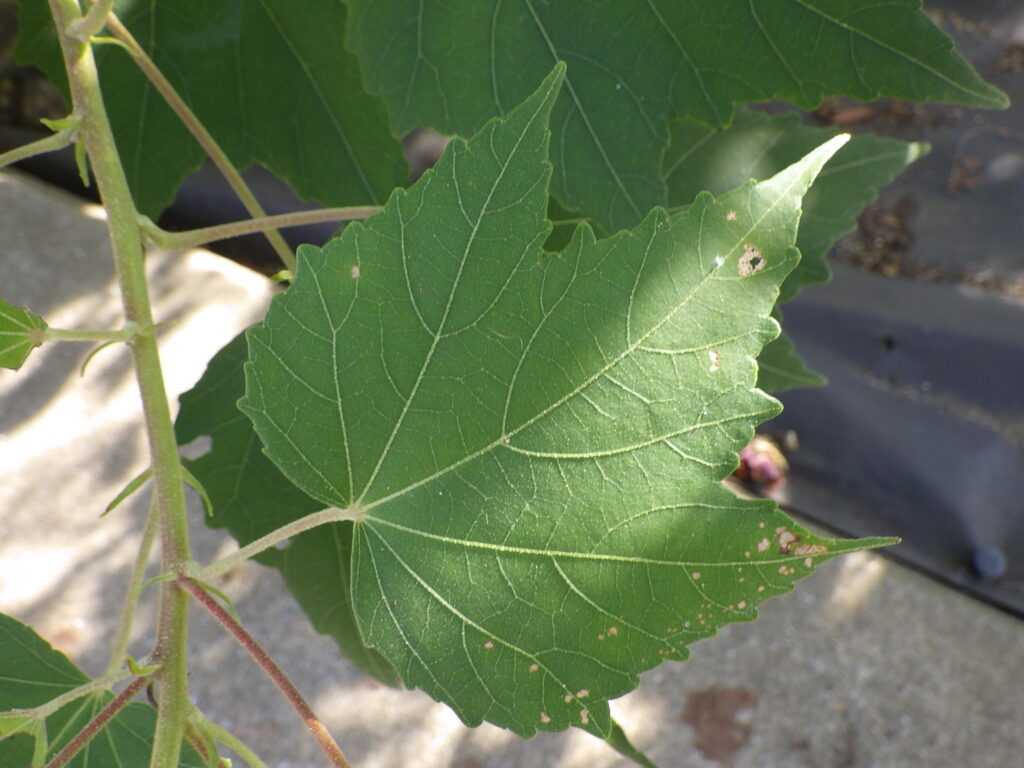
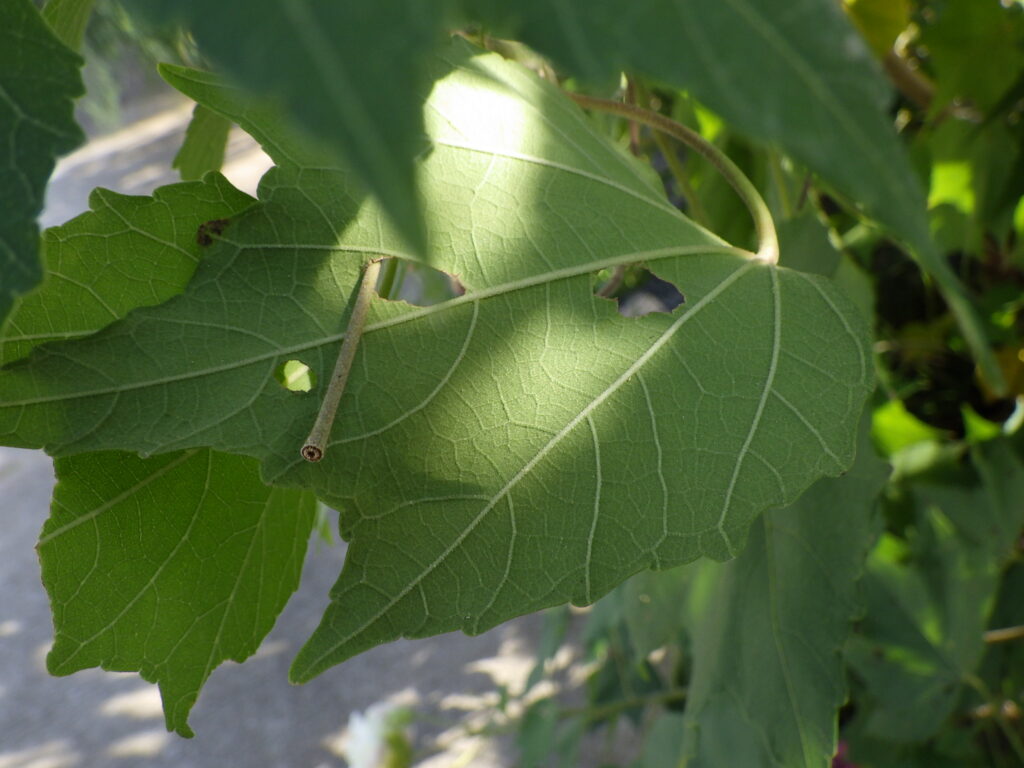
In the case of the rose of Sharon, the leaf blade is rhombo-ovate with a wedge-shaped base, whereas in the case of the hibiscus, the leaf blade is ovate with 3 to 7 angles and a heart-shaped base.
A more easily discernible difference is that the leaves of the rose of Sharon are hairless and glossy, while those of the hibiscus are hairy, rough, and lack gloss. This is immediately obvious.
The leaf stalks of the rose of Sharon are also shorter than those of the hibiscus.
Based on the above, it takes a little practice, but you can distinguish between the two types.
The difference between Hibiscus mutabilis and Hibiscus syriacus is at the variety level, so their basic structure is exactly the same.
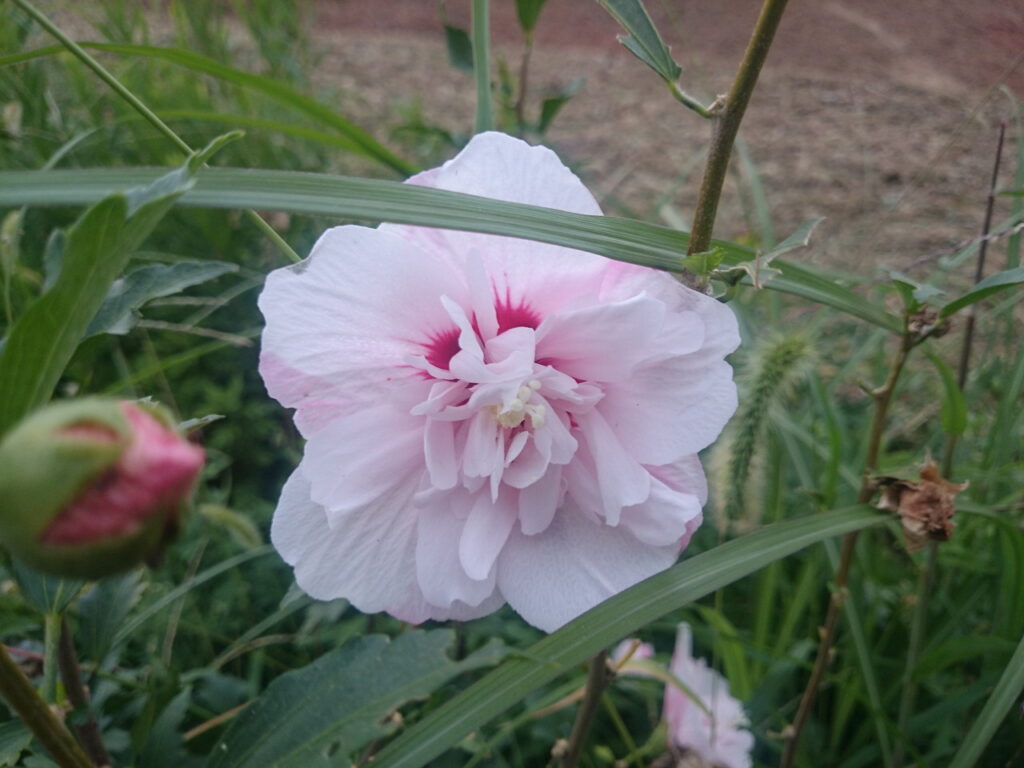
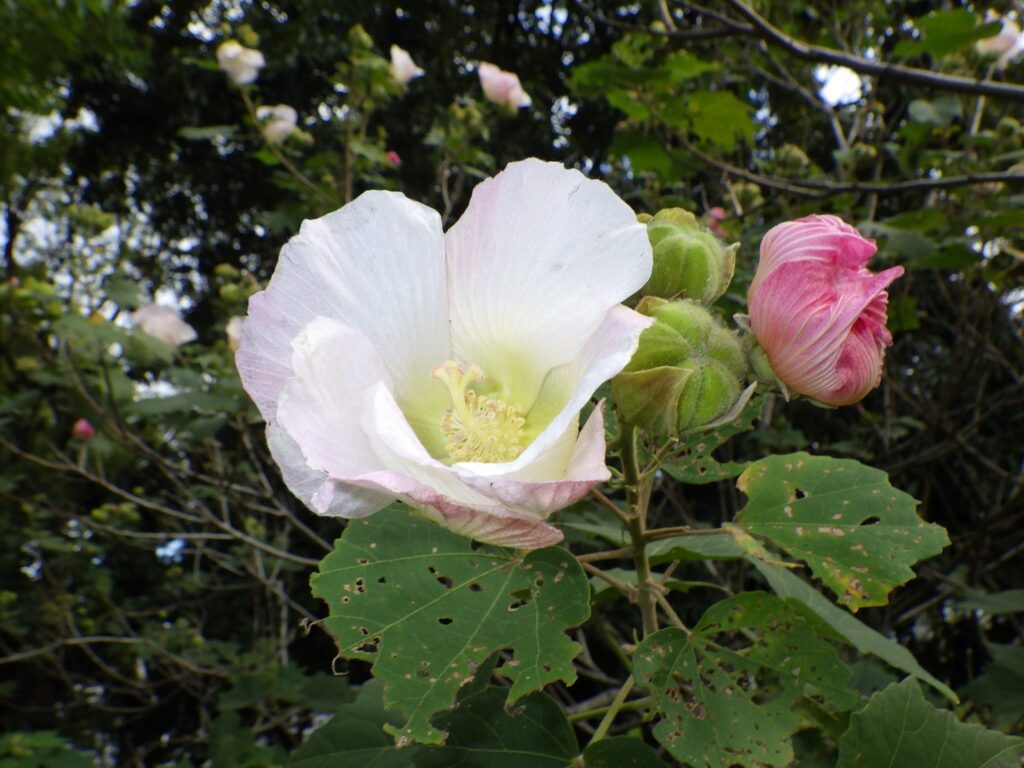
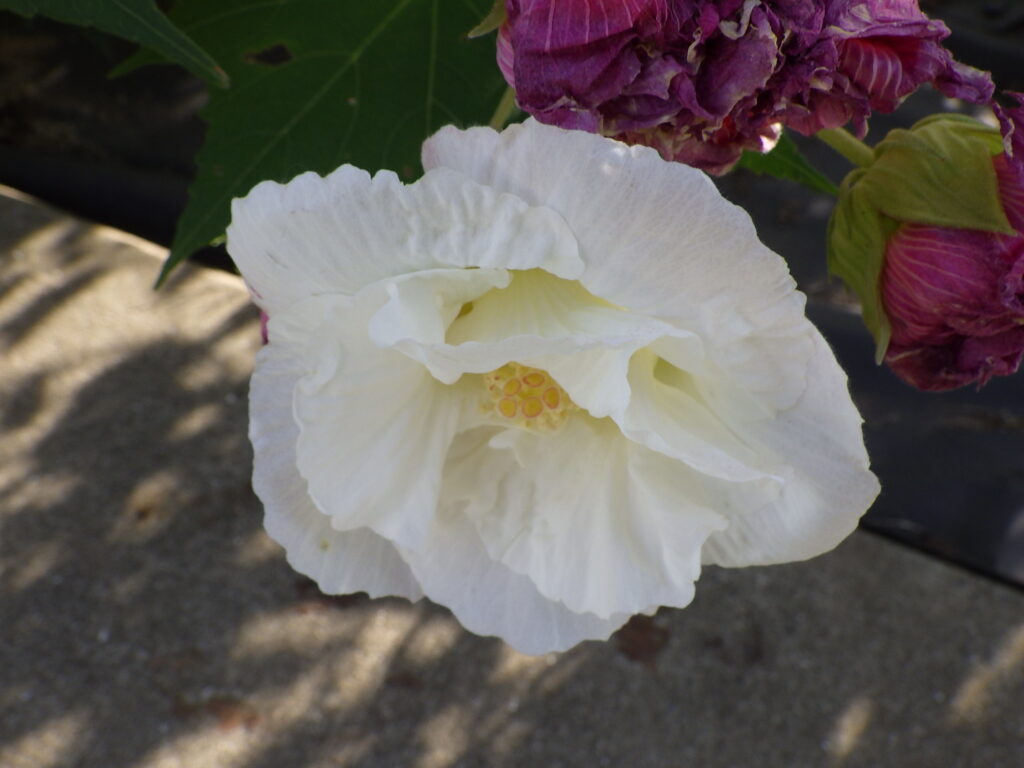
However, while the common hibiscus has single flowers and its color is fixed between red and white, the sweet hibiscus has double, larger flowers that change color from white to pink.
The fact that the color changes depending on the time of day is difficult to notice just by looking at it, but if the flowers are pale in color and double-flowered, you should suspect they are Confederate Roses (Hibiscus mutabilis). The Japanese name "Suifuyou" (酔芙蕉) is said to come from the fact that the way the flower changes color makes it look like someone is drunk from drinking alcohol.
Incidentally, the double-flowered variety, whose color remains unchanged, is called Yaefuyou Hibiscus mutabilis 'Flore Pleno'.
While there are many cultivated varieties of hibiscus, thanks to extensive breeding efforts, we will omit the details of their differences here.
Are there any other similar species?
For information on the differences between this hibiscus and the Sakishima hibiscus, which is even more similar, please see our separate article.
Other members of the same Hibiscus genus are introduced in a separate article.
References
Hayashi, Masayuki. 2019. Tree Leaves: Expanded and Revised Edition - Identifying 1300 Species Through Real-Life Scans. Yama-kei Publishers, Tokyo. 824pp. ISBN: 9784635070447
Kanagawa Prefecture Flora Survey Association. 2018. Kanagawa Prefecture Flora 2018 (Electronic Edition). Kanagawa Prefecture Flora Survey Association, Odawara. 1803pp. ISBN: 9784991053726
Mogi, Toru; Ota, Kazuo; Katsuyama, Teruo; Takahashi, Hideo; Shirokawa, Shiro; Yoshiyama, Hiroshi; Ishii, Hidemi; Sakio, Hitoshi; and Nakagawa, Shigetoshi. 2000. Flowers Blooming on Trees: Polypetalous Flowers (Vol. 2, 2nd edition). Yama-kei Publishers, Tokyo. 719pp. ISBN: 9784635070041