Euonymus japonicus, Euonymus fortunei, and Euonymus sieboldii all belong to the Euonymus genus of the Celastraceae family and are common trees in forests throughout Japan. Furthermore, they are frequently planted in urban areas for ornamental purposes and as hedges. These three species are broadly classified into Euonymus japonicus, Euonymus fortunei, and Euonymus sieboldii based on whether they are evergreen or deciduous, and Euonymus japonicus and Euonymus fortunei can be mainly distinguished by their growth patterns. Euonymus japonicus is sometimes confused with Aucuba japonica and Cleyera japonica, which are also evergreen trees, but their leaf and flower shapes are quite different upon closer observation. This article will explain the classification and morphology of the Euonymus genus.
What are Masaki, Tsurumasaki, and Mayumi?
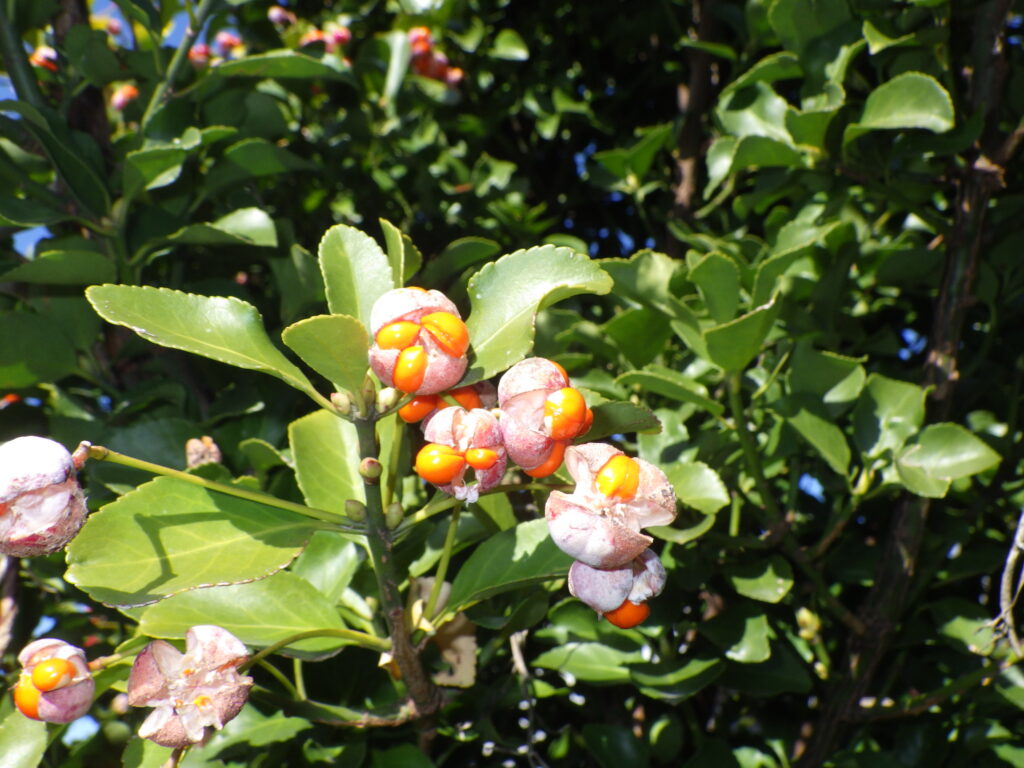
Euonymus japonicus, also known as Japanese spindle tree (Masaki), is distributed in Hokkaido (southern part), Honshu, Shikoku, Kyushu, the Ryukyu Islands, and the Ogasawara Islands in Japan, as well as in China. It is an evergreen shrub that grows abundantly in coastal areas and is used for hedges (Kanagawa Prefecture Flora Survey Association, 2018).
Euonymus fortunei var. radicans, also known as Tsurumasaki, is an evergreen climbing woody plant that grows in hilly to mountainous areas and is distributed in Hokkaido, Honshu, Shikoku, Kyushu, and Amami in Japan; as well as in southern Korea and China.
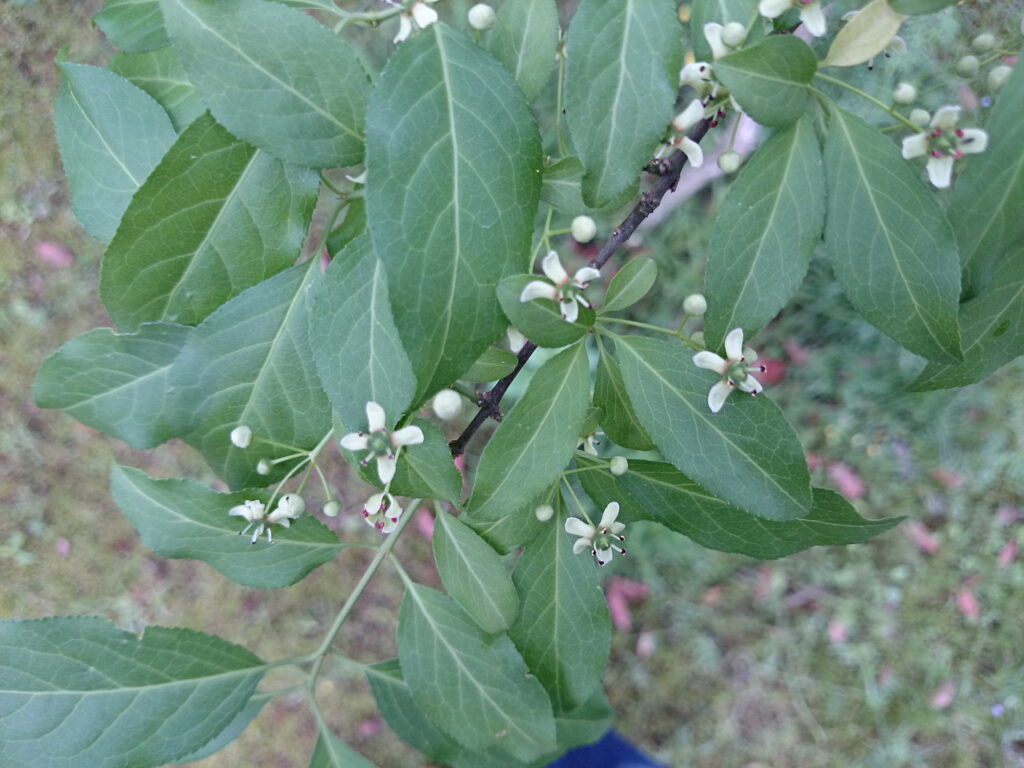
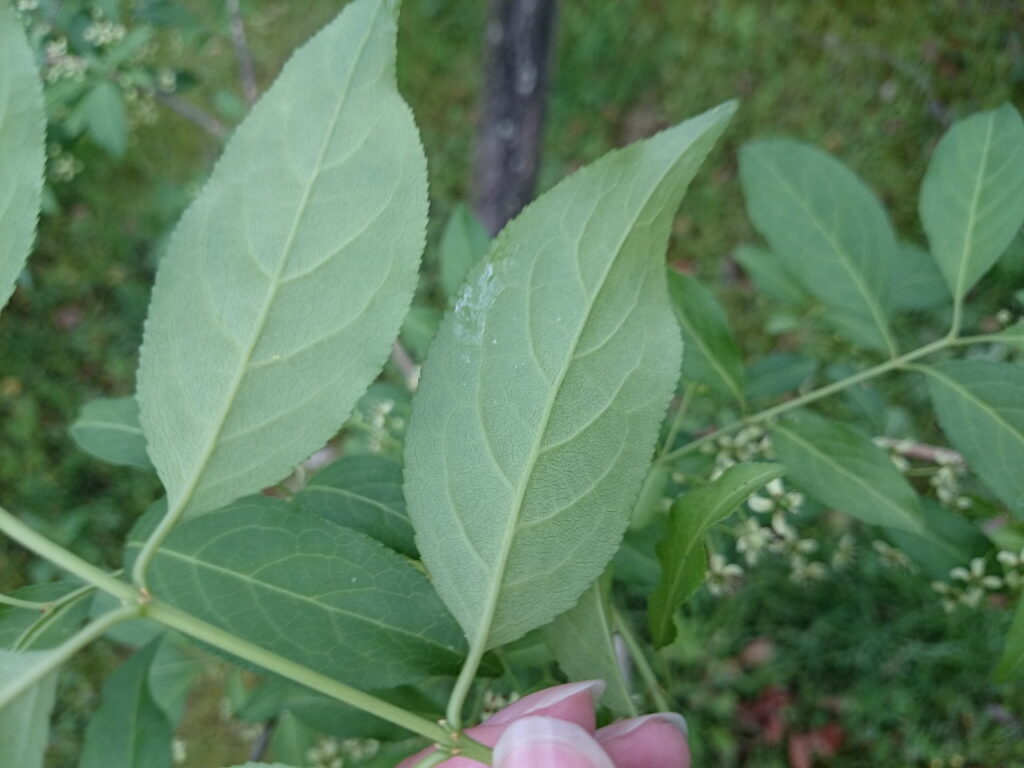
Mayumi (Euonymus sieboldianus var. sieboldianus), also known as Kansai Mayumi, is a deciduous shrub or small tree that grows in hilly and mountainous areas and is distributed in Honshu, Shikoku, Kyushu, Tsushima, and Yakushima in Japan, as well as in Korea and China.
Both belong to the Euonymus genus of the Celastraceae family and are common trees in forests throughout Japan. Furthermore, they are frequently planted in urban areas for ornamental purposes or as hedges, to the point that it seems you can't go a day without seeing them.
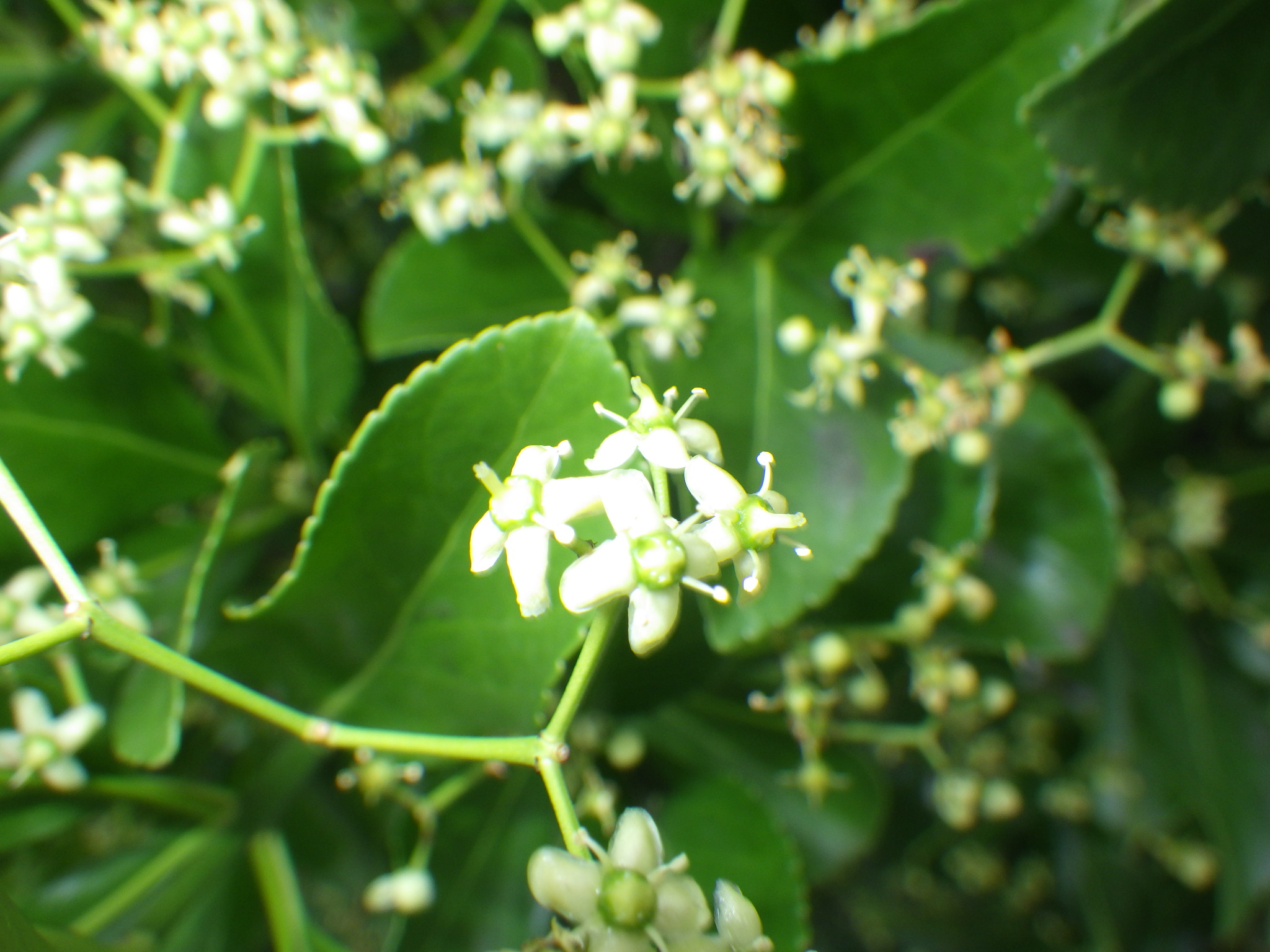
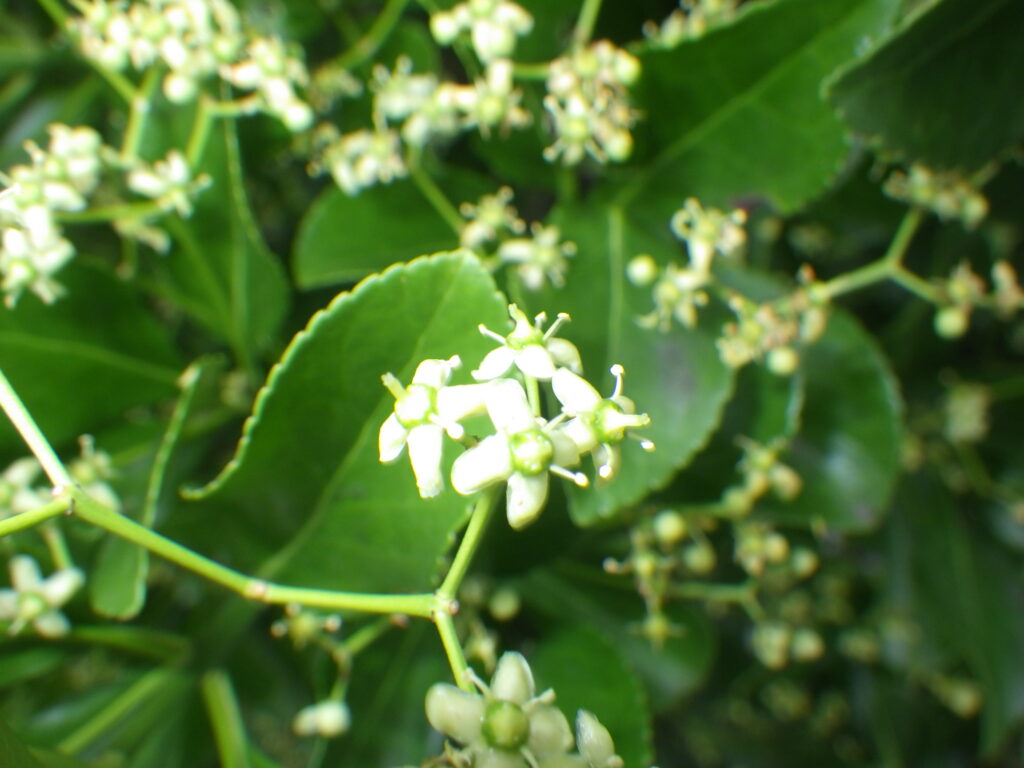
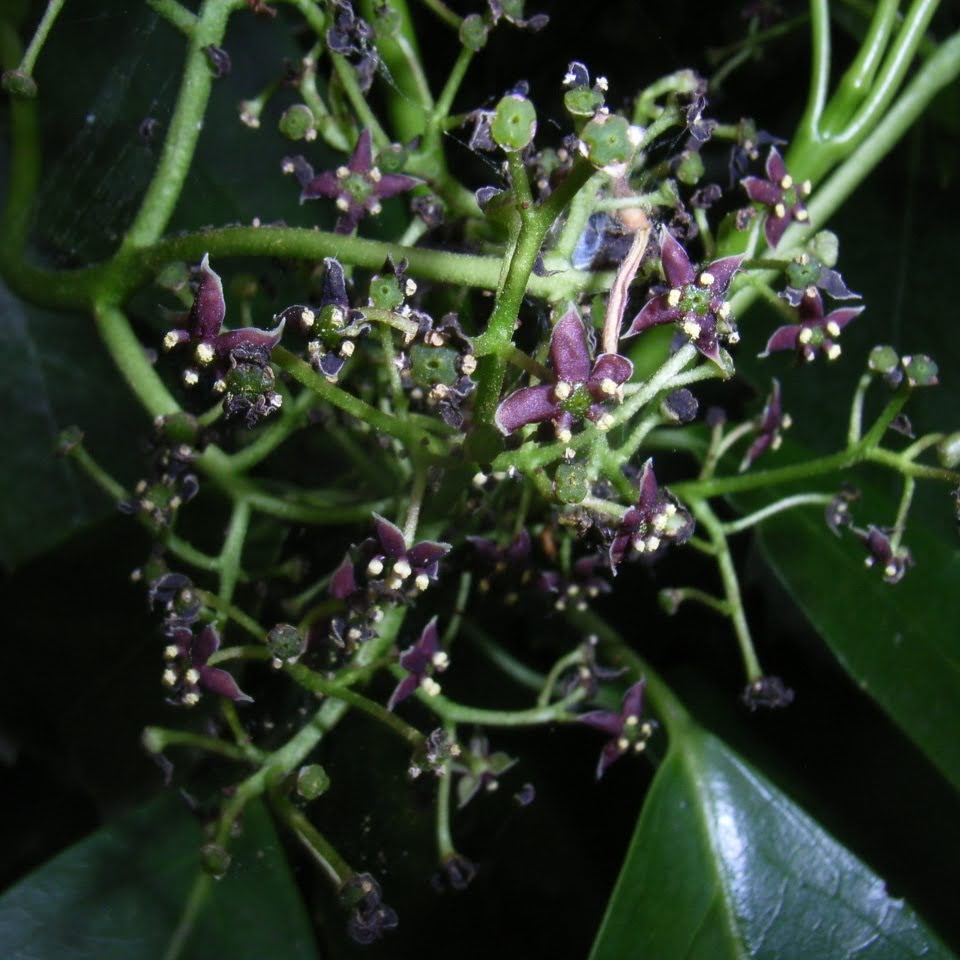
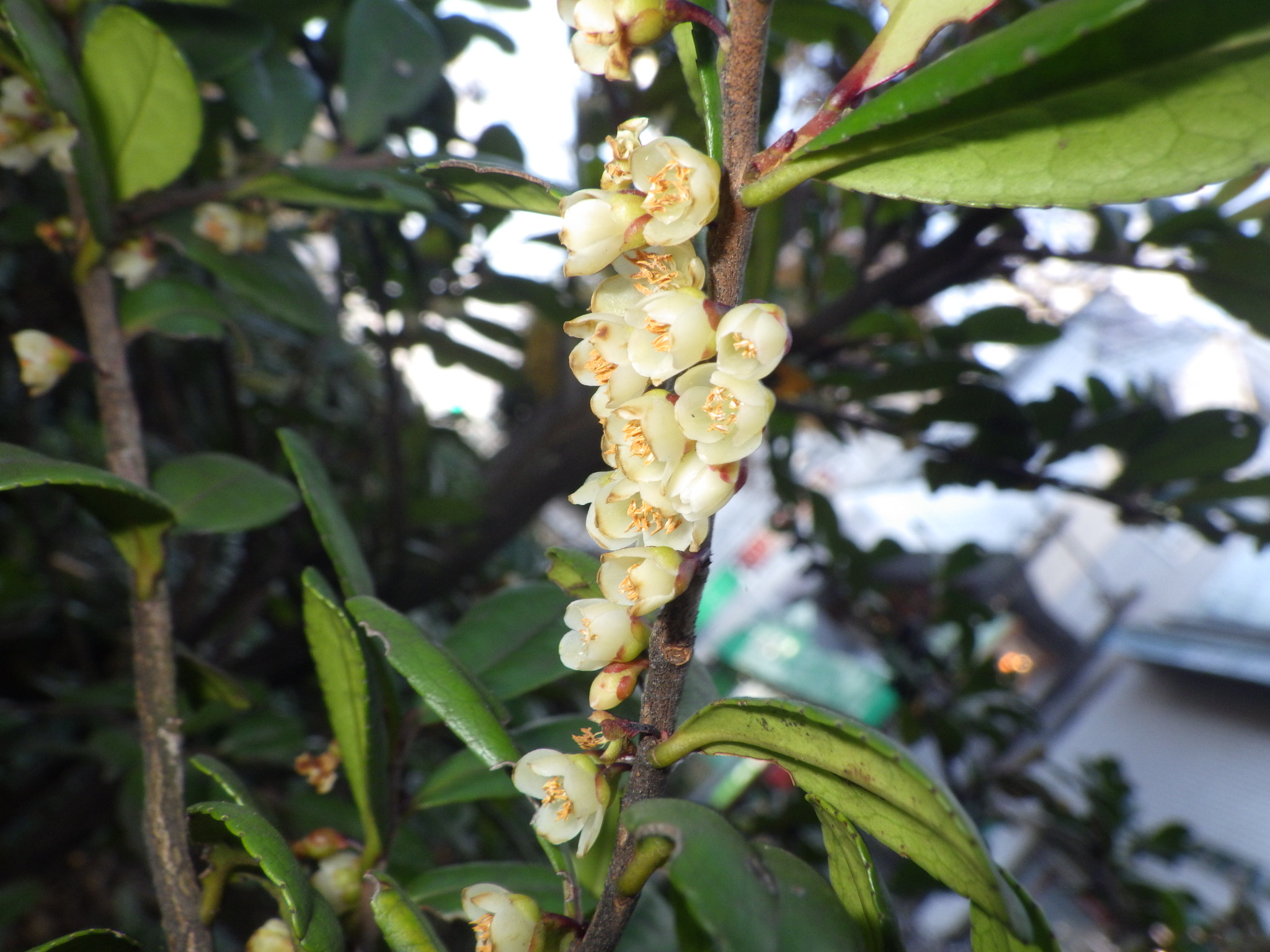
However, since they belong to the same genus, they are very similar in that their leaves have fine serrations and their flowers are white and composed of four petals, so some people might confuse them.
What are the differences between Euonymus japonicus, Euonymus fortunei, and Euonymus sieboldianus?
These three species can be broadly divided into two groups (Kanagawa Prefecture Flora Survey Association, 2018; Hayashi, 2019).
While Euonymus japonicus and Euonymus fortunei belong to the " Ilicifolius " section within the Euonymus genus, Euonymus sieboldii belongs to the " Melanocarya " section.
Therefore, there are differences in their characteristics; specifically, Euonymus japonicus and Euonymus fortunei are evergreen trees, while Euonymus sieboldianus is a deciduous tree.
In other words, while Euonymus japonicus and Euonymus fortunei retain their leaves even in winter, Euonymus sieboldii loses its leaves in winter, leaving only branches.
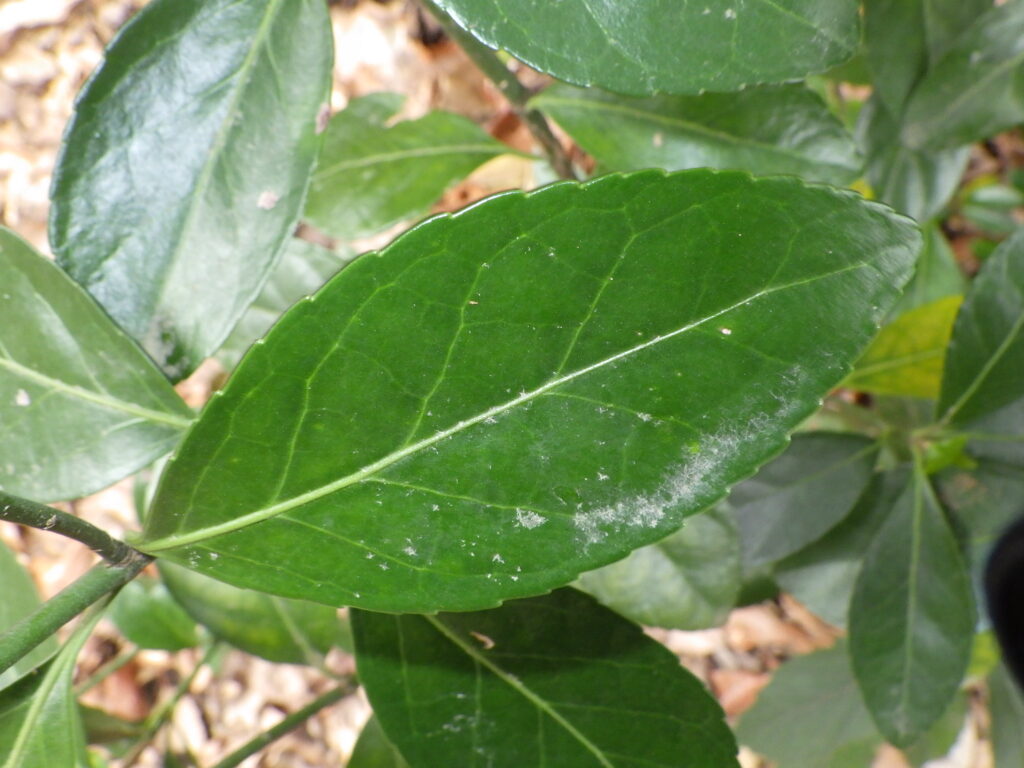
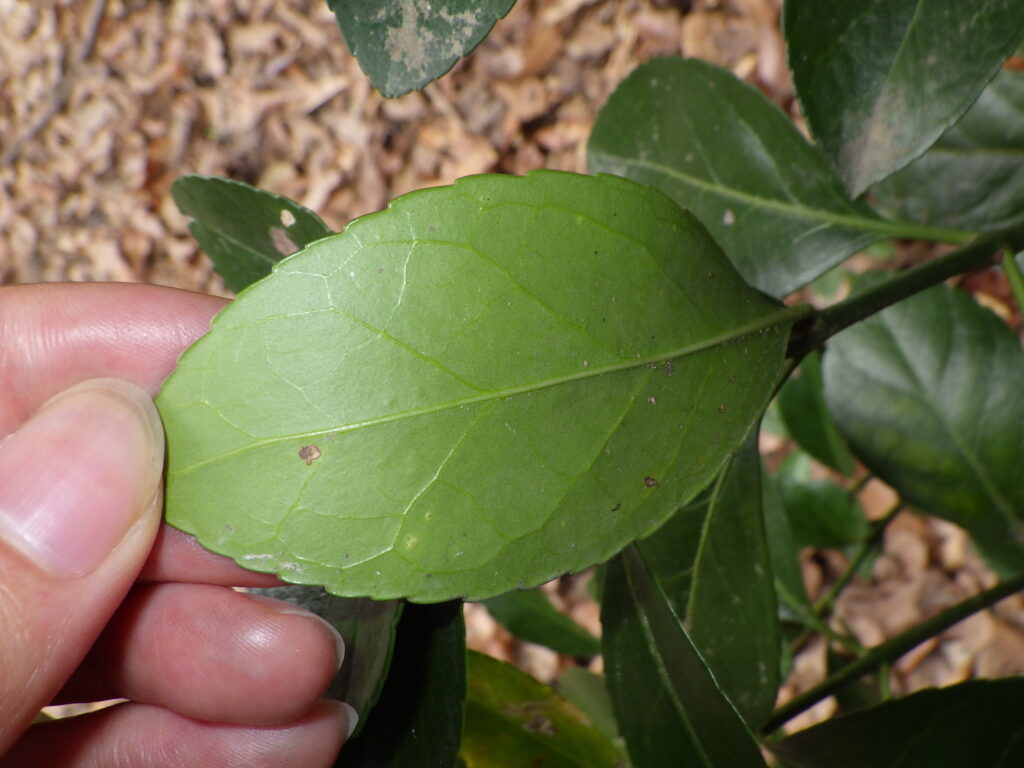
You can determine whether a tree is evergreen or deciduous even outside of winter. Euonymus japonicus and Euonymus fortunei are evergreens and have glossy, thick leaves like most trees, while Euonymus sieboldii are deciduous and have thin, dull leaves like most trees.
These points can be used to broadly categorize them.
Furthermore, regarding the flowers, there is a difference in that the flower stalks of Euonymus japonicus and Euonymus fortunei are thick and short, while those of Euonymus sieboldii are thin and long.
While there are few reliable distinguishing features between Euonymus japonicus and Euonymus fortunei, the main difference is that Euonymus japonicus is an upright shrub, while Euonymus fortunei is a climbing woody plant.
Furthermore, while the size of the leaves in Euonymus japonicus is basically the same regardless of where they grow from, Euonymus fortunei has a difference in that it has much smaller leaves, about 2-3 cm in size, on branches that creep along the ground.
I think it's best to distinguish them based on these two points. I've also checked botanical guides that describe the differences between the leaves of Euonymus japonicus and Euonymus fortunei, but since there is considerable variation in the leaves of these two species, I don't think they are very helpful.
I haven't observed any clear differences regarding the flowers either.


What are the varieties of Euonymus japonicus, Euonymus fortunei, and Euonymus sieboldianus?
Euonymus japonicus, Euonymus fortunei, and Euonymus sieboldii all exhibit considerable variation, and a large number of varieties are known.
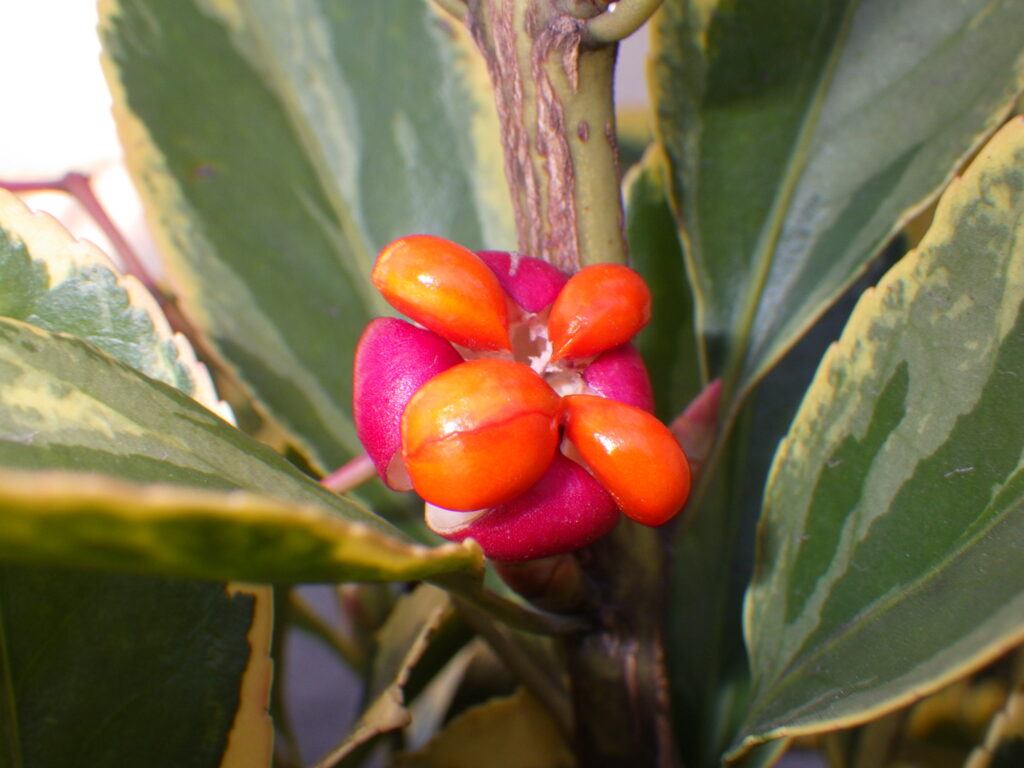
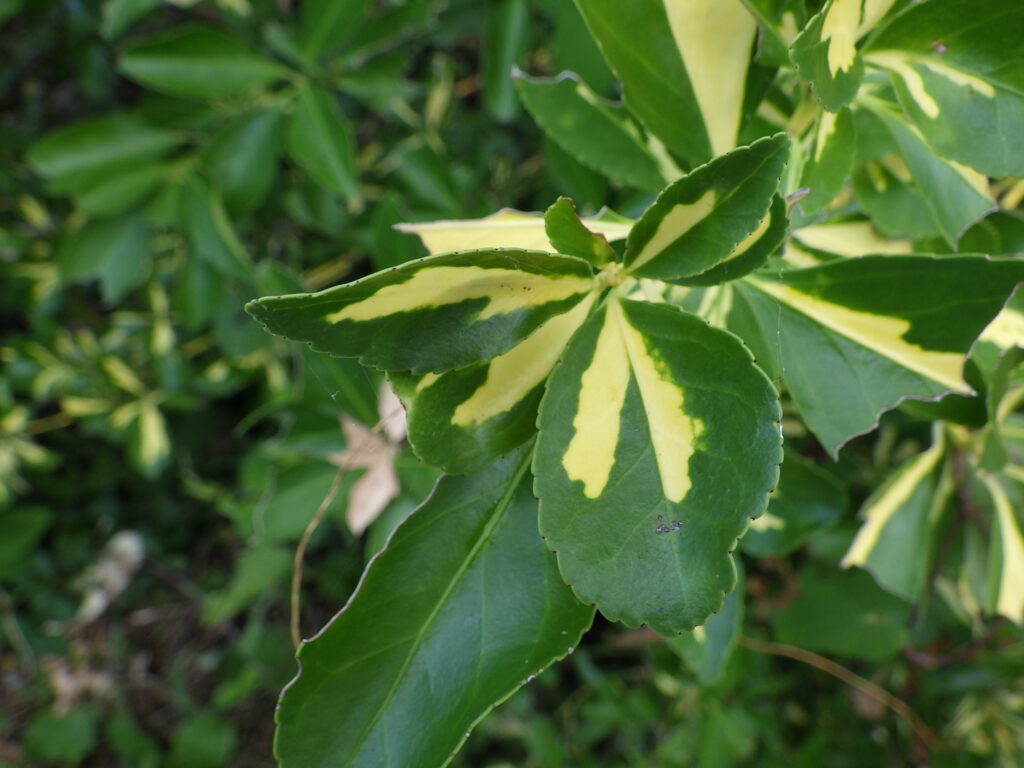
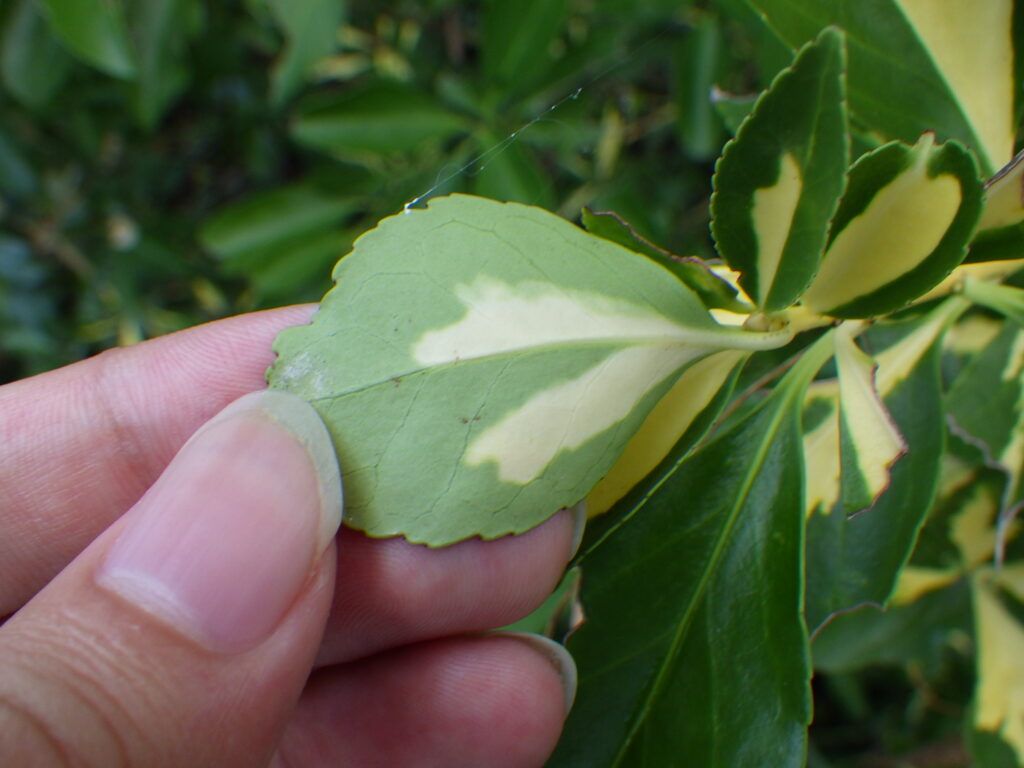
Besides the long-lasting bracts of Euonymus japonicus, Euonymus rugiosus, which has very uneven leaves, and the large-leaved Euonymus macrophyllus, there are also variegated varieties such as 'Albomarginatus' with white variegation, Euonymus aureovariegatus with yellow variegation, and Euonymus nakawaensis and Euonymus kiifukurinensis, which have yellow variegation inside the leaves. On the coast, there are also Euonymus kaiganensis var. littoralis, Euonymus sieboldiana var. obovatus, and Euonymus radicifer, but the detailed differences between them are not well known.
There are several varieties of Euonymus fortunei, including Euonymus fortunei f. angustifolius, Euonymus fortunei f. carrierei, and Euonymus fortunei f. rugosus, which has leaves with a pronounced uneven surface.
There are several varieties of Euonymus, including Euonymus yedoensis var. yedoensis, which has stronger and larger branches and leaves than the parent species; Euonymus megaphyllus var. megaphyllus, which is distributed in Hokkaido and Honshu (Hokuriku region and Sado Island); and Euonymus yumotoensis var. sanguineus, which has papillae on the veins on the underside of the leaves.
What are the differences between Masaki, Aoki, and Sakaki?
The differences between Euonymus japonicus, Aucuba japonica, and Cleyera japonica are also frequently searched for on the internet. Indeed, they are all evergreen trees that are commonly cultivated in urban areas.
However, Aucuba japonica belongs to the Aucubaceae family, while Cleyera japonica belongs to the Cleyera family, so their classifications are completely different.
The leaves of the Sakaki tree are entire and have no serrations, unlike the Masaki tree which has serrated leaves.
The leaves of Aucuba japonica are large and have coarse serrations, unlike those of Euonymus japonicus, which have small, fine serrations.
The other flowers and fruits are completely different. Please compare them with the photos in the other article for more details.
References
Hayashi, Masayuki. 2019. Tree Leaves: Expanded and Revised Edition - Identifying 1300 Species Through Real-Life Scans. Yama-kei Publishers, Tokyo. 824pp. ISBN: 9784635070447
Kanagawa Prefecture Flora Survey Association. 2018. Kanagawa Prefecture Flora 2018 (Electronic Edition). Kanagawa Prefecture Flora Survey Association, Odawara. 1803pp. ISBN: 9784991053726