Eurya japonica, Eurya japonica var. japonica, and Sakaki cypress all belong to the family Podocarpaceae (also known as the Theaceae family). In particular, Eurya japonica and Sakaki cypress have been considered "yorishiro" (objects that house deities) in Shintoism since ancient times and have been traditionally cultivated in Japan. However, their names are similar, and they may often be confused. However, the differences between them are quite clear when compared. They can be broadly divided into two groups: Eurya japonica/Eurya japonica var. japonica and Sakaki cypress, with significant differences in leaf arrangement, leaf margins, and sexual systems. Eurya japonica and Eurya japonica var. japonica can be reliably distinguished by observing their habitats, as well as their leaf veins, leaf tips, and leaf margins. The flowers of Eurya japonica, which bloom in early spring, seem to rely on small, cold-hardy bees and flies for pollination. This article will explain the classification, morphology, and ecology of the genera Eurya japonica and Sakaki cypress.
What are Hisakaki, Hamahisakaki, and Sakaki?
Eurya japonica, also known as Hime-sakaki, is an evergreen small tree or shrub widely distributed throughout Japan (south of Iwate and Akita prefectures), Shikoku, Kyushu, the Ryukyu Islands, and the Ogasawara Islands, as well as southern Korea, except in the beech forest zone.
Eurya emarginata, also known as beach prawn sakaki, is an evergreen small tree that grows abundantly along the coast and is distributed in Honshu (west of Chiba Prefecture), Shikoku, Kyushu, and Okinawa in Japan; the Korean Peninsula; and China. It is also used in park plantings and as a street tree.
Sakaki (Cleyera japonica) is also known as Honsakaki or Masakaki. It is an evergreen small tree that grows in mountainous areas and is distributed in Honshu (southwest), Shikoku, Kyushu, and the Ryukyu Islands in Japan; as well as in Korea, China, and Taiwan.
Both belong to the family Cleyera (or Theaceae), and in particular, Hisakaki and Sakaki have been considered "yorishiro" (objects that house the spirits of the gods) in Shinto since ancient times. They are widely planted in shrines and are also offered at household altars, placed in ceramic flower vases called "sakaki-tate" (however, nowadays, Chinese specimens are often used (Dai & Fujishima, 2010)).
Morphologically, both are evergreen trees, their flowers have five sepals and five petals that are fused together at the base, and their fruits ripen to black.
Furthermore, their names are similar, so they are often confused. The fact that their leaves are not particularly distinctive, and their flowers and fruits are quite inconspicuous, also contributes to the difficulty in distinguishing them.
What are the differences between Eurya japonica, Eurya japonica, and Sakaki?
However, although all three species belong to the family Theaceae, there are considerable morphological differences between them, as Eurya japonica and Eurya japonica are in the genus Eurya japonica, while Sakaki is in the genus Sakaki (Kanagawa Prefecture Flora Survey Association, 2018).
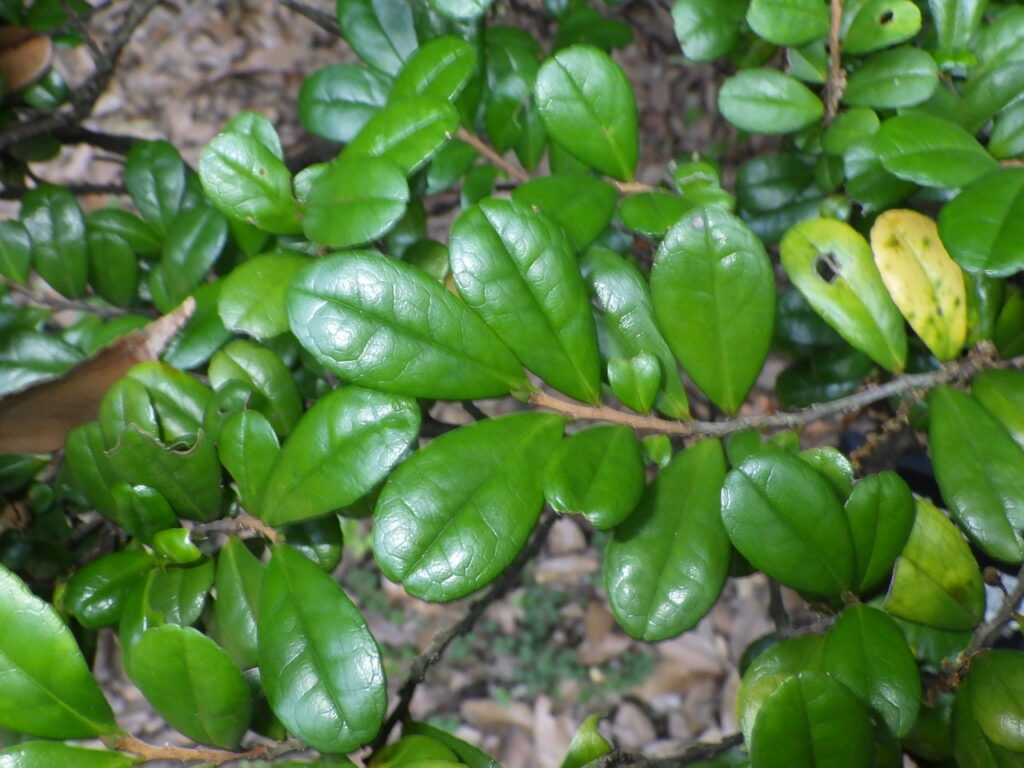
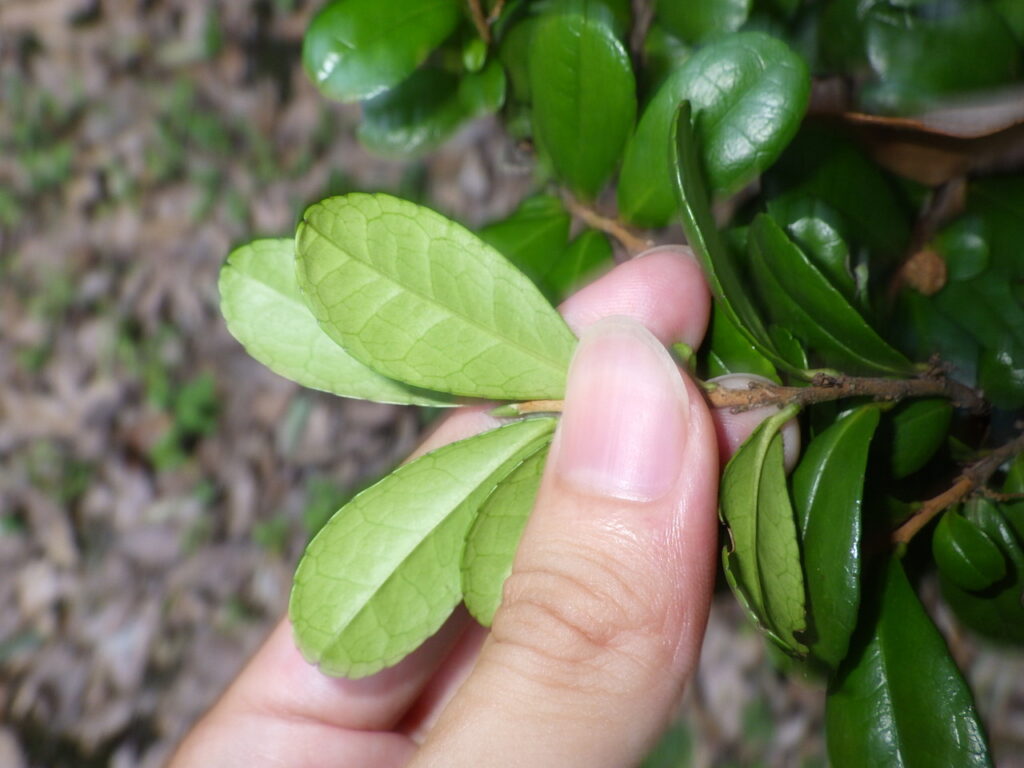
First, there is a difference in that the leaves of Eurya japonica and Eurya japonica are arranged in two rows and have serrated edges, while the leaves of Sakaki are arranged spirally and have entire edges.
This is the easiest difference to spot, and it's often sufficient to distinguish between them.
Just to add, there's another difference: Eurya japonica and Eurya japonica have unisexual flowers and are dioecious (having separate male and female plants), while Sakaki has hermaphroditic flowers and is monoecious (having both male and female flowers on the same plant).
In other words, while a single flower of Eurya japonica and Eurya japonica has either stamens or pistils, Sakaki has both stamens and pistils.
This point also helps us understand that these differ at the genus level.
I think it's easiest to distinguish between Eurya japonica and Eurya japonica by the shape of their leaves.
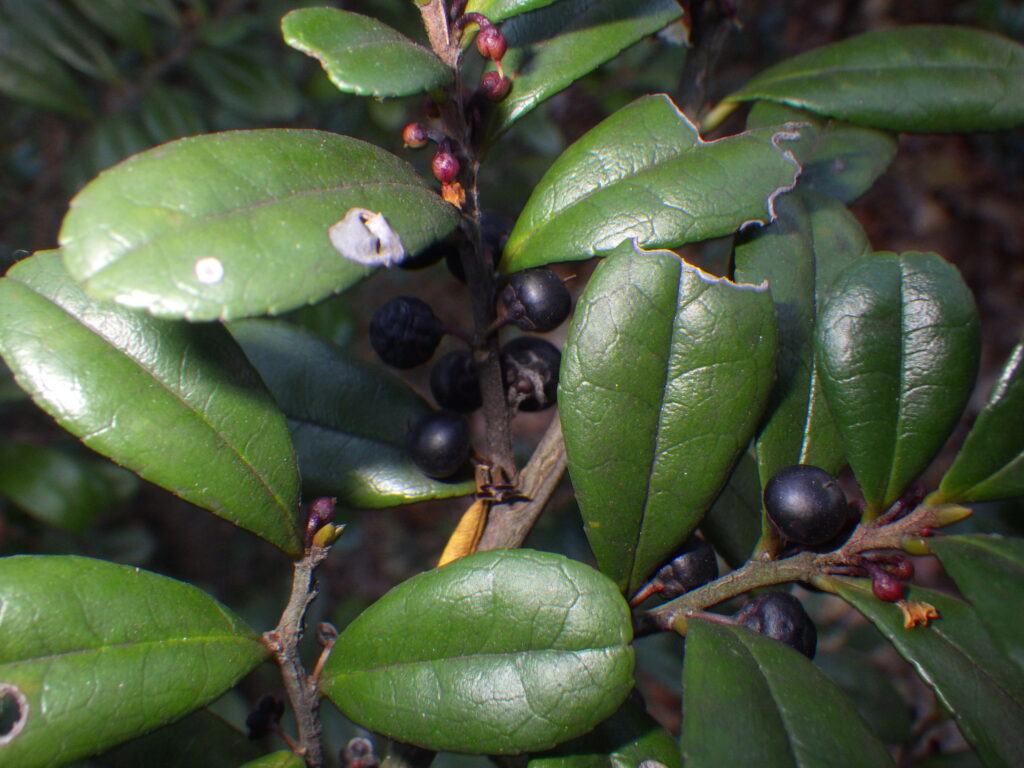
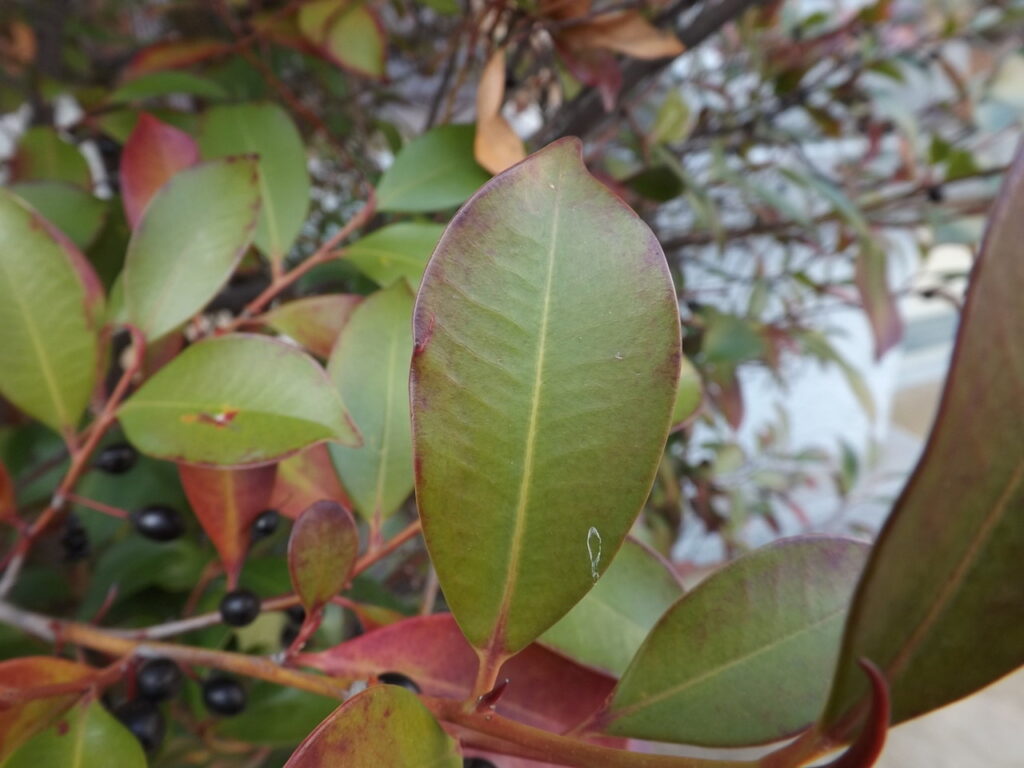
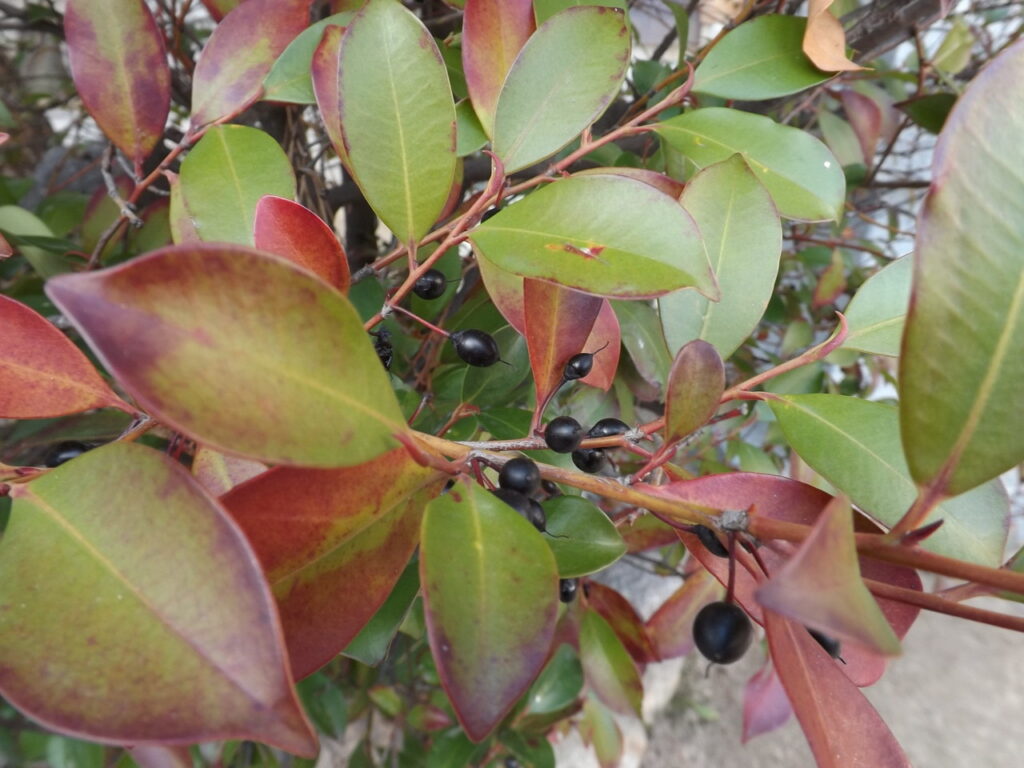
In Eurya japonica, the leaf tips are pointed, the veins are inconspicuous, and the leaf margins are flat, whereas in Eurya japonica, the leaf tips are concave, the veins are concave and prominent, and the leaf margins are curved backward.
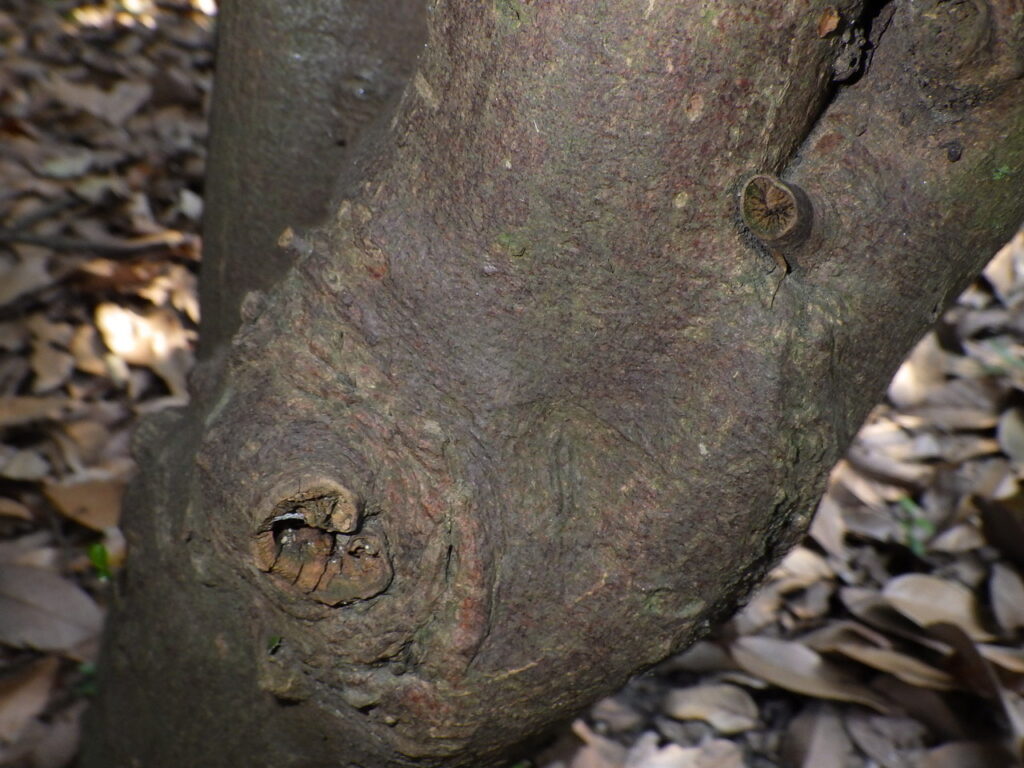
While it's worth noting that the young branches of Eurya japonica are hairless, sometimes with sparse hairs only at the top, and remain green for a long time, compared to Eurya japonica, whose young branches are densely hairy and quickly turn grayish-brown, this difference should only be considered as a general guideline.
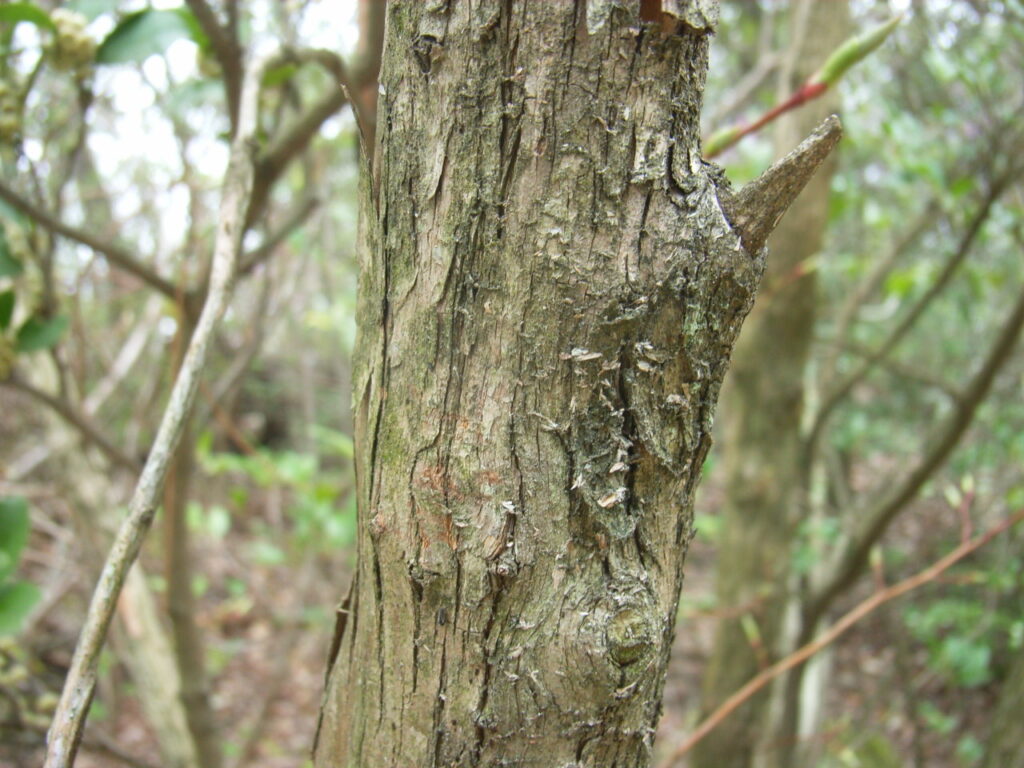
As mentioned above, in the wild, Eurya japonica tends to grow in forests, while Eurya japonica tends to grow on coastlines.
How is Eurya japonica pollinated?
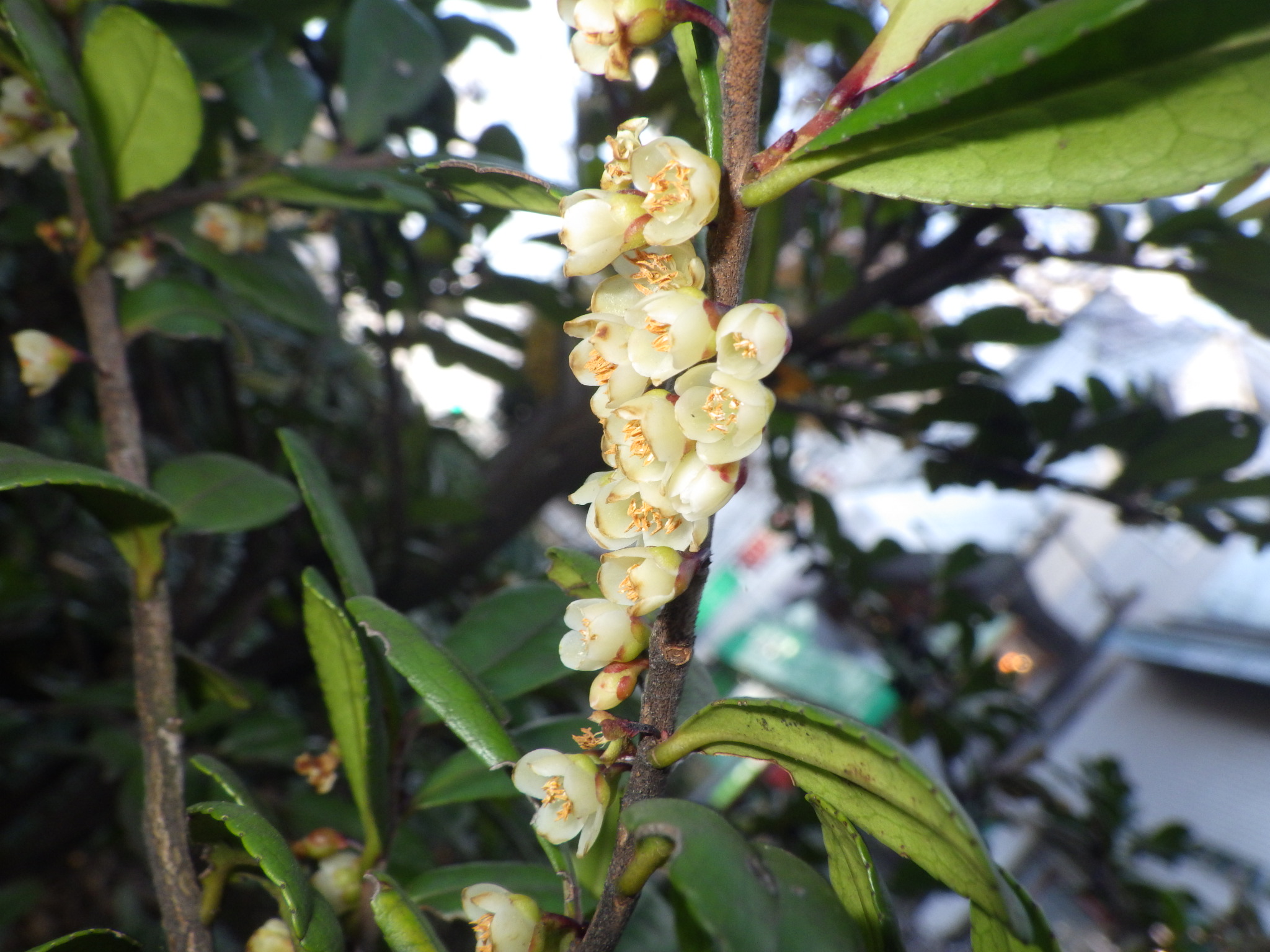
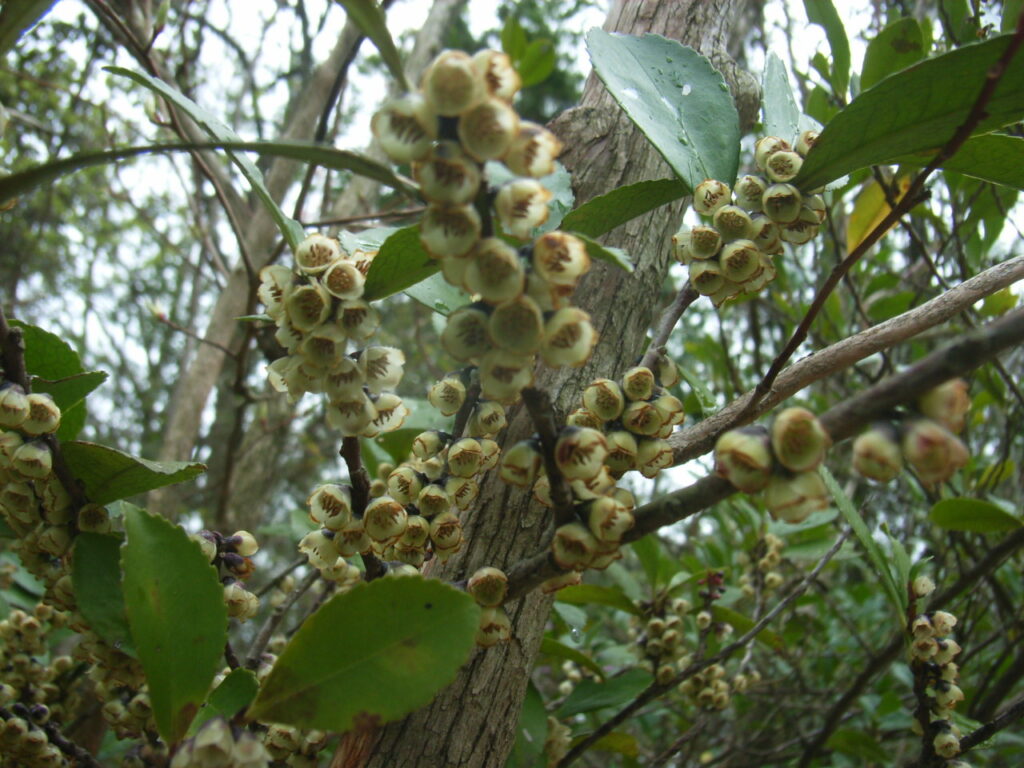
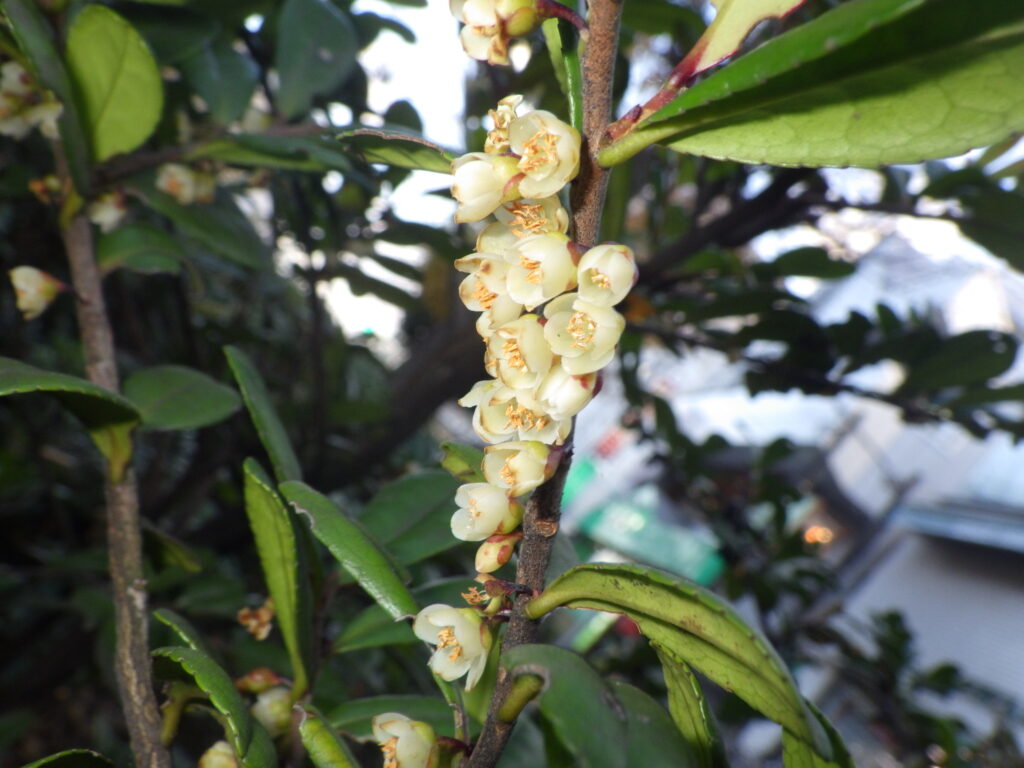
Eurya japonica is dioecious, with a flowering period from March to April (Mogi et al., 2000). It bears clusters of 1 to 3 bell-shaped to urn-shaped flowers in the leaf axils. The flowers are 2.5 to 5 mm in diameter, bloom facing downwards, and have a strong odor. Female flowers are smaller than male flowers. The petals are yellowish-white and number 5, slightly fused at the base. The sepals are dark purple and number 5. The pedicels are short, about 2 mm long.
Male flowers have 12 to 15 stamens, but female flowers have reduced stamens, and there is only one pistil, which is also reduced in male flowers. The style of the pistil is deeply three-lobed and curves backward.
The Eurya japonica is one of the first trees to bloom in spring and is quite noticeable as it often grows in forests and around shrines. It is clearly an insect-pollinated flower, but what kind of insects pollinate it?
One interesting point is that Eurya japonica is dioecious, meaning it has separate male and female plants. In dioecious plants, pollination during periods of low temperature is generally considered difficult because it limits the activity of flower-visiting insects. However, this is not the case with Eurya japonica, and many individuals can be seen.
A recent study on this point was conducted in Japan (Tatsuno et al., 2023).
These results indicate that flies (especially Empididae and Chironomidae) and bees (Hymenoptera) are the primary visitors to the flowers. Furthermore, Hymenoptera visitors were more active at high temperatures, while Diptera were observed even at low temperatures.
Even more interestingly, in areas with a higher concentration of dipteran visitors, the fruiting rate and seed count were higher.
Diptera (flies) are generally far inferior to Hymenoptera (bees and wasps) in terms of pollination, as they are more social (they raise their young). However, they compensate for this shortcoming by having a very large number of individuals visiting flowers.
In other words, the Eurya japonica tree cleverly utilizes two groups of insects to successfully pollinate even during periods when insects are scarce.
How do you disperse the seeds of Eurya japonica?
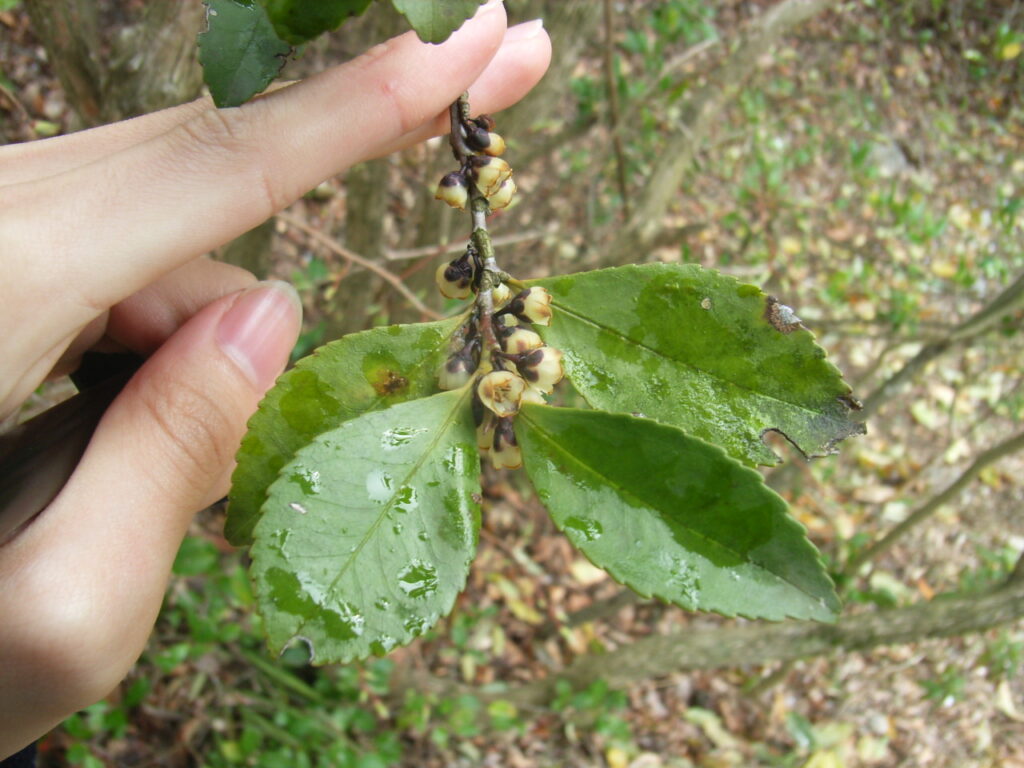
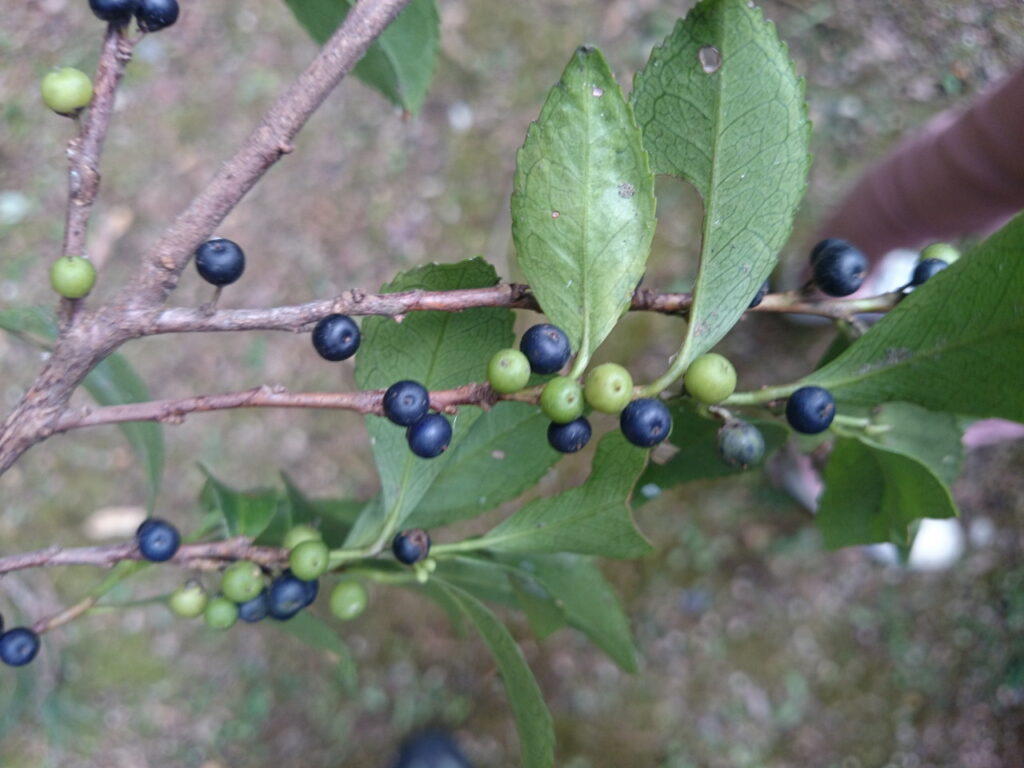
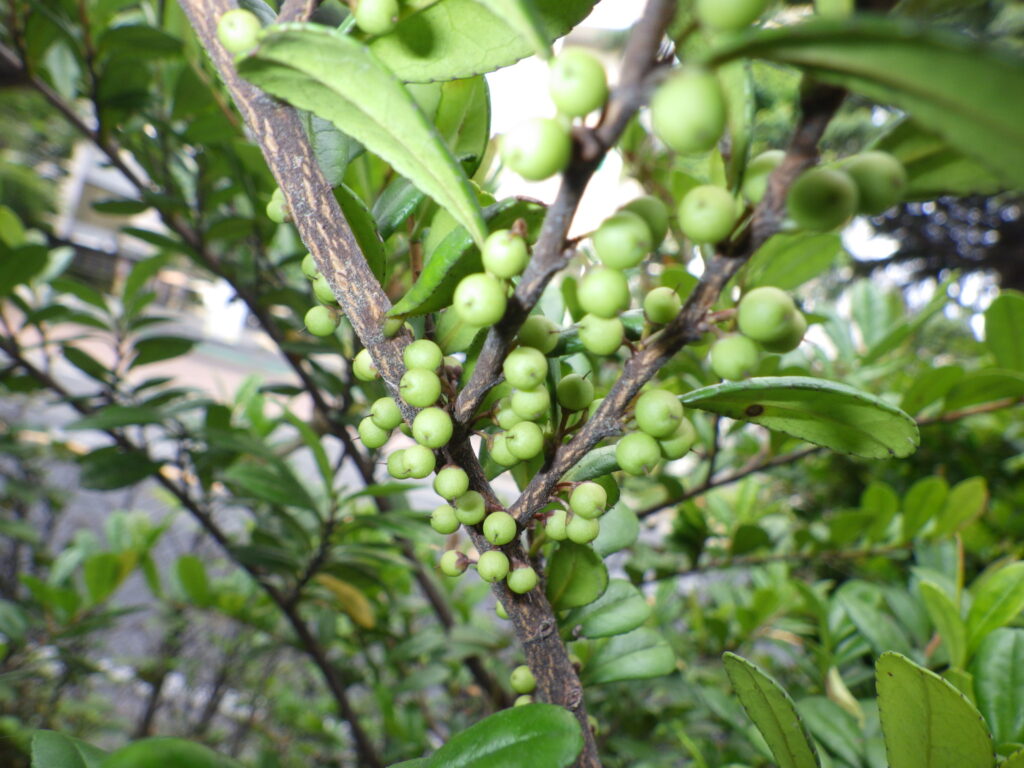
The fruit of the Eurya japonica is a berry, spherical in shape with a diameter of 4-5 mm, ripening to a dark purple color in October and November, and containing numerous seeds.
It is believed that the fruits of Eurya japonica are mostly eaten by birds, thus dispersing the seeds (Manabe et al., 1993; Imanishi, 2006). Specifically, these include brown-eared bulbuls, pale thrushes, starlings, and Japanese white-eyes.
While young Eurya japonica trees can be seen in various places in secondary forests, this is likely largely due to seed dispersal by birds.
References
Dai, Songjun & Fujishima, Koji. 2010. Export strategies and profitability of Sakaki-producing areas in China. Agricultural Market Research 19(1): 42-47. https://doi.org/10.18921/amsj.19.1_42
Imanishi, Ayumi. 2006. * Eurya japonica Thunb.*. Journal of the Japanese Society of Landscape Architecture 32(2): 374. http://www.jsrt.jp/pdf/dokomade/32-2hisakaki.pdf
Kanagawa Prefecture Flora Survey Association. 2018. Kanagawa Prefecture Flora 2018 (Electronic Edition). Kanagawa Prefecture Flora Survey Association, Odawara. 1803pp. ISBN: 9784991053726
Manabe, T., Yamamoto, S., and Chiba, K. 1993. Seed dispersal characteristics of Eurya japonica in secondary Quercus serrata forests. Journal of the Japanese Society of Landscape Architecture 18(3): 154-161. https://doi.org/10.7211/jjsrt.18.154
Mogi, Toru; Ota, Kazuo; Katsuyama, Teruo; Takahashi, Hideo; Shirokawa, Shiro; Yoshiyama, Hiroshi; Ishii, Hidemi; Sakio, Hitoshi; and Nakagawa, Shigetoshi. 2000. Flowers Blooming on Trees: Polypetalous Flowers (Vol. 2, 2nd edition). Yama-kei Publishers, Tokyo. 719pp. ISBN: 9784635070041
Tatsuno, M., Sueyoshi, M., & Osawa, N. 2023. Pollination ecology of the early-spring-blooming dioecious shrub Eurya japonica (Pentaphylacaceae). Botany 101(5): 164-175. https://doi.org/10.1139/cjb-2022-0083