Both Morus alba (Malus sieboldiana) and Morus australis (Malus sieboldiana) belong to the genus Morus in the family Moraceae and are deciduous shrubs commonly found along the edges of forests in Japan. Both are well-known for their use in sericulture (silkworm farming). Morphologically, a major characteristic is the presence of hairless upper surfaces on the leaves, with a mix of undivided leaves and lobed leaves with a distinctive 3 to 5 incisions. However, the two species are often confused and treated as if they were different varieties. In reality, they are completely different species biologically, with originally different distributions, and morphological differences are evident in their leaves, flowers, and fruits. Morus alba is more suitable for sericulture, while Morus australis is more suitable for food. This article will explain the classification and morphology of the genus Morus.
What are mulberries (Maguwa/Yamaguwa)?
Morus alba, also known as mulberry, mountain mulberry, or Chinese mulberry, is a deciduous tree native to central China. It was introduced worldwide for the purpose of raising silkworms (Bombyx mori), and in Japan, cultivated specimens have escaped cultivation (Kanagawa Prefecture Flora Survey Association, 2018).
The Japanese mulberry (Morus australis) is a deciduous tree distributed in Hokkaido, Honshu, Shikoku, Kyushu, and the Ryukyu Islands in Japan; Sakhalin; China; the Indochina Peninsula; India; and the Himalayas. It commonly grows in forest edges from mountainous areas to coastal regions and is cultivated for sericulture.
Both belong to the genus Morus in the family Moraceae and are deciduous shrubs that can be found in various places along the forest edges of Japan.
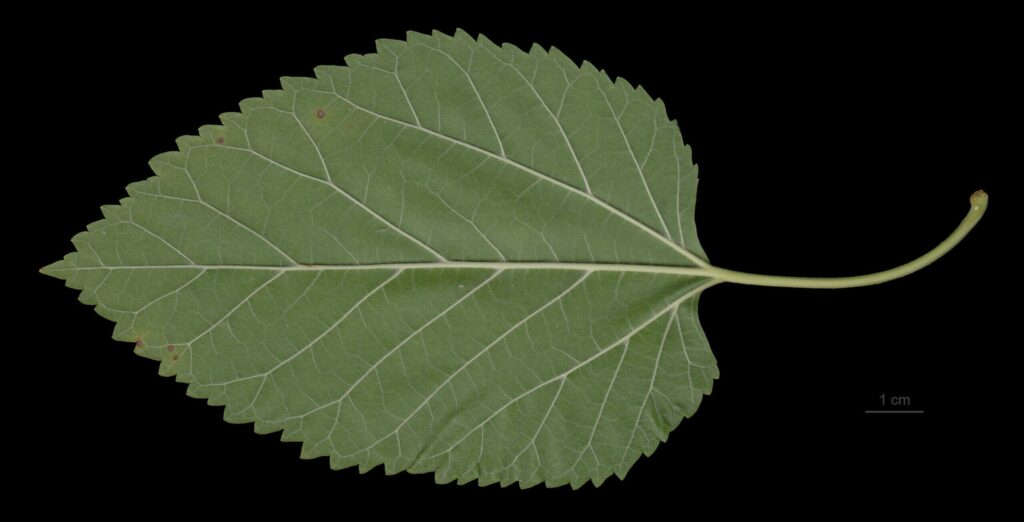
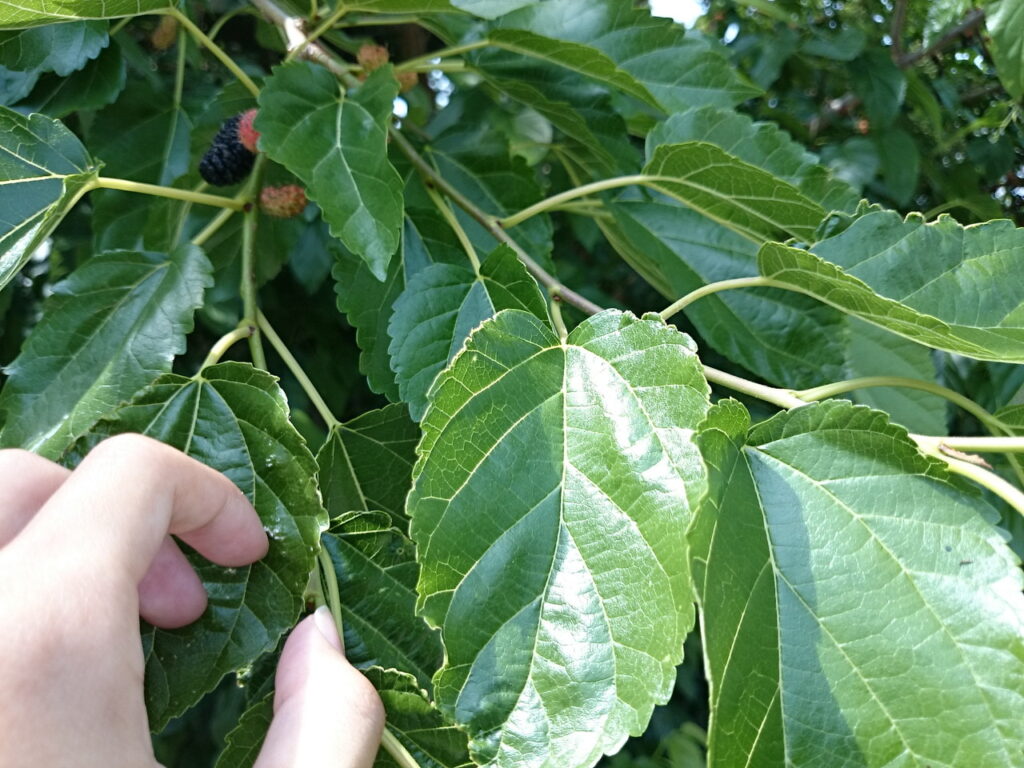
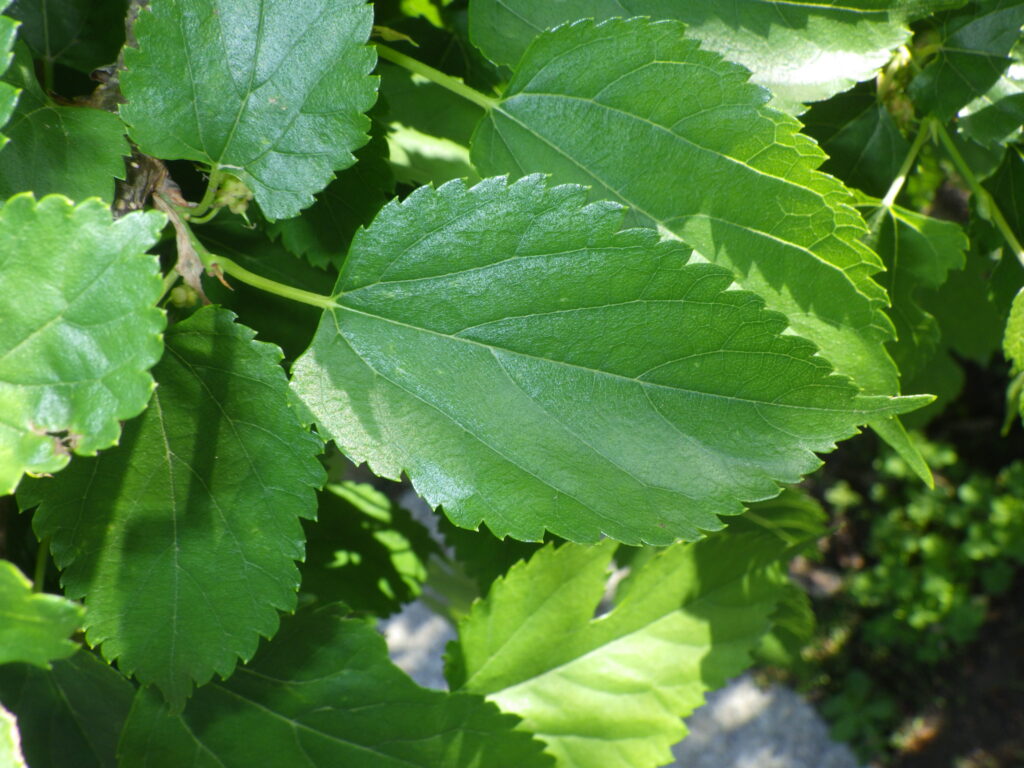
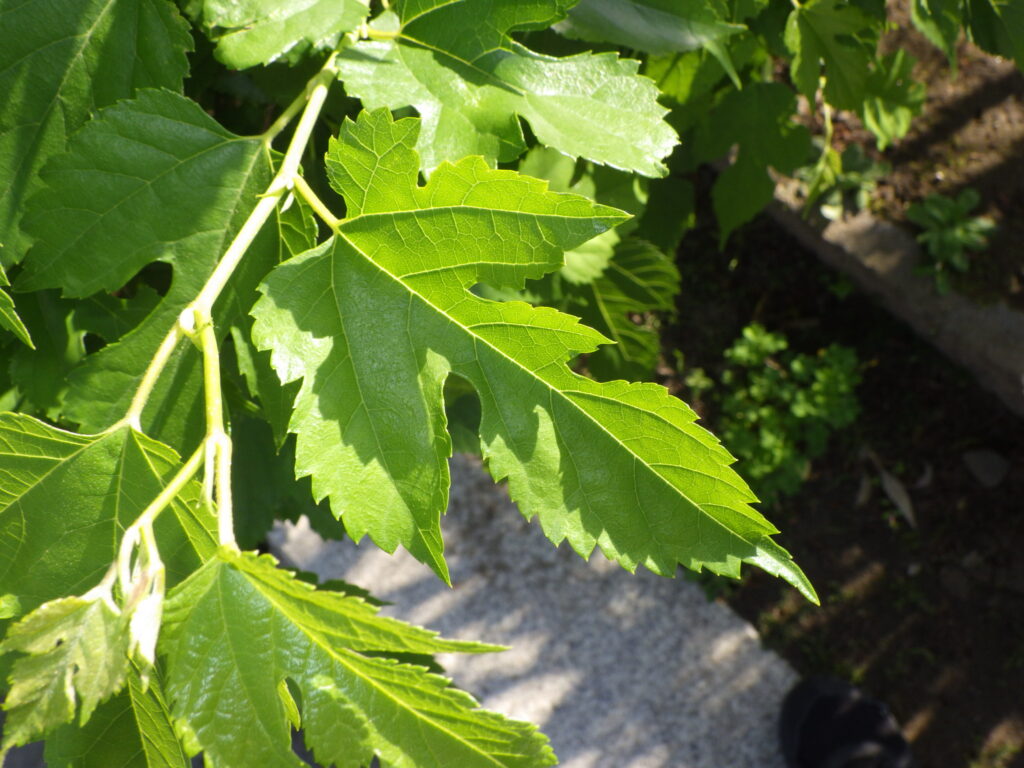
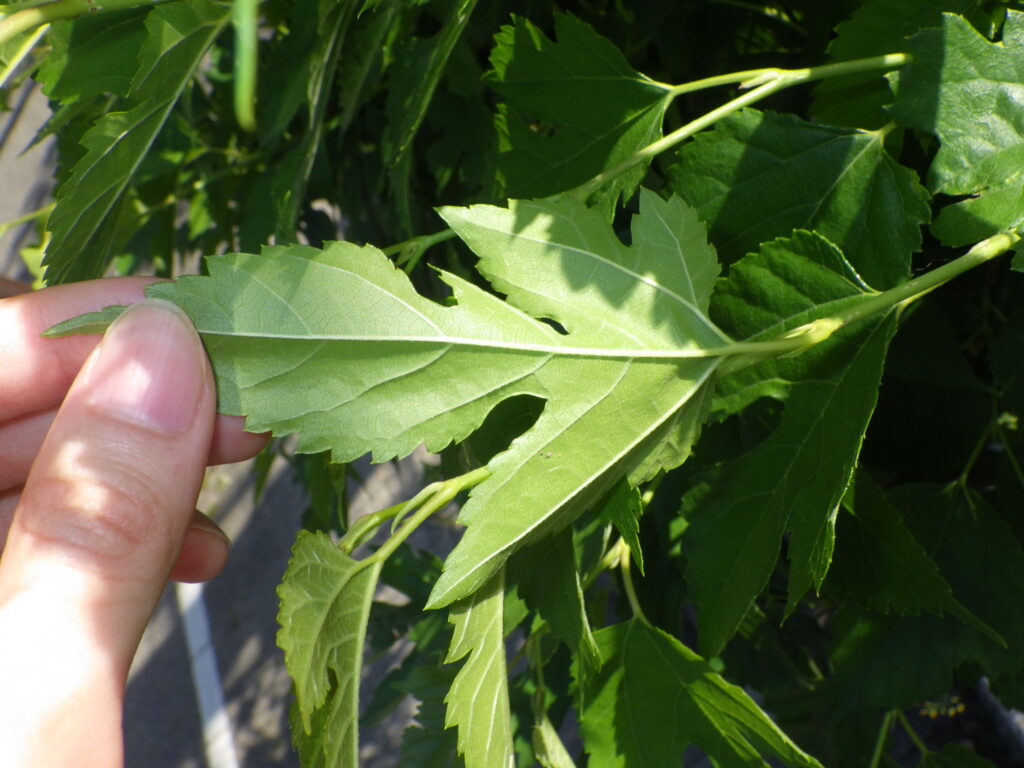
The leaves are easily recognizable by their granular dots or almost hairless appearance on the upper surface, their relatively straight lateral veins, and the fact that they consist of a mix of undivided leaves and lobed leaves with a distinctive 3 to 5 incisions.
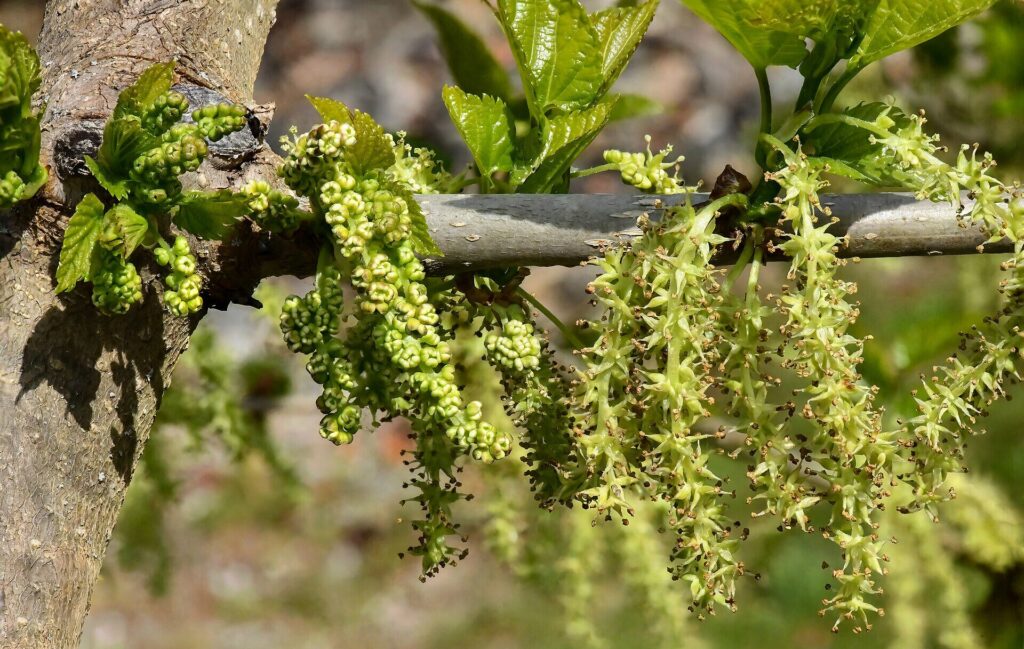
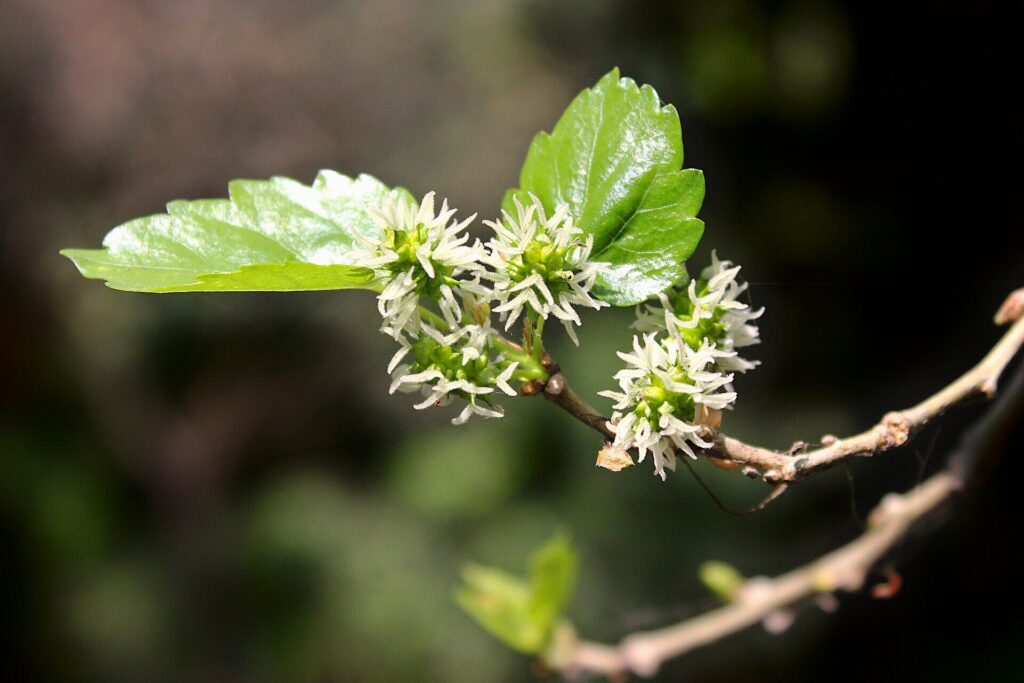
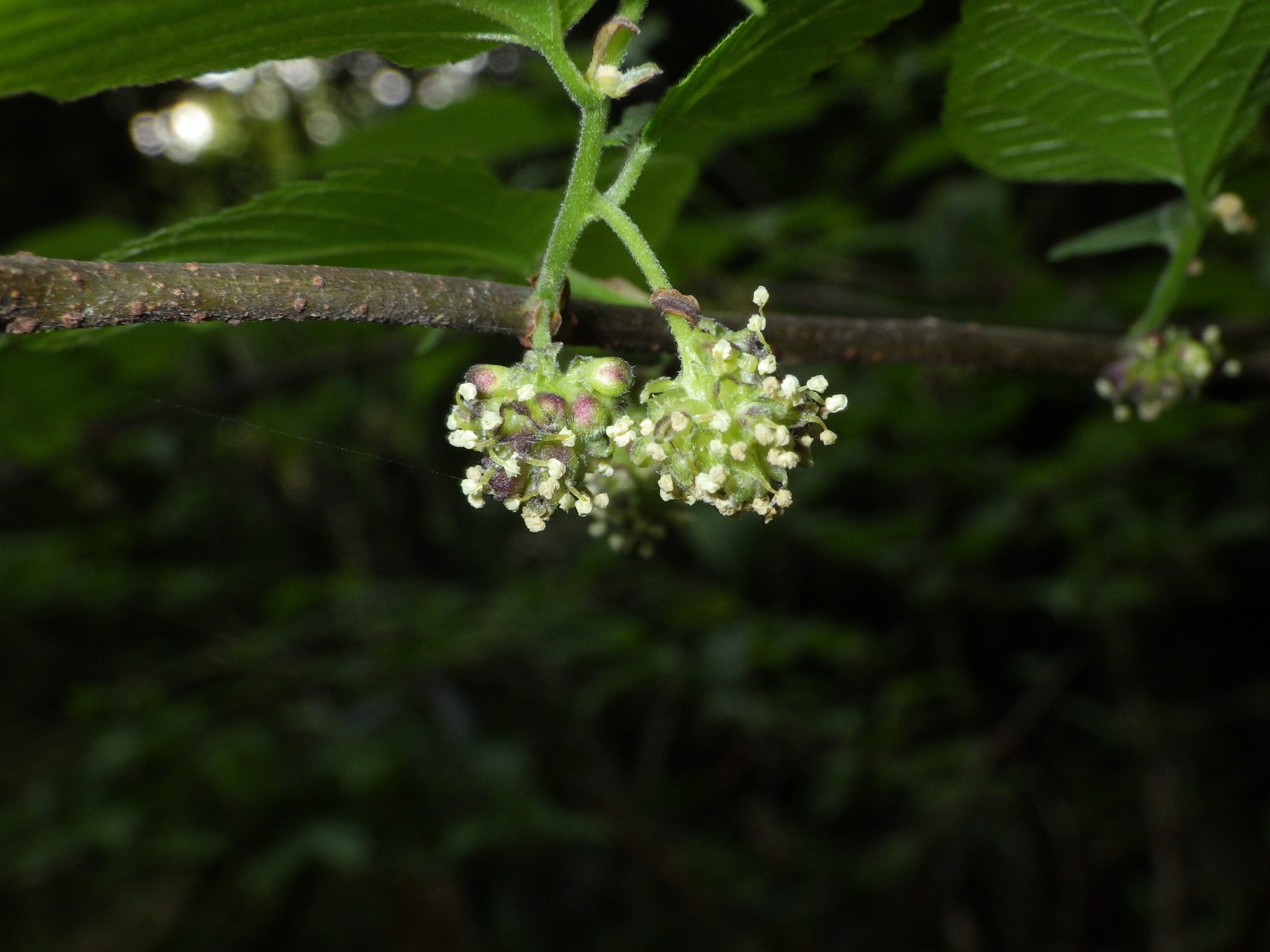
This plant is dioecious, and rarely monoecious, so the flowers are unisexual, with separate male and female inflorescences, and are wind-pollinated (Taylor et al., 2006). The stamens of the male flower release elastic energy to actively disperse pollen. The female flower has four perianth segments.
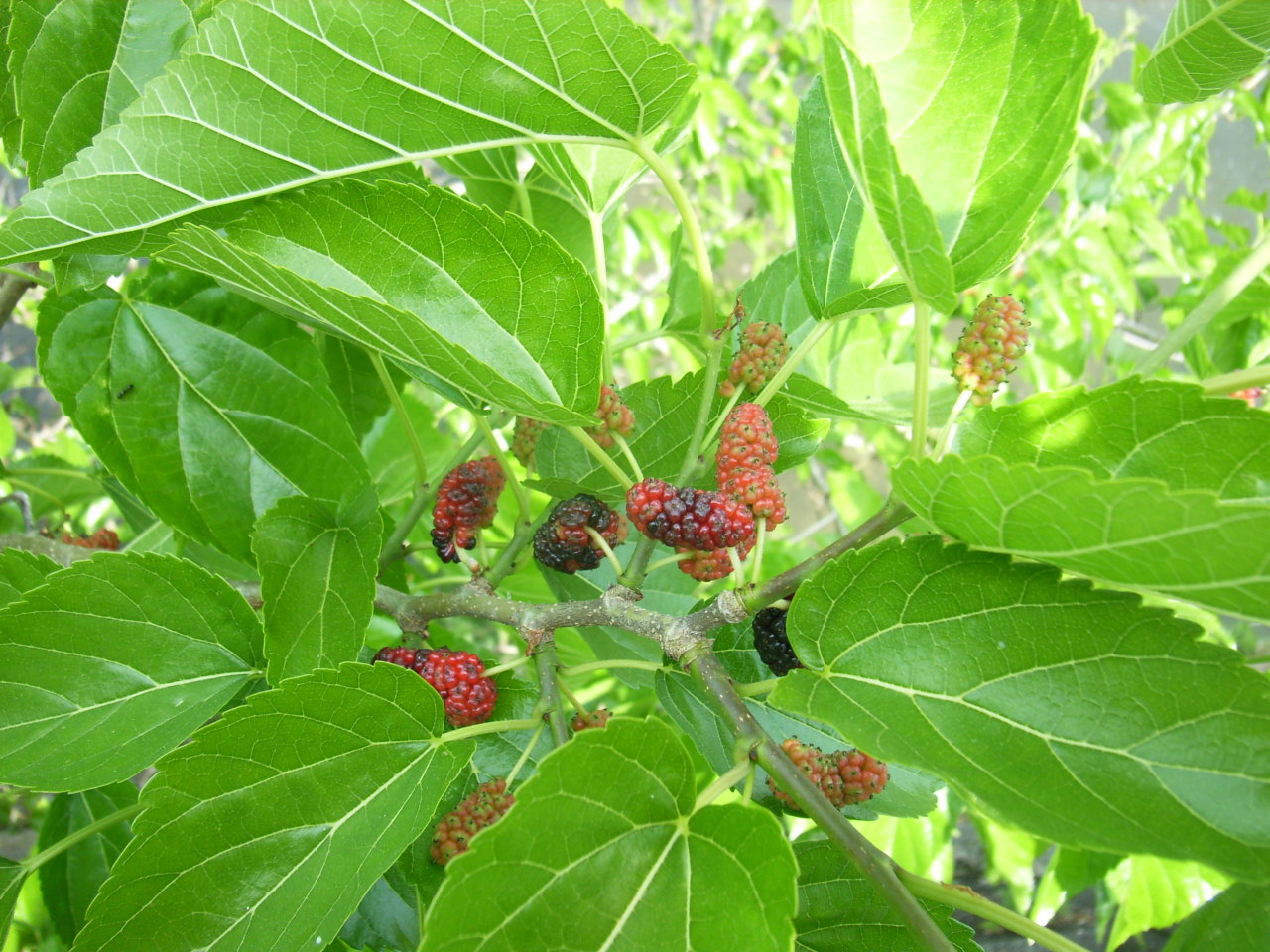
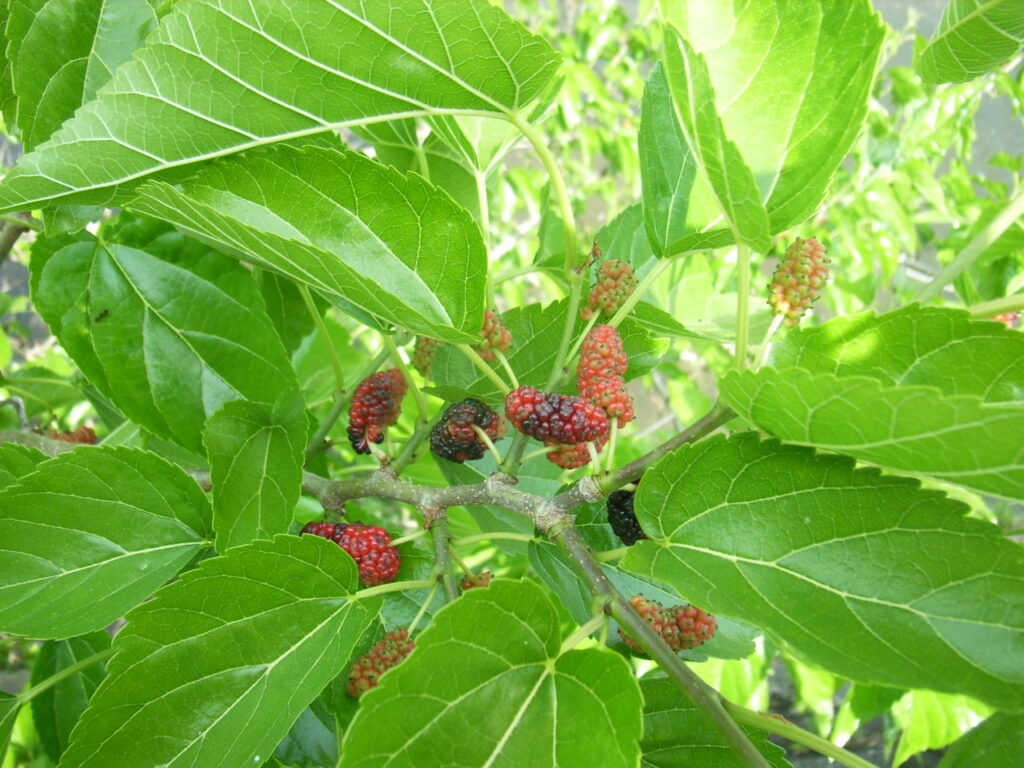
The fruit is encased in a thick, fleshy perianth, and the ripe, dark purple mulberries are sometimes eaten.
Other characteristics include its branches being grayish-brown and almost hairless.
However, it is perhaps best known for its use as feed for silkworm larvae. Raw silk and silk produced from silkworms are important products, and they have been raised in Japan since ancient times. From the late Edo period until the production of synthetic fibers (from the 1870s to the mid-1930s), the export of raw silk supported Japan's modernization and was a valuable source of cash income for farmers (Settsu, 2017). A considerable number of mulberry trees were cultivated specifically for this purpose.
Although its use is limited these days, wild individuals can be seen in various places.
However, many articles describe mulberry and mountain mulberry as if they were simply different varieties, but biologically they are completely different species, and it seems some people are unaware of the differences.
It seems that these products are being sold interchangeably on sites like Amazon and Rakuten.
What is the difference between Morus alba and Morus serrata?
First, regarding the difference in distribution, the common mulberry (Morus edulis) is an introduced species, while the Japanese mulberry (Morus australis) is a native species. The common mulberry was introduced to Japan in ancient times for silkworms. However, in Japanese history textbooks, when the term "mulberry" is used, it almost always refers to the common mulberry due to its importance.
There are also several morphological differences (Hayashi, 2019; Kanagawa Prefecture Flora Survey Association, 2018).
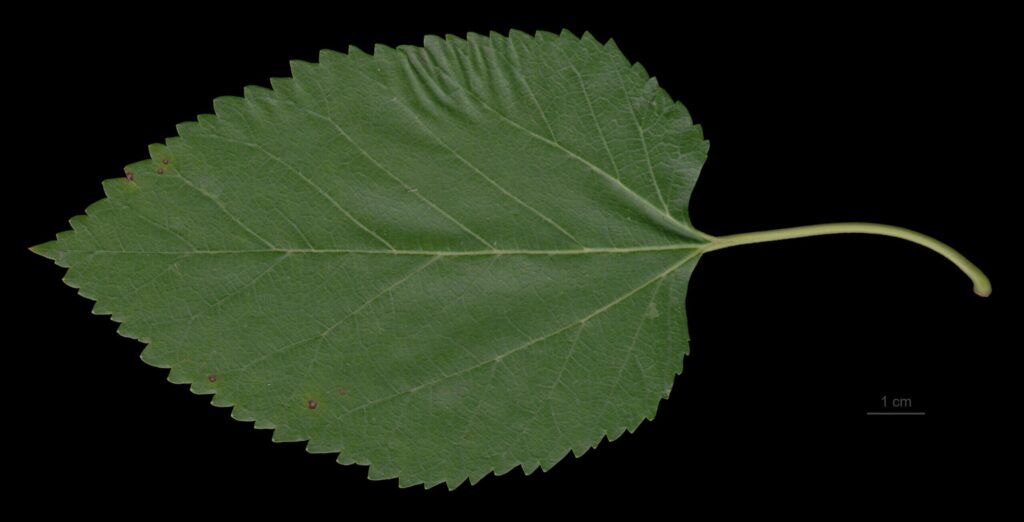
Regarding the leaves, the differences are that in Morus alba (Morus serrulata), the leaf margins have blunt serrations, the leaf tips are not caudal, and the upper surface of the leaf is glossy, while in Morus australis (Morus erythrosora), the serrations on the leaf margins are very pointed, the leaf tips are caudal, and the upper surface of the leaf is usually less glossy.
However, it's important to note that there is also a variety of mulberry called *Morus serrata* f. maritima that grows on the coast and has nearly hairless, glossy leaves.
Some sources on the internet suggest that they can be distinguished by the notches in their leaves, but this is scientifically unproven and there is too much individual variation, so it's best not to rely on this method.
Regarding the flowers, there is a difference in that the pistil's style in *Malus sieboldiana* is two-lobed from the base, while in *Malus sieboldiana*, the style is two-lobed at the tip. This is a very subtle difference and may be difficult to observe.
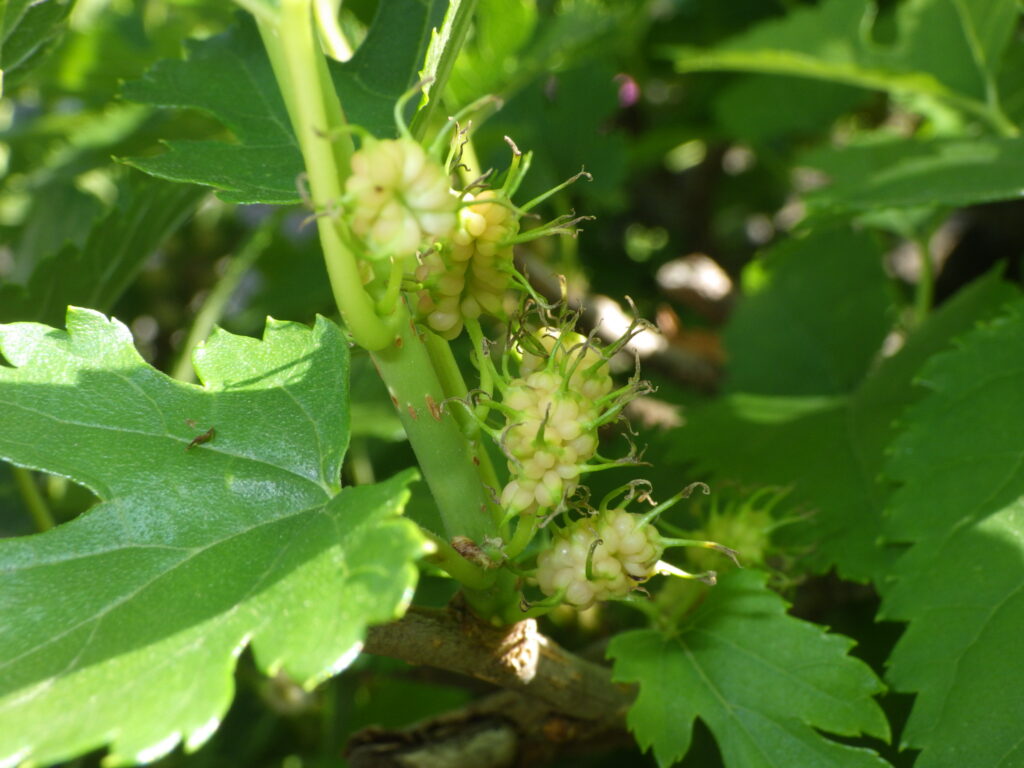
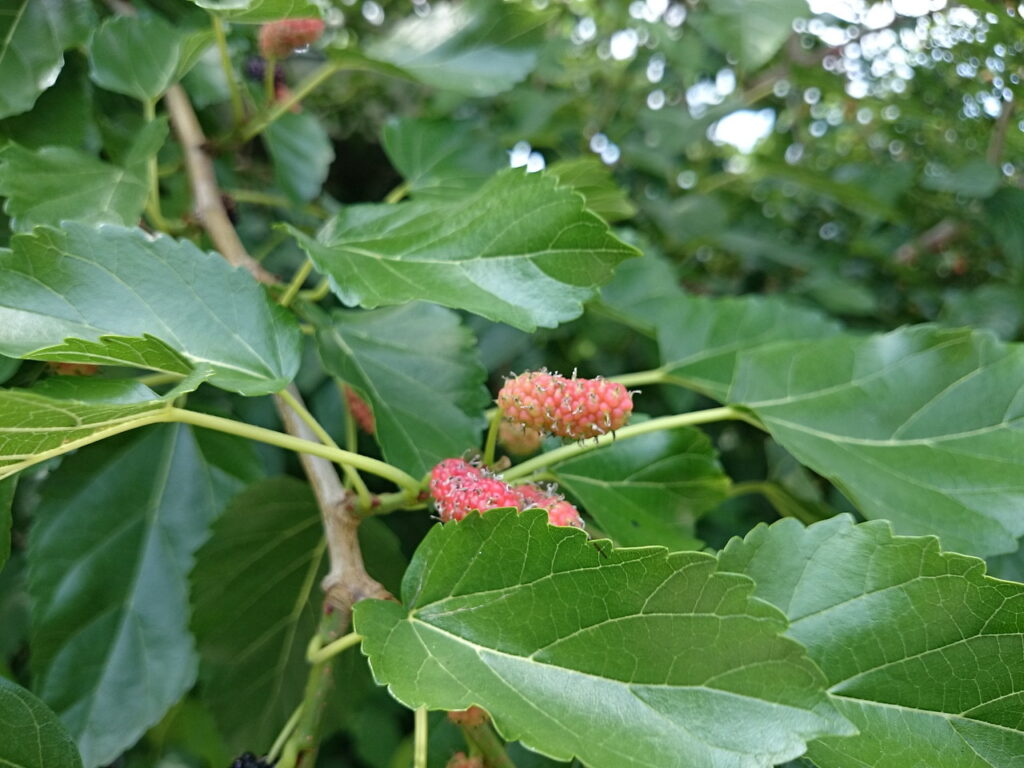
Regarding the fruit, there is a difference in that the protrusion of the style (part of the pistil) does not remain in the mulberry tree, while it does remain in the wild mulberry tree.
Therefore, only in the Japanese mulberry (Morus australis) can you observe thin projections extending from various points between the aggregate fruits.
However, hybrids of Morus alba and Morus serrata are also said to exist, and there are intermediate individuals that are difficult to distinguish.
What are the differences in the uses of mulberry and wild mulberry?
Both the Japanese mulberry (Morus edulis) and the mountain mulberry (Morus serrata) have been used in sericulture (Tsujii, 2006).
However, while the Japanese mulberry (Morus edulis) is the most important tree species in sericulture, the Japanese mulberry (Morus serrata) has harder leaves than the Japanese mulberry, which slows down the growth of silkworms and is considered inferior as feed. Therefore, it was used when the Japanese mulberry was not growing well and there was a shortage of feed.
Therefore, it can be said that mulberry was overwhelmingly more important to humans.
However, as a wild edible plant, the Japanese mulberry (Morus serrulata) is more useful than the Japanese mulberry (Morus edulis) in Japan. Its young shoots and leaves are boiled and then soaked in water before being eaten, and its fruit is eaten raw or made into jam. This is simply because the Japanese mulberry was preferentially used for silkworms, and its potential utility is probably about the same.
What are the differences between the genus *Mulberry* and *Broussonetia papyrifera*?
A genus very closely related to the mulberry genus is the paper mulberry genus, particularly the commonly seen species known as *Broussonetia papyrifera*.
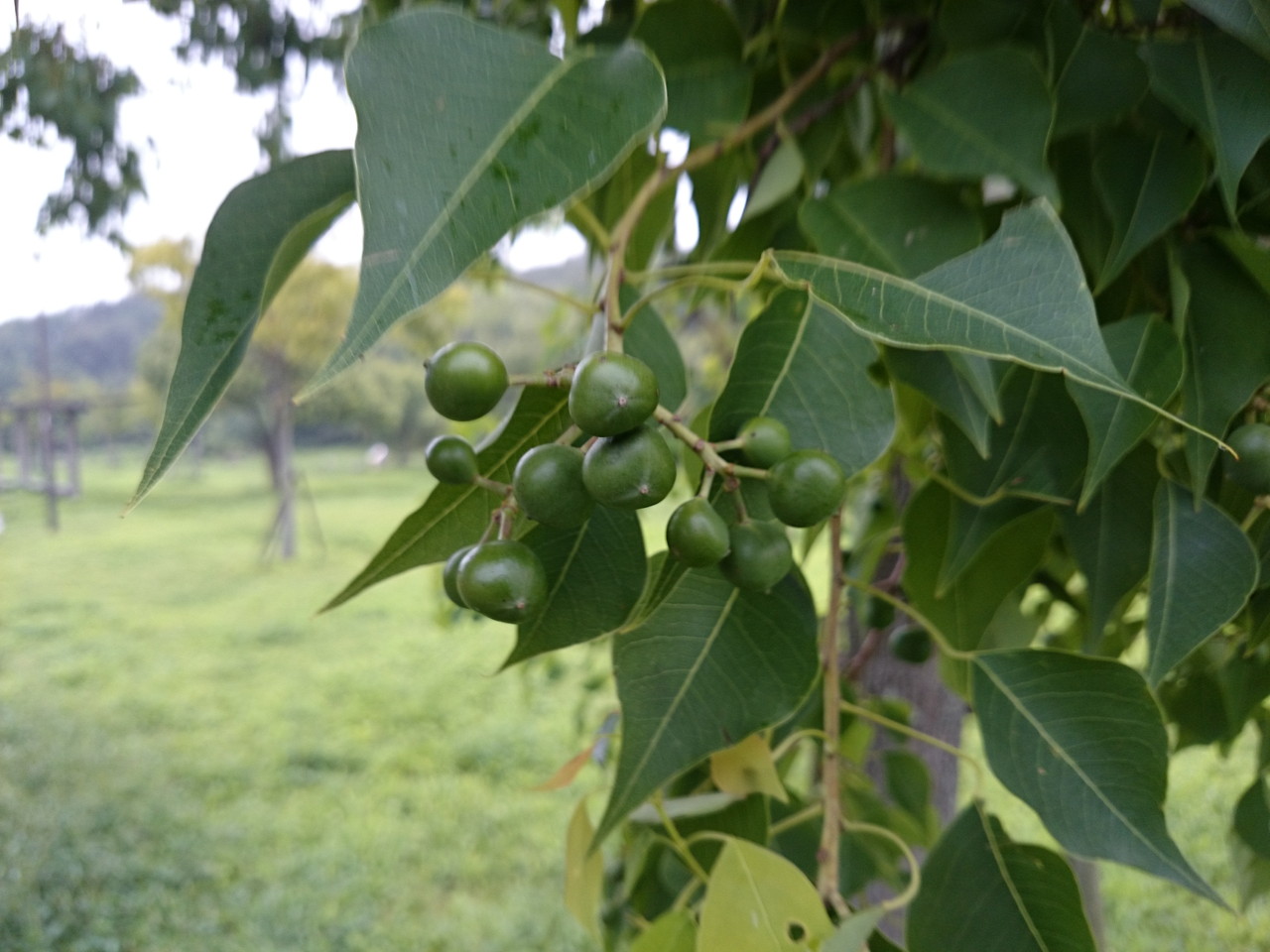
Both plants produce lobed and unlobed leaves, have inconspicuous flowers that are wind-pollinated, and produce red, red fruits (aggregate fruits) that are mainly dispersed by birds, among other similarities.
However, in the genus Morus, the female flowers have four perianth segments, the upper surface of the leaves is dotted or almost hairless, the branches are grayish-brown and almost hairless, and the fruit is enclosed in a thickened, fleshy perianth. In contrast, in the genus Broussonetia papyrifera, including Broussonetia verniciflua, the female flowers have a tubular perianth segment that is 3-4 lobed at the tip, the upper surface of the leaves is densely or sparsely covered with short hairs, the branches are brown and have fine hairs, and the fruit has a fleshy pedicel.
Another difference is that the male inflorescences and aggregate fruits of the genus *Mulberry* are elongated, while those of the genus *Broussonetia papyrifera* are spherical.
Please see the separate article for information on the genus *Broussonetia*.
Are there any other similar types?
Morus cathayana resembles Morus australis, but is distributed only in western Japan, Korea, and China, and differs in that it has dense, short hairs on the underside of its leaves. It is mostly undivided.
Morus kagayamae is similar to Morus australis, but it is distributed only in the Izu Peninsula and the Izu Islands. It differs in that its leaves are somewhat thicker, the underside of the leaves is almost hairless, and the hair-like projections on the upper surface of the leaves are inconspicuous. Its serrations and lobes are sharper than those of Morus australis.
References
Hayashi, Masayuki. 2019. Tree Leaves: Expanded and Revised Edition - Identifying 1300 Species Through Real-Life Scans. Yama-kei Publishers, Tokyo. 824pp. ISBN: 9784635070447
Kanagawa Prefecture Flora Survey Association. 2018. Kanagawa Prefecture Flora 2018 (Electronic Edition). Kanagawa Prefecture Flora Survey Association, Odawara. 1803pp. ISBN: 9784991053726
Taylor, PE, Card, G., House, J., Dickinson, MH, & Flagan, RC 2006. High-speed pollen release in the white mulberry tree, Morus alba L. Sexual Plant Reproduction 19: 19-24. http://doi.org/10.1007/s00497-006-0025-5.
Tsujii, Tatsuichi. 2006. Continued: Trees of Japan. Chuokoron-Shinsha, Tokyo. 230pp. ISBN: 9784121018342
Setsutsu, Hideki. 2017. Amazing! The hidden power of silkworms! Shining silk. Surface Science 38(3): 135-137. https://doi.org/10.1380/jsssj.38.135