Hibiscus, also known as hibiscus rosa-sinensis or hibiscus rosa-sinensis var. japonica, is a popular evergreen shrub in gardening, known for its vibrant red-based flowers that evoke a tropical atmosphere. While hibiscus and hibiscus rosa-sinensis are sometimes used interchangeably, this is often incorrect. The term can refer to a general category of plants in the Hibiscus genus, or it can refer specifically to cultivated varieties of hibiscus rosa-sinensis, often called "Hawaiian hibiscus" or "tropical hibiscus," which are hybrids of the Hibiscus genus. It's important to note that the hibiscus varieties created in recent years and the hibiscus rosa-sinensis, which has naturalized in ancient times , are fundamentally different plants. Hawaiian hibiscus originated from the crossbreeding of various species in Hawaii, resulting in significant individual variations. Clearly distinguishing it from hibiscus rosa-sinensis or hibiscus rosa-sinensis var. japonica is often difficult, but they are generally distinguished by flower color. The leaves may also differ slightly. Hibiscus rosa-sinensis and Hibiscus rosa-sinensis var. poukhanense can be distinguished by the shape of their flowers. The origin of Hibiscus rosa-sinensis is unknown, but it is believed to have been introduced to Japan in ancient times to the Ryukyu Islands and to mainland Japan during the Edo period. There are two theories regarding the pollination of its distinctive large red flowers: one that says hummingbirds from the New World come to it, and the other that says sunbirds from the Old World come to it, and both have been supported by evidence. Since its origin is unknown, it is unclear which of these was the case in the wild, but in either case, it seems to demonstrate the flexible adaptation of Hibiscus rosa-sinensis. This article will explain the classification, history, and pollination ecology of Hibiscus rosa-sinensis, Hibiscus rosa-sinensis, and Hibiscus rosa-sinensis var. poukhanense.
- Two species of red-flowered wild plants distributed mainly in tropical and subtropical regions.
- The word "hibiscus" has two meanings.
- What is the difference between hibiscus and hibiscus (specifically, the Japanese hibiscus)?
- What is the difference between Hibiscus rosa-sinensis and Hibiscus rosa-sinensis var. japonica?
- The origin of the hibiscus is unknown. When did it arrive in Japan?
- What is the structure of the flower with the striking crimson corolla?
- Is it a hummingbird or a sunbird that visits the flowers?
- Do butterflies also visit the flowers of the hibiscus?
- Are the fruits capsules and the seeds dispersed by gravity and ocean currents?
- References
- Source
Two species of red-flowered wild plants distributed mainly in tropical and subtropical regions.
Hibiscus rosa-sinensis, also known as the Japanese hibiscus, is an evergreen shrub whose origin is unknown, but is thought to be from China, Africa, or the tropical New World (El Mokni & Iamonico, 2020). It was probably introduced to Japan in ancient times and is distributed in Okinawa, southern Kyushu, the southern Izu Islands, and the Ogasawara Islands. In Japan, it is sometimes cultivated in greenhouses for ornamental purposes. The Japanese name "Fusōka" (扶桑花) comes from the fact that in China, Fusō originally referred to the rose of Sharon, and the misused name "Fusōka" (扶桑花), one of several Chinese names for Hibiscus rosa-sinensis, was introduced to Japan and became established (Tsuneya, 1991). The word "flower" was not added to Fusō in Japan.
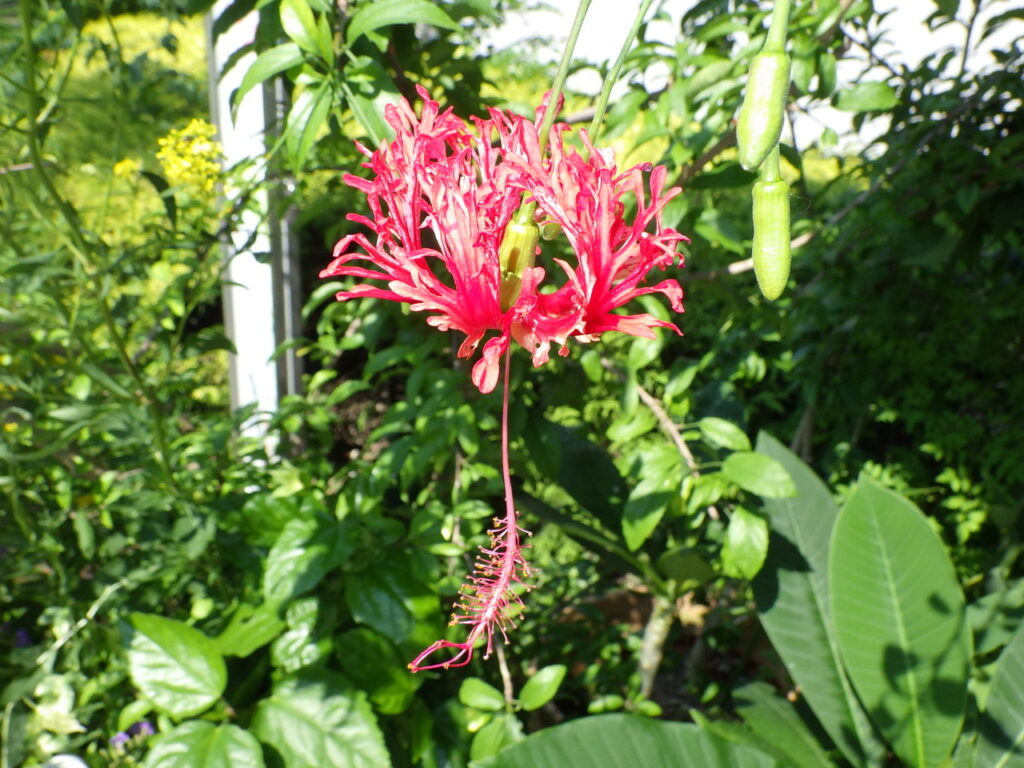
Hibiscus schizopetalus, also known as wind chime hibiscus, is an evergreen shrub native to Kenya and northern Tanzania (Thomson & Cheek, 2020). In Japan, it is sometimes cultivated in greenhouses for ornamental purposes. Its Japanese name comes from the fact that its flowers resemble wind chimes.
Both species belong to the genus Hibiscus in the Malvaceae family, and both have large red flowers, symbolizing the atmosphere of tropical and subtropical regions. They have a long history as ornamental plants in Japan and are widely cultivated.
The word "hibiscus" has two meanings.
However, along with the terms "Bussouge" and "Fuurinbussouge," you'll often see the word "hibiscus." Is there a difference between them?
The term "hibiscus" doesn't necessarily refer to a specific biological species. It has two possible meanings.
First, there's the case where "hibiscus" is used as a general term for the genus Hibiscus. In this case, in addition to the two species mentioned above, the genus Hibiscus is quite diverse even just in Japan, with representatives including Hibiscus mutabilis, Hibiscus syriacus, and Hibiscus hamabo. You'll also see descriptions of overseas species distributed in tropical, subtropical, and some temperate regions of the Northern Hemisphere being referred to as hibiscus. It is said that there are as many as 250 wild species.
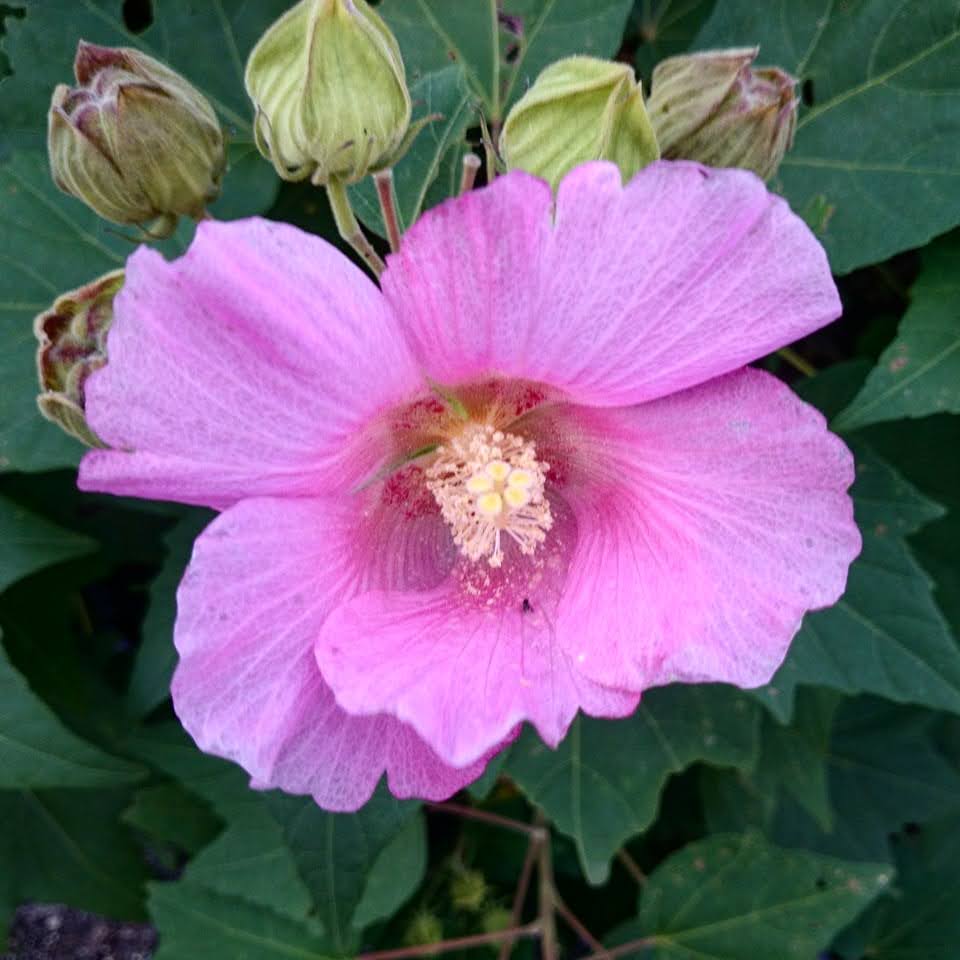
Next, the term sometimes refers to a group of horticultural varieties created by crossing Hibiscus rosa-sinensis, also known as "Hawaiian Hibiscus" or "Tropical Hibiscus," with Hibiscus species. Many of the Hibiscus rosa-sinensis horticultural varieties were created in Hawaii. After W.M. Gifford created four varieties through interspecific hybridization in 1902, serious hybridization began at agricultural experiment stations from 1909 onwards, and Hibiscus rosa-sinensis was also introduced. Over five years, as many as 1,000 horticultural varieties were created. Since then, hybridization of these hybrids has continued, leading to the varieties we have today. This fact is not widely known.
The exact origins of the Hawaiian hibiscus were unknown, but earlier Japanese research estimated that it is a hybrid group involving 10 native species from the Hawaiian Islands, 2 introduced species from the Indian Ocean islands, and the Japanese hibiscus (Tachibana, 1975).
Recent studies using other genes have also shown that Hibiscus denisonii (native to Hawaii), Hibiscus kokio (native to Hawaii), Hibiscus genevii (native to Mauritius), Hibiscus liliiflorus (native to Central America), Hibiscus boryanus (native to Mauritius and Réunion), Hibiscus arnottianus (native to Hawaii), and Hibiscus rosa-sinensis are complex hybrids originating from Hibiscus rosa-sinensis (Braglia et al., 2010).
Hybrid cultivars that strongly reflect the morphology of Hibiscus rosa-sinensis are sometimes called "species-type" cultivars. Similarly, hybrid cultivars that strongly reflect the morphology of Hibiscus rosa-sinensis are sometimes called "coral-type" cultivars.
Therefore, although it is often simply called "hibiscus," it is distinct from the wild hibiscus and wind-blooming hibiscus, which have also become naturalized in ancient times. It is important to understand the difference between these two in terms of meaning as well.
Some websites mistakenly state that "hibiscus = hibiscus," but this is not the case, so please be aware of this.
What is the difference between hibiscus and hibiscus (specifically, the Japanese hibiscus)?
I understand the origins, but how can we distinguish them morphologically?
Unfortunately, because Hawaiian hibiscus contains genes from both Hibiscus rosa-sinensis and Hibiscus rosa-sinensis var. japonica, there are similarities in their shapes, and therefore, a perfect method for distinguishing them has not yet been established.
Furthermore, even within the Hawaiian hibiscus species, it's unclear which Hawaiian or Indian Ocean island species it originated from, resulting in an unstable and chaotic state of morphology.
However, since the morphology of Hibiscus rosa-sinensis and Hibiscus rosa-sinensis var. japonica should be clearly defined, it is possible to identify some trends.
Firstly, while the flowers of the Japanese hibiscus and the wind-bell hibiscus are uniformly deep crimson, the flowers of the Hawaiian hibiscus come in a variety of colors, including white, pink, red, yellow, and orange-yellow, and the color of the corolla may vary in parts.
Furthermore, while the leaves of Hibiscus rosa-sinensis and Hibiscus rosa-sinensis var. japonica have clearly defined and relatively large serrations, some Hawaiian hibiscus varieties have large serrations, but we have also observed varieties with fine, almost no serrations.
It seems that the only way to distinguish them at present is based on these two points.
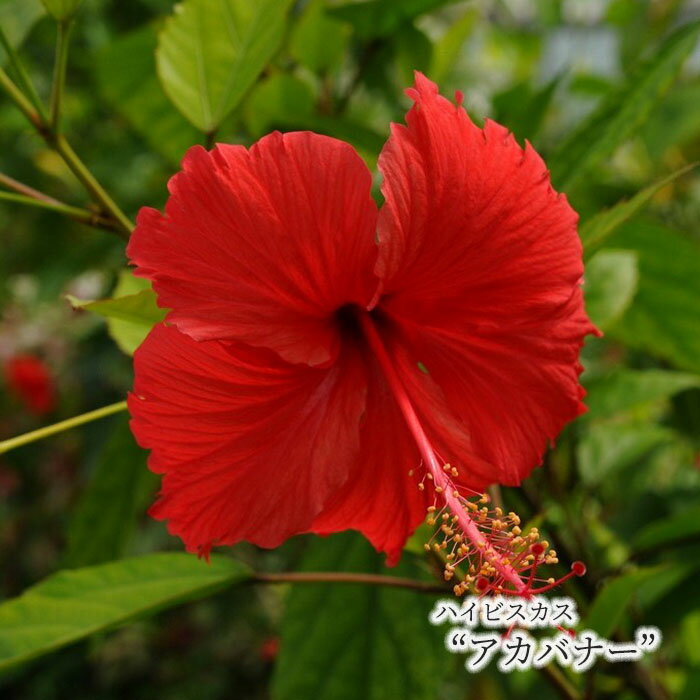
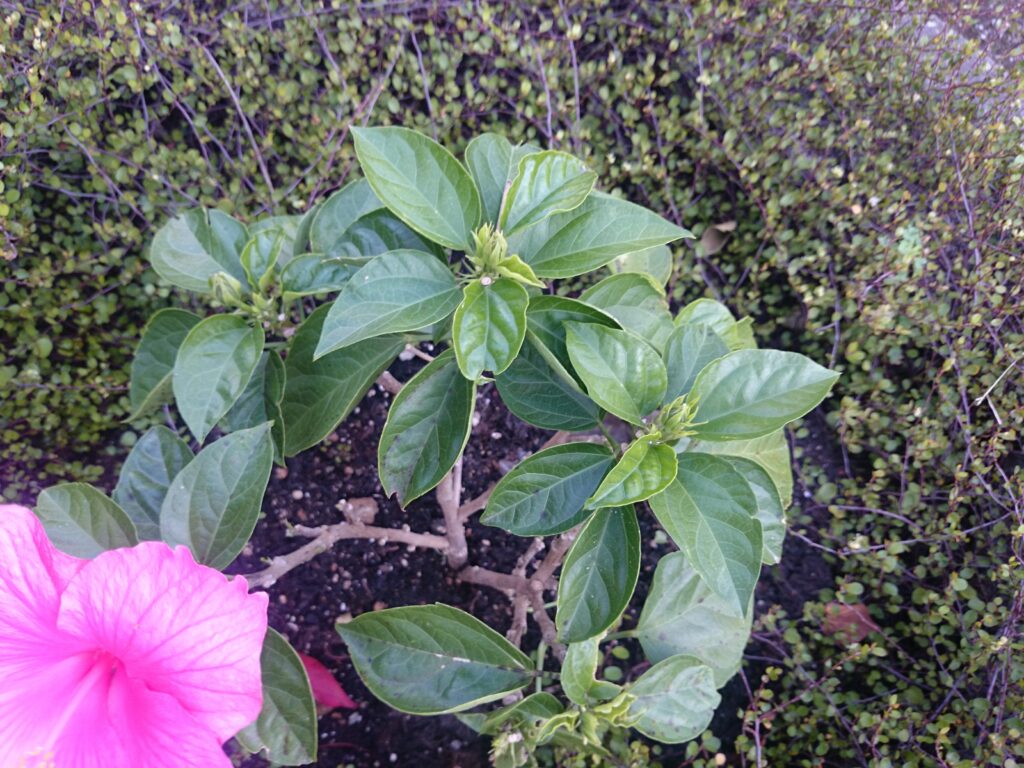
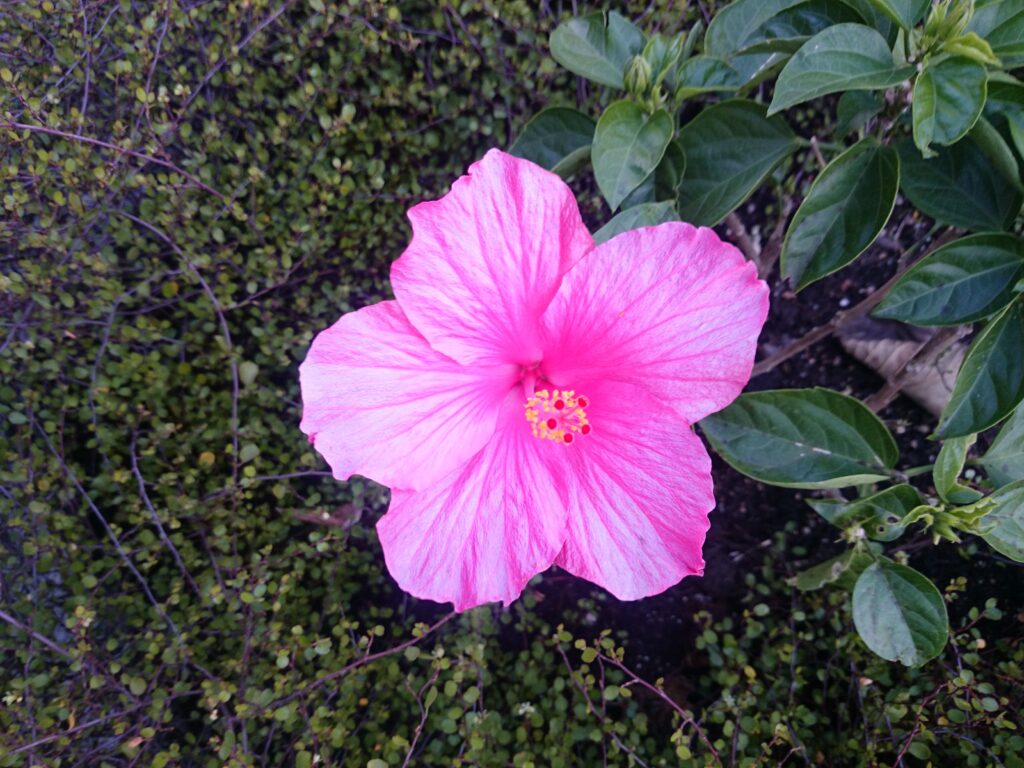
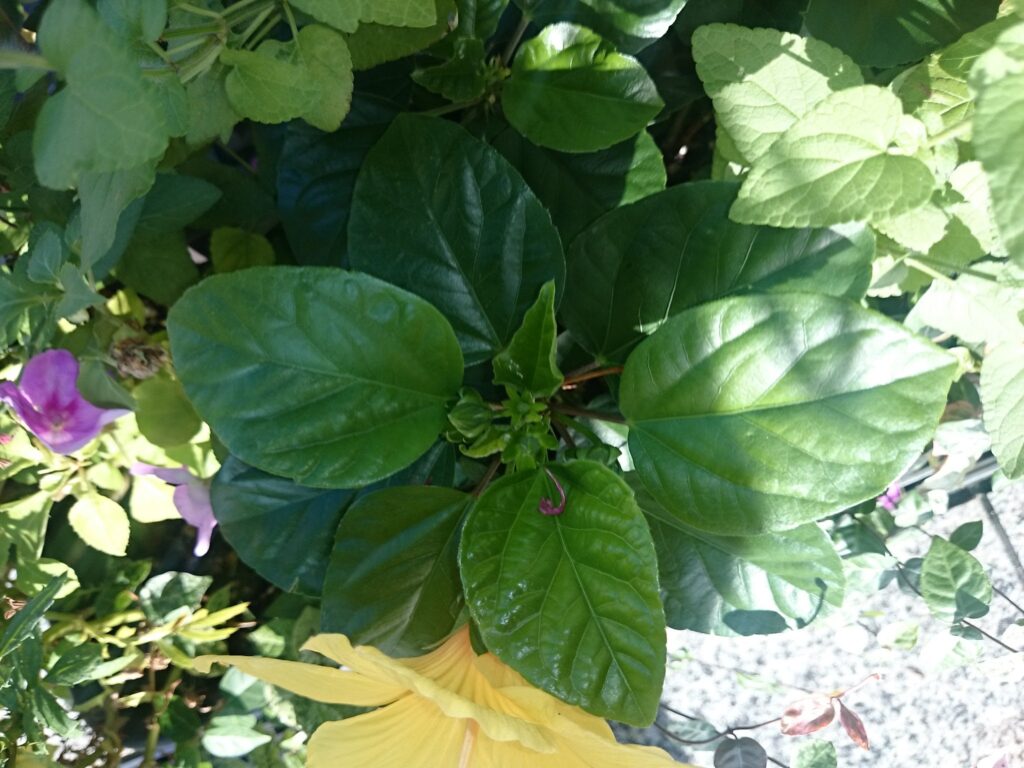
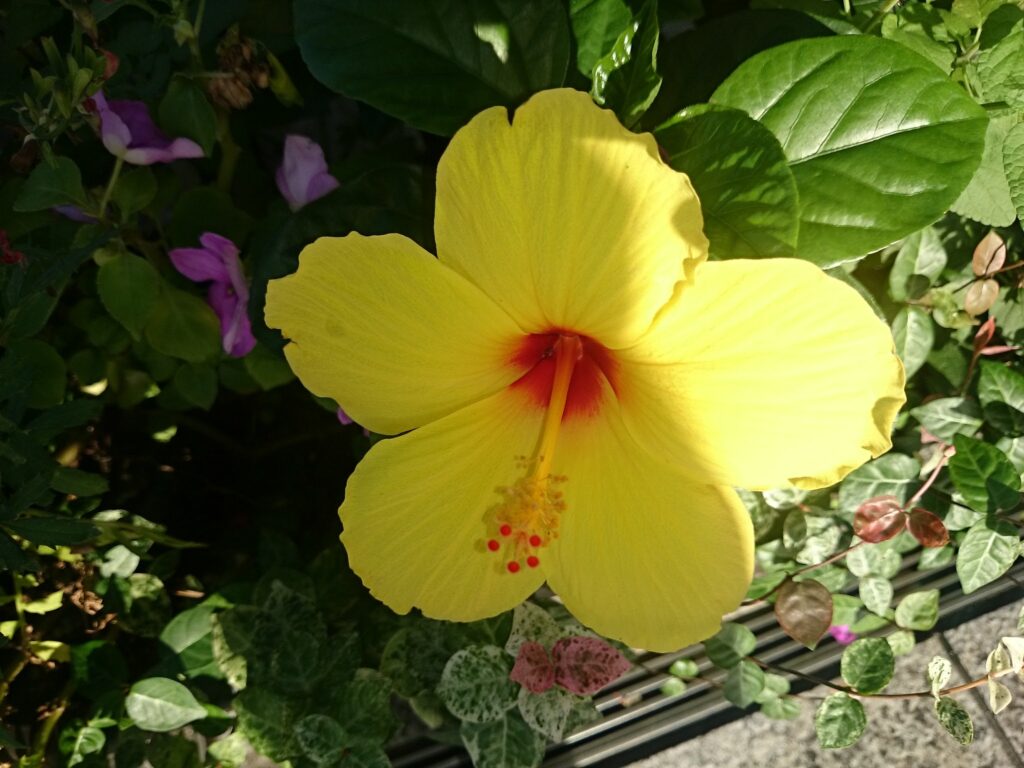
What is the difference between Hibiscus rosa-sinensis and Hibiscus rosa-sinensis var. japonica?
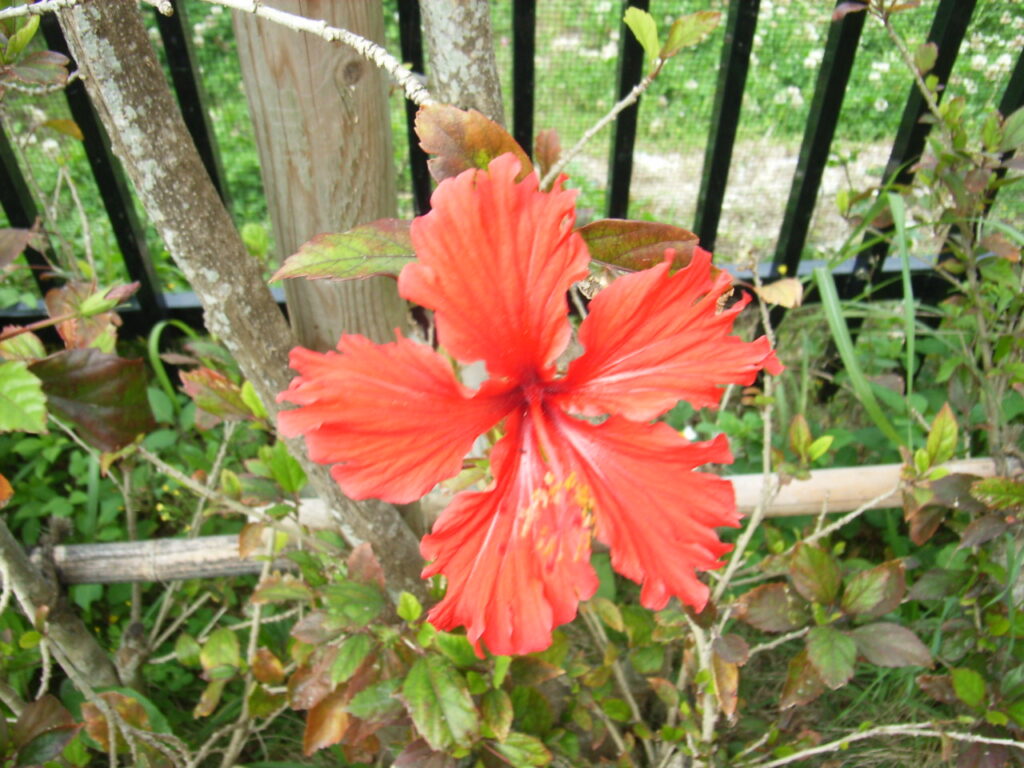
The difference between Hibiscus rosa-sinensis and Hibiscus rosa-sinensis var. buergeriana is that in Hibiscus rosa-sinensis, the flowers do not droop, the corolla is entirely or slightly incised and spreads out but does not curve backward, and the calyx-like bracts are 8-15 mm long, whereas in Hibiscus rosa-sinensis var. buergeriana, the flowers droop vertically, the corolla is deeply pinnately lobed and curves backward, and the calyx-like bracts are 1-2 mm long. Incidentally, the coral varieties of Hawaiian hibiscus droop diagonally downward, but they do not droop vertically.
Another species that is often confused with this one is the American hibiscus, Hibiscus moscheutos, which is native to North America and is also cultivated. Its corolla is pink or white and usually has dark red spots at the base, although these may not always be present. Another distinguishing feature is that the ovary and capsule are glossy.
Hibiscus species have slender, leaf-like structures called calyx-like bracts (epicalyx lobes) that extend below the calyx. This makes them appear to have two calyxes.
In American hibiscus, these involucral bracts are linear-lanceolate, quite slender, and number 10 to 14, which is a significant difference. In contrast, in species like Hibiscus rosa-sinensis, the involucral bracts are linear-lanceolate but thicker and number 6 to 7, which is a smaller number.
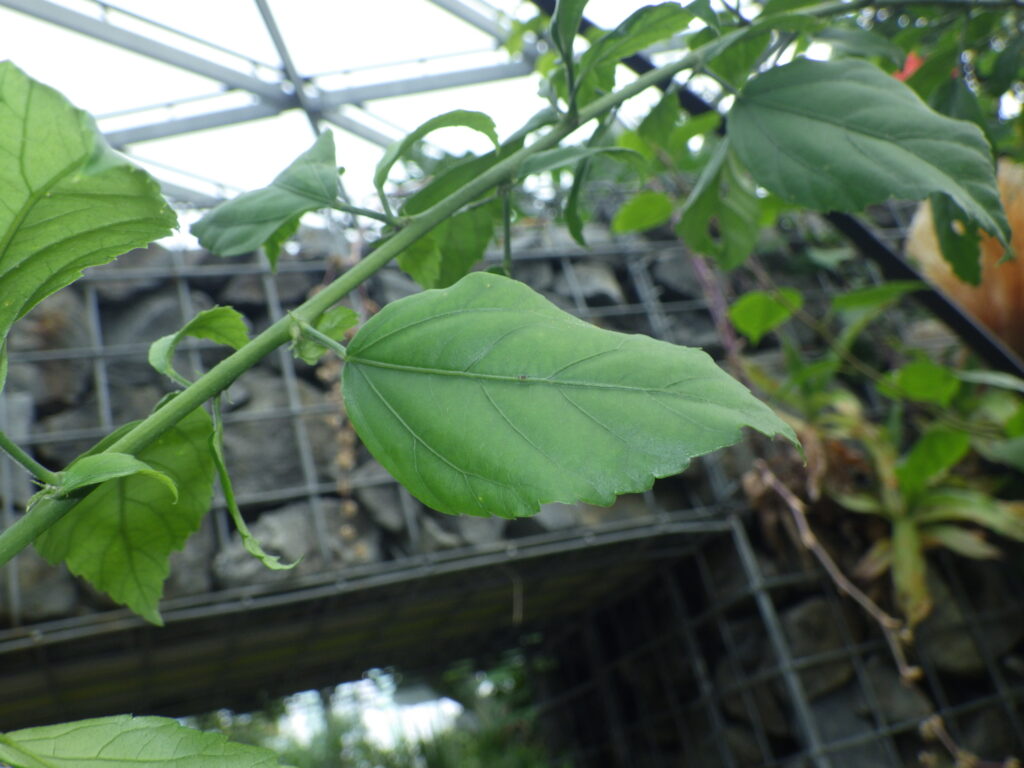
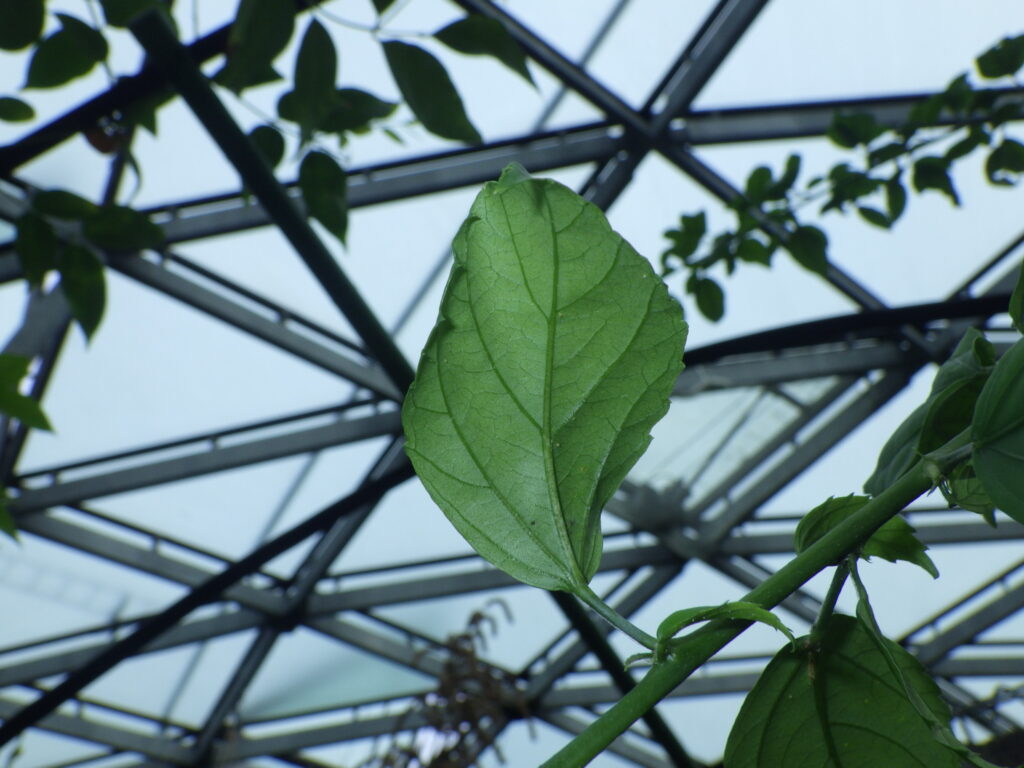
The origin of the hibiscus is unknown. When did it arrive in Japan?
The origin of the hibiscus is unknown.
Previous theories suggest that the hibiscus originated in China, or in the tropical regions of Africa or the New World. However, because the hibiscus has undergone extensive selection and hybridization, is often confused with the Hawaiian hibiscus, and has a complex history of cultivation, its origin remains unknown at present.
The Indian Ocean islands once had sea routes connecting Europe with India and Southeast Asia, and the plant was likely introduced to the Ryukyu Islands by the 1800s, probably via Southeast Asia. Currently, it is distributed in Okinawa, southern Kyushu, the southern Izu Islands, and the Ogasawara Islands, but this is probably not its original natural distribution.
In mainland Japan, the first recorded instance of the flower is said to be in the Edo period, in 1609 (Keichō 14), when Shimazu Iehisa, the lord of the Satsuma domain, presented Ryukyuan hibiscus to Tokugawa Ieyasu, according to the " Tokugawa Jikki" (Isono, 2007). The name "bussōka" also appears in earlier records from 1500 and 1544, but it is unclear whether these were the same flowers as the modern hibiscus.
In areas north of Honshu, it cannot withstand the winter cold and will wither, so even today it is grown in pots rather than planted in the garden.
What is the structure of the flower with the striking crimson corolla?
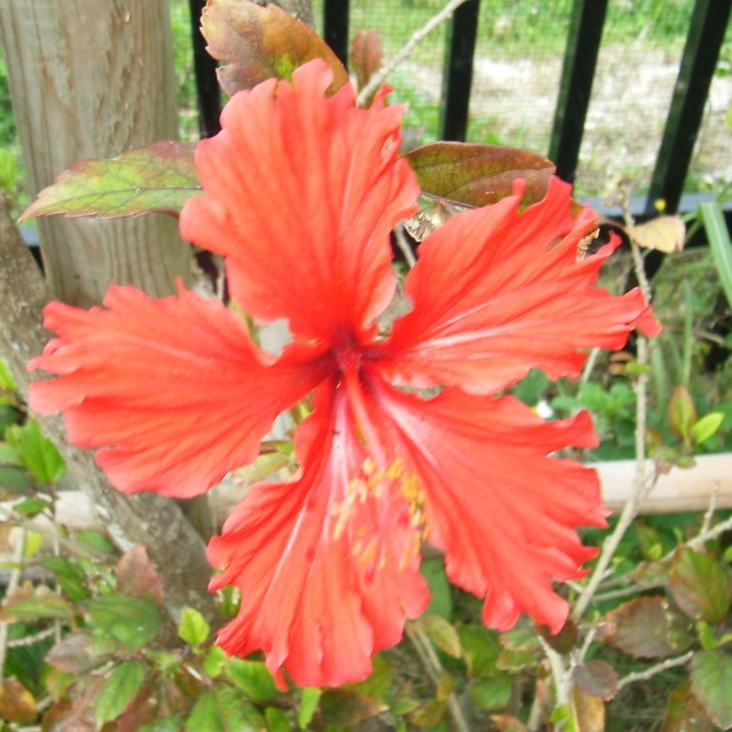
The flowers are common to the Hibiscus genus, and all species have fused petals with a five-lobed corolla; in the wild species, they are bright red. The corolla surrounds the column (a fused structure of stamens and pistil), which protrudes (Tsukamoto, 1994).
In Japan, the flowering period for hibiscus is from July to September, while in Malaysia, it blooms all year round. The petals spread out without gaps and do not curl back. They may droop slightly downwards, but they never droop vertically.
On the other hand, the flowering period for Hibiscus rosa-sinensis in Japan is from May to October. Its petals are frilly, deeply lobed and curved backward, and because the flower stalks are long, the flowers hang vertically like wind chimes, with the column pointing downwards, creating a charming appearance.

Is it a hummingbird or a sunbird that visits the flowers?
What kinds of animals visit these deep red flowers?
Very old studies have suggested that nectar-feeding hummingbirds visit the flowers of Hibiscus rosa-sinensis and Hibiscus rosa-sinensis (Van Der Pijl, 1937).
This is because the flowers hang downwards, making it easy for hummingbirds to hover and collect nectar. Also, due to color vision, only a limited number of insects, such as bees, can see the red flowers, and it is known that birds are strongly attracted to them. The large size of the flowers also suggests a connection to larger animals compared to insects.
Hummingbirds have evolved to have long, slender beaks and tongues, and to counteract this length, their flower tubes have also become long and slender. It is thought that their styles have also lengthened to prevent birds from stealing nectar from a distance.
Nowadays, if you search for " Hibiscus Hummingbird" on the internet, you can see many hummingbirds visiting hibiscus plants.
However, at least for Hibiscus rosa-sinensis, its native habitat is East Africa, where hummingbirds, which are found only in the Americas, do not exist. If only hummingbirds visit Hibiscus rosa-sinensis, then it is unlikely to become naturalized in Asia.
Based on this, observations in another study revealed that on the African island of Zanzibar, a nectar-feeding bird called Chalcomitra senegalensis visits hibiscus plants and carries their pollen (Prendergast, 1982).
The sunbird family (Northern Hemisphere) also consists of nectar-feeding birds, but it is a group of birds distributed only in the tropics of the Old World and Oceania. Their beaks and tongues have evolved to be slender and long.
While sunbirds aren't as stable as hummingbirds, they can hover for short periods, and it seems they touch the stamens of the drooping column in the process. Therefore, the same may be true for hibiscus.
Nowadays, if you search for " Hibiscus Sunbird" on the internet, you can see many hummingbirds visiting Hibiscus rosa-sinensis.
So, which method ultimately ensures that the hibiscus is successfully pollinated?
Considering these factors, it's likely that the hibiscus can be pollinated in either environment. The sunbird family and the hummingbird family are said to be two groups that evolved nectar-eating behavior in parallel in the Old World and the New World. While it's unclear which region the hibiscus evolved in, it can be said that it possesses the flexibility to be pollinated in either environment.
Do butterflies also visit the flowers of the hibiscus?
On the other hand, hummingbirds are unlikely to visit the Hibiscus schizopetalus. Even a Google image search for " Hibiscus schizopetalus Hummingbird" did not yield any photos of the bird.
However, I couldn't find any literature on the Sunbird, and even searching for " Hibiscus schizopetalus Sunbird" on Google Images yielded no results.
It's probably reasonable to assume that sunbirds visit the hibiscus flowers.
However, although it's outside its native habitat, checking Google Image Search and records from research in Myanmar revealed that butterflies do indeed visit the area (Wai & Zin, 2019). Internet photos even show pollen clinging to their wings.
While I don't know the details, it's possible that the hibiscus rosa-sinensis, which has an even more pronounced downward slant than the regular hibiscus, may be attracting different types of animals. Despite its distinctive features, it's safe to say that there are still many mysteries surrounding it in the natural world.
Are the fruits capsules and the seeds dispersed by gravity and ocean currents?
The fruit is a capsule, common to all hibiscus species. The seeds are kidney-shaped.
The capsules of hibiscus and rosehip are oval-shaped, about 2.5 cm long, hairless, and have a beak-like tip.
The capsule of Hibiscus rosa-sinensis is oblong-cylindrical, measuring 4 cm in length and 1 cm in width.
In Japan, hibiscus, hibiscus rosa-sinensis, and wind-blooming hibiscus typically produce small fruits that then fall off because there are no suitable pollinators.
If these plants produce fruit normally, seed dispersal is thought to occur, but the details are not well understood for these species. However, it is known that in American hibiscus, Hibiscus tiliaceus, and Hibiscus pernambucensis, seeds not only fall from the capsule and are dispersed by gravity, but also by ocean currents (Kudoh et al., 2006; Yamazaki et al., 2023). Therefore, a similar possibility exists for these species.
References
Braglia, L., Bruna, S., Lanteri, S., Mercuri, A., & Portis, E. 2010. An AFLP-based assessment of the genetic diversity within Hibiscus rosa-sinensis and its place within the Hibiscus genus complex. Scientia Horticulturae 123(3): 372-378. https://doi.org/10.1016/j.scienta.2009.10.003
El Mokni, R., & Iamonico, D. 2020. New aliens in Malvaceae for the North African flora, with nomenclatural notes. Collectanea Botanica 39: e009. ISSN: 1989-1067, https://doi.org/10.3989/collectbot.2020.v39.009
Isono, Naohide. 2007. Chronological Table of Horticultural Plants Introduced to Japan Before the Meiji Era. Keio University Hiyoshi Journal, Natural Sciences 42: 27-58. ISSN: 0911-7237, https://koara.lib.keio.ac.jp/xoonips/modules/xoonips/detail.php?koara_id=AN10079809-20070930-0027
Kudoh, H., Shimamura, R., Takayama, K., & Whigham, DF 2006. Consequences of hydrochory in Hibiscus. Plant Species Biology 21(3): 127-133. https://doi.org/10.1111/j.1442-1984.2006.00158.x
Tsuneya, Yukio. 1991. The origin of the name *Hibiscus serrata*. Journal of Japanese Botanical Research 66(4): 251-251. https://doi.org/10.51033/jjapbot.66_4_8612
Prendergast, HDV 1982. Pollination of Hibiscus rosa-sinensis. Biotropica 14(4): 287. ISSN: 0006-3606, https://doi.org/10.2307/2388087
Tachibana, Yoshishige. 1975. Horticultural studies on plants of the genus Hibiscus. [Doctoral dissertation, Kyoto University]. http://hdl.handle.net/2433/220614
Thomson, LA, & Cheek, M. 2020. Discovered online: Hibiscus hareyae sp. nov. of sect. Lilibiscus (Malvaceae), threatened in coastal thicket at Lindi, Tanzania. Kew Bulletin 75(4): 1-10. ISSN: 0075-5974, https://doi.org/10.1007/s12225-020-09911-6
Tsukamoto, Yotaro. 1994. Encyclopedia of Horticultural Plants, Compact Edition. Shogakukan, Tokyo. 3710pp. ISBN: 9784093051118
Van Der Pijl, L. 1937. Disharmony between Asiatic flower-birds and American bird-flowers. Annales du Jardin Botanique de Buitenzorg 48: 17-26. ISSN: 0169-5754
Wai, HH & Zin, T. 2019. Species Occurrence and Composition of Ichthyo-fauna from Nanpha “In” (Lake), Banmaw Township, Kachin State, Myanmar. International Journal of Entomology Research 4(4): 166-172. ISSN: 2455-4758, http://www.bmwuni.edu.mm/wp-content/uploads/2020/06/Vol-11-Zool.pdf
Yamazaki, Y., Kajita, T., & Takayama, K. 2023. Spatiotemporal process of long-distance seed dispersal in a pantropically distributed sea hibiscus group. Molecular Ecology 32(7): 1726-1738. https://doi.org/10.1111/mec.16836
Source
This article is a significantly expanded version of a piece originally published in the following book.